Slow Growth on Rangoon Creeper: Causes, Checks & Fixes
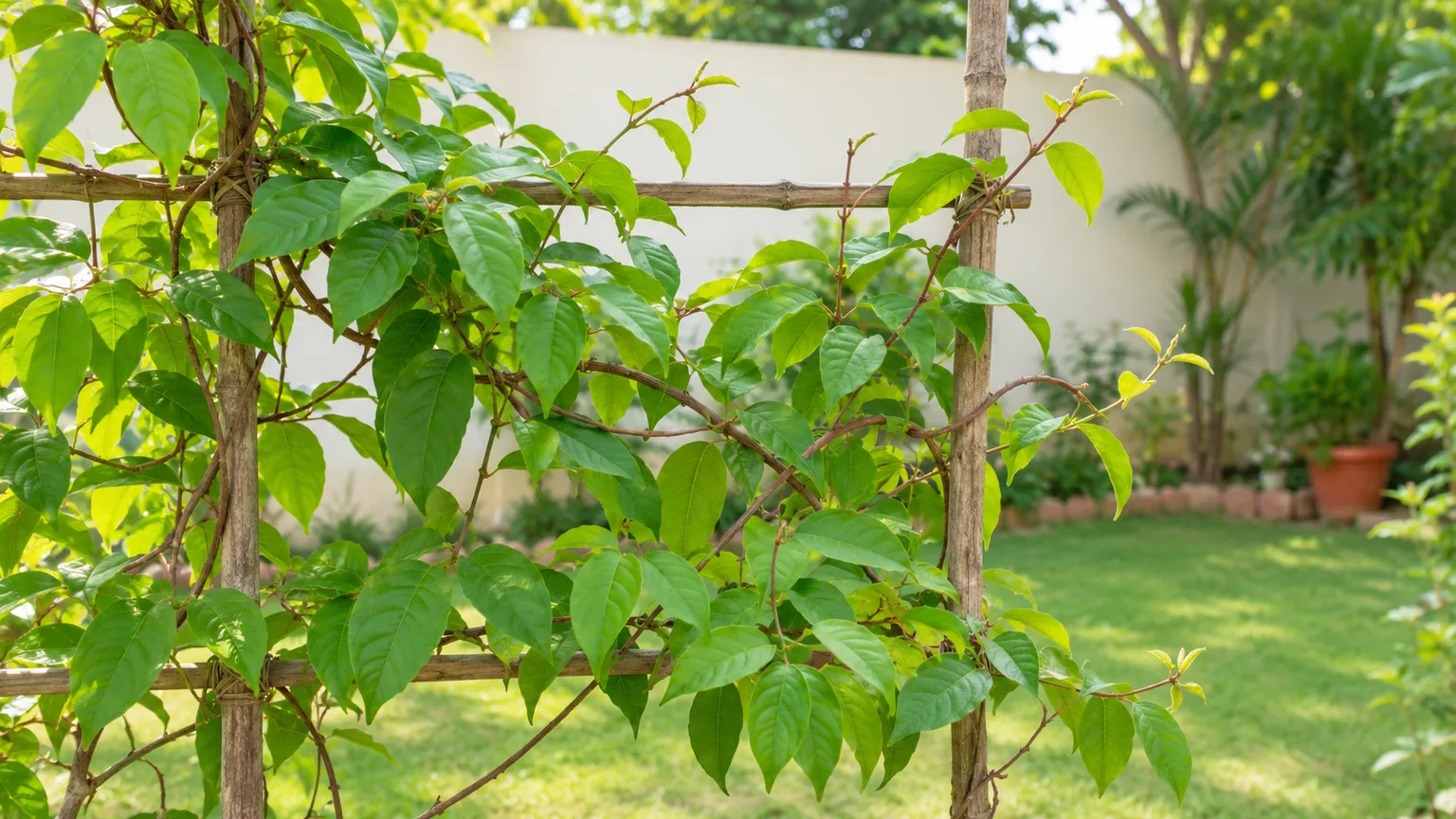
Slow Growth on Rangoon Creeper: Causes, Checks & Fixes
This guide covers slow growth on Rangoon Creeper. See also the general Slow Growth guide, watering, and light pages for this plant.
Slow Growth on Rangoon Creeper: Causes, Checks & Fixes
Quick answer
A healthy Rangoon Creeper is a fast vine, so a stall is information, not bad luck. First fix: confirm it is getting full sun and warm temperatures, and move it to your sunniest supported spot if it is not. Most stalls trace to weak light, cool-season slowdown, a rootbound container, or exhausted soil — not to a need for heavy fertilizer.
For the general mechanics of stalled plants, see our slow growth guide. On Rangoon Creeper, the pattern usually shows up as missing twining shoot tips and no new flower clusters during weather that should favor growth.
What slow growth looks like on this vine
Rangoon Creeper (Combretum indicum) is a perennial woody liana native to tropical Asia that climbs by means of hooks and can reach about 8 m tall Vivekananda College. Singapore’s NParks rates its growth rate as Fast, with a preference for full sun and moderate water NParks Flora & Fauna Web. Against that baseline, slow growth is easy to spot: shoot tips stop extending and twining, no new opposite leaf pairs unfurl for weeks in warm weather, and the fragrant white-to-pink flower clusters never arrive.
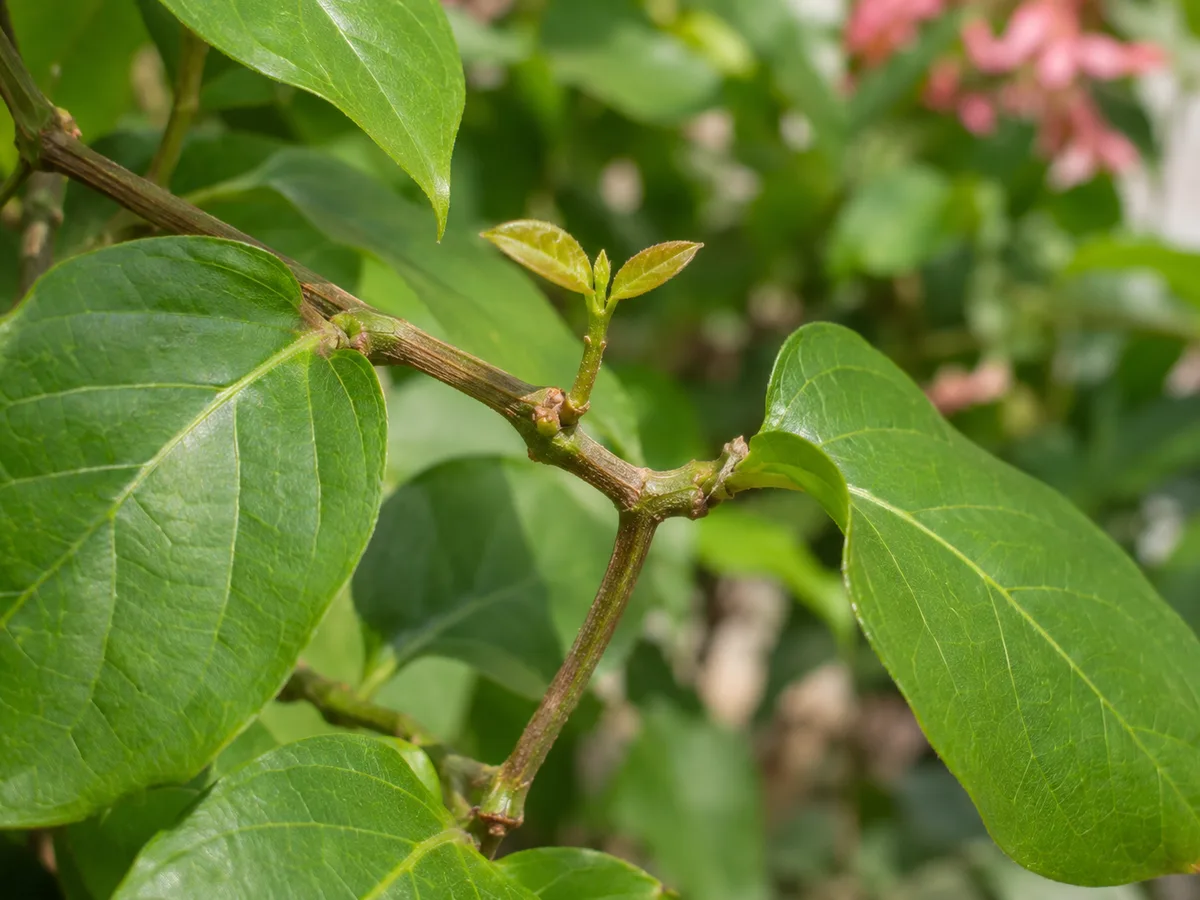
Short, stalled shoot tips and limited new leaf growth can signal a warm-season growth pause.
Normal vine behavior can confuse the diagnosis. Older stems turn woody and heavy, and the plant pours energy into a few strong leaders rather than every shoot at once. That is not a stall. A real stall means even the lead shoots sit motionless through warm, bright weeks, or new leaves emerge much smaller than mature ones while the plant otherwise looks intact.
Cool weather is the most common explanation
Before troubleshooting anything else, check the calendar and the thermometer. Rangoon Creeper is hardy only in USDA zones 10 and 11, defoliates with the lightest frosts, and returns from the roots as an herbaceous perennial in zone 9 after dieback Gardening Know How. It prefers roughly 60 to 80 degrees Fahrenheit, and some leaves may drop during a cold winter with the plant bouncing back in spring PlantCareToday.
If your vine stalled after nights turned cool, that is seasonal rest, not failure. Keep watering light, protect containers from frost and cold drying wind, and do not fertilize, repot, or hard-prune until warmth returns. Judge recovery by fresh shoots emerging after temperatures stabilize, not by coaxing the old stems back into action mid-winter.
Light hunger stalls vines before anything else
In the wild this creeper attaches to trees and climbs through the canopy in search of the sun, and garden plants need full sun to partial shade with afternoon shade appreciated in hot climates Gardening Know How. NParks lists its light preference outright as full sun NParks Flora & Fauna Web.
A vine in shade behaves exactly like a stalled plant: long weak shoots with sparse leaves, few or no flower buds, and growth that never accelerates even in summer. Compare your spot against the Rangoon Creeper light guide — fewer than 5 to 6 hours of direct sun is the usual culprit on balconies shaded by parapets or neighboring buildings. Relocating to the sunniest trellis, pergola, or railing is the single highest-leverage fix, and you should allow two to three weeks of strong light before deciding whether a second problem exists.
Rootbound containers choke a vigorous climber
A fast woody vine fills pots quickly, and a pot-bound root ball is the leading cause of stalls that persist despite good sun. Warning signs from established care practice: roots circling densely or escaping the drainage holes, soil that dries again within a day of watering, and growth that stays flat even with warmth, light, and feeding.
Confirm with two checks. First, look under the pot and at the surface for matted circling roots. Second, track dry-down speed using the finger test in the Rangoon Creeper watering guide — a container that swings from soaked to bone-dry daily has more roots than mix. If both checks point to crowding, repot in early spring or at the start of the warm season into a larger, stable container with fresh fertile mix, following the Rangoon Creeper repotting guide. Do not jump two pot sizes at once; excess uncolonized mix stays soggy and trades a stall for root trouble.
Exhausted soil and wrong feeding
Rangoon Creeper tolerates varied soils provided they drain well, and it adapts across a range of pH Gardening Know How. It is also adaptable enough to grow in the ground, in pots, and even in hanging baskets with adequate water Ugaoo. But “tolerant” does not mean “needs nothing”: a vine sitting in the same container mix for two or three years depletes organic matter, compacts, and drains poorly, and growth fades gradually.
Feed only once the basics are right. The practical schedule is composted manure or a balanced granular fertilizer twice a year, once in spring and once in fall, since the plant does not need heavy feeding PlantCareToday. Avoid fertilizers high in nitrogen: they push foliage at the expense of flower set Gardening Know How. If new leaves are pale between the veins while light and water check out, review the Rangoon Creeper fertilizer guide and the Rangoon Creeper soil guide before adding anything — and never fertilize a cold-stalled or waterlogged plant to force it awake.
Water rhythm that keeps roots working
NParks classifies this vine as a moderate-water plant in well-drained soils NParks Flora & Fauna Web. Both extremes stall growth: chronic sogginess suffocates roots so shoots sit still on wet mix, while repeated deep drying makes the vine drop buds and pause. Water deeply when the top 2 to 3 cm feels dry, let excess escape, and empty the saucer. Young establishing plants need steadier moisture than mature woody ones, and everything slows when cool weather arrives — reduce frequency rather than keeping a summer schedule into dormancy.
Unpruned tangles and missing support
This vine needs regular pruning to stay in bounds and productive, plus a trellis or fence to climb for future height PlantCareToday. A Rangoon Creeper left to sprawl without support or thinning puts energy into a congested mass of weak stems instead of strong flowering leaders, which reads as slow growth even though the plant is technically alive. After a major flowering flush, remove dead and tangled stems and shorten overlong shoots as described in the Rangoon Creeper pruning guide. Tie remaining leaders loosely to permanent support so new shoots twine upward instead of collapsing into shade at the center.
Pests that quietly brake growth
Occasionally the vine is bothered by scale insects and caterpillars Gardening Know How. Heavy scale feeding drains sap and can stall shoot extension while leaves yellow and drop, and caterpillars chew through the tender tips that would otherwise extend. Inspect stem nodes, leaf undersides, and fresh shoot tips before treating anything — a few chewed leaves need no spray, but encrusted stems with sticky honeydew and stalled tips justify targeted control. Do not confuse pest cleanup with the main fix: restore sun and root space first.
How to confirm the cause in order
Work through these checks on a warm day before changing anything:
- Season and temperature. If nights are cool or frost recently passed, assume seasonal rest and wait.
- Light hours. Count direct-sun hours on the leaves. Under 5 hours points to light hunger.
- Container and roots. Look for circling roots and daily dry-down swings that signal crowding.
- Soil and drainage. Probe 2 to 3 cm deep; sour smell or permanent sogginess means root-zone trouble, not hunger.
- Feeding history. No compost or balanced feed for over a year in an old mix suggests depletion; recent heavy nitrogen with lush leaves but no growth or flowers suggests overfeeding imbalance.
- Pests. Check nodes and shoot tips for scale bumps, caterpillars, or honeydew.
Change one variable at a time so the next flush of growth tells you what worked.
Recovery timeline
- Weeks 1 to 2: after a sun move or watering correction, existing shoot tips firm up and small new leaf pairs begin unfurling.
- Weeks 3 to 6: leaders extend and twine around support; this is the signal the diagnosis was right.
- One flowering cycle: buds and fragrant clusters return on plants stalled by light or feeding gaps.
- After repotting: allow a few extra weeks, since roots re-establish before top growth accelerates.
Old woody stems will not suddenly become slender and green again. Judge everything by new extension, not by the appearance of mature bark.
Mistakes that keep the vine stalled
- Fertilizing a shaded plant instead of moving it into the sun.
- Feeding with high-nitrogen fertilizer and getting leaves instead of flowers.
- Repotting into a much larger pot that stays wet around a small root ball.
- Stacking repotting, hard pruning, and heavy feeding in one weekend.
- Keeping a summer watering schedule through cool months.
- Pruning off the season’s flowering wood right before the display.
How to prevent the next stall
Give the vine its three non-negotiables every season: at least 5 to 6 hours of direct sun on a strong trellis, fertile free-draining mix refreshed with compost, and water matched to heat and growth stage. Browse the Rangoon Creeper problems hub when symptoms overlap, since stalled vines often show yellowing or bud drop alongside the pause. Repot young plants every 1 to 2 years, prune after flowering, and feed lightly in spring and fall rather than rescuing with emergency doses.
When to worry
Slow growth alone is rarely an emergency on this species. Act promptly when shoots wilt while the mix is moist, stem bases soften or smell sour, yellowing spreads across wet soil, or frost-blackened stems fail to resprout from the base in spring. Those signs mean root failure or cold damage, and waiting out the season can cost the plant.
Related tool
Use the Plant Growth Rate Calculator to estimate a realistic growth pace for your light, season, and container setup before changing multiple variables at once.