Fungus Gnats on Scindapsus Treubii Dark Form: Causes
Quick answer
Fungus gnats around Scindapsus Treubii Dark Form often point to a potting mix surface that stays moist. First, pause watering until the upper mix has dried to the plant’s usual top-half check; then resume watering by soil condition, not a calendar. Use traps to monitor adults and consider a labeled Bti product if larvae persist.
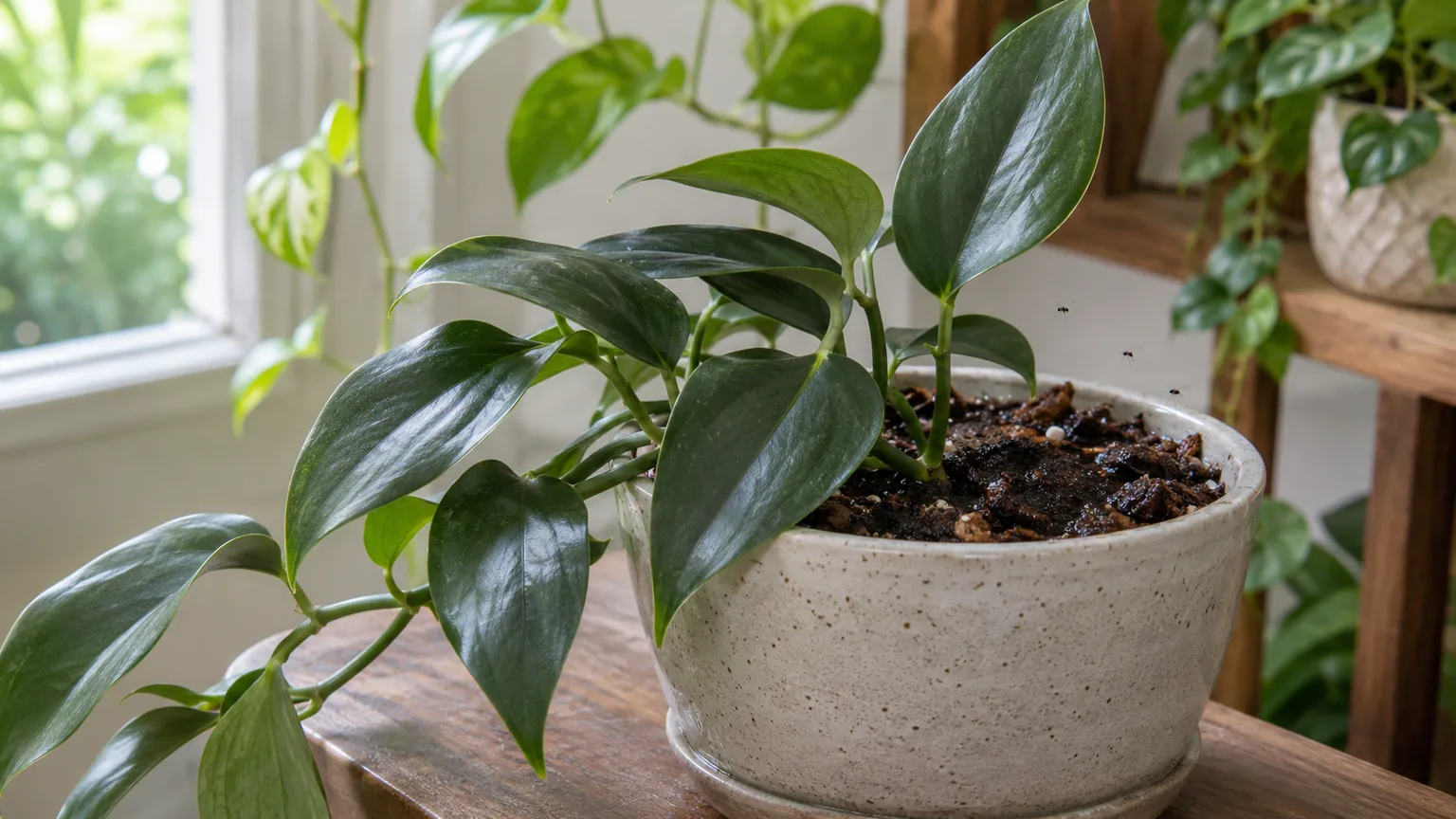
Fungus Gnats on Scindapsus Treubii Dark Form: Causes, Checks & Fixes
This guide covers fungus gnats on Scindapsus Treubii Dark Form. See also the general Fungus Gnats guide, watering, and light pages for this plant.
Fungus Gnats on Scindapsus Treubii Dark Form: Causes, Checks & Fixes
Quick answer
If tiny dark flies rise when you tap the pot, inspect the mix before changing care. Scindapsus treubii is watered after the top half of the soil dries; a persistently wet surface can also provide egg-laying sites for fungus gnats. First, pause watering until the upper mix reaches that plant-specific dry-down point, then resume based on soil moisture rather than a schedule. For the gnat life cycle and general controls, see our fungus gnat guide. On an established Dark Form vine, adult flies may be conspicuous while foliage remains unaffected; inspect roots if growth or leaves also decline.
What fungus gnats look like on this plant
Adults are delicate dark flies about 1/8 inch long, with long legs and antennae. They may walk on the mix, rest on leaves, or fly near windows and lamps. Their presence around the trailing vine does not by itself mean the foliage is being eaten.
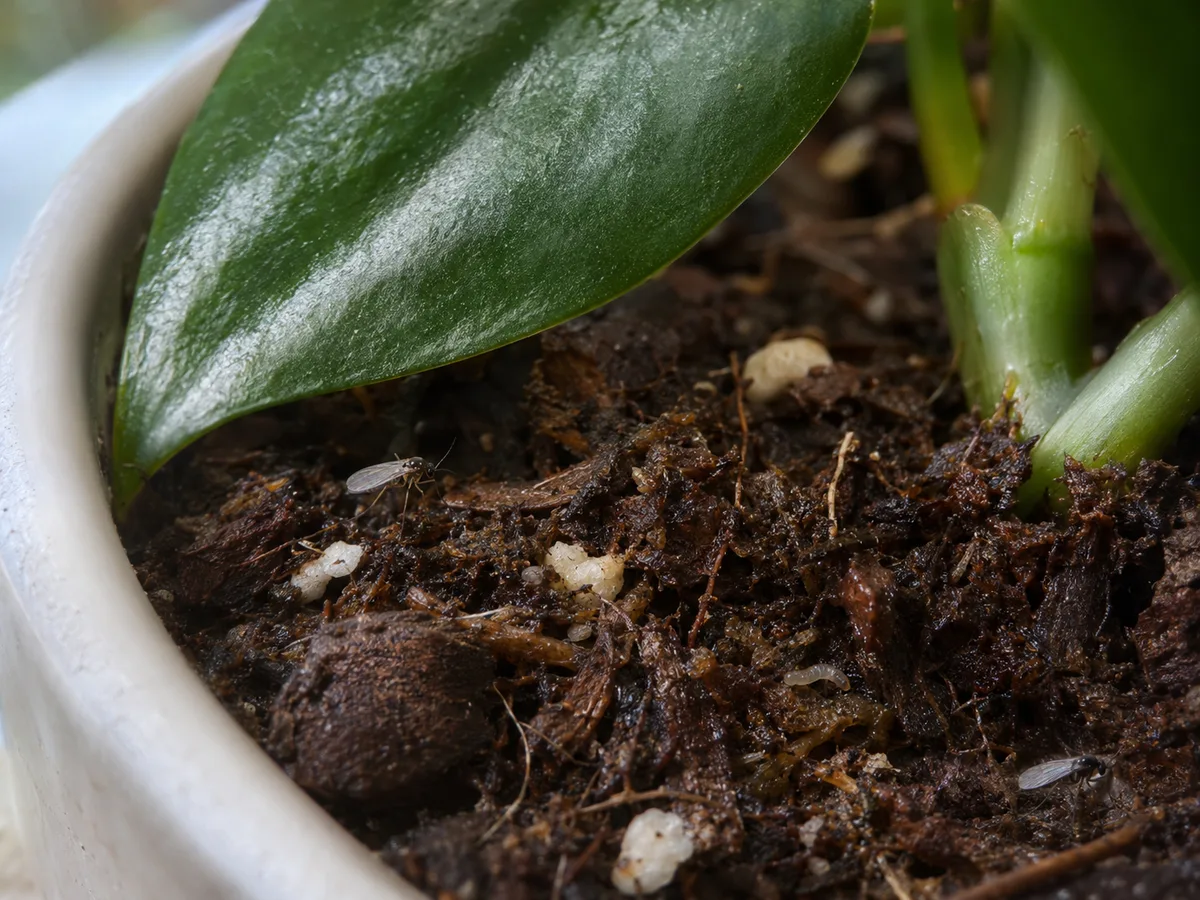
A few adults near the mix are a clue to inspect the soil; they do not prove the foliage is being eaten.
Larvae live in the growing medium as pale, legless worms with shiny black heads. They feed mainly on fungi and decaying organic matter; when numerous, they can damage fine roots, especially on seedlings and young plants (UC IPM; Wisconsin Extension). On an established Dark Form vine, check for a cluster of flies over damp soil and confirm larvae with a potato-slice test rather than diagnosing from leaf appearance alone.
Why Dark Form pots invite them
Three traits of this plant stack the odds toward gnats.
First, it has a soil-based dry-down cue. Follow the plant’s watering guidance and check the mix rather than assuming a fixed interval; seasonal light and growth change how quickly the pot loses moisture. A dim placement can slow drying further, so compare the actual light with the plant’s light needs before increasing watering frequency.
Second, low light can slow water use. Gnats alone do not prove a light problem, but a dim position plus a slow-drying pot is a reason to assess placement and compare new growth with the plant’s light guide. Long internodes can have other causes, so diagnose them separately.
Third, mix condition matters. A potting mix that has compacted or broken down can retain water longer; compare it with the plant’s soil guidance and repot only if the mix has actually failed. Moist organic growing media support fungus-gnat egg laying, particularly peat-rich mixes (Gardener’s Path); the age of the pot alone is not enough to diagnose a need for repotting (Colorado State Extension).
How to confirm the cause
Do these in order before buying anything:
- The tap test. Tap the pot rim and brush the leaves. Fungus gnats rise in a small dark puff and resettle on the mix within seconds.
- Sticky-trap count. Place a yellow sticky trap near the foliage and record the catch over several days. The trap helps monitor adults; there is no universal catch threshold that proves the breeding source is that pot.
- Potato-slice test. Press a 1/4-inch raw potato wedge, cut side down, onto the mix and check the underside after 3 to 4 days for translucent larvae. Wisconsin Extension recommends exactly this potato-slice check over 3 to 4 days because larvae migrate up to feed on it.
- Moisture audit. Check the upper half of the mix and lift the pot to compare its weight with a drier baseline. Persistent surface moisture is a risk factor, not proof of larvae; overwatering can also attract gnats (The Spruce). Vinegar traps do not monitor fungus gnats effectively, so use sticky cards for adults instead.
Rule out lookalikes while you are at it: shore flies are stouter with short bristle-like antennae and hang around algae; fruit flies hover around kitchens and drains, not potting mix. If leaves are yellowing and stems are mushy rather than just flies, read the Dark Form problem hub and suspect overwatering or root rot with gnats as passengers.
The first fix to try
Pause watering until the upper mix reaches Scindapsus treubii’s usual top-half-dry check. This is the first step; avoid adding treatments before confirming that the surface is staying wet and that gnats are breeding in the pot.
Keeping the surface drier reduces favorable egg-laying and larval habitat; Wisconsin Extension recommends allowing the soil surface to dry between waterings, while Colorado State discusses drying the upper 1 to 2 inches. For Dark Form, follow its top-half-dry watering cue rather than imposing a deeper dry-out that could stress the roots. Because eggs, larvae, pupae, and adults can overlap indoors, monitor the trap and soil over several weeks instead of expecting all adults to disappear after one watering cycle (Wisconsin Extension).
Step-by-step follow-through
If adults continue to appear and a potato test confirms larvae, consider these follow-up steps:
- Trap the adults. Keep the yellow sticky trap in place. Traps alone will not end breeding, but they cut egg-laying and show whether numbers are falling week to week.
- Consider a Bti product for larvae. Use a product labeled for the intended indoor plant use and follow its directions. Bti targets susceptible fly larvae, not adult gnats; repeat only at the product-label interval. Wisconsin Extension notes Bti can be used against larvae in growing media.
- Keep the surface open to inspection. A coarse top dressing is an optional barrier, but do not use it to mask wet or compacted mix; leave enough access to check the soil and water evenly.
- Repot only if the mix has failed. If the medium smells sour, stays soggy, or is two-plus years old, refresh it with a chunky perlite-heavy mix rather than treating the same dead sponge forever. Colorado State explicitly recommends repotting when the medium has broken down. Otherwise, leave the roots alone.
- Consider beneficial nematodes for persistent larvae. If using Steinernema feltiae, follow supplier directions for storage and application; effectiveness depends on suitable conditions and correct use.
Skip fogging the air with insecticide. Extension guidance holds that insecticides are rarely warranted indoors for gnats, and pyrethrin sprays only knock down flying adults temporarily.
Recovery timeline
Adult gnats do not feed on the plant, and larvae are most concerning when numerous or when a plant is young. On a mature Dark Form, watch for a declining trap count, firm roots, and normal new leaves; the exact time to control varies with conditions and overlapping generations.
If a young plant or cutting wilts despite moist mix, do not assume gnats are the only cause. Check the Dark Form root-rot guide if stems soften or roots appear dark and mushy; otherwise, avoid disturbing healthy roots just to remove a few adults.
Mistakes to avoid
- Watering on schedule. The top-half-dry check beats any calendar, especially in fall and winter when slower growth plus unchanged watering keeps pots wet and gnatty.
- Misting the leaves to “help.” Dark Form tolerates average rooms; misting wets the surface without watering roots and keeps the egg zone damp.
- Fertilizing a stressed, gnatty plant. Extra salts in soggy mix burn compromised roots. Feed only once growth resumes.
- Repotting on day one. Fresh mix around undisturbed wet roots just moves the nursery. Dry first, repot only failed mix.
- Moving the infested pot around the house. Adults emerge and colonize neighboring pots — keep infested plants put until traps read near zero.
How to prevent it next time
Prevent recurrence by using the top-half-dry check before watering, keeping the pot draining freely, and removing standing water from the cachepot. Keep the vine in suitable indirect light and inspect the mix if drying slows; see the Dark Form watering and soil guides for those decisions. Quarantine new plants and monitor their potting mix before placing them beside this vine.
Related tool
Use the Pest Identifier Tool to confirm the pest from visible signs before treating, especially if you are unsure whether you have fungus gnats, shore flies, or something else entirely.
Related Scindapsus Treubii Dark Form guides
- Use the plant overview and problems hub for general care and symptom routing.
- Use the root-rot guide if roots or stems are soft, and the mold-on-soil guide if surface growth is the main concern.
- Use the overwatering guide when the pot remains wet and the plant shows broader decline. This page is for confirmed or suspected fungus gnats in the growing medium.