Syngonium Mojito Care Guide: Light, Water & Tips
Syngonium podophyllum 'Mojito'
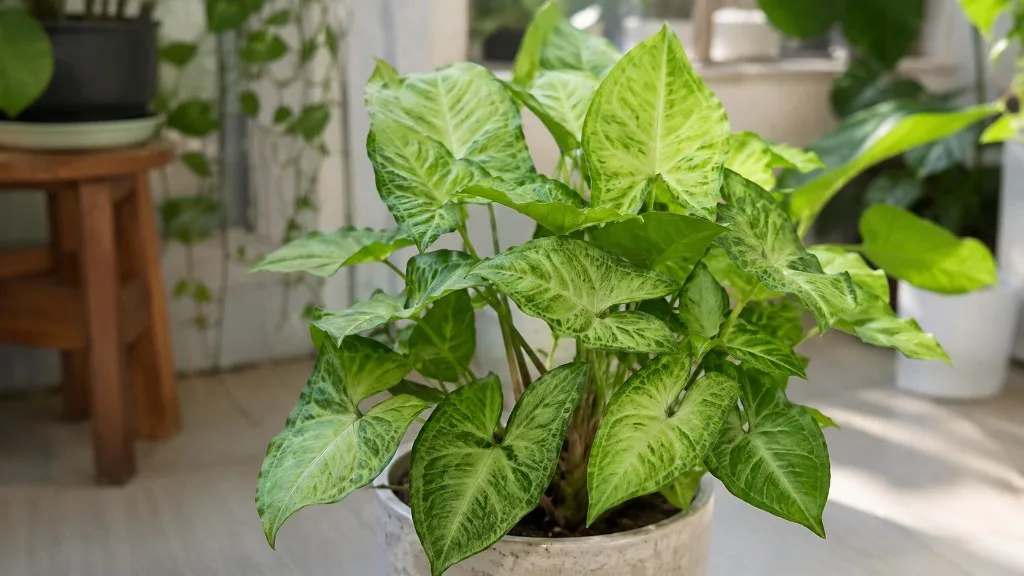
Syngonium Mojito needs bright filtered light to keep its mint-green and pastel pink foliage. Water when the top inch dries and prune to stay bushy or climb.
Syngonium Mojito Care Guide: Light, Water & Tips
Start with wateringThe most common care mistake for Syngonium MojitoWatering guide →Syngonium Mojito care essentials
Light
bright filtered indirect light
Water
Water when the top inch of mix dries; reduce frequency in low light.
Soil
Well-draining peat- or coco-based aroid mix with perlite.
Humidity
moderate to high (50–60%)
Temperature
16°C to 27°C (60–80°F)
Fertilizer
Feed lightly during active growth. uk/plants/17899/syngonium-podophyllum/details) at reduced strength with balanced liquid fertilizer and stop if the plant is stressed, newly repotted, or not actively growing.
About Syngonium Mojito
Syngonium Mojito has a upright growth habit. It is also known as Mojito Syngonium and Arrowhead Vine Mojito.
| Detail | Information |
|---|---|
| Also known as | Mojito Syngonium, Arrowhead Vine Mojito |
| Growth habit | Upright |
| Scientific name | Syngonium podophyllum 'Mojito' |
Syngonium Mojito Care Guide: Light, Water & Tips
What Is Syngonium Mojito?
Syngonium Mojito — botanically Syngonium podophyllum ‘Mojito’ — is a pastel arrowhead cultivar grown for mint- or lime-green juvenile leaves washed with soft pink on new growth. Retail tags may call it pink arrowhead vine or simply nephthytis, but the cultivar name matters because Mojito is not a generic green Syngonium with a marketing sticker. It is a blush-toned selection that reads softer and more uniform than speckled ‘Milk Confetti’ or the iridescent pink of patented ‘Neon Robusta’.
The species behind the cultivar, Syngonium podophyllum, is an evergreen tropical climber native from Mexico to Ecuador, where it grows in warm, humid forest understories and climbs tree trunks in filtered light. Indoors, the species can reach 3 to 6 feet (0.9 to 1.8 m) on a support, but Mojito is usually kept compact on a tabletop through pinching. Growth is moderate to fast in bright, warm conditions and slows when light or temperature drops.
If you are deciding whether Mojito fits your home, the honest summary is this: it rewards Syngonium Mojito light guide, evenly moist well-draining soil, and stable warmth — and it punishes dim corners, chronic overwatering, and cold drafts. It is easier than a calathea and more demanding about light than solid-green arrowheads if you want to keep the blush that made you buy it. One critical caveat for pet owners: like all S. podophyllum cultivars, Mojito is toxic to cats, dogs, and horses according to the ASPCA, which lists the species under arrow-head vine and nephthytis.
Botanical Background and the Aroid Connection
Mojito belongs to the family Araceae — the aroid family — alongside philodendrons, monsteras, pothos, and peace lilies. Aroids share baseline patterns: well-drained, airy potting mix; sensitivity to roots sitting in stale water; insoluble calcium oxalate crystals that irritate tissue if chewed; and best performance in bright indirect light that mimics forest-floor and lower-canopy conditions rather than open sun.
The genus name Syngonium refers to united reproductive organs in the flower structure — a detail you will rarely need indoors because Mojito is grown entirely for foliage. The older synonym Nephthytis triphylla still appears in references and explains why poison-control databases use “nephthytis” even when your pot label says Syngonium. Outdoors, S. podophyllum is winter-hardy only in USDA Zones 10 through 12, per the Missouri Botanical Garden. Everywhere else it is a houseplant.
How Mojito Differs from Other Pink Syngonium Cultivars
Commerce groups many pink syngoniums together, but growers notice real differences. ‘Neon Robusta’ — the patented selection with US Plant Patent PP18013 — arose as a branch mutation of ‘Neon’ and is marketed for iridescent pink upper leaf surfaces on a dense, upright habit. ‘Milk Confetti’ shows heavier pink-white-green speckling across the leaf. Mojito sits between those extremes: a gentle pink wash over mint-green juvenile foliage rather than bold neon pink or confetti patterning. If your plant opens mostly green leaves with no blush, you may have a mislabeled green arrowhead — or, more often, a Mojito in too little light.
Juvenile Leaves vs Mature Climbing Form
Young Syngonium podophyllum leaves are typically simple and arrowhead-shaped, often with silver, pink, or cream tones along the veins, according to NC State Extension. As the plant ages and especially as it climbs, newer leaves often become deeply lobed or pedate, developing multiple leaflets — a normal developmental shift, not a care failure. Mojito owners who want the pastel tabletop look pinch growing tips regularly or keep the plant in a smaller pot with less vertical support. Growers who want larger divided adult foliage provide a moss pole or trellis and accept the shape change.
Why Pink Color Depends on Light
The single biggest reason people buy Mojito is the mint-green and pink blush, and the single biggest reason they feel disappointed six months later is that the pink quietly disappears. This is almost never mysterious reversion. It is a light response. Pale and pink zones carry less chlorophyll than green tissue; when light drops, the plant produces more chlorophyll in blush areas to survive, which reads as greening or dulling.
That does not mean Mojito belongs on an unfiltered south-facing sill at noon. It means the window that keeps a dark-green arrowhead happy may be too dim to hold the color you paid for. East-facing windows are often ideal: gentle morning direct sun, then bright filtered light the rest of the day. A few feet back from a south- or west-facing window behind a sheer curtain also works. The diagnostic that matters is new growth: if the freshest leaves open with a visible pink wash, light is probably adequate. If new leaves arrive smaller, farther apart, and mostly green, move toward a brighter indirect position or add a grow light — details in the Syngonium Mojito light guide.
Best Growing Conditions for Syngonium Mojito
Mojito does best when your space approximates the warm, humid, filtered-light rhythm of a tropical forest understory. The four variables that decide almost every outcome are light, water, soil, and temperature. Get those aligned and feeding, Syngonium Mojito repotting, pinching, and propagation become routine.
Light Requirements
Syngonium Mojito grows best in bright, filtered indirect light — strong ambient daylight without harsh midday sun on the leaves. The Missouri Botanical Garden recommends bright indirect exposure and protection from direct sun for S. podophyllum, and the RHS lists partial shade for the species. For Mojito, that guidance matters doubly because pale blush leaves bleach and scorch more visibly than solid-green foliage.
Mojito tolerates lower light better than many strictly high-light tropicals, but tolerance is not the look you bought. In low light, stems stretch, internodes lengthen, and the pink wash fades toward green on new growth. University of Florida IFAS publication EP244 places commercial Syngonium production at 250 to 1,000 foot-candles — a useful ceiling for understanding that understorey is not a dark closet. If you must use a dim corner, expect slower growth and color loss unless you supplement with a full-spectrum grow light.
Temperature and Humidity
Mojito prefers stable indoor temperatures between 65 and 80°F (18 and 27°C) during active growth, with nights above 60°F (15°C). It dislikes cold drafts from winter windows and air-conditioning vents. Prolonged exposure below about 55°F (13°C) slows growth and can cause yellowing and leaf drop.
Humidity remains secondary to light and water but still matters. Indoors, 40 to 60% relative humidity supports healthy leaf edges and reduces spider-mite pressure. Average winter homes below 30% often produce crisp brown tips and smaller new leaves. Grouping plants, a pebble tray, or a small humidifier nearby help more reliably than evening misting, which can leave foliage wet overnight and invite bacterial leaf spot — a problem NC State Extension notes for greenhouse syngoniums.
Soil and Drainage
Use a light, well-draining, airy potting mix suited to aroids. The Missouri Botanical Garden recommends a soil-based potting mix for S. podophyllum — in practice, a structured indoor blend with perlite and bark rather than fine peat alone. A workable home blend is roughly two parts quality potting mix, one part perlite, and one part orchid bark or coco chips. Always plant in a container with a drainage hole, and empty saucers after watering. Full mix recipes and drainage tests live in the Syngonium Mojito soil guide.
How to Water Syngonium Mojito
The general rule for Mojito is water when the top 1 inch (2.5 cm) of mix feels dry, then soak thoroughly until a small amount runs from the drainage hole. Syngonium prefers evenly moist soil during active growth — not a swamp, but not bone-dry for long stretches. The Missouri Botanical Garden describes the species as needing regular water in the growing season with reduced frequency from fall through late winter.
In warm, bright conditions, that moisture check often translates to every 7 to 10 days for a medium pot, but your calendar should be a reminder to check, not a rule. Lift the pot — a noticeably light container means the root zone has dried; a heavy pot with a damp surface usually means wait. Always empty the saucer after watering because aroid roots rot quickly in stale water.
Watering During Active Growth
During active growth — typically spring through early fall when new blush-tinged leaves appear regularly — Mojito uses water predictably. Water deeply and evenly with room-temperature water rather than giving small daily sips. See the dedicated Syngonium Mojito watering guide for finger-check technique and saucer discipline.
Seasonal Adjustments
In cooler, dimmer months, Mojito slows even indoors. Stretch the interval, rely on the weight test and deeper finger check, and pause or reduce fertilizer until new growth resumes. Heating systems can dry the surface faster while the core retains moisture — check an inch or two down rather than trusting a crusty top alone.
Common Watering Mistakes
The most common Mojito problem is watering on a schedule without checking the mix — especially weekly auto-watering in a dim room where the plant uses little water. The second is leaving the pot in a full saucer. Third is confusing root-rot wilt with drought: soft stems, wide yellowing, and sour-smelling mix mean inspect roots before watering again. Oversized pots in low light are especially dangerous because excess mix stays wet while the plant weakens and pink fades to green simultaneously.
How to Feed Syngonium Mojito
Mojito is not a heavy feeder, but modest nutrition during active growth keeps internodes compact and supports steady new leaves. A balanced water-soluble houseplant fertilizer diluted to one-quarter to one-half of the label rate every four to six weeks from spring through early fall is enough for most indoor plants. Apply to already-moist soil so the solution distributes without burning fine roots. Pause feeding during winter slowdown, for four weeks after a major repot, and while the plant recovers from pest damage. Fertilizer cannot restore pink color in dim light — placement comes first. Dosing detail is in the Syngonium Mojito fertilizer guide.
Repotting and Root Health
Repot Mojito roughly every one to two years, or whenever roots circle drainage holes, water runs straight through without soaking, or the plant dries out unusually fast between waterings. The best timing is early in the active growing season — late winter through spring — so the plant has months of warmth and light to recover. Choose a pot one size larger with drainage, refresh the mix completely, and water lightly for the first week while disturbed roots heal.
Mojito is often sold bushy and compact, but stems still vine naturally at heart. Indoors it works as a pinched tabletop plant, a hanging basket, or a moss-pole climber. Without pinching or support, stems grow long and bare at the base. A moss pole encourages larger divided mature leaves; regular tip pinching keeps the pastel juvenile look many buyers prefer.
Signs It Is Time to Repot
Clear signals include roots emerging from drainage holes, water running through instantly, sour or compacted mix, and persistent fungus gnats when the surface never dries. Specimens you want to keep small can be root-pruned lightly and returned to the same container with fresh mix. Step-by-step timing is in the Syngonium Mojito repotting guide.
Propagation Methods for Syngonium Mojito
Mojito is among the easier syngonium cultivars to propagate at home. The most reliable methods are stem cuttings in water or moist mix and division of multi-stem clumps at repotting. Start from a healthy, well-hydrated plant and clean, sharp scissors or pruners.
For stem cuttings, select a stem with at least one node and preferably two or three leaves. Cut just below the node, remove the lowest leaf if it would sit below water or bury in mix, and place the cutting in bright, indirect light. In water, change the water every few days and pot into airy mix when roots are 2 to 3 inches (5 to 7.5 cm) long. Full aftercare is in the Syngonium Mojito propagation guide.
Common Syngonium Mojito Problems
Most Mojito problems are environmental or cultural, not mysterious diseases. They show up as leaf symptoms that map to specific causes. Fix the growing condition first, then trim damaged growth after the plant stabilizes.
Yellow Leaves and Fading Pink
Yellow leaves usually mean overwatering, underwatering, low light, cold drafts, salt buildup, pests, or normal older-leaf shedding at the base. Check moisture in the mix first — soggy soil with yellow lower leaves and soft stems strongly suggests root stress. A single yellow lower leaf on an otherwise healthy plant is often normal shedding.
Pink fading to green on new leaves is almost always a light problem, not a fertilizer deficiency. Move to stronger bright filtered light, filter harsh sun, or add a grow light, then judge by the next two or three new leaves. Older leaves at the base naturally green with age even under good light.
Leggy, sparse growth with small green leaves means insufficient light in most cases — see Leggy Growth on Syngonium Mojito for placement fixes. Brown leaf tips often point to low humidity, underwatering, or salt buildup from hard tap water and fertilizer. Pests to watch for include spider mites in dry air, mealybugs, aphids, and fungus gnats if the soil surface stays wet — all listed by NC State Extension for the species.
Is Syngonium Mojito Safe for Pets?
No — Syngonium Mojito is toxic to cats, dogs, and horses. The ASPCA lists Syngonium podophyllum as arrow-head vine with insoluble calcium oxalate crystals in all plant parts. Chewing causes oral irritation, swelling, drooling, vomiting, and difficulty swallowing. Most cases resolve with supportive care, but swelling that affects breathing warrants immediate veterinary attention — call the ASPCA Animal Poison Control Center at (888) 426-4435 (a consultation fee may apply) or your veterinarian if ingestion is suspected. Hang baskets out of jump range and avoid floor-level shelves where curious pets chew vines.
Conclusion
The most useful thing to know about Syngonium Mojito is that it is a pastel, blush-toned aroid cultivar from tropical American forest understories that wants bright filtered indirect light, evenly moist well-draining soil, stable warmth, and moderate humidity for its best form — especially if you want the mint-green and pink wash to last. Treat it as an aroid: respect drainage, watch for root rot in dim overwatered corners, and understand calcium oxalate toxicity around pets. Pinch it for a bushy tabletop look or give it a moss pole if you want a climber with larger mature leaves. When something looks wrong, check light and water before reaching for fertilizer or pesticide. Fix the environment first — particularly light if the pink is fading — and Mojito usually follows.
When to use this page vs other Syngonium Mojito guides
- Syngonium Mojito overview — Canonical hub for this cultivar; care topics branch from here.
- Syngonium Mojito light — Window placement, foot-candle targets, grow lights, and reading leaf color.
- Syngonium Mojito watering — Finger checks, seasonal rhythm, and overwatering recovery.
- Syngonium Mojito problems — Symptom-first path when you already know something is wrong.
Related Syngonium Mojito guides
How to care for Syngonium Mojito?
How much light does Syngonium Mojito need?
bright filtered indirect light
- bright filtered indirect light - bright filtered indirect light.
When should you water Syngonium Mojito?
Water when the top inch of mix dries; reduce frequency in low light.
- Check top 2 inches - Water when the top inch of mix dries; reduce frequency in low light.
- Drain excess water - Water when the top inch of mix dries; reduce frequency in low light.
What soil works best for Syngonium Mojito?
Well-draining peat- or coco-based aroid mix with perlite.
- Well-draining mix - Well-draining peat- or coco-based aroid mix with perlite.
Grower notes for Syngonium Mojito
Mojito identity note
Mojito is the softer pastel Syngonium — mint- or lime-green juvenile leaves with a gentle pink wash on new growth. It looks best when kept compact through pruning, because long unsupported stems can make the pale leaves look sparse. Bright filtered indirect light preserves the blush; dim light turns the plant muted and greenish. It reads softer and more uniform than speckled Milk Confetti or bolder Pink Splash.
Best use for Mojito
This is a good tabletop Syngonium when pruned young. If you want a climbing plant with larger mature leaves, train it early on a moss pole. If you want the pastel juvenile look, pinch and rotate before the stems run long.
What makes Mojito different
Syngonium Mojito is valued for soft pink new growth over mint-green foliage — a wash rather than heavy speckling. Too little light turns it dull and greenish; too much direct sun makes the pale leaves look washed and tired. Judge it by color on the newest leaves, not by vine length.
What matters most with Syngonium Mojito
Syngonium Mojito can change leaf shape as it matures, so juvenile arrowhead leaves are not always a sign of poor care. Give it support or pruning depending on whether you want a compact tabletop plant or a climbing arrowhead vine. In practice, the care checkpoint is simple: bright filtered indirect light, well-draining aroid mix, and watering only when the top inch of mix has dried. Avoid changing water, pot size, and placement all at once.
Best placement in a real home
Syngonium Mojito belongs where bright filtered indirect light is realistic for most of the day, not only where the pot looks good. Water when the top inch of mix dries. If the pot stays wet longer than expected, move the plant into better light or reassess the mix before watering again. Humidity target: moderate to high (50–60%). Temperature comfort zone: 16°C to 27°C (60–80°F).
Before you buy this plant
Choose Syngonium Mojito with firm new growth, visible pink blush on the newest leaves, clean leaf undersides, and soil that does not smell sour or feel compacted. Be cautious if you see mostly green reverted leaves, sticky residue, collapsed crowns, or a pot that is wet in poor light. Cosmetic old-leaf damage is less worrying than weak roots or active pests.
First month after bringing it home
Do not repot Syngonium Mojito on day one unless the mix is failing or pests are obvious. Quarantine it, learn how fast the pot dries in your light level, and keep care boring while it adjusts. Watch especially for leggy pale growth and yellow lower leaves — both often trace to overwatering in dim corners or insufficient light for a variegated cultivar. Correct the condition first rather than stacking fertilizer, repotting, and pruning together.
Safety note for Syngonium Mojito
Syngonium Mojito is not a plant to keep within reach of pets or children. Treat it as an inaccessible display plant. Use gloves if sap or plant tissue is irritating, and pick a pet-safe alternative for floor pots or low shelves.
How to tell Syngonium Mojito is settling in
If you plan to multiply it later, stem cuttings below a node root readily in water during warm active growth. New leaves opening with a clear mint-green and pink wash on firm petioles are the best sign the plant has found its spot.
Is it pet safe?
Syngonium Mojito is toxic to cats and dogs.
Contains calcium oxalate crystals; causes oral irritation and difficulty swallowing in pets.
Watering Syngonium Mojito
Water when the top inch of mix dries; reduce frequency in low light.
Soil & potting for Syngonium Mojito
Well-draining peat- or coco-based aroid mix with perlite.
Humidity & temperature for Syngonium Mojito
Syngonium Mojito prefers moderate to high (50–60%), though normal home humidity is usually fine. Keep temperatures around 16°C to 27°C (60–80°F).
| Detail | Information |
|---|---|
| Humidity | moderate to high (50–60%) - normal home humidity is fine. |
| Ideal temperature | 16°C to 27°C (60–80°F) |
Fertilizer & pruning for Syngonium Mojito
Use feed lightly during active growth. uk/plants/17899/syngonium-podophyllum/details) at reduced strength with balanced liquid fertilizer and stop if the plant is stressed, newly repotted, or not actively growing. for Syngonium Mojito.
| Detail | Information |
|---|---|
| Fertilizer type | Feed lightly during active growth. uk/plants/17899/syngonium-podophyllum/details) at reduced strength with balanced liquid fertilizer and stop if the plant is stressed, newly repotted, or not actively growing. |
Common problems on Syngonium Mojito
Yellow Leaves
MediumLikely cause: Common on this plant type; confirm with recent watering, light, and root checks.
Quick fix: Inspect the plant and correct the most likely care stressor before stacking treatments.
Full fix guide →Brown Tips
MediumLikely cause: Common on this plant type; confirm with recent watering, light, and root checks.
Quick fix: Inspect the plant and correct the most likely care stressor before stacking treatments.
Full fix guide →Root Rot
MediumLikely cause: Common on this plant type; confirm with recent watering, light, and root checks.
Quick fix: Inspect the plant and correct the most likely care stressor before stacking treatments.
Full fix guide →Overwatering
MediumLikely cause: Common on this plant type; confirm with recent watering, light, and root checks.
Quick fix: Inspect the plant and correct the most likely care stressor before stacking treatments.
Full fix guide →Underwatering
MediumLikely cause: Common on this plant type; confirm with recent watering, light, and root checks.
Quick fix: Inspect the plant and correct the most likely care stressor before stacking treatments.
Full fix guide →Spider Mites
MediumLikely cause: Common on this plant type; confirm with recent watering, light, and root checks.
Quick fix: Inspect the plant and correct the most likely care stressor before stacking treatments.
Full fix guide →Mealybugs
MediumLikely cause: Common on this plant type; confirm with recent watering, light, and root checks.
Quick fix: Inspect the plant and correct the most likely care stressor before stacking treatments.
Full fix guide →Aphids
MediumLikely cause: Common on this plant type; confirm with recent watering, light, and root checks.
Quick fix: Inspect the plant and correct the most likely care stressor before stacking treatments.
Full fix guide →Leggy Growth
MediumLikely cause: Common on this plant type; confirm with recent watering, light, and root checks.
Quick fix: Inspect the plant and correct the most likely care stressor before stacking treatments.
Full fix guide →Slow Growth
MediumLikely cause: Common on this plant type; confirm with recent watering, light, and root checks.
Quick fix: Inspect the plant and correct the most likely care stressor before stacking treatments.
Full fix guide →Wilting
MediumLikely cause: Common on this plant type; confirm with recent watering, light, and root checks.
Quick fix: Inspect the plant and correct the most likely care stressor before stacking treatments.
Full fix guide →Drooping Leaves
MediumLikely cause: Common on this plant type; confirm with recent watering, light, and root checks.
Quick fix: Inspect the plant and correct the most likely care stressor before stacking treatments.
Full fix guide →Low Humidity
MediumLikely cause: Common on this plant type; confirm with recent watering, light, and root checks.
Quick fix: Inspect the plant and correct the most likely care stressor before stacking treatments.
Full fix guide →Not Enough Light
MediumLikely cause: Common on this plant type; confirm with recent watering, light, and root checks.
Quick fix: Inspect the plant and correct the most likely care stressor before stacking treatments.
Full fix guide →Fungus Gnats
MediumLikely cause: Common on this plant type; confirm with recent watering, light, and root checks.
Quick fix: Inspect the plant and correct the most likely care stressor before stacking treatments.
Full fix guide →Mold on Soil
MediumLikely cause: Common on this plant type; confirm with recent watering, light, and root checks.
Quick fix: Inspect the plant and correct the most likely care stressor before stacking treatments.
Full fix guide →