7 Late-Summer Flowers for Fall and Spring Color
Plant black-eyed Susan, coneflower, sedum, aster, and three more late-summer flowers. See which bloom this fall, which pay off next spring, and how to beat the frost clock.
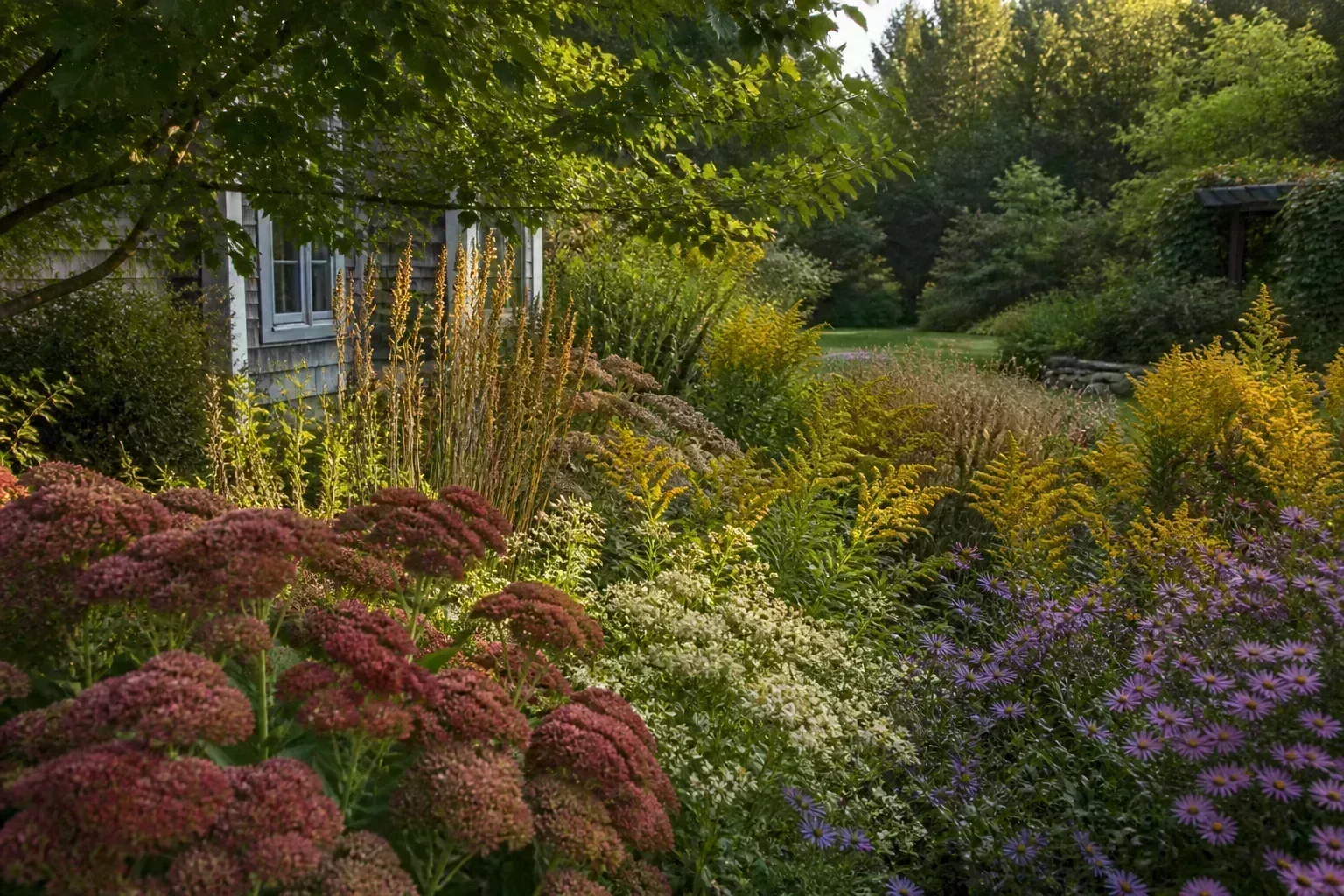
Late summer feels like the wrong moment to start a flower bed, but warm soil and slowly cooling nights create one of the best windows for two-season payoff: color before frost, then a stronger return after winter dormancy. The catch is that not every flower on a nursery bench—or every seed packet—can do both jobs on the same schedule.
The seven choices below are worth planting right now because each can contribute fall color, spring return, or both across its life cycle when you match the plant to the right method. Black-eyed Susan and sweet alyssum can move quickly from seed. Autumn Joy sedum and budded asters reward container purchases. Daylilies and coneflowers often spend their first late-summer weeks rooting, then bloom more generously next year. Your local average first frost date matters more than the calendar month.
Why Late-Summer Planting Can Still Deliver Two Seasons of Color
Perennials and fast annuals do different work in August and September. Some germinate in warm soil and flower within weeks. Others need a container-grown head start or simply invest in roots while nights cool. Iowa State University Extension treats late August through mid-September as an excellent perennial-planting window in many regions, but only when the plant still has enough frost-free time to establish. Iowa State University Extension’s late-summer planting guidance is a useful regional starting point; your frost calendar makes the final call.
Warm soil speeds germination for direct-sown flowers, while cooler air reduces the water stress that makes fresh transplants wilt every afternoon. That combination is why late summer can outperform spring for root building even when immediate flowers are modest. For more August planting context across the garden, see our guide to what to plant in August.
Count Back From Your First Frost Date
Use a practical rule: aim to plant six to eight weeks before your average first frost. That gives roots—or fast annuals—a meaningful run before soil temperatures drop and freeze-thaw cycles begin. The USDA Plant Hardiness Zone Map tells you winter survival; your local frost record tells you whether you still have a viable planting window this week.
| Time before average first frost | What to do |
|---|---|
| Eight weeks or more | Plant healthy transplants and direct-sow fast species such as black-eyed Susan, blanket flower, and sweet alyssum. |
| Six to eight weeks | Favor established nursery pots for sedum, aster, and coneflower; sow only quick-germinating seeds. |
| Four to six weeks | Choose small, vigorous transplants; skip slow seed crops unless your season runs unusually long. |
| Fewer than four weeks | Focus on winter-hardy transplants with strong root balls, or wait for spring. |
This is a planning estimate, not a guarantee. A heat wave can make even a well-timed planting struggle, and an early freeze can end alyssum and tender new growth overnight.
Seeds, Starts, and Transplants — Read the Label First
Seed packets often advertise days to bloom under ideal greenhouse conditions. In a hot August garden, germination may be fast while flowering still waits on frost-free weeks. Transplants trade instant root mass for higher purchase cost. Colorado State University Extension’s perennial tables emphasize matching each plant to sun, soil moisture, drainage, and bloom period rather than buying by color alone. Its herbaceous perennial reference is a good reminder that “easy care” only applies in the site the plant actually wants.
Before you checkout, decide which job you need: fall 2026 flowers, spring 2027 repeat bloom, or both over time. The seven profiles below state which path each plant prefers.
Quick Reference: Which of These Seven Will Bloom When?
Use this table to set expectations before you dig. “Fall bloom likely” assumes a healthy plant or successful direct sowing with at least six frost-free weeks remaining.
| Flower | Best late-summer method | Fall bloom likely? | Spring return? |
|---|---|---|---|
| Black-eyed Susan | Direct sow or small transplant | Often from sowing or budded pot | Yes, may self-sow |
| Purple coneflower | Nursery transplant | Sometimes if budded | Yes |
| Blanket flower | Direct sow or transplant | Often in long seasons | Yes, short-lived in some sites |
| Asters | Nursery transplant or late sowing | Often if budded | Yes |
| Autumn Joy sedum | Nursery transplant | Strongest same-year bet | Yes |
| Daylily | Division or container | Uncommon same fall | Yes |
| Sweet alyssum | Direct sow | Often within ~8 weeks | Self-sows; hardy only in mild zones |
If you want a broader August perennial list with site-based grouping, our perennials to plant in August guide complements this flower-focused short list.
Black-Eyed Susan — Fast Yellow Color From Seed or Pot
Black-eyed Susan (Rudbeckia hirta) is one of the fastest legitimate late-summer bets. Seed can germinate in about 7 to 14 days in warm soil, and plants sown early enough often bloom within 10 to 12 weeks—roughly the timeline many gardeners still have before first frost in zones 5 through 8. A healthy, budded container plant can flower sooner because the root system is already established.
These golden daisies are native across much of North America, tolerate heat once settled, and attract butterflies and other pollinators. The NC State profile for black-eyed Susan describes full-sun preference, drought tolerance after establishment, and value in naturalized or meadow-style beds. One nuance competitors skip: R. hirta behaves as a short-lived perennial or biennial in some gardens, reappearing through self-sowing rather than the same clump lasting decades. That is still useful if you want late-season color and volunteer seedlings next spring.
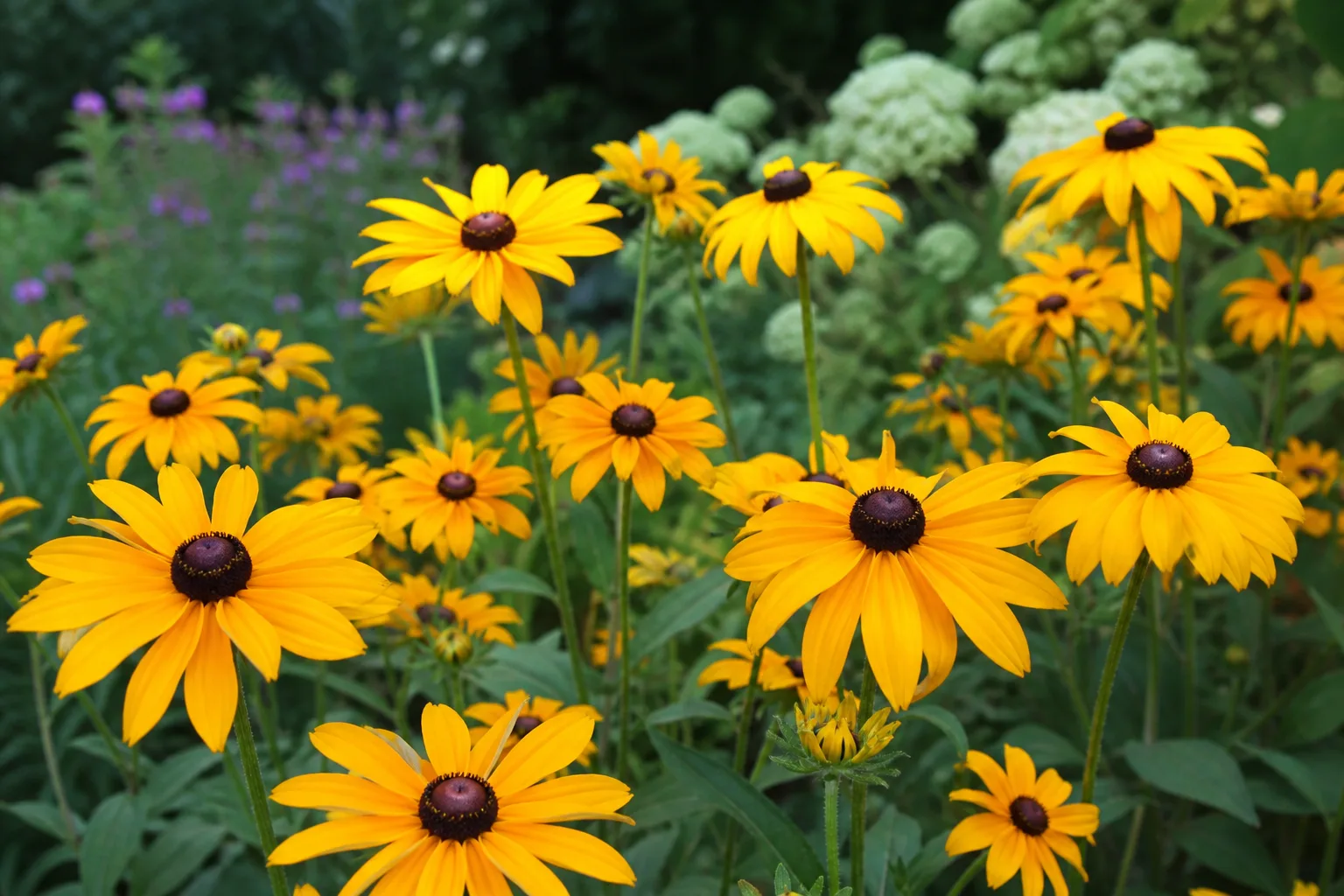
Plant in full sun with moist but well-drained soil while seedlings are young. Keep the seedbed or root ball evenly moist through germination and the first two weeks; established plants tolerate drier conditions. Leave some seedheads if you want birds and self-sown volunteers.
Purple Coneflower — Pollinator-Friendly Color That Often Waits Until Next Year From Seed
Purple coneflower (Echinacea purpurea) is a durable prairie native that handles heat, humidity, and occasional dry spells once rooted. It prefers full sun to light shade and well-drained soil. The NC State Plant Toolbox profile for purple coneflower notes its long bloom season from an established crown, drought tolerance after establishment, and value to pollinators and finches that eat the seedheads.
From seed sown in late summer, coneflowers more often spend the season building a rosette and bloom strongly the following year, especially in short-season climates. A budded nursery transplant planted with six or more frost-free weeks left gives you a reasonable shot at fall flowers while roots settle. Leave some cones standing through winter unless a tidy border matters more than bird food.
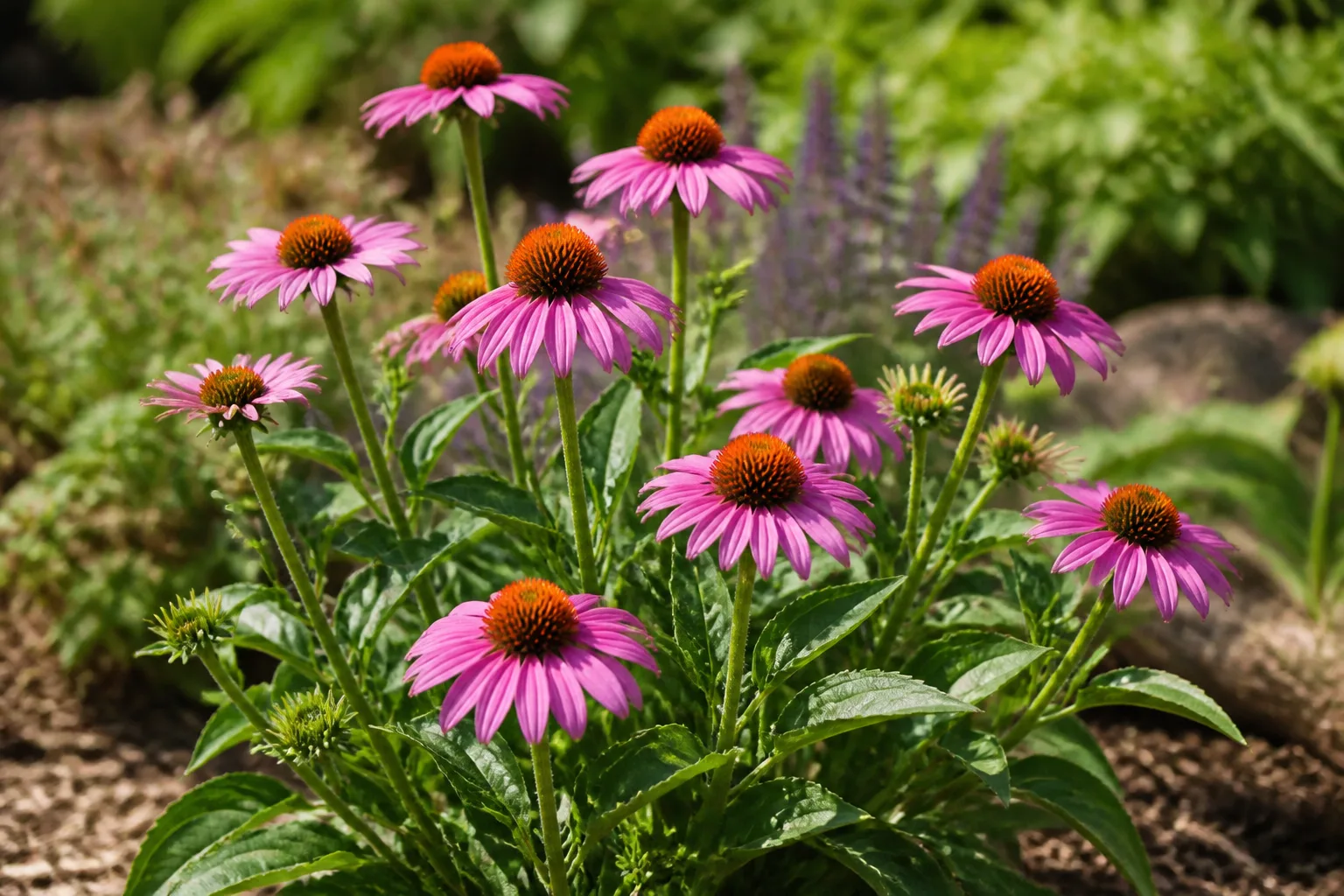
If your bed already has coneflowers and you want longer bloom windows across the yard, pair this planting with our long-blooming perennials guide for complementary timing.
Blanket Flower — Heat-Loving Daisies for Sunny, Well-Drained Beds
Blanket flower (Gaillardia × grandifora) brings red, orange, and yellow daisy faces to hot, sunny edges where many fussier perennials fade. Seed germinates in roughly 7 to 15 days, and plants can bloom within about 12 weeks when sown with enough frost-free time remaining. It is a strong pollinator plant and tolerates poor, well-drained soil once established.
Blanket flower wants full sun and sharp drainage. Wet winter soil kills more plants than drought does. In humid regions, some cultivars are short-lived; plan on division, replacement, or fresh sowing every few years. Deadheading can extend the show, but leave a few faded heads if you want self-sown seedlings next spring.
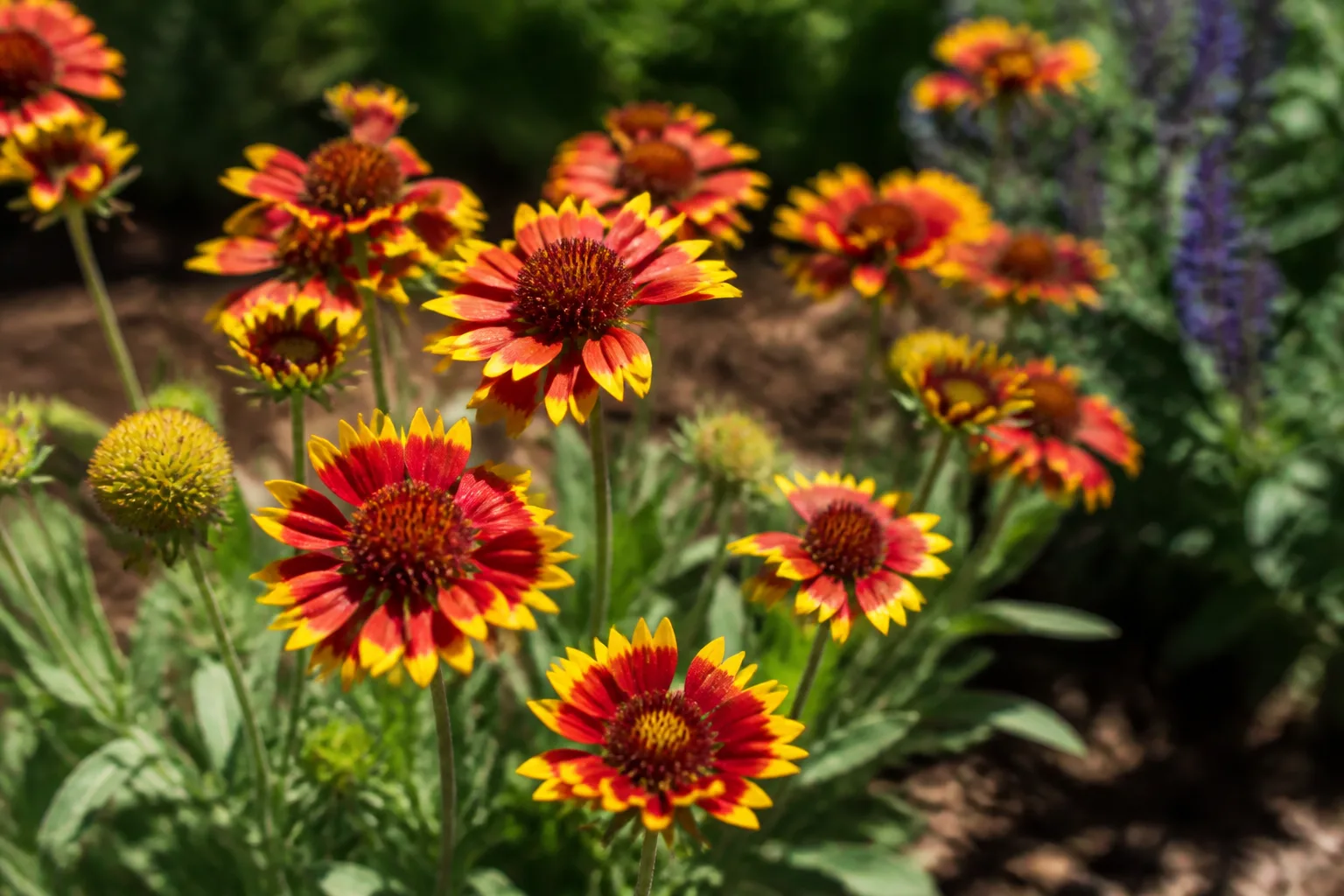
Treat blanket flower as a sun-baked border specialist, not a shade problem-solver. Group it with black-eyed Susan and sedum on the dry side of the garden, and keep it away from downspouts and heavy clay that stays soggy.
Asters — Cool-Toned Fall Flowers That Need Support Off-Prairie
Asters—now commonly classified as Symphyotrichum species and hybrids—are classic late-season purple and blue daisies. Many nursery asters are already budded in late summer and can flower within 4 to 8 weeks of planting if roots are healthy. Seed-sown plants may bloom in fall in long seasons but often perform best the following year.
In their native tall-grass prairie habitat, surrounding grasses help hold floppy stems upright. In a typical garden bed, tall asters may need staking, corralling, or a supportive companion grass unless you choose compact cultivars. Savvy Gardening’s perennial bloom guides note that most perennials flower for a few concentrated weeks rather than all season; asters earn their keep by filling the gap when summer stars fade.
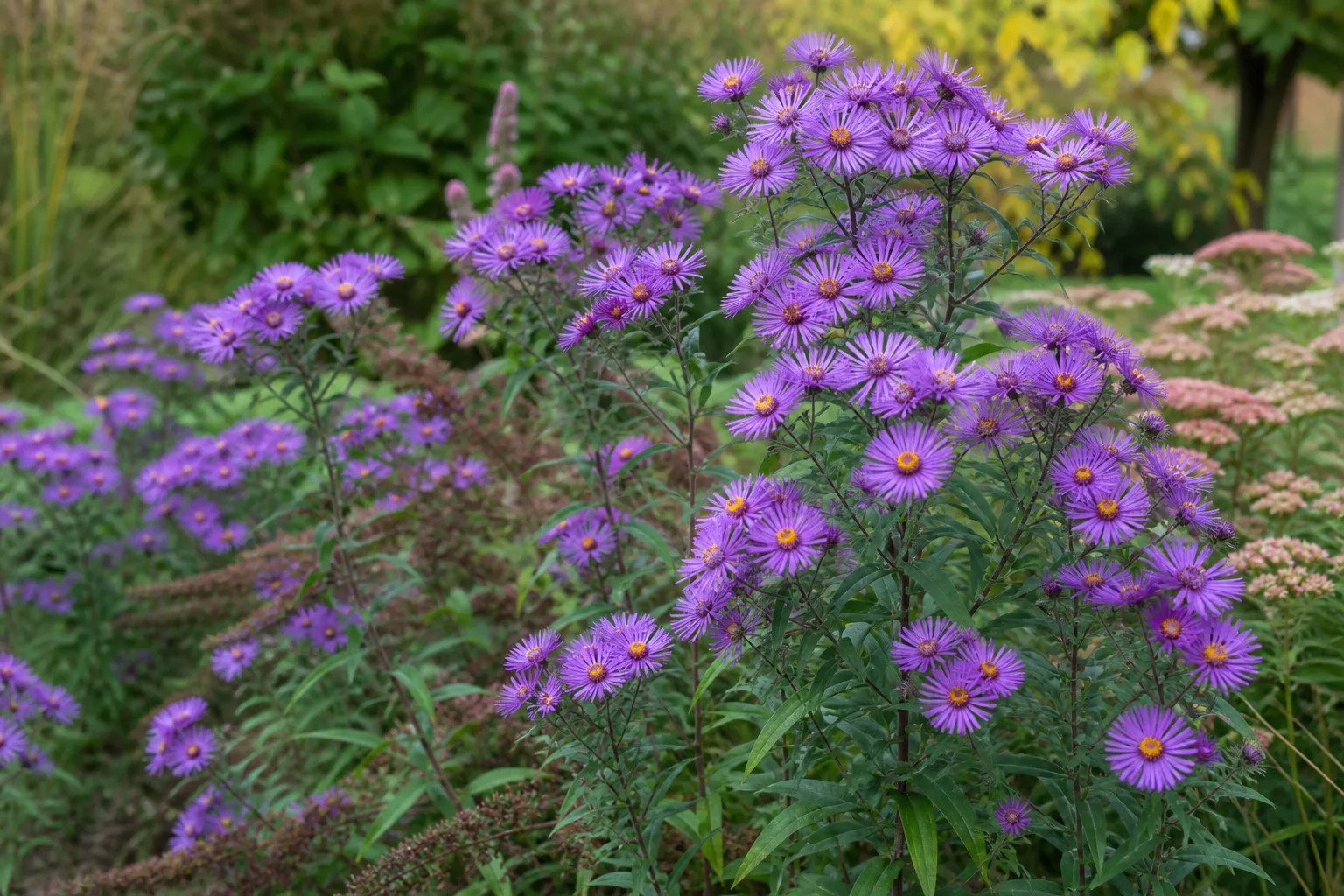
Plant in full sun to part shade with loamy, well-drained soil. Keep new transplants evenly moist while roots expand, then taper watering as nights cool. Cut back spent stems in late fall or early spring, and divide crowded clumps every few years to maintain vigor.
Autumn Joy Sedum — The Safest Bet for Fall Blooms This Year
If you want reliable fall color from a late-summer planting, start with Autumn Joy sedum (Hylotelephium spectabile ‘Autumn Joy’). This upright stonecrop builds broccoli-like buds all summer, then opens pink flower clusters in early fall. A container-grown plant with visible buds is the safest purchase when frost is eight weeks or fewer away.
The NC State Plant Toolbox profile for showy stonecrop describes succulent foliage, full-sun preference, excellent drainage, and low maintenance once established. Wet soil is the main enemy—especially for a fresh transplant. Set the crown at nursery depth, keep mulch away from the center, and let the soil dry slightly between waterings after the first two weeks.
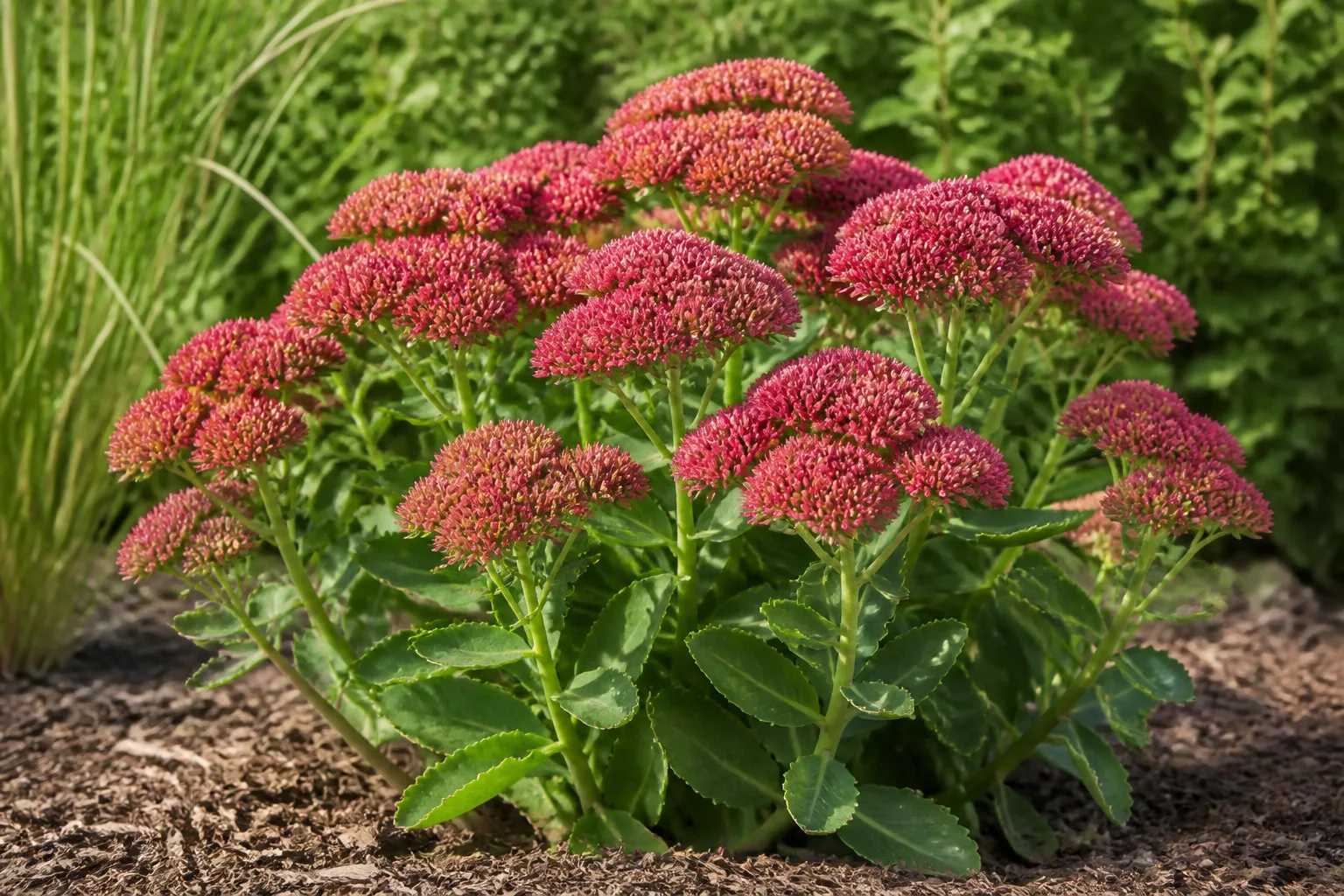
Seed-grown sedum is slower and less predictable for same-year impact. For a budded transplant, fall flowers this year and a fuller clump next spring are both realistic outcomes.
Daylilies — Crown Strength Now, Better Display Next Season
Daylilies (Hemerocallis spp.) are among the most forgiving perennials to move while actively growing. Plant bare-root divisions or containers in full sun to light shade, set the crown so the base sits just at or slightly above soil level, and water deeply while new roots form. Many cultivars can rebloom from spring through fall on an established clump, but an August planting usually prioritizes rooting over immediate flowers.
That is not a failure—it is the trade that buys a stronger clump next year. If you are dividing an existing clump, keep healthy foliage attached; the leaves help rebuild roots. Gardening Know How’s daylily transplanting guide recommends protecting fresh divisions from drying out and watering consistently through establishment.
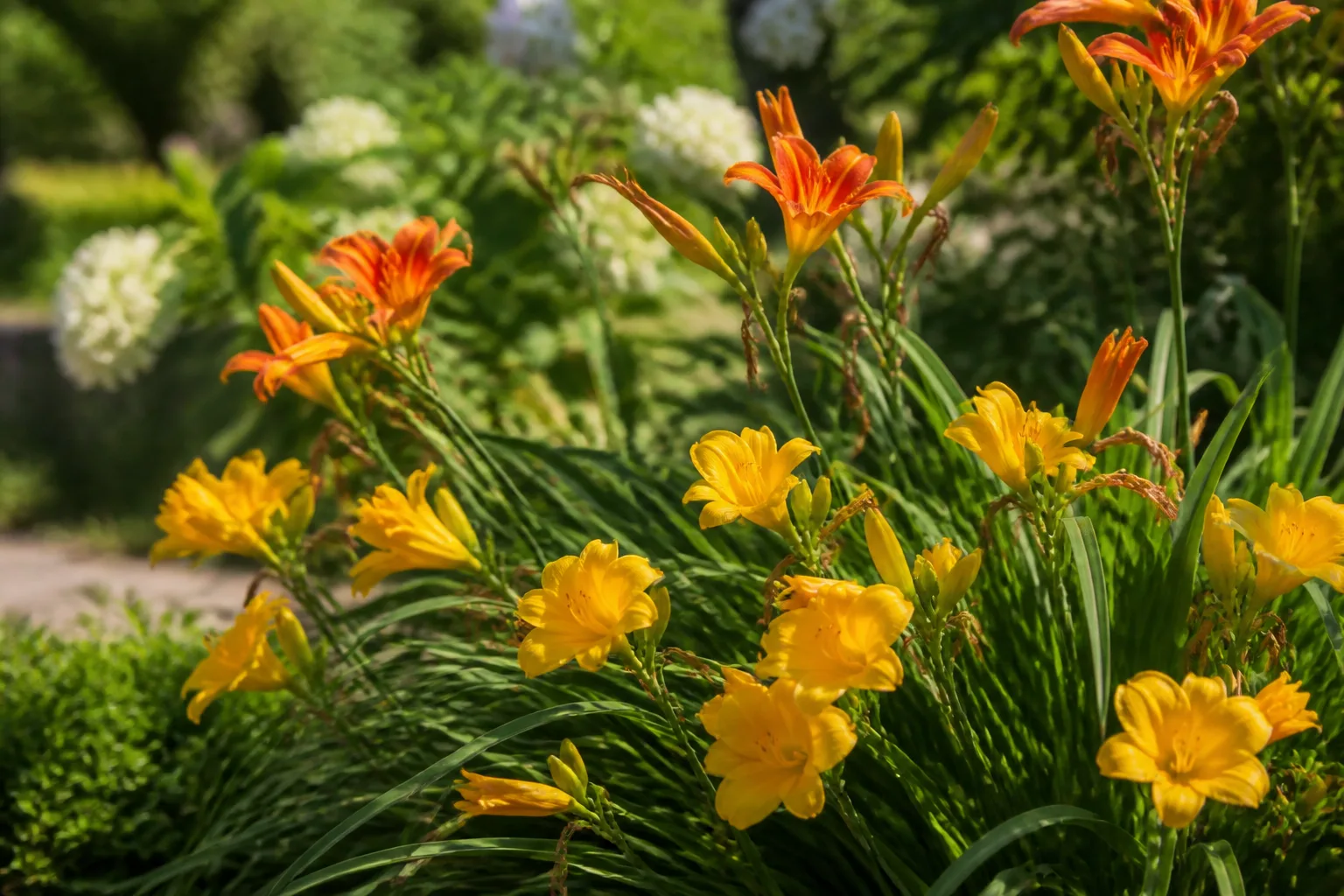
Before naturalizing the common orange daylily, check local guidance; some vigorous types spread aggressively in certain regions. For bloom maintenance on established plants, see should you remove dead daylily flowers.
Sweet Alyssum — Low Ground Cover With a Climate Caveat
Sweet alyssum (Lobularia maritima) is included here because it sows fast, covers soil with honey-scented white or purple flowers, and can bloom within about two months from seed in warm soil. That makes it one of the clearest late-summer annual-style wins for fall color.
The important nuance: although some references list alyssum as a perennial in broad zone ranges, most cold-climate gardeners treat it as an annual or rely on self-sown seedlings that reappear next spring after the parent plant dies in winter. In mild zones, it may persist as a short-lived perennial. Either way, the practical effect is often fall flowers now and volunteers or regrowth next spring—exactly the two-season look many beds need.
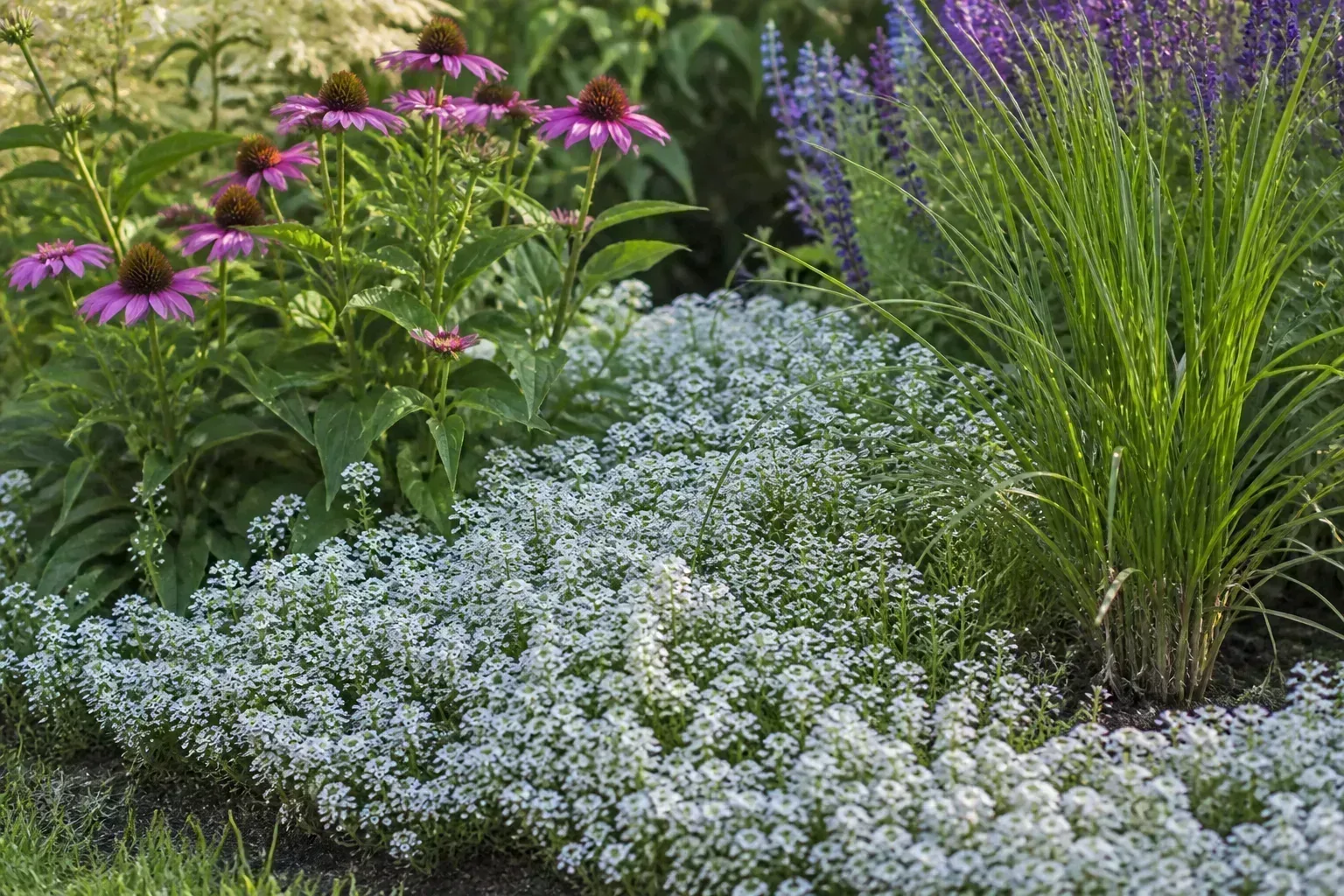
Sow in full sun to part shade in moist, well-drained soil. Alyssum excels as an edging plant, filler between young perennials, or soft ground cover beneath taller fall bloomers. Shear lightly after the first flush to encourage another round before frost. For more quick-color August options, compare our annuals to plant in August list.
How to Plant These Flowers in Late Summer
The planting hole is straightforward. The first three weeks decide success.
Soil Prep, Depth, and the First Three Weeks of Water
Clear weeds and loosen soil across an area about twice the width of the root ball or seed row. Blend in finished compost only if native soil is very poor; in heavy clay, improve drainage across the whole bed rather than creating a soft, water-holding pocket.
For transplants, set the plant at the same depth it grew in the pot. Backfill, water slowly until the root zone is fully wet, and mulch lightly while keeping material away from crowns and stems. For seeds, press lightly into firm, moist soil, keep the surface from crusting, and shade extreme sunny rows briefly if heat is intense.
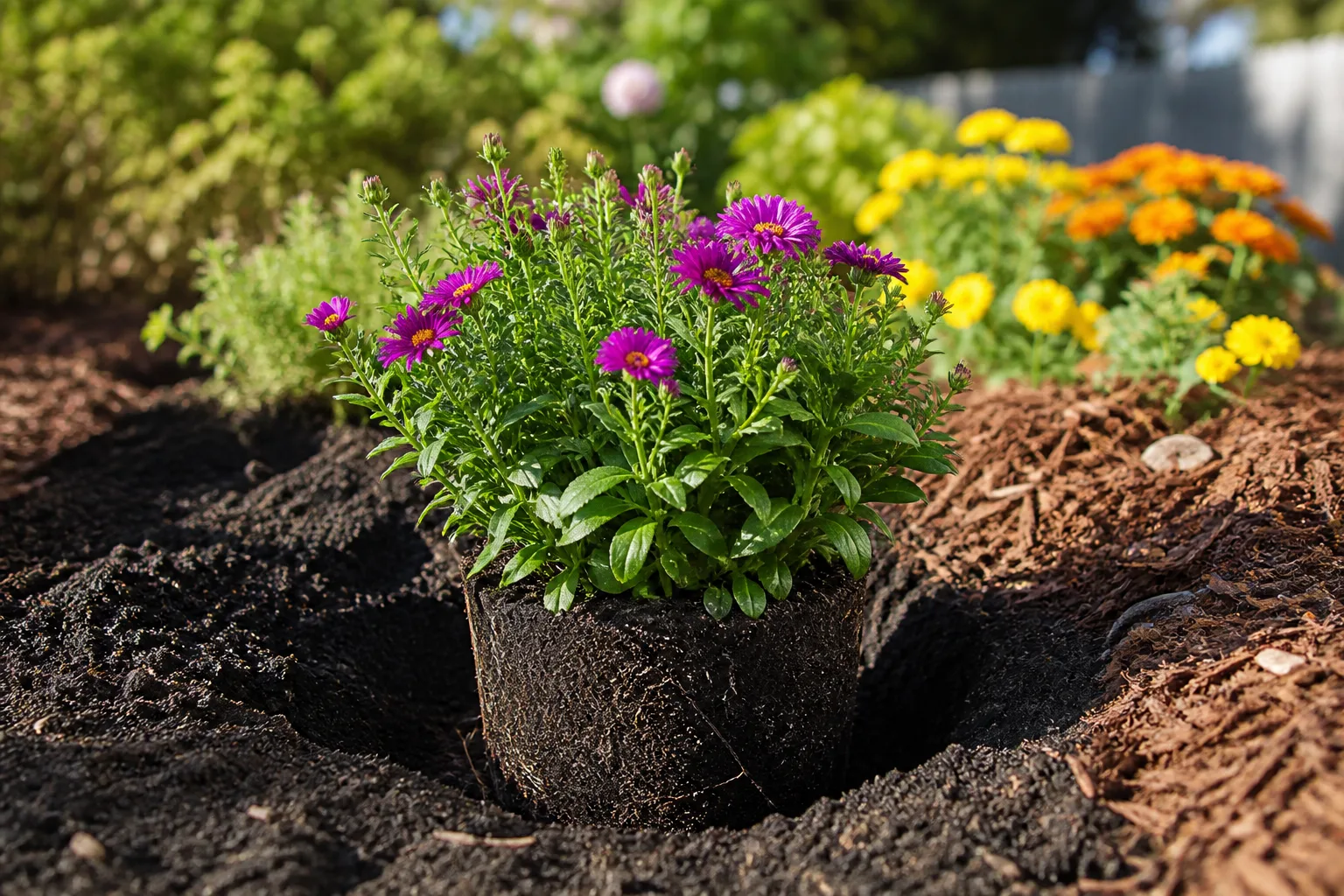
Check soil moisture daily for the first 10 to 14 days rather than watering on autopilot. New black-eyed Susan, aster, and alyssum seedlings need steady moisture; sedum and established blanket flower tolerate brief drying; daylilies need deep watering but not a soggy crown. In active heat, many new plantings need water every two or three days; after nights cool, stretch the interval.
Skip heavy nitrogen fertilizer at planting. Late lush growth is more vulnerable to frost and does not replace missing roots. Save feeding for the normal spring window unless a soil test says otherwise. Before hard freezes, apply 2 to 3 inches of loose mulch over root zones without smothering crowns.
Mistakes That Ruin a Late-Summer Flower Planting
Believing every seed packet will bloom before frost. Germination speed is not the same as time to mature flowers. In short seasons, coneflower from seed and daylily divisions are often next-year plants.
Planting during the worst heat with no recovery plan. If a heat wave arrives, plant in the evening, shade seedlings briefly, and water consistently until nights cool.
Treating sweet alyssum like a guaranteed permanent perennial everywhere. Plan for self-sowing or replanting in cold zones rather than expecting the same plant to overwinter reliably.
Overwatering sedum and blanket flower. These die from wet feet more often than drought once past seedling stage.
Leaving tall asters unsupported. Without prairie grasses or stakes, stems flop and flowers hide in mud after rain.
Buying the prettiest bloomer with the weakest roots. A heavily flowering, rootbound pot may sulk after transplanting. Healthy roots matter more than open flowers in late summer.
Ignoring the frost clock because the article said “plant now.” Now only works if your local calendar still offers enough weeks for the method you chose.
Conclusion
The best late-summer flowers for fall and spring color are not the ones with the brightest nursery tags—they are the ones that match your remaining frost-free weeks, your sun and drainage, and whether you are sowing seed or planting a rooted container. For fast fall impact, combine Autumn Joy sedum, asters, blanket flower, black-eyed Susan, and sweet alyssum. For durable long-term structure, add coneflower and daylilies even if their first reward arrives mainly next year.
Plant healthy stock, water deeply through the first hot weeks, keep fertilizer modest, and mulch before hard freezes. You may get flowers this fall, or you may be buying the root system that makes next spring’s display possible. Both outcomes count as success when the choice fits the site and the clock.



