8 Fruits You Can Grow Indoors (and Actually Harvest)
Grow fruit indoors with honest guidance on eight container-friendly choices, including what needs hand-pollination, a grow light, outdoor summers, or winter dormancy.
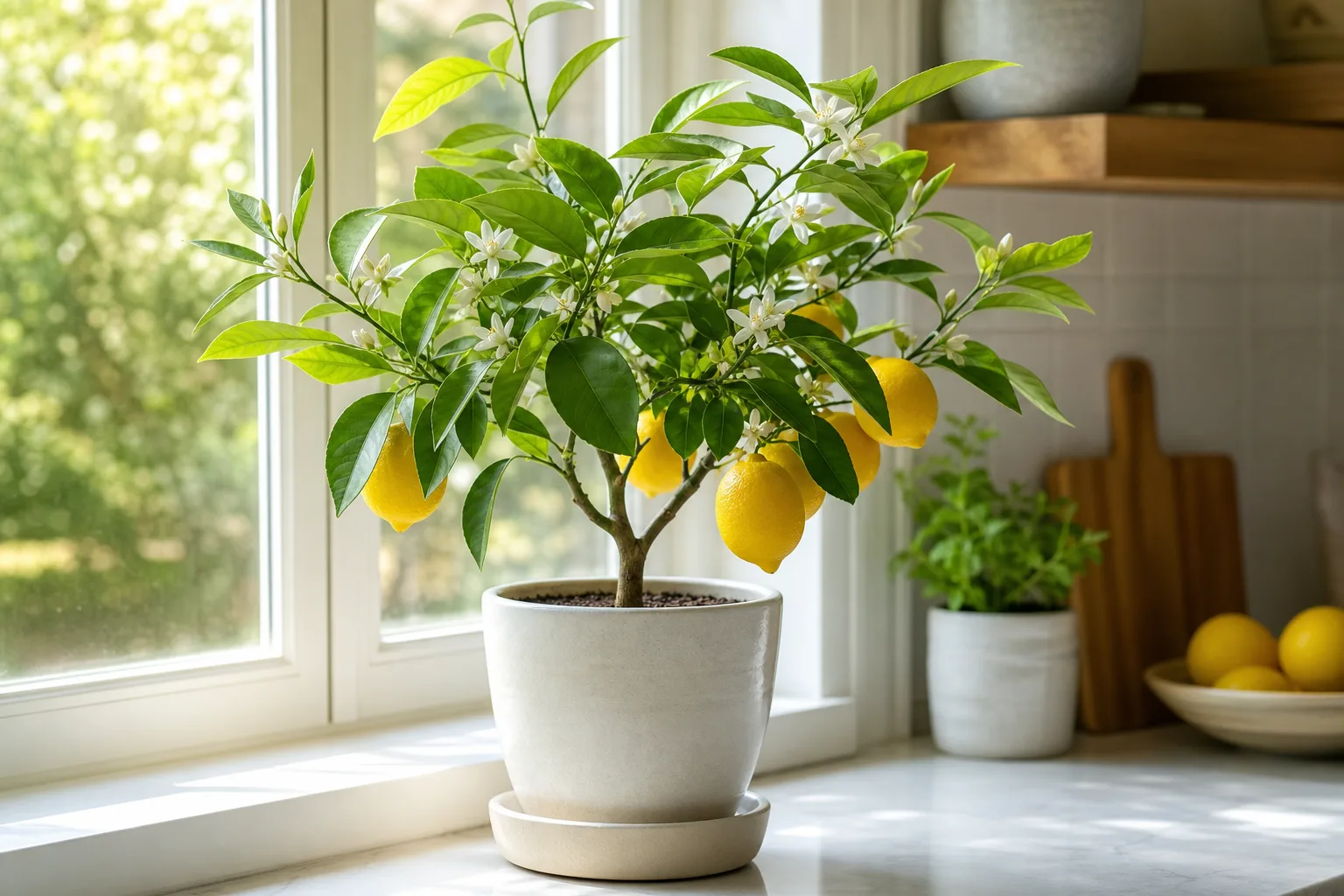
You can grow fruit indoors, but “will survive in a pot” and “will produce an edible harvest” are different promises. A mature dwarf citrus tree may flower beside a window, while the same tree in a dim living room grows leaves and drops every young fruit. The deciding factors are light intensity, plant maturity, root space, pollination, and whether the fruit needs a seasonal rest.
The most dependable indoor choices are Meyer lemon, calamondin, common fig, and day-neutral strawberry. Dwarf banana and pineapple can reward patient growers with enough heat and light, while raspberries and sweet mandarins are better treated as seasonal container crops that may spend part of the year outdoors. That honest distinction will save you months of caring for a plant that was never placed to fruit.
The indoor fruit reality: light matters more than a sunny-looking room
Fruit production uses far more energy than simply keeping foliage green. A bright room can feel sunny to you but still provide too little direct light for flowers, fruit set, and ripening. As a starting rule, give fruiting plants at least six hours of direct sun through a strong window or supplement the window with a grow light; the University of Wisconsin–Madison Extension notes that citrus is unlikely to flower and fruit in low indoor light and may need supplemental light when direct sun is limited. (University of Wisconsin–Madison Extension)
Before buying a tree, watch the proposed spot for a full day. A south- or southwest-facing window is usually the strongest indoor option in the Northern Hemisphere, but glass, curtains, balconies, trees, and seasonal sun angles change the result. If the plant is more than a few feet from the glass, add a timer-controlled grow light and judge success by compact new growth and flowers, not by the fact that the leaves remain green.
The University of Minnesota Extension includes tangerine, lemon, kumquat, and small orange trees among citrus that can be grown as houseplants, but its care guidance still centers on bright light, warm days, and a cooler night. (University of Minnesota Extension: Growing citrus indoors)
Temperature matters too. Citrus generally handles a cooler night than a tropical banana, but none of these plants appreciates a heater blast, an air-conditioning vent, or a rapid move from a dim room into harsh outdoor sun. Keep the pot away from drafts, leave space for airflow, and expect the plant’s needs to change as the day length and indoor humidity change.
Choose a fruit by the harvest you can realistically support
Use this table to match the plant to your setup before you choose a variety. “Indoor fit” means the plant can remain inside for meaningful stretches; it does not mean a small windowsill will produce grocery-store quantities.
| Fruit | Best starting form | Indoor fit | Main catch |
|---|---|---|---|
| Meyer lemon | Grafted dwarf tree | High with strong light | Fruit can take months to ripen; light and pest pressure matter |
| Calamondin or mandarin | Grafted dwarf citrus | High to moderate | Calamondin is easier; sweet mandarins need more warmth |
| Common fig | Named, self-fruitful Ficus carica | Moderate to high | Needs direct light, root restriction, and often a cool rest |
| Day-neutral strawberry | Potted young plant | High for small harvests | Flowers need hand-pollination indoors |
| Dwarf raspberry | Compact primocane cultivar | Moderate | Canes need room, support, airflow, and seasonal cues |
| Makrut lime | Dwarf grafted citrus | High with strong light | Fruit is small; the aromatic leaves are often the main crop |
| Dwarf Cavendish banana | Warm, vigorous container plant | Moderate | It becomes large and may take a year or longer to fruit |
| Pineapple | Crown or established pup | Moderate for patient growers | One fruit can take a long time and needs intense light |
The easiest starting points
If you have one bright window and want the fastest feedback, start with a day-neutral strawberry or a grafted Meyer lemon. The strawberry stays compact and shows quickly whether it has enough light, while the lemon gives you fragrant flowers and evergreen foliage even before it carries fruit. A mature nursery plant is a better starting point than a seedling because the waiting period and variety are more predictable.
The beautiful but demanding choices
Figs, bananas, pineapples, and raspberries can all be rewarding, but they are not interchangeable with a small houseplant. A fig may need a large, stable pot and winter dormancy; a banana needs floor space and warmth; a pineapple asks for patience; and a raspberry needs a cane management plan. Choose one of these because you can support its habit, not because a photograph made it look compact.
1. Meyer lemon
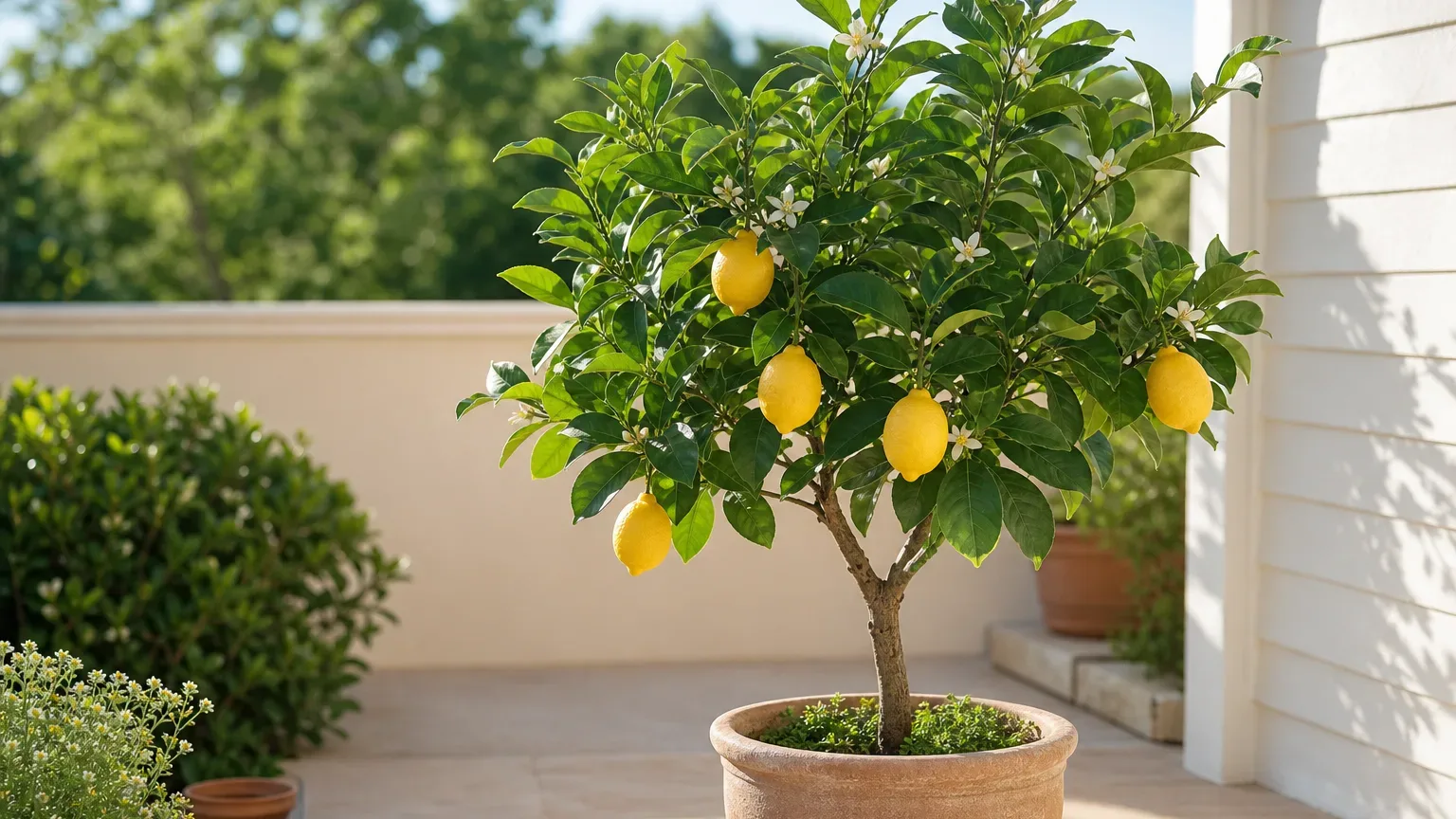
Meyer lemon is one of the best indoor fruit trees because it combines a manageable form, fragrant white flowers, and fruit that is useful in a real kitchen. Choose a grafted dwarf Meyer lemon from a nursery rather than growing a grocery-store seed if your goal is fruit; the grafted plant is selected for a known cultivar and usually reaches fruiting size sooner.
Give it the brightest window you have, or use a grow light when winter sun is weak. Use a fast-draining container mix in a pot with drainage holes, water thoroughly when the upper layer has dried rather than keeping the soil constantly wet, and feed with a citrus fertilizer according to its label during active growth. An oversized pot is not a shortcut to a larger harvest: excess wet mix around a small root system raises the risk of root problems.
“Dwarf” describes the rootstock or growth habit, not a plant that can fruit in a dim room. Gardener’s Path explains that dwarf citrus can be regular fruiting types grafted onto smaller rootstock and therefore more manageable in containers; the practical benefit is reach and pot size, while the light requirement remains real. (Gardener’s Path: How to grow dwarf citrus trees)
Meyer lemons are generally self-fruitful, so you do not need two trees. Still, an indoor flower has no reliable bee to move pollen. When flowers open, gently brush the stamens and the central stigma with a clean, soft paintbrush, repeating on several flowers over a few days. Keep only a realistic number of developing lemons on a small tree; a sudden wave of fruit drop is often the plant correcting a crop it cannot support.
Expect patience. Lemons and limes commonly take several months from bloom to ripe fruit, and a tree can carry flowers, green fruit, and ripe lemons at the same time. Pick when the fruit has reached its mature color and gives slightly to a gentle squeeze, but do not tug hard on a fruit that is still firmly attached.
If you are deciding between citrus types rather than shopping for the first available tree, a long-running indoor-growing comparison from the Walden Effect also favors dwarf Meyer lemon for its tolerance of indoor conditions. Treat that as practical experience rather than a guarantee: your window, cultivar, and starting plant still determine the harvest. (Walden Effect: Best indoor dwarf citrus varieties)
2. Calamondin or dwarf mandarin
Calamondin is the more forgiving indoor choice, while a dwarf mandarin or satsuma is the better pick if you want a sweeter, snack-size citrus and can provide more warmth. Both need bright light and even moisture, but sweet citrus generally needs more heat to ripen than acid citrus such as lemon and lime. The UW–Madison Extension lists mandarins and satsumas among the citrus that can be grown in containers and notes that they need less heat than true oranges. (Indoor Citrus, University of Wisconsin–Madison Extension)
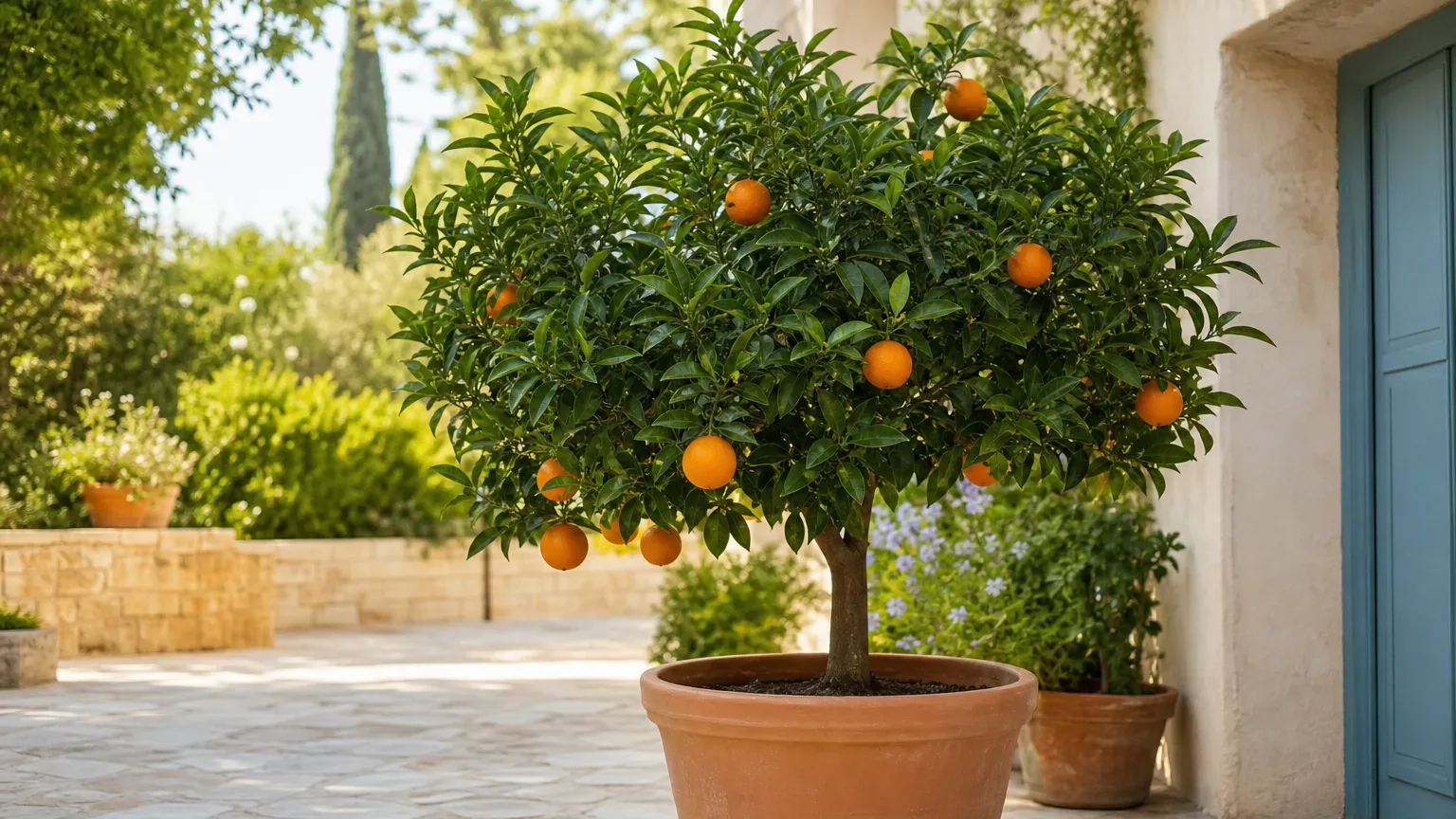
Calamondin’s small, tart oranges are often used like a lime or lemon, and the tree can flower repeatedly under good conditions. A dwarf mandarin needs the same fundamentals but may stall in a cool, dim room. If the leaves are healthy but flowers never form, improve light before adding fertilizer; more nitrogen cannot compensate for missing energy.
Citrus leaves also attract scale, spider mites, aphids, and whiteflies indoors. Inspect leaf undersides and stems whenever you water, wipe dusty leaves with a damp cloth, and isolate a new tree from your other houseplants for a few weeks. A sticky surface, fine webbing, or clusters of bumps is a scouting signal, not a reason to spray a mystery product; identify the pest and follow the product label if treatment is needed.
3. Common fig
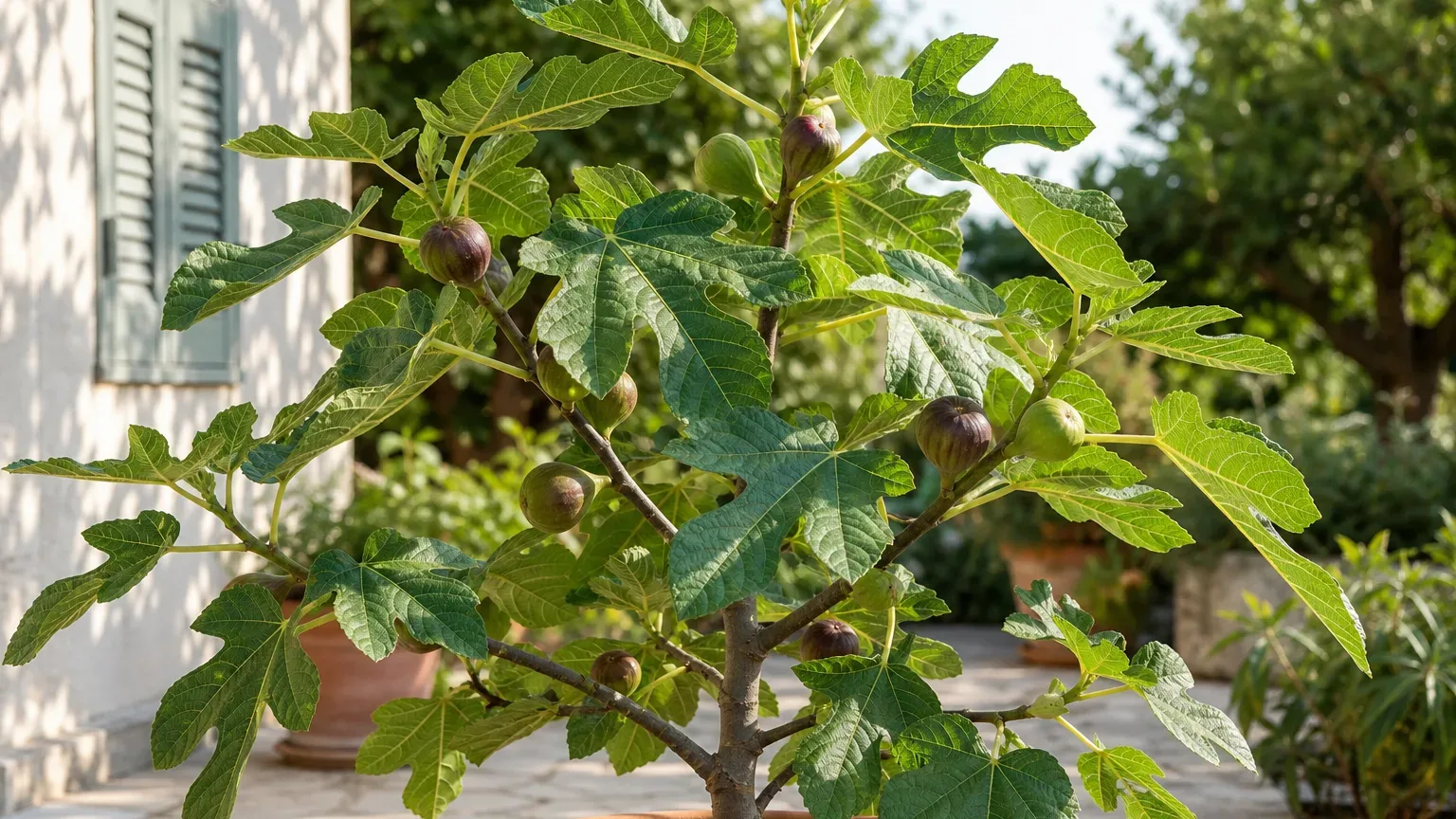
Buy Ficus carica, the common edible fig, not a fiddle-leaf fig. Fiddle-leaf fig is a foliage plant grown for large leaves; it is not the edible-fruit tree you want for an indoor harvest. Common figs are especially interesting in containers because restricting the roots can keep vigorous growth in check and encourage the plant to invest more energy in fruit.
Choose a named, self-fruitful cultivar such as a compact nursery fig, and give it a large, heavy pot with excellent drainage. The Royal Horticultural Society recommends container culture and root restriction for productive figs; its guidance also notes that fruit can develop without fertilization in parthenocarpic figs, so a suitable cultivar is more important than keeping two trees in the room. (Royal Horticultural Society: How to grow figs)
Figs need direct light, not a shady corner, and they respond well to deliberate pruning. Remove weak or crossing shoots, keep the canopy small enough that light reaches the interior, and avoid repeatedly cutting off the tips where a crop may be forming. Water deeply when the mix begins to dry, then let excess drain completely; a fig left sitting in a saucer can lose leaves and roots even while its top growth looks thirsty.
The overlooked requirement is seasonal rhythm. Many figs are more reliable when they receive a cool, bright rest rather than being pushed through a dim, heated winter. If your climate permits, keep the tree outdoors through the warm season and move it to a cool protected space after leaf drop, or follow the cultivar’s dormancy needs. A warm room with weak light is often the worst compromise: it prevents a clean rest while failing to provide enough energy for fruit.
4. Day-neutral strawberry
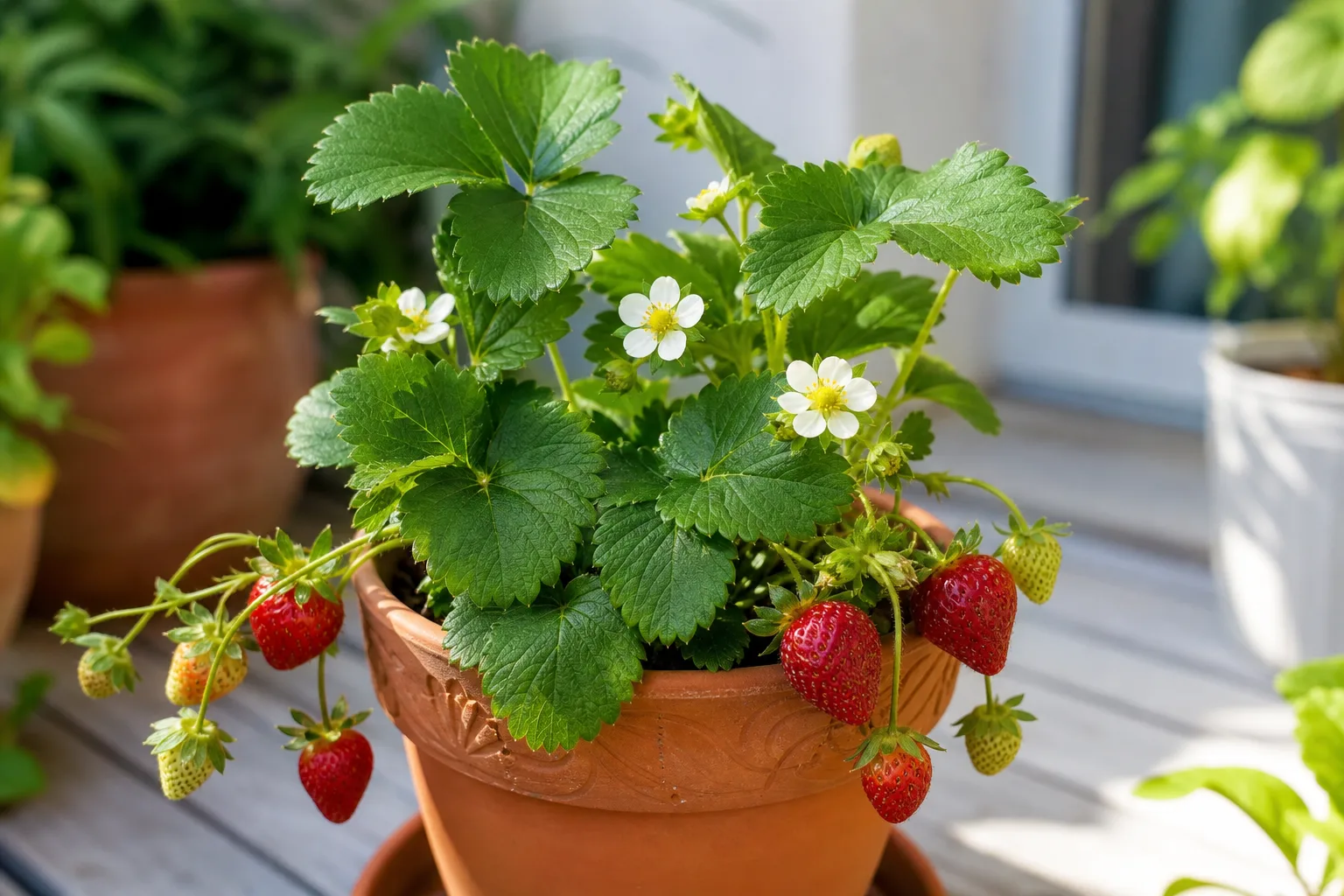
Strawberries are the most approachable fruit on this list for apartments because they do not need a tree-sized root system. Start with a healthy day-neutral or everbearing plant in a container with drainage. The Royal Horticultural Society confirms that strawberries grow well in pots, window boxes, and hanging baskets; indoors, a compact pot near a grow light is easier to manage than a crowded tower planter. (Royal Horticultural Society: How to grow strawberries)
Keep the crown—the short central stem where leaves emerge—level with the surface of the potting mix. Burying it encourages rot; exposing too much of the root ball lets it dry out. Give the plant the strongest light available, water when the mix is lightly dry but not dust-dry, and keep ripe berries from resting against damp soil or the side of a wet pot.
Pollination is the indoor step that gets skipped most often. Each time flowers open, use a small, dry paintbrush to touch the yellow anthers and then brush the center of the flower. Work around the flower rather than scraping it, and repeat on newly opened blooms. Good pollination produces more evenly shaped berries; miss it and the fruit may stay small, lopsided, or fail to swell.
Harvest strawberries when the entire berry is colored and fragrant. Pick with a short piece of stem instead of pulling the fruit, and remove overripe berries promptly because mold spreads quickly in still indoor air. If the plant makes many runners but few flowers, increase light and decide whether you want a larger strawberry patch or a smaller plant putting energy into fruit.
5. Dwarf raspberry
Raspberries are possible indoors, but they are the least apartment-friendly choice here. A raspberry is a cane plant, not a neat little shrub: even compact cultivars need room for new canes, a support, a wide container, and enough airflow to keep foliage from forming a damp thicket.
Choose a compact primocane cultivar from a reputable nursery if you want fruit on new-season canes, and ask whether it requires a winter chill period. Keep the pot in the brightest, coolest workable spot, support canes before they flop, and remove spent or weak growth according to the cultivar’s pruning instructions. A container raspberry that stays warm and dim all winter may produce leaves without giving you a useful crop.
Indoor flowers may still benefit from hand-pollination even when the plant is self-fertile. Tap or brush open flowers lightly, then give the plant enough light to ripen the berries. If you cannot provide outdoor summer sun or a suitable dormant period, choose a strawberry instead; the raspberry’s sweetness is not worth pretending that its space and seasonal needs have disappeared.
6. Makrut lime
Makrut lime, often sold under an older common name, is grown indoors mainly for its intensely aromatic leaves, but it can also produce small, bumpy fruit. It is a good choice when you cook with Southeast Asian ingredients and want a useful kitchen plant rather than a large bowl of limes.
Treat it like other dwarf citrus: direct light, a draining mix, a pot with holes, and steady but not soggy moisture. Keep the plant warm and away from cold glass, and turn the pot a quarter turn every week so new growth does not lean hard toward the window. One small tree can set fruit without a second pollinator, but a soft brush through open flowers improves your odds indoors.
The practical trade-off is scale. A makrut lime is valuable for leaves and fragrance long before it produces a large fruit harvest. If you want abundant juice, a dwarf Bearss or Persian lime may be a better container purchase, but it will demand the same strong light and pest scouting.
7. Dwarf Cavendish banana

Bananas are not trees in the botanical sense; they are large herbaceous plants with a pseudostem. A Dwarf Cavendish is the sensible indoor type because it stays shorter than a full-size banana, but “dwarf” still means a plant that can occupy a sunny corner and eventually reach the height of a person or more.
Give it warmth, strong light, a heavy pot that will not tip, and a mix that drains freely while holding some moisture. Water when the surface begins to dry, but never let the pot stand in water. High humidity helps the leaves look better, yet stagnant, wet air can encourage disease and pests; gentle circulation is more useful than sealing the plant in a humid box.
A banana may take a year or longer to reach flowering size indoors, and the fruiting cycle can be interrupted by low light, cold nights, or a move that damages the leaves. Once a plant fruits, the fruiting pseudostem eventually declines while pups emerge at the base. Keep one strong pup as the next generation and give it a realistic amount of space.
8. Pineapple
Pineapple is a bromeliad with a dramatic rosette, so it is satisfying to grow even before it produces fruit. You can start from a healthy crown or a rooted pup, but a supermarket crown is not a fast harvest plan. It needs intense light, warmth, a gritty, draining mix, and patience measured in many months or longer.
Set the crown or pup at the correct depth so the base is supported but not buried in wet mix. Water the potting mix when it begins to dry and avoid leaving water pooled in a cold room. If the leaves are long, pale, and soft, the plant needs more light; adding fertilizer to a low-light pineapple usually creates weak growth rather than a quicker fruit.
One pineapple plant generally produces one main fruit, then shifts its energy to offsets. When the fruit develops, let it remain on the plant until it has filled out and smells sweet at the base; color alone is not a perfect ripeness test. Choose pineapple if you enjoy the process and have a bright, warm place for a long-term project, not if you need a quick indoor crop.
How to make indoor fruit set happen
Once you choose the plant, manage the crop in this order: light first, root health second, pollination third, and fertilizer last. Growers often reach for feed when flowers fail, but a plant cannot use extra nutrients to replace missing light or oxygen-starved roots.
Light and temperature
Place fruiting plants as close to the brightest safe window as their leaves can tolerate, then add a grow light if the plant stretches, produces small leaves, or flowers only on the window side. Use a timer and keep the light close enough to be useful without heating or scorching the foliage. A room that supports foliage is not automatically a room that supports fruit.
Match temperature to the crop. Citrus can handle a wider range than bananas, and figs or raspberries may need a seasonal rest. Keep a simple note of the plant’s location, watering, flowers, and temperature; that record is more useful than changing three variables at once after a fruit drops.
Pollination and fruit thinning
Indoor pollination is not one universal task. Strawberries benefit from a soft-brush pass across each open flower, while many citrus trees are self-fruitful but still benefit from gently moving pollen indoors. Figs depend on the cultivar: choose an edible type that sets fruit without a specialized pollinating wasp, and do not assume every fig sold as a houseplant is an edible fig.
After fruit sets, thin crowded clusters on small trees. A plant that carries every tiny fruit can produce smaller, poorer-quality harvests or drop them all during a heat, drought, or light setback. Keeping a modest crop is not failure; it is how a container plant finishes fruit instead of spending all its reserves on an impossible load.
Water, potting mix, and feeding
Use containers with real drainage holes and a potting mix suited to the plant. Citrus prefer a fast-draining, slightly acidic mix; strawberries need an airy mix that keeps the crown above the wet surface; figs need a stable, well-drained container; bananas and pineapples need moisture without stagnant roots.
Check moisture below the surface before watering. If the pot is still heavy and the root zone is damp, wait; if the active roots are dry, water slowly until a little drains from the bottom. Empty the saucer instead of letting the pot sit in runoff. Yellow leaves can mean too much water, too little light, or a nutrient issue, so diagnose the pattern rather than treating every yellow leaf as hunger.
Feed only during active growth and follow the fertilizer label. A citrus fertilizer can suit citrus; it is not automatically right for every fruit plant. Overfeeding creates lush, soft foliage, salt buildup, and an even greater mismatch between leaf growth and the light available to support fruit.
Moving fruit plants outdoors without shock
Many container fruit plants grow better outdoors during the warm season, but a sudden move from indoor light to full sun can scorch leaves and trigger flower or fruit drop. Wisconsin Extension recommends acclimating citrus over one to two weeks, beginning in a sheltered, partly shaded place and gradually increasing sun exposure. (Indoor Citrus, University of Wisconsin–Madison Extension)
Use the same sequence for other sun-loving fruit plants: place the pot outside in bright shade for a few days, add gentle morning sun, then increase exposure gradually. Check the forecast, wind, and pot moisture, and inspect the plant for pests before bringing it back indoors. Reverse the process in late season before nights become too cool for the crop; do not wait for a frost warning to make the first move.
Troubleshoot flowers, fruit drop, and stalled growth
Start with the symptom and ask what changed recently. The most common indoor fruit problems are not mysterious diseases; they are mismatches between the plant’s energy demand and its environment.
- Lots of leaves, no flowers: improve direct light first, then check whether the plant is mature enough to fruit and whether the cultivar needs dormancy.
- Flowers open but no fruit swells: hand-pollinate strawberries and indoor flowers, check for heat or drought stress, and make sure the plant is not being moved repeatedly.
- Tiny fruit forms and drops: check low light, underwatering, waterlogged roots, abrupt temperature shifts, and excessive crop load before adding fertilizer.
- Leaves yellow and soil stays wet: improve drainage, empty the saucer, and wait for the root zone to dry appropriately; do not increase feeding.
- New growth is long and pale: the plant needs more light or the light source is too far away.
- Sticky leaves, webbing, or scale-like bumps: isolate the plant and inspect both leaf surfaces and stems before choosing a labeled treatment.
- Fruit tastes bland or never ripens: confirm that the plant has enough light and heat for its species, then check whether it needs a seasonal rest rather than more water.
When a plant has not fruited after a full growing cycle, change one major condition at a time. Move the light closer, adjust the pot’s drainage, or provide the required dormancy, then give the plant enough weeks to respond. Replacing a weak, seed-grown plant with a grafted or named cultivar is sometimes the most practical fix.
Conclusion
The best fruits to grow indoors are not necessarily the most exotic. Choose a grafted Meyer lemon or calamondin if you have a bright window and want an indoor tree, a day-neutral strawberry if you want a compact crop, or a common fig if you can provide direct light and a seasonal rest. Choose a banana, raspberry, or pineapple only when you have the space, patience, and light their growth habits demand.
Set the plant up for fruit before you buy it: measure the light, use a draining container, plan for pollination, and decide where it will spend the warm and cool seasons. With those decisions made early, an indoor fruit garden becomes a manageable growing project instead of a collection of attractive plants that never get past the flower stage.


