8 Herbs That May Help Keep Mosquitoes Away
Learn which 8 herbs may help around a patio, what the evidence actually shows, and how to grow citronella grass, lavender, lemon balm, and more.
If you want fewer mosquitoes around a patio, these eight herbs are worth growing—but not because a few pots create an invisible force field. Their leaves and flowers contain aromatic compounds that can affect mosquito behavior when the oils are released or concentrated, while the live plants themselves mainly give you scent, shade, pollinator value, and a reason to spend more time improving the space.
The honest short answer is that planting herbs alone is not a proven way to protect your skin. The CDC says the effectiveness of many non-EPA-registered natural repellents is unknown, and Penn State Extension notes that many plant-derived oils provide short-lived protection even after extraction. Use these herbs as part of a mosquito plan, not as a replacement for removing breeding water, using screens and airflow, or applying a labeled repellent when bites or mosquito-borne disease are a serious concern.
Do mosquito-repelling herbs actually work?
What the evidence can and cannot show
Mosquitoes respond to volatile chemicals in the air, which is why an aromatic leaf can smell powerful when you rub it between your fingers. But the amount of oil released by an intact pot of lavender or thyme is not the same as the concentration in a tested essential-oil formulation, and wind, heat, humidity, plant size, mosquito species, and the distance between the plant and your chair all change the result.
The strongest evidence for this list concerns extracted oils, not decorative planting. Penn State Extension lists citronella, lavender, lemongrass, thyme, and verbena among plant oils with insect-repellent activity, while also warning that most plant-derived oils last less than two hours. That is useful context: a fragrant plant may be a pleasant patio addition, but it should not be described as a dependable personal barrier.
Catnip offers an especially clear example of why the distinction matters. In a 2024 study in Scientific Reports, researchers tested catnip essential oil containing more than 95 percent nepetalactone against Aedes aegypti in a laboratory olfactometer. A 2-percent oil preparation repelled more than 70 percent of responding mosquitoes for between one and four hours under the study conditions—but that does not mean a catnip plant in a border produces the same concentration beside your arm. (Scientific Reports)
Why a live plant is not the same as a repellent
Think of a live herb as a nearby scent source and garden tool, not a pesticide. A large, healthy clump beside a walkway releases more aroma when leaves move or are brushed than a small pot placed ten feet away, but even a big planting cannot cover every seat, doorway, and damp corner of a yard.
The practical role is still worthwhile. Plant herbs where you sit, walk, or cook; grow them in containers you can move closer to a table; and choose species that will stay healthy in that exact spot. A thriving herb gives off more scent, stays attractive, and earns its space through cooking, flowers, texture, or pollinator value even if mosquito pressure remains.
Choose herbs by the job and your growing conditions
Start with the patio problem rather than the plant name. If you have a hot, bright, fast-draining terrace, choose Mediterranean herbs. If your patio is partly shaded or you tend to water generously, choose moisture-tolerant herbs in containers. If you live where winters freeze, treat warm-climate plants as seasonal or movable rather than pretending they are hardy perennials.
| Herb | Best garden role | Light and moisture fit | Main trade-off |
|---|---|---|---|
| Citronella grass | Warm-climate accent or large patio pot | Full sun; regular moisture; warm winters | Often confused with citronella-scented geranium; tender in cold climates |
| Lavender | Dry, sunny border or pot | Full sun; sharp drainage; let soil dry | Wet soil and high humidity can shorten its life |
| Lemon balm | Scented edible foliage near seating | Sun to part shade; even moisture | Spreads quickly by seed and stems |
| Bee balm | Flowering pollinator planting | Sun to part shade; rich, moist soil | Needs airflow and moisture management |
| Thyme | Path edge, rock garden, or small pot | Full sun; lean, fast-draining soil | Overwatering causes decline |
| Lemon verbena | Portable lemon-scented patio pot | Full sun; regular water; frost protection | Tender and can drop leaves in cold or dry stress |
| Sage | Dry culinary herb border | Full sun; excellent drainage | Does not like wet roots or crowded, damp foliage |
| Catnip | Sunny contained planting | Full sun; well-drained soil | Can spread and may attract neighborhood cats |
Best for a sunny patio
Lavender, thyme, sage, and lemon verbena make the most sense when your goal is a tidy, fragrant planting that can handle bright light. They share a preference for drainage, but lemon verbena needs more regular moisture and winter protection than the other three. Savvy Gardening’s container guidance likewise separates drier herbs such as thyme, oregano, and rosemary from moisture-loving herbs such as mint and lemon balm, and recommends pots with drainage and strong light. (Savvy Gardening)
Use terracotta or another porous container for the dry-site group if your climate is humid or rainy, and do not let a saucer hold water against the roots. The goal is not to stress the plant into making a stronger smell; it is to give it enough sun and airflow to produce healthy foliage.
Best for containers or colder climates
Containers make this list more useful because you can move tender plants indoors, place a pot next to a chair, or isolate aggressive growers. Citronella grass, lemon verbena, and bee balm can all be easier to manage when you control their root space, while lemon balm and catnip are less likely to take over a bed when grown in dedicated pots.
Container culture does not mean a plant can ignore its needs. A pot dries faster in wind and sun, freezes faster in winter, and becomes waterlogged more easily when its drainage hole is blocked. Match the potting mix and watering rhythm to the plant instead of putting all eight in one decorative planter.
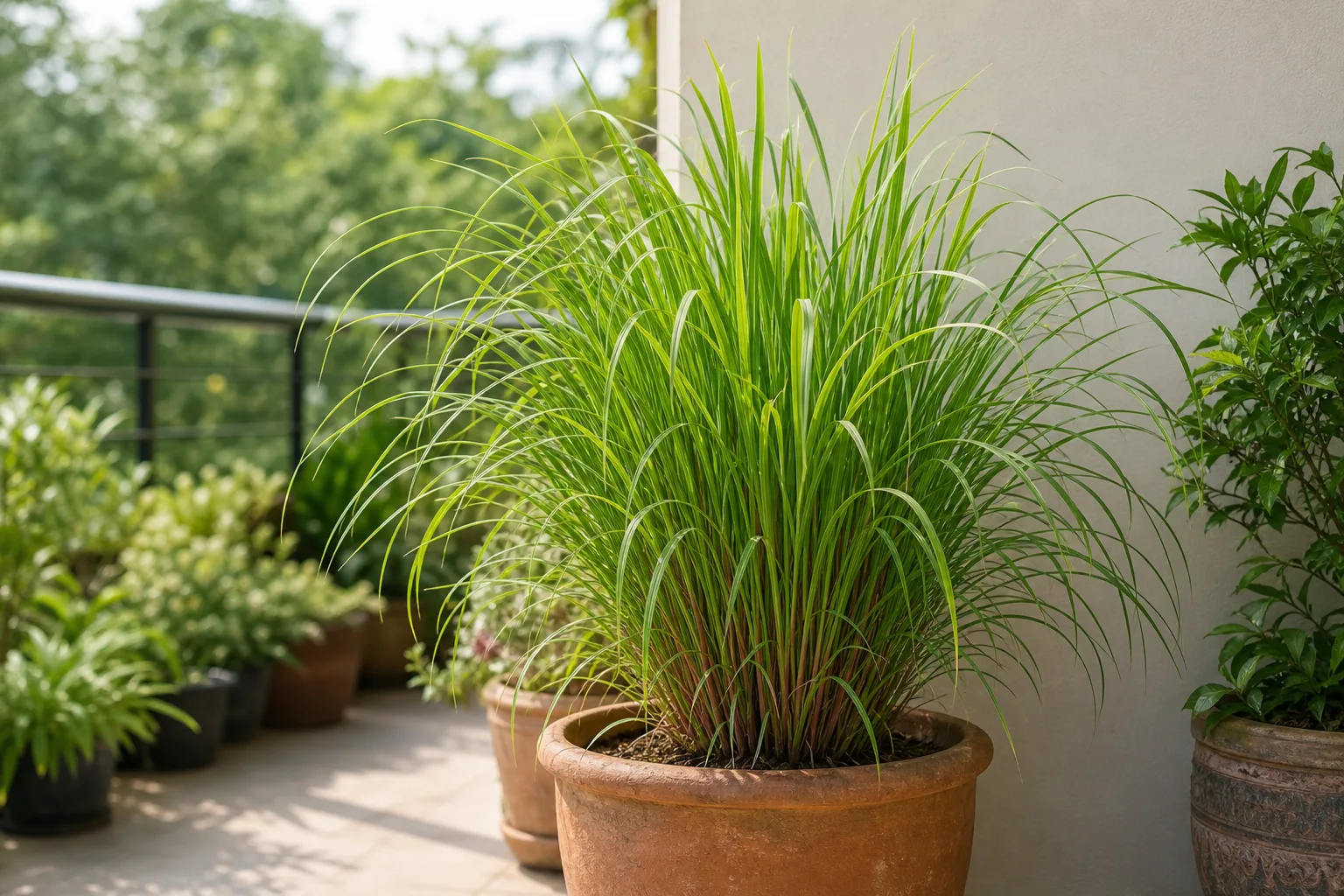
1. Citronella grass: the name to verify
True citronella grass is a tall Cymbopogon relative grown for fragrant oil, not the small, lemon-scented “citronella plant” often sold as a scented geranium. Gardening Know How makes the same distinction and notes that the geranium’s fragrance should not be treated as proof of reliable mosquito protection. (Gardening Know How)
Give citronella grass full sun, warmth, room to clump, and regular moisture without leaving its roots in standing water. In a warm climate it can become a substantial patio or border plant; in a cold climate, grow it as a seasonal container accent and bring it into a bright, frost-free space only if you can provide enough light.
Place it near an outdoor living area because the aroma is otherwise wasted in a distant corner. Do not crush the blades and rub them on your skin as a casual substitute for repellent: plant identity, oil concentration, and individual skin sensitivity are too variable for that to be a dependable or automatically safe practice.
2. Lavender: fragrant, sun-loving, and easy to site
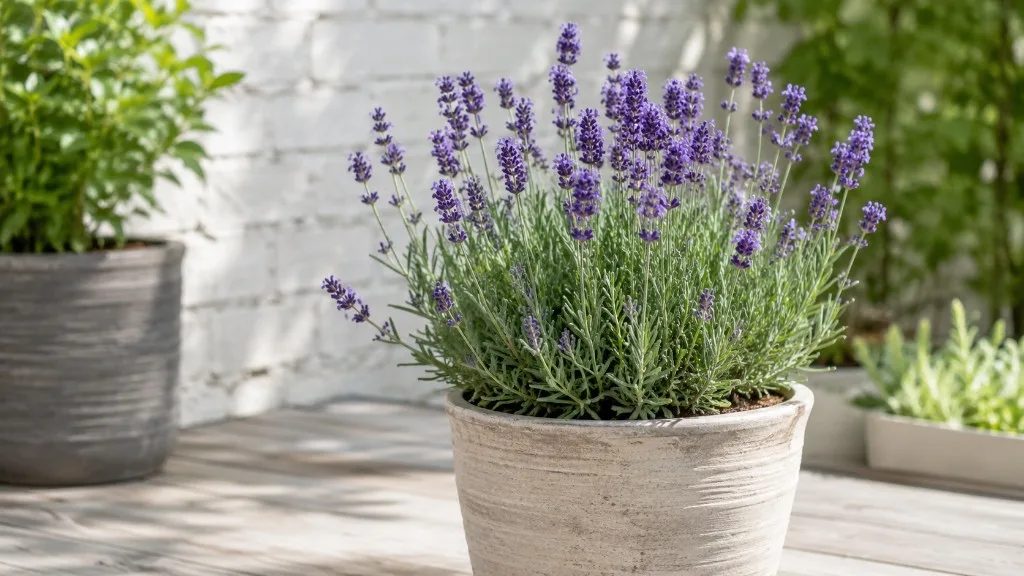
Lavender earns its place even when mosquito control is not the outcome. Its flowers support pollinators, its gray foliage looks good beside stone and timber, and its scent is strongest where people brush past it—exactly the kind of location that works for a patio border or container grouping.
Grow it in full sun and sharply draining soil. Water deeply while it establishes, then let the root zone dry between waterings; frequent shallow watering and heavy, wet soil are more likely to produce a struggling plant than a stronger aroma. A pot with a drainage hole is safer than a cachepot that traps water.
The useful expectation is modest: lavender can make a seating area more pleasant and may add local scent pressure, but a row of plants is not equivalent to lavender oil on skin. If your goal is dependable bite prevention, keep a properly labeled repellent available even when the lavender is flowering.
3. Lemon balm: useful but aggressive
Lemon balm, Melissa officinalis, is a lemon-scented mint relative that tolerates more moisture and a little more shade than lavender or thyme. It is one of the easiest choices for a beginner who wants leaves to harvest for tea or drinks, and the foliage releases more aroma when brushed or cut.
Its main problem is not growing; it is containing. Lemon balm can spread by seed and stems, so a large pot near the patio is usually a better choice than planting it loose in a small bed. Remove flower heads before they shed seed if you want to keep the clump tidy, and do not bury a pot with drainage holes unless you are comfortable with roots escaping through them.
Use lemon balm near a path or chair where you will actually touch the foliage, not as a distant perimeter claim. Because it prefers more even moisture, place it separately from lavender, thyme, and sage rather than forcing all four into one pot with one watering schedule.
4. Bee balm: a pollinator plant with aromatic foliage
Bee balm, or Monarda, is the most flower-forward choice here. Its tubular blooms bring hummingbirds and other pollinators, while its leaves have a strong, herbaceous fragrance when crushed. That makes it valuable as a habitat plant and a sensory addition even if its mosquito effect is not as predictable as a tested repellent.
Give bee balm sun to light shade, rich soil, and consistent moisture. It appreciates air movement because dense, damp foliage is more prone to powdery mildew; spacing plants and watering the soil instead of repeatedly wetting the leaves is a better routine than trying to keep the bed constantly misted.
Plant it beside a patio only if you can provide enough room for a clump and enough airflow for healthy leaves. It is a poor choice for a hot, reflected-heat strip that dries out every afternoon, but a good choice for a moist border where you want color and pollinator activity.
5. Thyme: compact and practical around paths
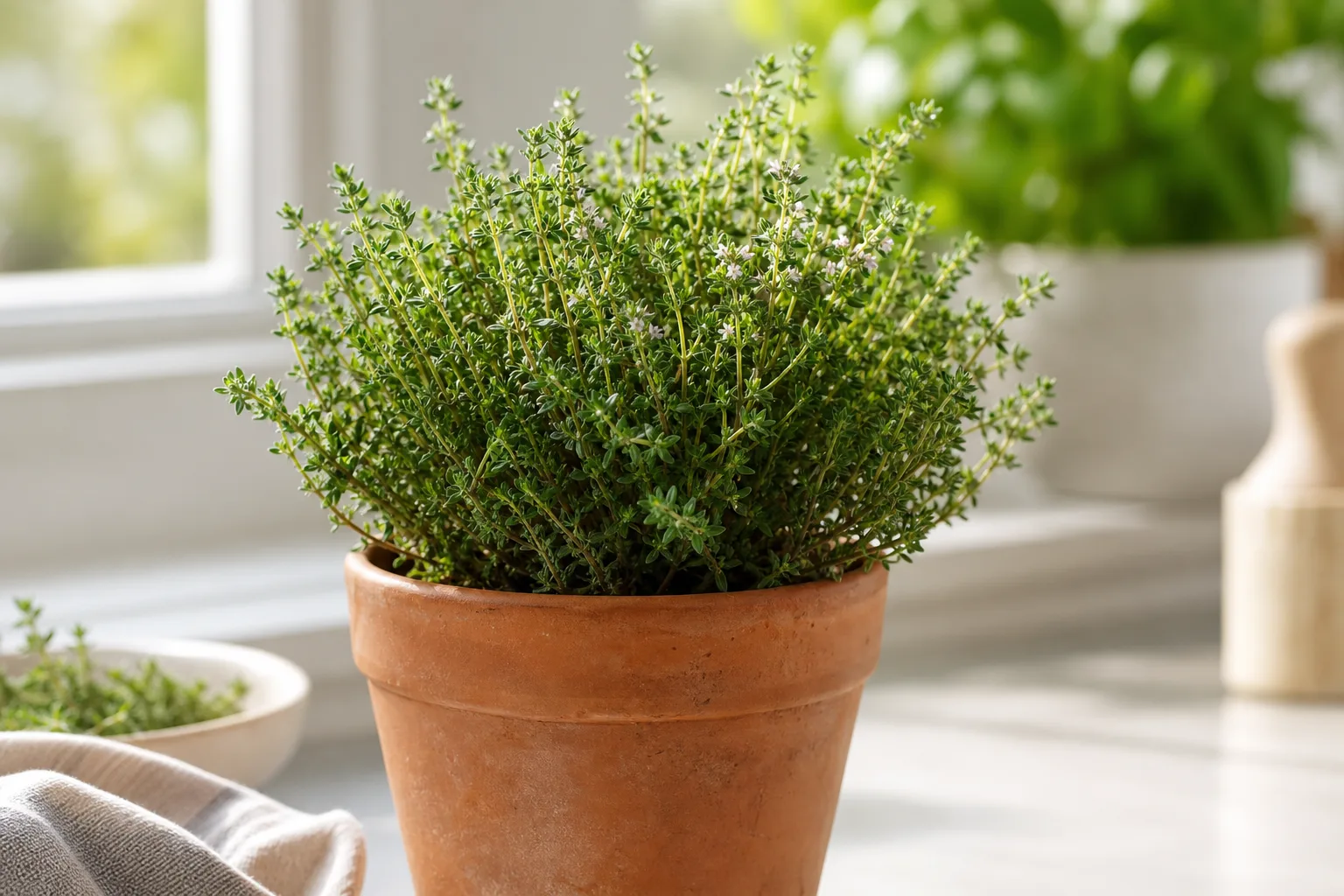
Thyme is one of the most useful herbs on this list for small spaces. Common thyme works in a pot, between stepping stones, along a sunny path, or at the edge of a raised bed. Its tiny leaves are easy to brush against, and many cultivars stay compact enough for a table-side container without creating a visual wall.
Grow thyme in full sun, a gritty or fast-draining mix, and a pot that never stays saturated. It is more forgiving of a missed watering than of a heavy mix that remains wet for days. Penn State Extension includes thyme among plant oils that have shown repellent activity, but its overview also places most plant-derived oils in the short-duration category; that is a reason to enjoy thyme close by, not a reason to skip a labeled repellent. (Penn State Extension)
Use thyme as a low border around the route people actually take to the patio. Its culinary value also helps justify the space: even when the mosquitoes ignore it, you still have a hardy herb for roasting vegetables, beans, and bread.
6. Lemon verbena: a tender lemon-scented herb
Lemon verbena, Aloysia citrodora, is prized for intensely lemony leaves and a graceful, shrub-like shape. It is a good candidate for a large pot beside an outdoor dining area because the container lets you move it into shelter before frost and keeps the plant close enough to appreciate.
Give it full sun, fertile but well-drained soil, and regular water while it is actively growing. Do not leave the pot in a saucer of rainwater, and do not assume that a plant that smells strongly lemony has the same chemistry as citronella grass. Similar fragrance is not proof of identical repellent performance.
Prune lightly to keep the plant branching and harvest leaves for drinks or desserts. If the plant drops leaves after a move indoors, check light, temperature, and watering before assuming the herb is dead; tender woody herbs often pause when conditions change.
7. Sage: a dry-site culinary herb
Garden sage, Salvia officinalis, is a strong choice for a sunny, low-water herb bed. Its gray-green leaves hold a resinous aroma, and the plant can form a neat perennial mound where the soil drains quickly. It also gives you a reliable cooking herb rather than a single-purpose mosquito claim.
Plant sage in full sun with excellent drainage and enough room for air to move through the foliage. Water during establishment and extended drought, but avoid treating it like basil or lemon balm. A crowded sage plant in damp soil is less likely to stay healthy than one in a leaner, open position.
You may see advice to burn dried sage or thyme outdoors for smoke. Smoke can be irritating, wind changes where it travels, and an open flame near dry mulch or fabric creates a fire risk; do not turn a culinary herb into an improvised fumigation method. Use the plant for its foliage and flavor, and use a tested product when you need measured protection.
8. Catnip: promising essential-oil evidence, pet trade-off
Catnip, Nepeta cataria, is the evidence-rich outlier on this list. Its oil contains nepetalactone, a compound studied for repellence, and the 2024 Scientific Reports experiment found measurable effects against Aedes aegypti at low oil concentrations in a controlled setup. The finding is promising for formulation research, not permission to assume that a catnip pot or crushed leaf offers laboratory-level protection.
Grow catnip in full sun and well-drained soil, preferably in a container if you do not want seedlings spreading through a border. The plant can attract cats, who may flatten, chew, or roll on it; that may be a feature for a cat garden and a nuisance beside outdoor dining. Use a sturdy pot and place it where visiting animals will not turn a narrow walkway into a wrestling mat.
Do not make a homemade catnip skin product by copying the study’s percentage. The researchers used distilled oil, measured concentrations, a prepared lotion, and a specific mosquito species; fresh leaves, infused water, and essential oil are different materials with different exposure and safety questions.
How to arrange the herbs around a patio
Put the plants where their benefits can be felt and maintained. A tidy arrangement is usually more useful than a large bed at the far edge of the property:
- At the seating edge: lavender, thyme, sage, or lemon verbena in pots or a raised border where people brush past the foliage.
- At a sunny path: thyme as a low edging, with lavender behind it for height and flowers.
- In a warm-climate container: citronella grass in a large pot with enough room for its mature clump.
- In a moist border: bee balm or lemon balm, spaced for airflow and kept away from dry-site herbs.
- Near the kitchen door: the herbs you will harvest, because regular use makes it easier to notice watering, pests, and declining plants.
Group plants with similar watering needs, leave air gaps between mature clumps, and keep saucers empty after rain. Gardens Illustrated’s herb-border guidance makes the same broad design point: a small planting can combine useful, strongly scented herbs when the plants share compatible conditions and the bed drains well. (Gardens Illustrated)
Avoid calling a bed a mosquito barrier unless you have measured a real reduction in bites under your conditions. A more honest goal is a comfortable herb zone: attractive plants within arm’s reach, no standing water nearby, enough airflow to make landing harder, and a proven repellent available when the evening turns intense.
What to do when mosquitoes are still biting
Start with the habitat, not a new plant. The CDC recommends emptying and scrubbing, turning over, covering, or discarding water-holding items at least weekly, including flowerpot saucers, buckets, toys, birdbaths, and other containers. Penn State Extension also emphasizes that mosquitoes can complete development in small warm-water sites in under a week, so a beautiful herb border cannot compensate for a forgotten saucer or clogged gutter. (CDC)
Next, make the seating area physically harder for mosquitoes to use. Repair window and door screens, use a fan to create moving air across the patio, wear loose long sleeves and pants when practical, and shift seating away from dense, damp vegetation. These actions address the insects you are actually encountering rather than waiting for a plant to release enough oil at the right moment.
When bite prevention matters, choose an EPA-registered product and follow its label. The CDC lists DEET, picaridin, IR3535, oil of lemon eucalyptus or PMD, and 2-undecanone among active ingredients used in registered repellents; “plant-derived” does not automatically mean tested, safe for every age, or effective for the length of time you need.
Safety: skin, pets, smoke, and essential oils
Avoid treating raw crushed leaves as a tested skin repellent. Plant sap and essential oils can irritate skin, trigger allergy, or cause problems if they reach eyes or are swallowed, and a home infusion does not provide the concentration, directions, or evaluation that an EPA-registered product does.
Never apply undiluted essential oil to skin, add essential oil to a child’s product, or use an unlabeled homemade spray around food, pets, or children. If you want a botanical repellent, look for a registered product with an active ingredient and directions that match your age group, activity, and destination; Penn State Extension advises checking the EPA registration number and reading the label before use.
Keep concentrated oils, dried bundles, and raw plant material away from pets and grazing animals. Catnip may attract cats, and any herb can become a choking or stomach-upset risk when an animal eats a large amount; ask a veterinarian or poison-control service about a specific exposure rather than assuming that “natural” equals harmless.
Finally, do not burn sage, thyme, or other dried herbs as a shortcut to mosquito control. Smoke can irritate lungs, wind can carry it toward neighbors or indoor air, and embers can ignite dry material. A healthy planting, water control, airflow, screens, clothing, and a labeled repellent are a safer layered plan.
Conclusion
The eight herbs on this list—citronella grass, lavender, lemon balm, bee balm, thyme, lemon verbena, sage, and catnip—are worthwhile for a patio when you choose them for the conditions you can actually provide. They bring fragrance, flowers, culinary harvests, and container flexibility, and some of their extracted oils have shown mosquito-repellent activity under controlled conditions.
The most important distinction is between a live plant and a tested repellent formulation. Put the herbs near the places you use, remove standing water every week, add airflow and screens, and keep a properly labeled repellent on hand when protection matters. That approach lets the garden improve the evening without asking one pot of lavender—or any other herb—to do a job the evidence does not support.



