How to Revive Petunias and Get Them Blooming Again
Revive wilting, leggy, or flowerless petunias by checking soil moisture, drainage, light, pruning, feeding, pests, and disease in the right order.
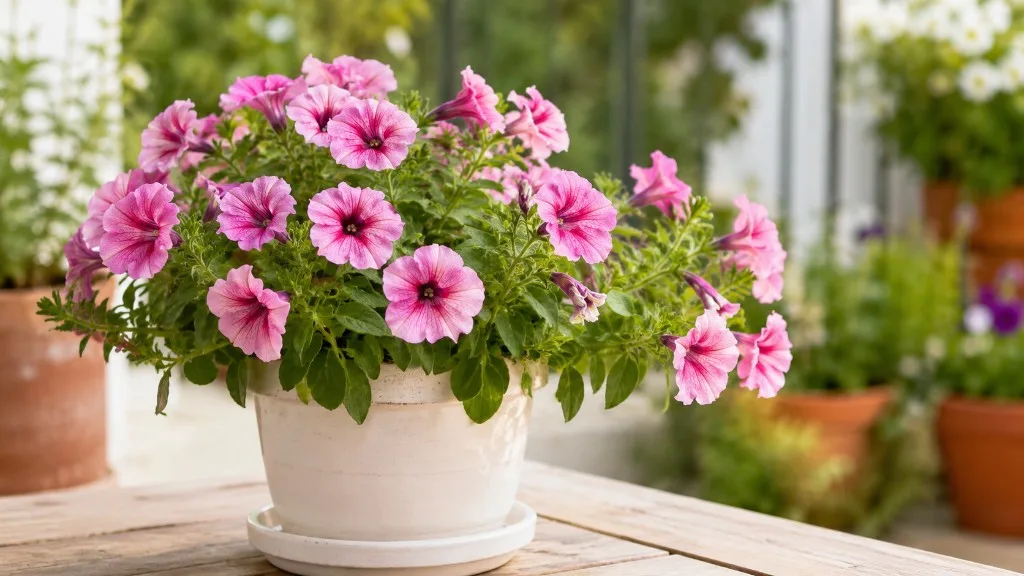
Petunias often look “dead” before they are dead. A hanging basket can wilt because the potting mix has dried into a water-repellent block, while a bed plant with the same limp leaves may be sitting in saturated soil. Yellow leaves, bare stems, chewed foliage, and brown flowers point to different problems, so the safest rescue starts with diagnosis rather than another drink or a handful of fertilizer.
The short version is this: check the root-zone moisture, confirm that water can drain, remove tissue that is truly dead, then correct light, feeding, pests, or disease one variable at a time. Garden petunias (Petunia x hybrida) are tender perennials in warm climates but are commonly grown as annuals; whether a plant can rebound also depends on how much warm growing season remains. NC State Extension lists full sun to partial shade, light well-drained soil, deadheading, and pinching leggy growth among the basics that support performance.
Start with a 60-second petunia triage
Before pruning or fertilizing, lift a container and check the soil about 2 inches below the surface. In a garden bed, push a finger or trowel into the root zone rather than judging moisture by the top crust. Then look at the stems: green and flexible stems suggest the plant still has living tissue, while brown, hollow, collapsing, or foul-smelling growth is a much worse sign.
Read the wilt and the soil together
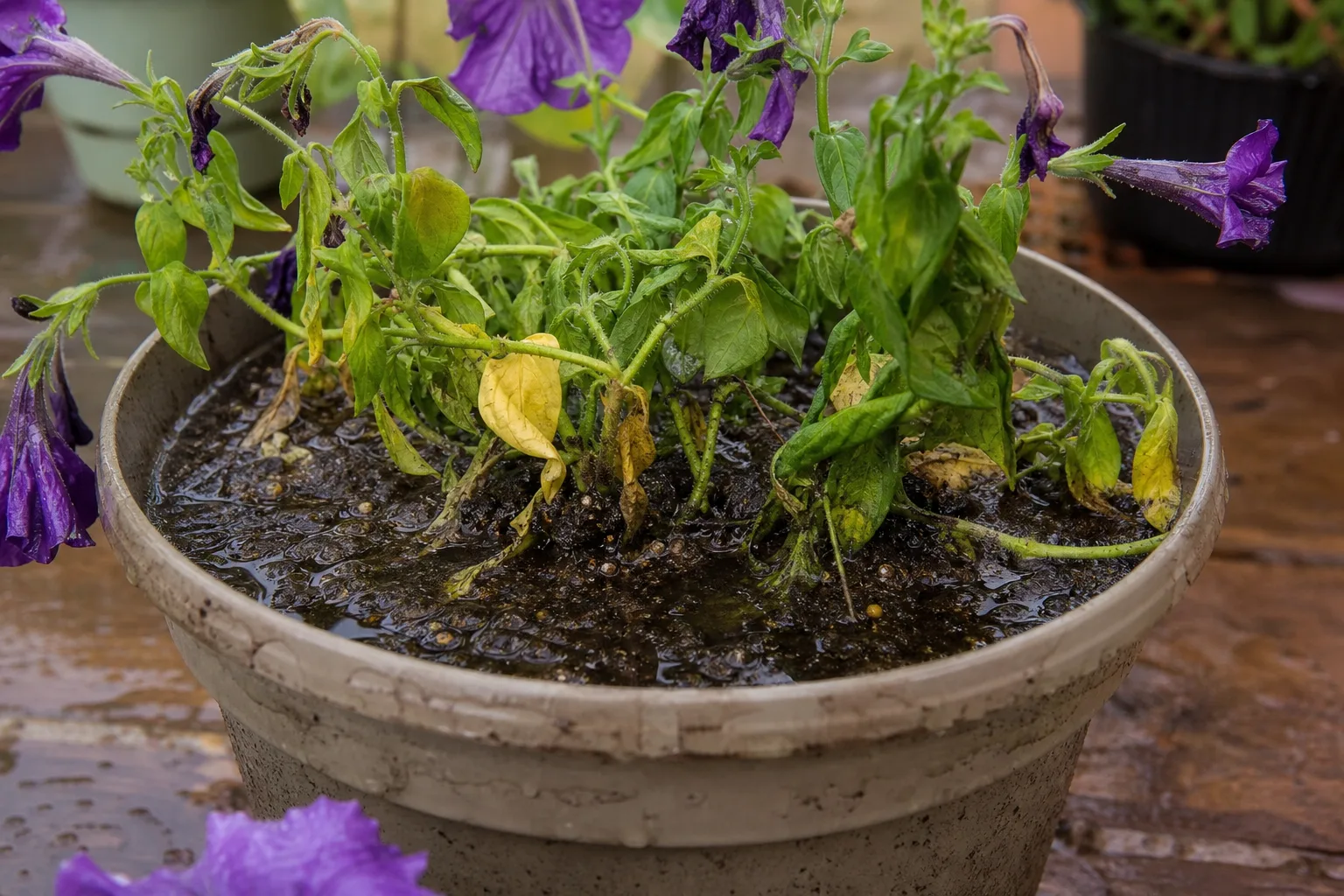
Dry soil with crisp leaves, thin stems, and flowers that collapse in the afternoon usually calls for a slow, thorough rehydration. Wet, heavy soil with yellowing lower leaves, persistent wilt, or a sour smell calls for more water to stop—not more water to add. Wilt by itself is not a diagnosis; damaged roots cannot move water properly even when the pot is wet.
If the plant perks up in the evening but looks limp again each hot afternoon, check how quickly the container dries and whether wind is stripping moisture from the foliage. If it stays limp overnight and the soil is wet, move root damage or disease higher on your list. The University of Minnesota Extension’s petunia diagnostic guide treats wilt, yellowing, brown tissue, and root symptoms as separate clues rather than one generic “needs water” signal. University of Minnesota Extension
Make one small record before you intervene: note whether the pot is light or heavy, where it sits, and whether the damage is old or appearing on new growth. This prevents a common rescue mistake—moving a plant, soaking it, pruning it, and feeding it on the same afternoon, then having no way to tell which change helped or hurt. A photo today and another in a week can reveal new growth more clearly than memory can.
Separate “not blooming” from “dying”
A petunia with green leaves and long bare stems may be alive but out of balance. Low light, crowded roots, depleted container nutrients, inconsistent moisture, and a heavy flush of old stems can produce plenty of foliage with few flowers. A plant that is merely leggy can often be reset; a plant with widespread mushy stems, black roots, or a rapidly spreading discoloration may not.
Check the growing tip before making a hard decision. Small green leaves or firm buds mean the plant has something to rebuild from. If every growing point is brown and the base is soft, spend your time checking one stem and the roots rather than repeatedly watering the whole pot.
Restore water to the roots without drowning them
Watering is a delivery problem, not just a quantity problem. The aim is to moisten the whole root ball when it is genuinely dry, then let excess water leave the container. A calendar such as “every day” or “once a week” cannot account for pot size, sun, wind, soil, plant size, or a sudden heat wave.
Rewet a dry, water-repellent container
When potting mix dries too far, water can run down the sides of a basket or through cracks while the center of the root ball stays dry. This is especially common in hanging containers and in mixes that have shrunk away from the pot wall. You may see drainage water immediately and still have a thirsty plant.
Water slowly over the surface, pause, and repeat until the mix begins to absorb rather than channel. For a small container, set the pot in a shallow basin of water for 20 to 30 minutes, then let it drain completely; the goal is to rehydrate the mix, not leave the roots submerged. Flower Patch Farmhouse describes this bottom-soak approach after finding a crowded basket whose hard mix was not absorbing ordinary watering evenly. Flower Patch Farmhouse
Do not fertilize a bone-dry plant during this first drink. Concentrated salts on dry roots can add stress, and fertilizer cannot repair a root ball that water is bypassing. Once the plant is rehydrated and the mix has begun to dry normally, resume the product’s label directions.
When the root ball is evenly moist, water should eventually exit the drainage hole rather than collect at the soil surface. Let the container drain fully before returning it to a saucer, and do not plug the hole with a shard or tightly packed material. In a bed, water slowly enough to soak the root zone instead of creating runoff that disappears down a crack in dry soil.
Reset a soggy pot and inspect for root damage
If the mix remains wet for days, the container lacks a drainage hole, or the petunia is yellowing while it wilts, stop watering and inspect the setup. Empty any saucer or cachepot, move the plant out of rain if possible, and make sure the drainage opening is not blocked by compacted soil or roots. Do not add a gravel layer inside the pot as a substitute for a drainage hole; it reduces the depth of usable soil without solving perched water.
Unpot only when the wetness persists or the plant is declining despite a corrected watering routine. Healthy roots are firm and pale tan to white; rotted roots are brown or black, soft, and sometimes foul-smelling. Trim only tissue that is clearly dead with clean shears, repot into fresh, airy mix in a clean container, and water lightly enough to settle the mix. A petunia with very little living root tissue is unlikely to justify repeated rescue attempts.
NC State Extension lists root rot, stem rot, and other disease problems among the issues associated with garden petunias, while Minnesota Extension describes black root rot as a cause of yellowing, wilt, stunting, and dark root lesions. NC State Extension University of Minnesota Extension
Give recovering petunias the right light and airflow
Petunias flower best with strong light, but “more sun” is not a cure for roots that are already failing. Move a container gradually if it has been in shade; a sudden jump from dim conditions to intense afternoon sun can add heat and leaf scorch to an already stressed plant. In most situations, aim for at least six hours of direct light, with morning sun or filtered afternoon light useful in very hot climates.
The plant’s shape tells you whether light is part of the problem. Long gaps between leaves, flowers only at the stem tips, and a floppy center suggest insufficient light or overdue pinching. Crisp brown edges after a heat wave suggest the water demand exceeded the root system’s supply, not that the plant needs to sit in even harsher sun.
During a heat wave, a container can benefit from morning sun and protection from reflected afternoon heat on concrete, metal, or a south-facing wall. That is different from putting the plant in deep shade for the rest of the season. Keep the plant bright, improve airflow, and check moisture more often while the extreme weather lasts; the temporary shelter is meant to reduce demand while the roots recover.
Airflow matters when foliage and flowers stay wet. Give baskets room from walls and dense neighboring plants, water the soil rather than repeatedly wetting the flowers, and remove fallen petals from the canopy. Minnesota Extension notes that gray mold can cause brown spots, wilt, premature flower drop, and gray fuzzy growth during cool, wet conditions. University of Minnesota Extension
Remove spent flowers and leggy growth
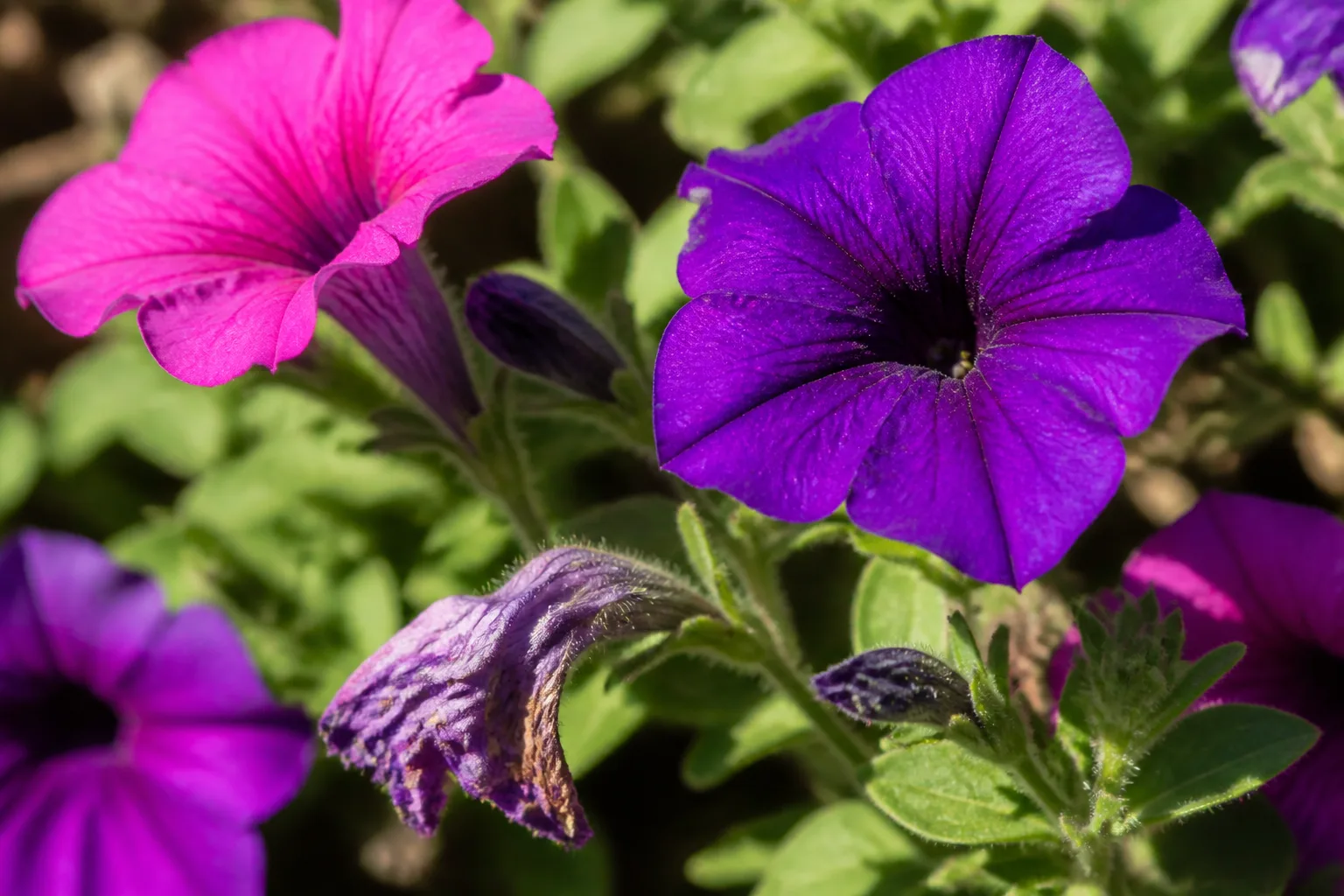
Deadheading improves the appearance immediately and prevents the plant from spending energy on developing seed. Pinch or snip the spent flower and the small developing seedpod behind it, following the flower stem back to the first healthy leaf junction. Do not confuse an unopened bud with a faded bloom; removing buds is one way to reduce flowers while trying to increase them.
Deadhead lightly or prune for a reset
Deadheading is a maintenance trim. Pruning is a structural reset for stems that have become long, bare, tangled, or flowerless. If only a few stems are leggy, shorten those stems just above a healthy leaf node and leave the strongest flowering growth in place. This preserves some color while new side shoots develop.
When most of the plant is thin and tired, cut back roughly one-third of the longest stems rather than shearing everything at once. For an extremely overgrown container with green at the base, a harder cutback can be reasonable, but it temporarily removes flowers and exposes the plant to more sun and drying. Water the root zone, keep the plant in bright light, and wait for new shoots before trimming again.
The plant should not be pruned as a substitute for fixing wet soil, drought, pests, or disease. Remove dead or diseased tissue first, but keep any firm green stem that can still support recovery. Clean shears between plants, especially when you are cutting tissue that may have been exposed to a fungal or bacterial problem.
Feed only after the root zone is stable
Petunias in containers can use nutrients quickly because they have a limited volume of mix and are watered often. That does not mean a yellow or wilted plant needs a strong dose immediately. A damaged root system cannot use fertilizer efficiently, and excess salts can burn the remaining roots.
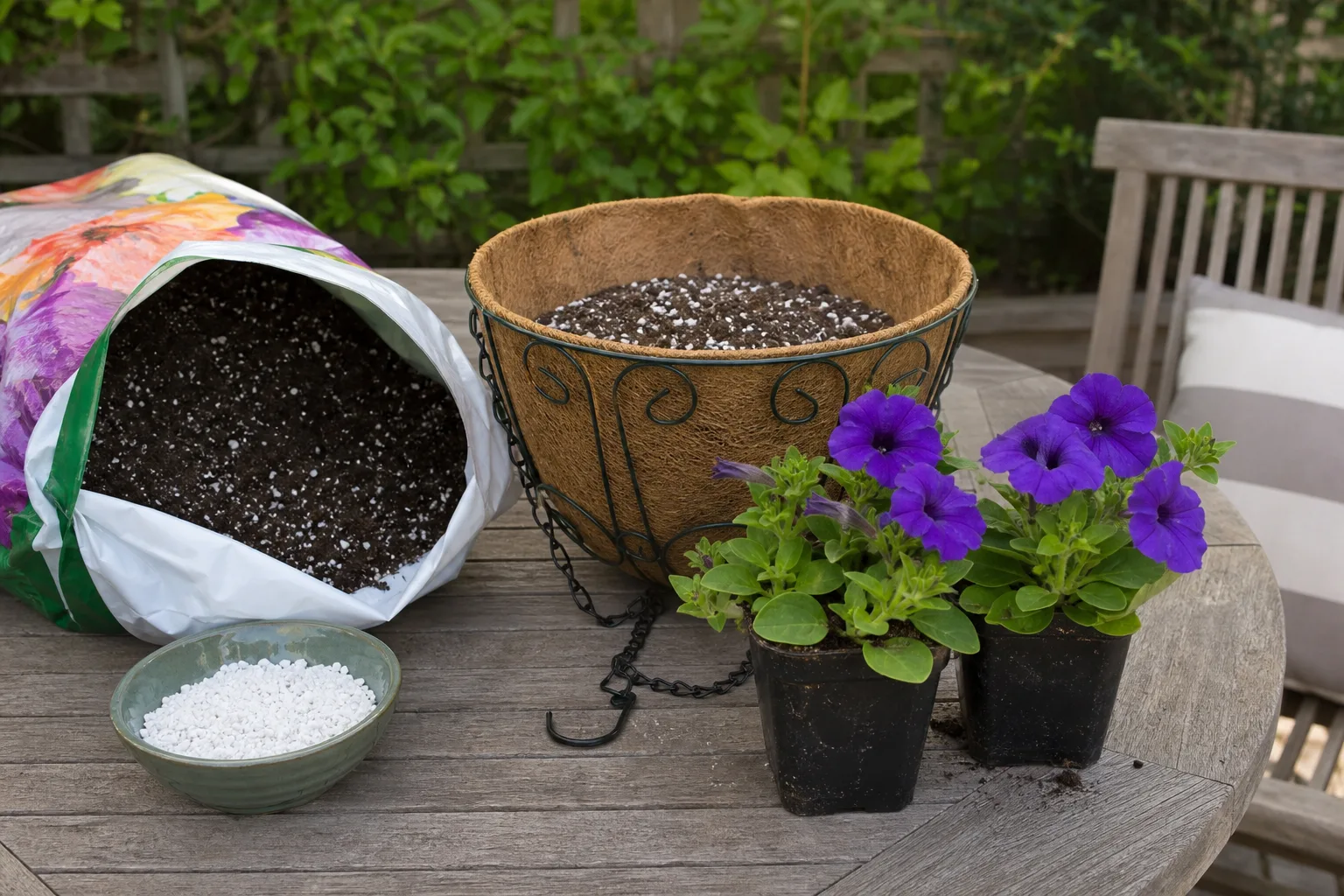
After the plant has been rehydrated or the drainage problem has been corrected, use a complete flowering-plant fertilizer according to its label. Slow-release granules can provide a steady supply in a container; a dilute liquid feed can be useful during active growth when the product label supports regular applications. Choose one routine, not several overlapping products, and never exceed the label rate because the plant looks hungry.
Look at the pattern before you feed. Uniform pale new growth, weak stems, and a long period without fresh potting mix can support a nutrition problem. Sudden yellowing after repeated watering points more strongly to wet roots, while green leaves with no flowers point first to light, pruning, temperature, or variety. Fertilizer is a supporting correction, not a revive button.
If the pot already contains slow-release fertilizer, do not add a second product simply because flowering has paused. Check the label or the original planting notes and correct light and moisture first. A visible white crust on the mix or pot rim can indicate accumulated salts; once the drainage problem is solved, a thorough plain-water flush may help, but flushing a pot that is already waterlogged is not a substitute for repotting or root inspection.
Check pests, weather, and disease before they compound the problem
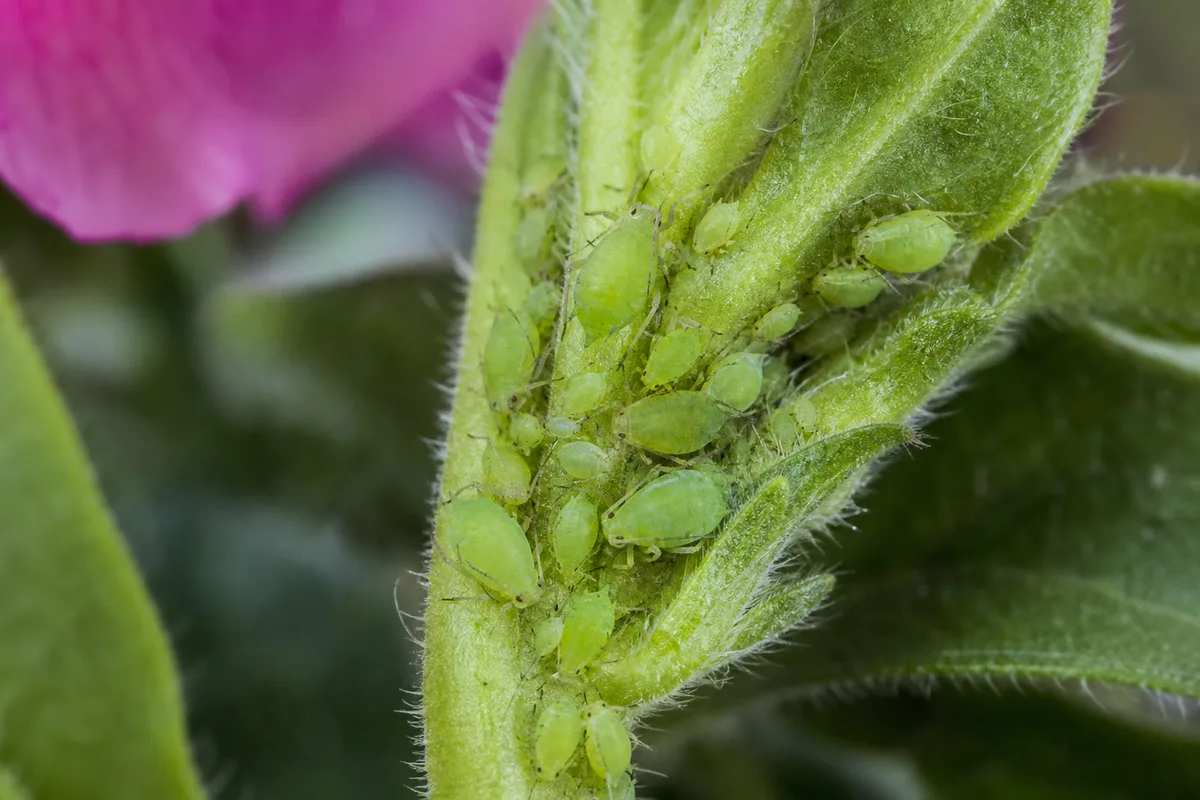
Turn over a few leaves and inspect the newest shoots, flower buds, and stem joints. Aphids cluster in soft new growth and may leave sticky honeydew; caterpillars chew irregular holes; thrips can scar flowers and distort new growth; slugs and snails make ragged holes overnight. NC State Extension lists aphids, flea beetles, slugs, snails, and several other pests among common petunia problems. NC State Extension
Identify aphids, chewing pests, and gray mold
For a small aphid infestation, rinse the plant with a firm but gentle stream of water and repeat after several days, checking the undersides of leaves. If you use insecticidal soap, choose a product labeled for the plant and pest, follow its directions, and test a small area first; applying products in hot sun or to drought-stressed foliage can cause injury. Do not use random kitchen detergents as a substitute for a labeled garden product.
For slugs and snails, look after dark or early in the morning and remove hiding places near the pot. For caterpillars, hand-pick the insects when practical and inspect the leaves daily. A treatment is more useful when you can name the pest; spraying a stressed plant without identifying what is eating it adds risk without solving the cause.
Keep newly treated or isolated plants away from healthy containers until you know the problem is contained. Remove badly diseased leaves and fallen flowers from the soil surface, clean your shears, and avoid taking cuttings from a plant with unexplained mottling or distorted growth. Healthy-looking new shoots are encouraging, but they do not prove that a systemic virus or root disease has disappeared.
Disease deserves a different response. Gray, fuzzy growth on brown flowers or leaves after cool, wet weather is consistent with gray mold; black lesions on roots, persistent wilt, and stunting point toward a root problem. If a plant has spreading mottling, distorted flowers, or rapidly declining branches, isolate it, remove badly affected material, and ask a local extension service for a diagnosis rather than propagating from it. Minnesota Extension’s symptom guide includes gray mold, black root rot, aster yellows, powdery mildew, and virus symptoms among petunia disorders. University of Minnesota Extension
Adjust the rescue for pots versus garden beds
Containers dry faster because they have less soil around the roots and more exposed surface area. Hanging baskets dry faster still, especially in wind and reflected heat. Check them by touch and weight, and water deeply when the mix is drying through the root zone; a hot, breezy week may require more frequent checks, while cloudy or rainy weather may require none.
Garden-bed petunias usually have a larger moisture buffer, but heavy clay, compacted soil, roof runoff, or a low spot can keep roots wet. Water at the base and check the soil before irrigating. If the bed stays saturated, moving the plant to a raised or better-drained spot may help more than changing fertilizer.
Do not automatically move a failing petunia into a much larger pot. Extra unused mix stays wet longer and can create the same root-zone problem in a larger container. If the plant is tightly root-bound or dries within hours even after proper watering, step up only one pot size, use fresh mix with good drainage, and water it in thoroughly before returning it to its final light level.
Variety changes the visual diagnosis as well. Cascading types naturally trail, while mounding types should stay fuller; a trailing petunia is not automatically leggy. NC State Extension groups garden petunias into cascading, grandiflora, multiflora, milliflora, and other hybrid groups with different habits, so compare the plant with its expected form before making an aggressive cut. NC State Extension
Watch for new growth and know when to stop
Give a corrected plant a stable week before changing another major variable. New leaves at the cut points, firmer stems, less frequent afternoon wilt, and fresh buds are meaningful improvement; a few old yellow leaves dropping after a root problem does not necessarily mean the rescue failed. After a hard prune, Flower Patch Farmhouse reports a severely cut-back basket filling and blooming again in about three weeks, but that is an example under favorable conditions, not a schedule every petunia will match. Flower Patch Farmhouse
Replace the plant when the base is collapsing, the stems are hollow and brown throughout, most roots are soft or gone, or a suspected disease continues to spread after isolation and cleanup. Also consider the calendar: a petunia planted late in a short season may not have enough warmth or light left to rebuild after a severe cutback. Saving a plant is worthwhile when living tissue and growing time remain; it is not a test of how long you can keep a failing root system in a pot.
Do not judge recovery by flowers alone during the first week. A newly pruned plant may spend its energy on leaves and side shoots before it makes buds, and a plant recovering from drought may drop damaged leaves that cannot be repaired. The useful checkpoints are firm stems, active leaf tips, even moisture, and a steady absence of new damage.
Conclusion: fix the roots first, then rebuild the canopy
The most reliable way to revive petunias is to stop guessing and read the whole plant. Check whether the root zone is dry, truly absorbing water, or staying saturated; then correct drainage, light, and weather exposure before you deadhead, prune, or feed. Remove dead tissue and pests, but preserve firm green growth that can branch again.
If the roots are healthy and the plant still has green growing points, even a tired midsummer petunia may return to a fuller shape and another flush of flowers. If the base is mushy, the roots are largely destroyed, or disease is spreading, replacing the plant protects your time and nearby plants. The goal is not to keep every petunia alive—it is to make the right fix early enough for the plant to respond.