200+ Plants in a Small NYC Apartment: Alessia Resta
Tour Alessia Resta’s 200-plus-plant NYC apartment and learn how vertical shelving, light zones, quarantine, and a simple care rhythm make a dense collection workable.
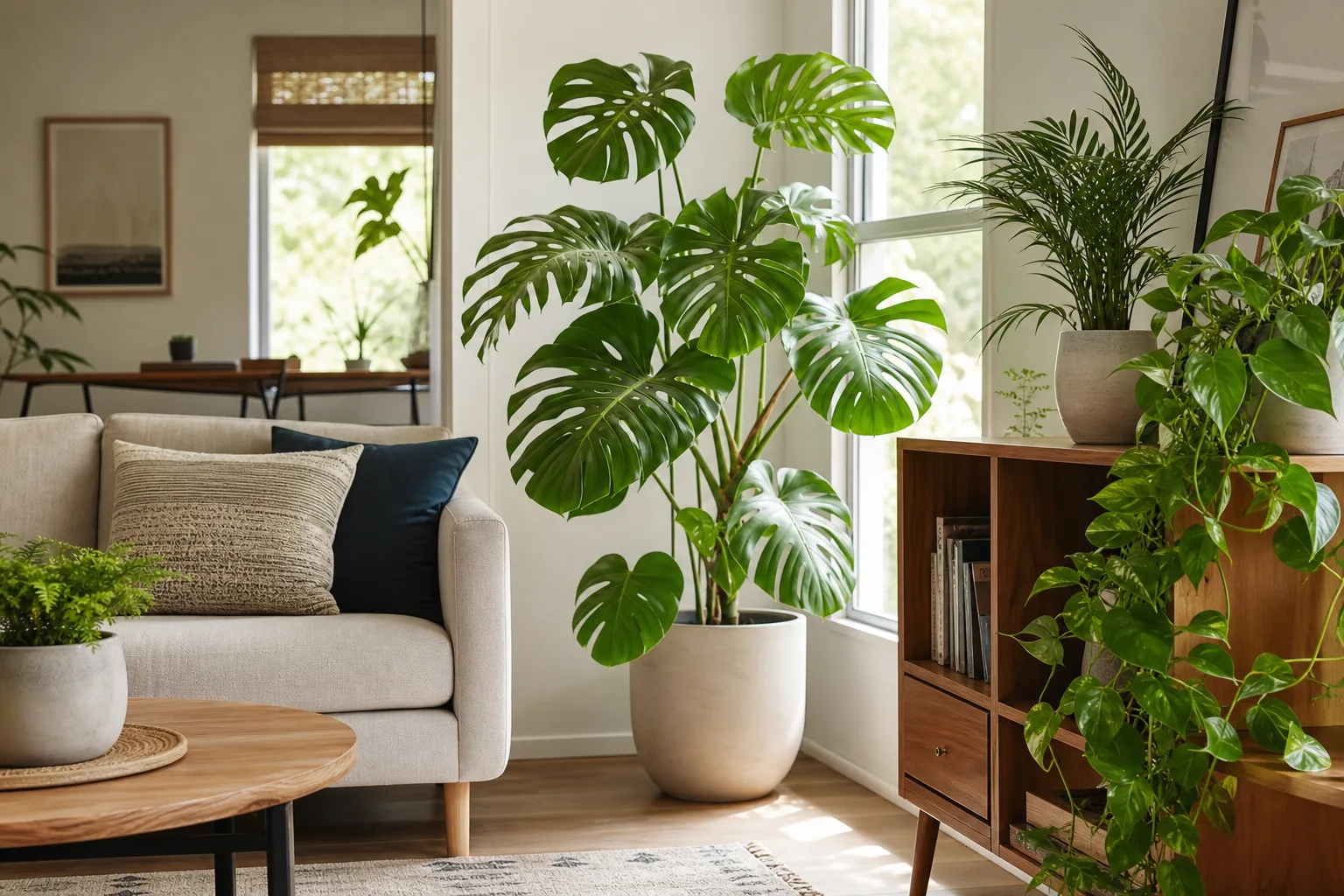
Alessia Resta’s apartment is the kind of home that makes “I’m out of space” sound less like a fact and more like a design problem. The supplied episode tour follows a New York City collection described as more than 200 plants, including rare philodendrons, a mite-recovering Philodendron ‘Ring of Fire,’ an Anthurium crystallinum that refuses to be easy, a cactus, a begonia, and a snake plant nicknamed Cheerio.
The useful lesson is not that every apartment should hold 200 pots. It is that a large collection works when light, access, humidity, pest control, and time are designed together. Resta’s home offers a memorable case study because the plants are not just decorations; they are a living system built around a person’s curiosity, routines, and willingness to keep learning.
What the tour really shows
A home tour captures the collection at its most photogenic. It does not show every watering trip, pest inspection, repotting mess, dead leaf, or plant that had to be moved to a less glamorous corner. That distinction matters because a dense apartment jungle is not created by shelves alone; it is sustained by repeatable work.
The plant count is also a time-specific detail, not a permanent measurement. A dated Apartment Therapy home tour recorded Resta, her partner, two dogs, and 175 plants in a 750-square-foot Upper West Side rental, while a 6sqft profile described the collection as nearing 200. Those reports are consistent with the later “over 200” framing, but they should not be read as a current inventory. (Apartment Therapy’s home tour; 6sqft’s profile of the Apartment Botanist)
That changing number is part of the point. Collections grow, shrink, trade cuttings, lose plants, and change shape when a person moves or their schedule changes. The better question is not “How can I copy 200?” but “What system would let my collection stay healthy at the size I can actually inspect?”
Meet Alessia Resta, the Apartment Botanist
Resta is the creator of Apartment Botanist, an online plant community she says she started in 2017. Her interest grew from studying plant forms for sculpture, building terrariums, and researching where plants come from so their indoor conditions made more sense. That background explains why her collection is organized around observation and experimentation rather than a single list of supposedly easy plants. (Apartment Botanist’s about page; WallyGrow’s Q&A with Resta)
The older home-tour reporting also gives useful context: the apartment is a rental with substantial natural light, home-work demands, art equipment, gaming gear, furniture, two dogs, and plants sharing the same limited footprint. Resta’s collection is therefore not a greenhouse disguised as a home. It is a real apartment where every plant competes with people, equipment, walking space, windows, and the need to clean up water.
Why a 750-square-foot apartment can hold 200 plants
The answer is small pots, vertical layers, and a high proportion of plants that can share a care zone. A collection does not need 200 giant floor plants; it can include cuttings, young plants, compact succulents, hanging vines, and mature specimens that occupy different heights.
It also needs a collector who accepts that every plant has a cost beyond its purchase price. That cost includes shelf space, inspection time, potting mix, water, pest risk, and the emotional attention required when a favorite plant declines. The collection becomes sustainable when those costs are visible before the next purchase, not after the room is full.
Build the collection around light, not empty floor space
The first planning mistake in a small apartment is choosing a shelf because it fits the wall and then asking plants to tolerate whatever light happens to reach it. Start by observing the room at different times of day, then place plants according to the light they need; the furniture comes second.
Map light before you buy a shelf
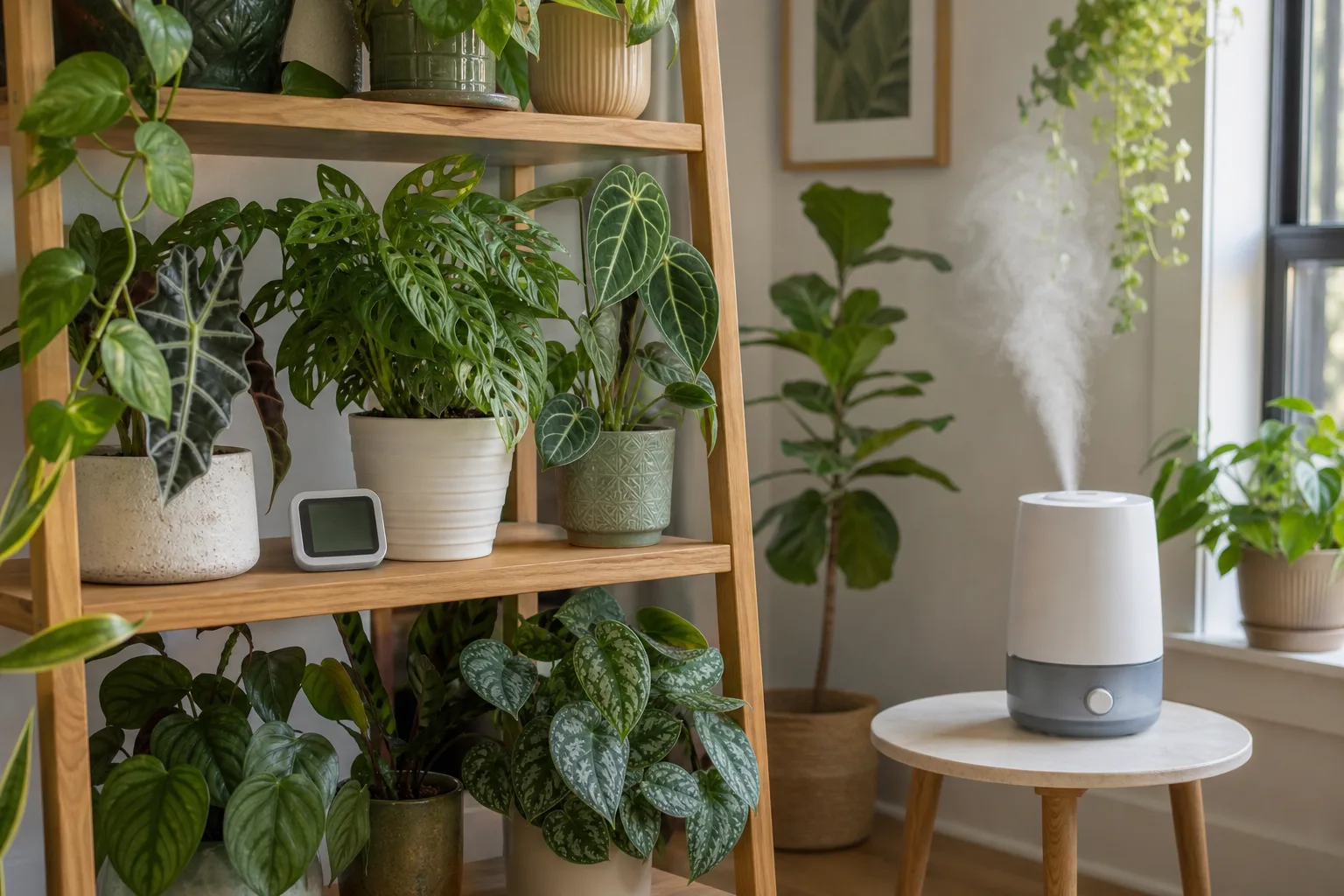
Make a rough map of the apartment with four bands: bright window light, filtered window light, mid-room light, and genuinely dim space. Use a phone light meter or a proper meter as a guide if you like, but the plants will also tell you what is happening: long gaps between leaves, small new leaves, pale growth, and lower-leaf yellowing can indicate insufficient light. The University of Missouri Extension also cautions that even low-light plants often receive too little light more than about 10 feet from an average window. (University of Missouri Extension’s indoor-lighting guide)
Put variegated and high-value plants in the brighter band first. Give tolerant green foliage the deeper positions, and use grow lights for shelves that are beautiful but too far from a window; a shelf full of plants is not automatically a shelf full of usable light.
If a window is west-facing, watch the afternoon heat and sun rather than assuming it is perfect for everything. Sheer curtains, a little distance from the glass, and rotating sensitive plants can prevent the classic small-apartment cycle of “not enough light in winter, scorched leaves in summer.”
Use height, but keep every pot reachable
Vertical space is valuable only when it remains serviceable. A tall shelf can multiply the number of display positions, but the top row should not become a place where a plant disappears until it is bone-dry or covered in pests.
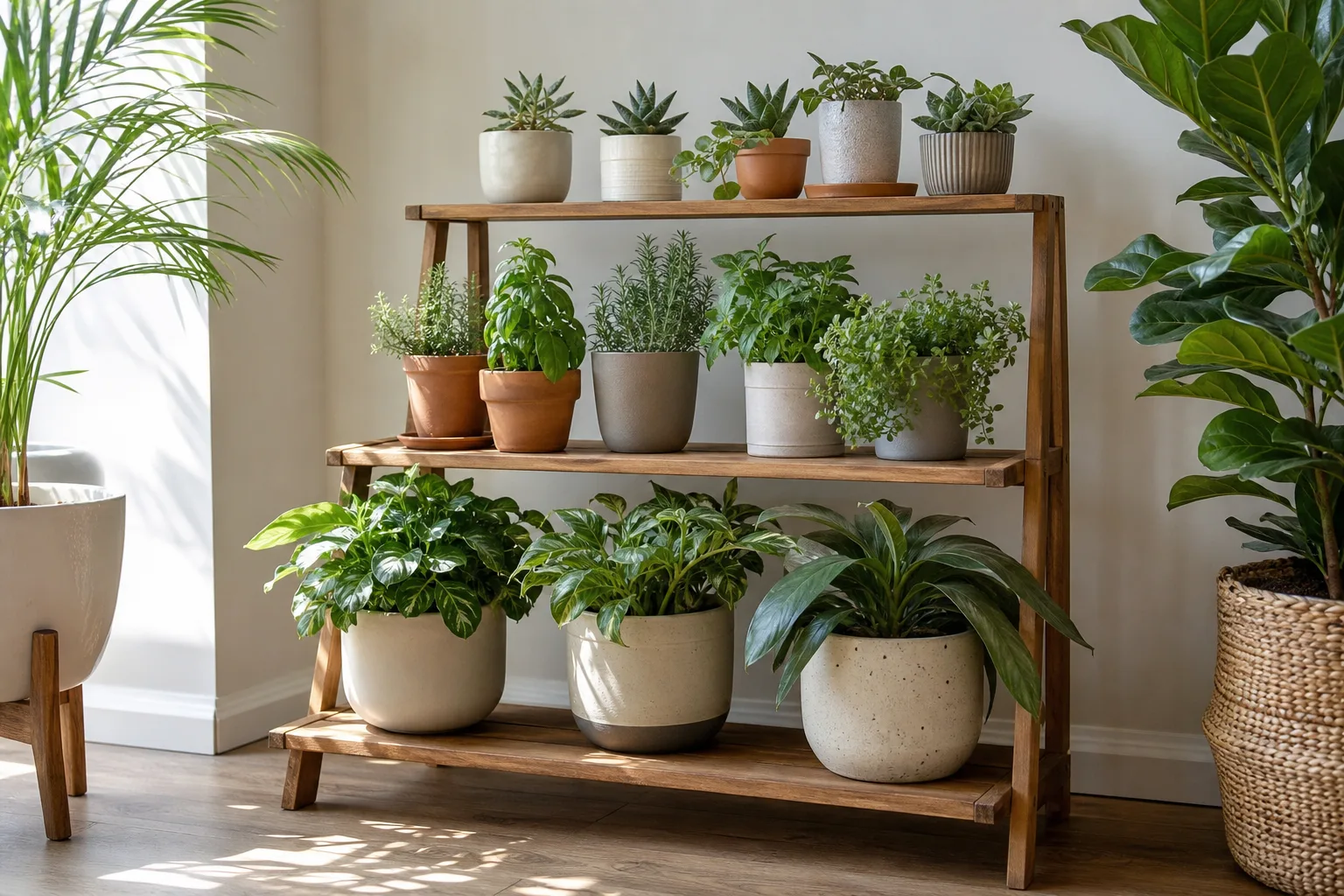
Use a three-level logic. Floor plants take the largest pots and anything that needs stable support; waist-to-eye-level shelves hold plants you inspect often; upper shelves and hanging positions belong to light, trailing, or low-maintenance plants that can be reached with a stable step stool. Leave enough space to lift each pot out without knocking leaves into its neighbors.
The safest vertical display is usually a combination of freestanding furniture, properly anchored shelving, and hanging points that are rated for the wet weight of the basket. Never treat an exposed pipe, sprinkler line, curtain rod, or electrical conduit as a convenient anchor. If a rental does not allow drilling, use furniture designed to stand on its own and keep the most valuable plants below head height.
The daily, weekly, and monthly routine that keeps the collection sane
Resta has described plant care as something she organizes into small, regular observations rather than one giant weekend job. In a separate Apartment Therapy interview, she recommends checking plants every day, while another practical suggestion in the same article is to divide the apartment by zones across the week. That is a much more durable model than watering every plant on the same calendar day. (Apartment Therapy’s daily plant-care interview)
Daily: scan leaves and soil
Daily care does not mean watering daily. Walk past one zone and look at leaf undersides, new growth, soil surfaces, and the floor around pots. Catching a sticky leaf, fine webbing, a suddenly collapsed stem, or water pooled in a cachepot early is more valuable than adding another product to the shelf.
Keep a small notebook or phone note for plants that are changing. Record the date of a new pest sighting, a move closer to a window, a repot, or a humidity-box trial. Large collections punish memory; a two-line record is enough to stop you from treating the same symptom repeatedly without knowing whether it improved.
Weekly: water by zone
Group plants by how they dry, not just by how they look. A cactus and a thirsty anthurium may look good together in a photograph, but they should not share a watering route. Philodendrons generally prefer moist, well-drained conditions and tolerate some household variation; succulents and snake plants need a longer dry-down. North Carolina Extension describes philodendrons as warm, bright-indirect-light plants that prefer well-drained soil, while snake plants need careful watering and should dry between drinks. (NC State Extension’s philodendron guide; NC State Extension’s snake-plant guide)
Water when the plant’s mix and species call for it, then empty saucers and cachepots. Keep a towel, narrow watering can, and a place to drain plants nearby; reducing the friction of the task is one of the few “hacks” that genuinely scales.
Monthly: reset the collection
Once a month, pull pots forward and inspect the plants that are usually hidden behind larger foliage. Clean dusty leaves where appropriate, prune dead material, wash trays, check shelf fasteners, replace yellow sticky cards, and look for roots escaping from drainage holes.
This is also the time to ask whether the collection still fits the apartment. A plant that needs a brighter window, a taller support, or a humidity cabinet may be healthy but incompatible with its current location. Rehome or trade a plant when its care requirements repeatedly conflict with the room; keeping every plant forever is not the same as being a good plant parent.
Philodendron Patricia: the expensive plant lesson
The tour’s most expensive plant is a Philodendron ‘Patricia,’ bought as a tiny plant for $250 and now described as nearly reaching the ceiling. That story is compelling because it shows how quickly the visual scale of a plant can change; it also shows why collectors should budget for the future shape of a plant, not the small pot in front of them.
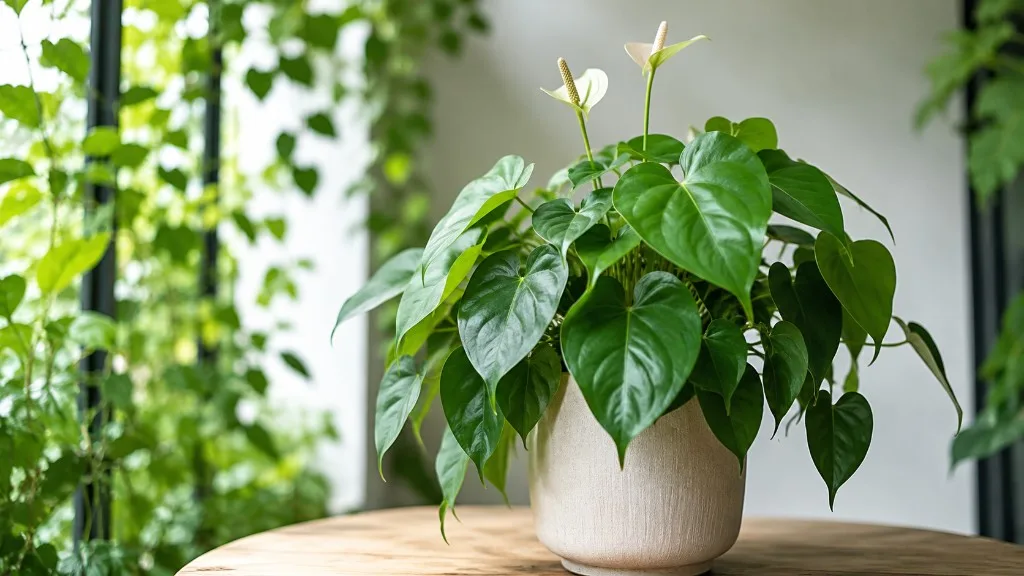
“Philodendron” is a broad genus, not one uniform care profile. North Carolina Extension notes that philodendrons include climbing and self-heading forms, that climbing types can use aerial roots on a support, and that common problems include root rot, spider mites, mealybugs, aphids, and scale. Bright indirect light, warm temperatures, and a well-drained organic mix are a sensible starting point, but a rare cultivar may need more light, a better support, or tighter humidity control than a common heartleaf type. (North Carolina Extension Gardener Plant Toolbox: Philodendron)
Before paying a premium for a small plant, ask four questions: What will its mature habit need? Is there a bright enough position when it is larger? Can the shelf or support carry a wet pot? And do you have a backup plan if the plant arrives with pests? The price of the plant is only one part of the risk; the real commitment is the space and attention it will claim as it grows.
Ring of Fire: a mite recovery is a system, not a miracle
Resta’s Philodendron ‘Ring of Fire’ arrived with mites, and the plant became a favorite after recovering. The useful part of that story is not the idea that a rare plant can always be saved. It is that early detection, isolation, repeated follow-up, and patience can turn a frightening arrival into a manageable rehabilitation.
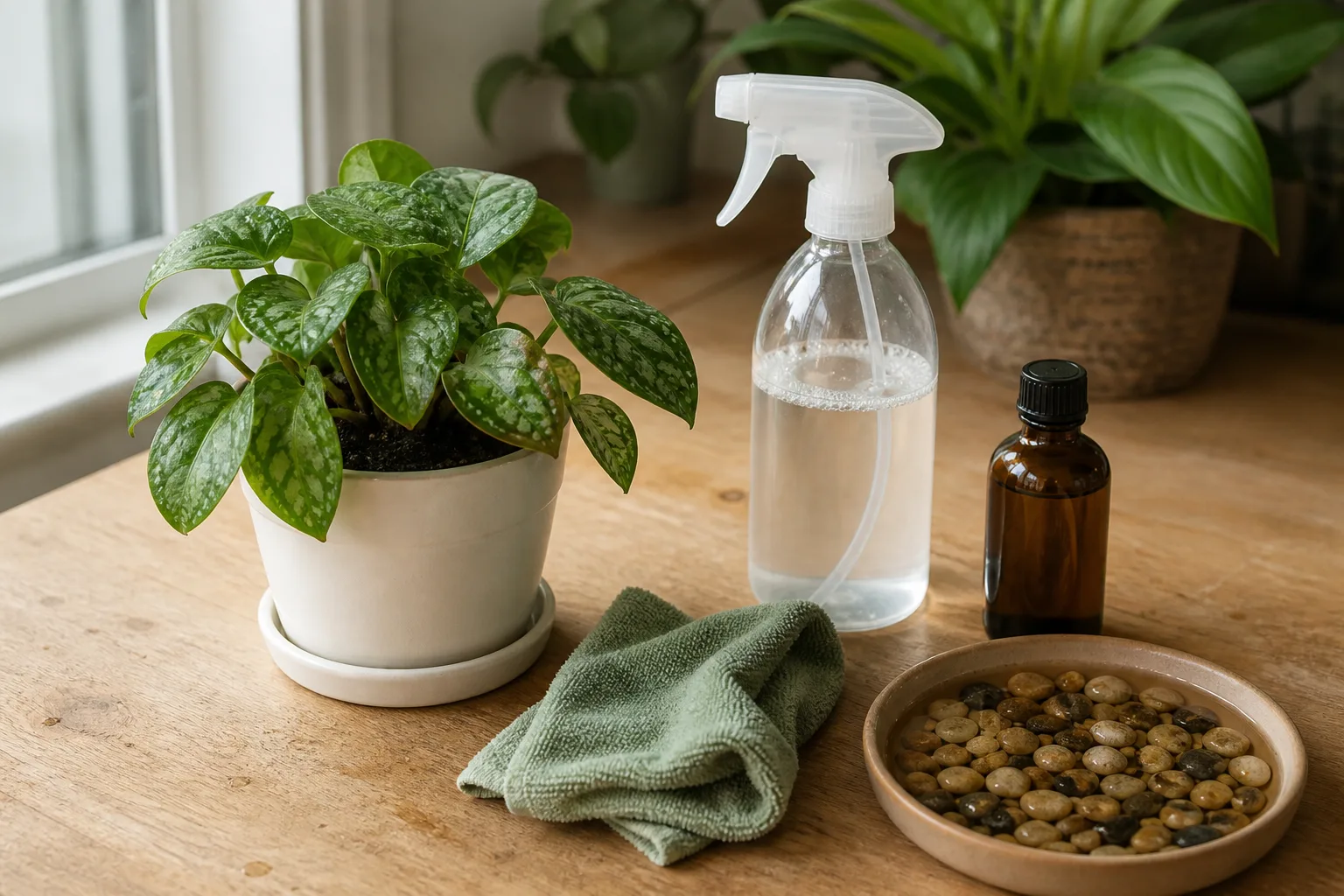
Spider mites are especially dangerous in a crowded collection because leaves and air currents create easy routes between neighboring pots. University of Minnesota Extension recommends regular scouting and notes that spider mites thrive in warm, dry conditions; tapping a leaf over white paper can help reveal moving specks that are hard to see on green foliage. (University of Minnesota Extension’s houseplant-pest guide)
Use this order when a new plant looks suspicious:
- Isolate it immediately. Put it in a separate room or as far from the collection as your apartment allows. Do not share trays, tools, or a watering can without cleaning them.
- Inspect the undersides. Look for stippling, webbing, shed skins, and moving dots on old leaves and new growth.
- Reduce the population physically. Rinse foliage with a gentle stream that reaches leaf undersides, remove badly damaged leaves, and wipe the work area. Do not blast fragile leaves or saturate the soil.
- Choose a labeled treatment if needed. Follow the product label, test a small area first, and repeat on the schedule the label gives; one application rarely reaches every life stage.
- Keep monitoring after it looks better. Release the plant only after repeated inspections show no fresh damage or webbing. “It looked fine yesterday” is not a quarantine protocol.
Do not move a mite-covered plant next to a humidifier and assume humidity alone is treatment. Better humidity can reduce stress for some plants, but sanitation, isolation, inspection, and appropriate treatment are what protect the rest of the collection.
Anthurium crystallinum: why the prettiest plant is often the fussiest
The tour calls Anthurium crystallinum the most uncooperative plant, which is understandable: its large, velvety leaves and pale veins are spectacular, but the plant has little patience for a room that swings between dry heat, cold drafts, dark corners, and wet soil.
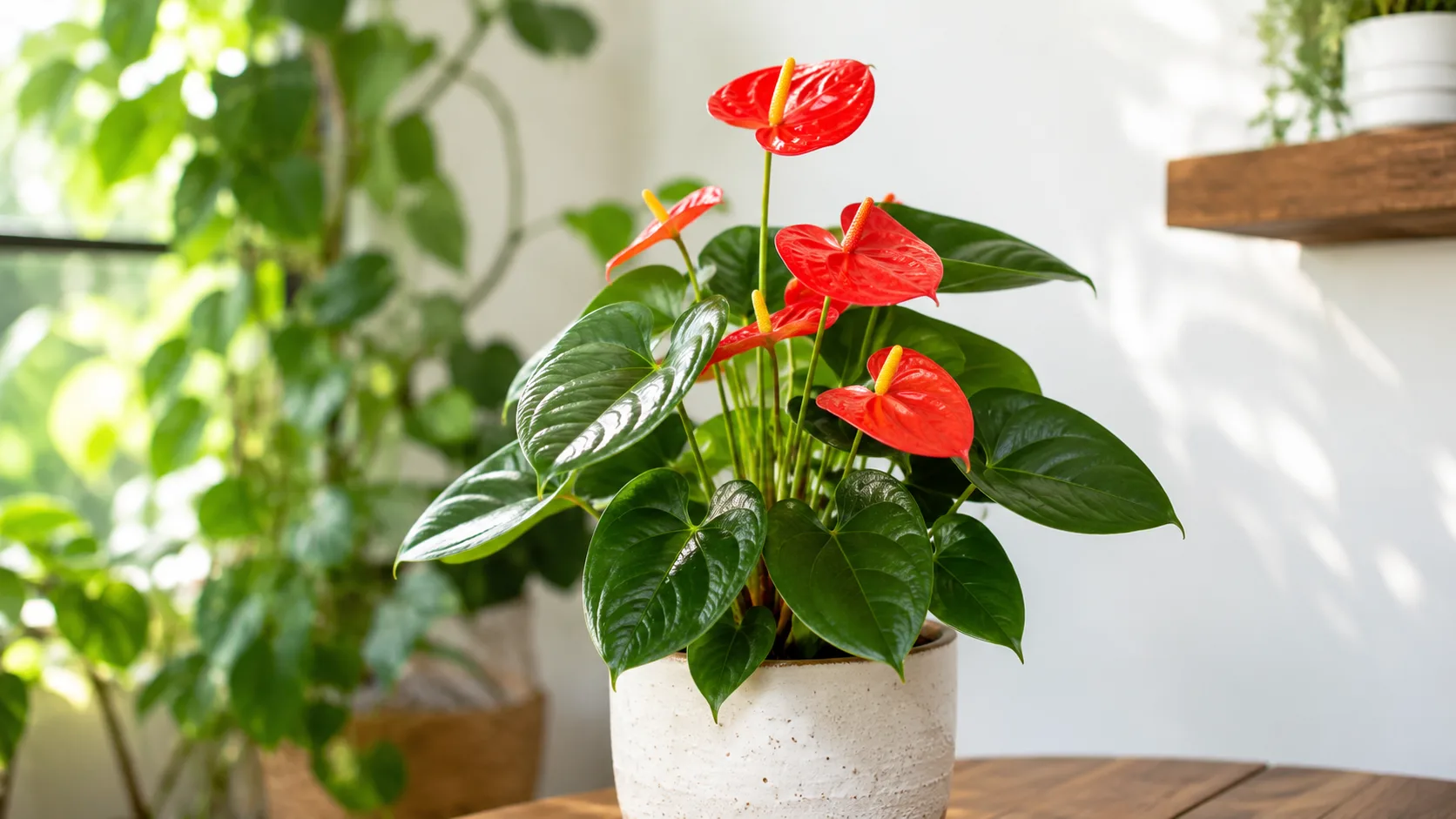
The Royal Horticultural Society recommends bright indirect light, an acidic, fast-draining mix, high humidity, warmth above 18°C, and less winter watering for A. crystallinum. It also flags overwatering, leaf spot, mealybugs, scale, and toxicity if eaten or handled carelessly. In other words, the plant needs a stable microclimate more than it needs constant attention. (RHS profile for Anthurium crystallinum)
That makes it a good test of a collection’s zoning. Put it in the brightest protected position that does not receive harsh midday sun, keep the mix airy, water after the upper layer has begun to dry rather than by a fixed weekday, and protect it from heating vents and cold glass. A hygrometer can tell you whether the air is actually dry; brown tips alone do not prove that humidity is the only problem.
If a plant needs a cabinet, humidifier, or clear recovery box to look good, count that equipment as part of the plant’s footprint. Rare plants are not space-saving simply because they start small.
The rest of the collection: cactus, Begonia Darth Vader, and Cheerio
The collection becomes memorable because it has stories, not just expensive names. Resta’s oldest plant is a Mammillaria gracilis fragilis cactus; the rarest is a Begonia ‘Darth Vader’; and a snake plant named Cheerio arrived in a Cheerios box. Names turn a room of pots into a set of relationships, which can make observation more motivating than a generic care chart.
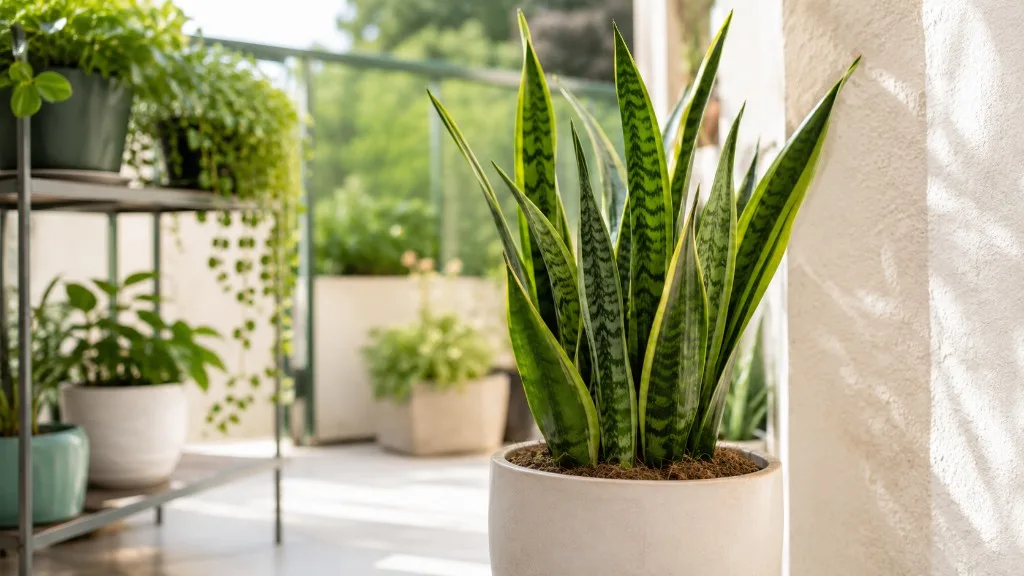
Cheerio also represents a useful counterweight to rare-plant collecting. Snake plants tolerate lower light than many tropicals, but they still need a well-drained pot and restraint with water. NC State lists Dracaena trifasciata—the current botanical name for the plant long sold as Sansevieria trifasciata—as a plant that can tolerate very low light, while warning that overwatering can rot the roots. (NC State Extension’s Dracaena trifasciata guide)
In a large collection, a plant like Cheerio can occupy a drier, dimmer transition zone while the cactus takes the brightest, least humid position. The lesson is not to fill every corner with the same tropical setup; it is to let different plants earn different corners.
Use a healing box without trapping disease
The tour’s healing box is a clear plastic container used to create a more humid environment for a struggling plant. That idea can work as a short-term recovery chamber, but it is not a magic greenhouse and it is not a substitute for diagnosing the original problem.
Use a clear box only when the plant needs higher humidity and the container can be kept in bright, indirect light. Keep the pot above standing water, leave room around the leaves, and open the lid or add ventilation if condensation stays heavy. A constantly wet interior with no air exchange can encourage fungal and bacterial problems, especially on damaged leaves.
Before the plant goes in, check the roots, soil moisture, pests, temperature, and light. A wilted plant in soggy soil does not need more humidity; it needs oxygen around the roots. A plant with dry, curling new growth may benefit from a humid chamber, but it still needs healthy roots and enough light to use that moisture.
Think of the box as a bridge between an ordinary room and a stable growing environment. Acclimate the plant back to room air gradually once it has produced stable growth, and disinfect the box between plants so a “healing” tool does not become a pest nursery.
Apartment collection safety: water, weight, and pets
The most glamorous plant shelf can still fail in ordinary ways. Water can damage floors, heavy wet pots can overload furniture, vines can block windows or exits, and a plant that is safe on a high shelf may become accessible to a curious dog or child after a single rearrangement.
Before adding another layer, check these constraints:
- Wet weight: Count the pot, plant, soil, saucer, and the water held after watering. Do not rely on the empty-shelf rating if the manufacturer gives a lower distributed load.
- Water path: Every pot should have a safe place to drain. Keep electronics, printers, and power strips away from splash zones and humidifiers.
- Reachability: If you cannot inspect the upper leaves without climbing on furniture, the plant is not in a sustainable position.
- Airflow: Leave space between dense foliage, walls, and HVAC outlets. Humidity without air movement is not a complete tropical environment.
- Rental rules: Check lease restrictions before drilling, hanging baskets, or placing furniture against sprinklers and radiators.
- Pet access: Research each species, keep questionable plants out of reach, and do not assume a familiar common name means a plant is harmless. RHS identifies Anthurium crystallinum as harmful if eaten and irritating to skin or eyes; NC State also records low-severity poisoning information for snake plants and philodendrons. (RHS Anthurium crystallinum profile; NC State Philodendron)
The final safety check is emotional rather than structural: can you still enjoy the collection when one plant fails? A resilient collection includes easy plants, difficult plants, backups, open floor space, and permission to let go of specimens that no longer fit the home.
Conclusion
Alessia Resta’s 200-plus-plant NYC apartment is impressive because it combines ambition with attention. The shelves and rare names create the visual hook, but the real infrastructure is quieter: light mapped before display, plants grouped by needs, leaves checked often, new arrivals isolated, humidity used with airflow, and the collection revised as it grows.
If you want a smaller version of the same idea, start with one bright zone, one forgiving plant group, and one reachable shelf. Add plants only when you can explain where each one will live, how it will dry, how you will inspect it, and what happens if it arrives with pests. That is how a small apartment becomes a healthy plant home instead of a crowded room full of unresolved care problems.



