How to Grow and Care for Malabar Spinach
Grow Malabar spinach in summer with the right heat, moisture, trellis, seed prep, pruning, harvesting, and fixes for flowers, yellow leaves, and leaf spot.
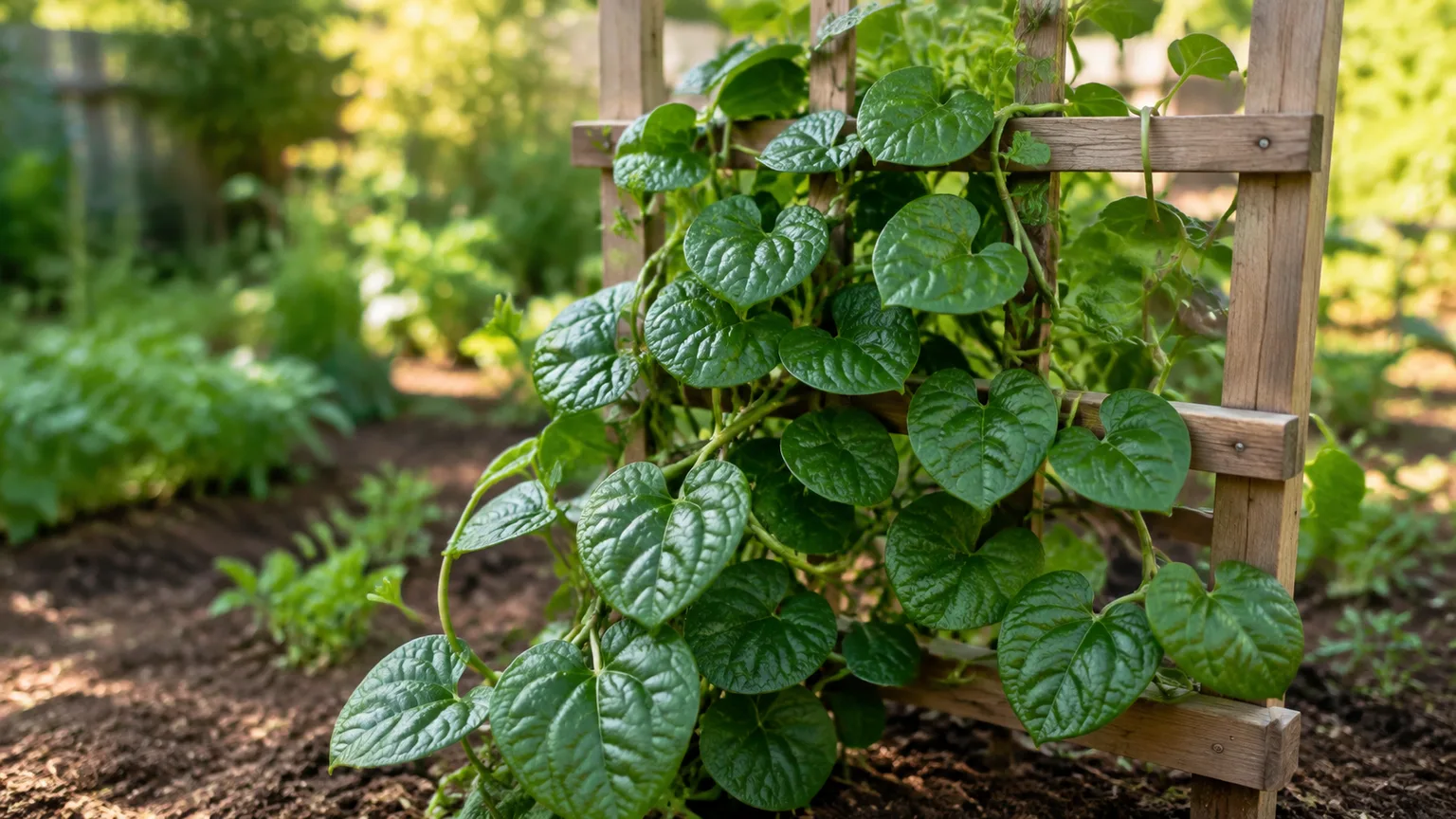
If summer heat makes ordinary spinach bolt before you can harvest much, Malabar spinach is the leafy green to try next. It is a vigorous tropical vine that keeps producing when temperatures climb, provided its roots stay evenly moist and its stems have something sturdy to climb. Plant it in warm soil, give it support before it starts running, and harvest the young leaves and shoots often.
This is not true spinach. Malabar spinach is Basella alba or Basella rubra, a different plant with thick, glossy leaves and succulent stems. The texture is spinach-like when young but becomes pleasantly mucilaginous—similar to okra—when cooked in soups, stews, curries, or stir-fries. The crop is especially valuable in a hot-summer garden because it turns the season that frustrates cool-weather greens into its productive window.
Malabar Spinach Quick Reference
| Care factor | Practical target | Why it matters |
|---|---|---|
| Planting time | After frost; wait for soil around 65–75°F | Cold soil delays emergence and frost can kill the vine |
| Light | Full sun for speed; partial shade for larger, more succulent leaves | Light affects growth rate and leaf texture |
| Soil | Fertile, moisture-retentive but well-drained soil; about pH 6.5–6.8 is a useful target | The plant needs water at the roots without stagnant conditions |
| Water | Keep soil consistently moist, not muddy | Dry spells encourage early flowering and bitterness |
| Support | Trellis, teepee, fence, or other sturdy vertical structure | Vines can become tangled and shade nearby crops |
| Spacing | About 12 inches between transplants; thin direct-sown seedlings to 6 inches, then remove extras if crowded | Airflow and harvest access matter more than a dense stand |
| Germination | 65–75°F; roughly 10 days to 3 weeks | The hard seed coat makes pretreatment worthwhile |
| Harvest | Baby greens from about 50 days; full-size harvest commonly around 70–85 days | Frequent light harvests encourage branching and new leaves |
| Winter habit | Annual where frost occurs; perennial only in frost-free climates | Do not expose it to even a light frost |
UF/IFAS gives a broad soil-pH tolerance of roughly 5.5 to 7.0, while Cornell and Wisconsin Extension describe the crop’s preference for fertile, moist soil and a slightly acidic range. In a home garden, drainage and regular moisture are more important than chasing a perfect decimal on a soil test. (UF/IFAS Extension, Cornell University, University of Wisconsin–Madison Horticulture)
What Malabar Spinach Is and Why It Wins in Summer
Malabar spinach is a soft-stemmed, twining vine in the Basellaceae family. It is native to tropical and subtropical parts of South and Southeast Asia, including the Indian subcontinent, and is also known as Indian spinach, Ceylon spinach, vine spinach, and climbing spinach. Its oval to heart-shaped leaves are thicker and more succulent than ordinary spinach leaves, which helps explain both its heat tolerance and its distinctive cooked texture.
The plant is a useful summer succession crop. Start it after spring peas, lettuce, or spring spinach have finished, then train it upward while those cool-season crops make room. In warm regions it can keep growing for months; in colder regions it provides a long summer harvest before frost ends the season. Wisconsin Extension describes it as a tender perennial that is easily grown as an annual, while UF/IFAS notes that it can grow through warm seasons as far north as Zone 7 but behaves as a perennial only in truly warm, frost-free areas. (Wisconsin Horticulture, UF/IFAS Extension)
Green versus red Malabar spinach
Green Malabar spinach is usually sold as Basella alba and is the straightforward choice for a cooking garden. It has green stems and dark green leaves with a mild, slightly peppery flavor and a hint of citrus. Red Malabar spinach is commonly sold as Basella rubra or as an alba cultivar called ‘Rubra’; its burgundy stems and pink-veined leaves make it especially ornamental.
Both types can be eaten, but the red color fades during cooking. Choose green if your priority is a dependable leafy vegetable, and choose red if you want the vine to do double duty on a trellis, fence, or ornamental support. Brooklyn Botanic Garden describes red-stemmed Malabar spinach as both a productive hot-weather vegetable and a striking garden plant; the purple berries that follow its small flowers also add ornamental interest. (Brooklyn Botanic Garden)
Choose a Site for Heat, Light, and Drainage
The best site combines summer heat, bright light, fertile soil, and a reliable water source. Malabar spinach grows slowly while nights remain cool, then accelerates when warm weather settles in. UF/IFAS reports that growth is strongest at 80°F and above, with especially vigorous growth in hotter conditions; Wisconsin Extension likewise notes that plants do little until the heat of summer and slow when nights stay below about 60°F. (UF/IFAS Extension, University of Wisconsin–Madison Horticulture)
Full sun gives the quickest vertical growth and the most foliage in a short season. If your summers are extremely hot or your soil dries quickly, light afternoon shade can be a good trade-off: Cornell notes that part shade may increase leaf size, even though the plant still prefers hot weather. Avoid a site where the vine will shade a small crop that needs full sun. A fence, cattle panel, or arch can be useful when the shade it casts protects heat-sensitive lettuce or herbs later in the day.
Work compost or other mature organic matter into the bed before planting, but do not turn the soil into a water-holding basin. The roots want a steady supply of moisture and oxygen. Heavy clay that stays saturated after rain is a poor site unless you improve drainage with a raised bed; loose sandy soil may need compost and mulch so it does not dry out between visits. Leave enough room around the base to reach the stems, weed, and check the underside of leaves.
When to Plant Malabar Spinach
Use soil temperature and frost risk—not the calendar alone—to choose the planting date. The minimum safe rule is to wait until all danger of frost has passed and soil is about 65–75°F. That often means planting two to three weeks after the last frost date, especially in a cool spring. A late start in truly warm soil is usually more successful than an early start that sits cold and wet.
Direct sowing or indoor starts
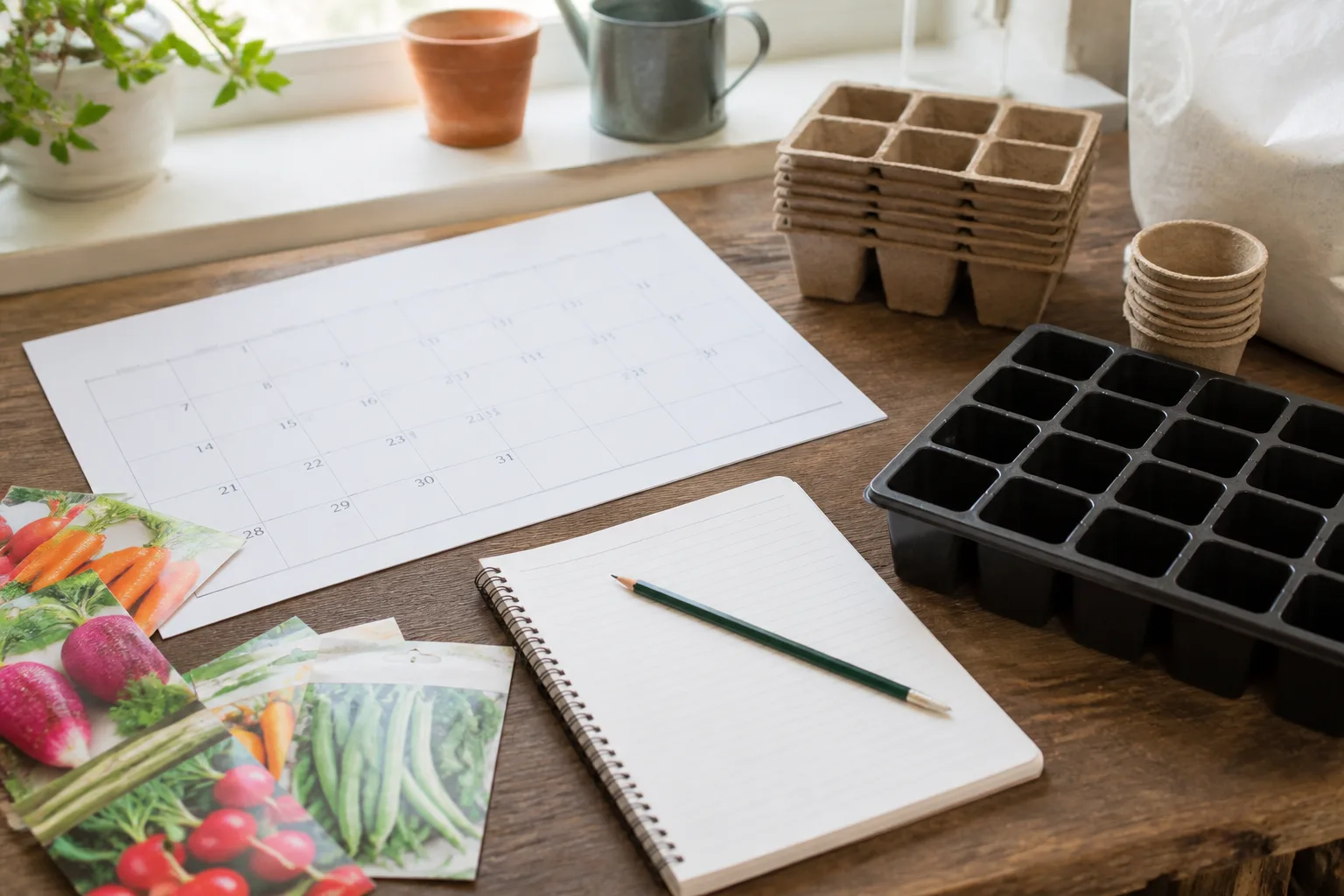
Direct sowing is the simplest option in a long, warm season. Make a shallow furrow about ¼ inch deep, place seeds 1–2 inches apart, and thin seedlings once they are established. UF/IFAS describes rows 12–18 inches apart with seedlings thinned to about 6 inches; for a home trellis, you can leave about 12 inches between final plants if you want larger individual vines and easier airflow. (UF/IFAS Extension)
In a short season, start seed indoors about six to eight weeks before the expected last frost, but do not rush the transplant outdoors. Young plants need bright light and warm roots; a seedling that has spent weeks in a cool windowsill may be larger but weaker than one started later in good conditions. Harden plants off gradually, then transplant when the outdoor soil is warm and nights are no longer chilly. Set the support in place first so you do not disturb fresh roots later.
Epic Gardening also treats Malabar spinach as a warm-season crop that can be direct sown, transplanted, or grown in containers after frost. A practical grower report from Marzi’s Garden found both direct sowing and indoor transplanting workable in a Zone 9b garden, but that experience reinforces rather than replaces the soil-temperature rule. (Epic Gardening, Marzi’s Garden)
Prepare the Hard Seeds for Better Germination
Malabar spinach seeds have a tough coat and can take 10 days to three weeks to emerge. Cornell and Wisconsin Extension both recommend mechanical scarification to speed germination, and Cornell lists 65–75°F as the optimum germination range. (Cornell University, University of Wisconsin–Madison Horticulture)
For a small batch, choose one of two low-tech methods:
- Soak the seeds overnight. Place them in room-temperature water for about 12–24 hours, then sow them immediately at ¼ inch deep. This softens the coat without requiring a sharp tool.
- Lightly scarify the coat. Rub one spot with sandpaper or carefully nick the outer coat with a file. You only need to open the coat; cutting deeply can damage the embryo.
Use a loose seed-starting mix and keep it evenly damp, not saturated. Warmth matters more than a heavy cover of soil. If nothing emerges after three weeks, check whether the mix stayed warm and moist, then try another batch rather than repeatedly digging up the seed. Once seedlings have true leaves, thin crowded cells so roots do not become a tangled mat before transplanting.
Build the Support Before the Vine Takes Off
Yes, Malabar spinach benefits from a trellis. It can trail across the ground, but a sprawling vine quickly occupies the space of neighboring crops, collects splash-borne soil on edible leaves, and becomes harder to harvest cleanly. Cornell and Wisconsin Extension both recommend a sturdy support for vegetable production, while Brooklyn Botanic Garden describes using poles, teepees, chain-link fencing, and other structures successfully. (Cornell University, Brooklyn Botanic Garden)
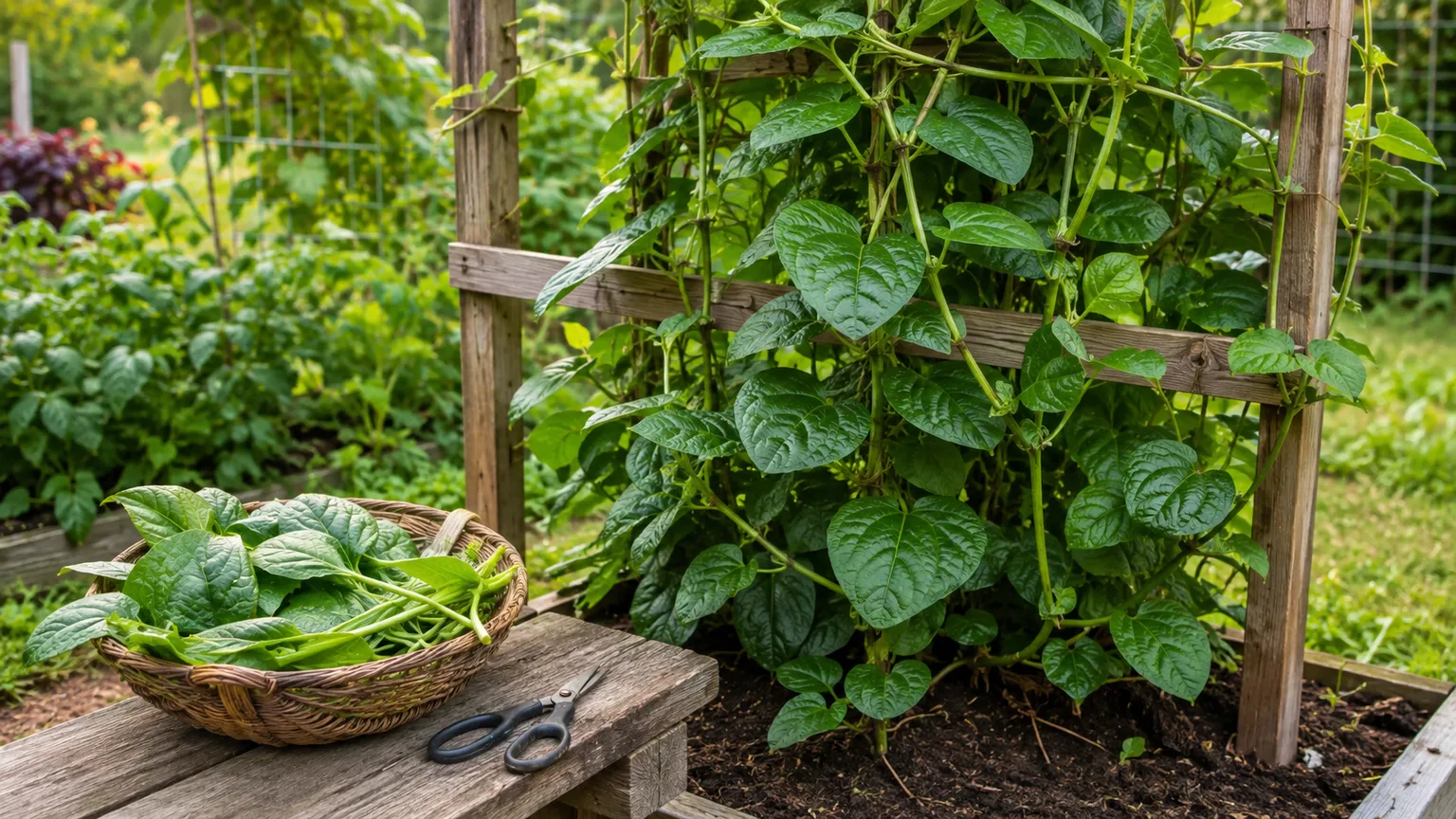
Install the structure before planting or while seedlings are small. A teepee, cattle panel, chain-link fence, or strong garden netting can work. The support should be anchored well enough to carry wet foliage and resist wind. Keep the lower edge open enough that you can reach the stem and harvest without pulling the vine. As shoots lengthen, guide them toward the support and loosely tuck or tie them only when needed; the twining stems will do much of the climbing themselves.
Plan for more height than the seedling suggests. A plant may reach 6 feet or more in a season and can become considerably longer in ideal tropical conditions. A support that ends at shoulder height may leave the productive top flopping onto nearby plants. If your trellis is short, pinch the growing tips once the vine reaches the top and allow side shoots to fill the structure.
Water for Tender Leaves Instead of Bitter Growth
The single most important care rule is to keep the root zone consistently moist. Malabar spinach tolerates wet weather better than drought, but that does not mean it belongs in stagnant soil. Dry conditions can trigger early flowering and make leaves less tender or more bitter, while saturated soil can starve roots of oxygen and invite decay.
Check the bed at soil level rather than watering by a rigid calendar. If the surface is dry and the top inch feels dry, water deeply enough to moisten the root zone. During a heat wave, a young plant or a container may need attention every day; an established vine in mulched ground may need less. The correct interval depends on sun, wind, soil, pot size, and rainfall.
Water at the base with a soaker hose, drip line, or low stream whenever practical. Avoid repeatedly wetting the foliage late in the day, particularly when vines are dense. A 2–3 inch layer of clean organic mulch helps hold moisture and keeps soil from splashing onto leaves, but leave a small gap around the main stem. If leaves start flowering early, check moisture consistency before adding fertilizer or blaming the variety.
Fertilizer and Mulch for Steady Production
Start with fertile soil rather than trying to force a struggling plant with repeated feeding. A compost-enriched bed usually provides a good base. If growth is pale and slow despite warm conditions and adequate light, use a vegetable fertilizer according to its label; a modest nitrogen contribution supports leaf and shoot production.
UF/IFAS reports that nutrient rates should be conservative and warns against overapplication because excess nutrients can accumulate or move into water. For a home garden, that means following the product label, feeding only during active growth, and stopping when the season cools. A light side-dressing or diluted feed every three to four weeks may suit a heavily harvested plant, but it is not a substitute for sunlight and water. (UF/IFAS Extension)
Mulch is often the more useful amendment after planting. It moderates the soil surface, reduces evaporation, suppresses weeds around the trellis, and limits splash onto edible leaves. Pull it back if the base remains wet for days after rain. The goal is a root zone that feels like a wrung-out sponge—not a dust bowl and not a puddle.
Growing Malabar Spinach in Containers
A container is a good choice when your garden soil is too cold, too wet, or too small for a permanent trellis. It also lets a gardener in a short season move the crop into a protected spot at the end of summer. The trade-off is that containers dry out faster and can become top-heavy once the vine covers its support.
Epic Gardening lists ground beds, raised beds, and containers as workable options, with the same basic requirement in each: warm conditions, consistent moisture, and a way to manage the vertical growth. (Epic Gardening)
Use a pot with drainage holes and enough volume to buffer daily swings in moisture. A sturdy 5-gallon container is a practical starting point for one plant, but use a larger or wider pot when you are installing a tall teepee or expecting a long harvest. A broad, heavy base is safer than a narrow lightweight pot. If the support sits in the container, anchor it before filling the pot so the structure does not damage roots later.
Use a quality container mix amended with compost or a slow-release vegetable fertilizer if the mix contains little nutrition. Check the pot frequently in hot weather, water until excess drains, and empty any saucer that holds water. Mulch the surface lightly, leaving air around the stem. If the plant wilts every afternoon even though the soil is dry again by evening, the container is too small, the site is too windy, or the vine has outgrown its water supply.
Pruning, Training, and Companion Shade
Regular harvesting is usually enough to keep Malabar spinach productive and manageable, but pruning is useful when stems run past the support or tangle with another crop. Pinch or cut just above a leaf node to encourage side shoots. Remove weak, damaged, or crowded material first, then shorten healthy runners that are crossing paths or shading plants that need light.
Do not strip every leaf from a long stem at once. Leave several active leaves and growing points so the plant can keep photosynthesizing and branching. A gentle weekly trim is easier on the vine than one severe haircut after it has formed a dense curtain. Clean shears are especially important if any leaf spot is present.
The vine can be used as a living summer screen or as temporary shade for lettuce, cilantro, or another crop that struggles in intense afternoon sun. Put the Malabar spinach on the north or west side of the heat-sensitive crop so the shade falls where you want it. Keep the support far enough away that harvesting the spinach does not require stepping through the companion planting.
Harvest Leaves and Tender Stems
Begin harvesting when the plant has a strong main stem and enough foliage to spare, often around 50 days for baby greens or 70–85 days for a fuller crop. Epic Gardening uses the formation of a strong main stem as a practical harvest cue, while UF/IFAS places full maturity around 70 days in optimal conditions. Look for young, glossy leaves and flexible stem tips. Cut or snap a short section with clean scissors rather than pulling hard on the vine. Young leaves are mildest raw; older leaves and tender stems hold up well in cooked dishes. (Epic Gardening, UF/IFAS Extension)
Frequent light harvests make a better plant than waiting for one giant picking. Take a few leaves from several parts of the vine, or cut a tender tip while leaving lower leaves and a portion of the shoot behind. If a plant is getting lanky, use the harvest to pinch the growing tip and encourage branching. Avoid harvesting immediately after a plant has wilted; water it, let it recover, and then pick firm, clean foliage.
Storage and kitchen use
Use Malabar spinach as soon as possible because the leaves lose quality faster than their thick texture suggests. Refrigerate unwashed leaves loosely wrapped or in a breathable container and aim to use them within two to five days. UF/IFAS reports that storage around 50–60°F preserves quality better than warmer storage, while temperatures that are too cold can injure the crop. (UF/IFAS Extension)
The youngest leaves work in salads, wraps, and sandwiches. Cooking changes the texture: sauté leaves and shoots briefly with garlic, stir them into eggs, or add them to soups, curries, ramen, and stews where their natural mucilage helps thicken the broth. If the okra-like texture is not your preference, use smaller leaves, cook them quickly, or combine them with other greens. Red stems and veins are most striking raw because their color can fade in a hot pan.
Propagate from Cuttings or Saved Seed
Stem cuttings are the quickest way to make a second plant from a healthy vine. Choose a 5–6 inch tip with several nodes, remove the lowest leaves, and place the cutting in moist potting mix or a glass of water. Keep it warm in bright, indirect light. Once roots develop and the cutting begins new growth, move it into a small pot or prepared bed and keep moisture steady while it establishes.
The plant can also root where a stem touches moist soil, which is useful if a runner has escaped the trellis. Peg the node down, keep the contact point damp, and separate the new plant after it has formed roots. This method is usually less disruptive than cutting a large established vine.
To save seed, let a few flowers mature into dark purple berries, then allow the fruit to dry fully on the plant or in a protected airy place. The pigment can stain hands, containers, and fabric. Remove the dried fruit from the stem, store it cool and dry, and label the year. Cornell notes that saved seed can remain viable for about four years under suitable storage. (Cornell University)
Flowers, Berries, and Self-Seeding
Flowering is not automatically a failure. Malabar spinach may flower as it matures, under dry conditions, or as day length changes. The practical problem is that leaves can become less tender or more bitter after flowering begins, and the plant shifts energy toward seed rather than fresh shoots.
If you want the longest leaf harvest, respond at the first sign of stress: restore even watering, add mulch, and harvest the growing tips regularly. You cannot always prevent flowering late in the season, especially as days shorten. If the flowers are part of the ornamental appeal, let them develop, but watch where the dark berries fall.
The berries are useful for saving seed and for their natural purple dye. Advice about routinely eating the berries varies by source and by culinary tradition, so the conservative home-garden choice is to treat leaves and tender stems as the food crop and reserve ripe fruit for seed or dye. Do not serve unknown berries to children or pets. Remove fallen fruit if you do not want volunteer vines in the following season.
Common Problems: Leaf Spot, Yellow Leaves, and Pests
Malabar spinach is generally resilient, but warm, moist foliage can still develop disease and roots can suffer when soil stays wet or when root-feeding pests are present. Start troubleshooting with the pattern, not a single symptom. A yellow leaf at the base of a vigorous plant may be normal aging; yellowing across new growth or a whole vine deserves a closer check.
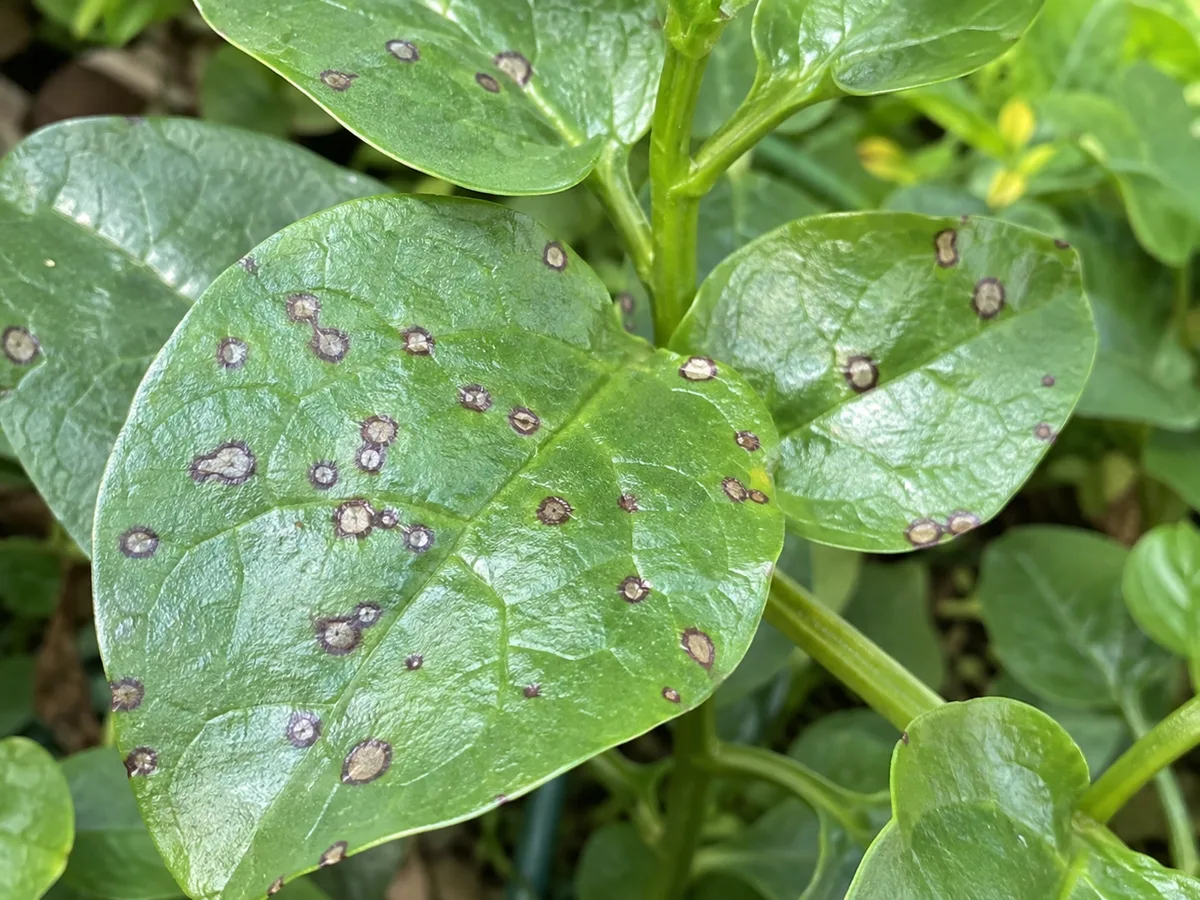
Cercospora-style leaf spots are small, circular lesions with darker margins; compare symptoms with soil and moisture conditions before treating.
Leaf spot: Cercospora leaf spot can appear as small circular or oval gray spots with darker purple or brown margins. UF/IFAS lists fungal leaf spot among the crop’s possible diseases, and recommends frequent monitoring and removal of infected leaves. Pick off affected leaves, discard them rather than composting them, improve airflow by thinning dense growth, and water at the soil line. Do not eat leaves with visible fungal lesions. (UF/IFAS Extension)
Yellow leaves with wet soil: If the mix stays saturated, roots may be unable to function normally. Check drainage holes, reduce irrigation frequency, and move a container to a brighter, breezier spot. If the stem base is soft or roots are dark and mushy, recovery may be limited; take a healthy cutting before the decline reaches the growing tips.
Yellow leaves with dry soil: Water thoroughly and add mulch, then monitor the plant for several days. Repeated wilt-and-recover cycles can trigger flowering and reduce leaf quality even when the plant does not die. A container that dries within hours may need a larger pot or a less exposed position.
Yellowing with stunting: Root-knot nematodes can cause swollen roots, weak growth, and chlorosis. UF/IFAS lists nematodes as a possible Malabar spinach pest, so lift a struggling plant and inspect the roots if watering and drainage look correct. Remove badly affected plants, rotate crops, and avoid moving infested soil into clean beds. Do not add a pesticide or soil treatment unless it is labeled for the crop and legal for your location. (UF/IFAS Extension)
Slugs and snails: Look for irregular holes and slime trails, especially on lower foliage near damp mulch. Remove hiding places, water in the morning when possible, and hand-pick pests during their active period. Keep harvested leaves clean and off the soil. Wisconsin Extension and UF/IFAS both emphasize the value of clean, well-managed growing conditions even though the plant resists many common pests. (University of Wisconsin–Madison Horticulture, UF/IFAS Extension)
Overwintering in Cold Climates
In a frost-free climate, Malabar spinach can behave as a perennial. Where frost occurs, it is usually simpler to treat it as an annual, save seed, and start again in warm soil next year. The vine is extremely frost-sensitive, and a protected night is not a substitute for a warm growing season.
If you want to keep a favorite plant, take several healthy tip cuttings in late summer rather than trying to bring a huge trellis indoors. Root them in small containers, place them in the brightest window available, and keep them warm and evenly moist. Growth will slow indoors, and low light can produce thin, stretched stems, so prune for size instead of expecting a full outdoor harvest through winter.
Before spring transplanting, harden the rooted cuttings to outdoor light and wind over about a week. Put them outside only after frost risk has passed and soil has warmed. Keeping a few cuttings and a packet of saved seed gives you insurance without sacrificing the space a mature indoor vine would require.
Conclusion
Malabar spinach succeeds when you treat it like the tropical vine it is: wait for genuinely warm soil, give it bright light and a sturdy support, and keep the root zone evenly moist. Green Basella alba is the most practical choice for cooking, while red-stemmed types add edible color and ornamental height. Start with scarified or soaked seed, install the trellis before planting, and harvest small amounts often rather than letting the vine become an unmanageable curtain.
When growth stalls, check night temperatures before adding fertilizer. When leaves turn bitter or flowers appear early, investigate dry spells. When yellowing persists, inspect drainage and roots; when spots appear, remove affected foliage and keep water off the leaves. Those few decision points turn a fast, sprawling summer vine into a steady source of tender greens.



