How to Grow and Care for Philodendron Ring of Fire
Learn Philodendron Ring of Fire care: bright indirect light, careful watering, airy soil, propagation from a green node, and fixes for common leaf problems.
The short version: five conditions that matter most
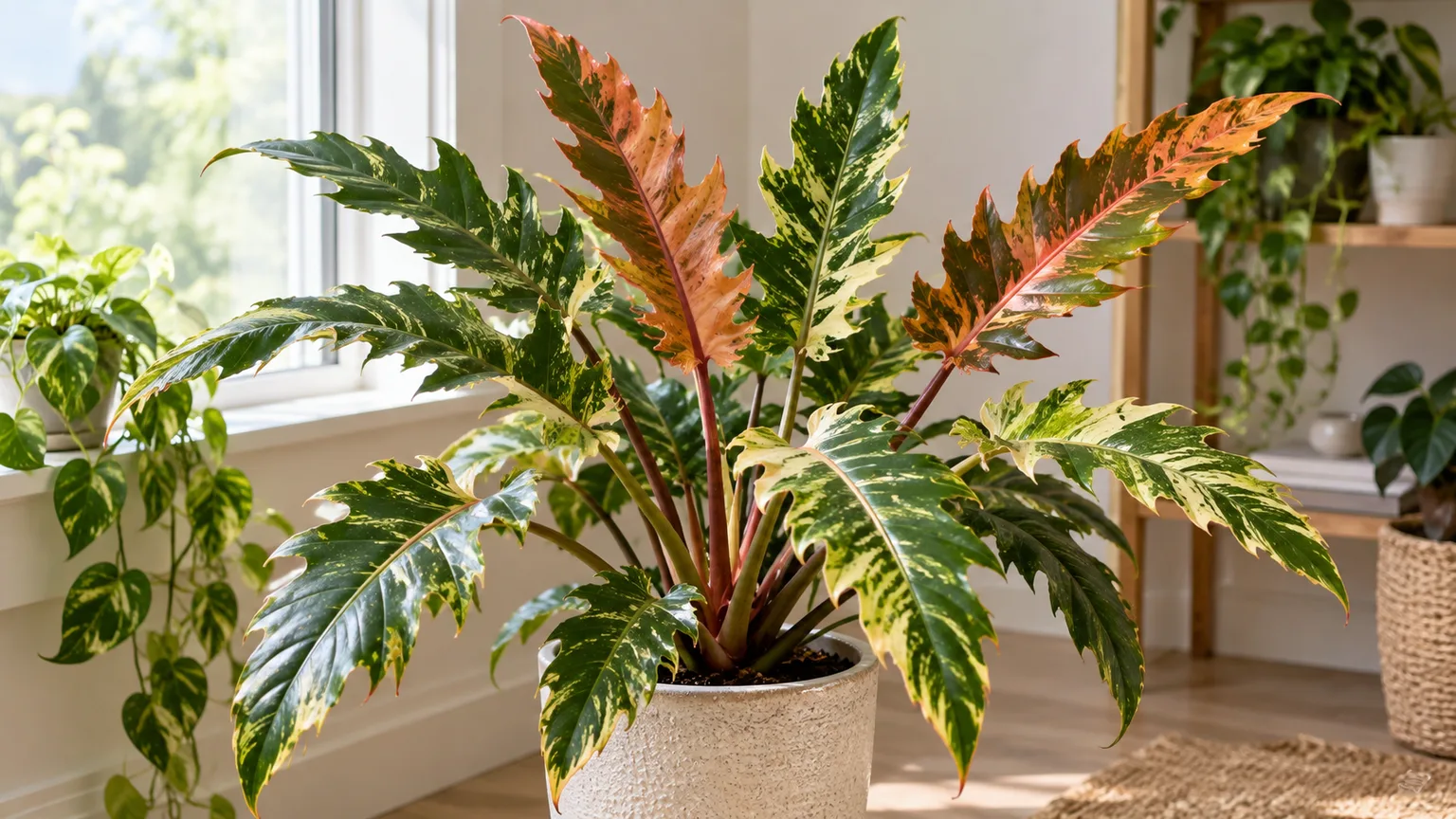
Philodendron ‘Ring of Fire’ is a slow-growing, variegated aroid that rewards consistency more than intensity. Give it bright filtered light, an airy mix in a pot with real drainage, warm temperatures, moderate-to-high humidity with moving air, and water only after the root zone has partly dried. The plant does not need a complicated cabinet or a rigid weekly routine to look good.
The catch is that its colorful leaves make ordinary mistakes more visible. Too little light encourages greener, smaller new leaves; hot direct sun bleaches or crisps the pale tissue; a large wet pot can stay saturated long enough to damage roots; and a cutting with no green tissue may never have the energy to establish. If you remember one principle, make it this: protect the roots, then give the next leaf enough light to pay its way.
For a dependable weekly check, inspect the top few inches of mix, the underside of every leaf, and the newest growth. Rotate the pot a quarter turn if one side is stretching, empty any water left in the saucer, and note whether the plant is actively growing before you feed or propagate. That small inspection is more useful than a care calendar copied from a different home.
What Philodendron Ring of Fire is—and what “variegated” means
Ring of Fire is sold as a named cultivated philodendron with long, deeply serrated leaves and irregular patches or sectors of green, cream, yellow, orange, and red. New leaves can open with warmer color and change as they harden, so the leaf you see unfurling is not always the leaf you will see a month later. Trade labels are not perfectly consistent; you may encounter references to different parentage or names such as “Ring of Fire Variegata,” so buy the plant’s visible structure and health, not a dramatic botanical label alone.
The cultivar’s appeal is also its management clue. Variegated tissue contains less chlorophyll than solid-green tissue, so the plant benefits from stronger usable light than a green philodendron might tolerate. That does not mean placing it against a blazing afternoon window. It means finding the brightest spot where the pale sections stay cool and intact. A Thursd profile of Ring of Fire also describes the cultivar’s changing leaf color, slow pace, and variable growth habit; use those as expectations, not as a promise that every plant will mature identically.
Do not confuse new orange or copper color with a nutrient deficiency, and do not assume a mostly green leaf is automatically unhealthy. Judge the plant by the pattern over several leaves: Is new growth getting smaller and farther apart? Is the color fading only on the newest leaves? Are the pale patches bleached and papery, or are they simply changing as the leaf matures? Those observations lead to better care decisions than trying to force a particular color on an old leaf.
Choose a healthy plant before you bring it home
With a slow-growing collector plant, the best purchase is usually the most balanced one, not the plant with one spectacular almost-white leaf. Look for several leaves with both green and colored tissue, a firm central growth point, and stems or petioles that are upright rather than collapsed. A few cosmetic marks are survivable, but active pests, a sour-smelling pot, mushy tissue, or a crown sitting in wet soil can turn a premium purchase into a rescue project.
Check the newest leaf and the newest cataphyll if you can. A plant that is actively pushing growth has a better chance of adapting to your home than one that is already stalled. Inspect leaf axils, petiole joints, and leaf undersides for cottony clusters, brown scale bumps, fine webbing, or silvery scarring. The Royal Horticultural Society’s philodendron guide similarly recommends choosing plants with strong growth, plenty of roots, and undamaged leaves, and keeping tropical plants warm during the trip home.
Quarantine a new Ring of Fire away from your collection for at least two weeks while you inspect it at each watering. That pause is practical insurance: pests often arrive hidden in leaf axils, and a plant that looked fine under a shop’s bright lights may reveal a wet, compacted root ball once it has been in your room for a few days. Do not repot automatically on day one unless the mix is staying wet, the pot has no drainage, or you have found rot; unnecessary disturbance adds stress to a plant that already grows slowly.
Give it bright light without bleaching the leaves
Aim for bright, indirect light for most of the day. An east-facing window with gentle morning sun is a good starting point; a bright south- or west-facing window can work when a sheer curtain or a few feet of distance takes the heat off the foliage. The RHS growing guide places philodendrons in bright but indirect light and warns that direct summer sun can scorch them.
The pale parts are the first to show sun stress. Bleached cream patches, a papery texture, or crisp brown edges on the window-facing side point to excess intensity; move the plant back from the glass rather than responding by watering more. Direct gentle morning sun can be useful, but hot afternoon rays through a window are a different exposure because glass, still air, and reflected heat raise leaf temperature quickly.
Adjust the distance by reading new growth
Existing leaves cannot recolor themselves after low light or scorch damage, so evaluate the next two or three leaves. A healthy light adjustment usually produces more compact spacing, stronger petioles, and a clearer balance of green with cream or warm tones. If new leaves emerge mostly green, small, or widely spaced, increase light gradually by moving the plant closer to a bright window or adding a grow light above it for a consistent daily period.
Change one variable at a time. Moving from a dim corner directly into intense sun can create the very leaf burn you were trying to prevent. If you use a grow light, start with a moderate distance and a timer, watch the leaf surface for heat, and adjust based on the plant’s response rather than chasing a particular wattage number.
Water by soil dryness, not a weekly schedule
Ring of Fire likes moisture available to its roots but dislikes a pot that stays wet. Because the plant grows slowly, it may use water more slowly than a fast vining philodendron; a calendar that works for one plant can leave this one in saturated mix. Push a finger or a wooden skewer two to three inches into the potting mix. If that zone still feels cool and damp, wait; if it is partly dry and the pot feels lighter, water thoroughly.
When it is time, pour room-temperature water over the mix until some drains from the bottom, then let the pot finish draining before returning it to its saucer or decorative cover. Never let the base sit in runoff. If water immediately races down the sides and out, the mix may have pulled away from the pot or become hydrophobic; water more slowly in two passes, or repot if the root ball is severely compacted.
A reliable watering routine
Use this sequence instead of counting days:
- Check moisture below the surface, not just the top crust.
- Look at the plant: droop and curling can mean thirst, but yellow lower leaves with wet mix suggest root stress.
- Water slowly and evenly until the root ball is wet throughout.
- Empty the saucer after drainage stops.
- Recheck sooner after a hot, bright spell and later during cool, dim winter weeks.
In a warm, bright room, the interval may be around seven to ten days; in a cool or low-light room, it may stretch to two or three weeks. Those are examples, not targets. Hard water can also leave salts on the mix and intensify brown tips over time; if your tap water is very hard, occasional rainwater or filtered water can be a reasonable option. The RHS advises using rainwater or filtered water where possible, particularly in hard-water areas, and keeping water at room temperature.
Build an airy, moisture-holding potting mix
The right Ring of Fire soil mix should hold enough moisture for roots to absorb but leave large air spaces after watering. A practical home blend is equal parts quality indoor potting mix, fine orchid bark, perlite or pumice, and coco coir. The exact recipe can vary with your home: add more aerating material if the pot stays wet for many days, and a little more moisture-holding material if the mix dries almost immediately in a hot, bright room.
Avoid straight garden soil and be cautious with a bag of dense potting soil used alone. A heavy medium can collapse around the roots, slow drainage, and make the surface look dry while the center remains saturated. Mildly acidic, free-draining compost is consistent with the general philodendron guidance from the RHS, but do not chase pH with repeated additives unless you have a specific test result and a reason to correct it.
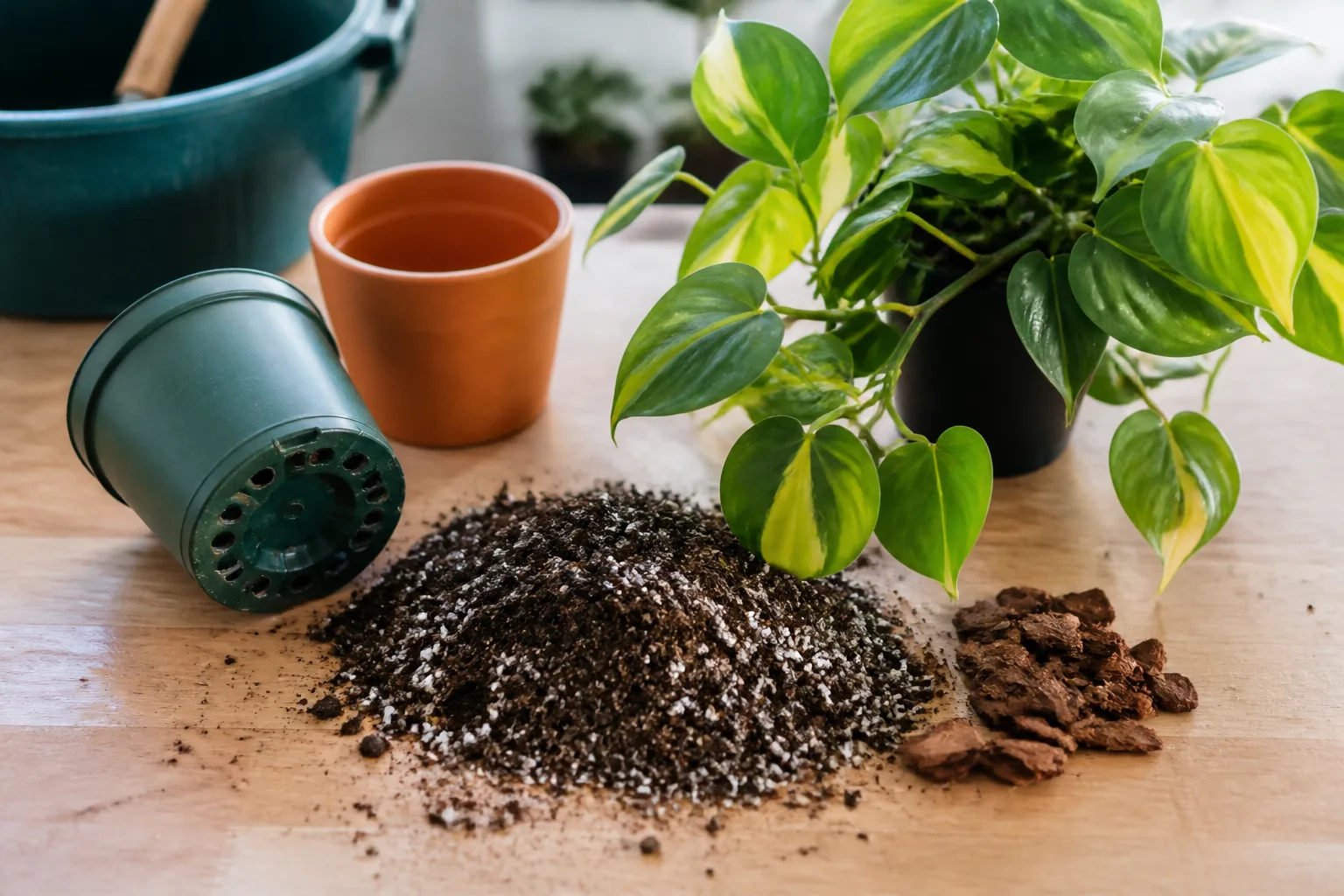
Test a new mix before planting. Wet a handful: it should absorb water, hold together lightly, and then break apart when pressed. In a filled pot, water should move through within a reasonable time without leaving the mix muddy. The goal is not the fastest possible drainage; it is a root zone that stays evenly damp for a while and then clearly dries enough to admit air.
Pot size and drainage are part of the soil system
Use a nursery pot with several drainage holes and a diameter only slightly larger than the root ball. A pot that is dramatically wider than the roots stores a large volume of unused wet mix, which is a common route to root rot. The RHS gives the same practical warning: an oversized container stays wet longer and can damage roots.
Terracotta can help a heavy-waterer’s mix dry more quickly, while plastic holds moisture longer. Neither material is automatically better; match the pot to your watering habits, humidity, light, and mix. A decorative cachepot is fine as an outer sleeve, but remove the nursery pot to water and drain it fully before placing it back.
Temperature and humidity: steady beats extreme
Keep Ring of Fire warm and away from drafts. A working indoor range is roughly 65–80°F (18–27°C), with a hard effort to keep it above about 59°F (15°C). Avoid the cold blast from an air conditioner, the hot dry stream from a radiator, and a doorway where temperature swings repeat every day. Sudden changes can slow growth even when the average room temperature looks acceptable.
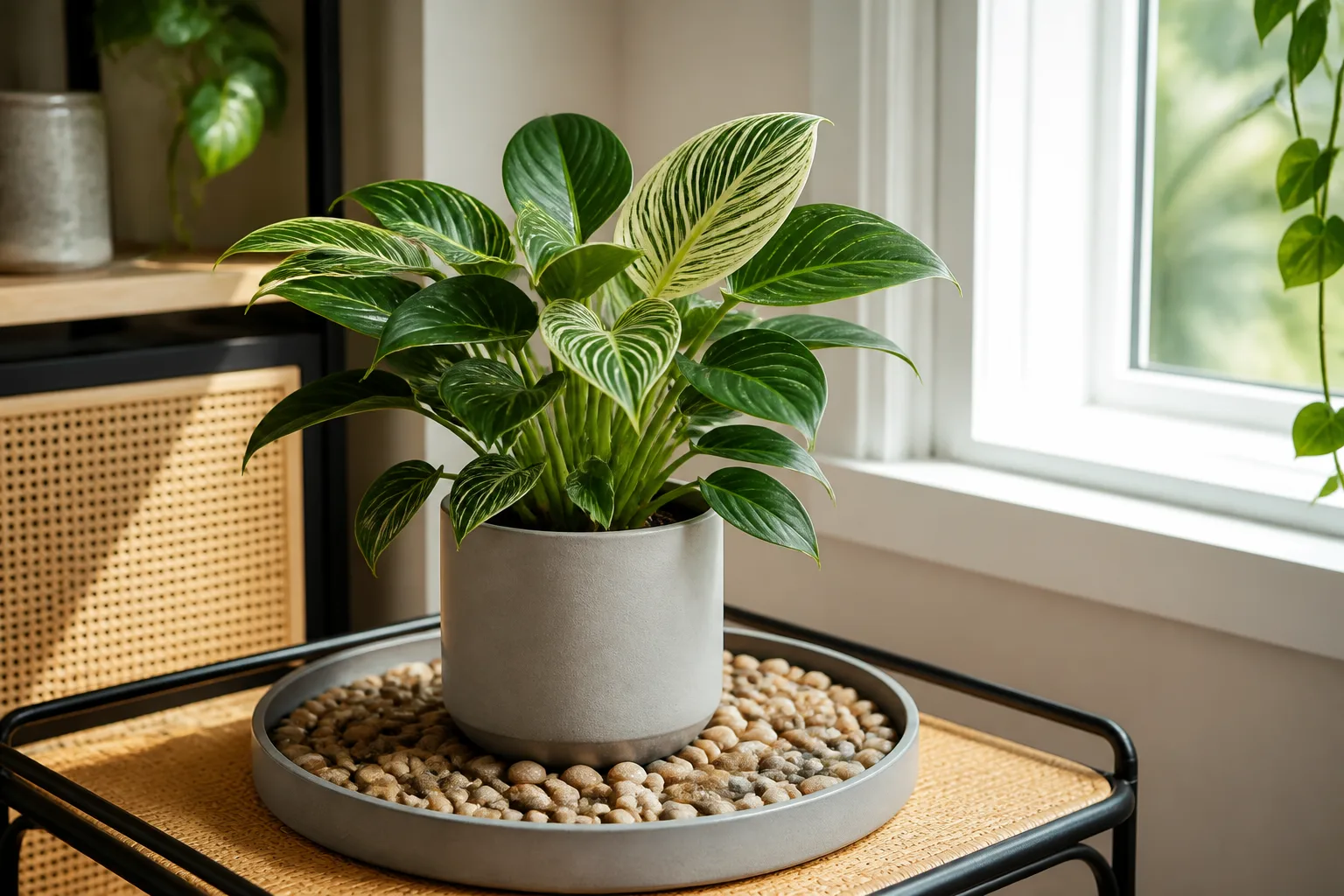
Average household humidity is often tolerated, but new leaves unfurl more cleanly when the air is not extremely dry. A hygrometer near the plant is more useful than guessing from the weather app. Grouping tropical plants, running a clean humidifier nearby, or using a correctly built pebble tray can help; do not let humidity improvements turn into permanently wet leaves or stagnant air. A pebble tray changes the immediate microclimate only modestly, while a humidifier offers a more consistent increase when the room is genuinely dry.
Aim for airflow as you raise humidity. Brown tips can come from dry air, but brown or black spots that expand in still, wet conditions point in a different direction. Leave space between pots and use a small fan on a gentle setting if air never moves; the leaves should not flap continuously.
Fertilize lightly while it is growing
Feed during active growth—usually spring and summer indoors—with a balanced liquid houseplant fertilizer diluted according to its label. A slow plant does not need a heavy dose to prove that it is alive. Water the mix first if it is bone dry, and do not fertilize a recently repotted plant or a stressed cutting until it has resumed growth.
Reduce or pause feeding when light and temperature fall and the plant stops producing leaves. Brown margins, a white crust on the mix, or sudden decline after repeated feeding suggest salt buildup or overfertilization rather than hunger. Flush the pot with plain water until it drains freely, empty the runoff, and wait for active growth before feeding again. More fertilizer cannot create variegation in a leaf that is genetically or developmentally set.
Decide whether to keep it bushy or add support
Young Ring of Fire plants often sit upright in a compact rosette. With age, some develop a more obvious stem, lean, or produce aerial roots. You can keep that sculptural, bushy look on a stable stand, or add a slim stake, coir pole, or moss pole when the plant begins to need support.
Support is not mandatory for a healthy plant. It becomes useful when the pot tips, petioles crowd one another, or you want the plant to grow vertically rather than sprawl. Tie stems loosely with soft material and attach the support during repotting if possible so you do not sever established roots. If you use a moss pole, keep the moss lightly moist only when aerial roots are actually reaching it; a permanently soaked support beside a small root ball can add unnecessary moisture.
Training can influence the display and, over time, leaf maturity, but it will not turn a slow self-heading plant into a fast wall-climber overnight. Give the plant the support you can maintain. A compact plant in excellent light is a better outcome than a tall plant tied tightly to a pole it cannot safely carry.
Propagate from a green, nodal cutting
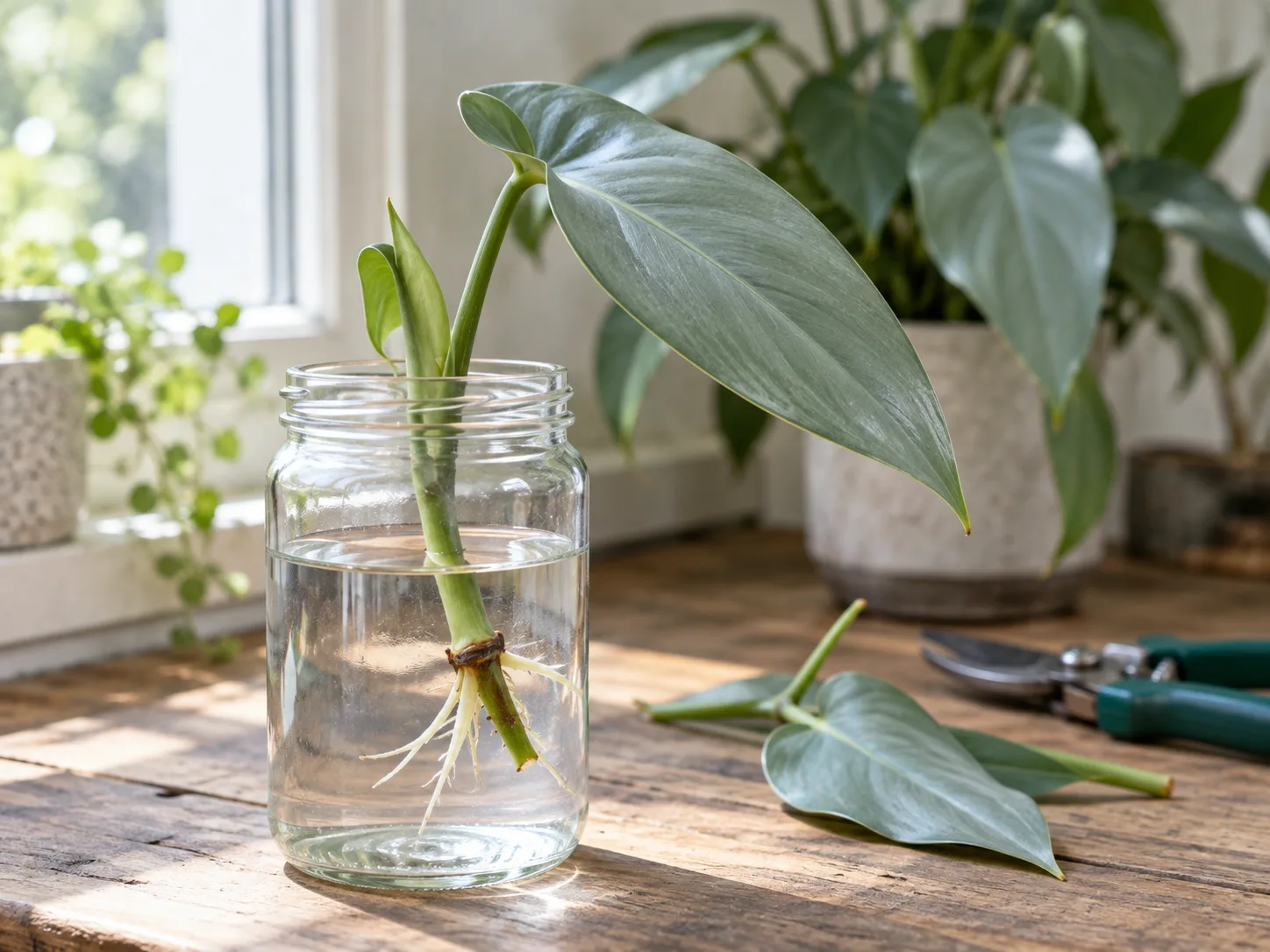
The dependable starting point is a healthy stem section with at least one visible node—the joint where a leaf, bud, or aerial root emerges—and some green tissue. A leaf without a node cannot make a new shoot, and a cutting that is entirely cream, white, or orange may lack enough chlorophyll to fuel rooting. Choose a section with a balanced mix of green and variegated tissue, and leave the parent plant with enough leaves to keep growing.
Take cuttings in spring or summer when the plant is warm and actively moving. Sterilize a sharp blade or pruner, cut just below the node, and remove any leaf that would sit under the water or propagation medium. You can root the cutting in water, damp sphagnum, perlite, or a loose aroid mix. The RHS propagation guidance for philodendrons supports spring-to-late-summer stem cuttings, while Healthy Houseplants’ Ring of Fire guide emphasizes warmth, bright indirect light, humidity, and patience for this slow cultivar.
Water propagation, step by step
- Fill a clean, narrow container with room-temperature water.
- Place the node below the waterline and keep every leaf above it.
- Set the cutting in bright indirect light in a warm, draft-free spot.
- Refresh the water when it becomes cloudy or develops an odor; keep the node clean rather than topping up indefinitely.
- Look for firm white or cream roots. Ring of Fire can take several weeks, and no visible roots after two weeks is not automatically failure if the cutting remains firm.
- Transfer it when the roots are roughly one to two inches long and the plant shows continued firmness or new growth.
Use a small pot and the same airy mix as the parent. Keep the new medium slightly more evenly moist for the first week while water-grown roots adapt, then lengthen the drying interval. A cutting that turns soft, brown, or foul-smelling is rotting; cut back to firm tissue only if a healthy node remains, otherwise discard it and clean the container.
Repot, prune, and clean with a light touch
Repot when roots circle the inside of the container, emerge from drainage holes, the mix has broken down into a dense mass, or watering has become erratic because the root ball fills the pot. For a healthy plant, that may be every two to three years rather than annually. Spring or early summer is the gentlest window because roots can resume growth quickly.
Slide the plant out, inspect the root ball, and trim only roots that are mushy, black, or clearly dead with sterilized shears. Move up one pot size, keep the crown at its former depth, fill around the roots with fresh mix, and water it through. Keep the plant out of harsh direct sun for a short recovery period, then return it to its normal bright location. Do not fertilize until new growth shows that the root system has settled.
Pruning is mostly sanitation and shaping. Remove a fully yellow or badly damaged leaf by cutting its petiole close to the stem, and wipe dust from healthy leaves with a soft damp cloth. Prune for a cutting just above a node only when the parent is large enough to lose that section. Do not remove every mostly-green leaf in a panic; green tissue is the plant’s working power source, and a severe haircut can slow recovery.
Diagnose yellow leaves, brown tips, and lost color
One old lower leaf turning yellow can be ordinary aging. Several leaves yellowing in quick succession, especially while the mix remains wet, deserves a root-zone inspection. Underwatering tends to produce a light pot, dry mix, droop, curling, and crispy margins; overwatering often combines yellow lower leaves with a pot that stays heavy, a sour smell, or soft roots.
Brown tips are not a diagnosis by themselves. Low humidity, inconsistent watering, salt buildup, root damage, direct sun, and cold or hot drafts can all create brown tissue. Look at the pattern: crispy tips on otherwise firm leaves after a dry spell suggest water or air stress; a white crust and repeated feeding suggest salts; bleached patches on the glass-facing side suggest sun; brown spots with a yellow halo that expand suggest a leaf-spot problem rather than ordinary dryness.
Loss of variegation is usually most useful to read on new leaves. If new leaves are smaller, farther apart, and greener, increase usable light gradually. If a leaf opens orange or cream and later turns greener, that may be normal hardening rather than a failure. A fully green shoot can remain green; pruning it is a choice to preserve the look of the plant, not a guaranteed way to make the next leaf variegated.
Separate root trouble from leaf-surface trouble
When the plant looks unhappy, check in this order:
- Feel the mix. Wet for many days means pause watering and inspect drainage; bone dry means rehydrate slowly and reassess the pot size.
- Inspect the roots if decline continues. Healthy roots are firm and pale to tan; mushy, dark, foul-smelling roots are a root-rot warning.
- Read the damage location. Window-side bleaching is different from lower-leaf yellowing, and leaf-edge crisping is different from expanding spots.
- Check the newest growth. New leaves reveal whether the environmental change is helping; old damage will not be erased.
If roots are rotten, remove the plant from the wet mix, cut away only dead tissue, and repot into a clean container with fresh airy mix. The Connecticut Agricultural Experiment Station’s philodendron plant-health guidance connects root rot with yellowing, browning, decline, overwatering, and standing water, and recommends clean pots and sterile mix. Do not keep a severely collapsing plant in wet soil while waiting for a leaf symptom to identify itself.
Pests, leaf spot, and safe handling
Inspect leaf undersides and axils at every watering. Spider mites prefer hot, dry conditions and leave fine webbing or stippled foliage; mealybugs look like cottony clusters; scale appears as small fixed bumps; thrips can scar tender new growth. Isolate an affected plant, wash foliage gently if appropriate, and use only a product labeled for indoor plants and the pest you have identified. Repeat according to the label rather than applying a stronger homemade concentration.
Leaf spot needs a different response from dry tips. Water the soil rather than splashing the foliage, improve air movement, remove leaves that are actively spreading lesions, and sterilize tools between cuts. The Connecticut Agricultural Experiment Station notes that bacterial leaf spot can begin as water-soaked areas, expand into dark lesions, collapse petioles, and spread through handling or splashing water. Severely affected plants may not recover well, so isolate first and protect the rest of your collection.
Ring of Fire is not pet-safe. Philodendrons contain insoluble calcium oxalate crystals; the ASPCA plant-safety entry lists oral irritation, mouth and tongue swelling, drooling, vomiting, and difficulty swallowing as clinical signs in pets. The Pet Poison Helpline philodendron guidance likewise warns that chewing can cause painful irritation and, rarely, breathing difficulty from throat swelling.
Keep the pot where cats, dogs, and children cannot chew leaves or pull down the container, and pick up fallen leaves and pruning debris. Wear gloves when pruning if the sap irritates your skin. If a pet or child has chewed the plant, contact a veterinarian, poison-control service, or medical professional promptly; breathing trouble is an emergency. Do not wait for a houseplant remedy to determine the severity of an exposure.
Conclusion: care for the next leaf
The easiest way to grow a good Philodendron Ring of Fire is to make its environment predictable. Put it in bright filtered light, use a small well-drained pot with an open mix, let the root zone partly dry, keep it warm with reasonable humidity and airflow, and feed only when it is actively growing. Then judge success by new leaves, firm roots, and a stable watering rhythm—not by whether every older leaf keeps the same color.
This is a plant for patient observers. A few minutes spent checking the underside of a leaf, feeling below the surface, or tracing a node before cutting prevents the expensive mistakes that slow it down. Protect the green tissue, keep wet soil from lingering, and give each new leaf the light and space it needs to become the next reason you wanted a Ring of Fire in the first place.



