Quick-Impact Container Garden in April: How to Plant
Plant a lush April container garden with thriller-filler-spiller design, mature bloomers, bulb layers, and smart pot prep—plus what to buy now vs wait on frost.
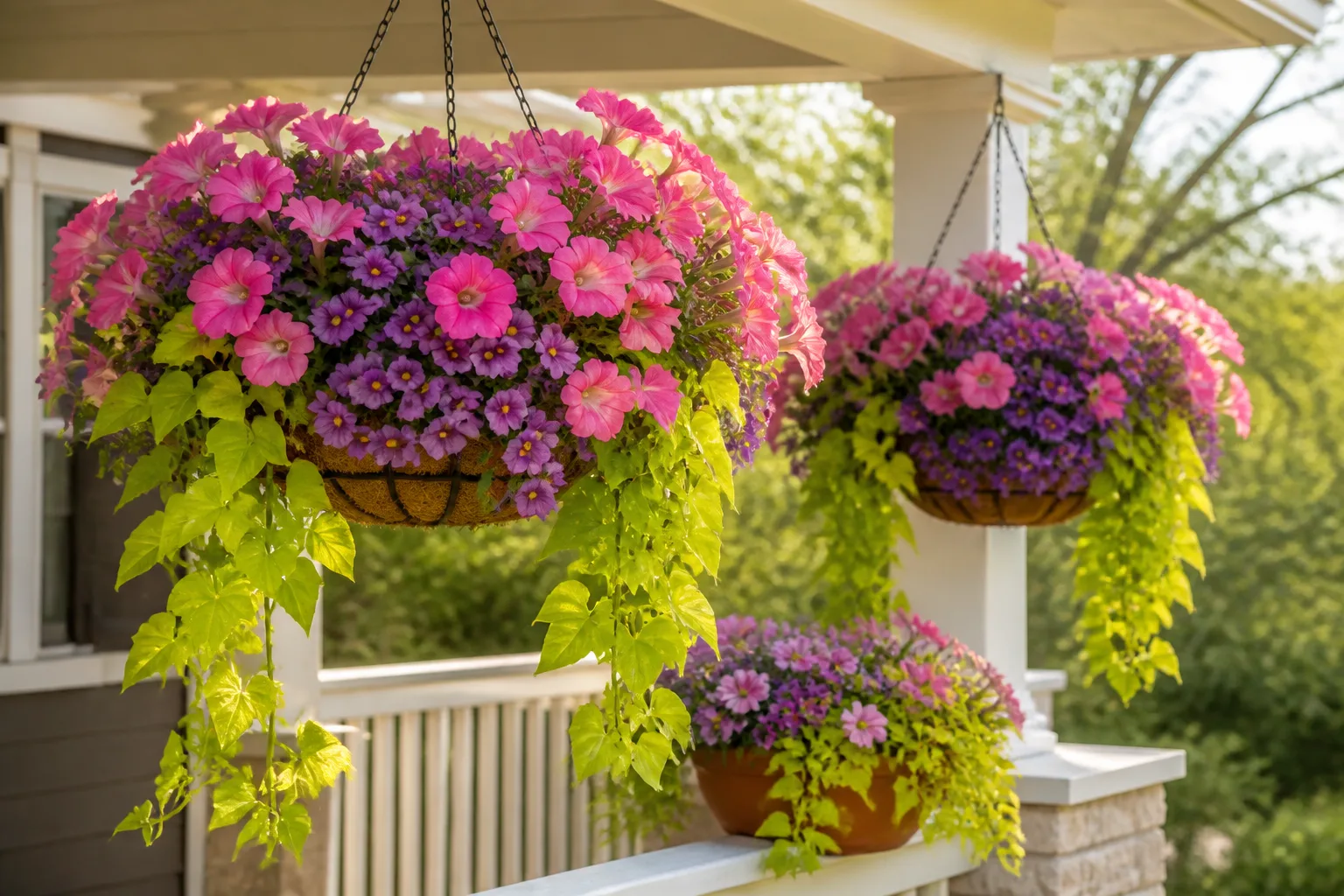
If March slipped past without a single pot planted, April is still one of the best months to build containers that look finished the day you set them out. Garden centers are stocked with cool-season bloomers, shrubs in flower, and summer annuals just arriving on benches. The job is not to copy a magazine photo plant for plant. It is to match your light, respect your last frost window, and use a simple design formula so one pot carries color from now through summer without a mid-May collapse.
A quick-impact container garden means you buy for structure today and succession tomorrow. You are not starting from seed in a windowsill. You are choosing mature plants, placing them with intention, and giving roots a potting mix and volume they can actually use in cool, often wet April weather.
Why April Containers Solve a Missed Spring Start
Containers buy flexibility that in-ground beds do not. You can move a pot off a cold north wall toward a warmer microclimate, pull it under an overhang when a late frost is forecast, and swap a tired filler without disturbing an entire border. The RHS treats containers as one of the fastest routes to seasonal color on patios and balconies because you control soil, drainage, and placement from day one.
April sits in the hinge between cool spring and warm summer. In many USDA zones, pansies, violas, and early shrubs still look strong while tender petunias and calibrachoa are appearing on retail benches. That overlap is an advantage. You can build a pot that reads lush immediately with cool-tolerant partners, then let heat lovers take over as nights warm—or plant a second, simpler summer pot once frost risk drops. Either approach beats staring at empty terra cotta because you thought the planting window closed in March.
Read Light and Frost Risk Before You Buy a Single Plant
The most expensive container mistake happens in the cart, not at home. Every plant in one pot must share the same light and similar water needs. A shade-loving spiller under a sun-hungry thriller will look fine for ten days, then one side fails while you wonder what went wrong.
Match Sun Exposure Across Every Plant in the Pot
Stand where the pot will live and note how many hours of direct sun hit that spot between 10 a.m. and 4 p.m. Full sun means six or more hours; part sun is roughly four to six; part shade is bright light with little direct midday sun; shade is filtered light without direct rays. Proven Winners’ thriller-filler-spiller guidance assumes you have already solved this step—height and trailing form only work when every plant tolerates the same exposure.
Reflected heat matters on balconies, driveways, and south-facing walls. A pot that is “part sun” on paper can behave like full sun in practice. If you are unsure, buy one inexpensive tester plant, place it in the target pot for a week, and watch for stretching (too little light) or bleached, crisp foliage (too much).
Which April Purchases Can Wait for Warmer Nights
Last frost date is your guardrail for tender summer annuals. Until nights are reliably above about 50°F (10°C) in your area, hold off on heat lovers like basil, coleus in cold regions, and many tropical spillers unless you can move pots indoors or cover them easily. Cool-season staples—pansies, violas, snapdragons, ornamental kale, and many spring shrubs—tolerate light frost and are safe April anchors.
If your garden center is already selling geraniums and petunias in full bloom, you can buy them in April when you accept the workload: watch the forecast, cover or roll pots into a garage on cold nights, and harden them off gradually. For a lower-stress quick-impact pot, shop the cool bloomers now and add one or two summer fillers in bud that will open as temperatures climb.
Build Around Thriller, Filler, and Spiller
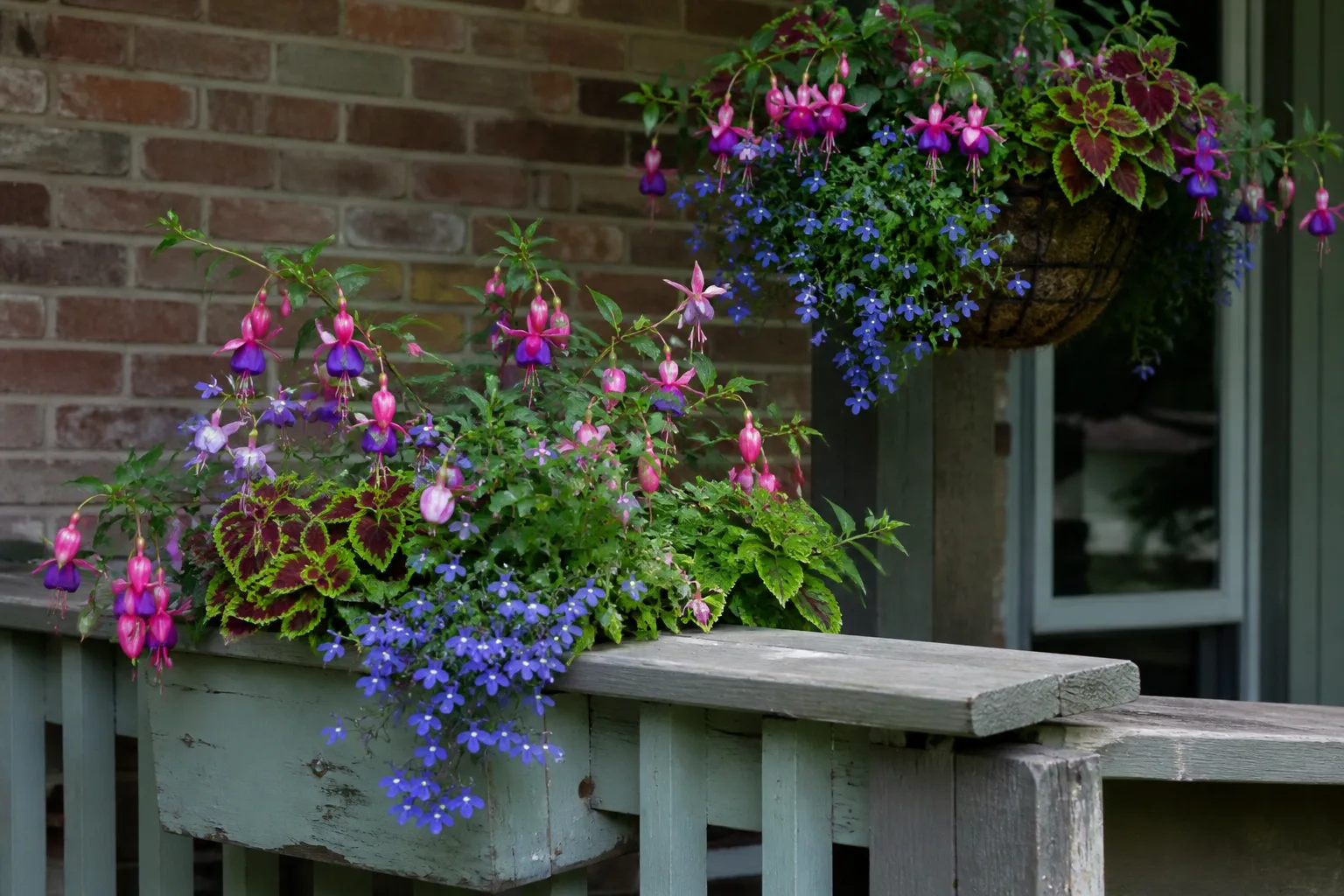
The thriller-filler-spiller formula is the fastest way to make a single pot look designed instead of crowded. Proven Winners defines thrillers as upright focal plants, fillers as mounding plants that occupy the middle zone, and spillers as trailing plants that break the hard line of the pot rim. Placement depends on viewing angle: center the thriller in a pot seen from all sides; set it at the back if the pot sits against a wall.
| Pot diameter | Thriller | Filler | Spiller |
|---|---|---|---|
| 12–14 in. | 1 small | 2–3 | 2–3 |
| 16–18 in. | 1 | 3–4 | 3–4 |
| 20–24 in. | 1–2 | 4–5 | 4–5 |
These counts assume nursery packs or 4-inch starts. Upsize or reduce if root balls are unusually large or varieties are famously vigorous—sweet potato vine and trailing petunias count as more than one plant in a small pot.
Thrillers That Look Good in April
Your thriller supplies height and drama. In April, strong choices include:
- Spring-flowering shrubs in bloom or tight bud: compact azalea, camellia, or rhododendron cultivars sized for pots
- Bleeding heart (Dicentra) for shaded compositions with arching stems
- Ornamental grasses such as purple fountain grass for sun—movement reads even before plumes fully develop
- Upright bulbs already flowering: tulips or daffodils with foliage still green
- Dracaena spike or cordyline for a neutral vertical spine you can surround with color
Put one thriller per standard pot unless the container is very large. Two vertical plants fight for attention in anything under about 20 inches across.
Fillers That Bridge Spring Into Summer
Fillers hide soil, connect the thriller to the rim, and carry most of the flower power in mixed designs. For April quick impact, look for mounding plants that are blooming now but not finished by May:
- Pansies and violas for cool weather; violas often recover better from heat than large-flowered pansies
- Wallflowers (Erysimum) for fragrance and warm-toned clusters
- Diascia, nemesia, or osteospermum where your climate stays mild
- Petunias or calibrachoa in warming zones or on protected porches—see our cascading flowers for container gardens guide for spiller-grade varieties that also mound well
Aim for fillers that reach roughly half the height of your thriller. Pack them midway between the center and the edge so spillers still have rim space.
Spillers That Soften the Rim on Day One
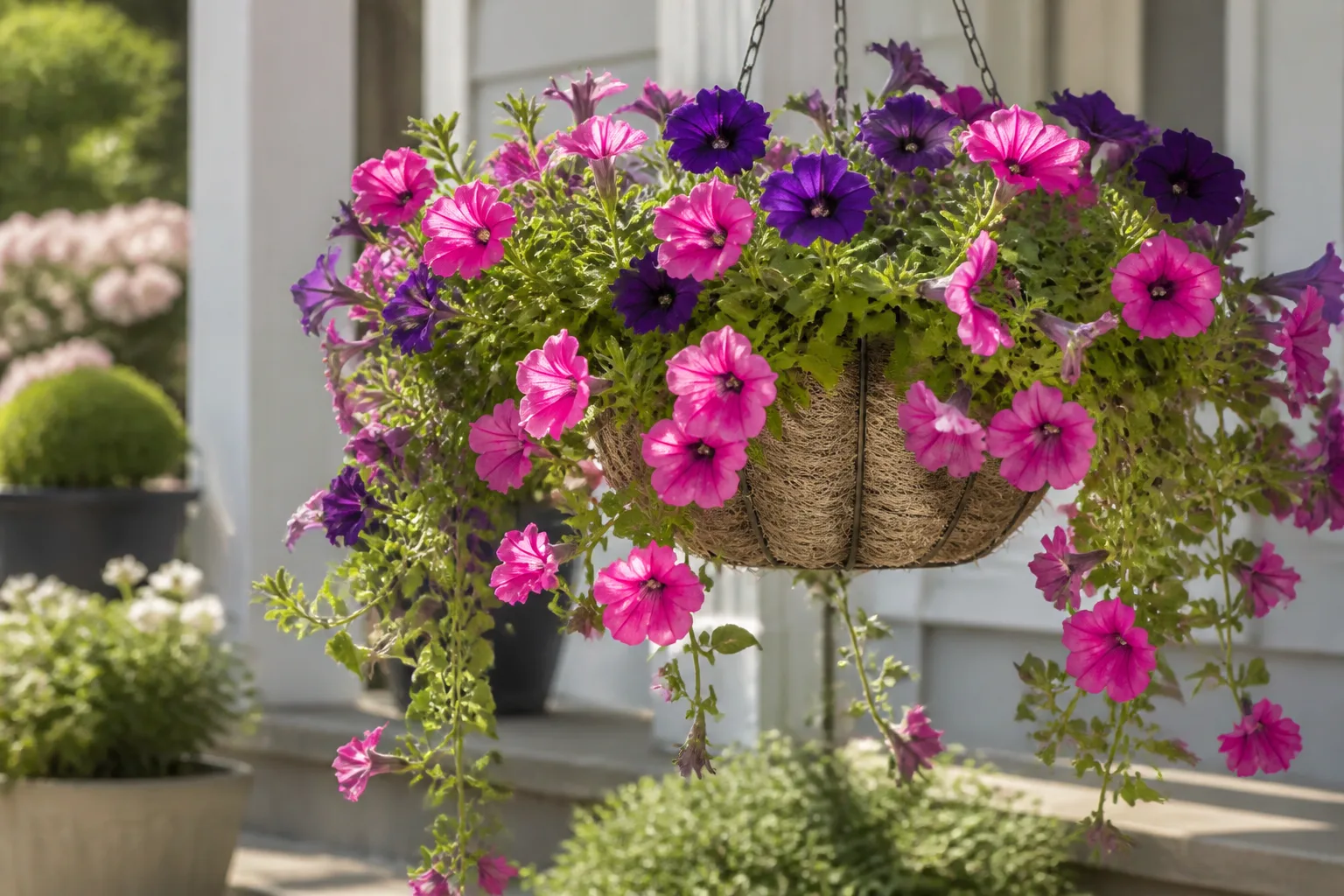
Spillers finish the composition. In April, reliable options include ivy, creeping Jenny (Lysimachia nummularia), bacopa, trailing lobelia, and sweet potato vine. Place spillers at the pot edge with stems angled slightly outward so they know which way to grow. If the pot is viewed from one side only, cluster spillers along the front. For 360° viewing, space them evenly.
Spillers are also the first plants to look tired when a pot dries unevenly. Our spiller plant care guide covers watering and trimming so edges stay crisp through summer.
Shop Mature Plants—and Know What “In Bud” Means
Quick impact requires transplants, not seed trays. Walk past six-pack seedlings unless you have four to six weeks to spare. Instead, choose quart or gallon pots with healthy root systems that fill the container without circling tightly.
For the longest show, buy plants in bud more than in full flower. A camellia covered in open blooms is stunning on the porch today and quieter in two weeks. One with tight buds and fresh foliage gives you a longer peak. The same rule applies to pansy bowls, clematis, and spring bulbs forced in pots: some color now, more coming.
At checkout, lift plants out of pots if tags allow. White, firm roots beat a brown, waterlogged mass. Reject plants with gray mold on soil, chewed centers, or stems broken at the crown. You are paying for time saved; damaged stock erases that advantage.
Layer Bulbs Under Bloomers for Succession Color
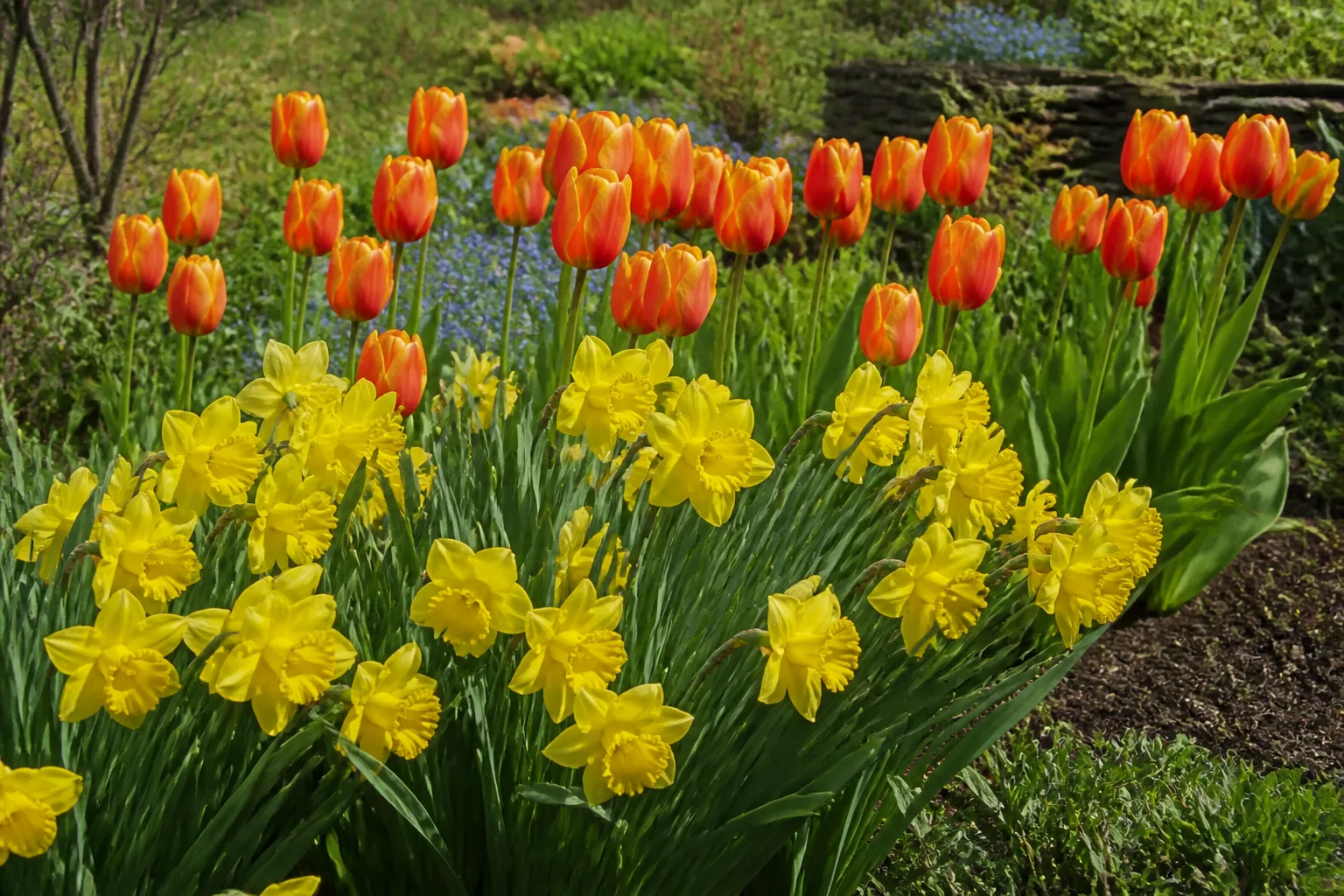
Lasagna planting in a container works like layered bulbs in the ground: large, late bulbs sit deepest; small, early bulbs sit higher; finishing annuals or small shrubs go on top. In April you are planting backward through time—the top layer is what you see now, and buried bulbs are your succession plan.
Use a pot at least 14–16 inches deep with drainage holes. Add potting mix, then a layer of tulip or allium bulbs if your climate still allows planting (sooner is better, but pre-chilled bulbs can go in while soil is cool). Cover with mix, add a layer of smaller bulbs such as grape hyacinth or crocus if space allows, cover again, then plant your April thriller and fillers at normal depth.
Water once after assembly and label what you buried. When top annuals fade in late spring, bulb foliage will be emerging. Do not yank the pot the moment the first layer looks tired—let bulb leaves photosynthesize until they yellow, or next year’s bloom suffers.
Lean on Foliage When Flowers Pause
Flowers are the headline in April, but foliage is the insurance policy. Variegated ivy, bronze coral bells, silver artemisia, and fine-textured grasses keep a pot readable on rainy weeks when petals collapse. Texture contrast also matters more than perfect color matching: a bold grass thriller with lacy trailing lobelia reads professional even with fewer open blooms.
If your thriller is a one-time spring shrub, surround it with foliage-heavy fillers you can keep after the shrub moves to a border. That way the container does not go empty when flowering ends.
Fast-Growing April Picks Worth the Bench Space
Speed matters when you are planting late. Aubrieta, creeping phlox, and sweet alyssum spread quickly at the rim. Petunias and calibrachoa on a warm site can cover soil within two weeks of planting. In partial shade, fibrous begonias and impatiens (where downy mildew is not a regional issue) fill fast.
Shrubs such as forsythia or early magnolia are tempting thrillers but often outgrow pots in one season. Treat them as temporary April centerpieces you will transplant or donate by June unless the container is oversized. Fast growth is an asset only when you have a plan for the aftermath.
Add Height With Climbers and a Trellis
A pot with a trellis or obelisk buys vertical interest without a bulky shrub root ball. April-friendly climbers include early-blooming clematis cultivars, compact wisteria (know it will need annual pruning), and star jasmine (Trachelospermum) where hardy—fragrant flowers may wait until early summer, but evergreen foliage carries the structure.
Use a deep, heavy pot so the trellis does not topple. Plant the climber at the back or center with root ball angled toward the support. Tie stems loosely with soft twine; do not strangle new growth. The RHS notes that early-flowering clematis of moderate vigor are among the best climbers for containers—avoid the most rampant species in a 12-inch pot.
Pair a climber pot with simpler satellite pots at the base if you want ground-level color without crowding roots.
Choose Pot Size, Soil, and Smart Spacers
Bigger pots are easier to keep alive. More soil volume holds moisture and nutrients longer, which matters when April sun is weak but wind is drying. For a mixed thriller-filler-spiller display, start at 16 inches diameter if space allows. Small cute pots are fine for a single viola bowl; they are unforgiving for five-plant combinations.
Use bagged potting mix labeled for containers—not garden soil, which compacts and suffocates roots. Mix in slow-release fertilizer at label rates at planting time. The National Gardening Association emphasizes that container plants depend entirely on you for water and nutrients because their root zone is isolated from ground soil.
Drainage Without the Old Rocks-at-the-Bottom Myth
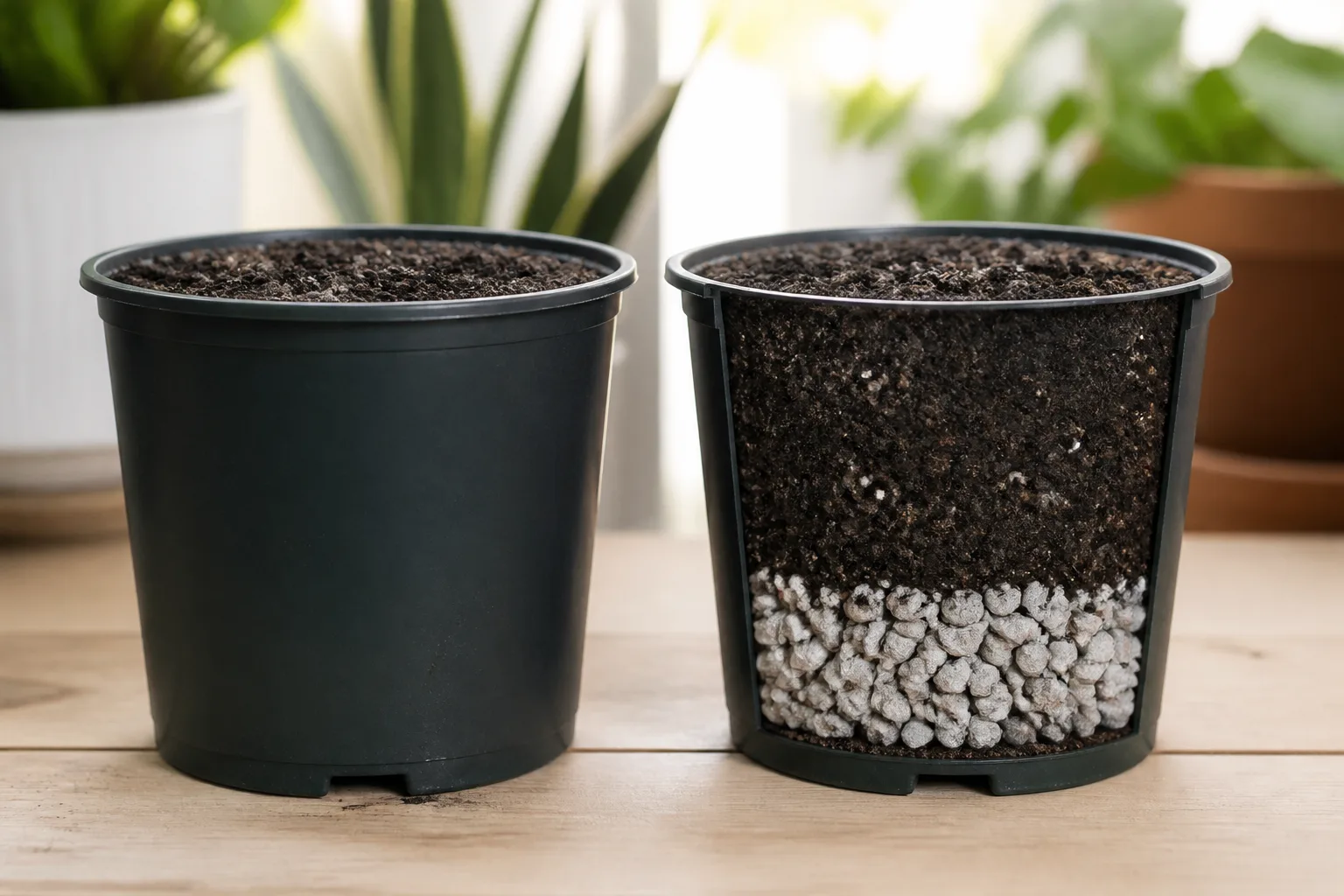
Deep decorative pots tempt gardeners to fill the bottom with broken pottery, bottles, or large rocks to save soil. A thin layer of coarse spacers—shards or lightweight filler—can reduce weight in very tall pots, but the growing zone still needs enough depth for roots. The critical rule is drainage holes that stay open, not a reservoir of rocks that can perch water above a saturated layer.
If your pot lacks holes, drill them or use it as a cachepot with a nursery liner lifted on pot feet. In rainy April climates, elevate pots slightly so they never sit in a saucer of standing water overnight.
Planting Order, the Tilt Trick, and First-Week Care
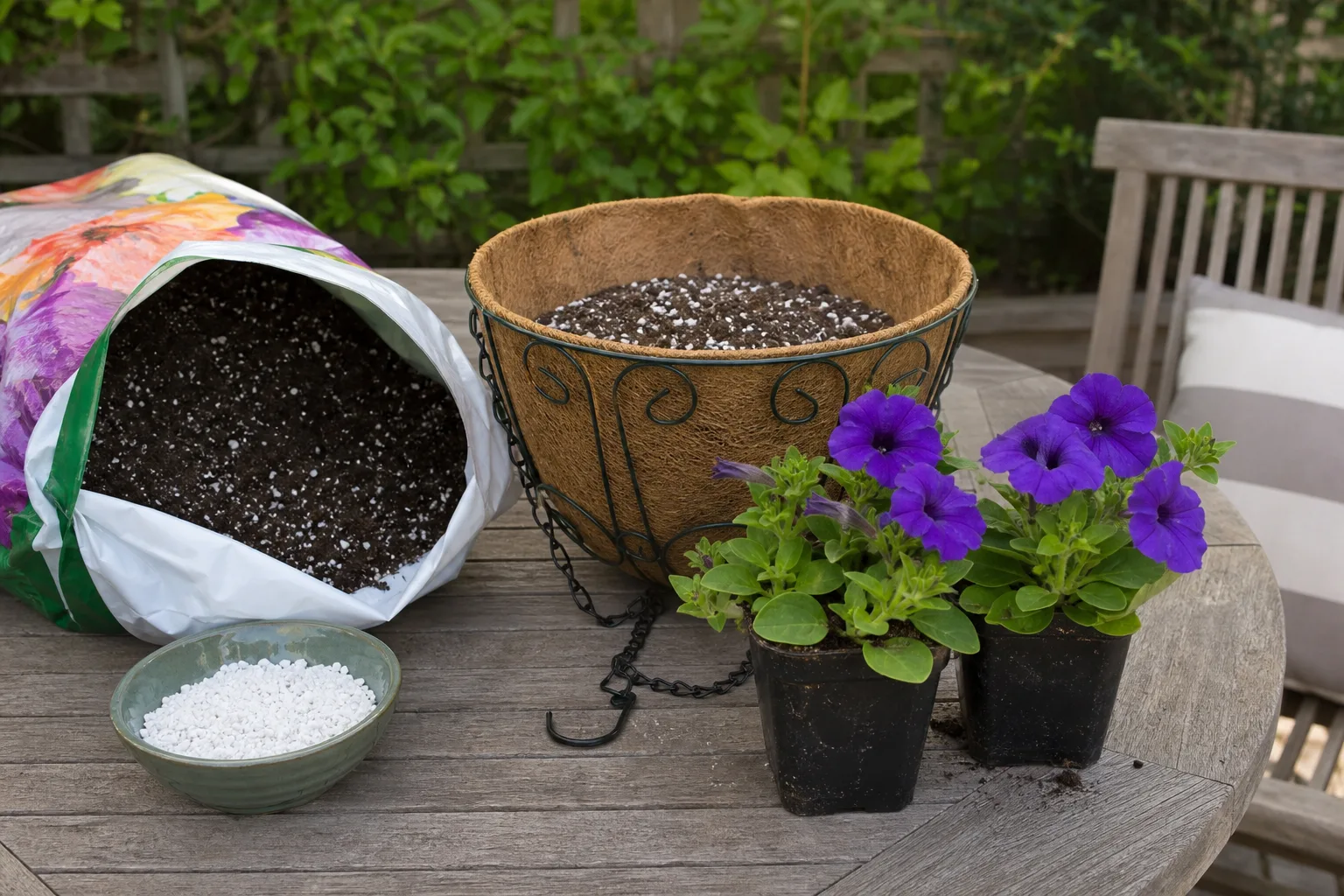
Plant center out, rim last:
- Moisten potting mix lightly so it does not repel water when you first irrigate.
- Place the thriller at the correct depth—top of root ball even with or slightly below the rim.
- Add fillers around it, leaving space for spillers at the edge.
- Set spillers with stems angled outward; firm mix gently so plants do not rock in wind.
- Water slowly until excess runs from drainage holes.
The tilt trick helps new pots look fuller immediately: angle spillers and some fillers slightly toward the viewer or walkway so the mass projects over the rim instead of sitting upright like classroom seedlings. Do not bury stems deeper than they grew in the nursery—tilt the root ball position, not the planting depth.
For the first week, check moisture daily by sticking a finger into the mix near the center. April rain may keep pots wet for days; resist watering on schedule alone. If nights remain cool, hold liquid feed until active growth resumes. Pinch spent pansy blooms to keep fillers producing.
Move finished pots to their display location and leave them there when possible. Repeated moving stresses tender new roots and dries foliage unevenly.
Keep the Display Full After the April Rush
Quick impact is day one. Maintenance is what separates a pot that peaks in mid-April from one that still earns compliments in July. Deadhead cool-season annuals as flowers fade. Swap a collapsed filler if you kept a spare in a nursery pot—slide it in without rebuilding the whole composition.
When summer heat arrives, increase watering frequency and switch to a diluted liquid feed every two weeks if slow-release fertilizer is exhausted. Trim leggy spillers by one-third after watering to force branching; details are in our best spiller plants for containers roundup.
If a shrub thriller finishes its spring show, prune lightly after bloom per species guidance, or remove it and promote a filler to center stage. Containers are allowed to evolve. That is the point.
Conclusion
April is not a consolation month for gardeners who missed March—it is a sweet spot for mature plants, cool-season color, and smart layering that pays off in May and June. Read your light and frost window, build with thriller-filler-spiller logic, choose transplants in bud as well as bloom, and give roots a large enough pot with real potting mix and working drainage. Add bulbs beneath for succession, foliage for rainy weeks, and a trellis if you want height without a shrub’s root demands. Plant center to rim, tilt spillers for instant fullness, and water by touch—not calendar—for the first week. Do that once this weekend and your porch stops looking like spring passed it by.