18 Types of Pothos for Your Houseplant Collection
Compare 18 pothos types by leaf color, light needs, growth speed, and rarity. ID tips for lookalikes, pet safety, and beginner picks.
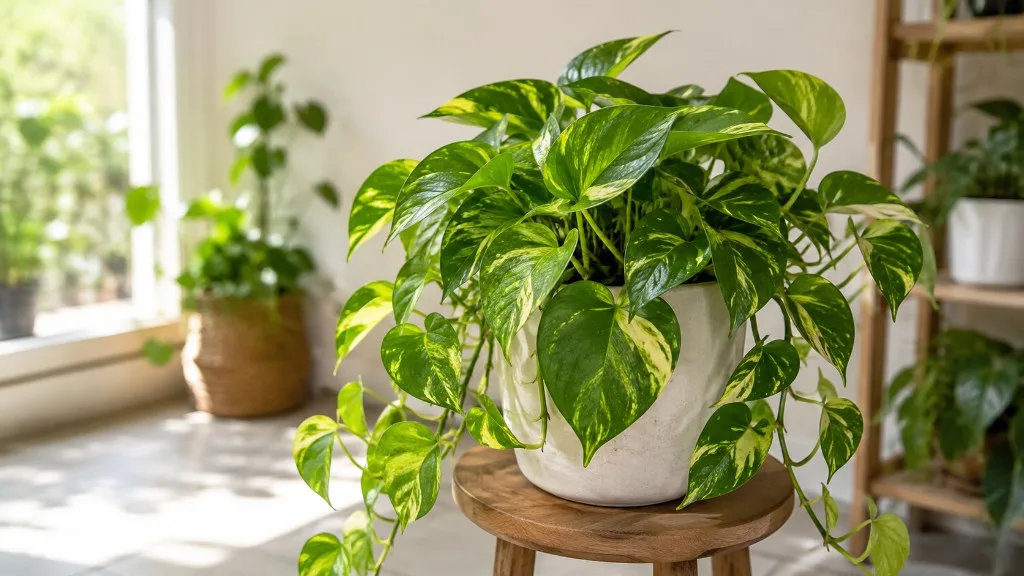
Walk into any plant shop and you will see the word pothos on a dozen different pots — golden vines, silvery satin leaves, blue-tinged climbers, and tiny white-splashed cuttings that all share one care card. That convenience hides a real ID problem. Some are Epipremnum aureum cultivars, others are Epipremnum pinnatum, and two of the most popular “pothos” on this list are actually Scindapsus pictus. Light needs, growth speed, and even pet-risk messaging shift with the genus.
This guide covers 18 pothos types you are most likely to encounter in retail and collector circles, grouped so the names stick. For watering rhythms, soil mixes, and propagation across the group, start with our pothos care overview and the pothos plant hub.
What Counts as a Pothos (Botanical Reality vs. Nursery Labels)
In horticulture, pothos is a common name, not a single species. Most indoor “pothos” are cultivars of Epipremnum aureum, a tropical aroid native to the Society Islands that NC State Extension describes as a trailing evergreen with glossy heart-shaped leaves and vines that can exceed 40 feet in warm climates. Botanists once lumped golden pothos under E. pinnatum ‘Aureum’; modern taxonomy treats E. aureum as its own species with distinct vegetative features.
Epipremnum, Scindapsus, and the Genus Confusion
Retail lists blur three genera:
| What shops call it | Botanical identity | Leaf cue |
|---|---|---|
| Golden, Marble Queen, Neon, N’Joy, etc. | Epipremnum aureum cultivars | Grooved petiole, no papery stipule on new growth |
| Cebu Blue, Baltic Blue, Dragon’s Tail | Epipremnum pinnatum forms | Thinner leaves; mature fenestrations on a support |
| Satin pothos, Silver satin | Scindapsus pictus cultivars | Matte, reflective silver splashes; slower growth |
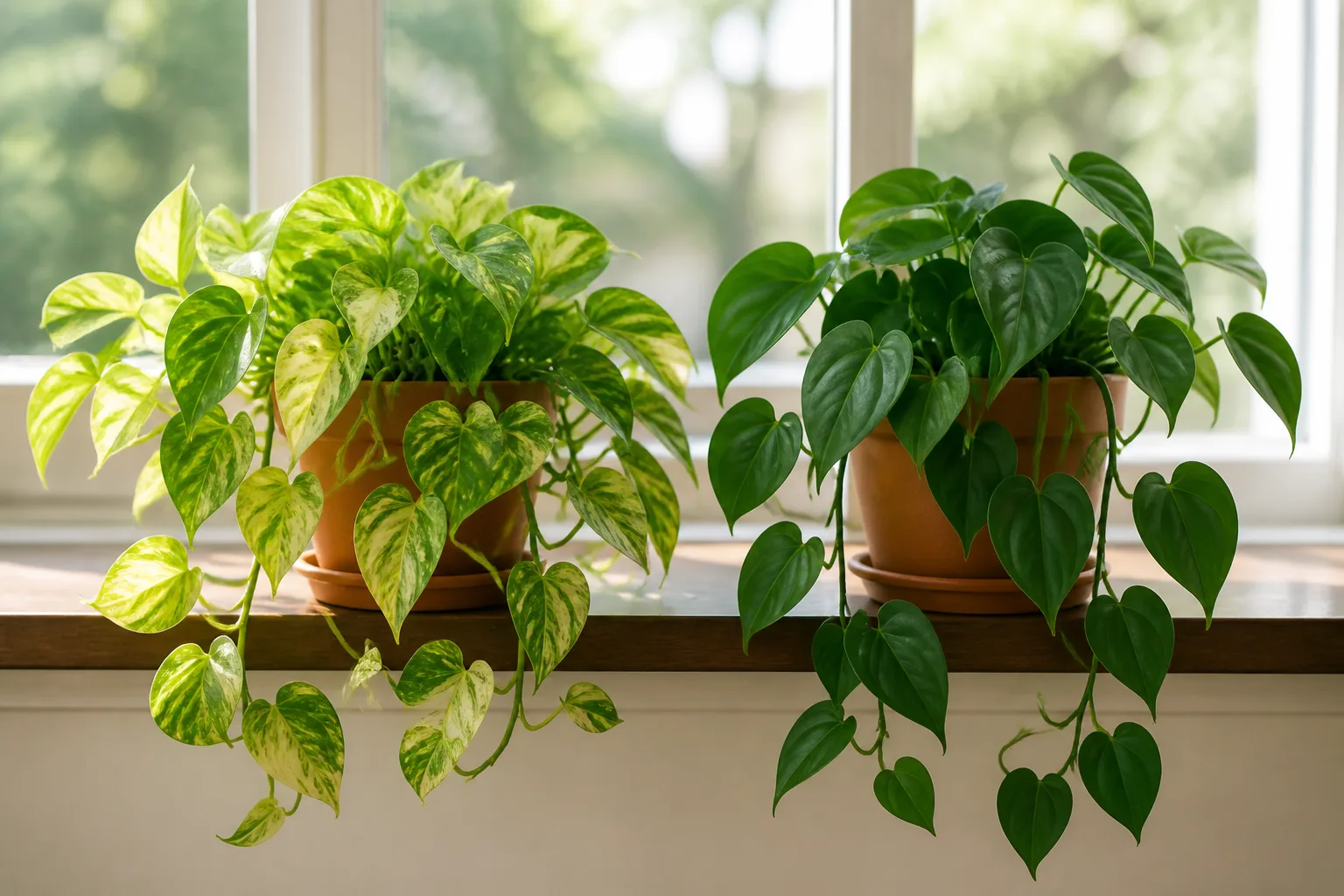
NC State Extension notes that E. aureum differs from heartleaf philodendron by the absence of conspicuous free stipules on new growth and by its grooved petioles — useful when tags swap names. Our pothos vs philodendron guide walks through side-by-side ID photos if you are shopping with a phone camera.
Devil’s ivy is another common name for golden pothos, referencing how hard the species is to kill — not a separate plant.
How to Choose the Right Pothos Before You Buy
Before falling for a leaf pattern, match the cultivar to your actual light and how fast you want vines to fill a basket.
Light, Variegation, and Growth Speed
Solid-green and lightly variegated types — Jade, Golden, Neon — tolerate moderate to lower indoor light and grow faster because more leaf tissue photosynthesizes efficiently. Penn State Extension lists pothos among houseplants that survive in low light, though growth slows and variegation dulls.
High-white cultivars — Snow Queen, Harlequin, heavily variegated Neon — need bright, filtered light to hold patterning. NC State Extension warns that low light causes loss of variegation across pothos cultivars. If your room is dim, buy Jade or Golden, not Snow Queen.
Growth speed rule of thumb: More green in the leaf usually means faster vines. N’Joy, Pearls and Jade, Glacier, and Harlequin are slower than Golden or Jade. Costa Farms notes that giving pothos bright light, warmth, and a vertical support encourages larger leaves and earlier fenestration on E. pinnatum types.
Shopping checks: Inspect roots through drainage holes for mushy brown tissue, scan for yellow halos that suggest bacterial leaf spot, and look for a single all-green shoot on a variegated plant — that reverted stem can overtake the pot if you do not prune it.
Classic Green and Gold Types Every Beginner Should Know
These three E. aureum cultivars are the backbone of the genus indoors — widely available, forgiving, and the baseline for comparing everything else on this list.
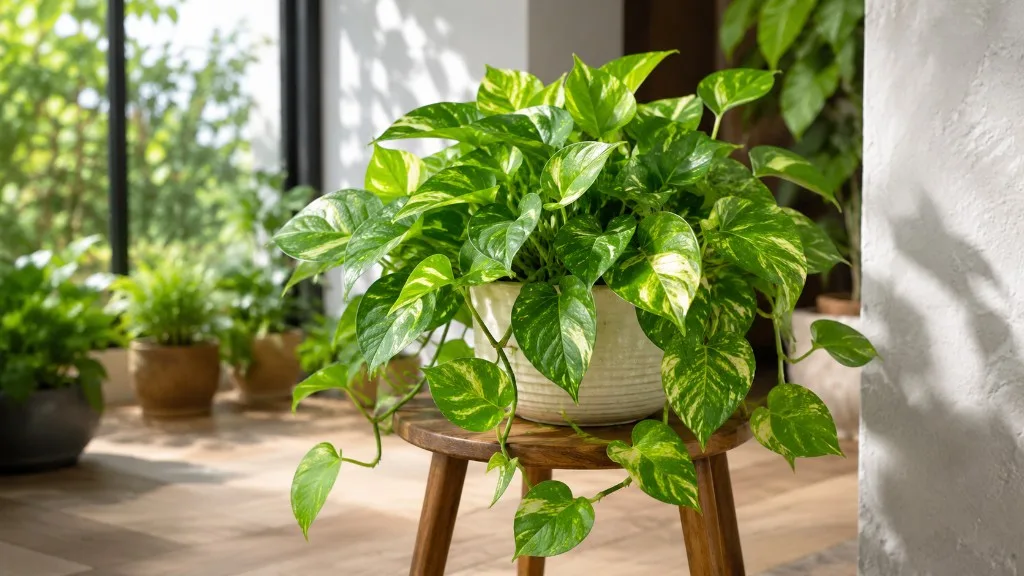
Golden Pothos
Golden pothos (Epipremnum aureum) is the default pothos: waxy heart-shaped leaves splashed with yellow or chartreuse variegation on a deep green background. It is a fast grower in bright indirect light and one of the few variegated houseplants that still performs in moderate shade, though new leaves may show more green when light is weak.
Vines root readily in water or soil, making it the standard propagation teaching plant. It suits hanging baskets, high shelves, and moss poles. See the golden pothos plant page for species-specific care.
Jade Pothos
Jade pothos is the solid-green sport — no yellow splashes, just glossy medium-green leaves that are slightly slimmer than Golden’s. Because every leaf is photosynthetically active, Jade is among the fastest pothos cultivars and one of the best choices for offices, hallways, and north-facing rooms where variegated types would revert or stretch.
It is often mislabeled as philodendron; check the grooved petiole and lack of stipule sheath.
Neon Pothos
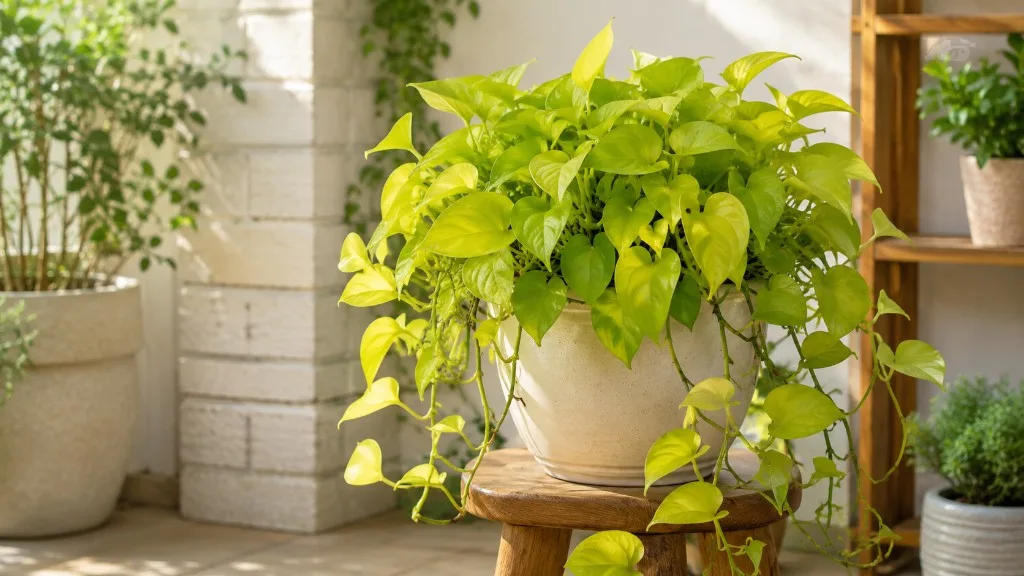
Neon pothos (E. aureum ‘Neon’ / ‘Lime’) pushes uniform chartreuse-yellow leaves without the green marbling of Golden. It is frequently confused with lemon-lime philodendron; philodendron new leaves emerge from a papery cataphyll sheath and often show a pinkish node.
Neon color stays brightest in medium to bright indirect light. In deep shade the yellow dulls toward green. It grows at a moderate pace — faster than heavy white variegates, slower than Jade.
White and Cream Variegated Cultivars
White-heavy pothos are showpieces. They also demand more light and patience than golden or jade types.
Marble Queen, Snow Queen, and Pearls and Jade
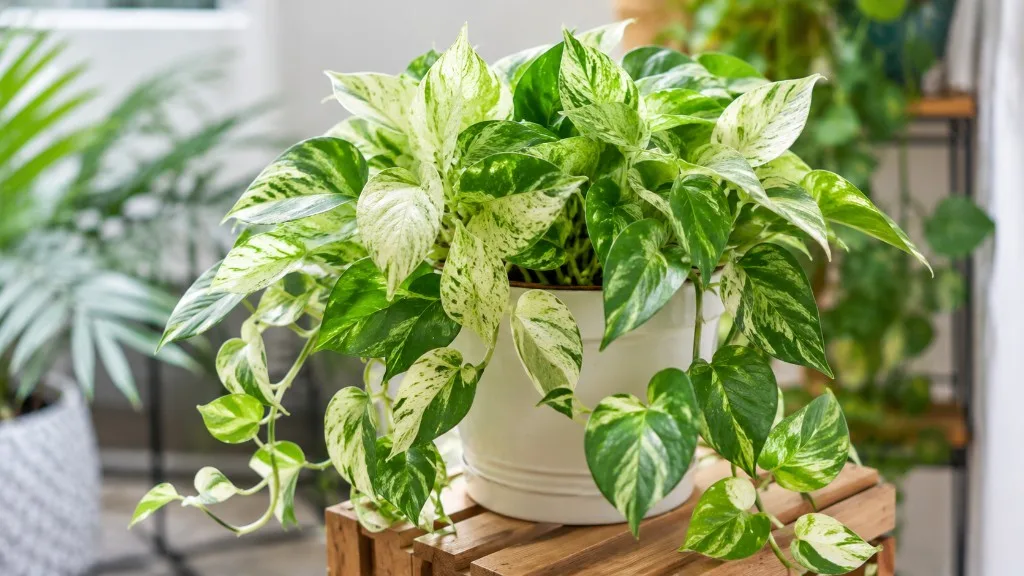
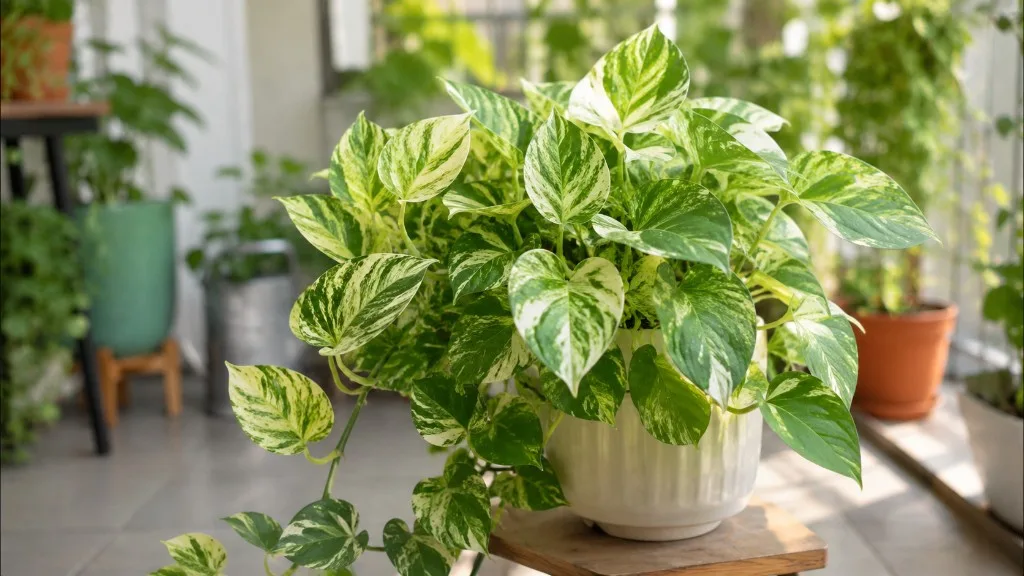
Marble Queen (E. aureum ‘Marble Queen’) marbles green and white/cream across each leaf in a fairly even speckle — the classic high-variegation queen. It needs bright indirect light to keep white sectors from shrinking on new growth.
Snow Queen pushes variegation further: leaves are mostly white with thin green streaks, so it is less forgiving in moderate light than Marble Queen. If your Snow Queen keeps producing green leaves, move it closer to a filtered window and prune reverted stems.
Pearls and Jade is a University of Florida–patented cultivar derived from Marble Queen. Leaves are smaller and thinner, with white edges and cream sectors that carry green flecks inside the white — the key ID feature versus N’Joy.
All three are slower than Golden pothos. Our Marble Queen care guide covers watering and reversion troubleshooting in depth.
N’Joy, Glacier, Manjula, and Harlequin
N’Joy looks like Pearls and Jade at a glance — small, papery leaves with white margins — but its white zones stay clean cream/white without green speckles inside the variegation. NC State Extension lists Beautifall® ‘Njoy’ as small green leaves with cream variegation; it is a compact, slow trailer for bright desks and shelves.
Glacier sits between Jade and N’Joy visually: small, rounded leaves with white edging and a slightly silvery cast. It is rarer in big-box stores but ID’d by leaf size and cool-toned variegation.
Manjula is a patented Costa Farms introduction with wavy, painterly patches of cream, white, silver, and green — often yellow-cream in new leaves. It tolerates brief low-light spells but colors best in bright filtered light.
Harlequin is the collector’s white-heavy type: bold white and dark green blocks without Manjula’s cream/yellow tones. Availability is limited and prices run high; treat it like Snow Queen for light — bright, stable, and no drafts.
Jessenia (discovered by Costa Farms in 2014 as a stable Marble Queen sport) deserves mention alongside this group: chartreuse-green variegation on a medium-green base — more subtle than Neon, softer than Golden’s yellow splashes.
Green-on-Green and Chartreuse Variegation
Global Green flips the usual variegation pattern: dark green patches on a lighter green leaf, similar in layout to N’Joy’s sectoring but without white. It was scarce a few years ago and now appears regularly at garden centers. Medium to bright indirect light keeps the two green tones distinct; in shade the contrast softens.
Variegated Neon (E. aureum ‘Neon Variegata’) combines Neon’s yellow base with stable lighter streaks. It reverts toward plain Neon in low light faster than Golden reverts toward Jade, so reserve it for your brightest pothos spot.
Epipremnum pinnatum Types That Fenestrate
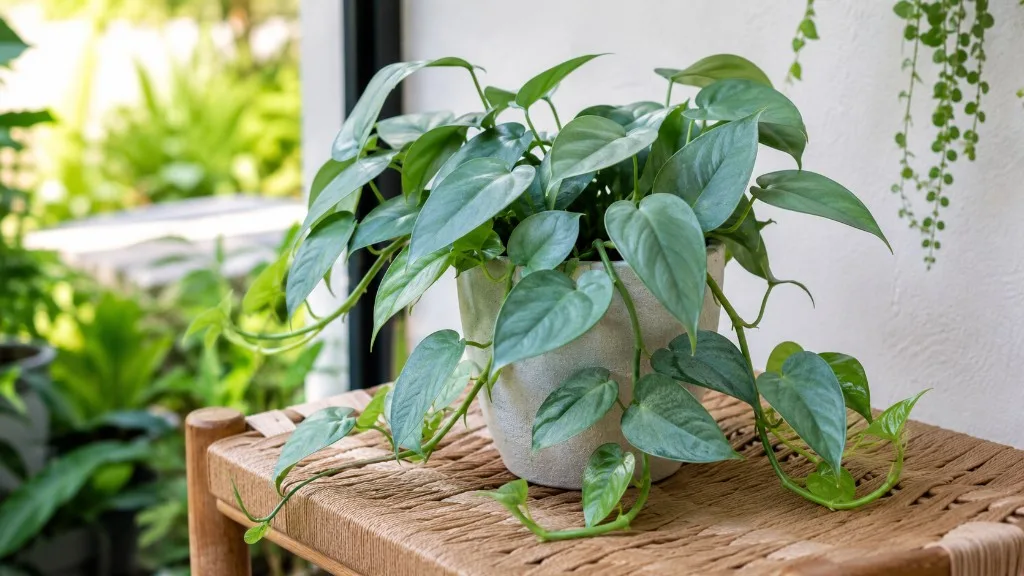
These “pothos” belong to Epipremnum pinnatum, a separate species whose mature leaves can develop splits and fenestrations when climbing a moss pole in bright light — behavior Costa Farms highlights for Baltic Blue and Cebu Blue.
Cebu Blue is the silvery blue-green E. pinnatum form from Cebu in the Philippines. Juvenile leaves are narrow and iridescent; mature leaves fenestrate on a support. It wants bright indirect light and a pole if you are growing for split leaves. See Cebu blue pothos for hub care.
Baltic Blue is a Costa Farms clone with deeper green-blue leaves that fenestrate earlier and grow larger than Cebu Blue, without Cebu’s silver sheen. It is often sold as a climbing pothos rather than a basket plant.
Dragon’s Tail (E. pinnatum without the Cebu/Baltic branding) starts with small jade leaves and develops large fenestrated foliage on a totem — the same species story with less marketing polish.
Do not confuse Cebu Blue with Baltic Blue at the nursery: Cebu reads silvery and stays smaller longer; Baltic is darker, bigger, and splits sooner.
Scindapsus Satin Pothos Types
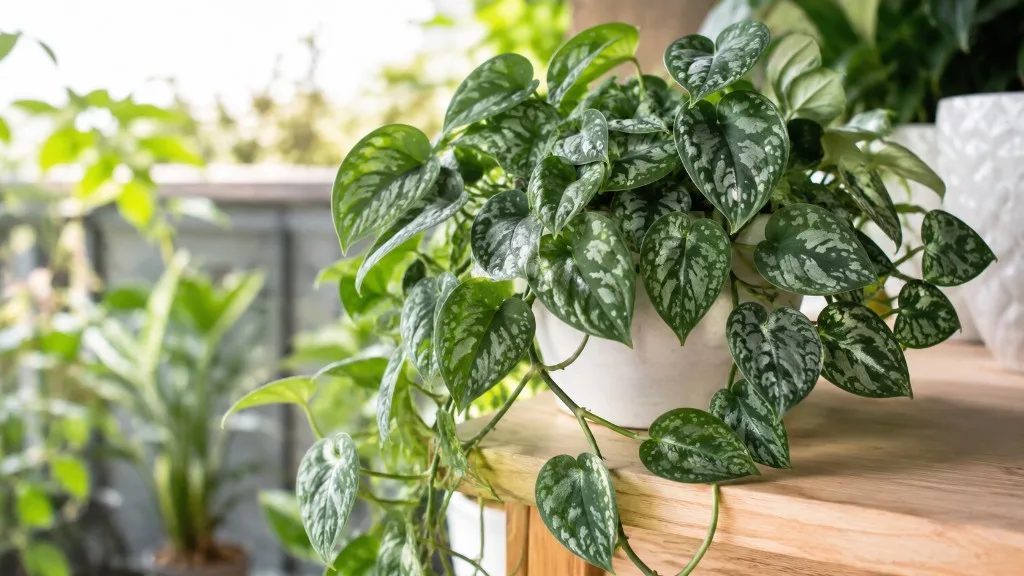
Shops label them pothos; botanists do not. Both are Scindapsus pictus — slower-growing aroids with matte, reflective silver spotting on green leaves.
Satin pothos (S. pictus ‘Argyraeus’) carries small heart-shaped leaves with scattered silver dots and a satin finish. It tolerates low to bright indirect light and trails gracefully from hanging planters. Full care lives in our growing satin pothos guide and the Scindapsus pictus hub.
Silver satin pothos (S. pictus ‘Exotica’) grows larger, darker leaves with broader silver washes — closer to a collector foliage plant than a beginner trailer. It needs brighter light to avoid leggy, small new leaves.
Both Scindapsus types share pothos-like watering — dry down partially between soakings — but are less drought-forgiving than E. aureum. Grouping them with true pothos in one pot works visually but Scindapsus will lag behind Golden pothos unless you prune aggressively.
Care Basics That Shift by Cultivar
Most pothos share the same skeleton care: well-draining potting mix, water when the top 1–2 inches of soil have dried, bright indirect light as the default, and monthly or bimonthly dilute fertilizer during active growth. UW-Madison Extension recommends letting soil dry between waterings and avoiding cold drafts below roughly 55°F.
Where cultivars diverge:
- Variegation and light: High-white types need more photons; solid-green types survive dimmer corners.
- Watering frequency: Fast growers in bright light dry out faster; small-leaf variegates in cool rooms need less frequent soakings.
- Support: E. pinnatum types reward a moss pole; basket Golden pothos does not require one.
- Pruning: Cut reverted all-green or all-white shoots on variegated plants to preserve balance. Costa Farms advises removing reverted Marble Queen stems before they dominate.
- Repotting: Pothos tolerates being somewhat rootbound but grows faster after moving up one pot size when roots circle the bottom.
For vining display ideas — baskets, shelves, and mixed trailers — see our indoor vining plants guide.
Pet Safety and Placement
Every Epipremnum and Scindapsus entry on this list is toxic to cats and dogs if chewed.
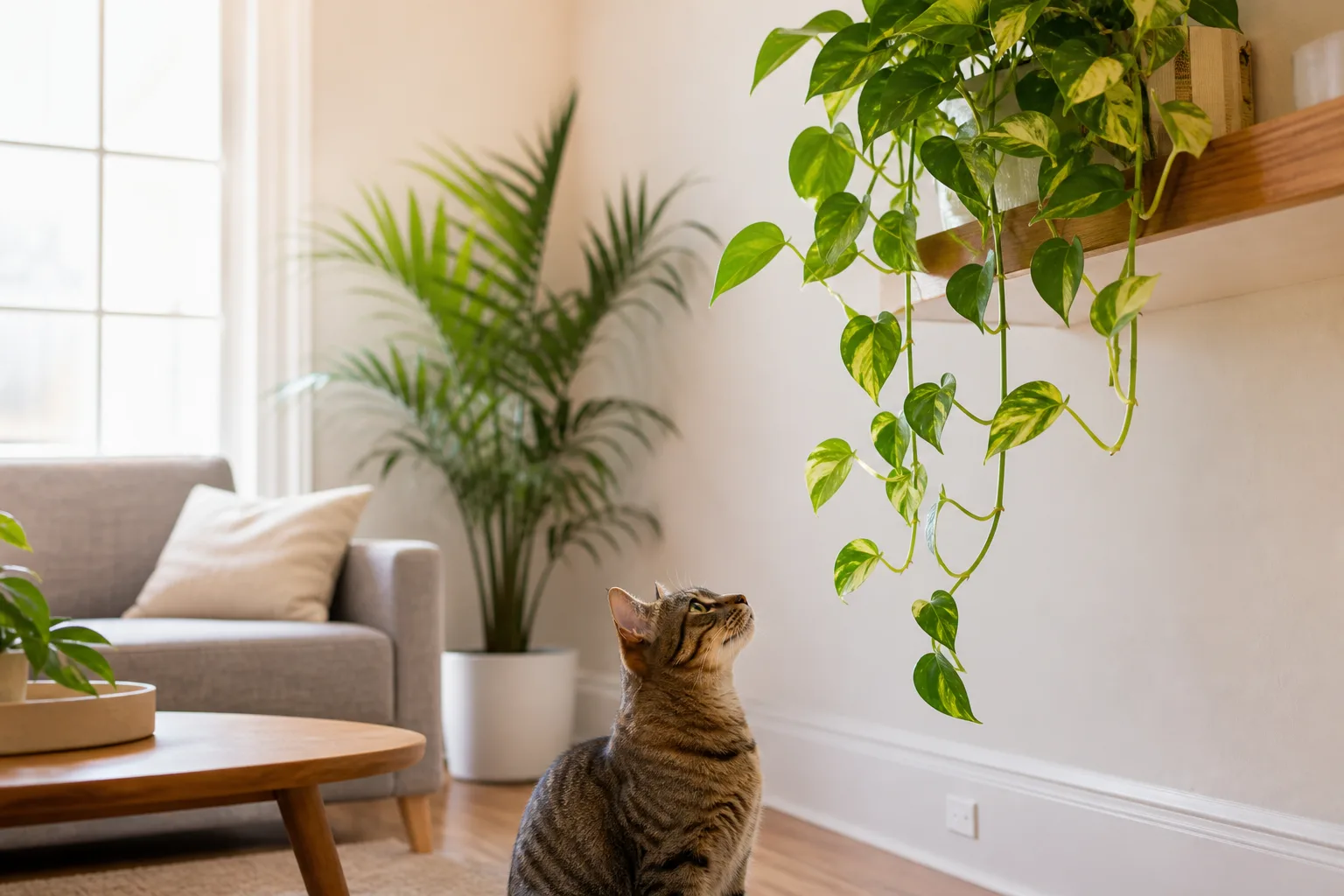
The ASPCA lists golden pothos (devil’s ivy) as toxic, with insoluble calcium oxalate crystals that cause oral irritation, burning, drooling, vomiting, and difficulty swallowing. Severity depends on how much tissue was ingested and the size of the pet — there is no safe “pet-friendly pothos.”
Hang baskets above jump height, keep propagations in jars off windowsills, and call your veterinarian or ASPCA Animal Poison Control at (888) 426-4435 if ingestion occurs. Pothos is not a beginner plant for homes with habitual chewers unless vines stay completely out of reach.
Conclusion
The best pothos for your collection is not the rarest cultivar on Instagram — it is the one that matches your light, your patience for growth speed, and your tolerance for variegation maintenance. Start with Golden, Jade, or Neon if you want easy, fast vines. Choose Marble Queen, N’Joy, or Global Green for pattern without Snow Queen’s light demands. Reserve Snow Queen, Harlequin, and Variegated Neon for bright rooms. Pick Cebu Blue or Baltic Blue when you want fenestrated climber drama on a pole. Add satin pothos when you want silvery texture at a slower pace.
Keep genus straight at the register, prune reverted shoots early, and wire your watering finger to the soil — not the calendar. With that framework, all 18 types on this list become easier to collect deliberately instead of accidentally.