Fall Mulching Guide: Plants to Mulch and Skip
Should you mulch in fall? Learn timing, depth rules, and which plants benefit from a winter layer versus which ones need dry soil or self-seed space.
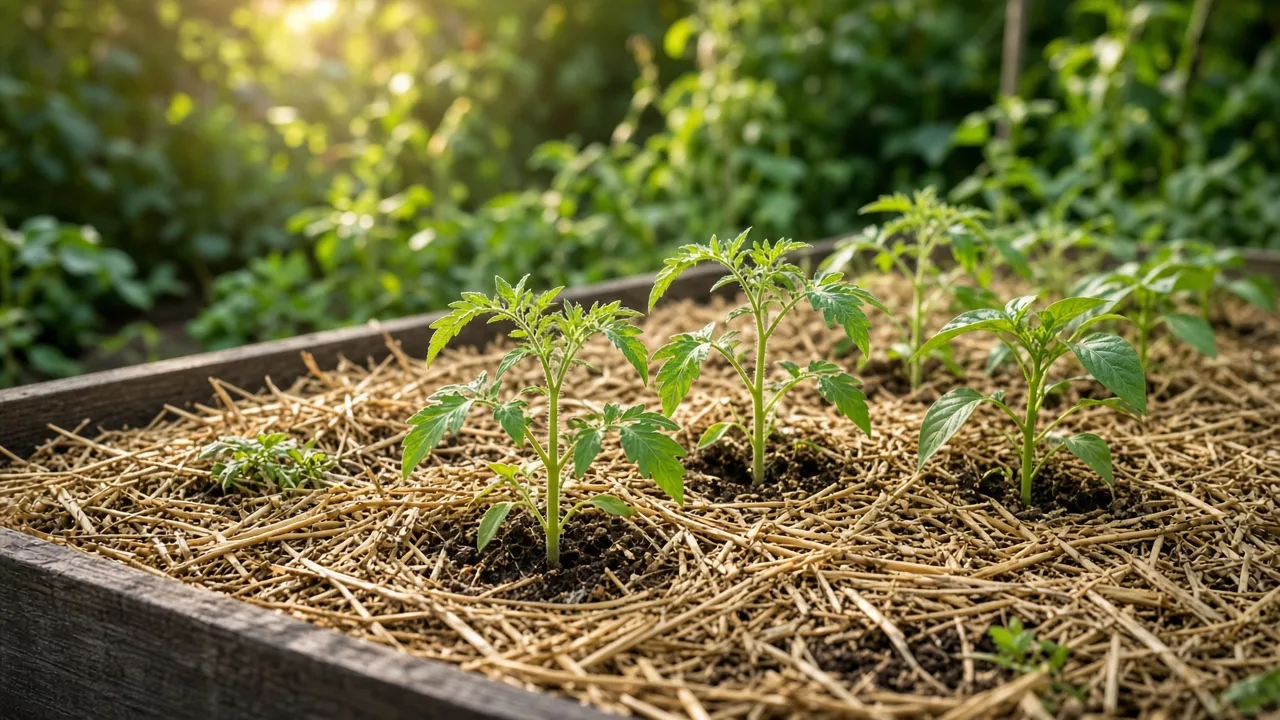
Most gardeners think about mulch in spring—when beds look bare and weeds are pushing up. Fall is the quieter season for it, and that is exactly why mistakes happen. A thick October layer on the wrong plant can rot a dry-loving herb crown, smother self-sown seedlings, or trap moisture against a tree trunk all winter. Skip mulch on a newly planted evergreen, and you may lose the plant to desiccation before you turn the hose on again in April.
The job is not “mulch everything before frost.” It is deciding which plants need an insulating blanket, which need open, dry soil, and whether your beds already have enough coverage to stop.
The Quick Answer: Match Mulch to the Plant, Not the Calendar
Mulch in fall when you have newly planted trees and shrubs (especially evergreens), shallow-rooted or first-year perennials, fall-planted bulbs in cold zones, marginally hardy plants, or vegetable beds you want to protect through winter. Apply after plants go dormant, in a 2- to 4-inch layer (less on poorly drained soil), and keep mulch off trunks and crowns.
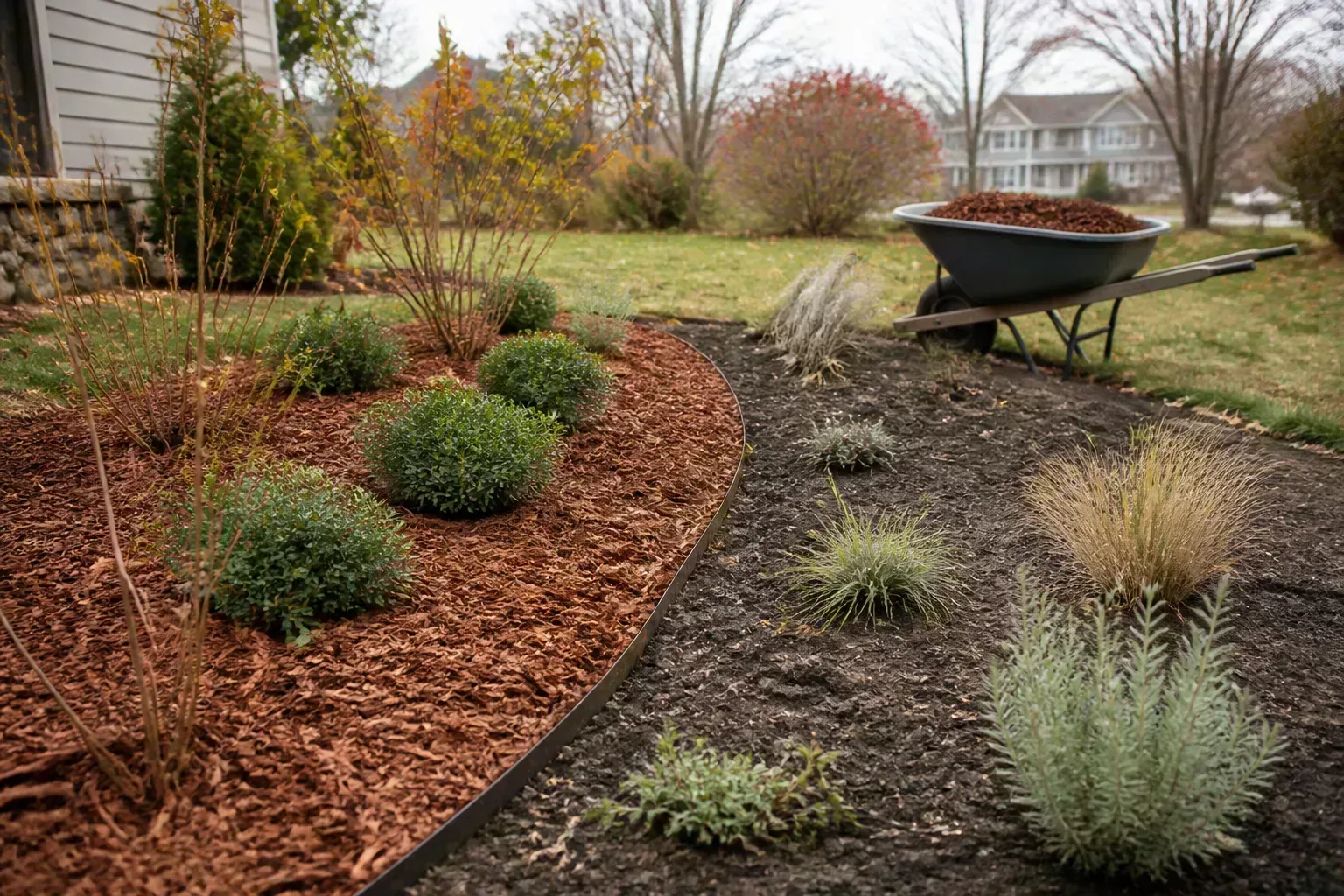
Skip fall mulch on Mediterranean herbs, succulents, alpine plants, ornamental grasses you leave standing, self-sowing annuals and wildflowers, and any bed that already has 3 or more inches of mulch in place. Hardy, established native perennials in protected sites often need nothing extra.
If you remember one rule, use the plant test: mulch for protection (new roots, freeze-thaw, winter dryness); skip for drainage, light, or seeds.
Why Fall Mulching Helps Most Garden Beds
Spring mulch is about aesthetics and weed suppression. Fall mulch is about survival mechanics—keeping soil temperatures steadier, holding moisture through months when you are not irrigating, and reducing the physical damage that comes from soil expanding and contracting as it freezes and thaws.
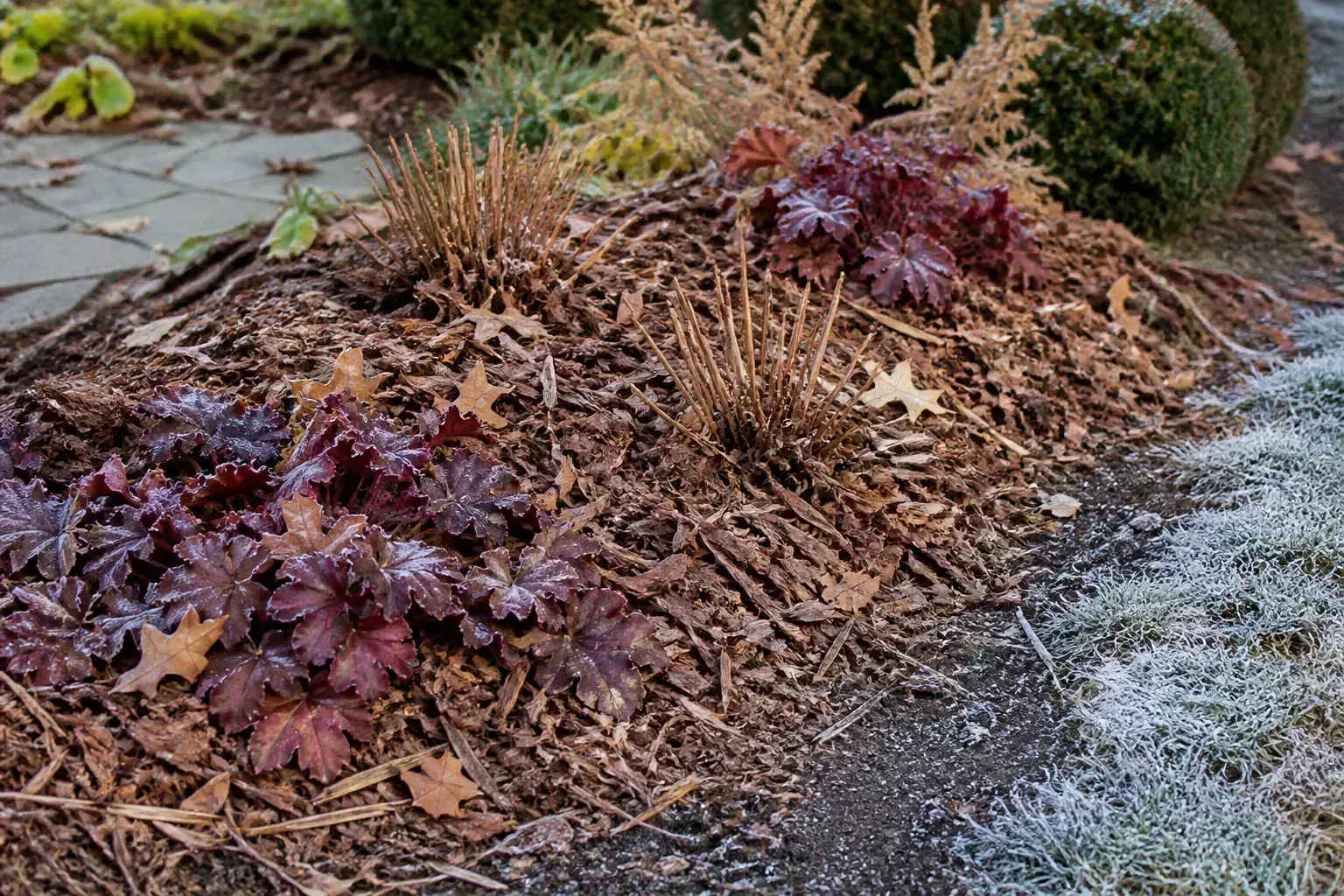
A good organic layer also feeds soil biology as it breaks down. Shredded leaves, bark, and compost mimic the forest floor: nutrients cycle back, structure improves, and weed seeds that land on top have a harder time germinating next year. For a deeper look at leaf management on lawn versus beds, see our guide on mulching vs bagging vs leaving leaves.
Freeze-Thaw Cycles and Frost Heave
In cold climates, repeated freeze-thaw cycles are brutal on young root systems. Soil expands when ice forms and contracts when it melts, and shallow roots can get heaved above the soil line—exposed, dried out, and vulnerable. A stable mulch blanket moderates temperature swings at the soil surface and helps keep roots anchored.
This matters most for newly planted perennials, fall-installed bulbs, and anything with shallow roots that has not yet built a deep network. Established prairie plants and deep-rooted natives handle heave better; a first-year coneflower or hosta often does not.
The Dry Gap Between Your Last and First Watering
Newly planted landscape plants face a hidden winter risk: desiccation. Evergreens keep losing moisture through needles and leaves even when the ground is frozen, but their small, young root balls cannot replace it. The stretch from your last fall watering to the first spring soak can be four to six months if you shut off irrigation—long enough to kill a spruce or boxwood that looked fine going into December.
Fall mulch does not replace watering, but it slows soil moisture loss and keeps the root zone from drying to dust between rain events. That is why extension specialists emphasize fall mulch for new transplants more than for mature, established specimens.
When to Apply Fall Mulch (Get the Timing Right)
Timing separates a protective layer from a problem layer. Mulch applied too early keeps soil warm, delays dormancy, and can invite rodents to nest before cold sets in. Mulch applied too late—after the ground is frozen solid—does less good because you missed the window to trap residual warmth and moisture.
Wait Until Plants Enter Dormancy
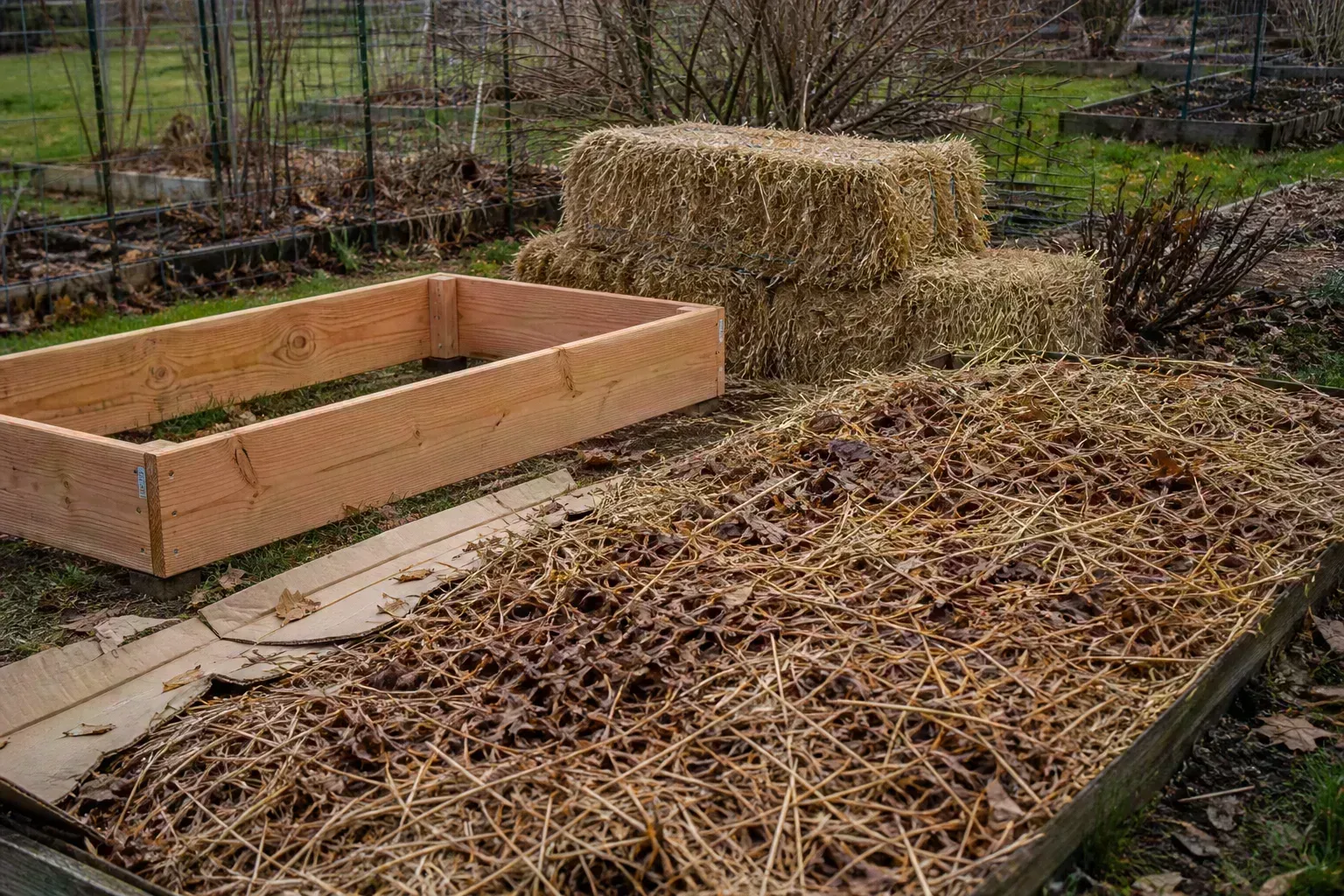
Gardening Know How recommends mulching in fall as plants enter dormancy—typically after several hard frosts have shut down top growth and leaves have dropped on deciduous material. In most temperate zones that means late October through November, not early September when warm spells can still push soft growth.
Manjot Sidhu of University of Maine Cooperative Extension warns against early mulching that prevents plants from reaching full dormancy, leaving tissue susceptible to cold injury. If you are unsure, wait until herbaceous tops have died back and woody plants have hardened off for winter.
How Deep to Mulch—and When to Use Less
Depth is not one-size-fits-all. Penn State Extension advises a 2- to 4-inch layer of organic mulch on well-drained soils, with less on poorly drained or compacted ground where deep layers restrict oxygen. Finely shredded or double-shredded mulch should stay toward the 1- to 2-inch end because it packs tighter.
On heavy clay or chronically wet beds, cap fall mulch at 2 inches maximum. Sidhu notes that excess depth on compacted soils can impede air exchange and do more harm than good. Before adding anything, check what is already there—if you can push aside existing mulch and still see 3 inches of material, you are done for the year.
Plants That Should Get Fall Mulch
These groups benefit most from a late-season layer. The common thread is vulnerability: new roots, shallow roots, marginal hardiness, or beds you are actively managing through winter.
Newly Planted Evergreens, Trees, and Shrubs
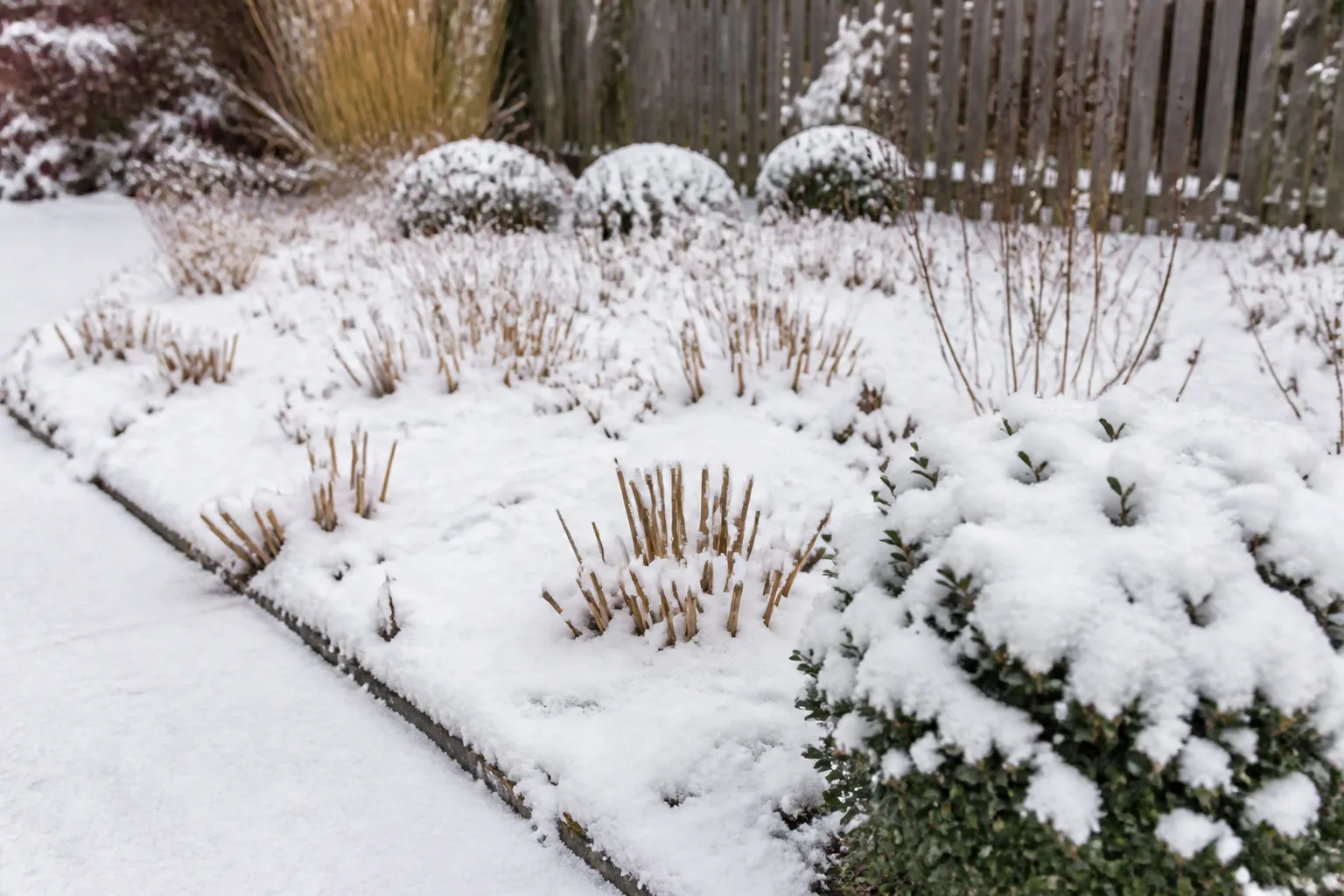
If you planted trees or shrubs this year—especially evergreens like spruce, pine, juniper, and fir—fall mulch is one of the highest-return tasks on your list. Evergreens transpire through winter and suffer winter burn and dieback more readily than leafless deciduous plants because they cannot shut down water loss entirely.
Chris Hilgert of Colorado State University Extension explains that fall mulch regulates soil temperature, protects roots from freeze-thaw cycles, and improves moisture retention through the long gap between fall and spring watering. The same logic applies to broadleaf evergreens and winter-interest shrubs: rhododendrons, azaleas, boxwood, and hollies all appreciate a stable root zone when they are newly installed.
Apply mulch in a wide, shallow ring—not a pile against the trunk. Penn State Extension is explicit: keep all mulch away from the trunk so the root flare stays visible. Piling mulch against bark—the infamous mulch volcano—traps moisture on the trunk, encourages fungal disease, and can suffocate roots. Spread mulch to the drip line when possible; on new trees, mulch wider than the root ball to encourage roots to grow outward.
Shallow-Rooted and Newly Planted Perennials
First- and second-year perennials with shallow root systems are prime candidates for fall mulch. Hostas, coral bells, astilbes, and young ornamental perennials sit close to the surface where frost heave does the most damage. Hilgert puts it plainly: mulch can be the difference between a young plant that barely survives and one that thrives the following season.
That does not mean every perennial in an established bed needs a fresh layer. Focus on plants installed this year, divisions you moved in fall, and anything that looked stressed through summer. Pull mulch back from crowns on plants that rot easily in wet conditions—you can add a ring around the root zone without burying the growing point.
Fall-Planted Bulbs and Marginally Hardy Perennials
Bulbs planted in fall—tulips, daffodils, lilies, and other spring bloomers—benefit from a light mulch layer in cold zones. The mulch buffers soil temperature swings and reduces frost heave that can push bulbs toward the surface. In USDA zones 6 and colder, a 2-inch layer of shredded leaves or straw after the ground begins to cool is standard practice; in mild zones, natural soil cover may be enough.
Marginally hardy perennials—plants at the edge of your zone rating—also deserve attention. Dahlias left in ground in zone 7, agapanthus at the northern edge of hardiness, and some salvias may need extra insulation to return reliably. Match depth to drainage: more mulch in sandy, well-drained beds; less in heavy soil. For tender tubers you lift and store, skip in-ground mulch and follow your storage protocol instead.
Late-Season Vegetable and Cool-Season Crop Beds
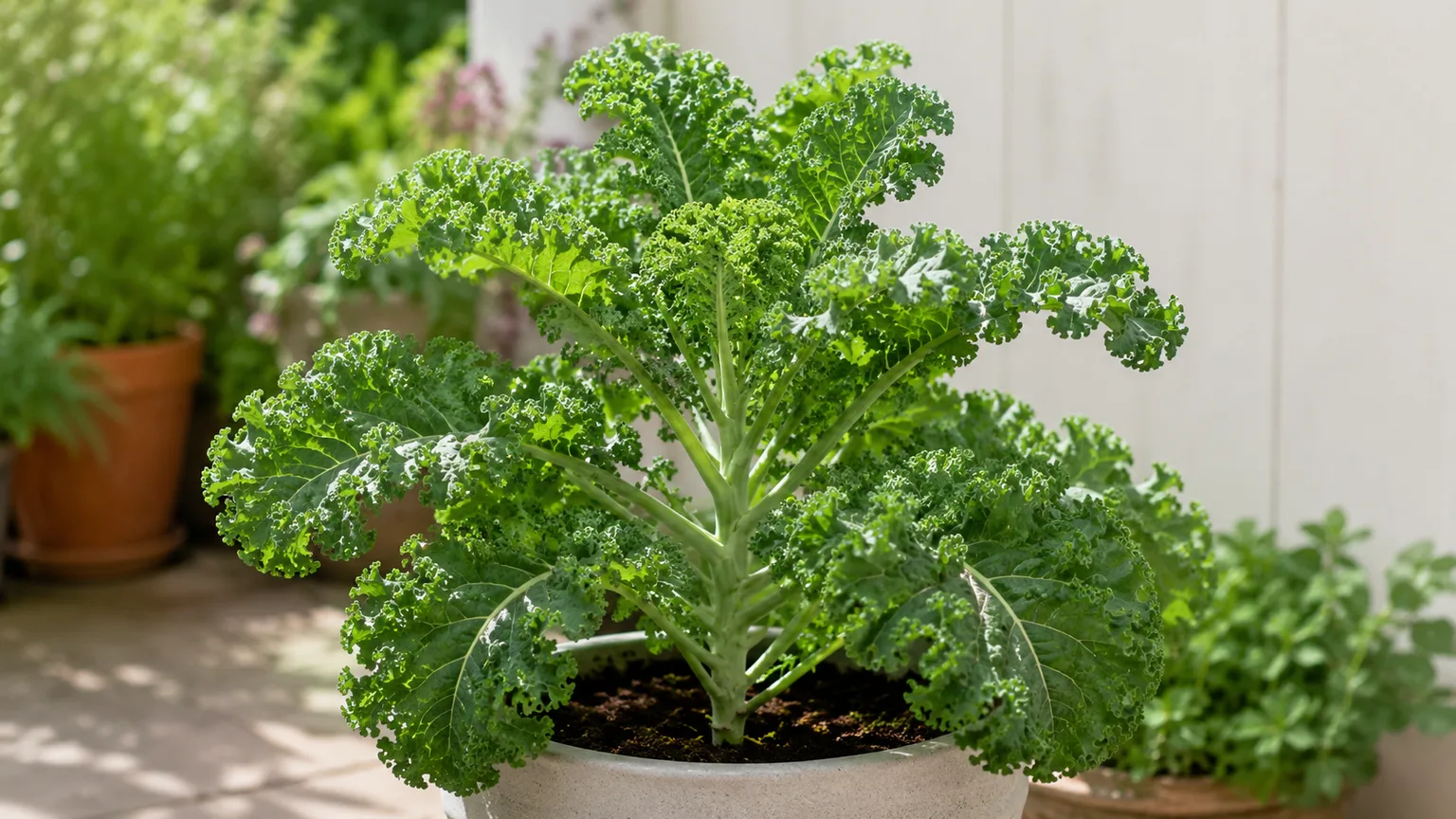
Organic mulch on vegetable beds in fall serves double duty: it insulates soil for late harvests and breaks down into organic matter before spring planting. Cool-season crops like kale, broccoli, cabbage, and cauliflower often keep producing into frost; a straw or leaf layer around their roots extends the harvest window and protects soil structure from winter rain compaction.
Use weed-free straw or shredded leaves rather than fresh grass clippings, which mat down and restrict air flow. Remove diseased plant debris before mulching—tomato and squash vines with blight belong in the trash or hot compost, not under your kale. For more on organic matter cycling, our mulching vs bagging guide covers when shredded leaves belong in beds versus on lawn.
Plants You Should Not Mulch in Fall
This is where most fall-mulch articles stop too soon. A blanket October layer hurts specific plant groups more than it helps. Know these exceptions before you load the wheelbarrow.
Mediterranean Herbs and Other Dry-Soil Lovers
Lavender, sage, thyme, oregano, and rosemary evolved in lean, fast-draining soils. They need dry crowns through winter—wet mulch packed against woody stems is a direct path to crown rot and death by spring. Gardening Know How lists Mediterranean herbs among plants that should not receive fall mulch because the moisture retention that helps a hosta will destroy a lavender.
If your herbs are in raised beds or gravel gardens with excellent drainage, you may still skip mulch entirely. A gravel topdressing or simply leaving soil bare around the crown is safer than shredded bark. In borderline-hardy regions, protect lavender with airy cover—a loose row-cover tent or evergreen boughs laid beside, not on, the plant—rather than a soil-level mulch mat.
Self-Sowing Annuals, Wildflowers, and Seed-Dependent Beds
Fall mulch suppresses weed seeds—and desired seeds right along with them. Beds where you rely on self-sowing annuals (calendula, poppies, cleome, nigella) or wildflower meadows should stay open through winter so seeds get the light contact they need to germinate in spring. A thick mulch layer blocks that interface and thins next year’s volunteers to nothing.
If you love the random color of self-sowers, rake leaves off those beds in fall or confine mulch to paths only. You can still mulch around established perennials in mixed borders while leaving seed zones bare—a patchwork approach beats an all-or-nothing rule.
Succulents, Alpine Plants, and Crown-Sensitive Perennials
Succulents and alpine plants demand sharp drainage and dry winter crowns. Mulch holds moisture against fleshy leaves and low rosettes, inviting rot during freeze-thaw cycles. Leave these plants in gravel, sand, or open soil; if you are pushing hardiness limits, use a cold frame or well-ventilated cover instead of organic mulch piled on the crown.
Hellebores and some heucheras also dislike heavy fall mulch against their crowns—winter wet on evergreen foliage encourages fungal spotting. Ornamental grasses and grass-like plants (iris, daylily, liriope) are often left standing for winter structure and wildlife; packing mulch around their bases adds little benefit and can trap moisture on dormant crowns. Cut back and mulch lightly in spring if weeds are an issue, not in fall.
When You Can Skip Fall Mulching Entirely
Sometimes the right action is no action. Hilgert’s threshold is practical: if beds already hold 3 or more inches of mulch, do not add more in fall. Extra layers create waterlogging, poor aeration, and habitat for pests without adding protection.
Hardy, established native perennials in undisturbed beds rarely need fall top-ups. Deep-rooted prairie plants, mature sedums, and long-settled shrubs have already built the root mass and soil community to handle your winter. Self-seeding beds, as noted above, are another full skip.
Finally, skip if you have not solved underlying problems first. Mulch over compacted, poorly drained soil or diseased debris does not fix the issue—it seals it in. Aerate or amend where needed, remove infected material, and then decide whether a thin protective layer makes sense.
How to Apply Fall Mulch Without Costly Mistakes
Choose the right material. Shredded leaves are free and break down fast—shred them with a mower first so they do not mat. Bark and wood chips last longer and suit trees and shrubs. Avoid fresh grass clippings in fall; they compact and turn anaerobic. Pine needles work in acid-loving beds but break down slowly—plan to rake them back in spring if they pile up.
Weed before you mulch. A clean surface means fewer surprises in March. Pull perennial weeds; do not bury live root systems under a cozy blanket.
Keep mulch off trunks and crowns. The International Society of Arboriculture, cited by Penn State Extension, is clear: mulch against trunks causes bark decay, insect habitat, and root dysfunction. Pull mulch 3 to 5 inches back from young tree trunks and 8 to 10 inches from mature ones.
Avoid the volcano. If you see mulch mounded up the bark like a cone, spread it flat to the drip line at proper depth. The amount piled in a typical volcano is often enough to mulch the tree correctly—just distributed wrong.
Check depth before adding. Rake existing mulch to break crusted layers. Add only enough to reach the 2- to 4-inch target total, not 2 to 4 inches on top of what is already there.
For weed-suppression context and mulch-type comparisons, see does mulch prevent weeds.
Conclusion
Fall mulching is not a universal October chore—it is a targeted protection strategy. New evergreens, young perennials, fall-planted bulbs, marginally hardy plants, and active vegetable beds gain real benefit from a well-timed, properly depth-controlled organic layer applied after dormancy. Mediterranean herbs, succulents, self-sowers, and already-mulched beds are better left alone.
Walk your garden bed by bed before the first sustained freeze. Mulch what needs insulation and moisture stability; skip what needs dry crowns, light for seeds, or nothing extra at all. Get the timing, depth, and trunk clearance right, and you will spend less on replacements in spring—and less time wondering why the lavender died while the rhododendron sailed through.



