How to Grow and Care for White Wizard Philodendron
Learn White Wizard Philodendron care: bright indirect light, airy soil, watering, variegation, propagation, repotting, pests, and pet safety.

White Wizard Philodendron is a climbing aroid prized for broad green leaves marked with dramatic white sectoral variegation. It can look almost effortless in a mature plant photograph, but the white portions change the care equation. White tissue contains little or no chlorophyll, so the plant needs enough useful light to support growth without being placed in harsh sun. At the same time, its roots need oxygen as much as they need moisture; a dense, constantly wet pot is a faster route to yellow leaves and root rot than a missed watering.
The most reliable routine is simple: give it bright filtered light, a warm room, a loose mix in a pot with drainage, and water only after the root zone has partly dried. Feed lightly during active growth, give the vine something to climb, and evaluate new leaves rather than trying to change old variegation.
White Wizard Philodendron at a Glance
| Care factor | Practical target |
|---|---|
| Plant type | Variegated climbing philodendron in the Philodendron erubescens group |
| Light | Bright, indirect or filtered light; protect white tissue from hot direct sun |
| Water | Water thoroughly when the upper portion of the mix has dried; let excess drain |
| Potting mix | Airy, organic, well-drained aroid mix with bark and a coarse drainage component |
| Temperature | Warm indoor conditions, ideally about 65–85°F; avoid cold drafts |
| Humidity | Average household humidity can work; moderate humidity and airflow support cleaner growth |
| Feeding | Diluted, balanced houseplant fertilizer during spring and summer growth |
| Support | Moss pole, coir pole, trellis, or another stable climbing support |
| Repotting | Spring or active growth, only one pot size larger when roots or mix require it |
| Safety | Toxic if chewed and irritating as sap; keep away from children and pets |
The species background helps explain the plant’s preferences. NC State Extension describes Philodendron erubescens as a tropical climbing perennial from Colombia that prefers warm conditions, high humidity, moist but well-drained organic soil, and partial shade. The cultivar will usually stay much smaller indoors than the species does in its native habitat, but its climbing habit remains important. A support can help it make larger, better-oriented leaves instead of a long string of increasingly small ones. For broad species-level growing guidance, see the NC State Extension plant profile.
What White Wizard Is and How to Identify It
White Wizard is a cultivated variegated philodendron generally treated as an Philodendron erubescens-type hybrid or cultivar. It is not a naturally occurring white-leaved species with a fixed pattern. Each leaf is produced from the plant’s growth point, and the amount and placement of white can vary from node to node.
Look for a climbing growth habit, broad leaves, and irregular white sectors or splashes against green tissue. White Wizard is commonly associated with green stems and petioles marked by white striping rather than the pink or burgundy coloration often used to distinguish other plants in the same group. Identification is more dependable when you inspect several leaves, the petioles, and the stem together. A single unusually white leaf is not enough evidence, because lighting, juvenile growth, and ordinary variation can make comparisons misleading.
Variegation also has a practical limit. The white portion can make a leaf visually striking but does not provide the same energy-producing capacity as green tissue. That is why a White Wizard with a moderate balance of green and white is often easier to maintain than one producing repeated nearly white leaves. A plant can be healthy and still produce a greener leaf; variegation is a pattern of growth, not a setting that can be dialed to a chosen percentage.
White Wizard vs. White Princess vs. White Knight
White Wizard, White Princess, and White Knight are often grouped together because all three are variegated philodendrons with P. erubescens connections. Leaf pattern alone is a poor way to tell them apart. Compare several nodes and pay attention to the stems and petioles as well as the blades.
| Plant commonly sold under this name | Useful comparison clues |
|---|---|
| White Wizard | Usually green stems and petioles with white striping; broad, irregular white sectors are common |
| White Princess | Often more compact, with a mix of white, green, and sometimes pink-toned markings on stems or petioles |
| White Knight | Commonly associated with darker burgundy or reddish-brown stems and petioles, though lighting and age affect appearance |
These are practical identification tendencies, not a substitute for a verified nursery label. The Foliage Factory comparison guide is useful for comparing stem and petiole traits, while the White Princess care guide and White Knight care guide provide neighboring care references. When in doubt, prioritize the plant’s roots, new growth, and overall response over a name based on one leaf.
Build the Right Indoor Growing Setup
Choose a bright room with enough space for the vine to climb, and keep the plant away from heating vents, air-conditioning blasts, and frequently opened cold windows. A few feet from a bright window behind a sheer curtain is often more useful than pressing the pot against the glass. The aim is steady, usable light with protection from temperature swings and scorching rays.
Keep the pot on a saucer or in a cachepot that can be emptied. Decorative outer pots are fine, but they should not turn a draining nursery pot into a water reservoir. Set the plant where leaves will not rub against a wall or curtain, and rotate it a quarter turn every week or two if one side is leaning toward the window. Rotation encourages even exposure, but do it gradually after a move so a shaded leaf is not suddenly exposed to intense sun.
Light That Protects Variegation
Bright, indirect light is the central White Wizard adjustment. Place it near an east- or west-facing window with filtered light, or farther back from a strong south-facing window. Direct midday sun through glass can bleach or scorch the white sectors, leaving tan, papery patches that will not recover. A dim corner creates the opposite problem: longer gaps between leaves, smaller new leaves, slower growth, and a tendency for new growth to contain more green.
Light cannot repaint an existing leaf. It can influence how the next leaves develop and whether the plant has enough energy to maintain vigorous growth. If the plant is making long bare stretches or very small leaves, move it closer to a bright window in small increments. If white tissue is turning crisp and brown, add a sheer curtain or move it slightly back. The University of Missouri’s interior-plant guidance explains why many philodendrons tolerate lower light while hybrids and colored foliage often perform better with medium to bright indirect light.
Temperature and Humidity
White Wizard grows best in warm, stable conditions. A useful indoor range is about 65–85°F, with protection from sudden cold. The Royal Horticultural Society recommends keeping philodendrons above 15°C/59°F, and this is a sensible lower boundary for avoiding cold stress. A plant beside a drafty door may struggle even when the thermostat reads warm enough across the room.
Average household humidity can be adequate, but moderate humidity often helps new leaves unfurl with fewer crispy edges. A humidifier is the most controllable option. Grouping plants can also slightly raise local humidity, provided air can move between leaves. Do not rely on frequent misting: the effect is brief, and repeatedly wet foliage in still air can encourage leaf-spot problems. Keep humidity equipment clean and avoid making the potting mix permanently wet in the name of humidity.
Choose an Airy Pot and Aroid Mix
Use a pot with a real drainage hole and a size that matches the root ball. White Wizard prefers a mix that holds some moisture while leaving large air spaces around the roots. A practical blend is equal parts quality indoor potting mix, perlite or pumice, and fine orchid bark. Adjust the proportions for your room: use more coarse material in a humid home or a pot that dries slowly, and slightly more organic mix in a very dry, warm space.
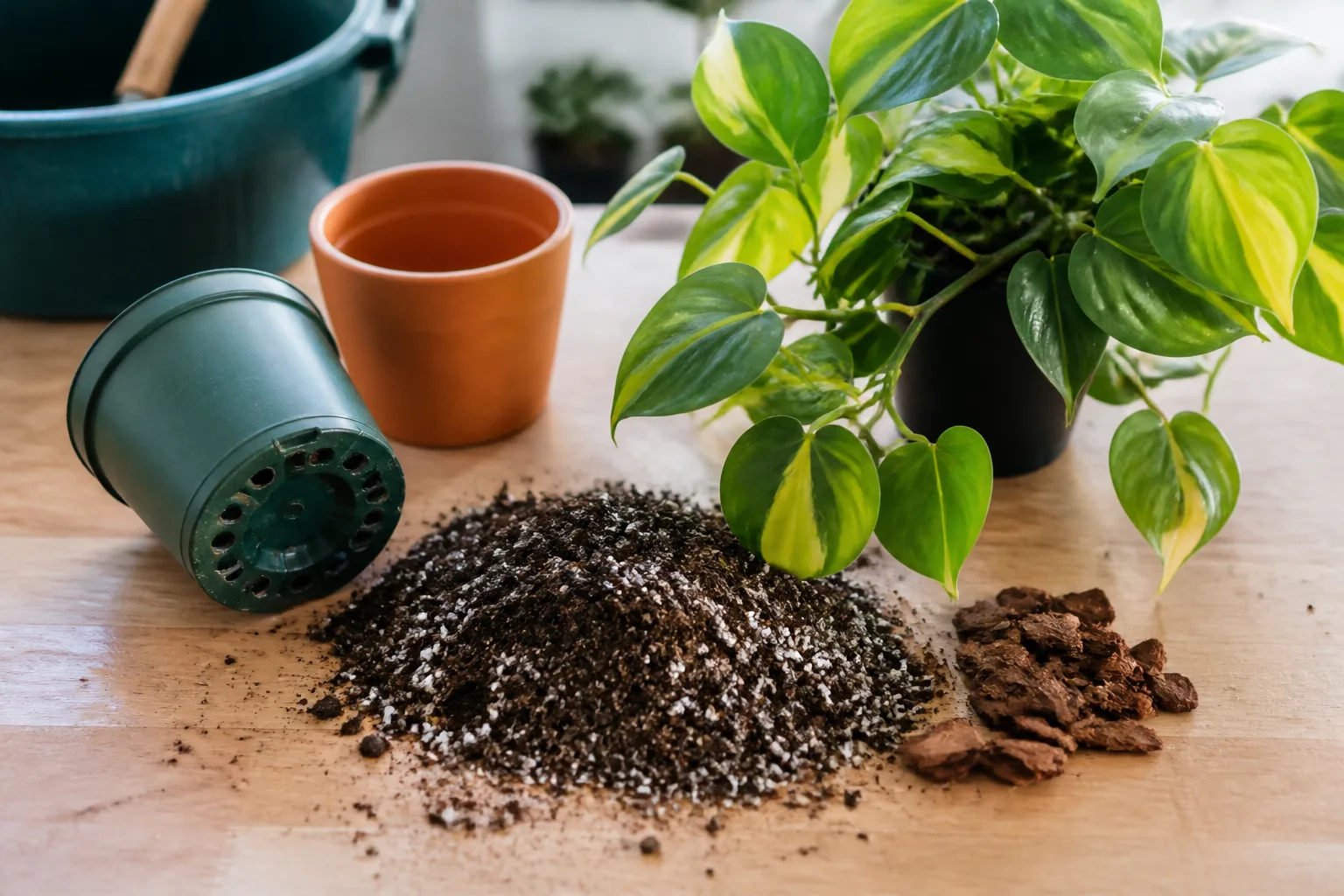
The mix should become evenly moist when watered, then begin drying from the top without turning into a hard, water-repellent block. If water sits on top or the pot remains heavy for many days, the blend is too dense, the container is too large, or the plant is receiving too little light and using water slowly.
The ideal root-zone pH is mildly acidic to neutral, but most fresh commercial aroid mixes do not need adjustment. Avoid adding garden soil to an indoor container; it compacts easily and can introduce pests. The RHS philodendron growing guide recommends a loose, free-draining compost and a pot only a few centimeters larger when repotting.
Water by Root-Zone Dryness
Water when the upper portion of the mix has dried, not because a certain number of days has passed. In a typical indoor pot, check the top 1–2 inches with a finger or wooden skewer. In a deeper container, use a moisture meter or compare the weight of a freshly watered pot with one that has partly dried. You want a meaningful dry-down, not a bone-dry root ball and not a permanently saturated one.
When it is time, pour room-temperature water slowly over the surface until it runs from the drainage hole. Let the pot drain fully, then empty the saucer or cachepot. The RHS specifically cautions against leaving philodendrons standing in water. Watering deeply helps wet the entire root ball, while draining prevents the air spaces from staying filled with water.
A White Wizard that is slightly thirsty may have a lighter pot, curling or drooping leaves, and a dry upper mix. A plant kept too wet often has yellowing lower leaves, a sour-smelling mix, persistent fungus gnats, or a pot that never becomes noticeably lighter. Brown edges can come from drought, dry air, salt buildup, or sun, so do not diagnose from color alone. Check the soil and the roots before changing several care factors at once.
Hard tap water can leave mineral deposits on soil and leaves. If you see a crust on the mix or recurring edge burn despite good watering, try rainwater or filtered water if it is safe and practical.
Feed for Steady Growth, Not More White
Feed during active spring and summer growth with a balanced indoor-plant fertilizer diluted according to the product label. A conservative routine is better than a strong dose: variegated leaves do not become whiter because more fertilizer was added, and excess salts can burn roots and leaf margins. Water the plant first if the mix is very dry, then apply the diluted feed to moist soil.
Pause or greatly reduce feeding in the darker, slower winter period. Yellow or brown tips, a crust on the potting mix, and declining roots after repeated fertilizing suggest salt stress rather than hunger. If the container drains freely, flush it with plain water several times and allow it to drain completely. If symptoms persist, inspect the roots and mix instead of continuing to add nutrients.
New leaves that are smaller or greener than expected do not automatically call for fertilizer. Light, root health, support, and the amount of green tissue on the parent stem all matter. Consistent conditions over several growth cycles reveal more than a single leaf.
Train the Vine for Larger Leaves
White Wizard is a climber, so a moss pole, coir pole, trellis, or other stable support can improve the shape of the plant. Install the support while the plant is still manageable. Guide the stem toward it and secure it loosely with soft ties; do not tie across a petiole or constrict a swelling stem. Aerial roots may attach to a textured support, especially when it is kept lightly moist, but never pack wet moss against a stem node so tightly that air cannot reach it.
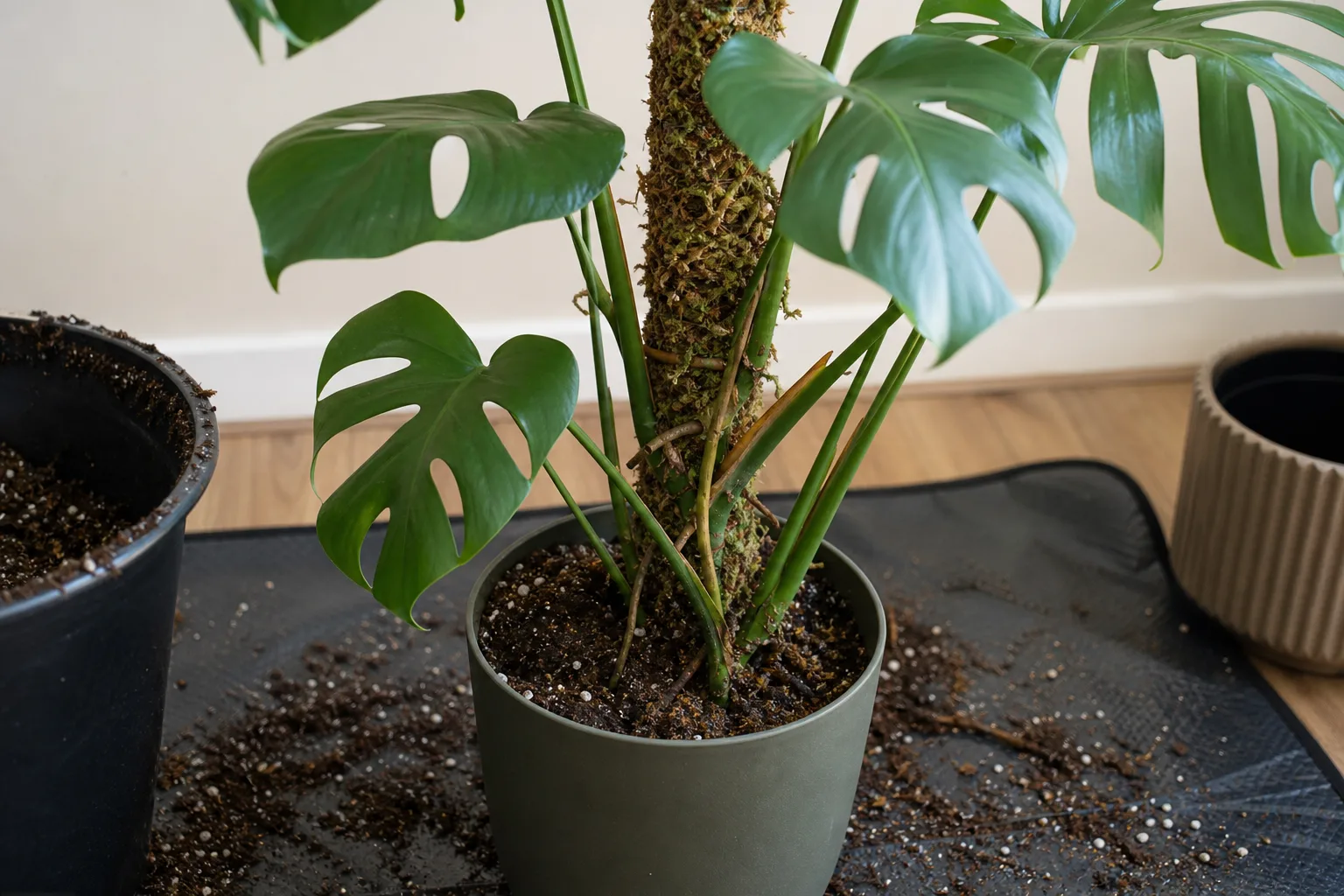
Climbing does not make every leaf instantly larger. The plant needs adequate light, a healthy root system, warmth, and time. Keep the support upright and let new growth find it. If the vine is trailing, it can still grow well, but its internodes may lengthen and leaves may remain smaller. For a detailed installation sequence, use the moss pole guide.
Prune and Manage Reversion
Prune in spring or during active growth with clean, sharp shears. Remove yellowing or badly damaged leaves at the petiole, and shorten an overly long vine by cutting just above a node. The remaining node can produce a new branch, while the removed section may be used for propagation if it is healthy.
Do not cut a healthy green leaf simply because it has less white than the previous leaf. The plant cannot redistribute white tissue into a leaf that has already unfurled. Instead, watch the next several leaves and inspect the stem. If new growth repeatedly becomes much greener across multiple nodes, the plant may be reverting. Better light supports the plant’s energy balance but does not guarantee a return of variegation.
If you need to correct a sustained reversion, keep a healthy node with convincing variegation and cut back to it rather than leaving a long, all-green section. Never prune the plant down to a bare stem without viable nodes. Conversely, repeated nearly all-white leaves may lack the energy to sustain the vine. A balanced plant with green tissue is usually more vigorous than one selected only for the largest white sectors.
Propagate from a Variegated Node
Propagate in spring through late summer, when warmth and light support quick recovery. Choose a vigorous stem with at least one healthy leaf and a clearly visible node—the small joint where a leaf, aerial root, or growth bud emerges. A leaf without a node cannot make a new vine, even if it stays fresh for a while.
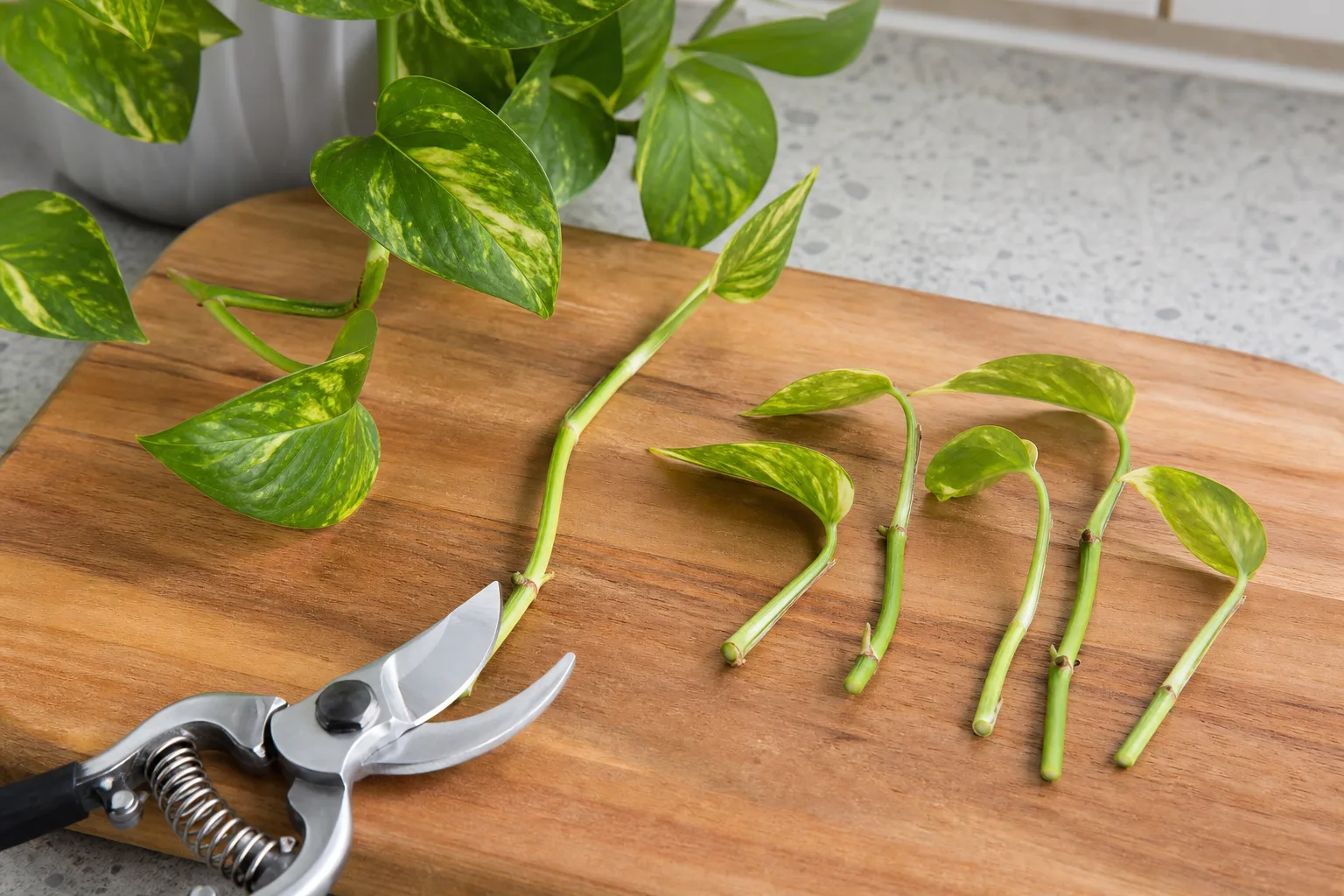
Use sterilized snips to cut below the node. A top cutting with two or three nodes is forgiving, but a single-node cutting can work when the node is healthy. Keep at least one leaf attached, and choose a section whose stem and leaf show the kind of variegation you want to carry forward. White Wizard’s pattern is not guaranteed in every cutting, so propagation is a way to preserve a promising node, not a promise that every new leaf will match the parent.
Place the cutting in a warm, bright location out of direct sun. Keep the leaf above the medium and maintain gentle moisture without submerging the leaf blade. High humidity can reduce water loss, but stagnant, saturated conditions encourage rot. For a broader visual walkthrough of node selection and aftercare, see the philodendron propagation guide.
Water, Moss, or Soil: Choose the Medium
Water propagation makes the node easy to observe. Submerge the node but keep most of the leaf and petiole above the water, and change the water when it becomes cloudy or develops an odor. Once roots are several centimeters long, pot the cutting into a small, airy mix and keep it a little more evenly moist while it transitions.
Moist sphagnum moss offers support and humidity around the node, but it must be damp rather than compressed and soggy. A clear container or loose cover can hold humidity; open it regularly so stale air does not build up. When roots fill part of the moss, move the cutting carefully and avoid tearing new roots away from the node.
Direct-to-soil propagation avoids a water-to-soil transition, but the node is harder to inspect. Use a small pot, an airy mix, and only enough moisture to prevent the cutting from dehydrating. In every method, warmth, light, and sanitation matter more than a complicated rooting additive. Discard a cutting if the node becomes soft, black, or foul-smelling rather than trying to save a rotting section.
Repot Without Losing Root Health
Repot in spring or when active growth makes recovery easier. Check for roots circling tightly inside the container, roots emerging from the drainage hole, a mix that has collapsed into fine sludge, or water that no longer moves through evenly. A pot that dries unusually fast can also signal a root-bound plant, but confirm that the faster drying is not simply the result of brighter light or warmer weather.
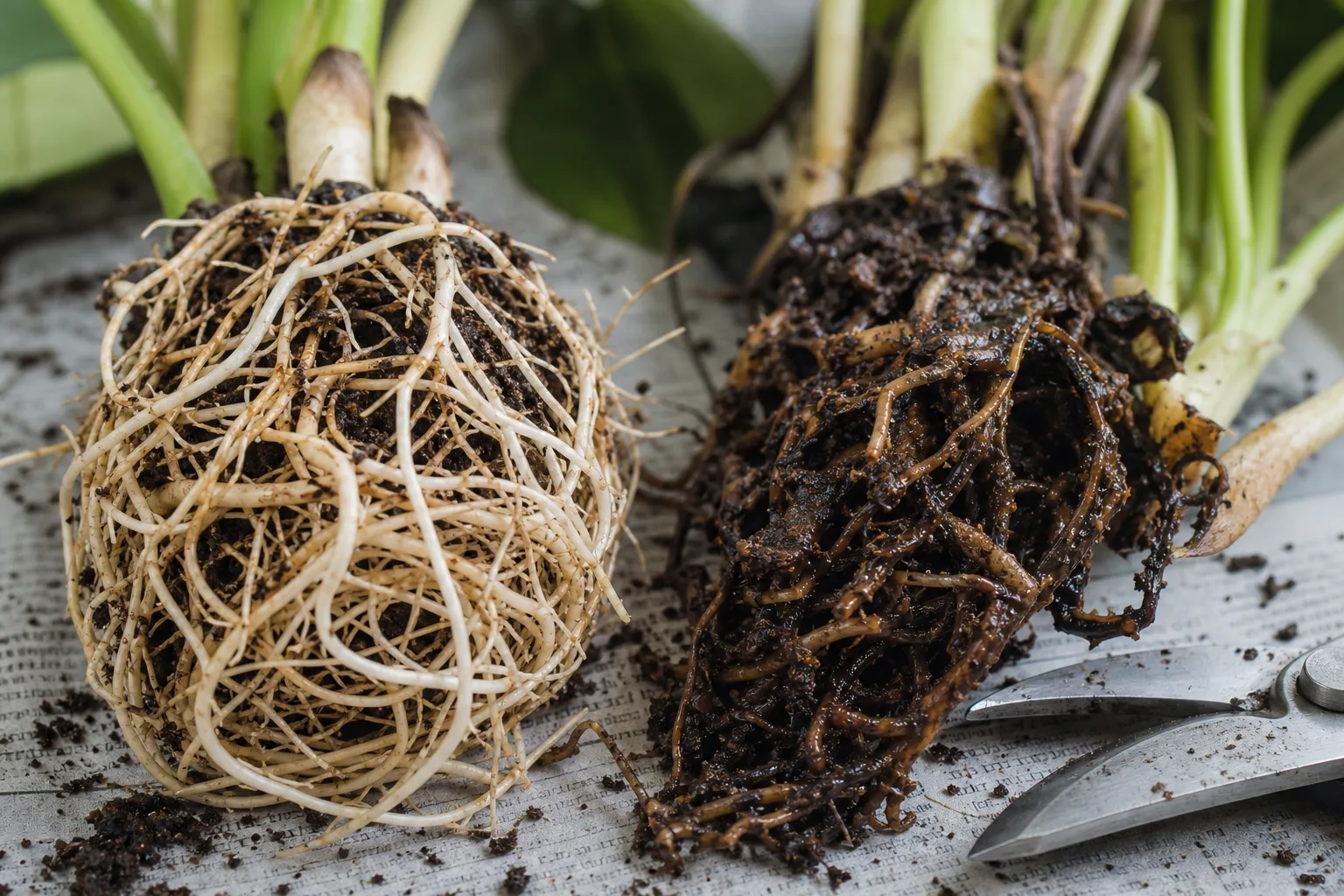
Choose a container only one size larger, generally about 1–2 inches wider than the current root ball. An oversized pot holds more wet mix than the roots can use and raises the risk of rot. Slide the plant out gently, loosen only the outermost compact roots, and inspect for firm cream, tan, or light brown roots. Remove soft, hollow, or foul-smelling roots with clean shears.
Set the root ball at the same depth as before. Do not bury the stem or pack mix tightly around aerial roots. Fill around the roots with fresh mix, tap the pot to settle it, and water once so the mix contacts the roots. Allow excess to drain, then return the plant to bright filtered light. Hold fertilizer until it shows renewed growth, because fresh mix and disturbed roots do not need an immediate nutrient boost.
Diagnose Yellow, Brown, or Leggy Growth
Start with the simplest sequence: feel the mix, inspect the newest growth, look under the leaves, and check the roots if watering has been consistently difficult. Changing light, water, fertilizer, and humidity all at once makes the original cause harder to identify.
| Symptom | Likely causes | First response |
|---|---|---|
| One old lower leaf turns yellow | Normal aging or a recent stress | Remove it once fully yellow and review the overall trend |
| Several leaves yellow while the mix stays wet | Overwatering, poor drainage, or root stress | Let the mix dry, check drainage, and inspect roots if it continues |
| White sections become tan and crispy | Hot direct sun, dry roots, or salt buildup | Filter the light, check moisture, and flush salts if needed |
| Long gaps between leaves | Insufficient light or lack of climbing support | Increase filtered light gradually and add a stable support |
| New leaves are small | Low light, root restriction, pests, or unsettled conditions | Check light and roots, then inspect the growth point |
| Silvery scars or distorted new leaves | Thrips or other sap-feeding pests | Isolate the plant and inspect every leaf and node |
| Black or soft stem near wet soil | Rot from saturated conditions | Unpot promptly and take firm-node cuttings if necessary |
Variegated plants make diagnosis visually complicated. A brown patch in white tissue can be sunburn, but a brown margin that advances from a dry edge may be water stress. A greener leaf can be ordinary variation, while repeated greener leaves plus weak growth suggest the plant needs a better light-and-root setup. Treat the pattern over time as evidence.
Check Light Before Changing Food
When growth is slow, move through the light check before increasing fertilizer. Confirm that the plant is close enough to a bright window or receiving useful grow-light exposure, then look for drafts and root congestion. If the roots are healthy and the plant is actively growing but pale, a diluted feed may help. If the mix is wet and roots are damaged, fertilizer can add stress rather than solve the problem.
Give a light change several weeks to show up in new growth. Keep direct sun off the white portions, and do not expect a previously green or white section to change color. The newest leaf, internode length, and firmness of the stem are better progress markers than the appearance of an older leaf.
Root Rot, Pests, and Leaf Spots
Root rot is usually a root-zone problem: a pot without drainage, a dense mix, repeated small sips that keep the center wet, or low light combined with frequent watering. Remove the plant from the pot when yellowing is widespread or the mix smells sour. Cut away soft roots, discard the saturated mix, and repot into a clean, airy container. If only a healthy node remains, use it as a cutting rather than placing a rotting stem back into fresh soil.
Common pests include spider mites, mealybugs, scale, aphids, and thrips. Spider mites can cause fine stippling and webbing; mealybugs look cottony; scale forms firm bumps; thrips may leave silvery scarring, dark specks, and distorted new leaves. Isolate the plant, wash accessible pests away, and use a product labeled for the pest and the plant, repeating only as its label directs. Inspect nearby plants because pests can spread before damage is obvious.
Leaf spots become more likely when foliage stays wet in still air. Water the soil rather than the leaves, improve airflow, remove badly affected foliage with clean tools, and keep a symptomatic plant separated until the cause is clearer. NC State Extension recommends keeping water off the leaves as part of leaf-spot prevention. The Epic Gardening philodendron care guide also emphasizes drainage, moisture-based watering, and avoiding direct sun and drafts when troubleshooting indoor philodendrons.
Outdoor and Seasonal Care
White Wizard can spend warm weather outdoors only in a protected, frost-free location with filtered shade. Acclimate it gradually, beginning with bright shade and short visits. Avoid harsh afternoon sun, strong wind, heavy rain, and patios where water collects under the pot. Outdoor growth can be faster, but so can pest pressure and drying.
The P. erubescens species is associated with warmer USDA zones, while a particular cultivar and local microclimate may be less tolerant. Treat the plant as an indoor tropical rather than trusting a zone label to protect it from a cold night. Bring it back indoors before temperatures approach the lower end of its comfort range, and quarantine or wash it before returning it to a plant collection.
In winter, move it toward the brightest filtered light available, keep it away from heating vents, and water less often if the mix dries slowly. Do not keep the soil constantly damp to compensate for dry air. Pause regular fertilizer if growth has slowed, and resume gradually when the plant produces active new growth in brighter conditions.
White Wizard contains calcium oxalate crystals and can cause painful irritation if chewed; its sap can also irritate skin and eyes. Wear gloves when pruning, wash hands and tools afterward, and place it where children and pets cannot reach it. If a person or animal chews the plant, contact a poison or veterinary professional for situation-specific advice. Poison Control’s philodendron safety guidance explains the irritation caused by the plant’s needle-like raphides and what to do after exposure. You can also review the site’s broader philodendron toxicity guide.
Conclusion
Grow White Wizard Philodendron as a warm, climbing aroid with a strong green foundation. Give it bright filtered light so new variegated leaves have enough energy, but shield white sectors from hot direct sun. Use a draining pot and airy mix, water after a partial dry-down, and feed lightly only while growth is active. A moss pole or trellis supports larger leaves, while clean node-based pruning helps manage a long vine or sustained reversion.
When the plant looks unhappy, check the root zone and light before reaching for fertilizer or a humidity gadget. New growth tells you whether the setup is improving. With stable conditions, careful watering, and realistic expectations about natural pattern variation, White Wizard can remain a vigorous, highly variegated houseplant rather than a fragile display piece.