Brown Tips on Alocasia Black Velvet: Causes, Checks & Fixes
Quick answer
Brown tips on Alocasia Black Velvet most often come from humidity below 50%, underwatering between the plant's 7–10 day summer dry-down, or fertilizer salts on compact velvet leaves. First step: place a hygrometer beside the pot and check whether the top 2–3 cm of mix is dry before you water again.
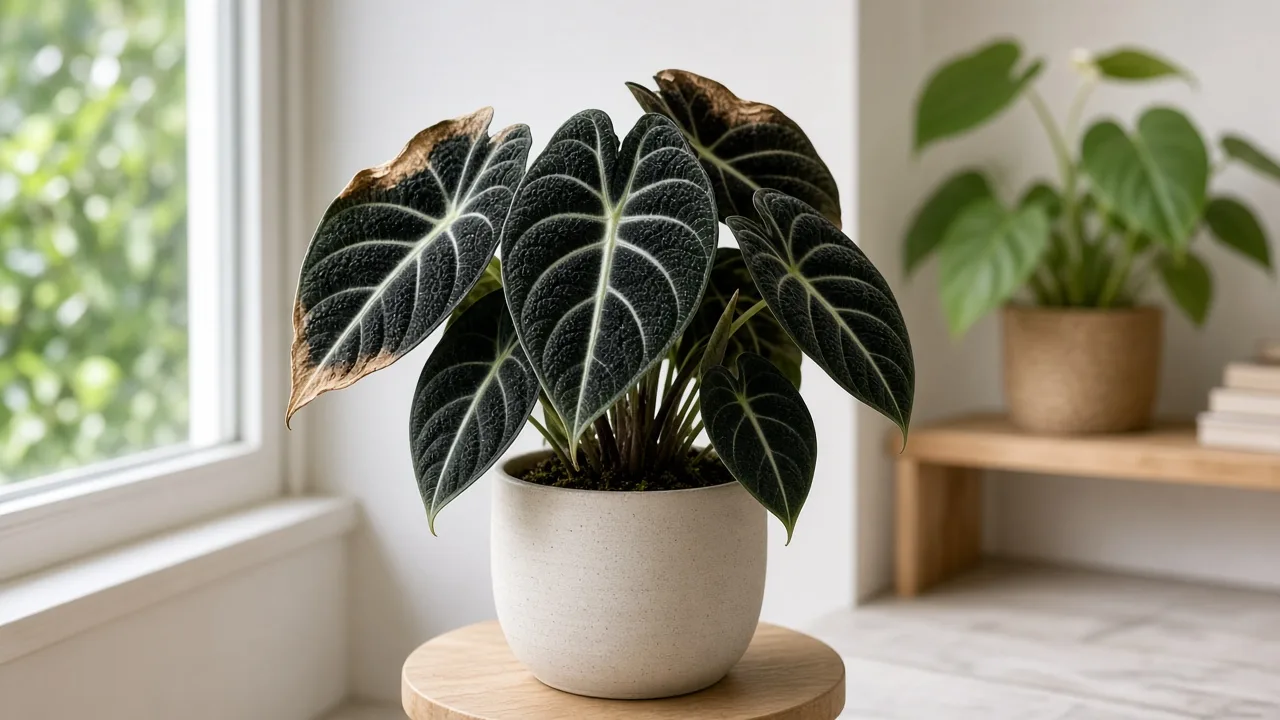
Brown Tips on Alocasia Black Velvet: Causes, Checks & Fixes
This guide covers brown tips on Alocasia Black Velvet. See also the general Brown Tips guide, watering, and light pages for this plant.
Brown Tips on Alocasia Black Velvet: Causes, Checks & Fixes
Quick answer
Brown tips on Alocasia Black Velvet (Alocasia reginula) usually trace to humidity below 50%, underwatering between dry-down cycles, or salt buildup on compact velvet leaves — not a mysterious disease. The jewel alocasia carries thick bullate foliage on a slow, shallow root system, so marginal damage often appears while stems still feel firm and the plant still holds two or three dark leaves.
First step: place a hygrometer within 12 inches of the canopy and press your finger into the top 2–3 cm of mix. If readings sit below 50% with papery tip bands, humidity is the likely driver. If the mix is dust-dry and the pot feels light, fix watering before adding a humidifier. For how tip burn works on houseplants in general, see our brown tips hub. On Black Velvet, the fuzzy velvet surface and 8–15 cm leaf size mean dry air and brief drought show at the farthest leaf point first — often while the dark blade still looks healthy from across the room.
Why Alocasia Black Velvet gets brown tips
Black Velvet evolved in warm, humid Borneo understories. Indoors, three stresses converge on the same symptom — crispy leaf margins — more often than on larger, glossier alocasias like Polly.
Low indoor humidity. The RHS notes that low humidity can cause browning on alocasia leaf edges and may attract red spider mites in dry air. Winter heating drops many homes to 25–40% relative humidity — far below the 65–80% range this species prefers. Dry air pulls moisture from leaf tips faster than the compact root system replaces it.
Underwatering between dry-down checks. Proven Winners recommends watering alocasia when the top 2–3 inches of soil is dry and warns that dry soil can cause plant stress. On Black Velvet, a missed dry-down in summer heat — or too little water during winter dormancy when you are afraid of rot — concentrates damage at the leaf tip before the whole blade yellows.
Fertilizer salt and hard-water minerals. Heavy feeding or skipped flushing leaves white crust on soil and pot rims. Salts accumulate at leaf margins on small velvet blades. This pattern worsens after monthly full-strength fertilizer without a plain-water flush.
Less common contributors: heat blasts from radiators, cold winter glass, and direct sun scorch on a window-facing leaf. Those look different once you map drafts, light direction, and feeding history.
What brown tips look like on Black Velvet
Brown tips on jewel alocasias have a recognizable pattern once you separate cosmetic edge burn from root failure or pest damage.
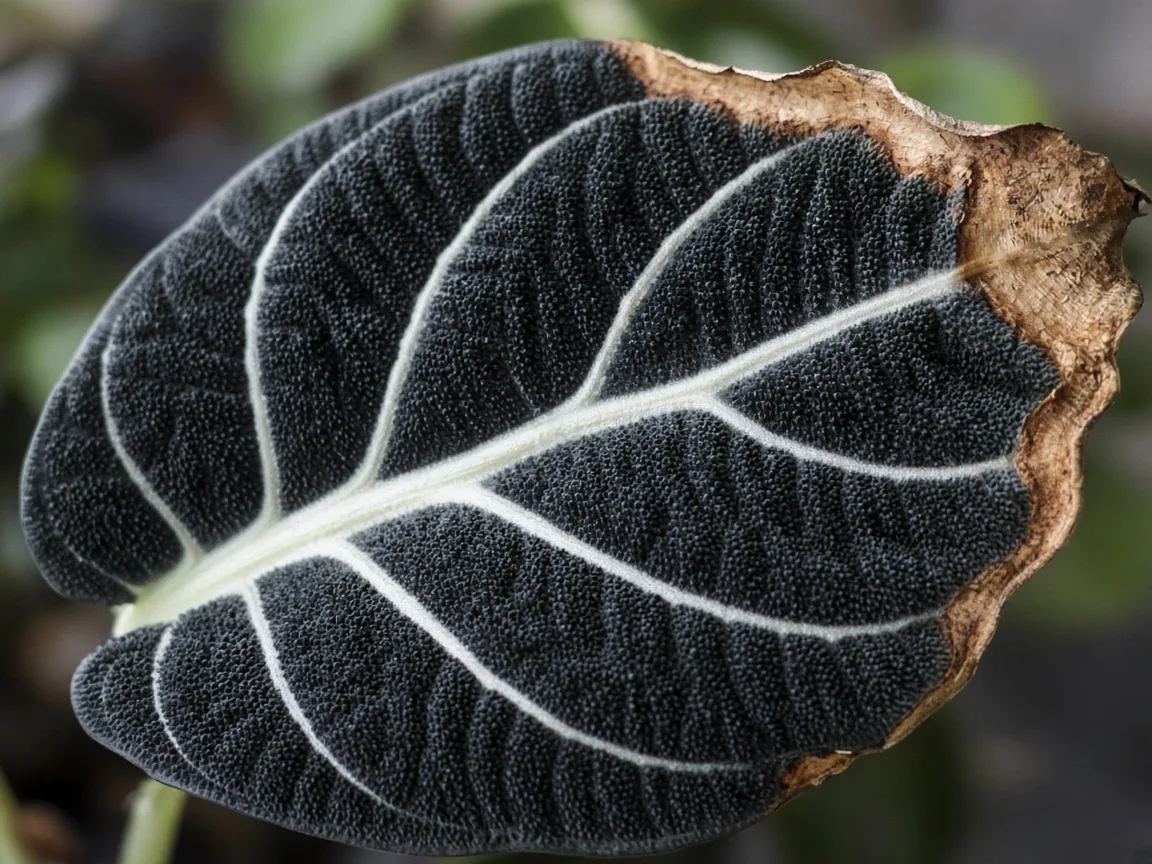
Brown tip symptoms on Alocasia Black Velvet — compare dry tan tissue with healthy dark velvet and white veining on the same blade.
Classic tip burn (humidity or salts):
- Narrow tan-to-dark-brown band at the very tip or along the wavy margin of a compact heart-shaped leaf
- Papery, dry texture on an otherwise firm, dark velvet blade with clear white veining
- Often worse on older outer leaves while the center still pushes one new leaf at a time
- May coincide with white crust on soil surface from hard water or fertilizer
Dry-air signature:
- Browning along both margins of multiple small leaves, not just one isolated point
- Worsens in late fall through early spring when heating runs constantly
- Soil moisture feels normal; petioles stay firm at the base
- Spider mites may follow if humidity stays below 50% for weeks
Underwatering signature:
- Crispy tips plus light pot weight and mix dry 2–3 cm down
- Leaves may droop slightly before margins fully crisp
- Often follows a hot week when the small pot dried faster than your calendar expected
What tip burn is not: uniform yellowing with wet soil (overwatering), whole-leaf brown collapse (brown leaves), bleached patches on the window side only (too much direct sun — see light guide), or stippling with fine webbing (spider mites). For margin crisping without isolated tip bands, also read low humidity on Black Velvet.
Velvet leaf surface: why misting makes brown tips worse
The bullate, hair-covered leaf surface is what gives Black Velvet its iconic look — and it changes how you handle tip burn. Never mist directly onto velvet foliage: water droplets sit in the leaf hairs, encourage fungal spotting, and can leave permanent brown marks that mimic tip burn. Raise humidity with a humidifier, pebble tray, or bright bathroom placement instead — the same approach the RHS describes for alocasia humidity.
When dust accumulates, wipe gently with a barely damp microfiber cloth, supporting the leaf from underneath. Avoid leaf shine products; they clog stomata and ruin the matte finish. If you see brown spots only where water beads sat on the surface, humidity correction alone will not fix those marks — trim the damaged edge cosmetically after you stop misting.
Lookalike symptoms to rule out
| Pattern | Likely cause | First direction |
|---|---|---|
| Crispy tips only; firm petioles; soil moist | Low humidity or salt buildup | Humidifier + water-quality check |
| Tips plus margins on many leaves in winter | Low humidity | See low-humidity guide |
| Light pot, dry mix 2–3 cm down, slight droop | Underwatering | Thorough soak; see underwatering |
| Yellow lower leaves, wet soil, soft petioles | Overwatering / root stress | Stop watering; check roots |
| Bleached patch on window-facing side | Too much direct sun | Move per light guide |
| Tips after monthly full-strength feed; white soil crust | Salt / fertilizer burn | Flush pot; dilute fertilizer |
| Stippling + webbing on undersides | Spider mites | Rinse and treat; raise humidity |
How to confirm the cause
Work through these checks in order. One change at a time makes it easier to read the plant’s response over the next two to three weeks.
-
Hygrometer at canopy height — Place a digital hygrometer within 12 inches of the top leaves. Readings below 50% with margin crisping strongly support low humidity. Target 65–80% for recovery on this species.
-
Soil dry-down cross-check — Press your finger or a chopstick into the top 2–3 cm of chunky aroid mix. NC State Extension notes that alocasias prefer moist, well-drained soil — the key word is drained, not constantly wet. Tips with dust-dry mix and a light pot mean fix watering first; tips with soggy mix that stays wet a week point to overwatering instead.
-
Pot weight test — Lift the container. A dry pot is noticeably lighter than one with moist soil. This physical check beats a calendar in winter when dormancy slows uptake.
-
Draft and heat map — Feel for moving air from vents, fireplaces, and single-pane winter glass. Relocate once at least 3–4 feet from forced-air registers before buying more hardware.
-
New-growth watch — The decisive test is the next emerging leaf. Clean margins and intact white veining on new tissue confirm your fix; repeated damage on fresh leaves means another cause is still active.
-
Feeding history — If you fertilized at full label strength or skipped flushing for months, leach the pot with plain room-temperature water until drain runs clear before feeding again.
You have likely confirmed humidity or watering stress when new leaves open with clean edges for two to three weeks, canopy RH holds near 65%, and petioles stay firm with appropriate soil moisture.
First fix for Alocasia Black Velvet
Apply one correction at a time so you can judge new leaf quality. The branch below matches what you confirmed.
If humidity is below 50% at the canopy
Run a small room humidifier several hours daily in the same room, aimed into ambient air rather than directly on velvet foliage. Supplement with a gravel tray — wide tray, stones, water just below the stone surface, pot on top, never submerged. Bathrooms help only when light is bright enough; see low humidity on Black Velvet for full RH targets.
If the top 2–3 cm of mix is dry and the pot feels light
Water thoroughly with room-temperature water until it runs from the drainage hole, then empty the saucer. Continue your normal dry-down check — do not add extra water because tips are brown. Expect the next one or two new leaves to show the clearest response within two to four weeks.
If white crust or heavy feeding preceded the tips
Flush the pot once with plain water until drain runs clear. Hold fertilizer until new growth looks healthy for two weeks, then resume at half strength per the fertilizer guide.
Cosmetic trim (after the fix is in place)
Snip dead tips with clean scissors, following the natural leaf contour. Brown tissue does not re-green; trimming is optional and for appearance only. Wear gloves — alocasia sap can irritate skin.
Reading leaf count while tips brown
Black Velvet often holds only three to five leaves at a time in good conditions — fewer in low light or winter dormancy. When brown tips appear but leaf count stays stable and new growth still emerges from the corm, the plant is stressed but not collapsing. If tips spread while leaf count drops to one or zero outside normal dormancy, cross-check roots and watering before assuming humidity alone will fix it. An empty-looking pot in winter may still carry a firm corm below the surface; resist overwatering bare mix.
Recovery timeline
Damaged leaf tissue is permanent. Brown or crispy tips will not turn green again. Judge success by stopped spread to healthy tissue and clean margins on newly emerged leaves.
- After humidifier fix: Margin crisping on new growth usually stabilizes within two to three weeks when canopy RH holds near 65%.
- After a thorough watering correction: First clean new leaf often appears within two to four weeks once roots rehydrate the small blades.
- Older leaves: May keep brown tips indefinitely; remove them only if more than half the blade is dead.
If three consecutive new leaves open with clean edges, consider the brown-tip problem controlled. Keep monitoring through heating season.
What not to do
- Do not mist velvet leaves to fix brown tips — water trapped in leaf hairs causes separate damage.
- Do not increase watering because tips are brown if soil is already moist; soggy mix invites corm rot on this species.
- Do not fertilize a stressed plant before humidity and watering stabilize.
- Do not repot on day one unless roots are mushy or mix is failing — see repotting after the plant stabilizes.
- Do not stack repotting, heavy pruning, and pesticide on the same day as a humidity or watering overhaul.
How to prevent brown tips on Black Velvet
- Run a hygrometer through heating season and act when canopy RH drops below 50%.
- Water when the top 2–3 cm is dry, with full drainage — match the routine in the watering guide.
- Use a humidifier instead of misting for long-term RH in the 65–80% range.
- Flush the pot occasionally with plain water to leach salts if you fertilize during active growth.
- Keep stable placement away from vents and cold glass once the plant acclimates.
- Inspect emerging leaves weekly so tip damage is caught while the fix is a humidity or watering tweak — not a repot.
When to worry
Treat as urgent if brown damage spreads to most new leaves within a week, petioles soften at the soil line, soil smells sour, or fine webbing appears on undersides — those patterns point past cosmetic tip burn toward root rot, overwatering, or spider mites.
Lower urgency: a few crispy tips on older outer leaves while petioles stay firm, soil moisture is appropriate, and new growth is still emerging. Fix humidity and watering before escalating to repotting.
Conclusion
Brown tips on Alocasia Black Velvet are frustrating but usually environmental — not a death sentence. Compact velvet leaves telegraph dry winter air, missed dry-downs, and salt stress at the margins before the corm fails. Measure humidity at the canopy, check the top 2–3 cm of mix, and keep water off the fuzzy leaf surface; then watch new emerging leaves for the real verdict. Old tips stay brown, but clean new growth with sharp white veining means you found the right lever.
When to use this page vs other Black Velvet guides
- Black Velvet watering guide — Use for routine moisture checks before assuming brown tips is the main issue.
- Black Velvet problems hub — Browse all common issues on this species.
- Low humidity on Black Velvet — Different entry point when whole margins crisp, not just tips.
- Underwatering on Black Velvet — Different entry point when the pot is light and mix is dry throughout.
- Overwatering on Black Velvet — Different entry point when soil stays wet and petioles soften.