Overwatering on Alocasia Black Velvet: Causes, Checks &
Quick answer
Overwatering on Alocasia Black Velvet usually means the underground corm and fine roots sit in mix that stays wet too long in a snug pot—often from calendar watering, an oversized cachepot, or winter drinks while the corm is dormant. First step: stop watering and lift the pot to confirm the top 2–3 cm of mix is still damp before you pour again.
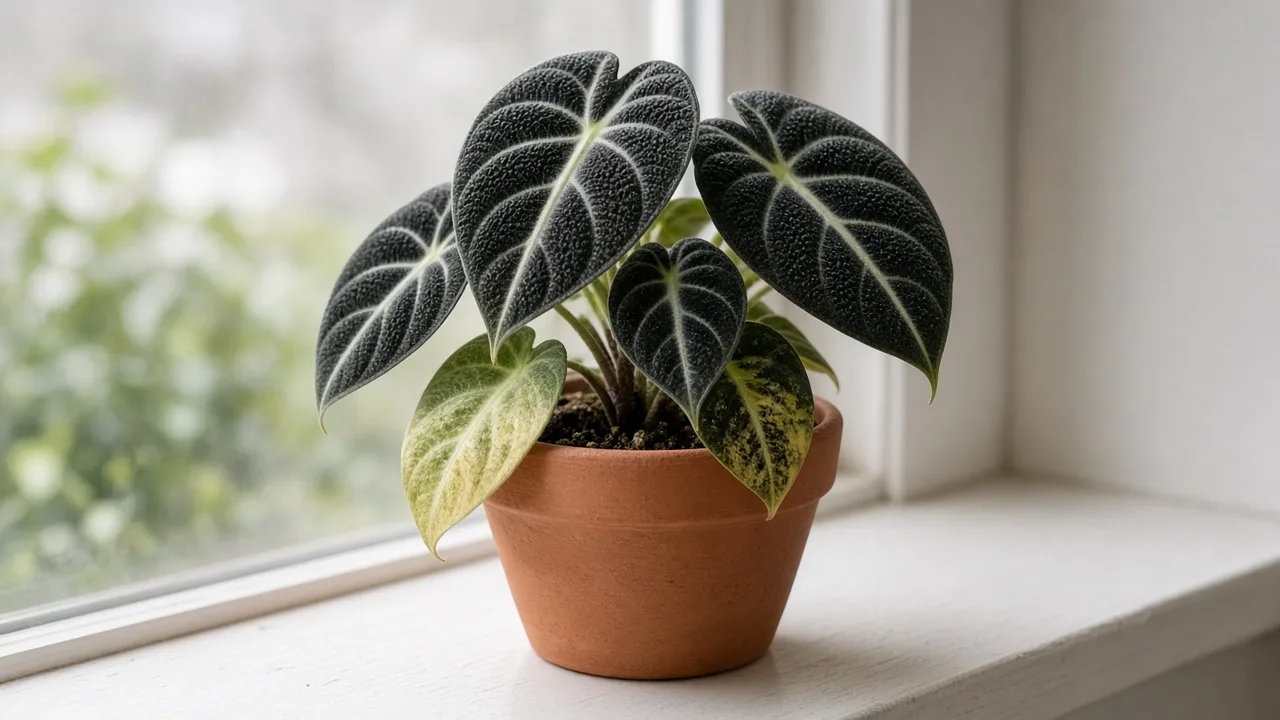
Overwatering on Alocasia Black Velvet: Causes, Checks & Fixes
This guide covers overwatering on Alocasia Black Velvet. See also the general Overwatering guide, watering, and light pages for this plant.
Overwatering on Alocasia Black Velvet: Causes, Checks & Fixes
Quick answer
Overwatering on Alocasia Black Velvet means the underground corm and fine roots stay wet too long in aroid mix—usually because someone watered on a calendar, the plant sits in an oversized cachepot, or winter drinks continued while the corm was resting. For how chronic wet mix damages roots in general, see our overwatering guide. On Black Velvet, the pattern usually shows up as yellow lower velvet leaves on soil that stays dark and heavy for days.
First step: stop watering and lift the pot. If the top 2–3 cm of mix is still damp and the container feels noticeably heavy, do not add more water. Check corm firmness and whether lower bullate petioles are soft at the soil line before you treat this as thirst.
When to use this page vs other Black Velvet guides
- Root rot — use when the corm is soft, roots are mushy brown, or the mix smells sour
- Drooping leaves — use when bullate blades hang limp; overwatering and underwatering both cause droop
- Wilting — use for rapid whole-plant turgor collapse, often late-stage wet-root failure
- Yellow leaves — use when yellowing is the main symptom and you need to separate nutrient vs. moisture causes
- Fungus gnats — use when small flies hover at the soil line on chronically damp mix
- Watering guide — use for long-term top-layer dry-down rhythm after the crisis stabilizes
What overwatering looks like on Alocasia Black Velvet
On a healthy Black Velvet, matte black bullate leaves with stark white veining stand upright on short stiff petioles in a tight 20–40 cm clump. Overwatering disrupts that silhouette from the bottom up—the corm and roots fail before the crown looks obviously sick.
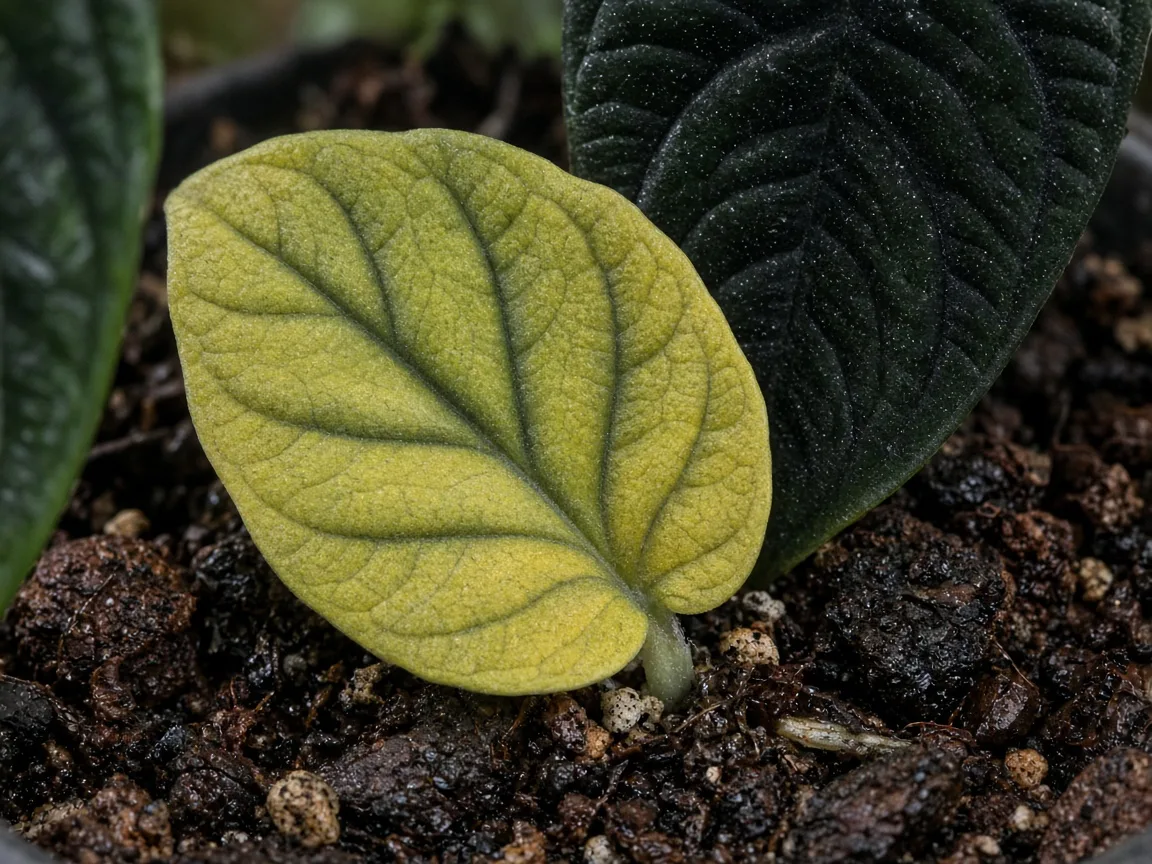
Overwatering on Alocasia Black Velvet—yellowing lower bullate leaves and dark damp mix at the soil line often mean the corm has been wet too long, not that the plant needs another drink.
Early wet-soil signs include lower velvet leaves turning pale yellow while the mix stays dark and cool. White veining may dull to flat gray-green. The pot feels heavy when lifted. You might notice fungus gnats near the soil surface before any leaf collapses. At this stage the corm is usually still firm if you press gently at the soil line.
Mid-stage overwatering adds limp bullate blades on wet soil—the confusing wilted-but-wet look. Wilting with moist soil often means rotting roots cannot take up water Owners see drooping velvet foliage and pour more water, which accelerates corm failure. Short petioles may feel rubbery at the base. Bottom leaves yellow and detach easily.
Advanced overwatering shows mushy petioles at the soil line, a soft corm, brown mushy roots, and a sour smell from drain holes. Black Velvet carries only a few leaves at once—lose the corm and you lose the whole plant. If you reach this stage, move to the root rot guide for salvage steps.
Why the velvet corm rots faster than you expect
Black Velvet (Alocasia reginula) is a compact jewel alocasia that stores energy in an underground corm, not a thick woody stem. Fine feeder roots sprout from that corm into chunky aroid mix and die quickly when oxygen is cut off. Root rot on alocasias usually results from mix that drains too slowly or from overwatering
The bullate leaf surface traps moisture and dust, which changes how stress shows up. Velvet alocasia foliage should not be misted directly—water droplets sit in the hairs and can leave permanent marks—so you cannot compensate for wet roots by spraying leaves. When roots fail, the compact plant has limited backup water compared with larger elephant ears. Three or four leaves can look fine while the corm below is already declining.
The oversized-pot slow-dry trap
Black Velvet prefers a snug pot—often 10–15 cm diameter—with fast-draining mix. University of Arkansas Extension notes this slow-growing species should stay in as small a pot as practical and never sit in standing water.
The trap: repotting into a decorative container one or two sizes too large “so it can grow.” Extra mix holds moisture far longer than the compact corm can use. Roots stay wet while upper leaves still look acceptable. Signs you are in this trap:
- Mix stays dark and cool for a week between waterings
- Pot weight barely changes after you water
- Fungus gnats hover near the soil line
- White veining fades on lower leaves but you keep the same oversized cachepot
The fix is not brighter light alone—it is matching water to how slowly this pot dries. See the Black Velvet repotting guide for snug-pot sizing and the watering guide for the top 2–3 cm dry-down rhythm.
Winter dormancy watering trap
Black Velvet may drop every leaf in late autumn or winter while the underground corm stays alive. During dormancy, reduce watering to a minimum—overwatering while dormant can cause roots to rot Many owners keep a summer weekly schedule through winter because the pot still looks like a plant, not because the corm is actively growing.
Winter overwatering signs:
- Bare or nearly bare pot with damp mix that never dries
- Corm still firm but no new petioles for weeks
- Sour smell developing despite few leaves to transpire moisture
- Overwatering in winter is the most common alocasia killer according to commercial growers
When the corm is resting, water every 2–4 weeks only if the top 2–3 cm of mix has fully dried—do not keep the mix evenly moist. Stop fertilizer until spring growth returns. See the overview guide for full dormancy rhythm.
Why Alocasia Black Velvet gets overwatered
Calendar watering ignores how fast the top layer dries in your room. A snug pot near a bright east window may need water every 7–10 days in summer; the same plant in a cool dim corner may need half as often. Water when the top 2–3 cm is dry—not because it is Tuesday.
Dense peat-heavy mix holds water like a sponge. Black Velvet needs perlite, orchid bark, and coarse components so the corm never sits in saturated soil. Plants in waterlogged soil may die because roots cannot absorb oxygen
Cachepots without drainage trap every drink at the root zone. Lift the nursery pot after watering and empty standing water from the outer shell.
Bottom watering too long can saturate the lower mix while the surface looks dry. If you bottom-water, set a timer and do not leave the pot soaking overnight—especially in winter dormancy.
Low light plus wet mix is a slow killer. Weak photosynthesis means the plant uses less water, so mix stays wet longer. Leggy growth on damp soil is a warning sign that light and watering are both misaligned.
Recent repot shock sometimes follows overwatering “to help it settle.” Disturbed roots uptake poorly; extra water makes that worse. Wait until the top layer dries before the next drink after repotting.
How to confirm overwatering (not underwatering)
Work through these checks in order:
- Lift the pot. Heavy and cool with limp lower leaves points to wet mix. Light with dry pale surface mix points to underwatering.
- Probe the top 2–3 cm. Damp or wet when leaves are yellowing confirms excess moisture—not thirst.
- Smell the drain holes. A faint sour or musty odor suggests anaerobic mix and declining roots.
- Press at the soil line. A firm corm with only early yellow lower leaves may recover with a dry-down. A soft corm needs root inspection.
- Check new growth. Healthy white-veined velvet leaves emerging from the crown suggest the problem is caught early. Collapsing newest leaves on wet soil means escalation.
If soil is wet and leaves look thirsty, trust the roots—not the foliage. That mismatch is classic overwatering on jewel alocasias.
The first fix to try
Stop watering immediately and move the plant to bright indirect light with good airflow—still within Black Velvet’s comfort zone. Do not fertilize, repot, prune heavily, or mist velvet leaves on day one.
Let the top half of the mix dry down. For a mildly overwatered plant in a snug pot with a firm corm, that single pause often stabilizes yellowing within one to two weeks. Lift the pot daily so you learn what “dry enough to water” feels like for this container.
Only after the top 2–3 cm has dried and the corm is still firm should you resume with a measured top-water—enough to moisten the mix, not flood the cachepot. Empty any saucer within 30 minutes.
Step-by-step recovery by severity
Mild (firm corm, early lower-leaf yellow on wet soil):
- Stop watering until top 2–3 cm dries
- Empty cachepot standing water
- Increase airflow slightly; avoid cold drafts below 13 °C (55 °F)
- Resume watering on the dry-down check only
Moderate (limp leaves on wet soil, some soft roots, corm still mostly firm):
- Slide the root ball out and inspect roots
- Trim mushy brown roots with clean scissors; leave firm white roots
- Repot into the same size or smaller pot with fresh chunky aroid mix only if roots were damaged—do not upsize
- Wait 5–7 days before the first cautious drink
Severe (soft corm, mushy petioles, sour smell):
- Follow the root rot salvage guide
- Consider corm division only if firm tissue remains
- Accept that yellow or collapsed lower leaves will not re-green
Recovery timeline
Mild overwatering on a firm corm often stops new yellowing within 7–14 days once the mix dries properly. Limp bullate blades on chronically wet soil may take two to four weeks to firm—if they firm at all. Lower yellow leaves typically will not turn green again.
Judge recovery by:
- Firm corm when you press at the soil line
- No new petiole mush at the base
- Fresh velvet leaves with crisp white veining emerging from the crown
- Pot weight dropping between waterings on a predictable rhythm
If every leaf drops in winter but the corm stays firm, the plant may be dormant—not dead. Reduce watering and wait for spring before declaring failure.
Lookalike symptoms
| What you see | More likely cause | Where to go |
|---|---|---|
| Limp leaves, light pot, dry top 2–3 cm | Underwatering | Underwatering guide |
| Limp leaves, heavy pot, wet mix | Overwatering / early root stress | This page |
| Rapid whole-plant flop overnight | Cold draft or severe root failure | Wilting |
| Yellow lower leaves only, stable moisture | Normal old-leaf senescence or nitrogen issue | Yellow leaves |
| Brown crispy edges, adequate moisture | Low humidity | Low humidity |
| White mold on soil surface | Surface saprophytic fungi on wet mix | Mold on soil |
Mistakes to avoid
- Watering because leaves look limp without checking whether the pot is already heavy
- Misting velvet foliage instead of fixing root-zone moisture
- Repotting into a larger pot while roots are still wet and damaged
- Fertilizing a stressed corm to “push growth”—wait until new leaves look healthy for two weeks
- Keeping summer watering frequency through winter dormancy
- Leaving the nursery pot in a full cachepot after every drink
How to prevent overwatering next time
Water when the top 2–3 cm of chunky aroid mix has dried—use a finger, chopstick, or pot-weight change as your trigger. Keep Black Velvet in a snug well-drained pot, maintain 65–80% humidity with a humidifier rather than misting, and place it in bright indirect light so the plant actually uses the water you give it.
Reduce watering 60–70% in autumn and winter when dormancy is likely. Empty cachepots and saucers after every watering. If fungus gnats appear, treat the wet-mix habit first—see fungus gnats on Black Velvet.
When to worry
Treat as urgent if the corm feels soft, petioles are mushy at the base, several leaves yellow and collapse within days, or the mix smells sour. Black Velvet’s small leaf count means you have little buffer—advanced root rot can kill the plant before owners realize watering was the problem.
Related Alocasia Black Velvet guides
- Alocasia Black Velvet overview — full light, water, humidity, and dormancy baseline
- Alocasia Black Velvet watering — top 2–3 cm dry-down rhythm and pot-weight checks
- Alocasia Black Velvet soil — chunky aroid mix that protects the corm
- Root rot on Alocasia Black Velvet — mushy corm, soft petioles, sour smell
- Drooping leaves on Alocasia Black Velvet — wet-soil droop vs. dry-soil droop
- Alocasia Black Velvet problems — browse all common issues on this species
Conclusion
Overwatering on Alocasia Black Velvet is a root-zone problem disguised as a leaf problem. Lift the pot, read the top 2–3 cm of mix, and stop watering when the container is already heavy. Most cases stabilize when watering matches how fast this snug pot dries—especially through winter dormancy. Recovery shows up as firm corm tissue and fresh velvet leaves with crisp white veining, not as every yellow bullate blade turning green again.
Related tool
Use the Root Rot Risk Checker to narrow causes for overwatering on this plant before changing multiple variables at once.