Fungus Gnats on Alocasia Black Velvet: Causes, Checks &
Quick answer
Fungus gnats on Alocasia Black Velvet almost always mean the potting mix is staying wet longer than this rot-sensitive corm can tolerate — often from calendar watering or peat-heavy mix in an oversized pot. First step: let the top 2–3 cm dry completely, skip the next scheduled drink, and place yellow sticky traps at the soil line.
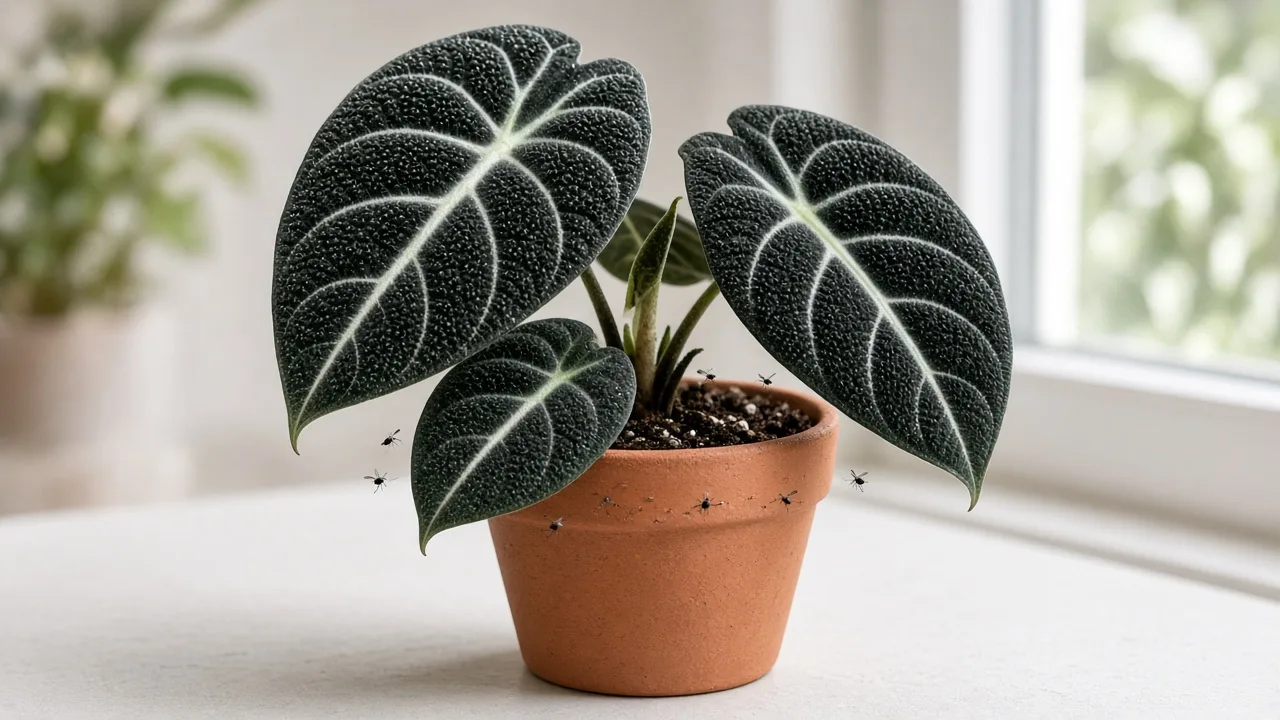
Fungus Gnats on Alocasia Black Velvet: Causes, Checks & Fixes
This guide covers fungus gnats on Alocasia Black Velvet. See also the general Fungus Gnats guide, watering, and light pages for this plant.
Fungus Gnats on Alocasia Black Velvet: Causes, Checks & Fixes
Quick answer
Fungus gnats on Alocasia Black Velvet almost always mean the potting mix is staying wet longer than this rot-sensitive corm can tolerate — often from overwatering on Alocasia Black Velvet or peat-heavy mix in an oversized pot. For how fungus gnats behave on houseplants in general, see our fungus gnats hub. First step: let the top 2–3 cm of mix dry completely, skip the next scheduled drink, and place yellow sticky traps at the soil line.
Black Velvet is a compact jewel alocasia with a small underground corm and shallow roots that rot faster than larger alocasias when left in saturated soil. Gnats are usually the visible clue that moisture has outpaced what the plant can use — not a random fly problem. The useful checks are pot weight, how long the top 2–3 cm stays damp, recent watering changes, light level, and whether the plant is in winter dormancy with sharply reduced water needs.
Why Alocasia Black Velvet gets fungus gnats
Fungus gnats are commonly associated with overwatered houseplants because their larvae feed on fungi, algae, and decaying organic matter in moist potting media. Adult females are highly attracted to moist growing medium, especially peat-heavy surfaces that stay damp for days.
That mismatch shows up often on Black Velvet (Alocasia reginula). Collectors treat it like a thirsty tropical foliage plant, but it is a compact species that needs chunky aroid mix in a snug pot and water only when the top 2–3 cm is dry — not a constantly moist surface. When the mix stays wet from a heavy hand, an oversized container, compacted old soil, or weak light slowing water use, fungus gnats find exactly the habitat they need.
Fall and winter make this worse. Cooler temperatures and shorter days slow plant growth and water uptake, but many growers keep the same watering calendar while Black Velvet may drop leaves and enter dormancy. Proven Winners notes that overwatering in winter is the most common alocasia killer and lists soil gnats among overwatering signs — if that step is skipped, the pot stays moist for weeks and gnat populations spike.
What fungus gnats look like on Alocasia Black Velvet
On Black Velvet, you usually notice the pest before leaf damage. Adults are about 1/8 inch long, dark, and mosquito-like, with a distinct Y-shaped vein pattern on the wings when viewed with a magnifying glass. They hover near the soil surface, walk across damp mix, and collect around windows and lamps. Because Black Velvet holds only a few compact bullate leaves on short petioles, the dark soil line stays visible — making the small flies easy to spot against matte black foliage.
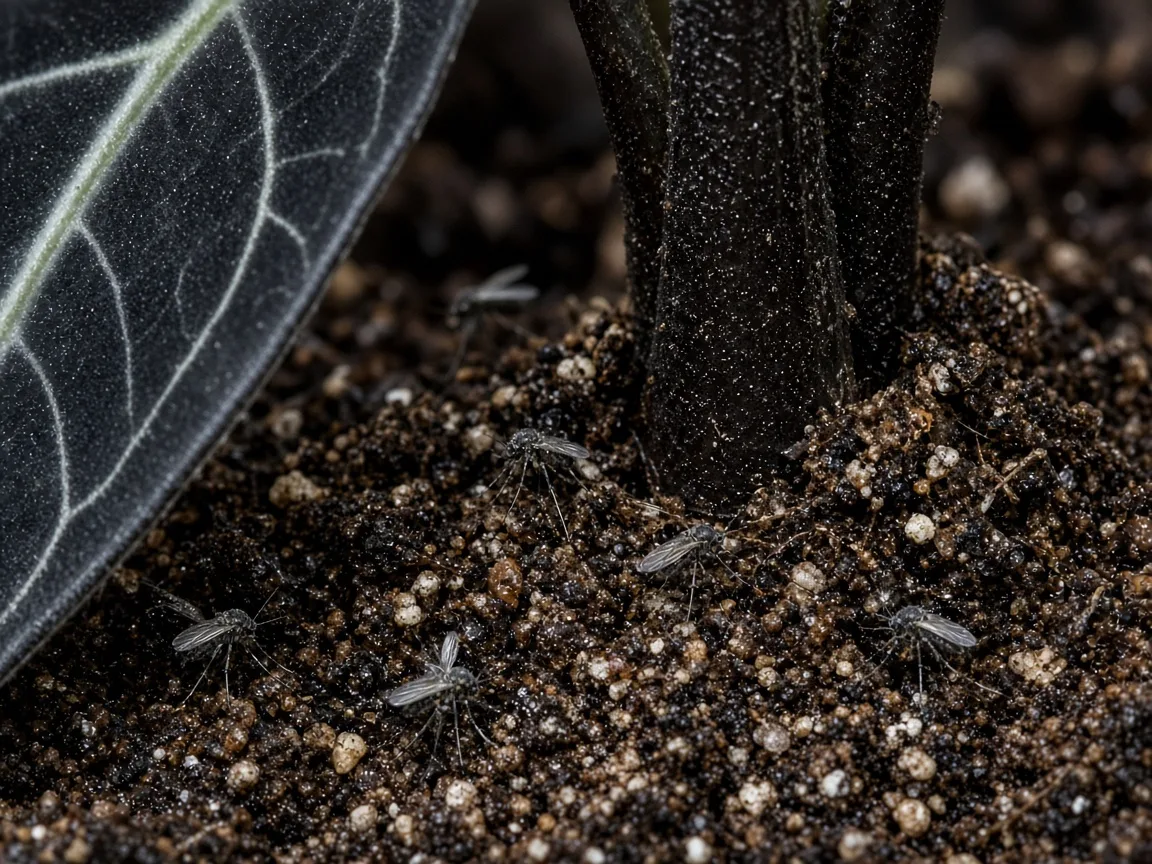
Fungus gnat adults at the soil line of a compact jewel alocasia — compare with healthy dry mix on the same plant.
Larvae are translucent worms with black head capsules, living in the top 2–3 inches of moist mix. They feed on fungi and decaying matter first; when numbers are high, they may chew root hairs or tunnel into roots. On a healthy, properly dried Black Velvet this is rare. If you see wilting or mushy petiole bases alongside gnats, suspect overlapping corm stress from wet soil rather than gnats alone.
Why a snug velvet corm pot breeds gnats faster than a big Alocasia
Black Velvet is not Alocasia Polly. The jewel species carries a small corm in a 10–15 cm pot with a slow root system that cannot use water as fast as a taller hybrid in a larger container. When owners repot into an oversized cachepot “so it can grow,” extra soil volume holds moisture around the corm long after the surface looks acceptable.
Peat-heavy mix without enough perlite and orchid bark compounds the problem. Standard indoor potting soil stays damp on top for days — perfect for egg laying — while the corm below sits in conditions that also invite root rot on Alocasia Black Velvet. Gnats appear first because adults are visible; the wet feet that invited them are the same stress that can kill the plant if ignored.
Dormant empty pots: winter watering that keeps soil wet
The issue that panics Black Velvet owners — every leaf drops in late autumn, leaving bare mix with a corm below — also creates a gnat trap. An empty-looking pot still has a living corm that needs sharply reduced water, not the same summer rhythm. Many growers keep watering because the mix looks dry on top while the lower profile stays damp, or because they fear the “dead” pot needs rescue water.
During dormancy, water only enough to keep the corm from desiccating — roughly every 3–5 weeks — and let the top 2–3 cm dry fully between drinks. Persistently moist mix in a leafless winter pot is one of the most common Black Velvet gnat scenarios: no transpiration from foliage, slow water use, and a surface that stays attractive to egg-laying females for weeks.
High humidity at the leaf vs. dry soil surface
Black Velvet wants 65–80% humidity for its velvet leaves, but high air moisture is not permission for wet soil. Owners running humidifiers or grouping plants in cabinets sometimes compensate by watering less often on the leaves while still soaking the pot on a calendar — or they mist foliage directly, which this species should never receive.
The fix is separation: raise humidity around the bullate leaves with a humidifier, and keep the soil surface dry between waterings. Allow the top inch of soil to dry before you water — for Black Velvet, that means the top 2–3 cm and ideally a lighter pot weight before the next soak. Humidity at the leaf and dryness at the soil line can coexist; confusing the two is how gnats persist on otherwise well-cared-for jewel alocasias.
How to confirm the cause
Start with the root zone, not the flies. Lift the pot — a Black Velvet on a proper dry-down schedule feels noticeably lighter and the surface mix looks matte, not dark and glossy. Push a chopstick or finger to the bottom drainage area; if it is still damp days after you last watered, you have found the trigger.
Run these checks in order:
- Pot weight and top 2–3 cm test — confirms whether the mix is drying as slowly as this corm needs.
- Drainage holes and cachepots — blocked holes or standing saucer water trap moisture around shallow roots.
- Soil age and texture — broken-down peat in old mix retains water even in an “aroid” labeled bag.
- Light level — a Black Velvet in dim corners uses less water; the same watering guide keeps soil wetter longer.
- Dormancy status — leafless winter pots need less water, not more, despite looking empty.
- Potato slice test — place 1/4-inch potato wedges cut-side down on the soil; check the underside after three to four days for larvae. This confirms immature stages without disturbing the corm.
- Yellow sticky trap count — one trap at the soil line shows whether adults are still emerging after you dry the mix.
Match the pattern before treating. Tiny flies near a fruit bowl are likely fruit flies, not fungus gnats — fungus gnats stay tied to moist pots. Mold on soil on Alocasia Black Velvet often shares the same damp conditions and may appear alongside gnats.
First fix for Alocasia Black Velvet
Let the top 2–3 cm of growing medium dry completely before the next watering. Skip the next scheduled drink entirely. Wait until the pot feels lighter and the surface is matte dry — this single correction removes the egg-laying sites females prefer and kills larvae that cannot survive in dry mix.
At the same time, set yellow sticky cards just above the soil surface near the petiole bases. Adults are attracted to yellow and will stick to the cards, reducing the next generation. Drying the soil is the primary fix — not spraying the air, misting velvet leaves, or fogging the room.
Make one targeted correction first so you can read the response. Stacking repotting, sand top-dressing, Bti drenches, and systemic insecticides on day one adds stress to an already over-watered corm and makes it harder to know what helped.
Step-by-step recovery
If drying alone does not reduce trap counts within two weeks, add steps one at a time:
- Scrape the top inch of old, algae-coated surface mix and discard it — larvae concentrate near the surface.
- Top-dress with coarse sand or fine gravel (1/2 to 1 inch) to keep the surface drier and less attractive for egg laying, as Wisconsin Horticulture recommends for houseplants.
- Bottom-water once after the mix is fully dry if you worry about dehydrating the corm — this wets the lower profile while leaving the surface dry.
- Apply Bti (Bacillus thuringiensis israelensis) as a labeled soil drench if larvae persist — products such as Mosquito Bits or Gnatrol target larvae; repeat every five to seven days for several applications because Bti does not affect eggs or pupae.
- Repot in spring if the mix has compacted, smells sour, or stays wet more than three weeks after corrected watering. Use fresh chunky aroid mix with extra perlite and a pot only slightly larger than the corm — see the repotting guide for timing.
Expect three to four weeks of modified watering before populations drop noticeably. Black Velvet can tolerate a longer dry stretch on the surface better than constant wet feet — that tolerance is an advantage here, provided the corm does not desiccate in active summer growth.
Recovery timeline
Existing velvet leaves on Black Velvet will not change appearance just because gnats disappear — there is no leaf damage to “heal” in most cases. Judge progress by three signals: fewer adults on sticky traps each week, a pot that dries on a predictable schedule, and firm new bullate leaves unfurling from the center.
Mild infestations tied to one overwatering mistake often stabilize within one to two dry-down cycles. Heavier infestations in old, peat-heavy soil may take a full month plus Bti or repotting. If petiole bases soften or new growth stalls while gnats persist, shift focus to possible root rot — wet soil hurts Black Velvet corms far more than gnat larvae usually do.
What not to do
Do not keep watering on a calendar because the few velvet leaves still look fine — Black Velvet hides drought stress briefly but succumbs quickly to chronic wet feet. Do not mist foliage to “help humidity” while fighting gnats — water droplets on bullate leaves invite fungal spotting and do nothing for larvae in the soil.
Do not spray flying adults with aerosol insecticides; UC IPM notes that fogging indoors is ineffective and does not reach larvae in the mix. Do not fertilize a Black Velvet while fighting gnats — salts in wet mix add stress, and the plant is not in active growth if light and watering have been off. Do not repot into an oversized container “to dry it out faster”; extra soil holds more moisture and prolongs the problem.
Causes to rule out
Several issues share a damp-soil connection but need different fixes:
- Root rot — sour smell, mushy corm or petiole bases, yellow leaves despite wet mix; more dangerous than gnats alone.
- Mold on soil — white or fuzzy growth on top of the pot; also signals moisture and organic debris, often appears alongside gnats.
- Overwatering — the underlying cause when the pot stays heavy and petioles soften without visible flies.
- Fruit flies — attracted to kitchen waste, not potting mix; lack the Y-wing vein pattern.
- Yellow leaves — often overwatering on Black Velvet, not gnat feeding alone.
On Black Velvet, prioritize the condition that threatens the corm first. Gnats are often the visible clue that moisture management — not pesticide — is the real fix.
Lookalike symptom check
Brown crispy edges on Black Velvet usually mean low humidity or underwatering — opposite soil conditions from gnats. Slow growth in winter is normal dormancy, not an insect problem. Pale, stretched leaves point to not enough light rather than larvae in the mix.
If you only see flies but the pot dries within two weeks and petioles are firm, the infestation may be mild or coming from a neighboring wet plant. Quarantine the affected Black Velvet, dry it fully, and compare sticky-trap counts before treating aggressively.
Alocasia Black Velvet care cross-check
Align watering, light, and soil with how this species actually grows indoors. Black Velvet wants bright indirect light bright enough that the pot dries predictably, chunky aroid mix at pH 5.5–6.5, and water only when the top 2–3 cm is dry — roughly every 7–10 days in summer and every 2–4 weeks in winter dormancy. Terracotta or breathable pots speed dry-down compared with glazed ceramic in oversized containers.
If you recently moved the plant to a darker corner, lowered thermostat, or switched to a moisture-retentive mix, gnats may be the first obvious sign that water use dropped but watering did not. Correct that mismatch before adding chemicals. Black Velvet is toxic to cats and dogs; keep sticky traps and any treated pots out of reach of pets that chew plants or packaging.
How to prevent fungus gnats next time
Prevention is moisture discipline, not monthly spraying. Allow the growing medium to dry between waterings — for Black Velvet, that means the top 2–3 cm and a lighter pot, not just a dry-looking surface over wet lower mix. Repot every 1–2 years before peat-based mix breaks down and holds water. Remove dead leaf debris from the soil surface so larvae lose an easy food source.
In autumn, cut watering frequency before gnats appear — match the dormancy slowdown before leaves drop. Inspect new plants before placing them near your Black Velvet collection, especially after outdoor summer stays. A weekly glance at the soil surface during routine care catches algae, mold, or the first few flies while the fix is still just drying the pot.
Practical checks
Urgency check
Treat as urgent if Black Velvet shows mushy petiole bases, sour soil, spreading yellow leaves, or wilting in a wet pot — those suggest root rot on top of gnat-friendly conditions. A cloud of gnats with firm petioles and no smell is a medium-priority moisture correction, not an emergency spray situation.
Best inspection order
For Black Velvet, inspect top 2–3 cm moisture and pot weight first, then sticky-trap adult counts, petiole bases for softness, drainage holes, light level, dormancy status, and — only if needed — potato slices for larvae. Check neighboring pots if traps stay full after your plant dries.
Severity note
This issue is marked medium for Alocasia Black Velvet — a triage clue, not a guarantee. Gnats alone rarely kill an established plant; the wet soil that invited them can destroy a small corm quickly.
Fungus gnat escalation point
Escalate if adult traps still catch flies after three to four weeks of proper dry-down, larvae appear on potato slices after the surface looked dry, or petiole bases soften while the mix stays damp. Move to Bti drenches, sand top-dressing, or repotting rather than repeated foliar sprays.
When to use this page vs other Alocasia Black Velvet guides
- Watering guide — Use for routine top 2–3 cm dry-down checks before assuming fungus gnats is the main issue.
- Problems hub — Browse all common issues on this species.
- Overwatering — when wet soil and mushy petioles are the main issue, not flying adults alone.
- Mold on soil — when white or fuzzy growth on the surface appears alongside gnats.
- Root rot — when the corm is soft, soil smells sour, or yellow leaves follow weeks of chronic moisture.