Mealybugs on Brahma Kamal: Rosette Crown Checks & Fixes
Quick answer
Mealybugs on Brahma Kamal settle in the basal rosette crown and where pale bracts clasp short summer flower stems—often with sticky honeydew on toothed leaves below. First step: move the pot away from neighbors and dab every visible cottony cluster with 70% isopropyl alcohol after a one-leaf phytotoxicity test.
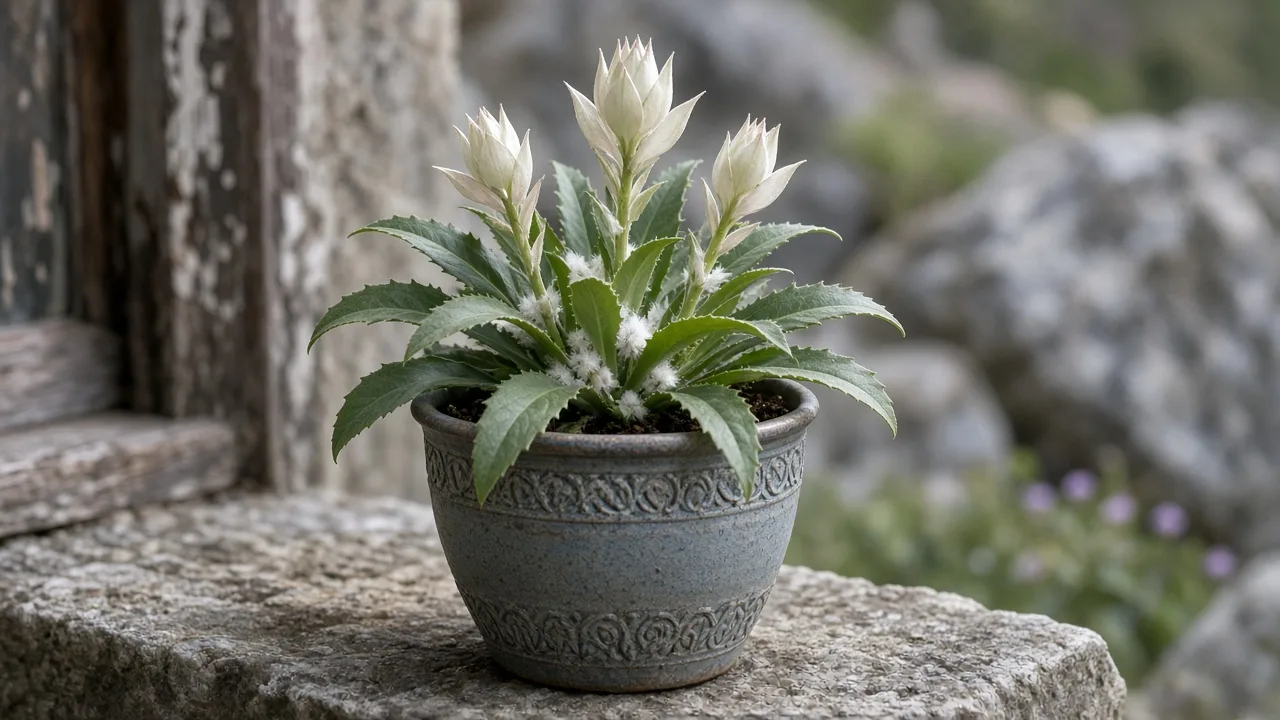
Mealybugs on Brahma Kamal: Causes, Checks & Fixes
This guide covers mealybugs on Brahma Kamal. See also the general Mealybugs guide, watering, and light pages for this plant.
Mealybugs on Brahma Kamal: Causes, Checks & Fixes
Quick answer
Mealybugs on true Brahma Kamal (Saussurea obvallata) are small, soft, wax-covered insects that look like bits of cotton tucked into the basal rosette crown and the pale bract sheaths around summer flower stems. They suck sap, weaken slow alpine growth, and leave sticky honeydew that can support black sooty mold on the toothed leaves below.
For how mealybugs spread, why ants defend them, and when alcohol dabs work in general, see our mealybugs pest guide. On Saussurea obvallata, the practical pattern is white wax in tight rosette axils and bract bases on short upright stems—not random dust on open leaf blades—while warm, wet benches make recovery harder than on typical houseplants.
First step: move the pot away from other cool-season alpines, test 70% isopropyl alcohol on one leaf, then dab every visible cottony cluster with a cotton swab before you spray anything.
When to use this page vs other Brahma Kamal guides
This page is the pest-first entry for white cottony sap feeders on the rosette and flowering stems.
| Pattern | Read next |
|---|---|
| Fine webbing and stippling, no cottony wax | Spider mites |
| Soft green insects on new spring shoots | Aphids |
| Flat brown or white domes fused to stems | Scale (see problems hub) |
| Yellow rosette leaves with wet, sour mix | Overwatering or root rot |
| Weak stretch without insects | Not enough light or leggy growth |
| Stalled summer heads after a cool spring | Slow growth |
What mealybugs look like on Brahma Kamal
True Brahma Kamal forms a compact basal rosette of toothed leaves, then sends up short stems whose flower heads sit inside pale, translucent bracts—the alpine architecture mealybugs exploit. They are oval, segmented insects covered with wax, often gathered in colonies in somewhat protected areas of the plant.
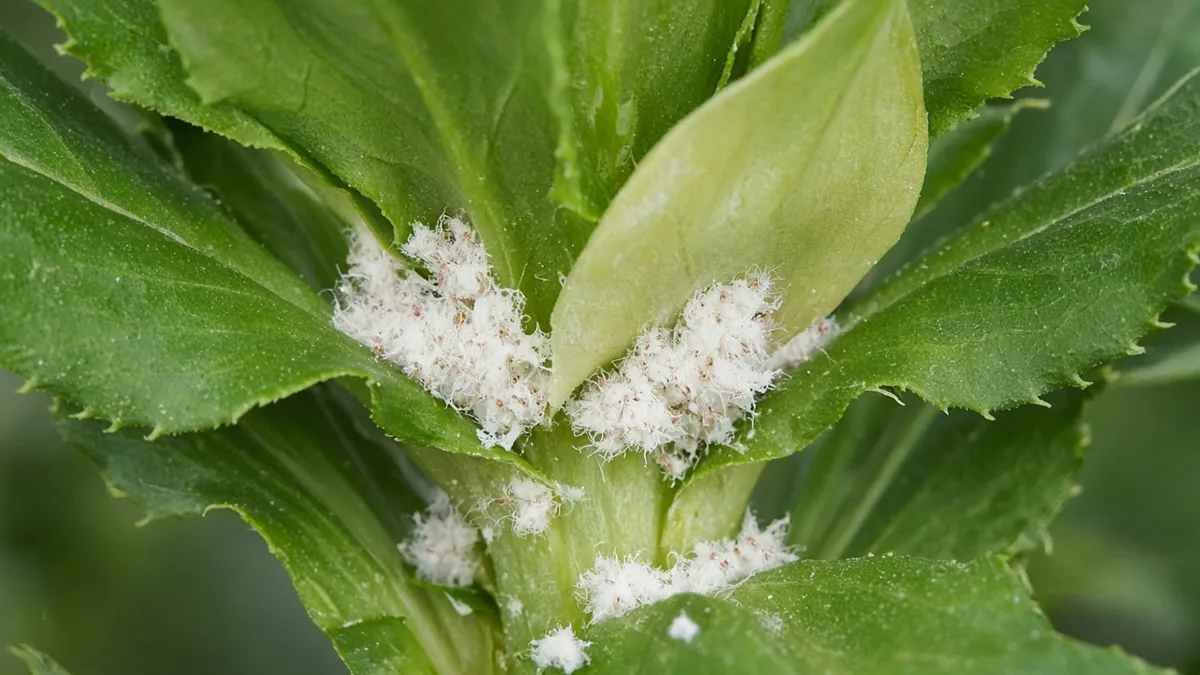
White mealybug wax nestled in a rosette axil—compare with firm green leaf tissue on the same crown.
Typical signs on Saussurea obvallata:
- White cottony tufts in rosette axils — Wax clusters where leaves meet the rhizomatous crown at the soil line
- Wax at bract bases — Colonies where pale bracts clasp upright summer stems
- Sticky shine on lower rosette leaves — Honeydew from phloem feeding, not normal alpine dew
- Black sooty film on honeydew-coated leaves — Surface mold once feeding is heavy
- Ant trails on pot rims or bench stones — Ants harvest honeydew and protect mealybugs from predators
- Pale, slowed new leaves — Sap loss on a slow perennial before obvious collapse
- Mobile pinkish crawlers before wax builds — Newly hatched nymphs lack wax until they settle
If your “Brahma Kamal” is a flat, leafless succulent stem that blooms at night, you likely have Epiphyllum oxypetalum, not Saussurea. Mealybugs can still occur, but inspection points differ—confirm the botanical label on the Brahma Kamal overview before treating this guide as yours.
Where mealybugs hide on the rosette crown and bract sheaths
Saussurea obvallata keeps its growing points low and enclosed. Mealybugs often live in protected areas such as crowns, branch crotches, and stems near soil. On Brahma Kamal, translate that to:
- Rosette crown — Every leaf axil where toothed foliage meets the rhizome; wax survives light misting
- Bract clasp points — Where translucent bracts wrap the developing flower head on short summer stems
- Undersides of inner rosette leaves — Lift leaves gently without snapping cold-stressed tissue
- Pot rim and bench contact — Crawlers walk between neighboring alpine pots
- Underside of nursery tags — Hitchhike point on newly purchased stock
This crown-and-bract search is plant-specific. A tropical foliage guide tells you to scour broad leaf undersides; here you are working a cool rosette and bract geometry with a hand lens in spring and monsoon-season growth.
Why Brahma Kamal gets mealybugs
Mealybugs are common on houseplants and outdoor ornamentals in mild climates. Outbreaks on Brahma Kamal usually trace to introduction plus stress, not random bad luck on a healthy alpine crown.
Bench culture clusters plants. Collectors often line up rosette alpines on shared tables. Adult females do not fly, but crawlers move pot to pot when leaves or bracts touch.
Warm nights and wet crowns weaken Saussurea. This species wants cool air, bright light, and moist but sharply drained mix. Sustained heat with soggy soil at the rhizome—common in monsoon-season shelter—stresses the plant while mealybugs still feed in protected axils. That pairing shows up as yellowing rosette leaves and wax, not either symptom alone.
Soft spring flush attracts egg laying. High nitrogen with regular watering stimulates tender growth where mealybugs prefer to reproduce. Hold extra fertilizer while you are fighting pests.
Mislabeled stock imports pests. Nursery plants sold as “Brahma Kamal” sometimes arrive with mealybugs already tucked at the crown. Quarantine is cheaper than rehabbing a rare alpine after crawlers spread.
How to confirm the cause
Work through these checks before you soak the whole rosette:
- Species check — Compact rosette + bract-wrapped stems = Saussurea; flat leafless night-blooming cactus = different care entirely.
- Texture test — Part the white mass. Mealybugs feel soft and may show a gray or pink body. Scale is hard and glued on. Mineral dust wipes off dry.
- Honeydew — Tacky residue on toothed leaves below the crown confirms sap feeders.
- Movement — Crawlers and adults move slowly when disturbed; scale and dust do not.
- Crown firmness — Press the rhizome zone gently through the pot wall. Firm tissue with wax points to pests; mush with sour wet mix points to root rot compounding the issue.
- Neighbor scan — Inspect every pot within arm’s reach on the same bench.
- Care cross-check — Compare recent watering and light shifts. Heat stress alone rarely produces cottony wax.
Confirmed mealybugs = cottony colonies + honeydew (or ants) in rosette or bract axils.
First fix for Brahma Kamal
Move the pot to an isolated, cool bright spot, test alcohol on one leaf, then dab every visible mealybug with a cotton swab soaked in 70% isopropyl alcohol.
Isolation limits crawlers reaching other alpines. Direct alcohol contact kills exposed adults and removes wax. Test on a small area first and watch for leaf burn—Saussurea leaves can be sensitive if solution pools in the crown.
Work from the soil line upward: open each rosette axil, then inspect each bract base without tearing pale sheaths. Expect a slow, careful first pass rather than a quick shower.
Do not drench the crown repeatedly while the mix is already wet. Do not repot on day one unless you see wax on buried rhizomes. Do not push fertilizer on a pest-hit rosette.
Step-by-step recovery
After the alcohol dab pass:
- Repeat manual removal every three to five days until inspections find no live cottony clusters.
- Apply insecticidal soap to rosette axils and bract bases where mealybugs hide. Soap works on direct contact and must reach sheltered wax; repeat at label intervals through at least two generations—often weekly for three to four weeks indoors.
- Optional horticultural oil or neem only after a leaf test; oils target younger nymphs with less wax. Avoid heavy oil films during peak heat.
- Blot honeydew and sooty mold from leaves with a damp cloth once feeding stops. Trim only leaves that are more than half coated and no longer photosynthesizing.
- Control ants on rims and bench stones so natural enemies can help outdoors.
- Monitor weekly for six weeks—eggs hatch on a staggered schedule, and stopping early is the usual reason infestations return.
- Repot only if root-zone mealybugs are suspected—wax near buried rhizomes or clean foliage that reinfests within days. Repot in early spring with fresh gritty mix per the repotting guide, then resume cautious watering.
Recovery timeline
Manual dabbing shows fewer live clusters within a few days when numbers are low. A full soap cycle with label repeats typically runs two to four weeks. Because Saussurea grows slowly, a clean new rosette flush may take several weeks to appear even after pests are gone.
Old leaves with sooty mold rarely return to pristine alpine color—watch for firm crown tissue and new leaves without wax at their bases. If summer flower stems abort, recovery can wait until the next cool spring flush; do not force growth with heat or feed.
Lookalike symptoms to rule out
Powdery mildew forms a flat white film across leaf surfaces in humid, stagnant air—not isolated cotton balls in axils.
Spider mites cause fine stippling and webbing, not waxy tufts in bract sheaths. See spider mites when silk appears.
Aphids are soft green or black insects on tender spring shoots, usually without thick wax. See aphids.
Hard water or mineral dust wipes off dry; mealybug wax stays until you remove it.
Crown rot from overwatering shows mushy rhizome tissue and sour mix without insects—read overwatering when wet soil precedes collapse.
Mistakes to avoid
Do not return the plant to a shared bench after one treatment. Plan for repeats.
Do not blast the rosette with a hose on cold evenings—water sitting in the crown plus cool nights invites rot faster than mealybugs alone.
Do not confuse Epiphyllum with Saussurea and copy tropical cactus fixes.
Do not use broad outdoor pesticides on alpines without a houseplant-safe label and pest match.
Do not ignore bench neighbors—mealybugs on one Brahma Kamal often mean hidden colonies on the next pot.
Brahma Kamal care cross-check
While treating pests, keep baseline care stable:
- Light — Bright cool conditions per the light guide; heat and shade stress extend rehab time.
- Water — Moist surface dry-down, never waterlogged crowns—see watering.
- Soil — Gritty, fast-draining alpine mix; soggy peat weakens rhizomes alongside sap loss.
- Temperature — Cool nights matter more than for tropical houseplants; avoid warm windowsills while infested.
- Fertilizer — Hold feed until new growth looks healthy for two weeks after pests clear.
Fixing only the insects while the crown sits in warm, wet mix often brings wax back within a month.
How to prevent mealybugs next time
Quarantine new plants two to three weeks before benching them beside Saussurea. Inspect the rosette crown at purchase—dealers miss wax tucked at the soil line.
Add a crown check to every watering pass: lift inner leaves, glance at bract bases on summer stems, and wipe honeydew early.
Examine plants regularly when you water—alpines reward quiet, frequent looks over crisis sprays.
Keep pots spaced so bracts and rosette edges do not touch. Clean bench surfaces after an outbreak.
When to worry
Treat as urgent when cottony colonies cover most rosette axils, ants swarm daily, honeydew drips onto the bench, or the crown softens while mix stays wet. Large infestations are difficult to control; a heavily compromised alpine may be better discarded than repeatedly treated, especially if rot has already started.
A few white tufts on one bract base, caught in cool spring growth, are manageable with isolation and dabs.
Conclusion
Mealybugs on Brahma Kamal hide in the alpine rosette crown and pale bract sheaths—out of sight until honeydew or ants expose them. Isolate, test alcohol, dab every cluster, then follow with thorough soap sprays on a repeat schedule while keeping the rhizome cool and sharply drained. Weekly crown checks through the growing season keep this slow Himalayan perennial ahead of the next crawler wave.
Related Brahma Kamal guides
- Brahma Kamal overview
- Brahma Kamal watering
- Brahma Kamal light
- Brahma Kamal soil
- Spider mites on Brahma Kamal
- Aphids on Brahma Kamal
- Overwatering on Brahma Kamal
- Brahma Kamal problems hub
Related tool
Use the Pest Identifier Tool to narrow causes for mealybugs on this plant before changing multiple variables at once.