Spider Mites on Brahma Kamal: Stippling & Webbing Fixes
Quick answer
Spider mites on true Brahma Kamal (Saussurea obvallata) show as fine yellow stippling and silky webbing on the undersides of basal rosette leaves and short flowering stems—often after warm, dry air in a heated room or drought-stressed alpine mix. First step: isolate the pot and rinse every leaf underside with lukewarm water while keeping the crown from sitting in soggy mix, then confirm moving specks with a white-paper shake test before any spray.
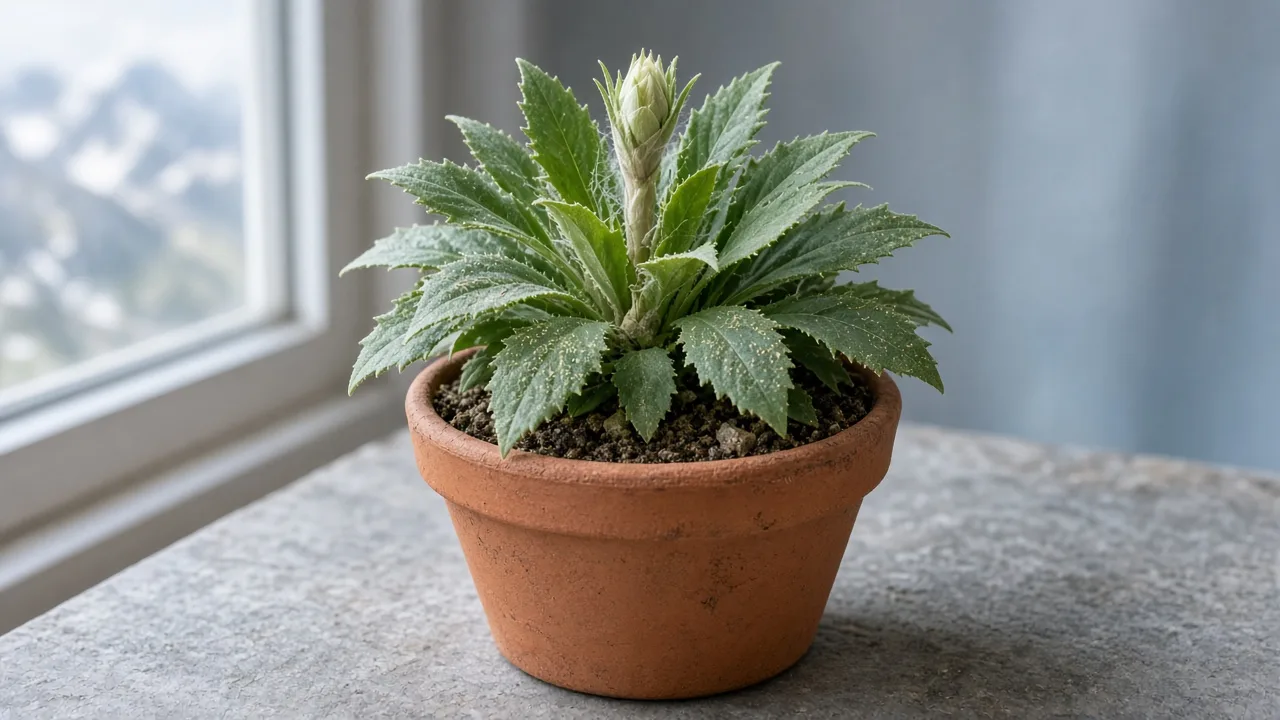
Spider Mites on Brahma Kamal: Causes, Checks & Fixes
This guide covers spider mites on Brahma Kamal. See also the general Spider Mites guide, watering, and light pages for this plant.
Spider Mites on Brahma Kamal: Causes, Checks & Fixes
Quick answer
Spider mites on Saussurea obvallata are tiny arachnids—not insects—that suck sap from leaf cells, leaving pale yellow stippling on toothed basal rosette leaves and fine silk webbing on undersides when colonies grow. They favor hot, dry, still air, which clashes with true Brahma Kamal’s need for cool alpine conditions and evenly moist, fast-draining mix—many outbreaks start when a cool-climate plant sits in a warm room with dry HVAC air while the surface of the pot dries between waterings.
For mite life cycles, why broad-spectrum insecticides can backfire, and when oils help in general, see our spider mites pest guide. On Brahma Kamal, the tell is stippling plus webbing on rosette undersides and short bract-wrapped stems—not cottony wax at the crown (mealybugs) or clusters of soft insects on fresh spring shoots (aphids).
First step: isolate the pot away from other alpines and herbs, then rinse every leaf underside with a firm stream of lukewarm water while you keep excess water out of the crown and saucer. Confirm live mites with a white-paper shake test before spray bottles. If leaves yellow on constantly wet mix with a soft crown and no stippling, see overwatering on Brahma Kamal instead of treating pests.
When to use this page vs other Brahma Kamal guides
This page is the mite-first entry for stippling, bronzing, and fine webbing on Saussurea foliage.
- Low humidity on Brahma Kamal — Use when crisp brown edges appear without stippling or silk webbing.
- Mealybugs on Brahma Kamal — Use for white cottony tufts in the crown, not moving dust-speck mites.
- Aphids on Brahma Kamal — Use for soft colonies on young spring shoots.
- Wilting on Brahma Kamal — Use when the whole rosette collapses on wet or bone-dry mix without a paper-test mite colony.
- Yellow leaves on Brahma Kamal — Use when older blades yellow uniformly during dormancy or root stress, not speckled stippling.
- Brahma Kamal problems hub — Browse all common issues on this species.
Why Brahma Kamal rosettes get spider mites in warm, dry pockets
Cool alpines in hot rooms create a dry microclimate at the crown. True Brahma Kamal is a slow perennial from Himalayan meadows at roughly 3,000–4,500 m, grown in bright cool light with moist but sharply drained soil. When the same pot moves into a warm living room, leaf undersides dry out faster than the mix below, and spider mites thrive in warm, dry environments even while you are still watering on the alpine schedule.
The basal rosette traps still air. Saussurea forms a compact crown of toothed leaves close to the soil. Mites colonize the undersides of outer rosette leaves pressed against the pot rim and the gaps between leaf bases—pockets a quick top mist never reaches. Short flowering stems wrapped in pale bracts add another tight surface where silk can span from bract to blade.
Surface-dry mix plus drought stress invites damage. Brahma Kamal wants water when the top 1–2 cm just begins to dry, not a full root ball baked dry for weeks. Water-stressed plants tolerate mite feeding poorly, and stippling looks worse when cool roots cannot keep up with transpiration in dry air.
Mislabeled “Brahma Kamal” adds confusion. Nurseries often sell Epiphyllum oxypetalum under the same common name. That tropical orchid cactus has flat stems and different pest pressure. This guide is for Saussurea obvallata with a basal leaf rosette—confirm the botanical tag on the Brahma Kamal overview before you match symptoms.
Broad-spectrum sprays can explode mite numbers. If you recently treated another pest with a pyrethroid-style spray, predatory mites and other natural enemies may die while pest mites rebound. Suspect a mite spike after chemical treatments, not just “bad luck.”
What spider mites look like on Brahma Kamal
- Fine yellow or white stippling scattered across toothed rosette blades—feeding often appears as light dots before leaves bronze
- Dull bronze or silvery cast on outer rosette leaves while the center still looks greener
- Silky webbing between leaf bases at the crown, along petioles, or on bract-wrapped flowering stems
- Tiny moving specks on undersides—shake leaves over white paper to see mites crawl
- Premature yellowing or crisping on heavily infested outer leaves before natural summer dieback
- Worst on older rosette leaves at soil level; new spring flush may stay clean until the colony spreads
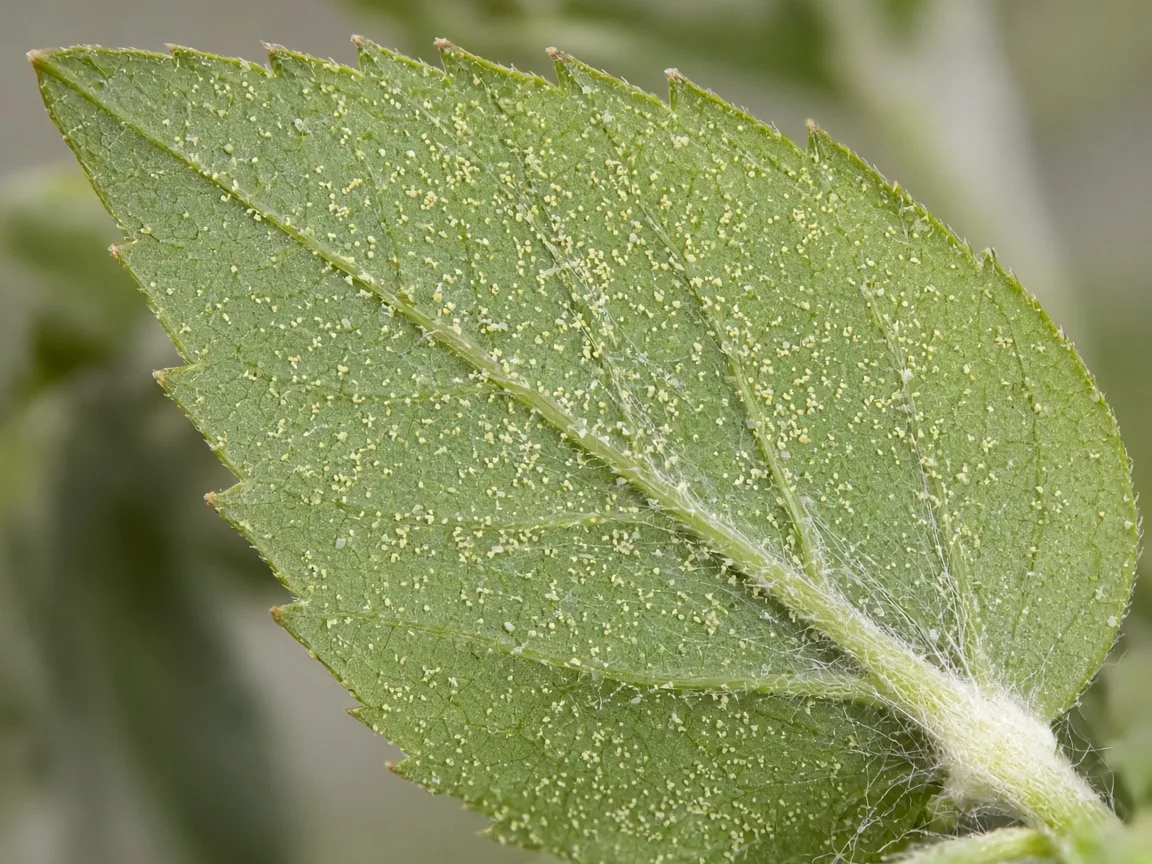
Pale stippling and fine silk on a Saussurea rosette leaf underside—compare with the unstippled blade closer to the crown.
On a low alpine rosette, damage is easy to miss until webbing shows—run the paper shake test on outer leaves weekly when the plant sits in heated dry air.
Where to inspect on the Saussurea crown and flowering stems
Brahma Kamal is not a tall foliage houseplant; mites use the soil-line rosette as habitat. Inspect in this order:
- Undersides of the three oldest outer rosette leaves pressed against the pot wall—first stippling usually appears here.
- The gap between leaf bases at the crown where silk bridges tight rosette layers.
- Undersides of bracts on short summer flowering stems before buds open.
- Leaves facing glass that overheats by afternoon—dry heat favors indoor mite buildup.
- Neighboring alpine pots on the same bench in a greenhouse or alpine house—mites walk on contact and drift on silk strands.
- New nursery plants brought beside established rosettes without quarantine.
This crown-level inspection path is specific to a Himalayan rosette perennial—not a betel vine on a pole or a ZZ rhizome with arching leaflets.
Confirm spider mites vs low humidity, mealybugs, aphids, and wet crown
| What you see | Likely cause | Key check |
|---|---|---|
| Stippling + fine webbing on undersides | Spider mites | Paper shake shows moving specks |
| Crisp brown margins, no webbing | Low humidity | Even stippling absent; hygrometer very low |
| White cottony wax in crown axils | Mealybugs | Alcohol dab smears pink-orange |
| Soft pear-shaped insects on spring shoots | Aphids | Colonies move when disturbed |
| Yellow rosette on sour wet mix, no stippling | Overwatering / root rot | Crown soft; mites absent on paper test |
| Uniform yellow of old leaves before dormancy | Natural dieback or yellow leaves | No silk; pattern on oldest blades only |
Confirmed diagnosis — Stippling plus webbing with live mites on the shake test and a firm crown. Suspected — Stippling only may need a hand lens; too much shade or warmth can weaken rosettes without a colony.
First fix: isolate and rinse rosette undersides with water
Move the pot away from other plants for at least two to three weeks while you treat.
Rinse undersides with a firm lukewarm water stream first. WSU Pestsense recommends thoroughly rinsing plants in a shower or sink, paying particular attention to leaf undersides, repeated at least weekly. UC IPM likewise advises forceful water sprays with good underside coverage for garden and container plants. On Brahma Kamal, angle the spray up into the rosette from the pot rim so outer leaf backs and crown gaps get direct contact—without leaving the plant sitting in a full saucer of runoff.
Wrap the pot in plastic if needed so grit and mix do not wash out and clog drains. Empty the saucer immediately; a waterlogged crown during warm weather invites rot faster than mites alone.
Why water beats oil on day one
Contact soaps and oils only kill mites they touch; Saussurea hides pests under overlapping rosette leaves. A thorough rinse knocks adults and webbing down, confirms you are fighting mites rather than mineral dust on alpine grit, and preserves natural enemies already on the plant. Repeat rinses every five to seven days for at least three cycles, shaking a sample leaf onto paper after each session until specks stop moving.
Schedule rinses in cool morning air so foliage dries before midday heat on glass or a warm balcony.
Humidity and watering without rotting the crown
Mites love dry air; Brahma Kamal roots hate stagnant wet mix. After rinsing, raise canopy humidity with grouped pots or a humidifier near the bench—see low humidity—but keep watering on the surface dry-down check. Do not overwater plants while chasing humidity.
Insecticidal soap and horticultural oil on alpine rosettes
If stippling spreads after two or three weekly rinse cycles, add insecticidal soap or horticultural oil labeled for ornamentals. UC IPM advises covering undersides completely and confirming mites are present before treating; avoid spraying when leaves are water-stressed or in extreme heat.
Rules for Saussurea rosettes:
- Coat outer leaf undersides and crown gaps where webbing persists.
- Patch-test one leaf; wait 24 hours before treating the whole plant.
- Do not combine heavy crown cleanup, repot, and oil in the same week—read the plant’s response one change at a time.
- Skip broad “general bug” sprays that trigger mite outbreaks.
Hold fertilizer until new growth looks clean; feeding a web-coated stressed rosette does not speed recovery.
Recovery timeline and the next spring flush
Active mites should drop within one to two weeks of consistent rinsing. Expect clean toothed leaves on the next spring flush within several weeks to a few months because growth is inherently slow on this alpine perennial. Bronze-stippled outer leaves will not re-green; they may die back naturally as part of the seasonal cycle.
A firm crown and unstippled new blades emerging after winter dormancy are good signs. Webbing that coats most of the rosette after three treatment rounds means escalate—inspect every neighbor in the alpine house and consider predatory mite release in a controlled greenhouse before stronger chemicals.
How to prevent spider mites on Brahma Kamal
Quarantine new rosettes for three to four weeks before benching them with established plants. Isolation limits spread by contact and drifting silk.
Keep the plant in bright cool light rather than a hot dry windowsill. Monthly underside rinses during winter heating cost less than recovering a stripped rosette.
Align soil and watering with steady moisture—not bone-dry swings that stress roots while mites exploit dry leaf surfaces.
Inspect outer rosette leaves whenever you lift the pot to check weight; that alpine dry-down habit doubles as a mite early-warning pass.
When to escalate
Escalate if webbing spans most outer leaves, stippling reaches new spring growth within a week, or several pots on the same cool bench show matching damage. Heavily infested plants can pose a risk to the rest of the collection when mites drift on silk.
Consider discarding a severely web-coated rosette in a shared alpine house if three full rinse-and-soap cycles fail—keeping a reservoir plant can reinfect neighbors. A few stippled outer leaves on an otherwise firm crown in cool air is manageable with isolation and repeated rinsing if you act within days.