Wilting on Brahma Kamal: Crown & Pot Checks
Quick answer
Wilting on true Brahma Kamal (Saussurea obvallata) is limp rosette leaves or collapsed summer stems when roots cannot keep up with water loss—often warm nights plus wet mix, monsoon soaking, or drought in gritty alpine soil. First step: lift the pot and feel whether the mix is heavy-wet or light-dry before you add water, move the plant, or repot.
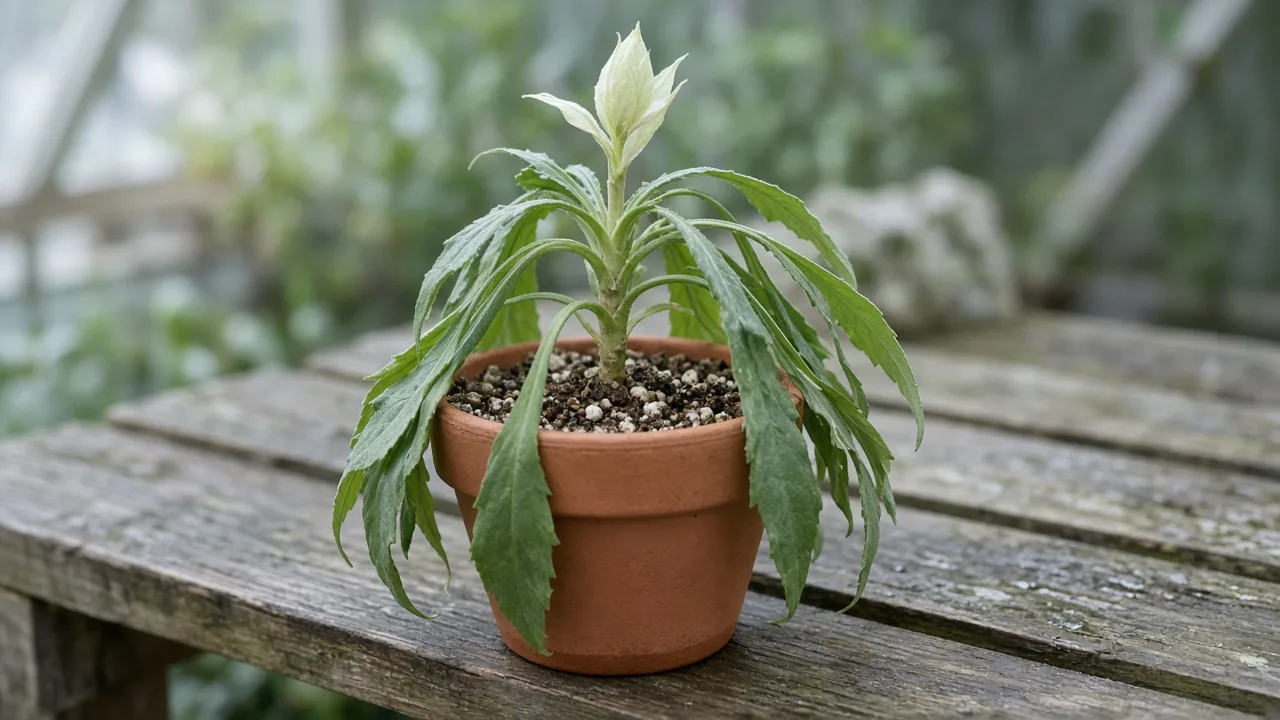
Wilting on Brahma Kamal: Causes, Checks & Fixes
This guide covers wilting on Brahma Kamal. See also the general Wilting guide, watering, and light pages for this plant.
Wilting on Brahma Kamal: Causes, Checks & Fixes
Quick answer
Wilting on true Brahma Kamal (Saussurea obvallata) is limp turgor loss in the basal rosette or on short bract-wrapped summer stems—not the slow posture change covered on the drooping leaves guide. For how wilting works when roots lose access to water or oxygen in general, see our wilting guide. On this cool Himalayan alpine, the emergency split is pot weight: heavy wet mix with a soft crown equals uptake failure; light dry mix with a firm crown equals drought collapse. Both look like “give it water,” but only one side wants a drink.
First step: lift the pot and press the top 1–2 cm of mix before you water, repot, or fertilize.
When to use this page vs other Brahma Kamal guides
This page is for mid-season collapse—rosette or stem limpness that appeared during active growth, often after heat, rain, or a watering mistake.
| What you see | Read next |
|---|---|
| Gentle sag without urgent collapse | Drooping leaves |
| Yellowing on a heavy wet pot | Overwatering or yellow leaves |
| Mushy crown, sour mix, black roots | Root rot |
| Very light pot, dry gritty mix, crisp edges | Underwatering |
| Weak pale stretch in warmth | Not enough light |
| Flat stem “orchid cactus” wilting indoors | Wrong species — see Brahma Kamal overview |
What wilting looks like on Brahma Kamal
Healthy Saussurea obvallata holds a compact basal rosette of toothed leaves and, in summer, short upright stems with pale translucent bracts around developing flower heads. Wilting shows when that tissue loses rigidity faster than roots can replace water.
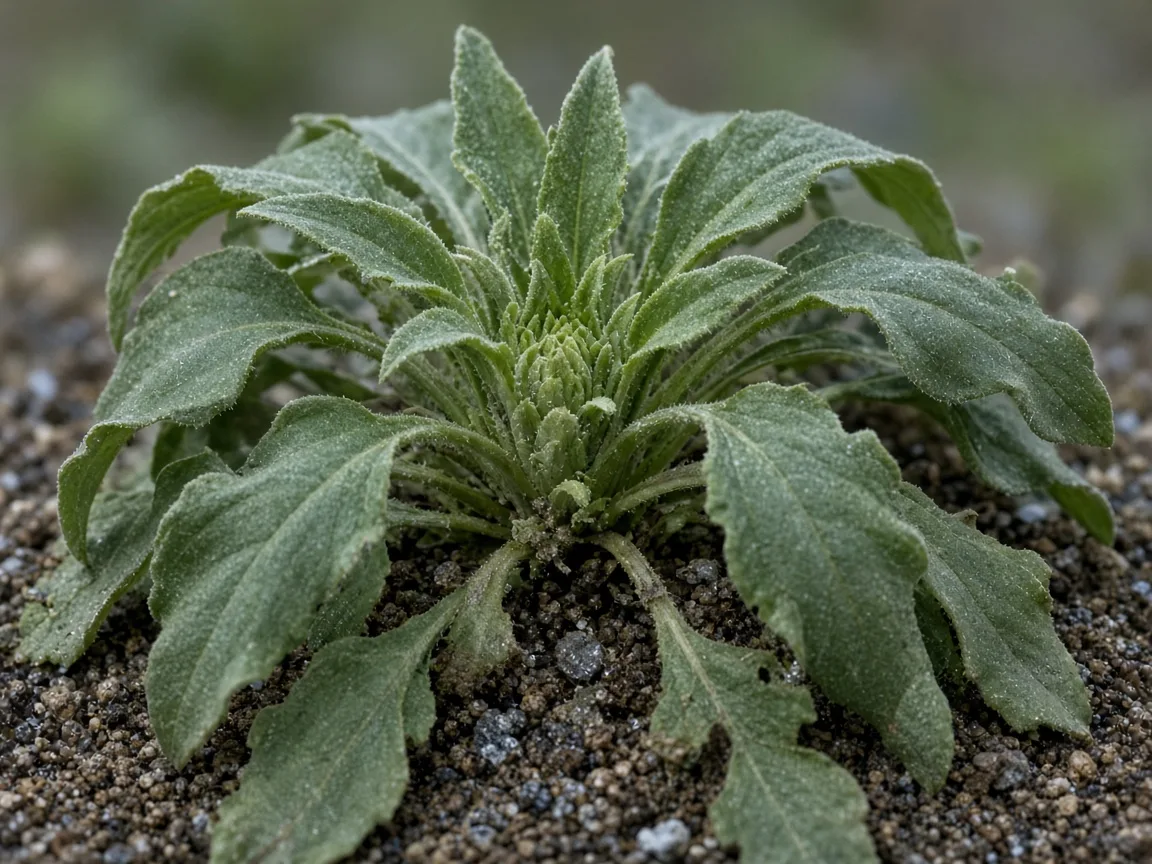
Limp rosette leaves at the crown—compare crown firmness and pot weight before you assume the plant needs more water.
Typical wilting signs during the growing season:
- Rosette leaves hang flat or fold downward instead of standing slightly cupped
- Petioles feel soft along the whole length, not only at tips
- Summer stems lean or kink while bracts still wrap the bud
- Mix may be either bone-dry and pulled away from the pot or damp days after watering
- Pot weight feels much lighter or much heavier than it did when the plant last looked crisp
Usually not urgent wilting:
- Older lower leaves yellowing one at a time on an otherwise firm rosette
- Above-ground stems browning after flowering as the plant enters dormancy (Wikipedia notes dieback after bloom)
- Brief midday limp on a hot terrace that recovers overnight when the crown stayed firm and the pot was not waterlogged
Confirm you have Saussurea, not the orchid cactus
Indian nurseries often sell Epiphyllum oxypetalum as “Brahma Kamal.” That tropical epiphyte has long flattened stems and a very different wilt story—usually indoor heat, wrong watering rhythm, or root stress in peat-heavy mix.
True Brahma Kamal is a Himalayan perennial geophyte with a low rosette crown and summer flower stems wrapped in papery bracts. If you treat the cactus like an alpine—or the alpine like a succulent—you can easily create the wilt you are trying to fix. Use the identification section in the Brahma Kamal overview before changing care.
Monsoon heat with a wet alpine crown
Saussurea obvallata evolved in alpine meadows and rocky slopes at roughly 3,000–4,500 m, where air stays cool even when monsoon rain arrives. On a warm balcony or terrace, hot nights plus repeatedly wet compost are a common wilt trigger that does not show up on generic houseplant wilt pages.
The plant still prefers moist soil during growth, but container culture is not a mountain streamside. RHS alpine guidance stresses sharp drainage and warns that waterlogging displaces air so roots can “literally drown.” When nights stay warm, a saturated crown loses oxygen faster than the rosette can pull water—leaves wilt while the mix feels wet.
Signs this pattern is active:
- Wilting after several days of humid heat and daily watering “to be safe”
- Saucer or cachepot holding water even though you thought you drained well
- Moss or algae on the mix surface while leaves collapse
- Overlap with fungus gnats or mold on soil on constantly damp organic mix
First correction for this pattern: stop adding water, empty standing water, and move the pot to cooler airflow with afternoon shade—not deeper shade that weakens the rosette. See overwatering on Brahma Kamal if yellowing follows.
Bract-wrapped stems vs natural dieback
Summer flower stems on Brahma Kamal are short and enclosed in pale bracts that protect buds in cold mountain air. When those stems wilt during July–August bloom season, owners often assume drought. Check the pot first:
| Pattern | Likely meaning | First move |
|---|---|---|
| Whole rosette limp, stems soft, heavy wet pot | Crown or root uptake failure | Stop water; inspect crown and drainage |
| Only the flowering stem kinks, rosette firm, light dry pot | Localized thirst on a tall stem | Water thoroughly once, then drain |
| Stems brown from tip down after bloom, rosette firming | Natural senescence into dormancy | Reduce water per watering guide |
| Rosette limp on light pot in cool weather | Drought or root damage | Skewer-test mix depth; see underwatering |
Wikipedia describes flowering in mid-monsoon with dieback of above-ground parts afterward. Do not fight that cycle with extra fertilizer or warm-room watering—it can keep the crown wet when the plant is trying to rest.
The 1–2 cm alpine moisture check (not succulent dry-down)
Brahma Kamal is not a “wait until the whole pot is dust-dry” plant during spring and summer growth. It is also not a peace lily that tolerates warm, stagnant wet mix. The plant-specific check matches the Brahma Kamal watering guide:
- Press the top 1–2 cm away from the crown.
- Lift the pot and compare to its weight right after a good drain.
- Slide a wooden skewer near the pot wall—dark damp wood means wait; nearly clean wood on a light pot means water.
Penn State Extension notes that water need shifts with weather, season, soil, and growth stage—a calendar cannot replace this trio. During dormancy after dieback, the crown should stay lightly moist, not saturated; wilting is less common then, but rot from winter wet still happens.
How to confirm the cause
Work through these checks in order:
- Species label — rosette alpine vs flat-stem epiphyte.
- Season — active rosette growth and bloom vs post-flowering dieback.
- Pot weight + top 1–2 cm moisture — heavy-wet vs light-dry split.
- Crown firmness at the soil line — firm, slightly flexing, or spongy.
- Drainage — holes open, mix gritty per the soil guide, no full saucer.
- Recent weather — monsoon sheets, heat wave, or a move into stronger sun per the light guide.
- Pests on new growth — aphids or spider mites can wilt tender leaves without changing pot weight much.
Confirmed mid-season wilting on Saussurea obvallata usually maps to uptake failure on wet warm mix, drought in fast-draining alpine compost, heat stress on an outdoor pot, or crown damage—not a mystery “weak plant.”
First fix for Brahma Kamal
Lift the pot and classify moisture before you pour.
- If the container is heavy and the top 1–2 cm is damp with limp leaves: do not water. Move out of rain, empty the saucer, and improve airflow. That single pause prevents drowning an already oxygen-starved crown.
- If the pot is clearly light, the skewer is dry several centimetres down, and the crown is still firm: water thoroughly until it runs from drainage holes, then stop. Let surplus drain completely.
Only after that fork should you consider repotting, crown inspection, or pest sprays. Do not fertilize a wilted rosette to “ perk it up.”
Step-by-step recovery
- Stabilize moisture using the fork above; do not alternate flood and drought every day.
- Cool the root zone — afternoon shade, spacing from hot walls, open sides for airflow on covered terraces.
- Refresh drainage — top dress with grit if the surface seals; confirm mix matches the soil guide.
- Inspect the crown if wilting continues on wet mix — soft tissue or sour smell means move to root rot workflow.
- Treat pests only after you confirm live insects on new growth.
- Repot only if mix is collapsed, sour, or roots are circling in a water-retentive block—prefer early spring per the repotting guide.
Recovery timeline
Brief drought wilt on a firm crown: leaves often firm within two to five days after one deep, well-drained watering. Heat-plus-wet wilt may take one to two weeks to stabilize once nights cool and the mix dries correctly. Crown rot or mushy tissue: weeks to months only if firm rhizome remains; many advanced cases do not fully recover. Post-bloom dieback is normal over several weeks—reduce water and wait for spring rosette return rather than forcing evergreen growth.
Lookalike symptoms
| What you see | More likely cause | Where to read |
|---|---|---|
| Heavy wet pot, yellowing, sour smell | Uptake failure / rot | Overwatering, root rot |
| Light dry pot, crisp margins | Drought | Underwatering |
| Slow sag, firm crown | Mild stress | Drooping leaves |
| Pale stretch toward window | Low light | Not enough light |
| Natural stem browning after bloom | Dormancy | Watering guide |
What not to do
Do not water automatically because leaves look limp—confirm pot weight first. Do not keep Brahma Kamal in a warm living room with wet peat mix; heat and stagnant moisture are a common wilt trap. Do not confuse post-flowering dieback with an emergency. Do not repot and prune heavily the same day you discover wilt. Do not collect wild plants; use nursery-propagated stock described on the overview.
How to prevent wilting next time
Treat Brahma Kamal as a cool alpine container plant: gritty mix, open drainage, and moisture checks at the top 1–2 cm during growth. Shelter from monsoon deluge while keeping air moving. Learn your pot’s weight after watering and after the correct dry-down point. Align summer placement with the light guide so the rosette photosynthesizes without baking the root zone.
After flowering, let the plant rest—sharply reduce water instead of pushing new leaves with feed. Browse the Brahma Kamal problems hub when symptoms overlap.
When to worry
Urgent when the crown dents or smells off, wilting spreads through the whole rosette on wet mix for more than a few days, or new growth blackens at the base. Salvage only firm rhizome with clean white roots; if the crown is mushy throughout, recovery is unlikely. For chronic weak growth without collapse, see slow growth and cross-check culture before assuming disease.
Related Brahma Kamal guides
Related tool
Use the Plant Watering Calculator to narrow causes for wilting on this plant before changing multiple variables at once.