Yellow Leaves on Brahma Kamal: Wet Mix, Heat & Pattern
Quick answer
Yellow leaves on Brahma Kamal (*Saussurea obvallata*) usually mean roots lost oxygen in warm wet mix, heat blocked uptake, or natural post-flowering senescence—not random hunger. First step: lift the pot and probe the top 1–2 cm; if the container is heavy and cool with yellow lowers on damp mix, stop watering and move the crown out of warm rain before you feed or repot.
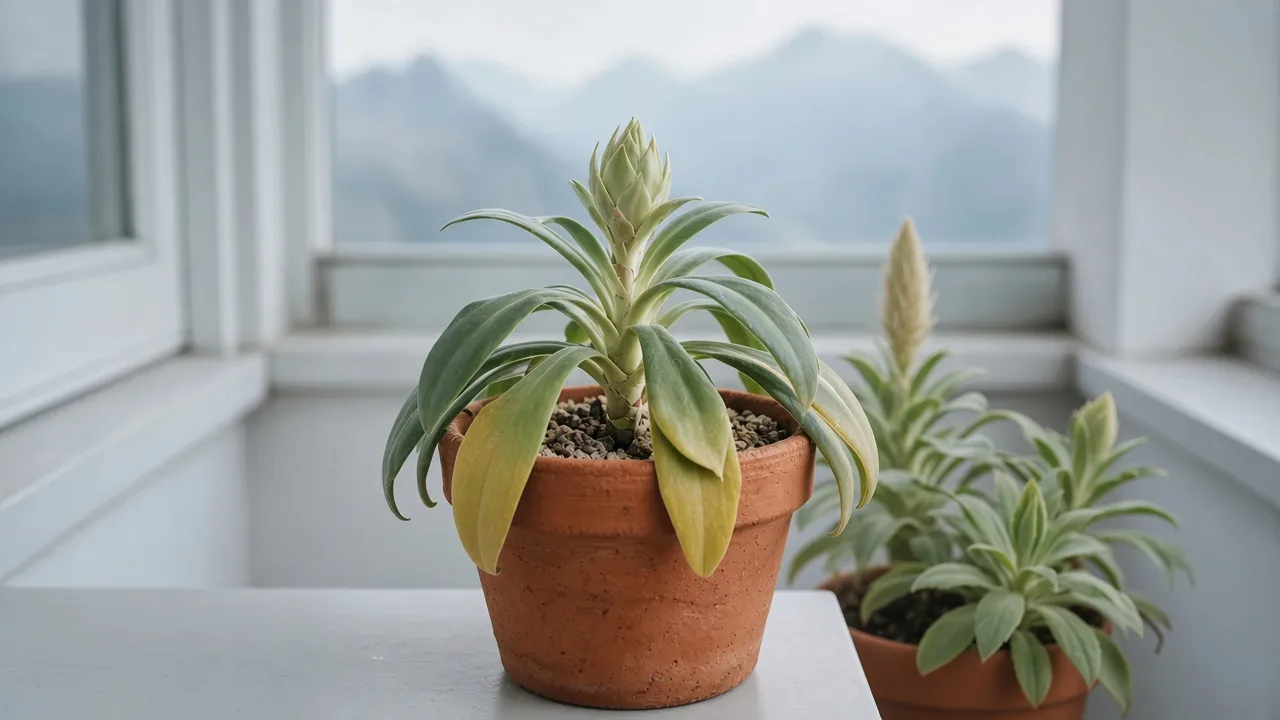
Yellow Leaves on Brahma Kamal: Causes, Checks & Fixes
This guide covers yellow leaves on Brahma Kamal. See also the general Yellow Leaves guide, watering, and light pages for this plant.
Yellow Leaves on Brahma Kamal: Causes, Checks & Fixes
Quick answer
Yellow leaves on true Brahma Kamal (Saussurea obvallata) are almost always a pattern tied to the alpine crown and root zone, not a generic “feed me” signal. This slow Himalayan rosette holds moisture in cool gritty mix during growth, then dies back naturally after flowering. Yellowing shows up when that balance breaks—most often warm wet soil, heat stress after a wet spell, thirst after a fear-driven dry spell, or normal outer-leaf senescence after the season ends.
For how chlorosis works on container plants in general, see our yellow leaves guide. On Brahma Kamal, the first fork is pot weight: heavy and cool with yellow lowers on damp mix (wet-root stress) versus light and dry with limp foliage (underwatering), versus firm crown with one fading outer leaf after bracts brown (seasonal die-back).
First step: lift the pot and probe the top 1–2 cm on the same day you notice yellow. Do not fertilize, repot, or prune until you know which branch of that fork you are on.
When to use this page vs other Brahma Kamal guides
- Overwatering — yellow lowers on heavy wet mix, softening crown, monsoon soak patterns
- Root rot — sour smell, mushy rhizome, collapse after chronic wet feet
- Underwatering — light pot, dry mix below 1–2 cm, limp rosette without sour crown
- Wilting — sudden whole-plant flop after warm nights or uptake failure
- Drooping leaves — limp foliage when wet vs dry is still unclear
- Not enough light — pale stretchy rosette before clear yellow on wet mix
- Brown tips — edge burn when mix was moist but air was dry
- Spider mites — stippling and webbing with patchy yellow
- Watering, soil, light — long-term rhythm after the cause is fixed
- Overview and problems hub — cluster navigation when symptoms overlap
What yellow leaves look like on Brahma Kamal
Healthy Saussurea obvallata keeps stiff, cool-green, toothed leaves in a compact basal rosette, with short upright stems and pale bracts when flower heads develop. Yellowing on this species usually starts on outer or lower rosette leaves and tracks with how the crown meets the soil line—not random middle-leaf spots like some tropical foliage plants.
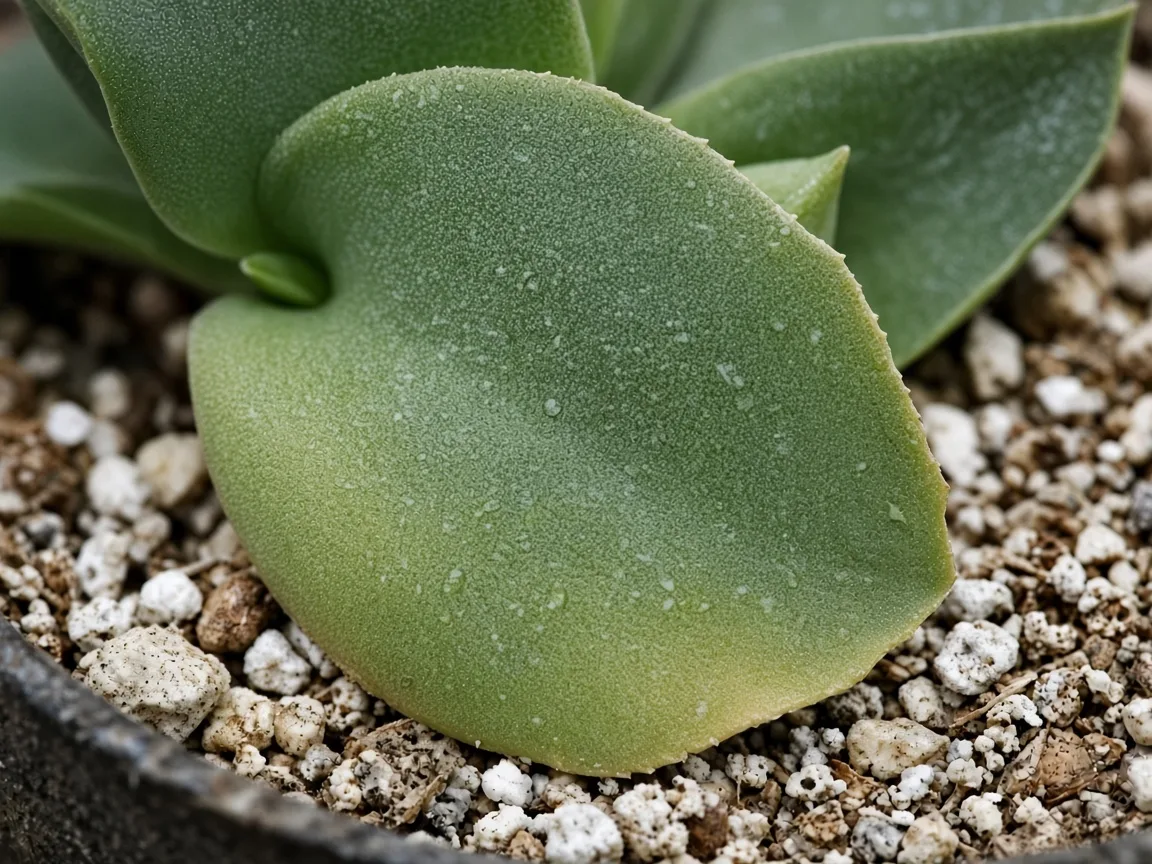
Yellow leaves on Brahma Kamal—chlorosis spreading from the base of an older rosette leaf while newer center foliage still looks cool green; compare pot weight the same day.
Wet-root yellow (most common in warm lowlands):
- Lowest rosette leaves turn yellow-green, then full yellow, while the pot stays heavy and the top 1–2 cm feel cool and damp for many days
- Leaves may look wilted despite wet mix—a classic sign that roots are not taking up water after oxygen loss in saturated compost
- Crown at the soil line stays firm early; soft dark tissue or sour smell means escalate to root rot
- Often follows warm nights plus rain, keeping alpine mix stagnant—see monsoon section below
Heat and uptake yellow:
- Yellow spreads on several leaves at once after a hot spell or after moving the pot into a warm room, sometimes with limp posture
- Mix may be moist but not swampy—roots shut down in heat while leaves still transpire
- Overlaps wilting when collapse is rapid; overlaps not enough light when the rosette was already pale and stretched
Thirst rebound yellow:
- Yellow appears on outer leaves after the gritty ball dried too far during active growth—usually with a light pot and dull limp blades, not a heavy wet container
- Owners who over-corrected after fearing overwatering often see this pattern
- Route to underwatering when probe and lift confirm dry mix
Post-flowering senescence (often normal):
- After bracts brown and stems die back, outer rosette leaves yellow evenly while the crown remains firm
- Matches the natural die-back described in the overview and watering guide—reduce water, do not force new leaves in warm rooms
Pest-linked yellow:
- Speckled yellow with fine webbing on leaf undersides → spider mites
- Clusters of soft insects on new growth → aphids or mealybugs
Confirm you are diagnosing the Himalayan plant, not the cactus
This page is only for Saussurea obvallata, the rhizomatous geophyte from alpine meadows and moist slopes at high elevation—not Epiphyllum oxypetalum, the flat-stemmed tropical cactus widely sold as Brahma Kamal in Indian nurseries.
The cactus yellows on flattened stems in warm humid rooms with a completely different dry-down rhythm. True Brahma Kamal yellows on toothed rosette leaves at a compact crown in cool, bright conditions. If your plant has long leaf-like stems and a large white night flower, stop here; yellow-leaf advice for the alpine will mislead you.
Why Brahma Kamal yellows when other “moist soil” plants stay green
Cultivation records describe a preference for moist soil in streamside alpine habitats—but container compost in a warm lowland garden is not a mountain crevice. Dense wet mix depletes oxygen around roots while warm nights keep respiration high. Brahma Kamal’s slow crown has little tolerance for that combination; yellow lowers are often the first visible signal before crown rot.
| Situation | Why yellow appears on this species |
|---|---|
| Monsoon or daily tray watering on cool days | Mix stays saturated; roots stop functioning while leaves still age |
| Tropical balcony heat after rain | Warm wet crown—greater challenge than cold for this alpine |
| Standard peat-heavy potting soil | Holds water without the grit alpine roots need; see soil |
| Fear after one yellow leaf | Skipping drains, then panic-soaking—oscillating stress |
| Post-flowering die-back in a warm room | Plant wants rest; forced moisture + heat yellows remaining leaves |
| Small pot in blazing afternoon sun | Roots heat in dark wet mix while leaves scorch—yellow and brown tips together |
RHS alpine guidance stresses sharp drainage and careful watering in warm gardens—exactly where Brahma Kamal yellow-leaf reports cluster.
Monsoon rain, cachepots, and the alpine crown line
Brahma Kamal is often grown outdoors where monsoon rain counts as watering. Yellow lowers after repeated soaking usually mean total water input exceeded drainage, not that the species “hates rain.” Check:
- Drain holes and empty saucers—standing water keeps the crown zone anaerobic.
- Cachepots that trap runoff after a cloudburst.
- Shelter during warm storms when nights stay above roughly 20°C—heat plus wet soil is the damaging pair noted in grower notes on the plant hub.
First fix when yellow appears on a heavy wet pot after rain: move the container to a breezy shaded spot, stop all added water, and tilt to drain any saucer. That single pause is the correct day-one action—not repotting, lime, or nitrogen on yellow tissue.
Post-flowering yellow vs stress yellow on the rosette
After flowering, Saussurea obvallata naturally allows foliage to die back toward dormancy. Stress yellow spreads quickly on multiple leaves while the crown softens on wet mix. Seasonal yellow is slower, on outer leaves only, with a firm crown and no sour smell—then the rosette rests.
Do not interpret autumn or post-bloom yellow as hunger. Reducing water per the watering guide matches alpine rhythm. Forcing fertilizer or warmth to “save green leaves” often produces more yellow in lowland heat.
Nutrient yellow—rare but possible on exhausted mix
Nitrogen deficiency on container plants often shows as uniform pale yellow on older leaves first, with yellowing that can spread upward over time. Mobile nitrogen symptoms begin on older foliage. On Brahma Kamal this is uncommon in the first year in fresh gritty mix but appears in old peat that was leached by months of rain without feeding.
Do not fertilize yellow leaves until moisture rhythm is stable and the crown is firm. Feeding a wet-stressed or rotting crown worsens salt stress. If roots are firm, mix dries on a normal schedule, and only oldest leaves fade evenly, a half-strength feed in cool active growth may help—after reviewing the fertilizer guide.
How to confirm the cause
Work through these checks in order:
- Identity — rosette + bracted stems = continue; flat cactus stems = different plant.
- Pot weight — heavy and cool vs light and dry on the same day as yellow.
- Top 1–2 cm probe — damp clinging mix on a heavy pot supports wet-root branch; clean dry skewer on a light pot supports thirst.
- Crown press — firm vs soft or dark at the soil line.
- Smell — earthy is normal; sour means root rot urgency.
- Season — post-flowering die-back vs midsummer heat wave.
- Leaf undersides — webbing or insects vs plain chlorosis.
| Pattern | Likely cause | First action |
|---|---|---|
| Yellow lowers, heavy wet pot, firm crown early | Wet-root / overwatering | Stop water, drain, cool breezy shade |
| Yellow + limp, light dry pot | Underwatering | Two-pass soak after probe confirms dry |
| Yellow several leaves after heat spike | Uptake / heat stress | Cool placement; fix water only after weight check |
| Outer yellow only, firm crown, after bloom | Seasonal senescence | Reduce water; do not force growth |
| Speckled yellow + webbing | Spider mites | Isolate; rinse undersides before sprays |
| Even pale yellow on oldest leaves, firm roots, normal moisture | Possible nitrogen loss in old mix | Light feed only after moisture stable |
Penn State Extension reminds growers that the same calendar interval rarely fits changing weather—yellow after a rainy week often means skip the next scheduled soak, not add fertilizer.
The first fix to try
When yellow lowers appear on a heavy, cool, damp pot with no sour smell yet:
Stop all watering, move the plant out of warm rain, and drain every saucer and cachepot completely.
Hold that single correction for 48–72 hours while you re-check crown firmness and whether yellow spreads. If the crown stays firm and the mix surface begins to dry in the top 1–2 cm, resume the watering guide rhythm—never return to daily splashes “because leaves look yellow.”
If the crown softens or smell turns sour during the pause, switch immediately to root rot salvage—waiting for leaves to re-green will not work.
Recovery timeline and what improves first
Mild wet-root yellow on a firm crown: spreading often stops within one to two weeks after drainage and a corrected dry-down. New center rosette leaves emerging cool green are the success signal—not older blades turning green again.
Heat-stress yellow: recovery tracks cooler nights and stable moisture; may take two to four weeks in slow alpine growth.
Seasonal senescence: outer yellow leaves may dry and be removed gently; spring shoot emergence from a firm crown is normal recovery.
Worsening signs: yellow reaching new center growth on wet mix, multiple leaves collapsing together, or soft crown—treat as urgent root failure, not a nutrient top-up.
Mistakes to avoid on Brahma Kamal
- Fertilizing yellow rosette leaves before pot weight and crown checks.
- Repotting into larger peat mix on day one—extra wet reservoir kills slow crowns.
- Pruning half the rosette while roots are still saturated—reduces photosynthesis without fixing oxygen.
- Moving into hot afternoon sun to “dry yellow leaves”—scorch adds stress.
- Confusing post-flowering die-back with disease and keeping summer watering on a dormant crown.
- Treating alpine Brahma Kamal like the tropical night-blooming cactus with the same yellow-leaf logic.
How to prevent yellow leaves next time
- Follow top 1–2 cm dry-down from the watering guide—moist below, never swampy.
- Use gritty alpine mix from the soil guide; refresh when mix collapses or smells sour.
- Shelter from warm monsoon soaking; count rainfall in total water budget.
- Favor cool bright placement per the light guide—avoid warm stagnant rooms.
- After flowering, allow die-back and reduce water instead of forcing evergreen growth.
- Inspect leaf undersides weekly in dry heat—catch spider mites before stippled yellow spreads.
Related Brahma Kamal guides
Use this page when you need to split yellow leaves by pot weight, season, and crown firmness. Use overwatering for the full wet-mix protocol. Use underwatering when the pot is light and dry. Use root rot when the crown softens or smells sour. Use wilting for sudden collapse after heat. Use problems hub to browse sibling symptoms.
Related tool
Use the Plant Problem Diagnosis Tool to narrow causes for yellow leaves on this plant before changing multiple variables at once.