Overwatering on Brahma Kamal: Causes, Checks & Fixes
Quick answer
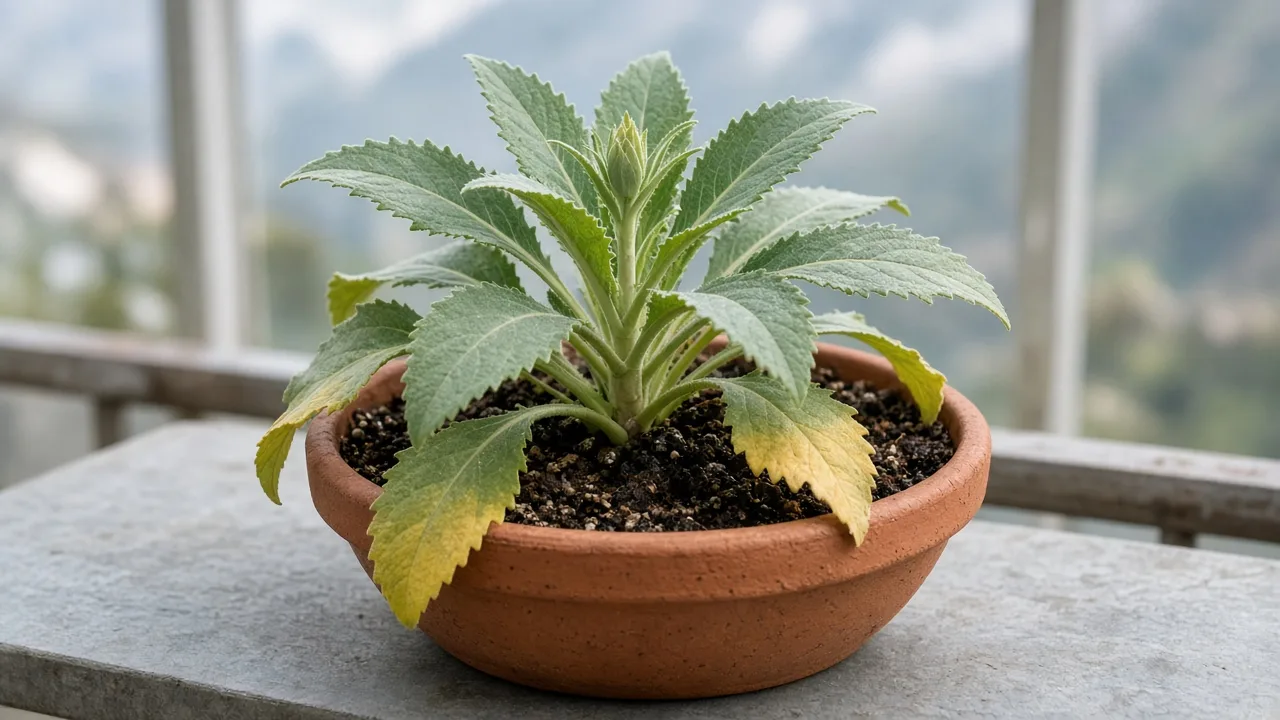
Overwatering on Brahma Kamal is wet, oxygen-poor mix around a cool alpine crown—often after monsoon rain, warm nights, or watering a shaded pot on a calendar. First step: stop all watering, move the pot out of rain, and empty every saucer and cachepot while you check whether the rhizomatous crown is still firm.
Overwatering on Brahma Kamal: Causes, Checks & Fixes
This guide covers overwatering on Brahma Kamal. See also the general Overwatering guide, watering, and light pages for this plant.
Overwatering on Brahma Kamal: Causes, Checks & Fixes
Quick answer
Overwatering on Saussurea obvallata is not “this Himalayan plant loves streams, so keep the pot soggy.” True Brahma Kamal evolved in alpine meadows and rocky slopes beside moving water, where cold, fast drainage prevents stagnant, oxygen-poor soil. In a warm container, water displaces air from the mix and roots can fail even while the surface still looks dark and damp.
For how chronic wet mix damages roots in general, see our overwatering guide. On Brahma Kamal, watch for a heavy cool pot after monsoon rain or repeated soakings, yellowing lower rosette leaves on wet gritty mix, wilting despite damp soil, fungus gnats at the rim, and softening at the rhizomatous crown where leaves meet the compost.
First step: stop all watering, move the pot out of rain, and empty every saucer and cachepot while you press the crown for firmness. That single pause prevents the most common mistake—pouring again because alpine leaves look limp while roots are already suffocating.
When to use this page vs other Brahma Kamal guides
- Wilting — rapid loss of turgor from heat, cold, or crown failure; this page focuses on chronic wet mix and oxygen loss
- Drooping leaves — limp rosette foliage from several stresses; start here when the pot stays heavy and wet
- Underwatering — light pot, dry top 1–2 cm, crisp brown leaf edges
- Root rot — mushy roots, advanced crown rot, salvage and repot decisions
- Yellow leaves — nutrient and seasonal patterns beyond wet soil alone
- Mold on soil and fungus gnats — surface stays wet for weeks
- Watering guide — long-term moisture rhythm after the pot stabilizes
Confirm you are troubleshooting true Brahma Kamal
This page is only for Saussurea obvallata, the compact rhizomatous geophyte with a basal rosette and upright flower stems wrapped in pale bracts. The night-blooming orchid cactus Epiphyllum oxypetalum is also sold as Brahma Kamal in many nurseries; it has flat leaf-like stems and completely different watering needs.
If you treat the cactus like an alpine perennial—or keep Saussurea in a warm living room on a tropical wet schedule—overwatering symptoms will follow. Use the botanical label and the Brahma Kamal overview before changing water, light, or soil.
What overwatering looks like on Brahma Kamal
On a healthy alpine rosette, toothed leaves sit firm in a tight crown and short flowering stems stay upright when buds develop. Overwatering usually hits lower rosette leaves first, then the crown, while the mix stays wet.
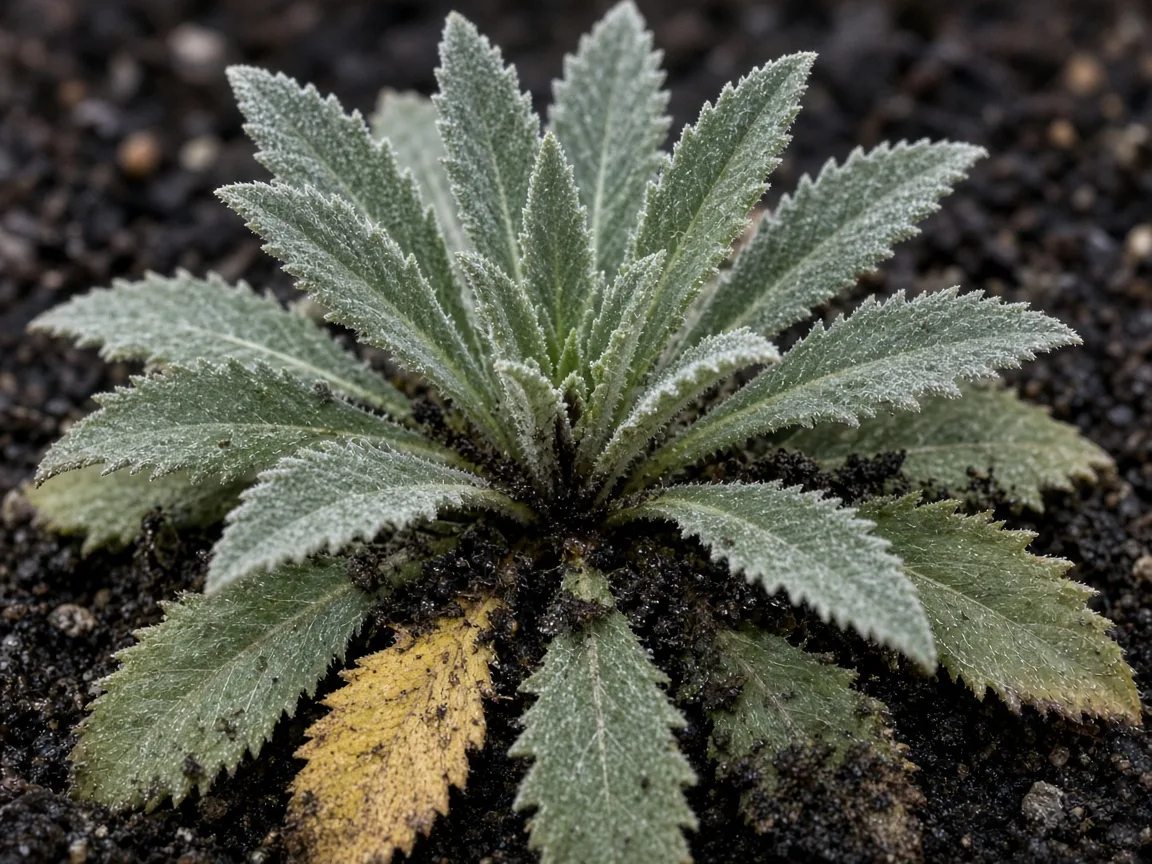
Overwatering on Brahma Kamal—yellowing lower rosette leaves and dark damp gritty mix at the crown while petioles stay limp, not crisp from drought.
Early wet-soil stress shows dulling or yellowing on the oldest rosette leaves, a pot that still feels heavy days after watering, and surface grit or mix that stays dark. You may notice small flies at the pot rim when organic debris never dries.
Established overwatering brings clear yellow lower leaves, limp blades that do not recover after a day, and stalled spring shoots or flower-head development. The crown—the compressed rhizome where leaves emerge—can feel spongy if rot is advancing.
Severe crown involvement overlaps root rot: sour smell at drain holes, blackened crown tissue, and collapse of the whole rosette while mix remains wet. Route there immediately if roots are mushy on inspection.
What overwatering is not: crispy brown edges on a light dry pot (underwatering); weak stretched growth in a warm dim room (not enough light); stippling with webbing (spider mites).
Why Brahma Kamal is easy to overwater at home
S. obvallata prefers moist soil in cool mountain air—not a bone-dry succulent and not a constantly saturated tropical pot. RHS alpine guidance stresses sharply draining compost and warns that alpines are susceptible to rotting if foliage stays too damp and that you should not overwater them. That combination confuses growers: the plant needs steady moisture during growth, but only with oxygen at the roots.
Heat makes the mismatch worse. Sustained warm nights plus wet mix slow root function on a species built for cool alpine days. Monsoon rain on a sheltered balcony can supply more water than the crown can use if drainage is poor—collectors often report more failures from rainy seasons than from dry cold.
Common setup mistakes on this species:
| Mistake | Why it hurts Brahma Kamal |
|---|---|
| Calendar watering in a warm room | Water need changes with season and weather; a cool alpine pot may not dry on your schedule |
| Leaving the pot in open monsoon rain | Ambient rain plus hand watering keeps the profile saturated |
| Dense peat-heavy “houseplant” mix | Holds water without the grit alpine roots need—see soil guide |
| Oversized decorative tub | Large wet reservoir around a small rhizomatous crown |
| Watering the foliage instead of the soil | RHS recommends directing water onto soil, not leaves, because alpines rot when crowns stay wet |
| Winter watering at summer frequency | After dieback, the dormant crown needs only light moisture |
The monsoon and warm-night trap
Himalayan growers often keep Brahma Kamal outdoors in summer. Rain is real moisture—but a pot without shelter, feet under the container, or open drainage can stay waterlogged for days. Editorial growers in India note that monsoon waterlogging causes rapid root rot on this cool-season alpine when drainage fails.
Signs you are in the trap:
- Mix stays dark after several dry-looking days because the core never aired out
- Lower leaves yellow while nights stay warm and humid
- Fungus gnats breed at the surface
- Flower stems soften at the base while bracts still look pale and intact
The fix is not moving the plant into a hot living room—it is shelter from pounding rain, airflow at the pot sides, and watering only when your surface dry-down check says the top 1–2 cm have just begun to dry.
Reading the rhizomatous crown and flower stems
Field and container failures on this species often start where the rosette meets the mix—not on the tip of a distant leaf. Before you water a yellowing Brahma Kamal:
- Press the crown gently where leaves emerge. Firm tissue with yellow lowers is more recoverable than a soft, dark, collapsing base.
- Check short flowering stems if present. Bract-wrapped heads should stand upright; a stem that goes limp at the soil line on wet mix is a red flag.
- Sniff drain holes. Mix too long without oxygen often smells sour or rotten.
- Skewer the edge of the pot. Dark, damp wood with clinging mix means wait; a lighter pot with a nearly clean skewer supports a careful soak.
If the crown is firm and only lower leaves yellow, you are likely in early overwatering. If the crown is soft, treat overlap with root rot immediately.
Winter dormancy and the “still moist” rule
After flowering and natural dieback, Brahma Kamal rests. Owners who keep watering on the spring schedule while foliage is gone often maintain a wet dormant crown—one of the fastest paths to rot on a geophyte that expects cold, drier rest.
During dormancy, aim for lightly moist at the crown, not a saturated root ball. Resume active-season checks only when new rosette growth appears. The watering guide covers seasonal reduction; this problem page applies when you skipped that reduction and the pot stayed heavy through winter.
How to confirm overwatering (not thirst or rot alone)
Work through these checks in order:
- Finger or skewer at 1–2 cm — Cool, clinging soil many days after watering confirms excess moisture; dusty dry crumbs through the profile point to underwatering.
- Pot weight — Heavy container + yellow lower leaves = wet-root stress; light pot + limp crisp-edged leaves = dry stress.
- Crown firmness — Soft crown on wet mix = escalate beyond this page.
- New growth — Absent or soft spring shoots on wet soil supports overwatering; firm new rosette leaves after a measured soak supports thirst correction.
- Wilt paradox — Wilting with moist soil often means damaged roots cannot take up water, not a call for another drench.
| Pattern | Mix at 1–2 cm | Pot weight | Likely cause |
|---|---|---|---|
| Yellow lower leaves, limp rosette | Cool, damp | Heavy | Overwatering / early root stress |
| Limp leaves, crisp brown edges | Dry | Light | Underwatering |
| Fast collapse, soft crown | Wet | Heavy | Root rot |
| Weak stretched pale growth | Variable | Medium | Not enough light / heat |
The first fix to try
Stop all watering, move the pot out of rain, and empty every saucer and cachepot while you confirm the crown is still firm.
That single action prevents pouring again because rosette leaves look limp while container mix is already depleted of oxygen. Do not fertilize, repot, or strip the whole rosette on the same day you discover wet-root stress.
After the pause, if the top 1–2 cm dry and the crown stays firm:
- Improve airflow around the pot and confirm drainage holes are open; RHS alpine containers need drainage holes and feet.
- Tilt the pot to drain any pooled water; never let the rhizome sit in a full saucer.
- Resume watering only with the soak-and-drain method in the Brahma Kamal watering guide—not on a calendar.
Step-by-step recovery
Mild overwatering (firm crown, yellow lowers only)
- Complete the dry-down until the top 1–2 cm pass your usual check; then water once until runoff and discard runoff within 30 minutes.
- Remove only mushy lower leaves; cosmetic yellow may remain on older tissue.
- Add a thin grit mulch at the crown if leaves rest on wet mix—grit keeps the neck dry on alpines.
Moderate stress (gnats, sour smell, slow spring growth)
- Finish the dry-down above.
- Loosen a wet surface crust with a fork—do not disturb deep roots if the crown is still firm.
- Address mold on soil and fungus gnats with surface drying; larvae need constantly moist organic debris.
- If mix stays wet longer than a week in cool shelter, plan repotting into grittier alpine blend after growth stabilizes—not while the crown is collapsing.
Severe crown softening
Skip gentle dry-down alone. Inspect roots, trim mushy tissue, repot into fresh sharply drained mix per the soil guide, and keep the plant cool and bright but out of hot afternoon sun. See root rot for salvage limits.
Recovery timeline
| Stage | What improvement looks like | Typical timeframe |
|---|---|---|
| Early wet stress | Yellowing stops spreading; top layer dries on schedule | 1–2 weeks after corrected watering |
| Root rebound | Firm crown; new rosette leaves or flower stems | Several weeks in cool bright shelter |
| Crown rot involved | Little firm new growth | Weeks to not recoverable—see root rot page |
Lower yellow leaves rarely return to deep green. Judge success by a firm crown and clean new spring growth, not by every older blade recovering overnight.
Lookalike symptoms on Brahma Kamal
| What you see | Wet or dry? | Next page |
|---|---|---|
| Yellow lowers, heavy pot, damp mix | Wet | This page |
| Crisp edges, light pot, dry surface | Dry | Underwatering |
| Whole rosette limp after heat spike | Variable | Wilting |
| Pale stretched leaves, firm wet mix | Moist but etiolated | Not enough light |
| White fuzz on soil only | Wet surface | Mold on soil |
What not to do
- Watering because rosette leaves look limp when the top 1–2 cm are still damp—the fastest path to root rot on an alpine crown.
- Moving a wet, yellowing plant into a warmer, darker corner “to rest”—heat plus stagnant moisture worsens oxygen loss.
- Fertilizing to “green up” yellow leaves while roots are oxygen-starved.
- Repotting into a larger decorative pot without fixing drainage or mix.
- Mist-spraying the crown as a substitute for root-zone correction; wet foliage on alpines invites rot.
How to prevent overwatering next time
Water when the surface has just begun to dry while the mix below still feels cool and lightly moist—details in the watering guide. In monsoon season, treat rainfall as part of the water budget and shelter pots that stay heavy. Use moisture-retentive but gritty alpine mix and shallow pots sized to the crown, not oversized tubs.
Match light and cool placement so the plant transpires without sitting in a warm, stagnant wet profile. After dieback, reduce moisture sharply for dormancy. Browse the Brahma Kamal problems hub if several symptoms overlap.
When to worry
Escalate immediately if:
- The crown softens or smells sour while mix stays wet
- Yellowing spreads through most of the rosette within days
- Flower stems collapse at the base after cool wet weather
- Most inspected roots are brown and mushy
If the crown has collapsed, focus on legally propagated replacement stock rather than expecting a rotten geophyte to reflower the same season.
Brahma Kamal care cross-check
- Identity — Confirm Saussurea obvallata on the label via the overview.
- Watering — Calendar watering in heat is the top cause; use pot weight + 1–2 cm checks.
- Drainage — Open holes, pot feet, and empty saucers after every soak.
- Season — Reduce sharply after dieback; do not force evergreen growth indoors.
- Light — Cool bright exposure helps the mix dry predictably without scorching rosette leaves.
Related Brahma Kamal guides
- Brahma Kamal overview — alpine identity, growth cycle, and whole-plant priorities
- Brahma Kamal watering — surface dry-down, monsoon logic, and soak-drain routine
- Brahma Kamal soil — grit, drainage, and mix when pots stay wet too long
- Brahma Kamal light — cool bright placement and heat protection
- Root rot — mushy roots and crown salvage
- Yellow leaves — patterns beyond wet soil alone
- Brahma Kamal problems — full problem list for this species
Conclusion
Overwatering on Brahma Kamal is a drainage and timing problem on a moisture-loving alpine, not proof the species hates water. Stop the next soak when the top layer is still damp, confirm the rhizomatous crown is firm, and shelter the pot from monsoon saturation. Recovery shows up in firm new rosette growth—not in every yellow lower leaf turning green overnight.
Related tool
Use the Root Rot Risk Checker to narrow causes for overwatering on this plant before changing multiple variables at once.