Mold on Soil on Brahma Kamal: Alpine Pot Checks & Fixes
Quick answer
Mold on Brahma Kamal (Saussurea obvallata) soil is usually harmless saprophytic fungus on organic mix that stays damp too long—often after monsoon-style watering or warm nights with a wet crown zone. First step: scrape and discard the top inch of affected mix, then let the surface dry before watering again while you confirm the rhizome crown is still firm.
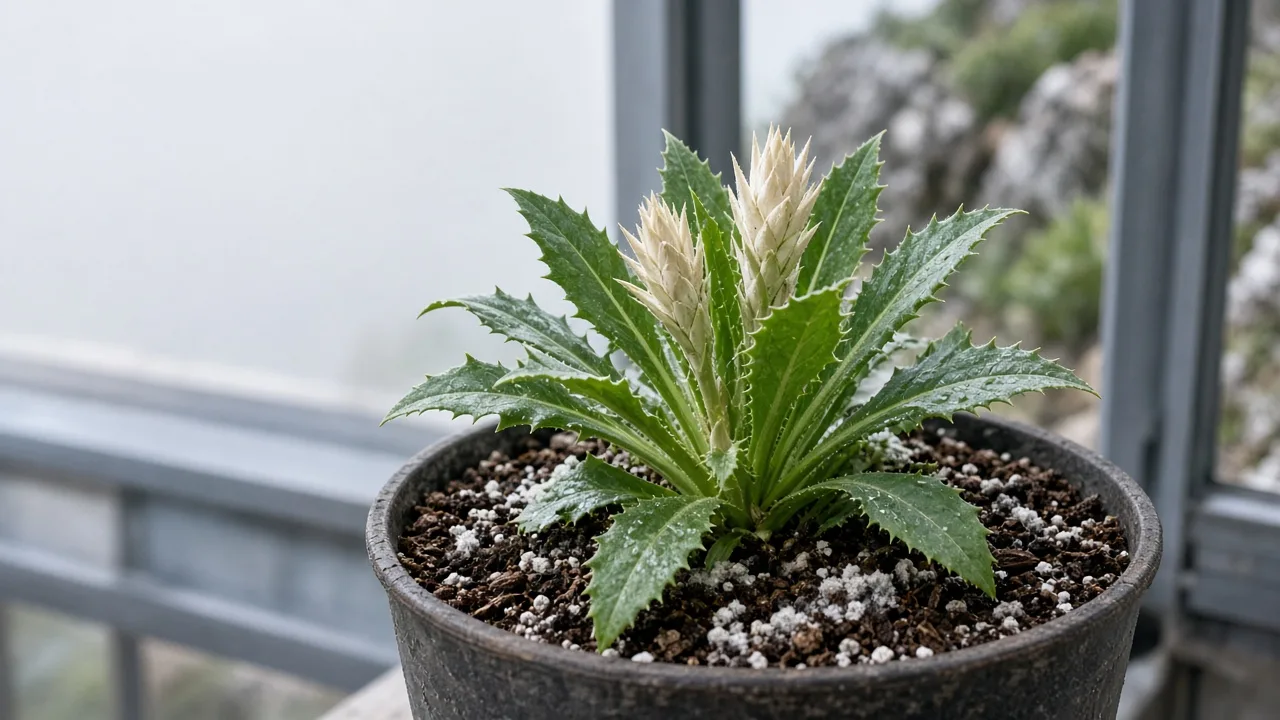
Mold on Soil on Brahma Kamal: Causes, Checks & Fixes
This guide covers mold on soil on Brahma Kamal. See also the general Mold on Soil guide, watering, and light pages for this plant.
Mold on Soil on Brahma Kamal: Causes, Checks & Fixes
Quick answer
Your Brahma Kamal (Saussurea obvallata) has white or gray fuzz on the potting mix and you need to know whether to scrape, repot, or panic. Start with what makes true Brahma Kamal different from the tropical orchid cactus often sold under the same name: this is a cool-adapted Himalayan alpine with a compact basal rosette and a rhizomatous crown that wants moist but sharply drained mix—not a constantly soggy peat surface in a warm room.
For how saprophytic fungi colonize wet organic mix in general, see our mold on soil guide. On Brahma Kamal, the practical pattern is white fuzz on damp leaf mould or bark fines at the rosette rim, especially after monsoon-style watering, saucers left full, or warm nights when the top layer never dries—even while the toothed leaves still look firm.
First step: scrape off the top inch of affected mix with a spoon, bag and trash the material, then pause watering until the surface dries. Make that one correction before repotting, fungicide sprays, or heavy crown disturbance.
When to use this page vs other Brahma Kamal guides
This page is the symptom-first entry for fuzzy soil on a Saussurea pot. Use it to decide what the surface growth means and which action comes first.
- Overwatering — go here for the full moisture rhythm, warm-night wet-soil stress, and yellow leaves in saturated mix
- Root rot — go here when the crown softens, mix smells sour, or you need trim-and-repot steps at the rhizome
- Fungus gnats — go here when small flies swarm after every watering alongside surface mold
- Watering guide — go here for surface dry-down checks during active growth and dormancy cutbacks
- Soil guide — go here for alpine grit, bark, and drainage that keeps the crown aerated
- Problems hub — full symptom index for this species
What mold on soil looks like on Brahma Kamal
On Saussurea pots, mold most often appears as a thin white, gray, or occasionally tan fuzzy film across the top of the mix. It may hug the rosette rim where leaf mould, pine bark fines, or old bract debris collect moisture. You might notice it after a stretch of cloudy monsoon weather, after bottom-watering without emptying the saucer, or when a nursery pot sits in a cachepot that traps humidity.
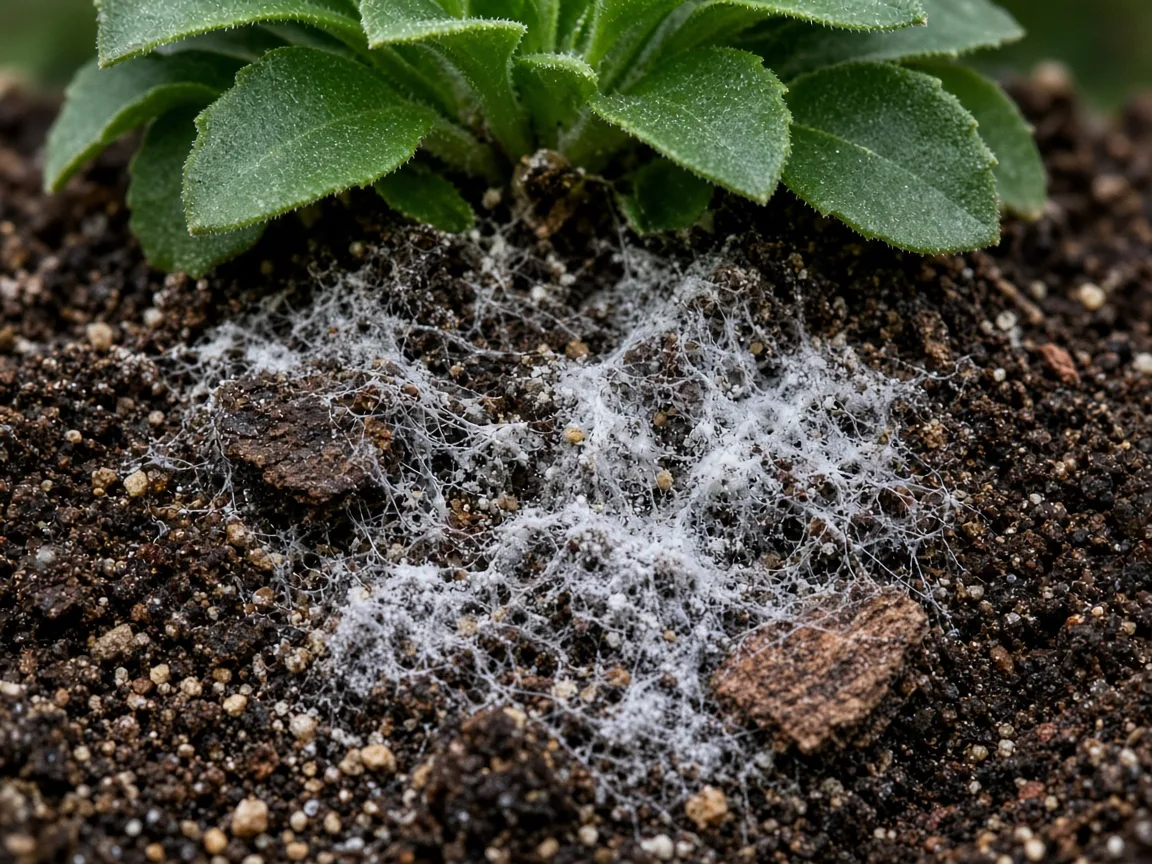
Surface mold on Brahma Kamal — compare damp organic top layer with firm basal leaves on the same plant.
Healthy Brahma Kamal during active growth should have mix that releases surplus water quickly while staying cool and lightly moist below the surface—not a slick, dark carpet that stays wet for many days. The compact rosette can still look upright while the top layer is too wet, because alpine leaves do not wilt as dramatically as tropical foliage.
Watch for these patterns:
- Surface fuzz only — White or gray film on damp topsoil; basal leaves firm; crown hard at soil line
- Rosette-rim mold — Fuzz where fallen bracts or old leaves decay on bark-rich mix
- Companion signs — Fungus gnats at soil level, green algae on the pot rim, musty smell from organic fines
- Advanced trouble — Yellow leaves on wet mix, wilting despite damp soil, soft dark tissue at the crown (rot, not cosmetic mold)
Occasionally a yellow mushroom may appear in very humid pots. Penn State Master Gardeners describe Leucocoprinus spp. as saprotrophic fungi on commercial potting soils that signal excess moisture; remove fruiting bodies if pets or children can reach the pot, but treat the underlying wet mix—not just the mushroom cap.
Confirm you are growing Saussurea—not the orchid cactus mislabel
Many Indian nurseries sell Epiphyllum oxypetalum (flat stemmed, leafless orchid cactus) as “Brahma Kamal.” That plant is epiphytic, often in bark-heavy mix with different mold triggers. True Saussurea obvallata forms a low rosette of toothed leaves and short flowering stems with pale bracts—see the overview before you apply alpine drainage fixes to the wrong species.
If your “Brahma Kamal” is a tall flat-stemmed night bloomer in tropical mix, surface mold still means wet organic substrate, but watering and repot timing follow cactus rules, not Himalayan alpine dormancy. This page assumes the botanical label reads Saussurea obvallata.
Why Brahma Kamal gets mold on soil
Alpines from mountain meadows evolved with rain followed by fast drainage and cool air. RHS guidance for alpines stresses sharply draining compost and warns that most dislike consistently damp soil. Brahma Kamal still needs steady root-zone moisture during spring and summer growth, but when the surface stays wet, spores in bark and leaf mould germinate into harmless saprophytic mats that feed on decaying organic matter.
Common Saussurea-specific triggers include:
Warm nights plus wet crown zone. Sustained heat with damp mix is a greater stressor for this species than cool alpine rain. Mold after monsoon weeks often means the pot never dried at the top while nights stayed warm—see overwatering and light placement.
Dense, peat-heavy “houseplant” mix. Standard indoor compost holds moisture at the surface long after an alpine mix with grit would have crusted dry. The soil guide covers bark, loam, and pumice blends.
Saucers, cachepots, and tray watering. Water pooling under the pot re-wets the bottom profile and keeps the surface humid. Empty runoff within minutes of every drink.
Organic top-dress and bract debris. Fallen pale bracts and leaf mould mulch give fungi food and hold water against the rhizomatous crown—a high-risk zone if saturation lingers.
Dormancy watering mistakes. After flowering dieback, Brahma Kamal needs sharply reduced moisture at a lightly moist dormant crown. Continuing summer watering frequency on a pot that is barely using water leaves the top layer fungus-friendly for weeks.
Low airflow on crowded shelves. Ventilated alpine-house conditions dry surfaces faster than a humid kitchen windowsill packed with other pots.
How to confirm the cause
Work through these checks before repotting or spraying fungicide:
- Crown firmness. Gently press the rosette base at soil level. A hard crown with only surface fuzz points to early moisture imbalance. Soft, dark, or sinking tissue means escalate toward root rot triage.
- Surface vs depth moisture. Feel the top 1–2 cm; push a skewer toward the pot bottom. Dark, clinging skewers mean wet soil throughout—not a dry pot with a lone mold patch.
- Pot weight and drainage. Lift the container. Heavy days after watering with slow drainage holes suggests trapped water. Confirm holes are open and saucers empty.
- Smell. Waterlogged mix often smells sour or rotten when roots have been too long without oxygen—a different urgency than earthy mold on an otherwise firm plant.
- Season and growth stage. Active spring shoots tolerate more moisture than a dormant crown after dieback. Match checks to the watering guide seasonal notes.
- Companion pests. Hovering gnats when you disturb the rim point to the same damp organic habitat—pair with the fungus gnat page.
If basal leaves are firm, the crown is hard, and only the top centimeter is fuzzy after one wet week, you likely caught a moisture slip early. Soft crown tissue plus sour odor means rot protocols, not scraping alone.
The first fix to try
Scrape off the top inch of affected mix, discard it in the trash, then pause watering until the surface dries.
Do not repot or drench fungicide on day one. Removing the fungal mat and organic debris eliminates the visible growth and gives you a clean read on how fast the gritty alpine profile dries in your climate.
Once the surface is dry to the touch:
- Move the pot to the brightest cool spot you can offer, with space around it for airflow—see light for alpine placement.
- Resume watering only when the top 1–2 cm just begins to dry during active growth, then water until runoff exits drainage holes and empty the saucer.
- Pull any matted bracts or old leaves resting on the soil away from the crown.
That single correction resolves many first-time mold cases on Brahma Kamal.
Step-by-step recovery
If mold was widespread or returned once before:
- Scrape and discard the top 2–3 cm of mix if the layer is mostly organic fines and fuzz.
- Replace removed material with fresh gritty alpine blend from the soil guide—not a thick peat top-dress.
- Hold fertilizer until new spring growth looks stable for a couple of weeks after moisture is corrected.
- If mold returns within seven to ten days while the skewer never dries, inspect roots on a dry day—chronic wet mix may already be damaging the rhizome even if leaves look acceptable.
Avoid stacking full repot, crown division, and pesticide on the same day unless you have confirmed active rot.
Recovery timeline
Surface mold on a firm Saussurea rosette often clears after one dry cycle at the top layer—sometimes a few days in bright cool weather, longer during humid monsoon weeks. Recovery means no new fuzz after scraping, stable firm leaves, and normal spring shoot growth—not old yellowed tissue turning green again.
If you corrected watering at the start of dormancy, expect little visible change until the next growth season; judge success by a crown that stays firm through winter, not by winter mold that never appears in a barely watered pot.
Lookalike symptoms
| What you see | Likely cause | First action |
|---|---|---|
| White fuzz on soil only; firm crown | Surface saprophytic mold on wet organic top | Scrape → dry surface → fix drainage |
| Green slick film on rim | Algae in constant moisture | Dry surface; improve light and airflow |
| Flies when watering | Fungus gnats in damp fines | Dry profile; see gnat guide |
| Yellow lower leaves, wet mix | Overwatering | Reduce frequency; check depth moisture |
| Sour smell, soft crown | Root rot | Unpot on dry day; trim decay |
| Crisp edges, light pot | Underwatering — not mold | Water when surface just dries |
Mistakes to avoid
- Misting the rosette to “balance humidity” while the soil surface stays wet—alpine crowns need airflow, not a wet crown zone.
- Cinnamon or fungicide drench before drying the mix—cosmetic fixes on still-saturated bark fines.
- Repotting into a much larger container “for drainage”—extra soil volume holds more moisture around the rhizome.
- Keeping summer watering on a dormant pot after foliage dies back—invites mold with no transpiration to pull water up.
- Assuming mold proves the plant is healthy because leaves are firm—rhizomes can be stressed before foliage shows it.
How to prevent mold next time
Use moisture-retentive but fast-draining alpine mix in a pot only slightly larger than the rhizome mass, with open drainage holes and no standing water in saucers.
Water when the surface just begins to dry during active growth; cut back sharply after natural dieback for dormancy per the watering guide.
Shelter pots from warm driving rain that saturates the rosette rim; tilt or move containers after monsoon bursts.
Remove spent bracts and decaying mulch from the crown zone promptly.
Scout the soil line weekly during humid seasons—mold is easier to fix when only the top inch is affected.
When to worry
A small fuzz patch on an otherwise firm Brahma Kamal with correctable wet surface mix is common when organic alpine blends meet humid weather—and rarely threatens a mature crown once moisture and airflow improve.
Escalate when the crown base softens, several leaves yellow together on wet mix, mold returns within days while the surface never dries, or fungus gnats swarm the rim. Those patterns mean root-zone triage, not repeated scraping alone.
Related Brahma Kamal guides
- Overview — true Saussurea vs mislabeled orchid cactus
- Watering — surface checks, monsoon shelter, dormancy
- Soil — bark, grit, and drainage for alpine roots
- Light — cool bright placement and heat stress
- Overwatering — yellow leaves and wet mix
- Root rot — soft crown and sour odor
- Fungus gnats — flies without surface fuzz
- Problems hub — full symptom index
Conclusion
Mold on Brahma Kamal soil is usually a pot-surface moisture signal on organic alpine mix—not a fungus attacking the rosette leaves. Scrape the damp top inch, let the surface dry before the next drink, and keep the rhizomatous crown cool, ventilated, and in gritty mix. Firm basal growth and a top layer that dries between drinks are the recovery markers; a soft crown on sour, saturated mix means rot work—not mold cosmetics alone.
Related tool
Use the Plant Problem Diagnosis Tool to narrow causes for mold on soil on this plant before changing multiple variables at once.