Underwatering on Brahma Kamal: Causes, Checks & Fixes
Quick answer
Underwatering on Brahma Kamal shows a light pot, dry mix below the top 1–2 cm, limp rosette leaves, crisp edges, or stalled flower heads—not yellow mushy foliage on a heavy wet pot. First step: probe the shallow surface layer and lift the container; if both read dry, give one slow two-pass soak with full drainage.
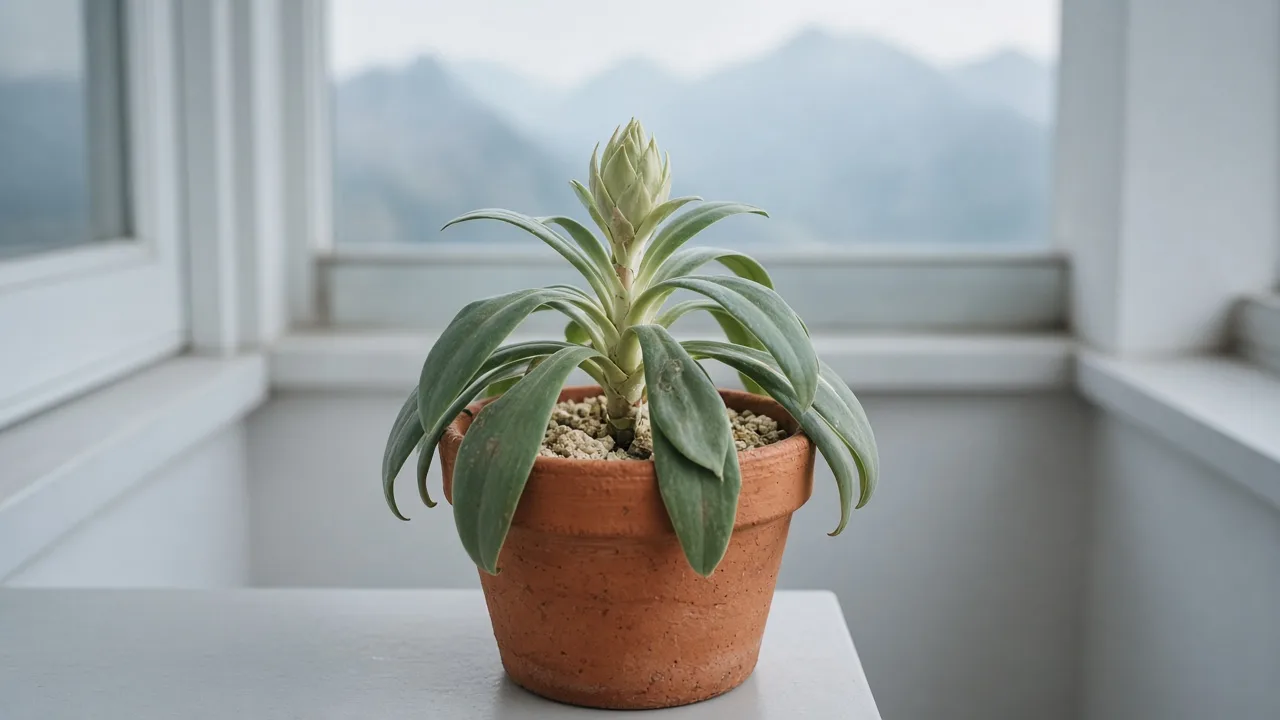
Underwatering on Brahma Kamal: Causes, Checks & Fixes
This guide covers underwatering on Brahma Kamal. See also the general Underwatering guide, watering, and light pages for this plant.
Underwatering on Brahma Kamal: Causes, Checks & Fixes
Quick answer
True Brahma Kamal (Saussurea obvallata) is a moist-soil alpine perennial, not a succulent you can ignore for weeks. When the gritty root ball dries too far—especially during cool active growth—compact rosette leaves lose turgor, edges crisp, and flower heads can stall. Owners who recently feared overwatering sometimes wait too long to soak again.
For how chronic dryness stresses container plants in general, see our underwatering guide. On Brahma Kamal, the tell is a light pot, dry mix below the top 1–2 cm, limp foliage with a firm crown, and optional mix shrinkage at the rim—not yellow lowers on heavy wet soil.
First step: probe the top 1–2 cm and lift the pot before you pour. If both read dry, one slow two-pass soak with full drainage is the correct first fix—not fertilizer, repotting, or pruning on the same day.
When to use this page vs other Brahma Kamal guides
- Drooping leaves — limp rosette foliage from several causes; this page focuses on confirmed dry root zone and light pot weight
- Wilting — rapid whole-plant collapse after heat shock or uptake failure
- Overwatering — heavy cool pot, yellow leaves on dark damp mix, soft crown tissue
- Brown tips — edge burn when mix was moist but air was dry
- Low humidity — crispy margins with otherwise adequate root moisture
- Slow growth — stalled rosette after drought stress is corrected but light or nutrition may also limit
- Watering guide — long-term top-layer rhythm after thirst is corrected
- Overview and problems hub — cluster navigation when symptoms overlap
What underwatering looks like on Brahma Kamal
A healthy Saussurea obvallata holds stiff, cool-green basal leaves in a tight rosette, with short flowering stems wrapped in pale bracts when buds develop. Underwatering changes posture and texture before it kills the crown.
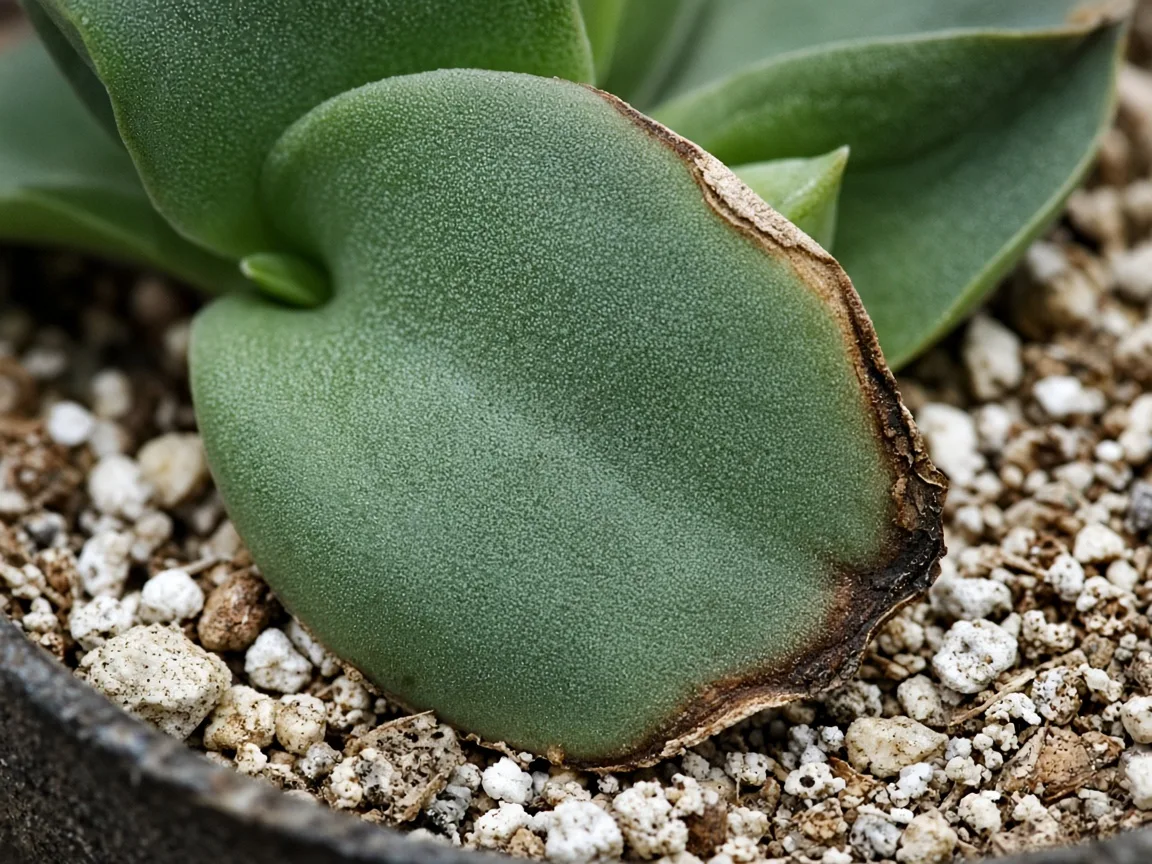
Underwatering on Brahma Kamal—slightly dull leaf surface, soft limp angle at the rosette, and pale crumbly alpine mix pulling slightly from the pot wall.
Early thirst shows subtly dull leaves, a rosette that sits flatter than usual, and mix that has lost its damp sheen in the top 1–2 cm while the pot feels lighter than after your last full soak. New center growth may pause without obvious pest damage.
Established drought brings clearly limp blades, crisp brown edges when air is also dry, slowed flower-head development, and soil pulling away from the pot wall. A wooden skewer inserted near the rim may come out nearly clean while the surface looked only “slightly dry.”
Advanced dry-down can include papery lower leaves, a feather-light container, and a crown that still feels firm but cannot supply turgor. Very dry gritty mix may channel water down the inside wall while the center stays dry—see the two-pass section below.
What underwatering is not: limp leaves on a heavy wet pot (overwatering or root rot); yellowing with sour smell at the crown; stippling with webbing (spider mites); sudden flop after a warm night indoors (wilting from heat).
Confirm you are diagnosing the Himalayan plant
This page is only for Saussurea obvallata, the rhizomatous geophyte from high Himalayan meadows—not Epiphyllum oxypetalum, the flat-stemmed tropical cactus widely sold as Brahma Kamal in Indian nurseries. The cactus tolerates different dry-down and warm-night conditions.
If your plant has long leaf-like stems and a large white night flower, stop here and use cactus-epiphyte care. If you have a low rosette and upright bracted flower stems, continue. Identity mistakes are the fastest route to “underwatering” advice on a plant that actually needed tropical humidity—or the reverse.
Why Brahma Kamal dries out faster than labels suggest
Alpine marketing often says “don’t overwater,” which growers translate into bone-dry pots. Kew and cultivation records place S. obvallata in streamside and moist-slope habitats where moist soil is normal. The species still needs oxygen at the roots—dense soggy compost kills crowns—but full root-ball drought during growth is equally harmful.
Common underwatering setups on this species:
| Situation | Why Brahma Kamal suffers |
|---|---|
| Treating it like a succulent | Entire gritty mix dries while owners wait for “wrinkled leaves” that never appear on this rosette |
| Small terracotta on a windy balcony | Alpine containers dry quickly in warm lowland gardens even when air feels cool |
| Fear after yellow leaves | Skipping soaks while mix is already dry 3 cm down—often confused with overwatering |
| Winter rest misunderstood | Foliage dies back and watering stops entirely; dormant crown still needs light moisture per the watering guide |
| Oversized pot with little root mass | Only the center ever wets; outer grit dries and roots cannot explore |
Penn State Extension notes that interval changes with weather, season, pot type, and growth stage—calendar watering fails on slow alpines in variable mountain-style weather.
The top 1–2 cm check, skewer, and pot-weight habit
Brahma Kamal watering rhythm is water when the top 1–2 cm has just begun to dry while the layer below still feels cool—not when the whole crown is limp. Combine three checks whenever foliage looks off:
- Finger or skewer 1–2 cm deep, away from the crown. A barely dry surface with cool moisture below means wait. A clean dry skewer plus a light pot supports thirst.
- Lift the pot. A light container needs water. Learn weight right after a full soak versus when the plant is due.
- Read the growth stage. Active spring shoots and flower buds use more water than a dormant crown after die-back.
On this species, pot weight beats leaf drama for the first fix. Limp rosette leaves on a heavy wet pot are a stop-water signal, not this page.
Two-pass rehydration for shrunken alpine mix
Gritty bark-and-pumice blends drain beautifully but can shrink and channel when allowed to dry completely. You may see:
- Water racing out the bottom while the center stays pale and dry
- Surface darkening for minutes, then light again
- Limp leaves shortly after a “watering” that never reached roots
That pattern is still underwatering. Very dry potting mix may need soaking to wet properly again. For Brahma Kamal:
- First pass: water slowly until a little runs from drain holes; pause two minutes.
- Second pass: water again until the pot feels distinctly heavier and the mix color evens through the top 3–4 cm.
- Drain fully and never leave the pot standing in runoff.
If channels persist, bottom-soak the container in a basin for 20–30 minutes, then drain. Review soil if the mix dries to dust every two days—a root-bound or under-sized reservoir may be the real issue.
Flower-head stall and cool-season transpiration
Underwatering on Brahma Kamal often shows up at the reproductive stage before obvious leaf death: bracts stay small, buds abort, or stems fail to elongate while the rosette still looks merely “tired.” That stall tracks with dry root zones during the short cool growing window—water stress limits growth on many perennials long before crowns collapse.
Bright, windy, cool days increase transpiration from the rosette while a small pot loses water faster than a calendar suggests—especially in porous alpine containers. Match checks to light exposure: more sun and airflow mean more frequent inspection, not more water per session unless probes read dry.
Dormancy: lightly moist, not abandoned
After foliage dies back, reduce watering sharply but do not dry the dormant rhizome to dust. Owners who stop all moisture through winter then see a weak spring rosette often blame “bad seed” when the crown endured drought. The Brahma Kamal watering guide describes keeping the dormant crown only lightly moist—probe near the crown monthly in storage, and give small drinks when the mix is bone-dry throughout.
Underwatering in dormancy is quieter than in summer: firm crown, no new shoots by spring, and a pot that has been feather-light for weeks.
How to confirm underwatering (and rule out lookalikes)
| Check | Underwatering | More likely alternative |
|---|---|---|
| Top 1–2 cm + pot weight | Dry and light | Overwatering if cool and heavy |
| Crown at soil line | Firm | Soft or dark → root rot |
| Leaf pattern | Dull limp rosette, optional crisp tips | Yellow on wet mix; mite stippling |
| After one two-pass soak | Firms within 1–3 days | No change on wet mix → uptake failure (wilting) |
| Humidity | Crispy tips if air dry | Low humidity if mix was moist |
Confirmed dry + light + firm crown = underwatering path below.
The first fix to try
After probe, skewer, and lift show dry mix:
- Water slowly in two passes until the pot feels heavier and water runs from drain holes.
- Drain completely and empty saucers within 30 minutes—moist alpine roots still need oxygen; stagnant feet route you to rot.
- Wait 24–48 hours and re-check turgor before repotting, pruning, or feeding.
That single rehydration cycle is the first fix. Do not stack lime, fertilizer, or a bigger pot the same afternoon.
Return to the watering guide rhythm once tension returns.
Recovery timeline and what improves first
Mild drought: rosette leaves firm within one to three days after a proper soak. Flower-head movement may resume within two to four weeks in cool active growth if buds were not fully aborted.
Older leaves with crispy margins usually do not fully re-green—trim cosmetic brown if needed, or pair with humidity checks. Judge progress by new center growth, not by every outer blade.
Worsening signs after a soak: soft crown, sour smell, or heavier pot with more yellow—stop watering and inspect for root rot. Chronic underwatering followed by panic daily watering can flip the plant into oxygen stress; stabilize one rhythm.
Mistakes to avoid on Brahma Kamal
- Pouring because leaves look limp without lifting the pot—classic confusion with wet-soil wilt.
- Treating it like a desert succulent because it is “alpine”—streamside moisture habits still apply during growth.
- Fertilizing a drought-stressed rosette before moisture is stable.
- Moving into harsh afternoon sun to “dry it out” when the real issue was thirst—scorch adds brown tips.
- Upsizing into a huge pot to “hold more water”—oversized wet reservoirs cause rot; match pot to crown per repotting when truly crowded.
How to prevent underwatering next time
- Adopt the top 1–2 cm dry-down rule from the watering guide and learn dry pot weight.
- In windy bright weather, check every two to three days on small terracotta; stretch interval after die-back but never ignore a light container for weeks.
- Refresh gritty soil when mix collapses or channels every cycle.
- Shelter from monsoon deluge without confusing rain skip with root-zone drought—touch the mix, do not guess from clouds alone.
Related Brahma Kamal guides
Use drooping leaves when limp foliage could be wet or dry—start with probe and lift. Use this page when the pot is light and the top 1–2 cm are dry. Use overwatering when mix stays dark and damp. Use wilting for sudden collapse after heat. Use slow growth when the rosette stalls after water stress is fixed but cool light may still limit.
Related tool
Use the Plant Watering Calculator to narrow causes for underwatering on this plant before changing multiple variables at once.