Slow Growth on Brahma Kamal: Alpine Stall Checks
Quick answer
Slow growth on true Brahma Kamal is often normal for a cold alpine perennial—or winter crown rest—not a hungry houseplant. First step: confirm the label says Saussurea obvallata, check whether the crown is dormant or active for the season, then move a firm plant to the brightest cool outdoor spot with morning sun and log new rosette leaves for three weeks before repotting or feeding.
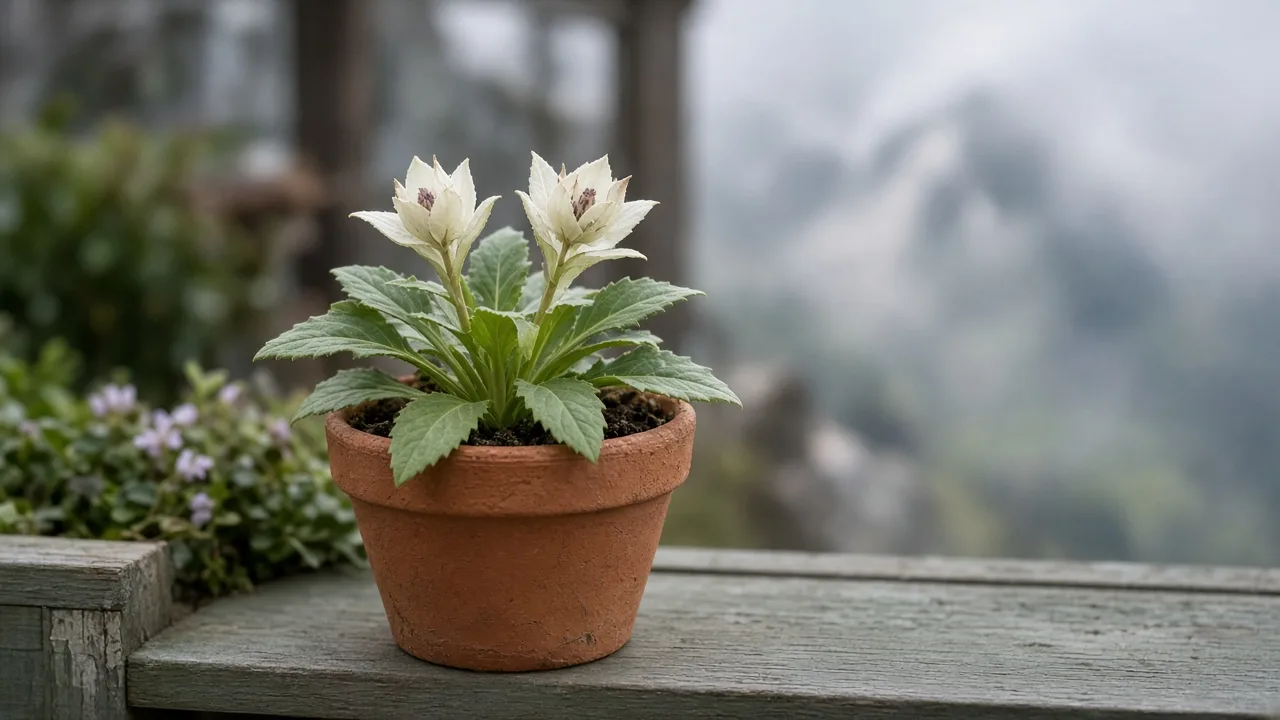
Slow Growth on Brahma Kamal: Causes, Checks & Fixes
This guide covers slow growth on Brahma Kamal. See also the general Slow Growth guide, watering, and light pages for this plant.
Slow Growth on Brahma Kamal: Causes, Checks & Fixes
Quick answer
Slow growth on true Brahma Kamal (Saussurea obvallata) is often expected, not a crisis. This is a small perennial from grasslands, rocky slopes, and stream margins at roughly 3,200–5,200 m—a habitat where cool air, bright sky light, and sharply drained yet moist root zones set a deliberate pace. In cultivation it commonly reaches only about 30 cm tall, pushes most visible growth in spring and summer, and can sit nearly still while nights stay warm or while the crown rests after dieback.
For how chronic stagnation works across plants in general, see our slow growth hub. On Brahma Kamal, the decisive checks are species identity (Saussurea vs the tropical “Brahma Kamal” cactus), seasonal crown dormancy, cool bright outdoor placement, and whether the rhizomatous crown stays firm—not whether the rosette matches tropical vine speed.
First step: confirm the botanical label says Saussurea obvallata, decide whether the crown is in winter rest or active growth, then move a firm active-season plant to the brightest cool outdoor position with morning sun and track new rosette leaves for three weeks before repotting, heavy watering changes, or fertilizer.
When to use this page vs other Brahma Kamal guides
This page is the stall-without-collapse entry—a compact rosette that barely widens, short stems that do not advance, or a long pause with a firm crown—when you are unsure whether to wait or intervene.
| Pattern | Read next |
|---|---|
| Long weak stems reaching for dim windows | Leggy growth or not enough light |
| Yellowing on wet mix | Yellow leaves or overwatering |
| Limp foliage on light dry mix | Underwatering or wilting |
| Soft crown, sour wet mix | Root rot |
| Droopy leaves without obvious rot | Drooping leaves |
| Dry air stress in warm rooms | Low humidity |
| Long-term sun and placement | Light guide |
| Full problem index | All Brahma Kamal problems |
What slow growth looks like on Brahma Kamal
Healthy Saussurea obvallata in a cool bright season builds a compact basal rosette of toothed leaves, then short upright stems whose pale, boat-shaped bracts partially enclose the flower heads. Slow growth is about the rhythm of new leaves and stems stopping while the crown stays firm—not instant collapse:
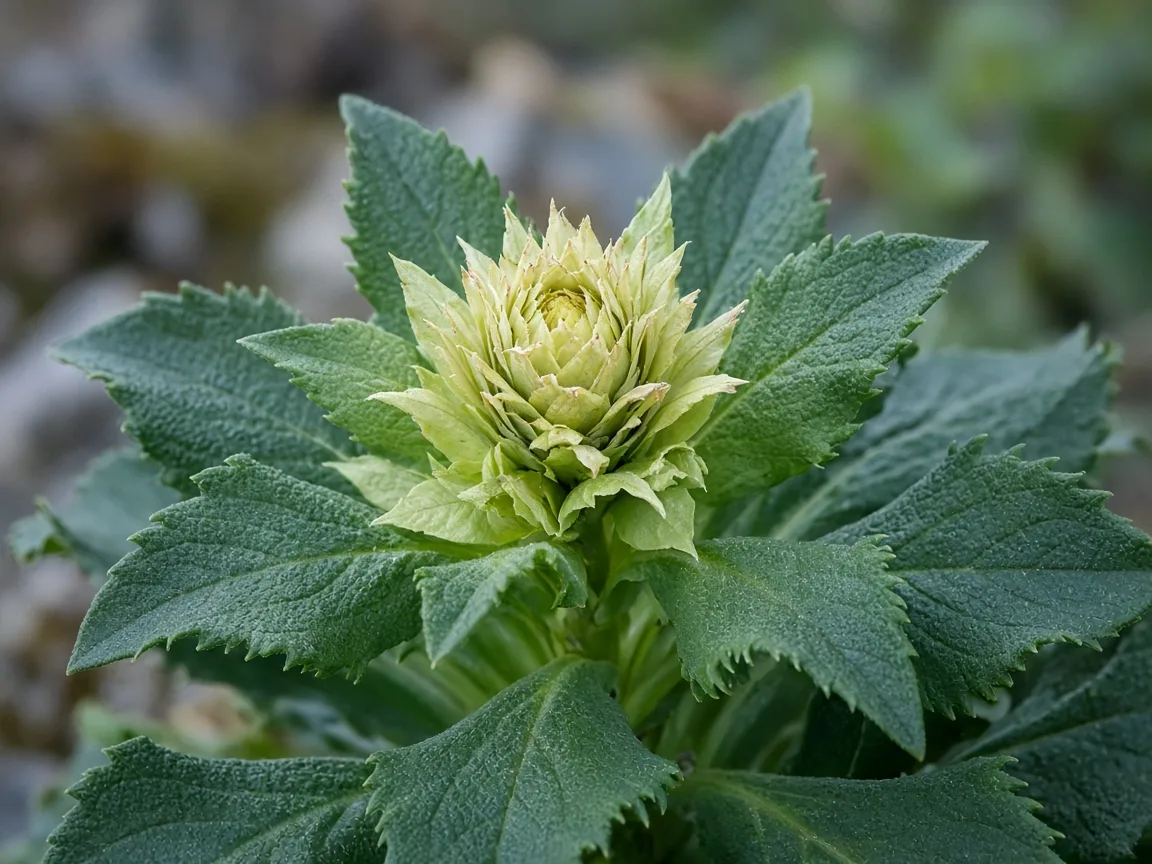
Tight alpine crown: firm green tissue and layered bracts, but no new rosette leaf emerging at the center—compare with early spring when toothed leaves unfurl from the rhizome after winter dieback.
- Rosette width unchanged for many weeks despite firm leaves and stable watering
- No new toothed basal leaves through a cool bright spring window when neighbors’ alpines are waking
- Flower stems stall—bracts stay small or do not lift while the season passes the usual July–September flowering window in Himalayan climates
- Winter quiet—above-ground parts absent or minimal from late autumn into early spring while the crown stays hard at the soil line (normal rest, not “dead”)
- Warm-room flatline—nothing new June through August indoors while nights stay hot, even though mix moisture looks “fine”
- Post-repot pause—one to two months with firm crown and no fresh leaves after division or repotting
This differs from leggy growth, where stems stretch and the rosette leans toward light, and from not enough light, where pale weak tissue may still appear even as height increases slowly. Overwatering stalls vigor with yellowing and soft crown tissue on heavy wet mix—not a firm crown on appropriate seasonal moisture.
Why Brahma Kamal grows slowly
Alpine perennials trade speed for survival. PFAF lists Saussurea obvallata as a perennial to about 0.3 m that prefers moist soil in sun or semi-shade but offers limited cultivation detail—consistent with a specialist slow grower, not a tropical foliage factory. RHS alpine guidance applies to the same constraint set: most alpines need gritty, free-draining compost and dislike consistently damp, especially winter-wet, conditions—a combination that limits root metabolism when heat or waterlogging stacks up.
Brahma-Kamal-specific triggers:
- Species-appropriate slowness — a 15–30 cm rosette that adds a few leaves per warm month can be healthy alpine pacing, not failure.
- Winter crown dormancy — after flowering and dieback, the visible plant may disappear while the rhizomatous crown rests; growth commonly resumes as temperatures rise in spring, not on a tropical evergreen calendar.
- Warm lowland nights — sustained heat with warm evenings and wet mix suppresses root activity even when leaves look green; see the overview on cool-day placement.
- Dim or indoor culture — bright cool outdoor light drives spring shoots; a warm living room rarely matches alpine meadow brightness even near a window.
- Moisture paradox — the plant wants steady root-zone moisture in growth yet sharp drainage like other alpines; dense soggy potting soil in monsoon heat stalls roots without immediate rot symptoms.
- Wrong plant expectations — Epiphyllum oxypetalum, often sold as “Brahma Kamal” in warm regions, is a fast tropical epiphyte; comparing it to Saussurea guarantees a false “slow” diagnosis.
- Post-flowering pause — energy goes to seed and crown recharge after bracts open; a summer stall immediately after bloom can be normal.
- Root-bound or exhausted mix — years in the same peat-heavy compost without refresh can flatline warm-season leaves while the crown stays firm; see repotting timing. Rock-garden culture likewise rewards sharp drainage over rich, soggy beds when establishing slow alpines.
- Withheld or mistimed feed — fertilizer on a dormant crown burns; conversely, a sun-cooled plant in depleted gritty mix through a full active season may need the fertilizer guide after water and light align.
Saussurea vs nursery “Brahma Kamal”: an identity check only this plant needs
Before any “fix,” confirm you are diagnosing Himalayan snow lotus, not night-blooming cereus.
| What you see | Likely plant | Slow-growth meaning |
|---|---|---|
| Flat succulent stems, no true soil rosette | Epiphyllum oxypetalum | Different species—use cactus care; Saussurea advice will mislead |
| Compact toothed basal leaves, short stems, papery bracts | Saussurea obvallata | This page applies |
| Label missing | Unknown | Resolve identity before repotting or feeding |
PFAF user notes explicitly warn that many growers confuse the two common names. If your plant is Epiphyllum, stop here and follow epiphyllum culture—no amount of alpine cooling will speed a mislabeled tropical.
Winter dieback clock: dormant crown vs true stall
Saussurea obvallata behaves like a high-mountain perennial: above-ground growth can fade after the season ends while the stout caudex or rhizome crown persists underground. Treat that pause as rest unless tissue is soft or wet.
| Seasonal stage | Normal slow pattern | Investigate further |
|---|---|---|
| Late autumn–winter: little or no visible foliage; firm crown; reduced watering | Dormancy | Do not force feed or soak |
| Early spring: first toothed leaves slow to emerge in cool weather | Alpine wake-up lag | Brighten and cool; wait 2–4 weeks |
| Active summer: no new leaves; warm nights; heavy wet pot | Metabolic stall | Dry-down and airflow first—watering |
| After July–September bloom: rosette static | Post-flowering recharge | Reduce stress; avoid repot until spring |
| Any season: soft dark crown on sour mix | Not normal slowness | Root rot path |
Bract and flowering rhythm: a monsoon-season timing check
Unlike generic houseplants, Brahma Kamal announces progress through bract-wrapped stems, not constant leaf flushes. Flora of China records flowering July through September in the wild—aligned with monsoon-season Himalayas.
Use this rhythm before calling the plant “stuck”:
- Spring — rosette leaves expand; stems may stay short.
- Early summer — stems lengthen; pale bracts swell around the head.
- Mid–late monsoon — bracts open to purple flowers if conditions stay cool and bright enough.
- After bloom — foliage may die back; growth pauses until next cool spring.
If bracts never swell through an entire cool outdoor summer, revisit light and crown health before assuming the species is simply lazy.
How to confirm the cause
Work through these checks in order:
- Identity — label or morphology confirms Saussurea obvallata.
- Season — is the crown in documented winter rest with lightly moist mix, not active spring?
- Crown firmness — hard rhizome at the soil line vs soft, dark, sour tissue.
- Overnight temperature context — cool nights vs sustained warm room heat above roughly 20°C (68°F) on summer days.
- Moisture pattern — surface just drying before water in growth; reduced moisture in dormancy per watering.
- Light — brightest cool outdoor exposure, not dim indoor corner.
- Pot weight — heavy days after watering on dense mix in heat points to root slowdown.
- Recent disturbance — repot, division, or move within the last six weeks can skip one growth flush.
- Pest scout — aphids or spider mites on young leaves can flatten vigor before obvious webbing; see cluster pests on the problems hub.
If light, moisture, season, and identity align and growth is still flat through a full cool bright month, inspect roots sparingly in early spring rather than repeatedly disturbing the crown in heat.
First fix for Brahma Kamal
After confirming Saussurea obvallata and active-season crown firmness, move the pot to the brightest cool outdoor position you can offer—morning sun with protection from hot afternoon heat and monsoon waterlogging—and mark the rosette edge today to see whether new toothed leaves appear within three weeks.
That single placement test separates normal alpine patience from warm stagnant air without stacking repot, prune, and feed on the same weekend. RHS alpine culture stresses good drainage and avoiding waterlogged compost; combine brighter cool sun with unchanged, appropriate watering—not a drought shock and not extra fertilizer.
If the plant is clearly in winter dormancy with a firm crown, the first fix is hold reduced moisture and wait—not indoor heat and feed.
Step-by-step recovery
After the cool-bright placement test, proceed by pattern:
If warm nights and dim culture were the limit:
- Keep the pot outdoors in moving air where summer days stay as cool as your site allows.
- Maintain alpine-style gritty mix and water when only the surface begins to dry.
- Watch for the first new basal leaf; then maintain placement through the flowering window.
If wet heavy mix suppressed roots without rot:
- Stop watering until the top 1–2 cm dries and the pot lightens.
- Shelter from repeated monsoon soaking; confirm drainage holes are open.
- Resume the watering guide rhythm—do not repot on the same day unless mix is clearly failing.
If post-repot or post-bloom pause:
- Hold stable moisture and light for four to six weeks.
- Avoid fertilizer until fresh spring-style leaves show.
- Plan repotting or division only in early spring before shoots start.
If nutrition lagged on an established cool-season plant:
- Confirm several weeks of active leaf growth after winter.
- Apply dilute feed per the fertilizer guide—never on a dormant crown.
Recovery timeline
Judge progress by new rosette leaves and bract development, not daily height:
- Winter dormancy: no above-ground growth for months with a firm crown can be normal; expect spring leaves, not January shoots.
- Cool spring after dieback: first new leaves in two to four weeks once nights stay cool and days brighten are common.
- After cool-sun correction: look for one to two new basal leaves within three to four weeks in active season.
- After early-spring repot: resume growth in four to eight weeks is typical; flowering may skip that year.
- Post-flowering: static rosette through late autumn before dieback is often normal recharge.
Older leaves do not enlarge retroactively. Success means shorter gaps between new toothed leaves, swelling bracts on schedule, and a firm crown through the next dormancy.
What not to do
Do not treat Saussurea like a tropical foliage vine—warm rooms, heavy feeding, and constant moisture mirror the wrong plant.
Do not fertilize a dormant or heat-stressed crown to “wake” it; wait for visible spring growth.
Do not repot, divide, and feed in one weekend unless crown rot forces emergency action.
Do not keep the pot in sealed cachepots through monsoon rains while diagnosing slowness—alpines need surplus water to leave the root zone quickly.
Do not assume slow equals underwatering and soak repeatedly; equally stagnant roots can sit in wet dense mix—confirm with pot weight and crown firmness.
Do not collect wild plants to replace a slow specimen; use legally propagated nursery stock only.
How to prevent slow growth stalls next time
- Confirm Saussurea obvallata at purchase and reject mislabeled Epiphyllum if your goal is this alpine.
- Site for cool bright outdoor culture per the light guide rather than long-term warm indoor display.
- Use gritty alpine mix from the soil guide and refresh every two to three years.
- Water on surface dry-down in growth; reduce after dieback per watering.
- Allow natural post-flowering dieback rather than forcing evergreen growth with heat and feed.
- Feed lightly only in active cool growth per fertilizer.
- Log rosette marks each season so winter quiet and post-bloom pauses read as calendar events, not crises.
- Prune spent stems after bloom per pruning without cutting into the firm crown.
When to worry
Slow growth alone is medium urgency and often seasonal. Escalate when:
- The crown softens on wet mix with sour smell — root rot
- Yellow leaves spread while the pot stays heavy — overwatering
- Rosette collapses on light dry mix — underwatering
- No improvement after a full cool bright month with firm crown and corrected moisture — consider tip damage, heat unsuitability, or non-viable stock
A firm crown with no visible shoots through winter on lightly moist mix is usually worth waiting out—not an emergency repot.
Related Brahma Kamal guides
- Brahma Kamal overview — species identity, cool alpine needs, and realistic home placement
- Watering — surface dry-down in growth and dormancy reduction
- Light — morning sun, cool outdoor brightness, and warm-climate shade
- Soil — gritty alpine mix that stays moist yet drains fast
- Fertilizer — feeding only after settled spring growth
- Repotting — early-spring division before shoots emerge
Related tool
Use the Plant Problem Diagnosis Tool to narrow causes for slow growth on this plant before changing multiple variables at once.