Drooping Leaves on Brahma Kamal: Pot Weight & Crown Checks
Quick answer
On true Brahma Kamal (Saussurea obvallata), drooping basal leaves usually trace to the root zone or air temperature, not a leaf disease. Lift the pot and feel the top 1–2 cm of mix before you pour—heavy wet soil with a softening crown points to rot, while a light pot with barely dry surface mix points to uneven drought.
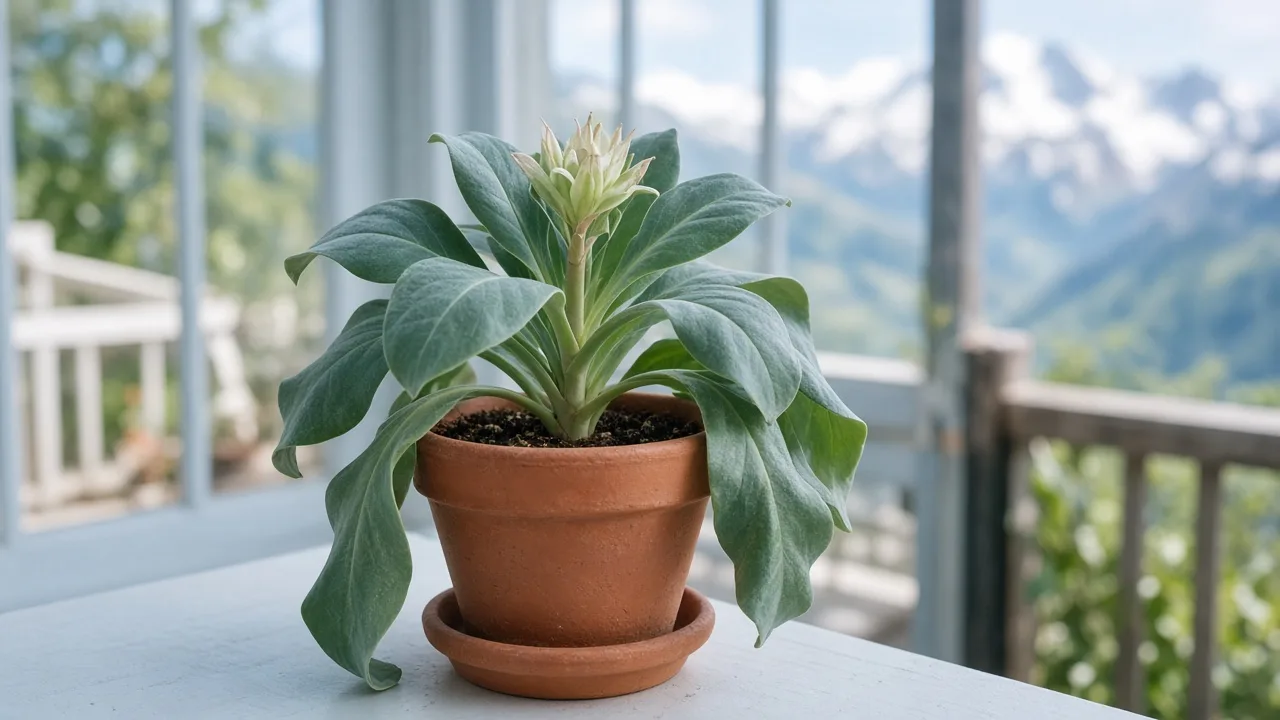
Drooping Leaves on Brahma Kamal: Causes, Checks & Fixes
This guide covers drooping leaves on Brahma Kamal. See also the general Drooping Leaves guide, watering, and light pages for this plant.
Drooping Leaves on Brahma Kamal: Causes, Checks & Fixes
Quick answer
Picture two pots on the same cool balcony after a humid week. In the first, the basal rosette leaves hang limp, the pot feels heavy, and when you press the crown it yields slightly even though you watered three days ago—that is wet-soil root failure on an alpine that cannot tolerate stagnant mix. In the second, the same pale-green rosette leaves droop, but the crown is firm, the pot is noticeably lighter, and the top 1–2 cm of mix has lost its damp sheen—that is uneven drought on a species that wants steady moisture, not a desert dry-down.
That split is what makes drooping leaves on Brahma Kamal different from the same symptom on a peace lily or pothos. Saussurea obvallata is a perennial or rhizomatous geophyte from high Himalayan meadows, not a tropical foliage houseplant. It keeps a compact basal rosette and upright flowering stems wrapped in boat-shaped bracts. For how turgor loss works in general, see our drooping leaves guide. On Brahma Kamal, the practical pattern is pot weight plus a shallow surface dry-down check before any drink.
First step: lift the pot and feel moisture in the top 1–2 cm while you test whether the crown is firm. Do not water, repot, prune, or feed until you know which side of the wet/dry divide you are on.
When to use this page vs other Brahma Kamal guides
This page is the leaf-posture entry for limp basal foliage on Saussurea obvallata while the crown may still feel solid.
| Pattern | Read next |
|---|---|
| Whole rosette collapses or crown softens | Wilting |
| Yellow leaves on a heavy wet pot | Overwatering or yellow leaves |
| Mix pulls away from the pot, crisp edges | Underwatering |
| Sour smell, blackened crown tissue | Root rot |
| Stretching, pale rosette in warm shade | Not enough light or leggy growth |
| White fuzz on wet soil surface | Mold on soil |
Use the problems hub when you are not sure which symptom page fits.
What drooping leaves look like on Brahma Kamal
Healthy Saussurea obvallata holds a low rosette of oblong basal leaves with slightly scarious margins, often with a cool blue-green cast. When turgor drops, those basal leaves lose stiffness and hang outward or downward from the crown while the short stem may still look upright. The change can hit the oldest leaves first or spread across the whole rosette after a heat spike or a watering mistake.
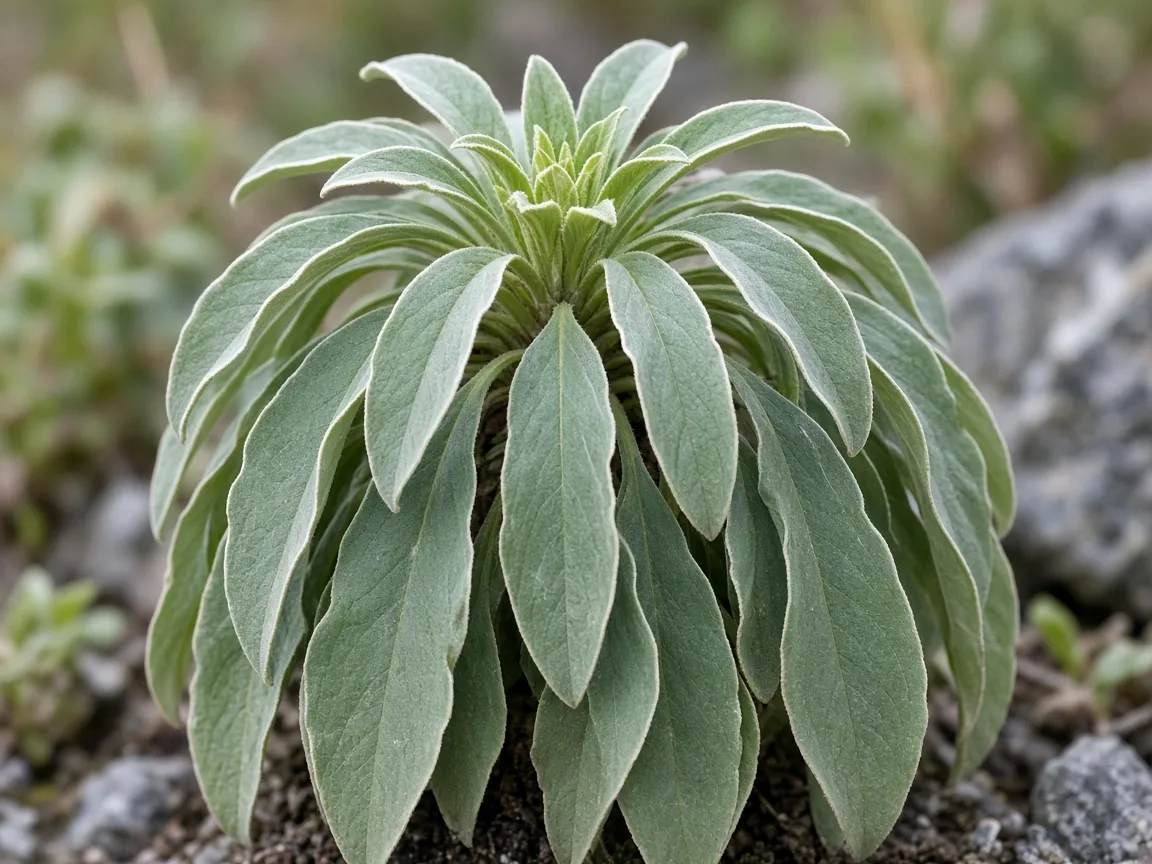
Limp basal leaves around a still-firm crown—common when the surface dried faster than the root ball during warm weather.
Patterns that narrow the cause quickly:
- Basal leaves droop while the crown stays firm and cool — often uneven moisture during active growth, or temporary stress after a move; see the watering guide.
- Droop with heavy pot and glossy wet mix for days — classic overwatering or early oxygen loss in dense compost; alpine crowns rot quickly in warm stagnant soil.
- Limp leaves with light pot and mix pulling from the pot wall — more typical of underwatering during a dry spell, though this species should not be left entirely dry through the growing season.
- Sudden limpness after a hot afternoon in a lowland garden — heat stress combined with transpiration; foliage may recover overnight in cool air if roots were healthy.
- Lower leaf limpness after flowering — can be normal senescence as the plant winds down; do not confuse with rot unless the crown softens.
The flowering stem tells a parallel story. A drooping bract-wrapped flower head on a firm rosette is often mechanical (wind, rain weight) or post-bloom decline, not the same emergency as a soft crown.
Confirm Saussurea—not the night-blooming cactus
Indian nurseries often sell Epiphyllum oxypetalum under the name Brahma Kamal. That tropical orchid cactus has flat leaf-like stems and a very different watering response. If your “drooping” plant is a tall flattened stem, stop here and use tropical epiphyte care; this alpine page will mislead you.
True Brahma Kamal forms a compact basal rosette and upright stems with layered pale bracts around the flower head. The overview walks through label checks before you change moisture or light.
Rosette droop vs bract-wrapped stem lean
Searchers often describe both as “drooping,” but on Saussurea obvallata they mean different stressors.
Basal rosette droop affects the ground-hugging leaves while the crown center still feels firm. Causes are usually root-zone moisture or temperature—too much stagnant water, too little even moisture, or heat forcing water loss faster than cool roots can replace it.
Flower-stem lean is the upright stalk tilting under rain, wind, or the weight of developing bracts. The basal rosette may look fine. Stake or shelter the stem, improve drainage around the pot rim, and avoid soaking the bracts repeatedly—direct irrigation onto alpine foliage invites rot when leaves sit against damp compost.
If the rosette droops and the crown softens and the mix smells sour, treat water stress as urgent rot risk—not stem support.
The shallow dry-down and pot-weight test
Brahma Kamal evolved in alpine meadows that stay moist but drain freely. In a pot, that translates to even root-zone moisture with immediate drainage, not calendar watering.
Use three checks in order:
- Touch the top 1–2 cm away from the crown. A barely dry surface with cool, lightly moist mix below is the usual rewatering window described in the watering guide. Glossy wet surface means wait.
- Lift the pot after you learn its weight freshly watered versus ready to drink again.
- Skewer the edge of the pot. Dark, clinging mix on the wood means the middle is still saturated; clean wood plus a lighter pot confirms it is safe to water if the crown is firm.
Penn State Extension reminds growers that irrigation need shifts with weather, season, soil, and location—especially important when monsoon rain counts as part of the water budget.
Missouri Botanical Garden’s overwatering guidance applies here too: judge moisture deeper than the surface before you assume droop means thirst.
Why Brahma Kamal gets drooping leaves
Wet mix in warm air
Alpines in containers need sharp drainage and restrained watering. Dense peat-heavy mix in a warm room stays saturated while leaves still transpire. Roots lose oxygen, uptake falters, and basal leaves hang limp while the mix feels wet—the same “wet wilt” pattern as overwatering. Heat plus wet soil is especially dangerous for this cold-adapted crown.
Uneven drought during active growth
Unlike succulents, S. obvallata prefers moist soil during growth. If the surface dries completely while you delay watering through cool weather, then a warm day hits, the rosette can droop from low turgor even though the plant is not a “dry completely” species. The fix is restored even moisture, not a desert cycle.
Heat and lowland nights
Grower notes for this species emphasize cool air and protection from sustained tropical heat. When nights stay warm and humidity is high, transpiration can outpace root uptake on a stressed plant. Drooping appears after hot afternoons and may recover if the pot cools and moisture is balanced—see light placement before you drench a firm-crowned plant.
Monsoon and cachepot mistakes
Outdoor pots that receive rain and manual watering often sit wet for weeks. A decorative outer pot without drainage traps the same problem indoors. Move the nursery pot to a rain shadow with open sides for airflow, and align with soil that releases surplus water immediately.
Post-flowering and dormancy shift
After bracts fade, older basal leaves may yellow or droop as growth slows. That is a seasonal rhythm on a slow perennial, not automatic rot—unless the crown softens or the mix stays sour through winter.
How to confirm the cause
Work through this sequence once before you change more than one variable:
| Your observation | Likely cause | First action |
|---|---|---|
| Heavy pot, wet top 1–2 cm, firm crown | Early overwatering stress | Stop water; shelter from rain; check drainage |
| Heavy pot, sour smell, crown yields | Advancing root rot | Stop water; inspect crown same day |
| Light pot, barely dry surface, firm crown | Uneven drought | Water thoroughly; drain fully |
| Droop after heat spike, firm crown, balanced moisture | Heat/transpiration | Cool placement; shade hot afternoon sun |
| Droop on oldest leaves only after bloom | Seasonal dieback | Reduce water gradually; keep crown lightly moist |
| Droop + pests on new growth | Aphids or spider mites | Inspect undersides; treat after confirming pests |
The first fix to try
Lift the pot, test the top 1–2 cm of mix, and feel the crown—then make exactly one correction.
- If the mix is wet and the pot is heavy: stop all irrigation, move the plant out of rain, and empty saucers. Do not repot on day one unless the crown is already soft.
- If the surface has just dried and the pot is light with a firm crown: water until a little drains from the holes, then stop. Do not leave the pot standing in runoff.
- If moisture is balanced but the plant drooped after heat: relocate to cooler bright air and wait overnight before watering again.
Only after the plant responds should you consider repotting into sharper alpine-style mix or adjusting fertilizer—never feed a drooping plant before the root zone makes sense.
Recovery timeline and what improves
Mild drought droop on a firm crown often shows stiffer leaves within 24–48 hours after one well-drained watering in cool weather. Wet-soil stress takes longer: you are waiting for new roots and fresh basal leaves, commonly several cool weeks on this slow species.
Signs you are winning:
- Crown center stays firm when pressed gently
- New basal leaves emerge with normal color
- Pot weight stabilizes between checks without staying heavy for a week
Signs you are losing ground:
- Crown tissue darkens or feels hollow
- Drooping spreads to every leaf while soil stays wet
- New growth fails to open for multiple weeks in cool active-season conditions
Mistakes to avoid
Do not pour water on reflex because leaves look limp—confirm wet versus dry first. Do not move a stressed plant into harsh midday sun or a warm living room with wet soil. Do not repot, divide, prune heavily, and fertilize in the same week. Do not treat every drooping leaf as a pest problem without checking the root zone and recent care changes.
How to prevent drooping next season
Match mix and pot to an alpine: gritty, free-draining, and never waterlogged in winter. Water on inspection, not a calendar. Keep summer placement as cool and bright as your climate allows. After repotting, follow the repotting guide recovery rhythm before expecting firm new leaves.
Related Brahma Kamal guides
- Overview: identity, alpine cycle, and Saussurea vs Epiphyllum confusion
- Watering: shallow dry-down, monsoon logic, and dormancy moisture
- Soil: drainage and moisture retention for Himalayan pots
- Light: cool bright placement and heat protection
- Wilting: whole-plant collapse workflow
- Problems hub: full symptom index
Conclusion
Drooping leaves on Brahma Kamal are a rosette-and-root-zone signal on a cool alpine perennial—not a mysterious leaf blight. Lift the pot, read the top 1–2 cm of mix, and test crown firmness before you pour. Firm crowns with appropriately light pots want even moisture restored; firm crowns with heavy wet pots want drying and drainage; soft crowns want rot rescue. Clean new basal growth at the crown center is the recovery marker; older limp leaves may senesce without harming a healthy geophyte.
Related tool
Use the Plant Problem Diagnosis Tool to narrow causes for drooping leaves on this plant before changing multiple variables at once.