Not Enough Light on Brahma Kamal: Causes, Checks & Fixes
Quick answer
True Brahma Kamal (Saussurea obvallata) needs bright cool light—not a dim living-room corner. A loose rosette, weak flower stems, and stalled summer heads in shade usually mean placement, not fertilizer. First step: move the pot to the brightest cool outdoor spot you have (east or northeast morning sun), without hot afternoon sun or warm stagnant air.
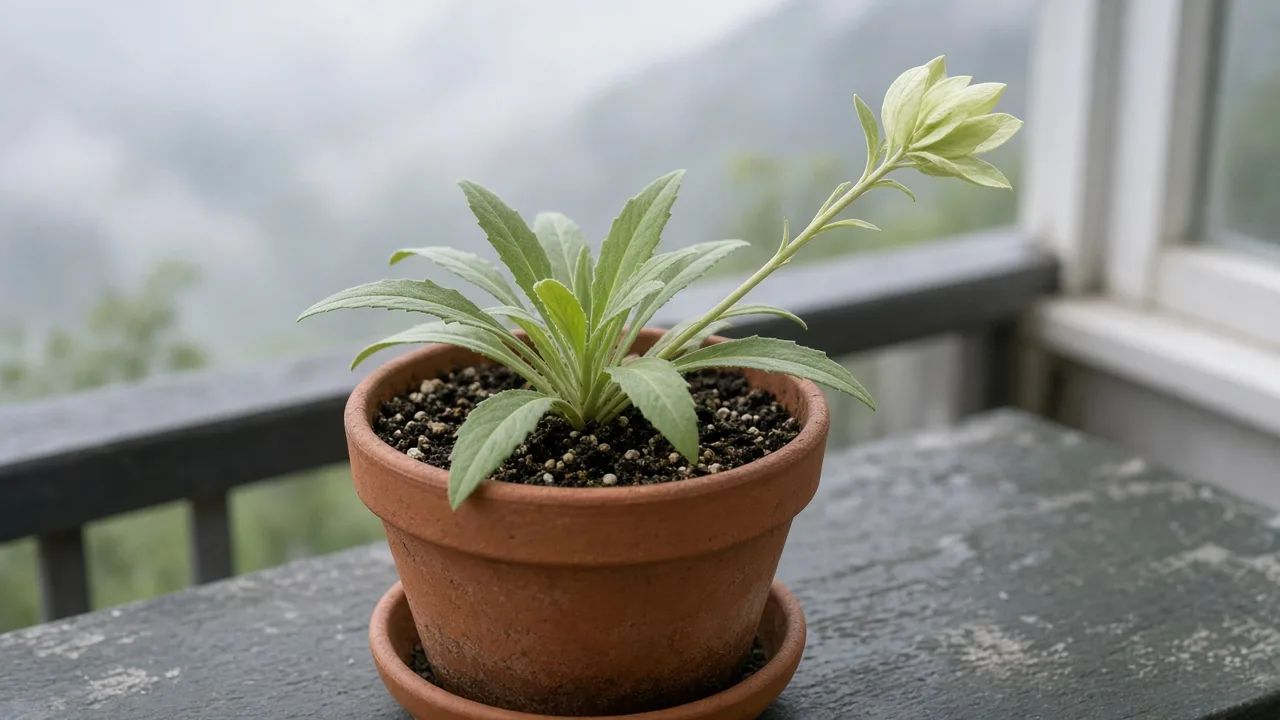
Not Enough Light on Brahma Kamal: Causes, Checks & Fixes
This guide covers not enough light on Brahma Kamal. See also the general Not Enough Light guide, watering, and light pages for this plant.
Not Enough Light on Brahma Kamal: Causes, Checks & Fixes
Quick answer
Brahma Kamal here means the Himalayan alpine Saussurea obvallata—a compact rosette perennial from high meadows—not the flat-stemmed tropical orchid cactus (Epiphyllum oxypetalum) often labeled “Brahma Kamal” in nurseries. True Saussurea needs bright light with cool air. When light is too low (or paired with warm nights), the rosette loosens, leaves pale, flowering stems stretch, and summer heads stall even if you water faithfully.
First step: move the pot to the brightest cool position you can offer—typically full morning sun on an east or northeast balcony, or bright open shade with strong sky light—then wait two weeks before changing anything else. For how weak growth and stretch work on houseplants in general, see our not enough light guide. On Saussurea, the pattern almost always shows up as a flat, reaching rosette in a warm dim room, not as a single crisp brown tip.
When to use this page vs other Brahma Kamal guides
- Brahma Kamal light guide — baseline sun vs shade by temperature, balcony direction, and grow lights
- Leggy growth — when elongated stems are the main complaint after you already know placement is dim
- Slow growth — when the plant is cool and bright but still barely moves (dormancy, roots, or heat)
- Yellow leaves — when yellowing pairs with wet mix, not pale stretch alone
- Overwatering — when soil stays soggy in a dark corner and the crown softens
- Problems hub — full list of Saussurea issues
What not enough light looks like on Brahma Kamal
Low light on Saussurea obvallata is a structure and timing problem: the plant still lives, but it cannot build the tight alpine rosette and short summer stems its wild populations show on grasslands and rocky slopes at high elevation.
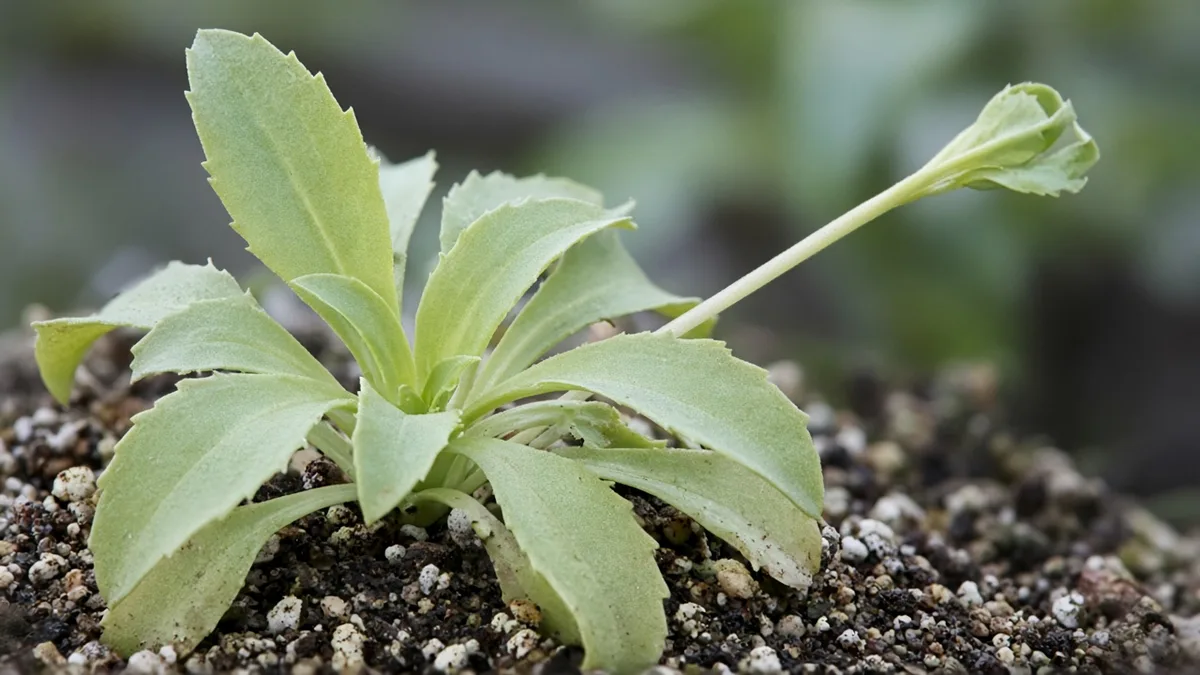
Not enough light on Brahma Kamal — compare internode spacing and leaf color with firmer older leaves lower on the rosette.
Typical signs on true Saussurea:
- New rosette leaves emerge smaller, paler, or farther apart than the previous season’s foliage
- The whole pot leans or reaches toward the brightest window or doorway
- Summer flower heads stay few, late, or undersized; buds may abort after weeks of shade
- Soil dries slowly because photosynthesis dropped, so you water on habit while roots sit cool and wet
- Growth feels “alive but flat” through the active season—no crisp alpine compactness
What low light is not on this species:
- Pale, boat-shaped bracts wrapping the flower head are a normal species feature, not proof of deficiency
- Night-blooming flat stems belong to Epiphyllum—if your “plant” has no basal rosette, stop here and match the label before moving pots
- Crisp brown leaf edges with bone-dry mix point to underwatering in cool air, not shade alone
- Bleached tan patches on one sun-exposed side after a sudden move mean too much hot direct sun—see the light guide for sunburn vs brightness
Why Brahma Kamal gets not enough light
Wild Saussurea obvallata grows in open alpine terrain with intense sky light but cool temperatures. Plants For A Future records it from alpine meadows and slopes at roughly 3,000–4,500 m, tolerating moist soil in sun or semi-shade. That is a very different recipe from a warm interior shelf.
Home situations that push Himalayan Brahma Kamal below usable light include:
Indoor display in a living room. Windows filter light, distance matters, and warm nights keep metabolism high while photosynthesis stays low—stretch and pallor follow. Supplemental lighting principles can help intensity, but they rarely fix warm stagnant air without ventilation.
Deep veranda shade without sky light. Covered south verandas can be darker than they appear. Alpines still want bright exposure; most alpine types prefer plenty of sun when temperatures stay cool.
Monsoon and winter cloud cover. The pot never moved, but months of dull weather mimic chronic shade. Saussurea is slow growing even in good conditions, so seasonal stall is easy to miss until stems lean.
The dim-corner watering trap. In low light the root zone dries slowly. Wet mix plus weak growth invites yellowing and crown stress—often logged as overwatering when the trigger was placement.
Heat plus shade. Saussurea can take sun when nights are cold; warm lowland shade is worse than cool morning sun. Long-term success may still fail in tropical heat even after light improves—honest expectations matter.
How to confirm the cause
Work through these checks before repotting, dividing the crown, or feeding:
- Label check. Confirm Saussurea obvallata on the tag. Orchid cactus mislabels are common; care diverges completely.
- Shadow test at rosette height. At midday, hold your hand above the crown. A soft shadow means some usable light; no shadow in an outdoor spot strongly suggests shade stress. A harsh black shadow on a hot west wall means sunburn risk—step back or use morning sun only.
- Internode spacing. Measure spacing between new rosette leaves or along the last flower stem. Increasing gap over two flushes points to etiolation.
- Lean direction. Consistent tilt toward one opening confirms the plant is actively seeking light.
- Dry-down speed vs growth. If you follow the watering guide but mix stays damp 5–7 days while new leaves stay pale, pair moisture checks with a light upgrade.
- Two-week placement trial. Move to the brightest cool location available; change nothing else. Tighter new leaves or firmer flower stalks within a few weeks support low light as the main limiter.
If bleaching or crisping appears on the sun-facing side after the move, you overshot into hot direct sun—shift to morning sun or bright open shade per the light guide.
First fix for Brahma Kamal
Relocate the pot today to the brightest cool exposure you can sustain—outdoors if possible—with east or northeast morning sun or bright open shade and free air movement.
This single change targets Saussurea physiology without stacking stressors. Practical placements:
- East or northeast balcony — mild direct sun before surfaces heat; ideal for many Indian hill and plain growers in spring and autumn
- Open alpine house or mesh shade house — bright diffused sky light with cool nights
- North-facing window only at high altitude — may work when the rosette sits at the glass and air stays cold; at low elevation it is often still too dim
After moving, pause fertilizer and re-check watering against the new dry-down rate. Brighter cool light usually increases water use; dim warm rooms do the opposite.
If no outdoor cool spot exists, add a full-spectrum LED 12–14 inches above the crown for 12–14 hours daily in a ventilated room, following indoor lighting guidance—but treat this as a bridge, not a full substitute for alpine conditions.
Step-by-step recovery
Once light improves, support recovery in this order:
- Match water to new growth speed. Feel the top 1–2 cm of the alpine mix and lift the pot; water when the surface barely dries while the core stays cool—not on a calendar from the dark corner.
- Protect from hot afternoon sun. Saussurea can use strong light when air is cool; scorch arrives when sun hits a warm pot on a west wall. Use sheer shade or move pots after 11 a.m. in hot lowlands.
- Remove only dead or mushy leaves. Do not strip the rosette bare; the crown needs foliage to recover. Prune spent flower stems after they brown per the pruning guide.
- Hold feed until new growth looks firm. Light, not nitrogen, was the missing input. Resume weak fertilizer only after two to three weeks of improved rosette color.
Recovery timeline
Expect the first sign—tighter, greener rosette leaves—within four to eight weeks after a meaningful cool-light increase during active spring or summer growth. Flower head size may not normalize until the next summer cycle because Saussurea is a slow alpine perennial.
Signs recovery is working:
- New leaves sit closer with better green tone
- Lean stops increasing; rotation evens growth
- Soil dry-down becomes predictable
- Summer stems stay shorter with more normal bud swell
Signs the problem is worsening:
- Yellowing spreads while mix stays wet in the same dim spot
- Crown softens or smells sour—inspect for root rot
- Continued stretch after four weeks in clearly brighter cool air—suspect heat stress, wrong species, or root damage
Lookalike symptoms
| What you see | More likely cause | Quick check |
|---|---|---|
| Pale loose rosette, lean, slow dry-down | Not enough light (this page) | Shadow test; two-week bright cool move |
| Limp leaves, dry mix pulling away | Underwatering | Pot light; crisp edges |
| Yellow leaves, wet mix, sour smell | Overwatering / rot | Crown firmness; drainage |
| Long weak stems only | Leggy growth | Often overlaps—fix light first |
| Almost no growth, cool bright site | Slow growth | Dormancy or heat, not shade |
| Translucent pale bracts around buds | Normal Saussurea flowering | Not a deficiency pattern |
Mistakes to avoid
- Treating orchid cactus as Saussurea. Different plant, different light—verify the label.
- Assuming pale bracts mean “feed me.” Bracts are naturally pale; do not fertilize a shaded rosette on that clue alone.
- Jumping to a huge pot or heavy feed in a warm room. Extra soil stays wet; salts stress a plant that still lacks photons.
- Moving straight to harsh west sun “to fix” stretch. Heat damage can kill an alpine crown faster than shade weakened it.
- Ignoring temperature. Bright light in a hot bedroom often fails even when a grow light is on—cool air matters as much as photons.
Brahma Kamal care cross-check
While correcting light, confirm the alpine baseline from the overview:
- Soil: Moist but fast-draining mix—dense peat in shade rots roots
- Water: Even moisture in active growth; sharp reduction after dieback
- Temperature: Cool days and cold nights when possible; sustained tropical heat limits recovery
- Airflow: Gentle ventilation prevents stagnant humidity around the crown
How to prevent not enough light next time
Choose cool bright placement before décor. A rosette that earns morning sun on a hill balcony outperforms a shaded living-room centerpiece, even with perfect watering.
Plan for monsoon and winter dim spells—shift pots to the brightest safe tier or run supplemental LEDs in a ventilated alpine house. When buying, start new plants in the same exposure tier you can maintain; lowering light after purchase thins the rosette within one season.
Rock-garden culture emphasizes open bright sites with sharp drainage—mirror that brightness even if your pot stays on a balcony.
When to worry
Most Saussurea recover from moderate shade stress once cool light improves. Worry when the crown softens, mix smells sour, or yellowing accelerates in the same wet dim corner—those patterns need root inspection, not another window shuffle.
If the plant has spent multiple warm seasons indoors with continuous stretch, recovery may be partial. Some lowland growers never achieve wild-type compactness; success may mean healthy smaller rosettes and occasional blooms, not textbook Himalayan form.
Related Brahma Kamal guides
- Brahma Kamal overview — species ID and alpine baseline
- Light — sun vs shade by climate
- Watering — dry-down after a brighter move
- Soil — gritty mix that survives bright light without rot
- Leggy growth — stem stretch overlap
- Slow growth — when shade is not the limiter
- Yellow leaves — wet-soil lookalike
- Problems hub — all Saussurea problem pages