Root Rot on Brahma Kamal: Crown Checks & Alpine Rescue
Quick answer
Root rot on true Brahma Kamal (Saussurea obvallata) is crown and rhizome failure from warm, stagnant, waterlogged mix—not normal alpine moisture. First step: stop all watering, move the pot out of monsoon rain, and sniff the drainage holes for sour smell before touching the crown.
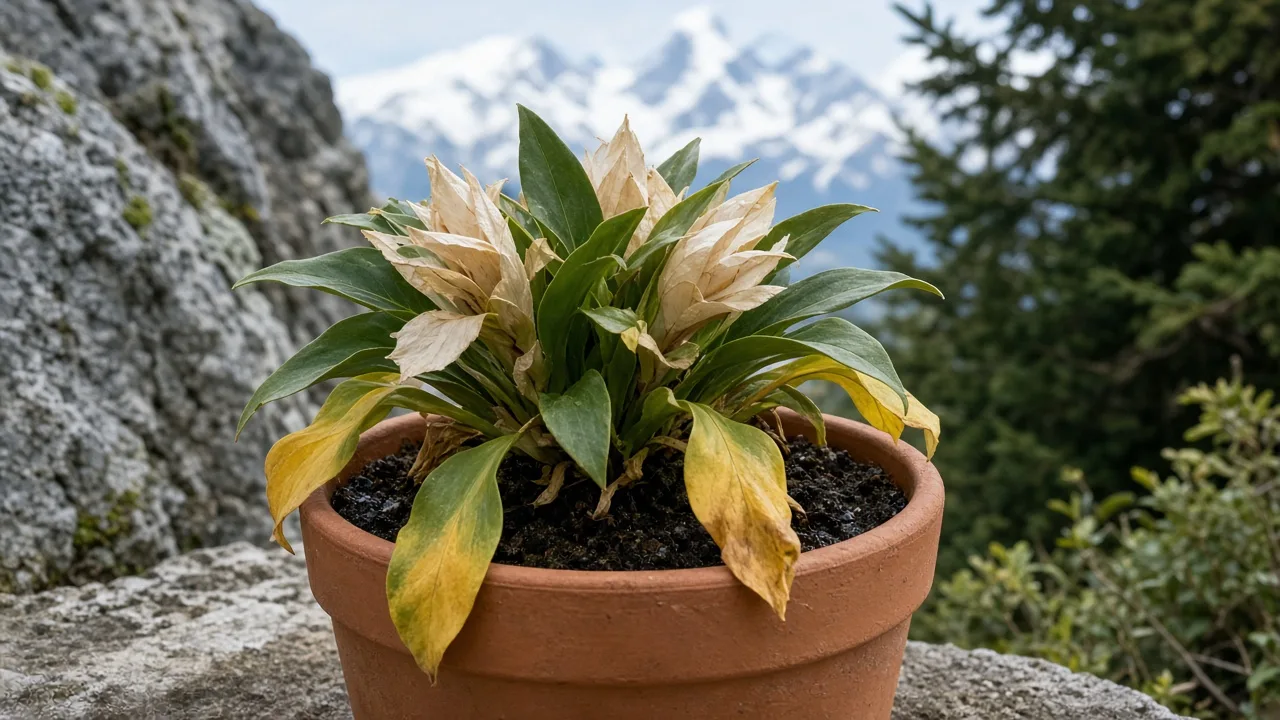
Root Rot on Brahma Kamal: Causes, Checks & Fixes
This guide covers root rot on Brahma Kamal. See also the general Root Rot guide, watering, and light pages for this plant.
Root Rot on Brahma Kamal: Causes, Checks & Fixes
Quick answer
Root rot on Saussurea obvallata—the Himalayan alpine called Brahma Kamal—is rhizome and crown failure from oxygen-starved, stagnant compost, not a mysterious leaf spot on pale bracts. The species evolved in alpine meadows and rocky streamside slopes where moving cold water and grit keep roots aerated. In a warm pot that never dries, water displaces air from soil pores and roots can drown the same way RHS describes for waterlogged alpine compost.
For how chronic wet mix destroys roots in general, see our root rot guide. On true Brahma Kamal, the pattern is a heavy wet pot after monsoon rain or calendar watering, sour smell at drain holes, yellowing basal rosette leaves on damp mix, and—most critically—a soft dark rhizomatous crown while flower bracts may still look intact.
First step: stop all watering and move the pot out of rain or standing runoff. Shelter under eaves or a ventilated alpine house lip, empty saucers, and sniff drainage holes. Soft crown tissue on wet soil means unpot and inspect roots the same day—do not add water, fertilizer, or fresh compost on top first.
When to use this page vs other Brahma Kamal guides
| Pattern | Read next |
|---|---|
| Heavy wet pot, yellow lowers, firm crown | Overwatering — dry-down pause may be enough |
| Soft crown + mushy roots (this page) | Stay here for unpotting and salvage |
| Limp rosette on light dry pot | Underwatering |
| Drooping without confirmed mush | Drooping leaves |
| Whole rosette limp on wet mix | Wilting |
| Gnats + surface mold, firm crown | Fungus gnats or mold on soil |
| Yellow-green soft leaves before collapse | Yellow leaves |
This page is the symptom-first entry when you suspect decay in the root zone of a labeled Saussurea obvallata. If your plant is the flat-stemmed night-blooming cactus sold as Brahma Kamal in many Indian nurseries, use cactus-epiphyte guides instead—the overview explains how to tell them apart.
What root rot looks like on Brahma Kamal
True Brahma Kamal forms a compact basal rosette and short flowering stems wrapped in pale, papery bracts—Kew lists it as a perennial or rhizomatous geophyte, not a succulent stem. Root rot hides in the rhizome while upper bracts still look presentable, until several rosette leaves yellow or wilt at once on soil that refuses to dry.
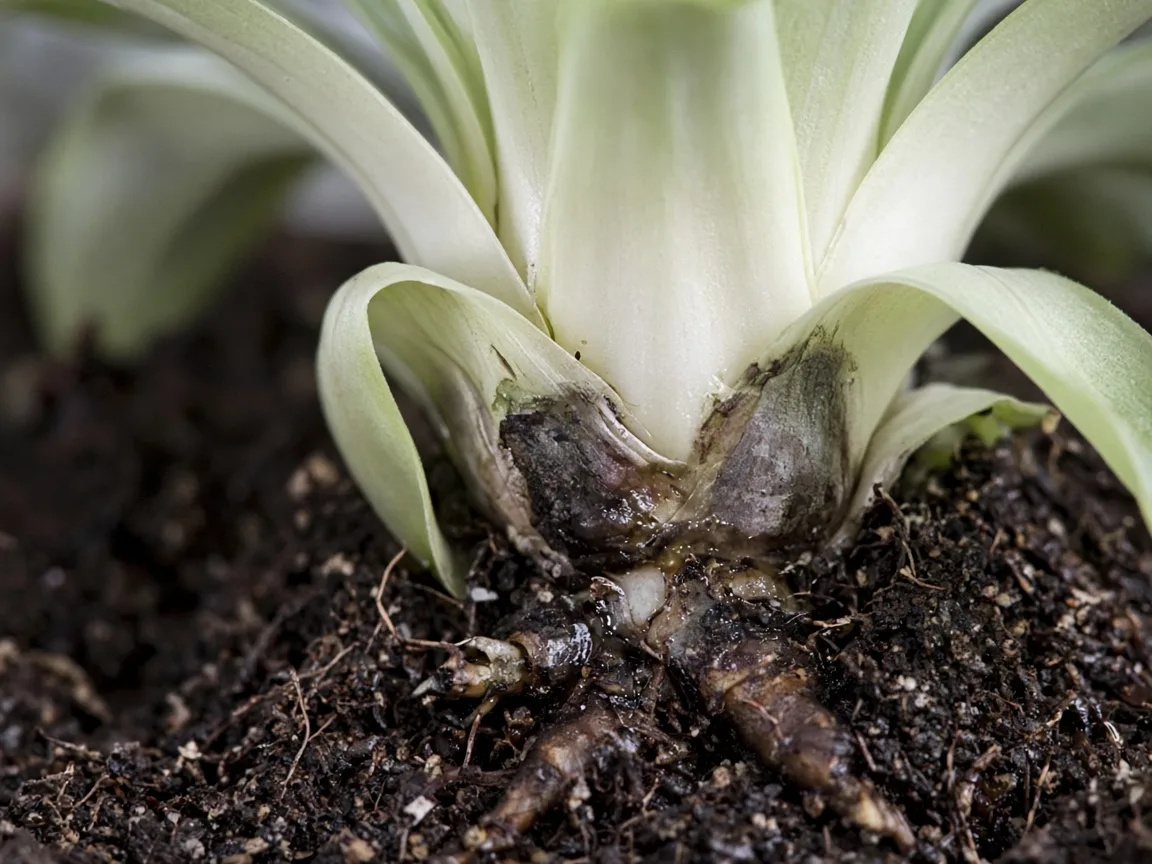
Root rot at the Saussurea crown—darkened soft tissue where the rhizome meets damp alpine mix, with lower bracts and leaves beginning to yellow.
Early signs (roots failing, rosette still upright)
- Heavy pot days after rain or watering; top 1–2 cm of mix never loses its wet sheen in humid weather
- Sour or rotten smell when you tilt the container toward a drainage hole
- Yellow lower rosette leaves that feel soft, not crispy, on damp compost
- Stalled spring shoots or flower-head development despite wet soil—see also slow growth when light is adequate
- Fungus gnats over persistently wet surface mix
- Gentle edge probe reveals brown, mushy, or translucent roots while the crown still feels mostly firm
Advanced signs (crown rot)
- Soft, dark, or collapsing crown where leaves and bracts meet the soil—alpine growers use grit top-dress partly to keep this neck dry for the same reason RHS recommends grit to prevent rot
- Wilt paradox—limp foliage despite wet mix because damaged roots cannot move water
- Several outer leaves collapse together after warm nights plus monsoon soaking
- Mush climbing into the base of bract-wrapped stems meant to bloom in late summer
- White healthy-looking tips above a failing crown—a common trap on slow alpine perennials
One aging outer leaf is not automatically root rot. Root rot adds wet mix + sour smell + progressive yellowing + crown softening to that picture.
Monsoon heat vs alpine moisture (why this plant rots in “good” care)
Brahma Kamal care sounds contradictory until you separate moist from stagnant. PFAF notes the species prefers moist soil in its native range, and your watering guide targets even moisture during active growth. That is not permission for a water-filled pot: streamside alpine grit receives oxygen and cold runoff; dense peat in a warm balcony does not.
Colorado State Extension is blunt that plants fail in soil that is continually waterlogged because pores fill with water and deplete oxygen to the roots. WVU Extension ties blocked drainage holes and waterlogging directly to root rot in containers. On Saussurea, the dangerous combo is monsoon rain plus warm nights—evaporation slows, the crown stays cool and wet, and fungi attack the rhizome first.
Trusted grower guides echo the same moisture trap: check 3–5 cm deep before watering and treat overwatering or waterlogging as root-rot risk, especially when low light slows drying.
Crown-first triage on a rhizomatous rosette
Before you repot, map where the living tissue actually is.
- Identify the crown—the tight junction where pale bracts and rosette leaves emerge from soil. Decay usually starts here, not at the tips.
- Press gently in a ring 1 cm above and below the soil line. Rot often hides on the side that sat against a wet saucer or north-facing wall with poor airflow.
- Sniff drain holes before unpotting. Sour anaerobic smell confirms you need to see roots today.
- Note season. Active spring and monsoon growth tolerates more moisture than a dormant crown after foliage dies back—see watering seasonal changes before assuming rot during a deliberate dry rest.
- Photograph bract condition so you can compare after rescue; bracts do not re-tighten once soaked and infected.
If the crown is still firm and only roots at the outer edge are mush, you may avoid full crown surgery. If the crown yields under gentle pressure, treat it as crown rot, not a light overwatering pause.
How to confirm root rot (without guessing)
Work through these checks in order:
| Check | Root rot likely | Points elsewhere |
|---|---|---|
| Pot weight days after rain/water | Stays heavy | Light—consider underwatering |
| Drain-hole smell | Sour, rotten | Neutral earthy |
| Crown press on wet mix | Soft or dark | Firm |
| Skewer to pot edge | Dark, clinging wet mix throughout | Damp core but surface dry—may be OK alpine moisture |
| Unpot roots | Brown mush, outer sheath slips off | White/cream, firm, with fine root hairs |
| New growth | None or blackened shoot tips | Firm pale shoots after dry-down |
Do not trust leaf colour alone. Alpine rosettes can yellow from heat stress or not enough light as well—but those usually come with lighter pots or dry mix, not sour wet compost.
The first fix to try
Stop water input and break the wet cycle. Move the pot out of rain, empty saucers and cachepots, and improve airflow around the crown without blasting hot afternoon sun. That single step prevents new decay while you plan inspection.
If smell is sour or the crown is soft, unpot the same day onto newspaper in cool shade. Rinse only enough to see roots—avoid soaking the crown in a bucket. Trim only mushy roots with clean scissors; keep every firm white segment. Let cut surfaces air-dry 30–60 minutes before repotting into the alpine mix from the soil guide—never dense indoor peat alone.
Hold fertilizer until new growth looks stable for several weeks. Stressed Saussurea does not need feed while roots are regrowing.
Step-by-step recovery by severity
Mild: firm crown, limited mushy roots
- Trim decayed root tips; leave the rhizome intact.
- Repot into the same or slightly smaller pot with fresh gritty mix—see repotting for timing in early spring when possible.
- Water once lightly to settle mix, then wait until the top 1–2 cm barely dries before the next drink.
- Top-dress with horticultural grit to keep the crown off damp compost, matching RHS alpine container practice.
Moderate: soft crown patch, some firm interior
- Unpot and wash away failing outer root sheaths.
- Cut back to firm white tissue; dust cuts with cinnamon or let air-dry—skip fungicide unless you already use it on other alpines.
- Repot with the crown slightly raised on a mound of grit so the neck drains faster.
- Remove badly soaked bracts that trap moisture against stem bases.
Severe: crown collapses or mush through the rosette
- If any firm side offsets or healthy bud scales remain on the rhizome, isolate them into small gritty pots.
- Discard the rotten centre—it will not re-firm.
- Do not compost infected mix indoors; bag and trash it to avoid gnats spreading to other pots.
- Accept that bract-wrapped flowering stems may be lost for the season; recovery is a vegetative rosette year.
Recovery timeline and what “better” looks like
Saussurea is slow. After rescue:
- Week 1–2: No new yellowing; crown feels firmer; sour smell fades
- Weeks 3–6: Pale tight bud scales or new rosette leaves if conditions stay cool and airy
- Rest of season: Gradual return to the moisture rhythm in watering—not the schedule that caused rot
Yellowed leaves will not green up fully. Success means no further wilting, firm crown, and new growth from the centre or offsets.
Worsening signs: blackening crown, leaves pulling off with a tug, gnats increasing, or mold returning within days on unchanged habits—revisit mold on soil and drainage.
Lookalike symptoms on Brahma Kamal
| Symptom | Often mistaken for rot | How to tell |
|---|---|---|
| Crisp brown leaf edges | Crown rot | Edges dry; pot light; crown firm |
| Limp rosette after heat spike | Rot | Mix may be dry; crown firm |
| Night-blooming cactus stem mush | Saussurea rot | Flat leaf-like stems, not rosette |
| Normal post-bloom dieback | Rot | Planned dormancy; mix drying down |
| Salt or fertilizer burn | Rot | Crisp tips; surface crust; see fertilizer |
Mistakes that turn rescue into loss
- Watering “to cheer it up” when leaves wilt on already wet mix
- Repotting into heavier peat because alpine mix “dried too fast”
- Keeping a cachepot full of runoff after monsoon storms
- Growing true Saussurea indoors with warm nights while soil stays cool and wet
- Confusing Epiphyllum oxypetalum and applying cactus dry-down to an alpine rosette—or vice versa
- Fertilizing before roots are firm and new growth appears
Prevention tied to Brahma Kamal care
- Build and maintain sharp alpine mix with grit, bark, and modest organic matter—not water-retentive tropical potting soil.
- Water when the top 1–2 cm just begins to dry, then drain fully; never let outer pots trap water.
- Shelter pots during multi-day monsoon soak while keeping sides ventilated.
- Reduce moisture sharply after foliage dies back; dormant crowns want lightly moist, not wet.
- Repot before mix collapses sour—see repotting every few years or when drainage fails.
- Browse the full problems hub when symptoms overlap.
Related Brahma Kamal guides
- Overview — confirm Saussurea obvallata vs night-blooming cactus
- Watering — moisture without stagnation
- Soil — gritty alpine mix and drainage tests
- Overwatering — early wet-pot correction before mush
- Repotting — when to refresh mix after rot rescue
Conclusion
Root rot on Brahma Kamal is a rhizome and crown crisis on a cold-adapted alpine that still needs moisture—but never warm, stagnant soup around its neck. Stop water, shelter from monsoon soak, and unpot when sour smell or soft crown tissue confirms failure. Necrotic rosette leaves will not perfect themselves; judge recovery by a firm crown and tight new growth. Match watering to how your cool, ventilated pot actually dries, and keep the crown on grit, not damp peat.
Related tool
Use the Root Rot Risk Checker to narrow causes for root rot on this plant before changing multiple variables at once.