Fungus Gnats on Brahma Kamal: Moisture Checks & Fixes
Quick answer
Fungus gnats on true Brahma Kamal (Saussurea obvallata) almost always mean the top of your alpine mix stays damp for days—often from monsoon-style watering, warm indoor nights, or dense peat in a cool-climate plant. First step: set a yellow sticky trap at the soil line and press a raw potato chunk cut-side down for 48 hours to confirm larvae, then let only the top 1–2 cm dry before the next drink while keeping the rhizome crown ventilated.
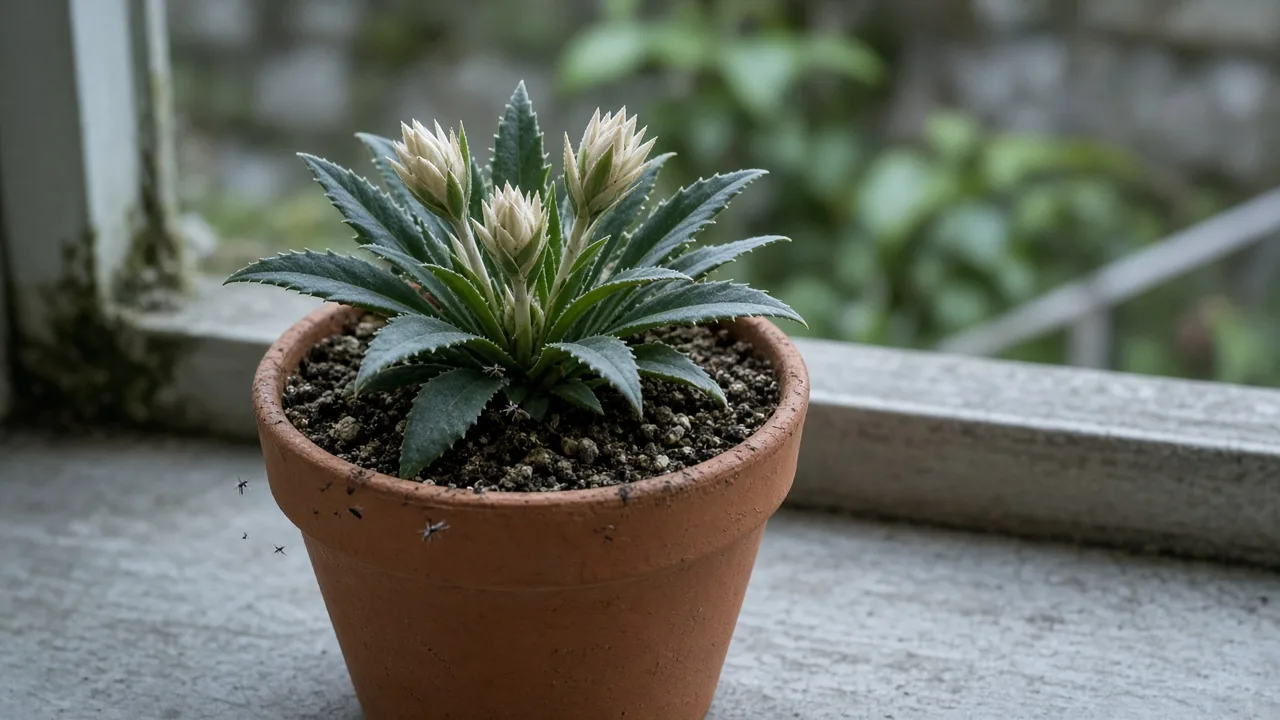
Fungus Gnats on Brahma Kamal: Causes, Checks & Fixes
This guide covers fungus gnats on Brahma Kamal. See also the general Fungus Gnats guide, watering, and light pages for this plant.
Fungus Gnats on Brahma Kamal: Causes, Checks & Fixes
Quick answer
Fungus gnats on Saussurea obvallata are almost always a surface-moisture and mix problem at the pot, not insects attacking the pale bracted flower heads. True Brahma Kamal needs evenly cool, moist roots during active growth—but when warm room air slows evaporation, the top layer can stay damp long enough for females to lay eggs in moist organic debris or potting mix and for larvae to feed on fungi, decaying matter, and fine roots.
For how fungus gnats behave in wet potting media in general, see our fungus gnats hub. On Brahma Kamal, the useful clues are flies at the rim of a rosette pot, a dark damp surface that never lightens between drinks, monsoon-style watering in warm nights, and confusion with the tropical orchid cactus also sold as “Brahma Kamal”—not chewed bracts or toothed rosette leaves.
First step: set a yellow sticky trap at the soil line and press a raw potato chunk cut-side down for 48 hours to confirm larvae. Make that one correction before repotting, systemic drenches, or fogging the room.
When to use this page vs other Brahma Kamal guides
Use this page when you see tiny flying insects rising from the pot of a compact alpine rosette. Start with watering and soil if the surface stays wet but you have no flies yet—that pattern may lead to overwatering or root rot without a visible gnat swarm. Choose mold on soil when you see surface fuzz or slime trails but no adult flies. Return to the problems hub if symptoms do not match gnats after a week of moisture correction.
What fungus gnats look like on Brahma Kamal
Fungus gnats are small, mosquito-like flies about 1/8 inch long with long legs and antennae. They are weak fliers that stay near pots rather than cruising the whole room.
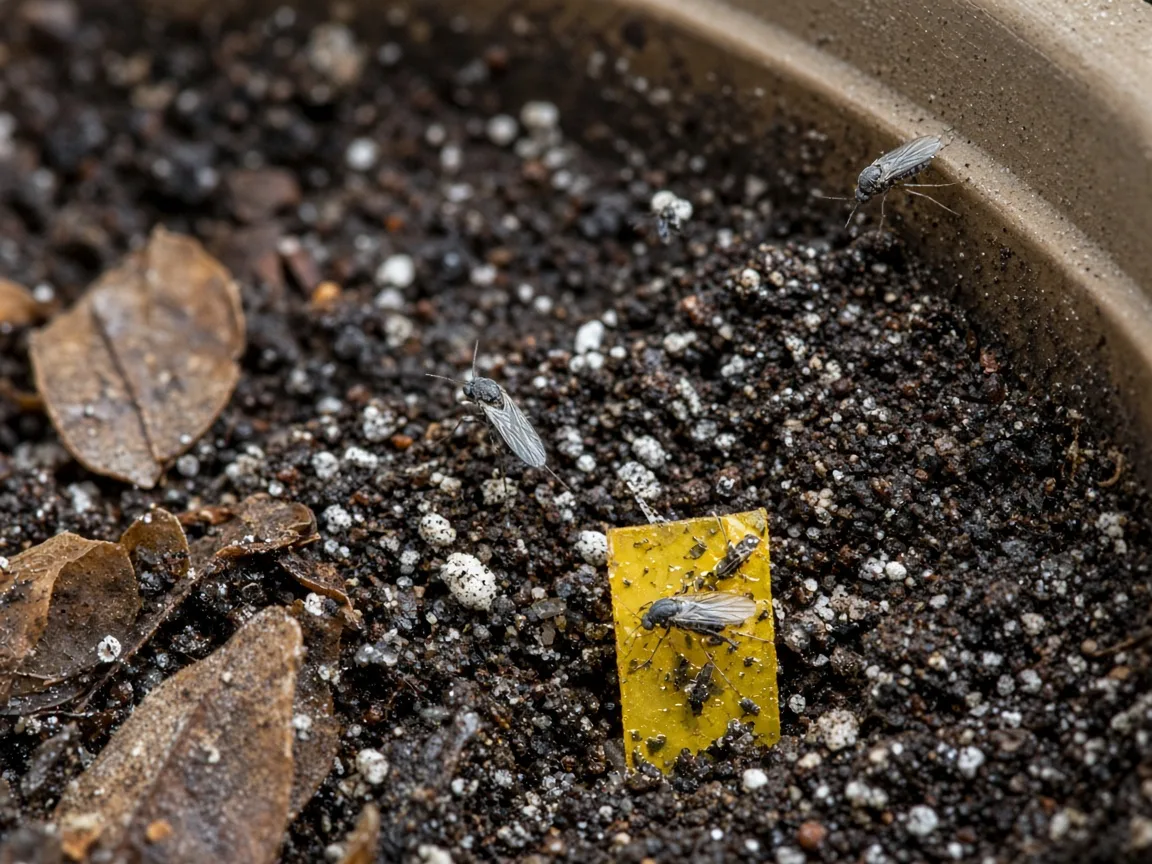
Fungus gnat adults at the soil surface of an alpine mix—compare with healthy, dry-looking grit on the same pot between waterings.
Typical signs around a Brahma Kamal pot:
- Small dark flies rise when you water or disturb the mix near the basal rosette
- Adults rest on damp soil, pot rims, and nearby cool windows where you keep the plant
- Yellow sticky traps at soil level catch many tiny gnat-like insects within 48 hours
- The top 1–2 cm of gritty alpine mix stays visibly dark and cool-damp for days after watering
- Fine translucent larvae may appear under a potato test wedge placed on the surface
What you usually will not see on healthy Brahma Kamal:
- Stippling or webbing on toothed rosette leaves (that points to spider mites in dry warm air)
- Cottony clusters in leaf axils (mealybugs)
- Chewing on enclosed summer flower bracts from gnat feeding alone—larvae primarily feed on fungi and organic matter in soil, with root chewing more serious when populations are high on young or stressed plants
On this species, the flies are an early warning that surface moisture is out of step with cool alpine culture, especially when nights are warm and the crown sits in stagnant wet mix.
Why Brahma Kamal pots breed fungus gnats
Fungus gnat larvae need moist, organic-rich topsoil. Adults are highly attracted to moist growing media, and as mix ages it often holds more surface water—exactly when cooler weather and shorter days slow plant water use but owners keep the same watering calendar.
Brahma Kamal–specific triggers:
- “Always moist” interpreted as constantly wet surface. Saussurea obvallata wants the root zone evenly moist with the surface just beginning to dry—not a permanently dark, soggy top layer. Warm indoor air can leave that layer wet for days while deeper mix still feels appropriate, which breeds gnats without helping the plant.
- Monsoon-style watering on a cold-adapted crown. Outdoor growers in humid summer may water through warm rain while the rosette crown stays enclosed and wet—a combination that favors fungi, algae, and gnat larvae at the soil line and raises crown rot risk far more than the flies themselves.
- Peat-heavy or degraded mix in a small alpine pot. Standard bagged houseplant soil retains moisture this species does not need in the upper profile. Allow the surface of container soil to dry between waterings while keeping the deeper root zone cool-moist—not bone dry.
- Growing the wrong “Brahma Kamal.” Epiphyllum oxypetalum, the tropical orchid cactus, shares the common name but wants different drainage. Gnats on a flat-stemmed cactus in warm peat are a different care mismatch; confirm the label says Saussurea obvallata on the overview before you copy alpine watering advice.
- Oversized pots after repotting enthusiasm. Extra wet soil volume around a slow rhizome keeps the surface damp long after the crown has drunk what it needs—common after repotting into a much larger container.
- Dormancy overlap. Continuing summer watering frequency as foliage dies back leaves surface mix wet in a pot that is barely transpiring—prime gnat habitat through winter unless you reduce drinks per the watering guide.
The nuance for this plant: you cannot fix gnats by drying the entire pot for weeks like a ZZ or cactus. You can break the larval cycle by drying only the top 1–2 cm on schedule while preserving cool root-zone moisture below.
How to confirm fungus gnats (and rule out lookalikes)
Work through these checks before buying treatments:
- Flight trigger — Disturb or water the pot. Fungus gnats emerge from mix at the rosette base; fruit flies hover near kitchens and ripening produce.
- Sticky trap test — Yellow sticky traps at soil level for 48 hours. Dozens of tiny flies confirm active adults laying eggs in that pot.
- Potato wedge — Insert 1/4 inch slices or wedges of raw potato cut-side down on the mix. Larvae migrate within a few days; check the underside for translucent worms with dark heads.
- Surface dry-down — If the top 1–2 cm are still cool-damp three to five days after watering in a warm room, habitat—not bad luck—is sustaining the infestation.
- Crown and rhizome firmness — Gently brush back a lower leaf and feel the crown at soil line. Firm tissue and no sour smell mean you caught a moisture habit early. Soft, dark crown tissue with gnats means escalate toward root-zone triage, not traps alone.
- Identity check — Compact toothed rosette and short bracted stems confirm Saussurea; flat succulent stems mean you need orchid-cactus culture instead.
| What you see | Likely cause | Next page |
|---|---|---|
| Flies from pot + damp surface | Fungus gnats | This guide |
| White or gray fuzz, no flies | Mold / algae on wet surface | Mold on soil |
| Yellow rosette leaves, sour wet mix | Chronic wet roots | Overwatering |
| Soft crown, blackened base | Crown or root decay | Root rot |
| Limp rosette, dry lightweight pot | Underwatering | Underwatering |
First fix for Brahma Kamal
Place a yellow sticky trap at the soil line and press a raw potato chunk cut-side down on the mix for 48 hours to confirm larvae.
While the potato test runs, pause the next scheduled watering until the top 1–2 cm pass your dry fingertip test—the same surface check described in the watering guide. Deeper mix should still feel cool and slightly moist for an active rosette; you are shortening the wet window at the surface, not drought-stressing the rhizome.
Empty saucers and cachepots so no water wicks back into the profile. If the plant sits in a warm room, move it to a cooler, brighter spot with good air movement around the crown—not enough light slows water use and extends surface dampness.
Do not repot on day one, drench with hydrogen peroxide, or fog the room before you know larvae are in this pot and whether the surface dry-down rhythm is wrong.
Step-by-step recovery if gnats persist
After one corrected dry-down cycle at the surface, add controls in this order:
1. Align watering with alpine rhythm
Water when the surface just begins to dry, then soak until a little water exits drainage holes and discard runoff. In active spring and summer growth, that may be every two to three days in cool outdoor conditions; in a warm flat it may be less often than you expect. During winter dormancy, keep the crown lightly moist and reduce frequency so the top layer is not constantly dark.
2. Keep using sticky traps
Replace traps when coated. Traps reduce egg-laying adults and show trend lines—they do not reach larvae in mix.
3. Apply Bti for stubborn larvae
Bacillus thuringiensis subspecies israelensis (Bti)—in products such as Mosquito Bits or Gnatrol—targets fungus gnat larvae in moist soil. Apply as a labeled soil drench. Bti does not persist indoors, so repeat applications at about five-day intervals until trap counts fall.
4. Improve mix or pot only if the surface never dries
If the top 1–2 cm stay damp more than a week after one thorough watering, the mix or container is too water-retentive. Repot into alpine-style grit and bark blend with open drainage, confirm holes are clear, and avoid jumping more than one pot size. Repotting is a secondary fix once moisture rhythm is understood—not day-one surgery for gnats alone.
5. Shelter the crown during wet weather
Outdoors, tilt pots slightly for runoff, move plants under eaves during warm monsoon bursts, and keep bracts from sitting in pooled water. Gnats and crown pathogens both favor stagnant wetness against the rosette heart.
Recovery timeline
Sticky-trap counts often drop within one to two weeks once the top layer dries reliably between drinks. Larval Bti cycles need roughly three to four weeks to cover overlapping generations at room temperature. Judge success by fewer flies on traps, surface mix lightening between waterings, and firm new spring rosette growth—not by older leaves changing color. Badly damaged crown tissue does not “green up” again; recovery means stable new shoots and no spreading softness.
Mistakes to avoid
Do not bone-dry an active Saussurea rosette to kill gnats—the species tolerates brief surface dry spells, not prolonged drought in warm growth season.
Do not interpret gnats as a call to fertilize; stressed crowns need stable moisture and light, not feed pushes.
Do not aerially fog indoors or spray adults in flight—target larvae in mix and adults on traps.
Do not ignore identity: orchid-cactus culture on true Brahma Kamal (or the reverse) keeps the wrong moisture profile and the gnats return.
How to prevent fungus gnats next time
Use fast-draining alpine mix with mineral grit and a stable pot only one size larger than the rhizome mass.
Match watering to season and placement—cool outdoor benches dry differently than warm rooms; see light placement notes.
Empty saucers immediately after every soak.
Quarantine new plants for two weeks before placing them beside established rosettes.
Scout the soil line weekly during spring shoot emergence.
Remove decaying old leaves and spent flower stems from the pot surface so larvae lose easy organic food.
When to worry
A few fungus gnats on a firm Brahma Kamal with correctable surface moisture are common in mixed collections and rarely threaten a mature rosette once the top layer dries on schedule.
Escalate when the crown softens at soil line, several rosette leaves yellow while mix stays wet, larvae remain abundant on potato tests after three corrected dry-down cycles, or flies persist while the surface never lightens—those patterns overlap root rot and need root-zone triage, not another sticky trap alone.
Related Brahma Kamal guides
- Overview — true Saussurea obvallata vs lookalike orchid cactus
- Watering — surface dry-down without drought stress
- Soil — gritty alpine mix that drains yet holds cool moisture
- Overwatering — when wet mix damages the crown
- Mold on soil — surface growth without flying adults
- Root rot — soft rhizome and sour mix
- Problems hub — full symptom index
Conclusion
Fungus gnats on Brahma Kamal are a surface-moisture signal for an alpine rosette—not a separate Himalayan pest. Confirm larvae with a potato wedge, dry the top 1–2 cm before the next drink while keeping the root zone appropriately cool-moist, and trap adults while you align watering with seasonal growth. Firm crown tissue and falling trap counts mark recovery; persistent wet mix with a soft base means root problems, not flies alone.
Related tool
Use the Plant Problem Diagnosis Tool to narrow causes for fungus gnats on this plant before changing multiple variables at once.