Low Humidity on Brahma Kamal: Causes, Checks & Fixes
Quick answer
True Brahma Kamal (Saussurea obvallata) grows in cool alpine meadows with moist roots—not steamy indoor air. Crisp rosette edges, stalled flower heads, or limp leaves in a warm dry room usually mean heat plus dry air or underwatering, not a missing humidifier. First step: move the pot to the coolest bright sheltered spot you have and confirm the top 1–2 cm of mix is lightly moist before misting or repotting.
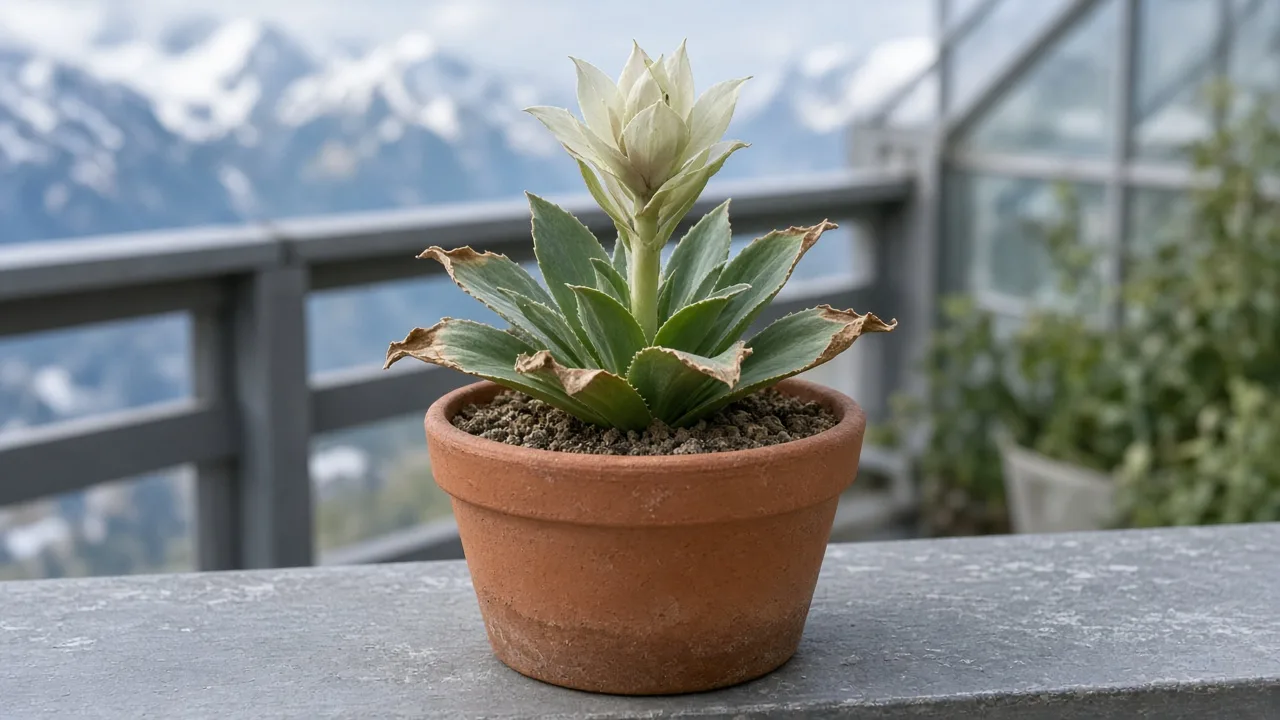
Low Humidity on Brahma Kamal: Causes, Checks & Fixes
This guide covers low humidity on Brahma Kamal. See also the general Low Humidity guide, watering, and light pages for this plant.
Low Humidity on Brahma Kamal: Causes, Checks & Fixes
Quick answer
True Brahma Kamal (Saussurea obvallata) is a rhizomatous alpine perennial from Himalayan meadows at roughly 3,000–4,500 m, where cool air and moist but free-draining soil work together. Species records describe alpine meadows and stream margins with moist soil—not the steamy bathroom conditions tropical foliage plants need.
For how dry winter air crisp leaf edges on houseplants in general, see our low humidity hub. On Brahma Kamal, “low humidity” almost always means hot dry air on an alpine crown, or drought in the root zone—not a missing room humidifier like a calathea would need.
First step: move the pot to the coolest bright sheltered position available (morning sun, afternoon shade, open airflow) and check whether the top 1–2 cm of mix is lightly moist. Do not mist the crown or run a humidifier in a warm room until heat and watering are ruled out.
When to use this page vs other Brahma Kamal guides
- Underwatering — use when the pot feels very light, mix pulls away from the sides, and limp leaves return after a deep soak
- Brown tips — use when tan crispy margins are the main pattern after heat, hard water, or fertilizer salts
- Wilting or drooping leaves — use when foliage collapses while the mix stays wet (root stress) or after sudden heat
- Leggy growth — use when stems stretch toward light; weak growth in shade is not fixed by humidifying
- Spider mites — use when dry air coincides with stippling on rosette undersides in a hot window
- Watering and light — use before assuming room humidity is the limiting factor
What low humidity looks like on Brahma Kamal
Alpine Saussurea does not show the classic “crispy fern frond” pattern. Watch the basal rosette, short flowering stems, and pale bracts that enclose the bud.
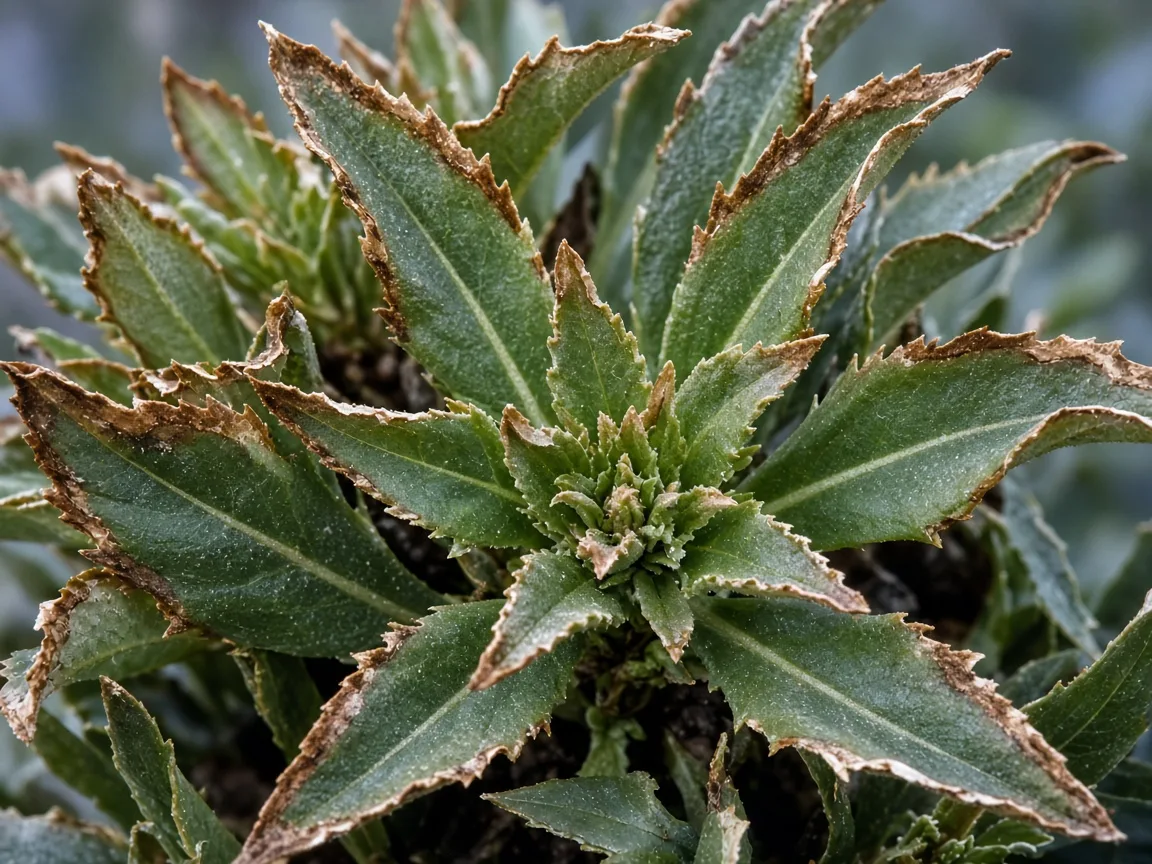
Low humidity on Brahma Kamal—crisp brown margins on toothed rosette leaves while the crown stays firm; compare with healthy inner leaves.
Typical signs when dry warm air is involved:
- Crisp brown edges on outer rosette leaves, often worse on the side facing sunny glass or a heat vent
- Dull, slightly limp foliage in cool weather even though the mix is not waterlogged
- Stalled or shriveled flower bracts on upright stems while roots are otherwise healthy
- Mix drying faster than expected on a windy balcony or beside unglazed terracotta in dry winter spells
- Fine stippling on leaf undersides in the same hot dry micro-climate—mite overlap, not humidity tolerance alone
Usually not low humidity:
- Yellowing leaves with a heavy, wet pot — overwatering or root rot
- Long soft stems leaning to one window — not enough light
- Natural autumn dieback after flowering — seasonal dormancy per the overview, not dry air
Bract-wrapped flower heads: a symptom calatheas never show
Brahma Kamal develops upright stems with translucent involucral bracts that protect the flower head in exposed alpine sites. In cultivation, those bracts should stay pale and slightly moist-looking through bud development.
When warm dry air pulls water faster than roots replace it, growers often see:
- Bracts turning papery brown while the rosette still looks partly green
- Buds aborting on short stems after a heat wave on a lowland balcony
- Outer rosette leaves crisping at the same time as bract damage
That combination is specific to this species’ flowering architecture. A tropical houseplant with plain leaves will not give you the same bract-first clue. If bracts fail while the mix is soggy, switch to drainage and crown aeration—not a humidifier.
Monsoon humidity vs heated dry balconies
Indian growers often keep S. obvallata outdoors through the monsoon, then move pots to heated rooms or dry winter terraces. The stress flip is environmental:
| Season / placement | What changes | What you may see |
|---|---|---|
| Cool monsoon shelter, open airflow | High ambient moisture, moderate temperatures | Steady rosette growth if drainage holds |
| Pre-monsoon heat on a west-facing wall | Hot dry wind + strong sun | Crisp leaf margins, fast-drying mix |
| Warm living room with heating | Low RH beside vents, warm nights | Limp leaves, stalled buds despite “humid” rainy season memory |
| Sealed propagator or misted dome | Warm wet air around crown | Crown rot risk—opposite of alpine ventilation needs |
RHS alpine container guidance stresses sharp drainage and ventilation for potted alpines. S. obvallata also needs moist root zones, so the goal is cool airy placement with even soil moisture—not a steamy enclosure.
Why Brahma Kamal struggles with warm dry air
Cool-alpine physiology. Kew classifies the species in subalpine or subarctic biomes. It evolved with cool days, cold nights, and consistent root moisture—not sustained tropical heat.
Transpiration outruns roots in heat. When summer days stay warm indoors or on a lowland terrace, leaves lose water quickly even at moderate humidity. Penn State Extension notes that heated winter air is often much drier than greenhouse air and that humidity and temperature interact for houseplants. For Brahma Kamal, heat is usually the bigger lever than RH percentage alone.
Not Epiphyllum oxypetalum. The orchid cactus sold as “Brahma Kamal” in many nurseries wants warm humid tropical air. Mistaking the two species sends you toward the wrong fix. Confirm Saussurea on the label via the Brahma Kamal overview before humidifying.
Spider mites in dry hot pockets. Colorado State Extension reports dry weather greatly favors spider mites on indoor plants. A rosette tucked against sunny glass in winter matches that habitat—see spider mites on Brahma Kamal if stippling appears.
The crown firmness check (rhizome rosette, not succulent stems)
On succulents you pinch stem ridges. On Brahma Kamal you assess the central crown and rhizome:
- Gently press the crown center with a clean finger. Firm, cool tissue suggests the plant is hydrated enough at the root zone.
- Lift the pot. A very light container plus crisp leaves points to underwatering before low humidity.
- Smell the mix surface. Sour odor or soft dark crown tissue means wet anaerobic stress—never humidify over that.
- Watch spring shoots. New compact leaves from the crown confirm recovery; bracts on the next stem should enlarge smoothly.
Soft, collapsing crown tissue is an emergency drainage problem, not a humidity tweak.
How to confirm the cause
Work through checks in this order:
- Species ID — rosette + bracted stems = Saussurea; flat cactus stems = wrong guide.
- Temperature at the pot — note hot afternoon sun, radiator proximity, and night warmth.
- Hygrometer at rosette height for several days—pair readings with how fast the top 1–2 cm dries.
- Pot weight and skewer test — bone-dry mix overrides humidity theory.
- Bract and bud condition on any flowering stems.
- Leaf undersides for mite stippling or webbing.
If the plant sits in a cool alpine house with moist mix and firm crown tissue, low humidity is unlikely to be your main problem.
First fix for Brahma Kamal
Relocate before you humidify. Move the pot to the coolest bright site you can offer: morning sun, afternoon shade, protection from drying wind, and no direct blast from AC or heating vents. That single placement change often stops margin crisping when the mix was drying too fast in heat.
After placement, water only if the surface has just begun to dry and the pot is lighter than when fully moist—following the Brahma Kamal watering guide. If the mix was already wet and the crown soft, skip watering and improve airflow instead.
Do not mist the crown, do not seal the plant in a humidity dome, and do not repot on the same day you move it.
Step-by-step recovery
Once the plant is in cool shelter:
- Adjust watering rhythm to steady light moisture in the alpine mix—not saturation, not drought.
- Shelter from monsoon pounding rain if runoff cannot escape; wet crowns in warm nights invite rot.
- Shade hot afternoon sun per the light guide if leaf scorch and crisping overlap on the sunward side.
- Treat spider mites if confirmed—humidity alone will not clear them.
- Hold fertilizer until spring growth looks stable, per the fertilizer guide.
Make one change at a time so you can read the plant’s response.
Recovery timeline
- 1–2 weeks: Margin crisping from a heat vent or west wall often stops once the pot moves
- 2–4 weeks: Mix holds moisture more evenly in cooler air; new rosette leaves emerge cleaner
- One growing season: Flower bracts may develop normally on the next stem after a cool rest period
Existing brown leaf edges and damaged bracts do not heal cosmetically. Use the next growth cycle and the following flower stem as your benchmark.
Lookalike symptoms
| What you see | More likely cause than low humidity |
|---|---|
| Very light pot, mix shrunk from sides | Underwatering |
| Yellow leaves, wet heavy mix, sour smell | Overwatering / crown rot |
| Stretching toward one window | Low light |
| Stippling + webbing on undersides | Spider mites in hot dry air |
| Lower leaves yellowing after bloom | Natural dieback / dormancy |
| White crust on soil + tip burn | Salt buildup from feed |
Low humidity vs brown tips: Brown tips from hard water or fertilizer can mimic dry-air crisping on older leaves; new spring growth should open clean once placement and watering stabilize.
What not to do
- Do not treat Brahma Kamal like a tropical foliage plant with daily misting—wet crowns in warm rooms invite rot.
- Do not run a humidifier in a hot living room without cooling and ventilation; soggy alpine mix fails faster than dry air.
- Do not overwater because leaf edges look dry. Mushy crowns are harder to save than crisp margins.
- Do not fertilize stressed rosettes to “push” growth.
- Do not confuse seasonal leaf loss after flowering with humidity damage—reduce water through dormancy instead.
How to prevent dry-air stress next time
- Grow S. obvallata where summer days stay cool when possible; accept that warm lowland flats are a poor long-term match.
- Use open shelter: alpine house, ventilated north/east balcony, or outdoor bench with windbreak—not a sealed terrarium.
- Choose pot material for your climate: terracotta dries faster in dry wind; plastic buffers moisture but needs sharper drainage oversight.
- Keep even moisture with grit-rich soil and empty saucers after watering.
- Scan rosettes during dry winter heating spells when mite risk rises.
Penn State Extension notes ASHRAE’s 30–60% indoor comfort band; Brahma Kamal cares more about cool air plus moist roots than chasing a tropical RH target indoors.
Brahma Kamal care cross-check
Align dry-air work with baseline alpine care:
- Light: Cool bright exposure; harsh afternoon sun accelerates leaf-edge burn in dry wind
- Water: Surface just drying, crown never waterlogged
- Soil: Moisture-retentive but fast-draining alpine blend
- Season: Sharply reduced moisture after natural dieback—do not force evergreen growth with humidity
When air feels dry and the mix stays wet for days, fix drainage and placement before humidifying.
Practical checks
Urgency check
Dry warm air is usually medium severity if the crown stays firm. Escalate immediately if the crown softens, turns dark, or smells sour—that is wet crown failure, not humidity.
Best inspection order
For Brahma Kamal, confirm species, check crown firmness and pot weight, map heat and vent placement, inspect bracts on any stems, then rosette undersides for pests—before adding humidity equipment.
When the first fix fails
If crisping continues after four to six weeks in cool shelter with steady watering, flush salts if fertilizer crust is present and revisit light exposure. Persistent wet mix points to repotting into fresher gritty mix—not higher humidity.
Related Brahma Kamal guides
- Brahma Kamal overview
- Brahma Kamal watering
- Brahma Kamal light
- Brahma Kamal soil
- Brown tips on Brahma Kamal
- Brahma Kamal problems hub
Related tool
Use the Humidity Calculator to narrow causes for low humidity on this plant before changing multiple variables at once.