Brown Tips on Brahma Kamal: Causes, Checks & Fixes
Quick answer
On Saussurea obvallata, crisp brown leaf tips usually mean the rosette dried out too far, got scorched in sudden heat, or is sitting in the wrong watering rhythm for an alpine—not a tropical succulent. First step: confirm the botanical label, then check whether the top 1–2 cm of mix is parched or still wet before changing anything else.
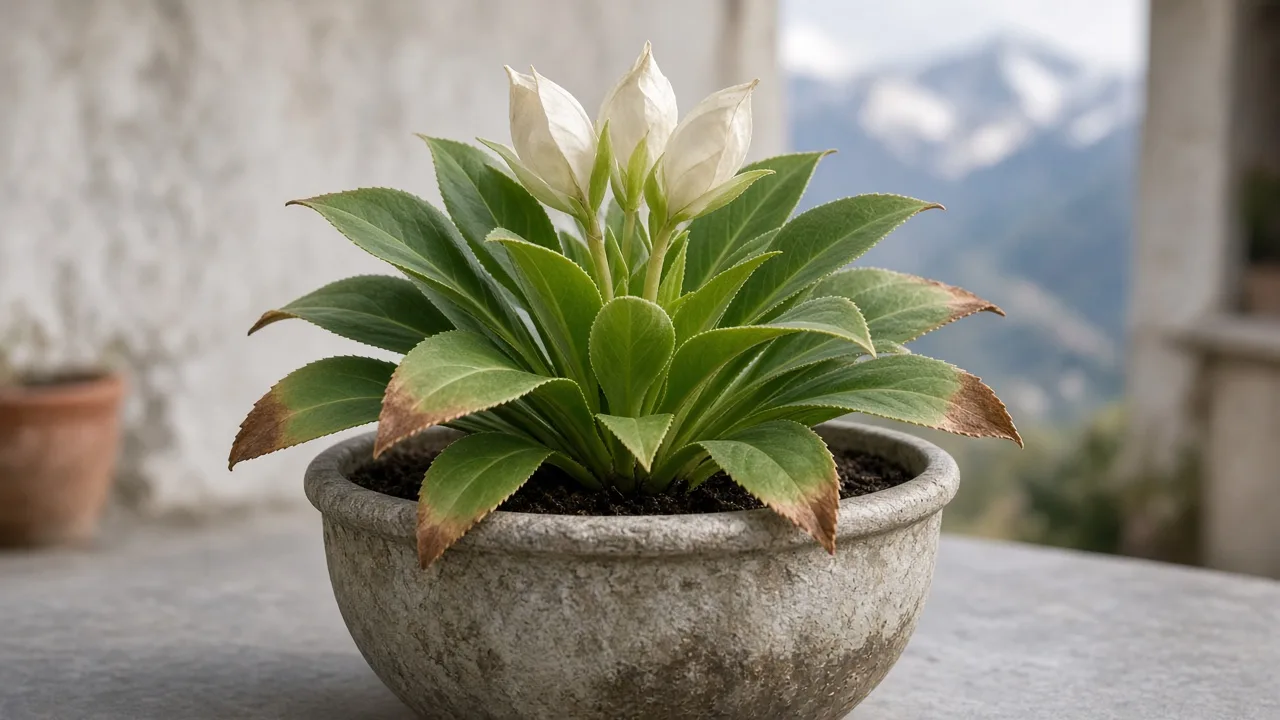
Brown Tips on Brahma Kamal: Causes, Checks & Fixes
This guide covers brown tips on Brahma Kamal. See also the general Brown Tips guide, watering, and light pages for this plant.
Brown Tips on Brahma Kamal: Causes, Checks & Fixes
Quick answer
Crisp brown tips on true Brahma Kamal (Saussurea obvallata) are almost always a water-balance or heat-light stress signal on the rosette—not a mysterious “fungus on the tips.” The leaf tip is the last place water arrives; when an alpine crown dries too hard, when warm air pulls moisture faster than roots can replace it, or when damaged roots cannot hydrate margins, tips tan and feel papery first.
First fix: confirm the plant is Saussurea obvallata (see the overview), then check the top 1–2 cm of mix and pot weight. If the surface is dusty, the pot is very light, and lower leaves feel limp in cool weather, give one thorough drink with full drainage and do not mist the foliage. If the mix is wet and the pot heavy, stop watering, move the plant out of warm rain, and read overwatering before you trim or repot.
For how tip necrosis works on houseplants in general, see the brown leaf tips hub. On this Himalayan alpine, the pattern usually tracks cool moisture plus drainage—not tropical humidity hacks or succulent “wait until bone dry” rules.
When to use this page vs other Brahma Kamal guides
This page is for dry, crispy tan tips on rosette leaves while the crown is still mostly firm.
- Underwatering — use when the whole rosette is limp, mix has pulled away from the pot, or flower-head development stalls in dry compost.
- Overwatering or root rot — use when tips brown with yellowing, sour wet mix, or soft crown tissue.
- Low humidity — use when margins crisp during dry heated air but the root zone is still moist (common in forced indoor culture).
- Not enough light — use when stretching and weak pale growth dominate; tip burn alone is rarely the main story.
- Yellow leaves — use when discoloration starts at the base or whole leaves yellow while soil stays wet.
- Problems hub — browse all symptom pages for this species.
Confirm you are troubleshooting Saussurea, not the orchid cactus
The most expensive mistake on “Brahma Kamal brown tips” is treating the wrong plant. Nurseries often label Epiphyllum oxypetalum as Brahma Kamal; that tropical epiphyte wants episodic dry-down on flat stems. Saussurea obvallata is a compact alpine daisy relative with a basal rosette and upright bract-wrapped flower heads—it needs cool air, steady root-zone moisture, and sharp drainage, not cactus timing.
If your plant has long flattened leaf-like stems and a large night-blooming flower, stop here and follow epiphyllum care. If you have a low rosette with toothed leaves, you are in the right guide. Species records place S. obvallata in alpine meadows and rocky slopes with moist soil in a sunny, well-drained position—that combination explains why both drought and soggy heat show up as tip burn.
What brown tips look like on Brahma Kamal
On Saussurea obvallata, tip damage is usually marginal and dry, not wet or spotted:
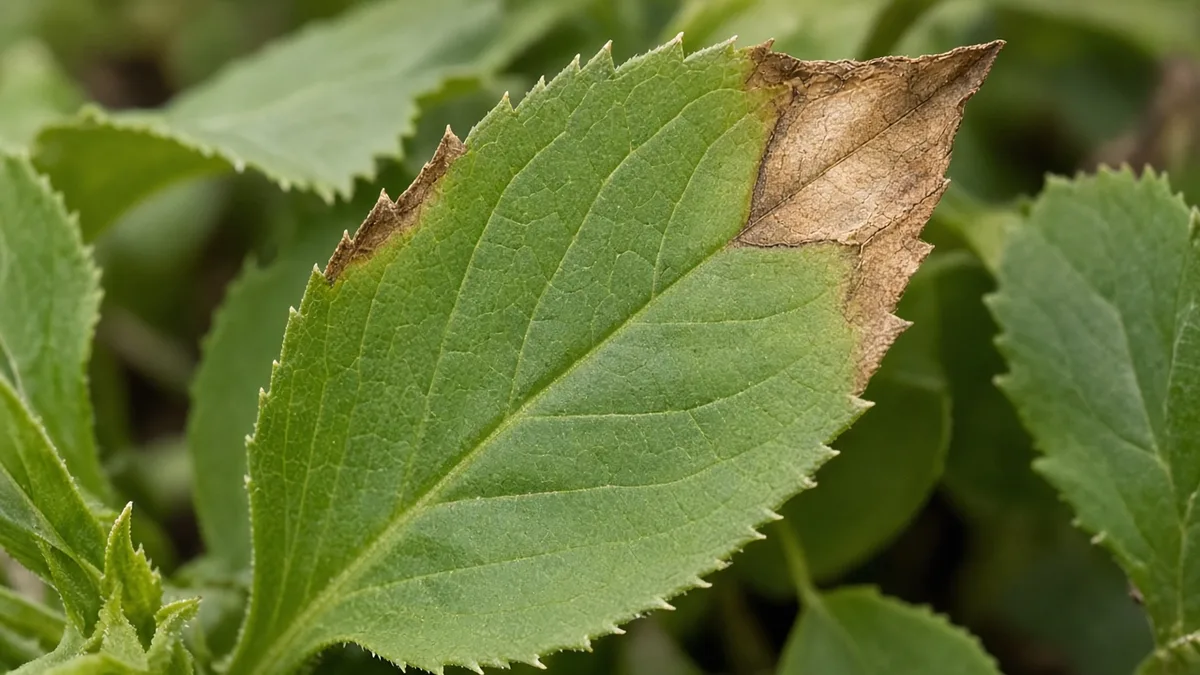
Crisp tan necrosis at the leaf tip on Saussurea obvallata—compare with greener tissue lower on the same leaf.
Typical tip-burn pattern
- Tan to light brown crispy tips on rosette leaves, sometimes creeping slightly along the toothed margin.
- Leaves may feel thin or limp if drought triggered the burn; margins stay firm if only the tip desiccated.
- Damage often appears on older outer leaves first, but new leaves with tips already burnt point to an active stressor (heat, salt, or root failure).
Patterns that are probably not “simple” tip burn
- Soft, darkening crown with wet mix — crown or root stress; see root rot.
- Yellowing whole leaves while soil stays damp — overwatering or poor drainage in warm weather.
- Stippling or webbing on undersides — spider mites in dry heated air.
Diagnosis matrix for Brahma Kamal brown tips
| What you see | Likely cause on this alpine | Quick confirmation | First action after ID check |
|---|---|---|---|
| Crisp tips, very light pot, top 1–2 cm dusty, limp leaves in cool weather | Drought / underwatering rhythm | Skewer dry below surface; underwatering signs match | One thorough water, drain fully, then resume watering checks |
| Tips brown after heatwave or sudden full sun; crown still firm | Sun/heat scorch on rosette | Symptoms followed hot afternoons or warm nights | Shelter from afternoon sun; improve airflow per light guide |
| Tips on new leaves, heated room, mix still moist | Low humidity + transpiration stress | Humidity very low; no dry-down mistake | Cooler placement, humidity tray away from crown; see low humidity |
| Tips plus white crust on pot rim after feeding | Salt or fertilizer edge burn | Recent fertilizer; hard water | Flush pot once; pause feed until clean new growth |
| Tips with yellowing, heavy wet pot, sour smell | Root stress from wet warm mix | Crown softening; gnats possible | Stop water, shelter rain, assess root rot |
Why Brahma Kamal gets brown tips
Drought between “alpine moist” and “succulent dry”
Growers often hear “let it dry” and apply succulent rules. Saussurea still wants the root zone lightly and evenly moist during growth, with only the surface beginning to dry before the next drink. When the whole root ball dries, margins desiccate first—your plant detail lists crisp brown leaf edges as a classic underwatering sign. Water use on any potted plant shifts with weather, season, soil, and growth stage, so a fixed calendar is a common trigger for these swings. That matches general brown tip physiology on houseplants: the tip is the last hydrated tissue.
Heat and light on a cold-adapted rosette
Alpine species tolerate bright cool light but not hot, stagnant warmth with wet crowns. LeafyPixels grower notes flag sustained tropical heat as a bigger threat than cold. Sudden exposure to harsh afternoon sun after shade can bleach and crisp tips before the rest of the leaf shows damage—similar to scorch patterns described for container plants in RHS alpine guidance, which stresses sharp drainage and keeping low crowns out of soggy compost.
Wet, warm roots that cannot hydrate margins
Ironically, overwatering also produces brown tips: damaged roots fail to deliver water evenly, so tips dry while mix stays wet—the same “wet soil but thirsty leaves” mismatch Missouri Botanical Garden describes when roots sit in saturated mix. Alpine pots need fast-draining soil with grit; dense, warm, waterlogged mix is a poor match for a species from streamside scree. RHS notes that alpines dislike heavy, consistently damp soil—especially when air is warm.
Salt, minerals, and slow feeding
Slow-growing crowns do not need heavy feed. Soluble salts in container media can burn leaf edges when water uptake pulls minerals into margins. If tips browned right after fertilizer or you see white crust, flush once during active growth and resume light feeding only after new leaves look clean.
Pests on stressed rosettes
Spider mites thrive in dry, warm air. Their stippling can mimic marginal burn, but you will see fine webbing or dusty undersides. Fix the environment before spraying a stressed alpine.
How to confirm the cause
Work in this order so you change only one variable at a time:
- Verify Saussurea obvallata on the label or seller notes.
- Touch the top 1–2 cm of mix and lift the pot (same method as the watering guide).
- Inspect the crown at the rosette center—firm is good; soft or dark is not.
- Review the last two weeks of weather—heat spike, monsoon soaking, or a move to stronger sun.
- Scan leaf undersides for mites or aphids.
- Note whether only oldest leaves are affected—post-flowering dieback can tan a few tips without a care emergency.
First fix to try
After ID confirmation, match water to what the pot actually needs today:
- Dry and light: water until a little runs from drainage holes, empty the saucer, and recheck in 48 hours.
- Wet and heavy: withhold water, improve airflow, and keep the crown out of standing splash—do not repot on day one unless the crown is soft.
Do not mist leaves to “fix humidity”; wet rosette centers in warm air invite decay on this species. Do not fertilize burned leaves.
Step-by-step recovery
Days 1–7: Stabilize the root zone
Hold the corrected watering or shading change. Remove only fully dead tip tissue if it is mushy; leave crispy tan tips until you see whether new growth stays clean.
Weeks 2–4: Watch the next leaves
Success is clean margins on the newest rosette leaves, not greening of old tips. If tips keep appearing on fresh leaves, re-run the matrix—especially for hidden wet mix or heat.
After flowering dieback
Natural foliage dieback toward dormancy can tan older leaves. Reduce water per the watering guide rather than forcing evergreen growth; distinguish seasonal tan from active spread on young leaves.
Grit mulch and crown dryness (alpine habit)
Low alpine rosettes stay healthier when rain does not lodge in the crown and leaves do not rest on soggy compost. A thin layer of horticultural grit on the surface—standard advice in the RHS alpine growing guide—keeps the neck drier and reduces rot that can secondarily brown margins. This is specific to how Saussurea sits in the pot; it is not a generic “mulch for humidity” trick.
Recovery timeline
Cosmetic tip burn from one dry spell often stops spreading within one to two watering cycles once moisture is steady. Heat scorch stabilizes after light is softened; old damage remains visible. Root-related tip burn may take several weeks and depends on how much healthy rhizome remains—judge by firm crown tissue and clean spring shoots, not old leaf color.
What not to do
- Do not treat Saussurea like a succulent “water once a month” without checking mix depth.
- Do not repot, prune heavily, and fertilize the same week—alpine crowns need calm recovery.
- Do not leave the pot in a hot cachepot of standing water after monsoon rain.
- Do not assume brown tips mean “more humidity” if the mix is already wet and cool.
How to prevent brown tips next time
Anchor prevention in the cluster care guides:
- Watering — surface just begins to dry, never bone-dry whole root ball in active growth.
- Soil — moisture-retentive but gritty; never dense warm peat that stays saturated.
- Light — bright cool exposure; shelter from scorching afternoon sun and warm nights.
- Repotting — only when drainage fails; oversize pots stay wet too long.
Check rosettes weekly during heat or monsoon season so tip burn is still a early warning, not crown loss.
When to worry
Escalate same-day if the crown softens, mix smells sour, or multiple new leaves brown within a week on wet compost. Those patterns point to root rot or advanced overwatering, not cosmetic tips.
Lower urgency: a few oldest leaves with dry tips after flowering, firm crown, and stable pot weight—monitor through dormancy.
Related Brahma Kamal guides
- Overview — ID, climate, and species baseline
- Problems hub — all symptom pages
- Watering — moisture checks and dormancy
- Soil — alpine mix and drainage
- Light — cool bright placement without scorch
Related tool
Use the Plant Problem Diagnosis Tool to narrow causes for brown tips on this plant before changing multiple variables at once.