Leggy Growth on Ginger: Light, Spacing & Rhizome Fixes
Quick answer
Leggy ginger shows long gaps between narrow leaf blades on thin pseudostems that lean toward the brightest side—common when a rhizome crop sits in deep shade or a dim indoor corner. First step: move the pot to bright filtered light with a few hours of softer morning sun and rotate it weekly before cutting green leaves or feeding.
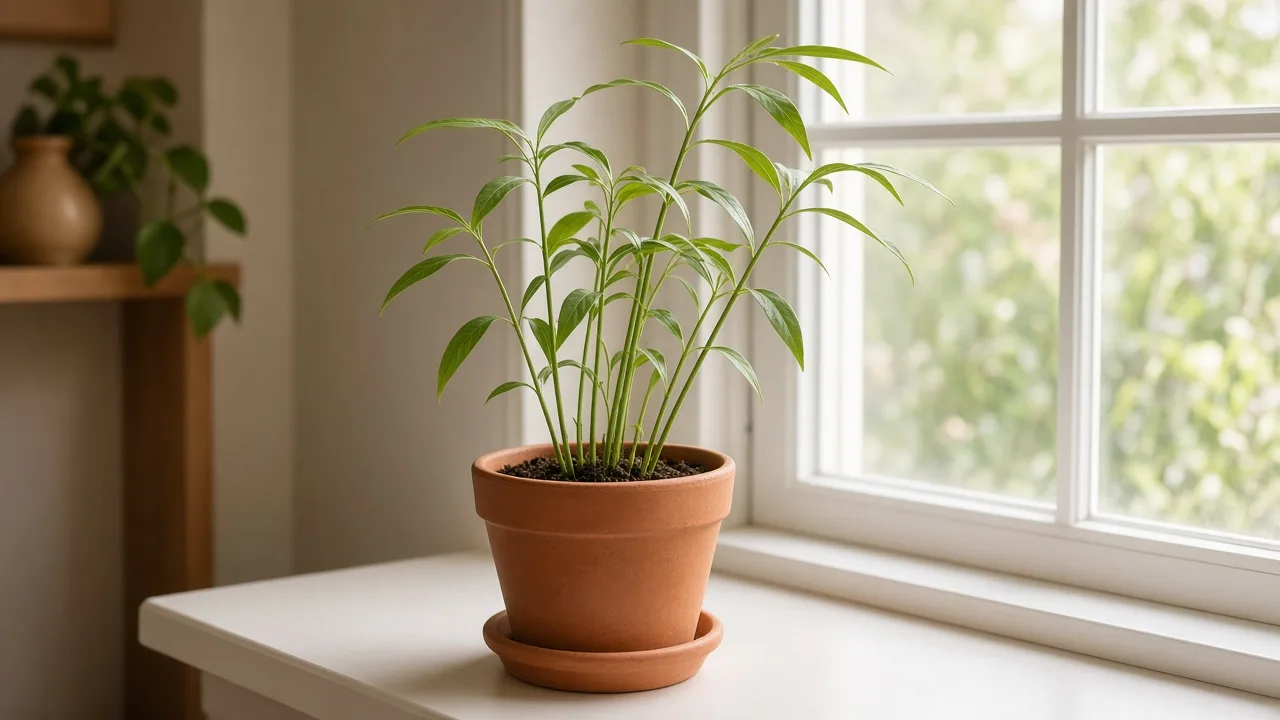
Leggy Growth on Ginger: Causes, Checks & Fixes
This guide covers leggy growth on Ginger. See also the general Leggy Growth guide, watering, and light pages for this plant.
Leggy Growth on Ginger: Causes, Checks & Fixes
Quick answer
Leggy growth on culinary ginger (Zingiber officinale) is etiolation on a rhizome crop, not decorative “fast growth.” The plant lengthens its pseudostems—tightly wrapped leaf sheaths—not woody branches, leaving long gaps between narrow blades while the whole clump leans toward the brightest wall.
For how low light forces stretch in general, see our leggy growth hub. On ginger, the telltales are thin reaching pseudostems, sparse narrow foliage for the pot size, a mix that stays damp too long in a dim corner, and weak rhizome swell even though leaves still look green.
First step: move the pot to bright filtered light with a few hours of softer morning sun, then rotate it a quarter turn every week—before you shear green leaves, repot, or fertilize.
When to use this page vs other Ginger guides
This page is the stretch-and-structure entry when pseudostems are tall, sparse, and leaning—not when tips alone brown or rhizomes rot.
| Pattern | Read next |
|---|---|
| Dim room but internodes not stretched yet | Not enough light |
| Firm clump, cool season, little new growth | Slow growth |
| Sun-facing side with crisp brown leaf tips | Brown tips |
| Soft rhizome smell, sour wet mix, collapse | Root rot or overwatering |
| Leaves hang limp in heat after dry soil | Drooping leaves or underwatering |
| Ready to trim only failed tissue after light is fixed | Pruning guide |
| Window hours and partial shade placement | Light guide |
What leggy growth looks like on Ginger
Healthy ginger builds upright pseudostems about 3–4 feet tall with long, narrow leaf blades arranged in two ranks along each shoot. UW–Madison Extension describes shoots formed from tightly wrapped leaf sheaths and blades roughly 7 inches long by three-quarters of an inch wide on medium green foliage. Leggy etiolation breaks that silhouette:
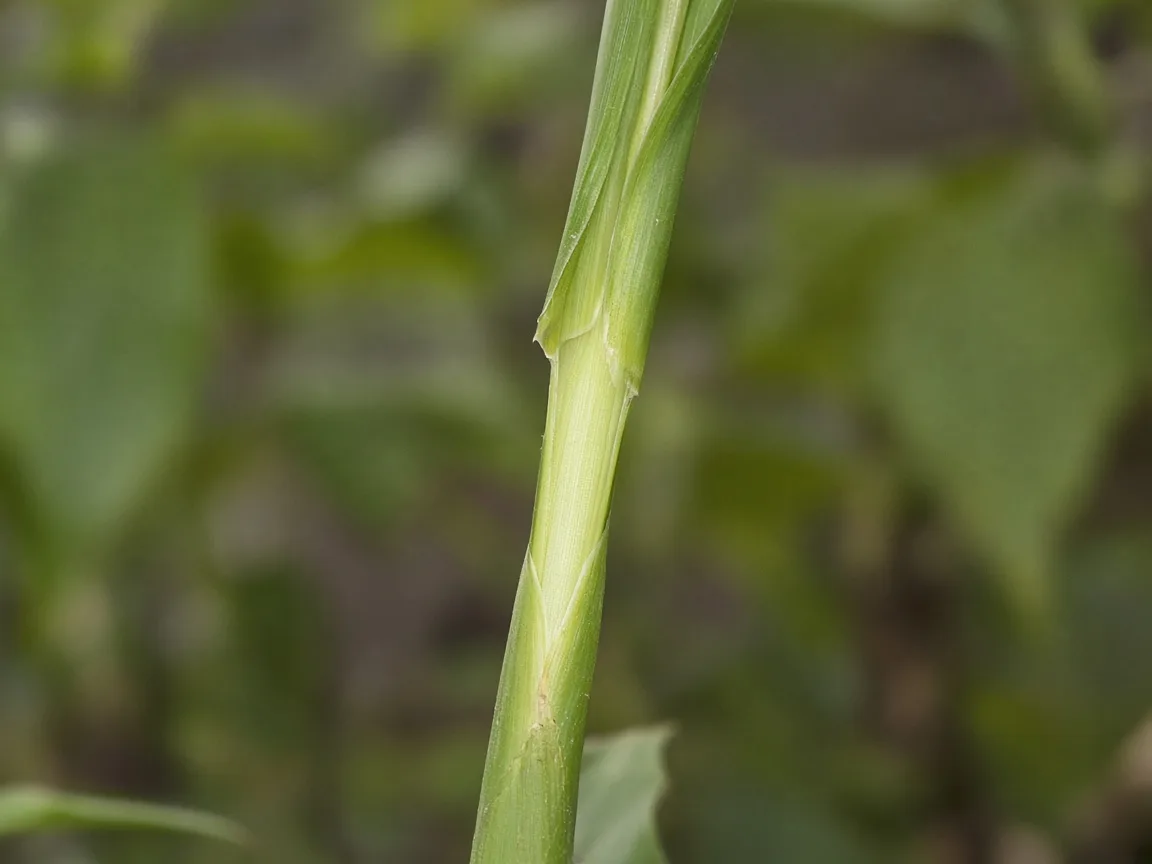
Wide spacing between narrow blades on a thin pseudostem—compare the stretched section with tighter leaf spacing on a sturdier shoot at the base of the clump.
- Long empty gaps between narrow blades — Internodes on the pseudostem widen; newest leaves stay small because the plant is reaching, not filling rhizomes
- Thin, soft upper pseudostems — Stretch weakens the leaf-sheath tube; shoots feel hollow and bend toward glass
- Hard lean toward one window, door, or terrace edge — The clump angles toward the brightest side while the shaded side stays shorter
- Lush green color but weak stance — Ginger can stay green in deeper shade than sun-loving herbs, which makes stretch easy to miss until stems flop
- Slow rhizome swell for the season — Energy goes into height; harvest-minded growers see thin “fingers” at dig time despite months of watering
- Mix stays wet too long — Weak light slows transpiration; the same watering rhythm that worked on a sunny terrace now keeps roots damp (partial shade culture still needs even moisture, not perpetual sogginess)
A firm rhizome with some lower leaf yellowing near dormancy is different from a soft, sour base on chronically wet mix—see overwatering when rhizomes fail a gentle press test at the soil line.
Pseudostem spacing vs rhizome goals: a plant-only check
Ginger is grown for plump underground rhizomes, not a tight leafy houseplant silhouette. That changes how you read stretch:
- Long sheath gaps plus window lean on firm rhizomes — Etiolation; light and rotation are the primary fix before any green-leaf cut.
- Stretch only on the shaded side of a crowded clump — Directional shade on a balcony; space pots and improve exposure on the weak side per the overview.
- Tall soft shoots plus heavy wet pot in a north room — Dim light slowed dry-down; cross-check watering before assuming hunger.
- All-day dark corner but leaves still green — UF/IFAS notes edible ginger can grow in full shade, yet produces well with only a couple of hours of sunlight—deep shade often yields weak, reaching pseudostems even when the plant survives.
This rhizome-crop framing does not apply to woody shrubs you tip-pinching into balls—you are managing a partly shaded forest understory herb that still needs real photons to thicken underground stems.
Why Ginger gets leggy growth
Culinary ginger evolved in humid, partly shaded tropical forest edges. UW–Madison Extension places its native habitat in moist forests of Southeast Asia—bright filtered understory, not a closed dark closet. When photons are short, the plant lengthens pseudostems toward the source while keeping blades small because energy goes to height, not rhizome storage.
Plant-specific triggers:
- Dim living rooms and deep north windows — Epic Gardening recommends bright, indirect light with several hours of dappled brightness indoors, with east-facing windows as a reliable default; a “bright to human eyes” corner that casts only a soft hand shadow still produces reach.
- One-sided light on a crowded terrace — Pseudostems on the shaded side stretch longer; the pot leans as weight shifts toward glass.
- Winter short days before dormancy — UW–Madison notes container plants lose stems in cool short days but resume from rhizomes in a bright warm spot; stretch from autumn often shows by late winter on plants kept too far from glass.
- Misreading “shade tolerant” as “shade loving” — NC State lists partial shade (about 2–6 hours of direct sun) as the cultural sweet spot; UF/IFAS adds that more than a couple of hours of hot sun slows growth and browns tips—the fix for leggy ginger is more filtered brightness, not blasting unfiltered west-afternoon sun.
- Soft, over-fed shoots in marginal light — Nitrogen-rich feeds during warm weeks produce succulent reaching tips when the canopy already lacks light; match feeding to the fertilizer guide instead of pushing growth while pseudostems are already thin.
How to confirm the cause
Work through checks in order so you do not prune green leaves while rhizomes are rotting from wet soil:
- Hand-shadow test — On a clear day, hold your hand beside the foliage. A sharp, dark shadow for much of the day means you are closer to what ginger wants outdoors than a soft indoor shadow that looks bright to human eyes.
- Sheath-gap comparison — Measure spacing between blades on the newest pseudostem versus a lower section from when the plant had better light. Widening gaps confirm stretch.
- Lean direction — Strong tilt toward one window or terrace edge points to directional etiolation.
- Rhizome-base press — Firm rhizomes with damage only on upper pseudostems point to light stress. Soft or mushy tissue at the soil line on damp mix means rot risk first—see root rot.
- Dry-down cross-check — Finger-test the top 2–3 cm per the watering guide; chronic wet mix in a dim spot often pairs with stretch because the plant is not using water quickly.
Symptom lookalike comparison
| What you see | Likely cause | Key check |
|---|---|---|
| Long sheath gaps, window lean, firm rhizome | Leggy growth / low light | Shadow test; compare pseudostem sections |
| Dim room, no extreme lean yet | Not enough light | Hours of filtered sun still borderline |
| Firm clump, cool season, little new growth | Slow growth | Warm soil resumes growth; no strong lean |
| Brown tips on sun-facing side | Too much hot sun | Move to afternoon shade; see brown tips |
| Yellow lower leaves on heavy wet pot | Overwatering | Sour odor; soft rhizome; lean optional |
| Limp blades in heat after dry soil | Drooping leaves | Pot weight light; not primarily stretch |
Confirmed diagnosis — Widening sheath gaps plus lean toward the brightest side with firm rhizomes below. Suspected — Pale soft tips without obvious lean may need a week of rotation and light logging before any cut.
First fix: improve light before you cut or feed
Move the pot to the brightest filtered location you can offer—east-facing glass, morning sun on a terrace, or dappled shade under open sky—with gradual acclimation if it came from a very dim room. Jumping straight from a dark corner to harsh midday roof sun can scorch narrow blades even though ginger is not a full-sun desert crop.
Acclimation steps for narrow ginger foliage
- Days 1–3: Bright indirect beside the target spot; watch for bleached patches on upper blades.
- Days 4–7: Add early-morning direct sun; keep the top of the mix drying on schedule per soil and watering guides.
- Week 2 onward: Aim for the partial-shade band extensions describe—NC State’s 2–6 hour direct-sun partial shade range outdoors, or UF/IFAS’s couple of softer sun hours in hot climates—with the pot rotated a quarter turn weekly so all sides build evenly.
Do not repot, heavily prune green leaves, or fertilize the same week you fix light. One variable at a time lets you read the response on the next flush of narrow blades.
When to add cleanup cuts
After two to three weeks of better light, if old stretched pseudostems still flop, remove only fully failed leaves or collapsed sheaths near the soil line during warm active growth—details in the pruning guide. Ginger feeds rhizomes through green canopy; shearing healthy blades to “bush out” a stretch delays underground swell.
If the room cannot offer enough natural brightness, add a full-spectrum grow light on a long daytime schedule while growth is active—Epic Gardening suggests grow lights when the space is darker—rather than accepting permanent window reach.
Recovery timeline and what old tissue can do
Existing stretched sheath sections do not shrink. Expect tighter blade spacing on new pseudostems within three to five weeks during warm active season once light is adequate. Old bare sections remain; judge success by the next flush, not by old gaps filling in.
Signs you are winning: upright top growth, deeper green on new blades, shorter gaps between leaves, and a pot that dries on a predictable schedule after deep watering. Signs to escalate: creased bending pseudostems, soft rhizome at the soil line on soggy mix, or collapse despite bright light—rhizome checks before more pruning.
Container-grown ginger rarely flowers anyway, so do not use bloom as your recovery scorecard—watch new shoot thickness and rhizome firmness instead.
Mistakes to avoid
- Pruning green leaves before fixing light — New pseudostems will stretch again from the same dim spot and starve rhizomes.
- Feeding a stretched plant — Soft nitrogen-rich growth in marginal light worsens etiolation; confirm filtered sun first.
- Watering on calendar autopilot — Dim plants use less water; wet feet plus weak light invite root rot.
- Moving into full west-afternoon sun to “fix” stretch — NC State links full sun to brown-tipped foliage and poor growth on ginger; you may swap lean for tip burn.
- Expecting tip-pinching like a hedge — Ginger is not a bushy shrub; see pruning for cleanup rules tied to rhizome crops.
How to prevent leggy growth next time
Match the Ginger overview routine: bright partial shade, rich moist mix that still drains, and dry-down watering. Scout pseudostem tips monthly when days shorten in autumn. Quarantine new rhizome pieces in bright holding spots, not dim corners, while you learn each pot’s dry-down speed. Space clumps so side light reaches every shoot on a terrace row.
Related Ginger guides
- Ginger overview
- Ginger light
- Ginger watering
- Not enough light on Ginger
- Slow growth on Ginger
- Ginger pruning
- Brown tips on Ginger
- Ginger problems
Conclusion
Leggy ginger is almost always a light-and-rotation problem expressed as long gaps between narrow blades, thin reaching pseudostems, and a clump leaning toward the brightest side—often with a pot that stays wet too long in the same dim corner. Move to bright filtered light with softer morning sun first, acclimate narrow foliage gradually, rotate weekly, then remove only failed tissue if old stretch cannot be reversed. Firm rhizomes and tighter new blades tell you the crop is recovering; soft wet bases need water and drainage correction before any renovation cut.
Related tool
Use the Plant Problem Diagnosis Tool to narrow causes for leggy growth on this plant before changing multiple variables at once.