Spider Mites on Monstera Peru: Signs and First Fixes
Quick answer
First, isolate your Monstera Peru from other plants. Look beneath the puckered leaves for live mites, fine silk, and new pale stippling; if you confirm mites, rinse both leaf surfaces and the leaf joints with a gentle, thorough stream of water.
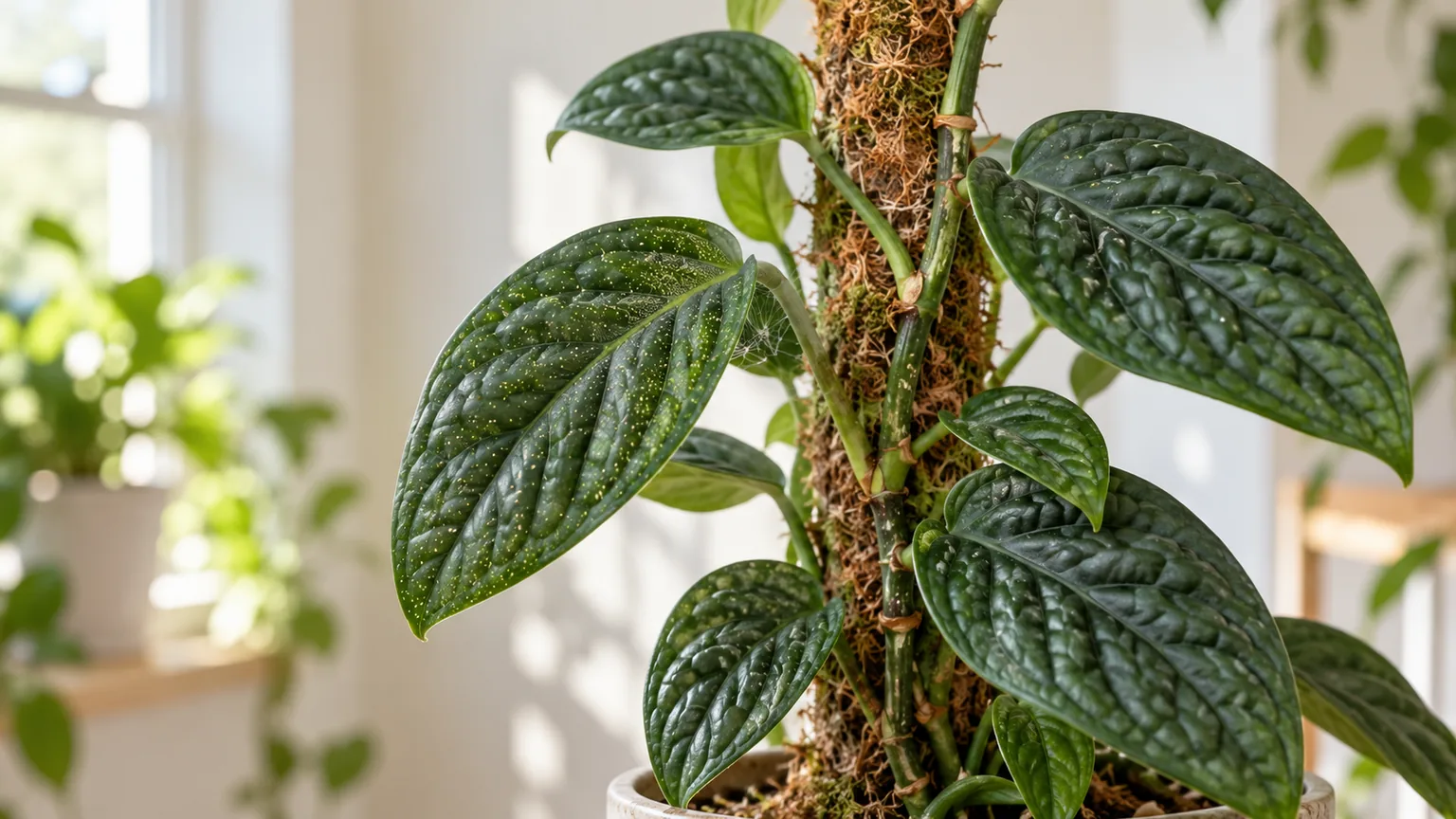
Spider Mites on Monstera Peru: Causes, Checks & Fixes
This guide covers spider mites on Monstera Peru. See also the general Spider Mites guide, watering, and light pages for this plant.
Spider Mites on Monstera Peru: Causes, Checks & Fixes
Quick answer
First, isolate your Monstera Peru from other plants. Then check the undersides of its thick, quilted leaves, the creases beside each midrib, and the petiole joints for tiny moving mites, fine silk, or new pale pinpricks. If you confirm active mites, rinse the leaves with a gentle, thorough stream of water and keep checking the plant until fresh damage stops.
Treat this as a foliage investigation, not an automatic reason to unpot a healthy vine or change its watering schedule. This guide is for the tiny pests and their characteristic speckled feeding marks; the broader spider mites guide explains the general pest pattern. On Monstera Peru, the corrugated leaf surface and close spacing around climbing nodes make a quick look at the top of the foliage an unreliable check.
What spider mite damage looks like on Monstera Peru
Early feeding can leave many very small, pale dots scattered across a leaf. Against Monstera Peru’s dark green surface, these pinpricks may look like dull silver or yellow flecks rather than a large yellow patch. As feeding continues, marks can merge into bronze or dry-looking areas; with a heavier infestation, fine silk may span the leaf underside, the petiole, or the gap between leaves. Spider mites are extremely small, so stippling and silk are often easier to notice than the mites themselves. The Spruce describes stippled, yellowed or dry foliage and fine webbing as typical signs of spider-mite damage (The Spruce). UC IPM’s citrus examples also illustrate pale stippling and webbing, but its crop-specific images and species details do not identify the mite on a houseplant.
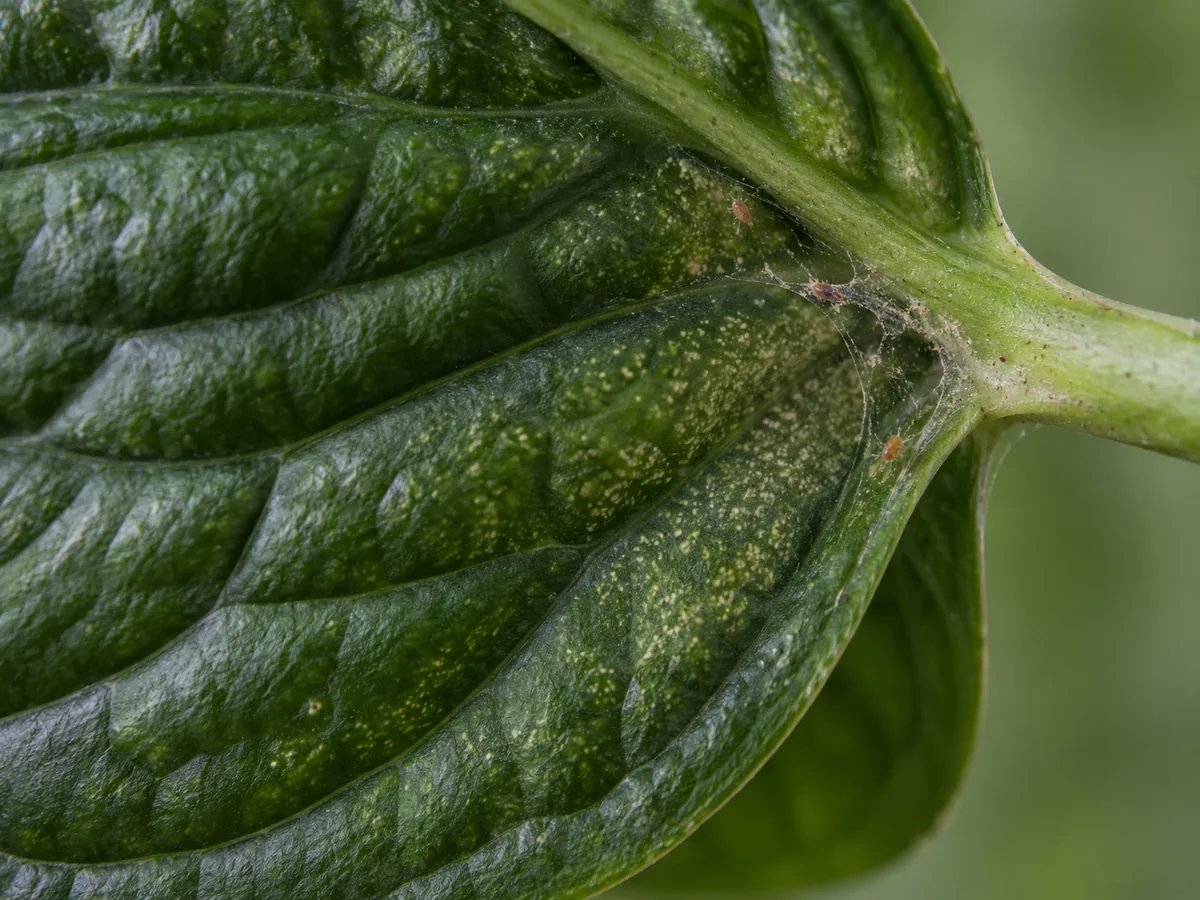
Fine stippling and silk near a leaf joint are reasons to inspect Monstera Peru closely for active spider mites; confirm with magnification before treating.
A few loose threads are not enough to prove a mite infestation, and dust caught in the ridges can resemble pale flecks. Look for a pattern: fresh stippling that was not present before, tiny moving dots under magnification, and delicate silk close to the damaged tissue are more persuasive together than any one sign alone. Dense webbing across several leaves suggests a more extensive infestation; do not wait for this late sign before checking.
Where to inspect a Monstera Peru’s quilted canopy
Start with the underside of the newest fully opened leaves, then work back along the vine. Hold a leaf toward a bright window or lamp and look across the surface at an angle. The shallow valleys between Monstera Peru’s raised ridges, the protected space beside the midrib, and the point where the petiole joins the blade are natural places to slow down: the texture can hide tiny specks from a casual overhead glance. Check where two leaves overlap and where the vine sits against its board or pole, especially if neighboring foliage touches it.
Use a 10× hand lens if you have one. Magnification helps reveal small mites and immature stages; The Spruce notes that a lens can help reveal these tiny pests (The Spruce). Without a lens, look for movement rather than trying to identify a mite by color.
Inspect the whole plant, not only the leaf with the most obvious dots. Follow each stem to its growing tip and node, then look at the front and back of leaves and any plant that touched the Peru. A board or moss pole can keep leaves close together and make a hidden leaf surface easy to miss. Separate the plant before moving it through the room so its leaves do not brush a neighboring plant on the way to the sink or shower.
Confirm mites before choosing a treatment
Treat a diagnosis as confirmed when you find live, moving mites or repeated fresh stippling together with silk in the same area. If you cannot see a mite, keep the plant separate and recheck the same leaf undersides for movement or fresh damage before applying a product. If the marks are old and no movement or fresh damage appears, keep the plant separate and recheck rather than applying a product on suspicion alone.
A light infestation may show stippling without obvious silk. Conversely, a thin strand crossing one leaf may be a spider’s thread, not mite webbing. Use the visible signs to decide where to inspect, then confirm the live pest on your plant.
Do not start by unpotting Monstera Peru. Spider mites feed on foliage, so pulling apart the rootball will not remove mites from the leaf undersides and may add avoidable stress. If the plant also wilts while its potting mix remains wet, has soft stems, or develops broad yellowing, investigate that separate root-zone pattern through the Monstera Peru watering guide and soil guide. Those signs do not confirm spider mites.
Why spider mites can gain a foothold on this vine
The most plausible triggers are an introduction on another plant and conditions that let a small population go unnoticed. Check recent acquisitions and any plant brought inside after spending time outdoors when you are tracing a possible source; Clemson identifies new arrivals and plants brought indoors from outside as common entry points for houseplant pests (Clemson Cooperative Extension, prevention). That matters for Monstera Peru because it is often displayed close to other foliage or trained on a support where leaf backs can face a wall.
Warm, dry indoor air can favor spider-mite activity, and winter heating can make rooms drier. Epic Gardening describes hot, dry, dusty conditions as favorable to spider mites (Epic Gardening). A bright window, heater, or air-conditioning stream can make one side of a vine warmer and drier than the room as a whole. Treat that as a reason to inspect carefully, not proof that low humidity caused the infestation. A plant can have mites in a comfortable room, and simply raising humidity does not remove eggs or active mites from the leaves.
Monstera Peru has thick leaves, but that does not make it immune. Its puckered surface gives you more grooves and sheltered joints to inspect than a smooth leaf would. A crowded shingling vine may also hide the underside of a leaf against its support. These are inspection and coverage problems: they explain why you can miss early signs or leave a few affected surfaces untouched, not a special pest susceptibility unique to this trade plant.
Separate likely contributing conditions from the confirmed pest. If the pot stays heavy because the plant receives less light or the mix dries slowly, correct that care issue only if your checks support it. Monstera Peru is normally kept in bright filtered light and a chunky, draining aroid mix; its light guide and care overview help you compare its current position with those needs. Penn State’s Monstera houseplant guidance supports bright indirect light and a well-draining potting medium for the genus. Keep light and root-zone changes gradual while you are treating the leaves, so new damage has a clearer explanation.
The first action: isolate Monstera Peru
Move the vine away from other houseplants before you handle or rinse it. Choose a temporary spot where leaves cannot touch other plants and where you can inspect both sides without brushing the foliage against a curtain or wall. Keep it there until repeat checks show no live mites and no new stippling; expect isolation to continue beyond the first rinse.
Isolation protects nearby plants and gives you a clean baseline: photograph one or two affected leaves, note which leaves already have marks, and inspect the same surfaces during follow-up checks. Do not cut every marked leaf at once. If one leaf is badly damaged and the rest of the vine is clean, you can remove that leaf with clean shears, but pruning alone will not remove mites hidden on the remaining leaves or nodes. Keep the main stem and viable nodes if the plant is otherwise firm.
Rinse the corrugated leaves without soaking the pot
Once mites or fresh mite damage are confirmed, use a gentle but thorough water rinse as the next step. Carry Monstera Peru to a sink, tub, or shaded outdoor area if weather allows. Support the vine and the base of its petioles; direct the water across both leaf surfaces, giving extra attention to the underside, ridged valleys, petiole joints, and spaces where a leaf meets the support. The aim is to dislodge pests from the plant, not to blast the delicate growing tip or force water into a soft, crowded stem junction.
A firm rinse can dislodge many mites, and repeat rinsing may be needed when they return. Epic Gardening recommends using a strong stream of water on spider mites (Epic Gardening). For a Peru vine, use enough flow to move mites from the foliage without flattening the plant against a surface. If a leaf is pressed flat against a moss pole or board, release the tie gently and rinse the hidden side rather than soaking the support and leaving foliage trapped against it. Let leaves drain and dry in bright, indirect light with air moving through the canopy.
Keep the potting mix from staying saturated during repeated rinses. Tip the pot so water runs off, protect the soil surface loosely if needed, and empty the saucer afterward. That matters for this plant because its care is based on letting the upper few centimetres of chunky mix dry before watering; a pest rinse is a foliage treatment, not a reason to give the rootball an extra full watering. If the mix was already wet, leave the plant in its usual bright filtered position and wait until its normal watering cue returns.
Inspect again after the foliage dries and continue checking every few days. Repeat the rinse if you find moving mites or fresh marks; a single pass may miss pests concealed in folds or on another leaf. Use the same inspection route each time, so you do not mistake old stippling for new spread.
When to consider a labeled spray
If live mites persist after careful rinsing and follow-up inspection, consider a product only when its label explicitly permits use on indoor houseplants and lists spider mites. Insecticidal soap is a contact treatment, so it works only where the spray touches pests; it is not a shield over leaves that were missed. Hidden pests or eggs may require more than one application. Follow the current product label, checking for indoor houseplant use and the target pest; do not treat “natural” or “organic” as a substitute for directions.
Test the chosen product on a small, less visible leaf area first and observe it for at least 48 hours before treating the entire vine. Do not apply a spray to a thirsty, heat-stressed plant or in direct sun. Clemson’s houseplant guidance identifies soap as a contact treatment, notes that hidden pests or eggs can require repeated treatment, and advises label checks and a small-area test because spray injury may take at least 48 hours to appear (Clemson Cooperative Extension, insecticidal soap and label cautions). Check the current local label for indoor-use restrictions, protective equipment, ventilation, pets, children, and disposal. Product registration and directions vary by location, so do not copy a rate from a website or use a garden-only product indoors.
Avoid unlabelled kitchen recipes such as homemade detergent, alcohol, or essential-oil sprays. Their dilution and directions may not be appropriate for this plant or indoor use. If you use a labeled contact product, wet the surfaces the label requires, including leaf undersides, and follow its directions about sunlight and repeat intervals. Rinsing first lets you see whether a pesticide is necessary at all.
Tell mite damage from other Monstera Peru problems
The pattern matters more than a single yellow or brown mark. Compare the leaf surface, the rest of the vine, and what you can find with magnification before treating.
| What you notice | More useful clue | Next check |
|---|---|---|
| Fine pale dots or bronze stippling with silk or moving specks | Mites are plausible, especially when the signs cluster on leaf undersides and joints | Isolate the plant and inspect the full vine with a lens |
| One bleached patch on the window-facing leaf, without moving specks or silk | Light injury is more plausible than an active mite colony | Compare the mark with the plant’s position and recent sun exposure; see the Monstera Peru light guide |
| Broad yellowing, a heavy pot, or soft stem tissue | A root-zone or watering problem needs attention separately | Check the plant’s dry-down and drainage; compare with the yellow leaves guide |
| Crisp tips or edges without stippling | The leaf margin pattern alone does not confirm mites | Review humidity and care changes with the brown tips guide |
| Pale dust that wipes away while leaf tissue underneath remains unchanged | Surface debris is more likely than feeding damage | Clean one leaf gently, then watch for new dots or live mites |
Spider mites and care stress can occur together. For example, a dry room may make the leaf edges less comfortable while the actual mite evidence is concentrated stippling and silk underneath. Do not spray the plant just because one old leaf is yellow, and do not dismiss moving mites because the plant was recently watered. If the evidence does not line up, use the plant’s problem guides to route a broader symptom check.
Recovery: watch new Monstera Peru leaves
The pale pinpoints on an already stippled leaf usually remain visible after the mites are gone; washing removes pests, not the tissue discoloration they caused. A badly bronzed or dry leaf may never regain its former appearance. Keep it if it still contributes useful green tissue and does not interfere with inspecting the vine. Remove only a leaf that is largely dry, broken, or so marked that it is no longer useful to the plant or to your inspection.
The best evidence of recovery is a pause in new stippling and a new leaf that opens without fresh dots, webbing, or spreading bronzing. Monstera Peru’s thick, strongly textured leaves can take time to unfurl, so do not diagnose failure from the appearance of a leaf that began developing before treatment. Mark the date and photograph a newly opened leaf in consistent light; compare it with the next inspection rather than judging from memory. If new marks keep appearing, check the same leaf backs, stem nodes, and any adjacent plant again before changing treatments.
Keep the vine in the bright filtered light where it was growing well and let the top few centimetres of its mix dry before watering. Do not fertilize to “repair” stippling, move the plant repeatedly, and repot on the same day as pest treatment. Those actions do not remove mites and make it harder to see whether the rinse or labeled product worked. If the potting mix is failing or the roots are soft and sour-smelling, treat that as a separate problem and follow the Monstera Peru soil guide after the active pest issue is under control.
If most leaves are dry, the growing tip is dead, and the main stem has collapsed, salvage may be limited. For a climbing Peru, assess the stem and nodes as well as the leaves, because a firm, healthy node may still support a clean section. Keep any salvaged cutting away from other plants until it has been inspected. Remove badly damaged leaves only when they no longer contribute useful green tissue or interfere with inspection.
Prevent another outbreak in Monstera Peru
Inspect new plants before they join the collection and keep them separate while you check for pests. Regular weekly examination with special attention to leaf undersides helps catch pests while the affected area is still small. On Monstera Peru, make that inspection specific: look inside the ridges, around petiole joints, near the growing tip, and on the leaf surfaces that face a board or pole. Repeat the check after moving a plant indoors at the end of an outdoor season.
A short weekly inspection is more useful than waiting for webbing. Wipe dust away with a damp, soft cloth when it builds up in the corrugations, taking care not to scrub the raised surface or snap a petiole. If the vine is trained to a board, leave enough room to lift or turn a leaf for inspection; ties should support the stem without pinning leaf surfaces together. Wash the foliage occasionally when it is dusty, but avoid a routine that keeps the chunky mix wet or sends water into the crown and nodes.
Keep Monstera Peru growing steadily rather than trying to create a pest-proof microclimate. Bright filtered light supports compact growth, and allowing the upper mix to dry between waterings protects the root zone; neither step guarantees that mites will stay away. If the plant sits beside a heater or receives dry air from an air conditioner, move it out of the direct air stream and monitor the foliage. Raising room humidity may help maintain leaf condition, but do not rely on misting as mite control: it does not reach every underside or remove a colony.
When to use this page vs other Monstera Peru guides
Use this guide when you see fine stippling, silk, or moving specks and need to confirm spider mites before treating. If the main sign is general yellowing, soft stems, or soil that stays wet, start with the Monstera Peru yellow leaves guide or assess its normal dry-down. If the marks are limited to pale patches on the brightest side of the canopy, compare placement with the plant’s usual light position before spraying. For another visible pest, use the Monstera Peru problems hub rather than assuming all leaf damage is mites.
Related Monstera Peru guides
The Monstera Peru overview explains the plant’s climbing habit and basic growing conditions; use the watering guide when pot weight or dry-down suggests root-zone stress rather than leaf-feeding damage. If the mix stays wet or drains poorly, use the plant’s soil guidance. If multiple symptoms are present, the Monstera Peru problems hub routes you to the closest plant-specific diagnosis.
Related tool
Use the Pest Identifier Tool to compare spider mites with other pests before changing care or choosing a treatment.