Monstera Peru Brown Tips: Causes and Fixes
Quick answer
Brown tips on Monstera Peru are already-dry leaf tissue, but the color alone does not identify the cause. First check the mix 3–5 cm below the surface. If it is dry, water thoroughly and let the pot drain; if it is still damp, do not add water until you check the roots, light, and recent care changes.
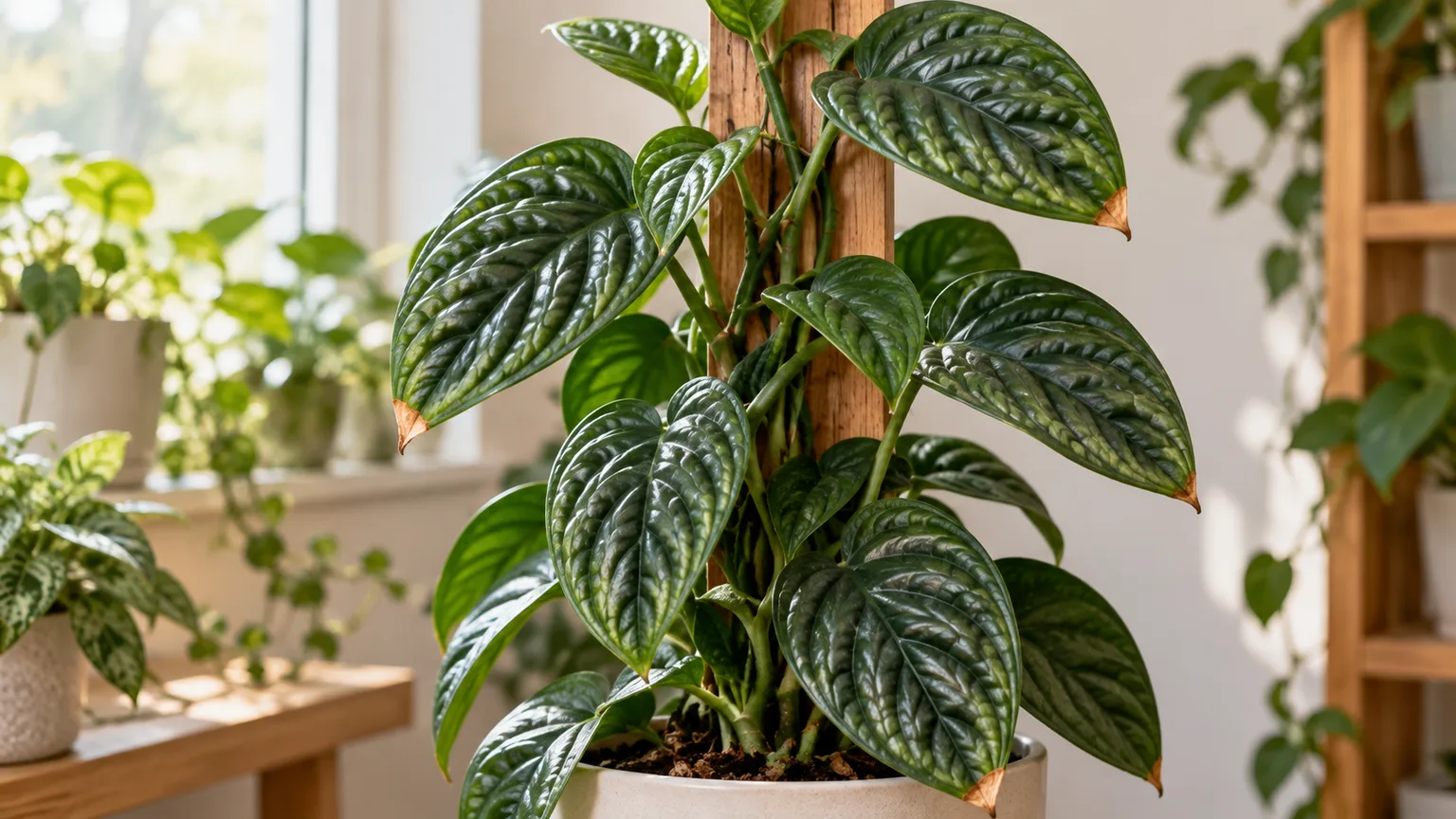
Brown Tips on Monstera Peru: Causes, Checks & Fixes
This guide covers brown tips on Monstera Peru. See also the general Brown Tips guide, watering, and light pages for this plant.
Brown Tips on Monstera Peru: Causes, Checks & Fixes
Quick answer
A brown tip is already-dry leaf tissue, not a diagnosis. On Monstera Peru, start by checking the potting mix before you reach for the watering can: if the upper 3–5 cm is dry, water thoroughly and let the pot drain; if it is damp, hold off and look for root-zone, light, or salt stress. A single damaged tip may be an old injury. Repeated crisping on several leaves calls for a pattern check.
Use the Monstera Peru overview for the plant’s broader care profile. This guide narrows the question to the pointed brown edges; the brown-tips symptom hub covers the general symptom across houseplants.
What brown tips look like on Monstera Peru’s puckered leaves
On a Monstera Peru, the first sign is often a small tan or brown patch at the pointed end of a thick, dark green leaf. The edge feels papery or crisp rather than soft and wet, and the brown tissue may form a narrow wedge that follows the margin. Look at the whole leaf before deciding what it means: the puckered, raised surface is normal for this plant, while a new dry edge is a change in the tissue.
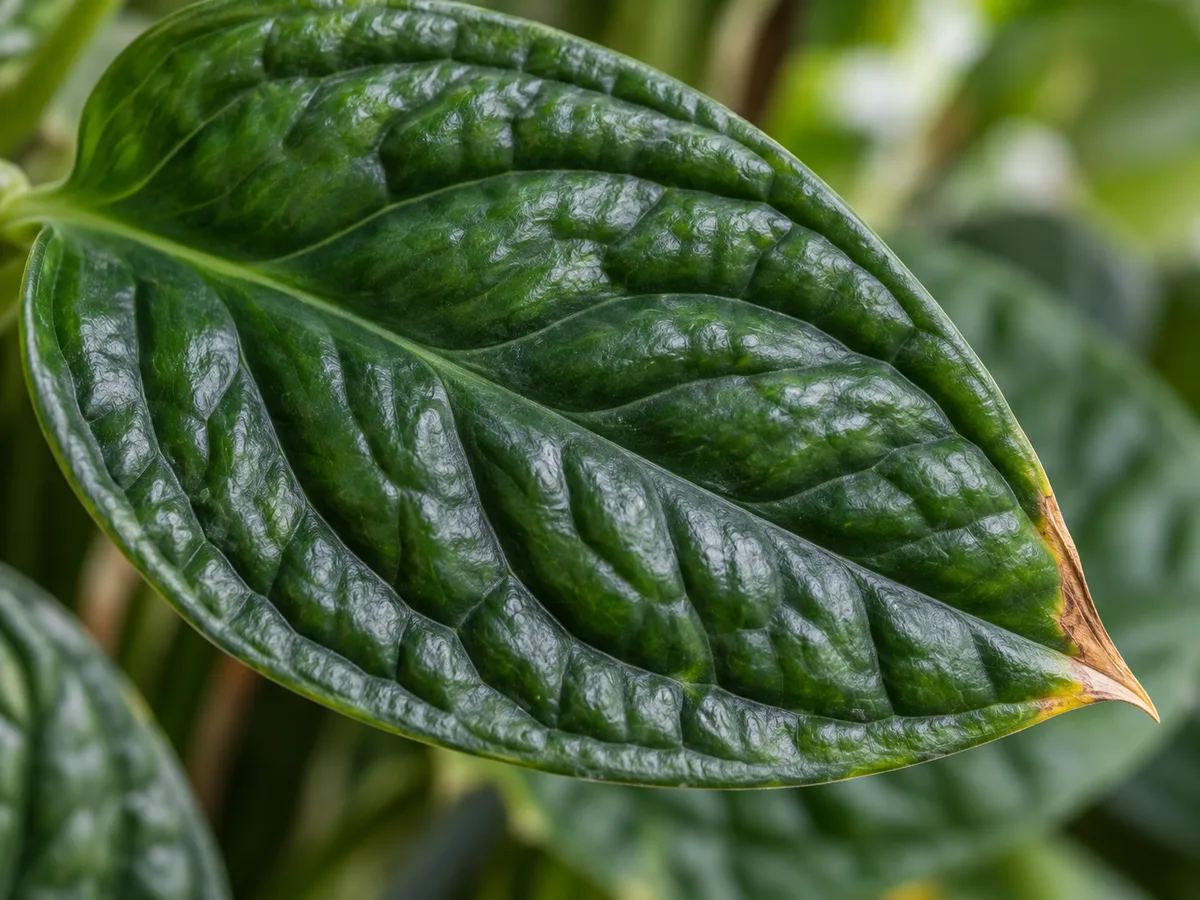
A narrow dry tip is a symptom, not a diagnosis; check the mix and the newest growth before changing care.
The location and pace matter more than the shade of brown. A single edge that stopped changing after a leaf rubbed a wall or caught direct sun may be a one-time injury. Similar dry points appearing on several leaves, or on a new leaf as it hardens, suggest that the vine is repeatedly experiencing a condition worth correcting.
Brown tips are different from soft, dark patches that spread inward, pale stippling, or blackened areas with yellow halos. A tip that is dry and sharply bounded usually calls for a care-pattern check first. A wet, mushy lesion or a fast-moving patch needs a closer look for root decline, physical damage, or disease rather than a humidity adjustment.
Why Monstera Peru develops brown tips
A dry root ball on Monstera Peru’s climbing vine
If the pot becomes very light and the mix is dry below the surface, the vine may have gone too long without a full watering. This is especially plausible after a move to a warmer, brighter window, a change to a smaller pot, or a period of active growth: the same interval that worked earlier can stop matching how quickly this pot now dries. A calendar alone cannot tell you whether the center of the root ball is dry.
Underwatering is not confirmed by brown color alone. Compare the moisture at several points with the pot’s weight, then recall whether the mix was allowed to become bone-dry or pull away from the pot. The underwatering guide is useful when a dry root ball and a light pot fit the symptoms. A Monstera troubleshooting article also describes dry, brown tips as one possible result of underwatering, but that pattern should match the soil check before you water.
How wet chunky aroid mix can mimic thirst on Monstera Peru
Brown tips do not always mean the plant needs more water. When a mix stays wet for too long, roots can lose oxygen and become less able to supply water to the leaves. The leaf may then dry at its edge even though the pot feels heavy. A mix that smells sour, remains wet well past its normal dry-down, or has drainage holes blocked is a stronger clue than the tip itself.
This matters for Monstera Peru because the plant’s care profile calls for a chunky, well-draining aroid mix rather than a compact medium that remains saturated. If the mix stays dense or the pot has no clear drainage, read the Monstera Peru soil guide before changing the watering interval. Use the overwatering guide for prolonged wetness and the root-rot guide if the mix is sour, roots are soft, or stems are declining.
Clemson Extension notes that overwatering and underwatering can produce overlapping symptoms, and that watering frequency changes with plant, pot, mix, location, and growth. Its indoor-plant watering guidance recommends checking the mix directly rather than using a fixed schedule. Treat a wilted leaf in wet soil as a reason to inspect the root environment, not as an automatic signal to add more water.
Fertilizer salts and water quality
If brown edges started after frequent feeding, stronger-than-label fertilizer, or several waterings that produced a pale crust at the soil surface or pot rim, soluble salts move higher on the list. Fertilizer can support growth, but concentrated residue around the roots may injure them. The Spruce’s Monstera browning guide lists overfeeding among possible causes of leaf browning; use it as a reason to review the feeding history, not proof that fertilizer is responsible.
Water source can matter as well. Clemson says that thorough watering until water exits the pot can carry excess salts out, and warns that softened water adds sodium and chloride that may damage plants. Its advice on salts and runoff is relevant when the pot drains freely and the root zone is not already staying wet. Do not repeatedly flush a compact, soggy pot; correct the drainage problem first.
For a Monstera Peru with brown tips, pause fertilizer while you determine whether feeding is involved. Do not add fertilizer to “green up” crispy edges; that tissue is already damaged, and another dose can increase the stress if salts are the cause. If you later resume feeding, follow the product label at a conservative rate during active growth and water the mix thoroughly when it is time to water.
Dry room air, heat, or a vent
Very dry indoor air can add stress to a leaf edge, especially when a heater, air conditioner, or fan blows directly across the vine. A pattern that appears during winter heating or after a plant is moved beside a vent is more persuasive than low humidity by itself. Do not assume every brown point means the room needs misting; first check that the root ball is neither too dry nor persistently wet.
Penn State Extension’s Monstera care guidance recommends bright light without direct sun, humidity preferably above 50%, thorough watering after the top 1–2 inches dry, and a well-draining mix. That is genus-level Monstera guidance, so use it as context for Monstera Peru rather than a precise threshold that overrides your pot’s actual dry-down. If your room is extremely dry, move the plant away from the vent or use a room humidifier and watch the next leaf; misting the leaf does not keep the root zone hydrated.
Direct sun across Peru’s raised leaf ribs
Long exposure to strong direct sun can scorch foliage. On Monstera Peru, suspect a sun-facing window when damage is concentrated on the side nearest the glass or when tan patches appear on the broad surface as well as the tip. A crisp spot that appeared after a sudden move into a sunny position is a better match for scorch than a set of tips that brown gradually across the vine.
Woman & Home’s article quotes horticultural specialists on direct-sun scorch and visible pest signs, including webbing, bumps, or insects under leaves and on stems. For this plant, keep the thick corrugated leaves in bright filtered light; the Monstera Peru light guide helps distinguish useful brightness from prolonged direct exposure. Move the pot gradually if the present location is too exposed.
Pests or a single old leaf
Pests are less likely when every mark is a clean, dry triangle at the leaf tip and the rest of the surface is clear. They become more plausible if you also find fine webbing, tiny moving specks, stippling, sticky residue, or bumps around leaf joints and petioles. Monstera Peru’s ridged leaves create grooves that deserve a close inspection with a bright light; do not spray the plant just because a tip is brown. If you find webbing or speckling, use the spider-mites guide to confirm that problem separately.
One older lower leaf may fade and dry as the vine grows, while the newest leaves remain firm and clean; The Spruce describes this natural aging pattern for Monstera leaves. That is different from several leaves browning at once or fresh tips repeating the same damage. If the older leaves also turn yellow, compare the yellow-leaves guide before assuming normal aging.
How to confirm the cause before changing care
Compare new leaves at the climbing vine’s growing tip
Look at the plant from above and note which leaves are affected. Mark whether the damage is limited to one leaf, repeats at the tips of several leaves, or appears on one side of the plant. Check whether the newest leaf has finished unfurling and hardened. On a climbing Peru vine, compare the youngest leaf near the growing end with older leaves lower on the stem; a fresh tip that browns as it matures points to an ongoing condition, while one old leaf with a fixed mark may not.
Take a photo and note the date. The photo is useful because small changes at a pointed edge are easy to misremember, and it lets you distinguish an advancing boundary from old discoloration that is simply still visible. Avoid trimming the tip before you have recorded its shape. A clean cut can improve appearance later, but it erases part of the evidence you need to determine whether the problem is active.
Check moisture, pot weight, and drainage
Push a finger into the mix about 3–5 cm, not only across the surface. If the top looks dry but the mix beneath is cool and damp, wait and check again later. Pick up the pot and compare its weight with how it feels shortly after a full watering. Clemson Extension lists soil touch and pot weight among practical checks because mix texture and container size change how quickly a plant dries; its moisture-check steps are more useful than a universal “water every week” rule.
Look at the drainage holes and saucer. Water should be able to exit the pot freely, and the pot should not sit in runoff. If a moss or coir support is damp, do not treat that surface moisture as proof that the potting mix itself is wet; check the root zone separately. Conversely, if the root ball has shrunk from the sides or water runs around it without wetting the center, the mix may have become difficult to re-wet.
Inspect the rest of the plant and its recent history
Check the stem, petioles, leaf undersides, and the surface of the mix. Firm stems and a clean, stable root zone support a less urgent diagnosis. A sour smell, soft roots visible at a drainage hole, or a vine that becomes limp while the soil is wet justifies a closer root check. Do not unpot a healthy-looking Peru for one small tip; disturbance is not a diagnostic shortcut.
Then connect the plant’s appearance to changes from the last few weeks: a new window, closer heater, stronger fertilizer, repotting, missed watering, or a different water source. Also check whether the air flow or direct sun reaches the affected leaves. If you find webbing, moving specks, bumps, or sticky residue, isolate the plant from nearby houseplants while you identify the pest. If you find no pest evidence, keep the diagnosis centered on moisture, light, and the feeding or water history.
The first fix: check the mix before you water
Your first action is to check the root-zone moisture at 3–5 cm. If it is dry and the pot feels light, water slowly and thoroughly until water runs from the drainage holes, then empty the saucer. If the mix is still damp or the pot remains heavy, do not water again yet; give the root zone time to dry and look for blocked drainage, weak light, or a compact mix. This conditional check is safer than adding water based on leaf color alone.
Use one correction at a time. If the dry-down check confirms a dry root ball, return to the routine in the Monstera Peru watering guide. If the pot is wet, first correct standing water or a blocked outlet and keep the plant in bright filtered light while it dries. Do not combine a repot, fertilizer dose, relocation, pruning, and pesticide treatment on the same day; if the leaves improve or worsen, you would not know which change mattered.
Recovery steps for each confirmed pattern
If the root ball is dry
Water the pot evenly so the full root ball is moistened, rather than pouring a small amount beside the stem. Allow the excess to drain, empty the saucer, and let the upper mix dry to the Monstera Peru baseline before watering again. If water channels around a hard, shrunken root ball and leaves the center dry, re-wet in two passes with a pause between them, then let the pot drain completely. Do not turn this recovery step into daily sips of water.
After the watering, return the pot to its usual bright filtered position. A leaf that has developed a crisp brown tip will not regain green tissue, so judge the change by the next leaf and whether the boundary stops advancing. If the mix remains dry quickly at every check, investigate whether the pot is root-bound, unusually small, or exposed to more heat than before. If the dry pattern keeps recurring despite a full watering, repeat the moisture and pot-weight checks before changing the pot.
If the mix stays wet
Let the mix dry to the plant’s normal threshold and confirm that water can leave the pot. Remove standing runoff, check that the container has open drainage holes, and move the plant out of cold drafts or dim corners that keep the mix wet for too long. A bright filtered location can help the pot use water at a more predictable pace, but do not place the leaves in strong direct sun to “dry the soil faster.”
If the mix is compacted, smells sour, or drains poorly even after the saucer is emptied, consult the Monstera Peru soil guidance and correct the substrate when the evidence supports it. If roots are soft or the stem base is declining, a root inspection may be warranted; trim only clearly rotten tissue with clean tools and repot into a fresh, airy mix. A single dry tip without wet-soil symptoms is not enough reason to unpot the plant.
If a salt or fertilizer problem fits
Stop feeding temporarily and check the soil surface, pot rim, and recent fertilizer concentration. If the mix drains freely and the root zone is otherwise healthy, one thorough watering can rinse some accumulated salts through the pot; let it drain instead of leaving it in runoff. Do not flush a compact, soggy pot; correct drainage first, and switch away from softened water if that is what you have been using.
Do not scrape a little visible crust away and assume the root zone is clear, and do not flush a pot that remains saturated or has no drainage. Once new growth is steady and the next leaf has developed without advancing damage, resume a modest feeding routine only if the plant is actively growing. Avoid treating brown tips with a high-dose fertilizer, leaf polish, or a home remedy; none can restore dry tissue.
If air or light is the likely trigger
Move the vine away from an active heater, air-conditioner, or fan first. If several leaves are exposed to strong afternoon sun, add a sheer curtain or move the pot a short distance from the glass; make the change gradually so the plant is not forced into a sudden darker spot. Keep enough bright indirect light for the vine to grow with compact spacing and well-formed new leaves.
For consistently dry rooms, a room humidifier is more predictable than wetting the foliage. Keep it clean and use it to change the air around the plant rather than creating a perpetually damp support or surface. If a plant has brown edges despite moderate room humidity and normal soil moisture, return to the other evidence instead of raising humidity indefinitely. Use the low-humidity guide when the dry-room pattern is clear.
If pests are confirmed
Separate the Peru from nearby plants and identify the pest before choosing a treatment. Look under leaves, along the petiole, and in the grooves of the corrugated surface; a hand lens or flashlight helps you distinguish dust from moving mites or webbing. Follow a pest-specific control plan only if its signs match. Do not choose a spray based on brown color alone; confirm that an active pest is present first.
When to inspect roots or trim a leaf
Root inspection becomes reasonable when brown tips arrive with several signs of root-zone trouble: the pot stays wet far beyond its usual dry-down, the mix smells sour, roots at the drainage holes are soft, or the stem base loses firmness. Take the plant out gently and inspect the roots without stripping away healthy ones. Healthy roots should feel firm; soft, collapsing roots and a worsening smell support rot. If the roots are firm and the plant is holding new growth, return it to its normal routine rather than escalating to a full repot.
Pruning is cosmetic when damage is limited to the very end of a leaf. You can leave a small stable brown section in place. If you want to trim it, use clean scissors and follow the natural outline of the leaf, leaving a thin brown border instead of cutting through healthy green tissue. Do not remove a whole Monstera Peru leaf just because its tip is unattractive; keep it if most of the blade is green and functioning. Remove a leaf only when it is mostly dead, collapsing, diseased, or interfering with a confirmed pest-management step.
Recovery timeline: follow the next leaf
Brown tissue itself will not turn green again. A brown edge may stay visible even after the cause is corrected, so the shape of the old mark is a poor measure of recovery. Instead, look for the boundary to stop expanding, the rest of the leaf to remain firm, the mix to dry at a more consistent pace, and the vine’s next leaf to unfurl without the same crispy margin.
Give the plant several weeks of stable conditions before deciding that a correction failed, unless damage is accelerating or roots and stems are soft. Monstera Peru can grow slowly in a cool or low-light season, so a pause in new leaves does not by itself prove that the plant is failing. Record each watering and any care change; that makes it easier to connect the next leaf’s condition to a specific adjustment rather than making several guesses.
Escalate sooner if the brown area travels rapidly across the blade, several leaves yellow together, the stem base softens, or fresh leaves fail while the pot stays wet. Those combinations point beyond a cosmetic tip issue. A single old leaf with a dry point, firm vine, and clean new growth can usually remain while you observe the plant.
Preventing brown tips on Monstera Peru
Let the pot’s condition set watering, not the weekday. For this Peru, check the upper 3–5 cm of the chunky aroid mix and the pot’s weight; when it has dried to the plant’s threshold, water thoroughly and let the pot drain. Seasonal light, indoor temperature, pot material, root mass, and mix structure all change the interval, so an exact seven-day reminder is only a prompt to inspect.
Keep the root system in an airy mix and a pot with drainage. If you repot, move up only enough to give the roots room; a much larger volume of wet substrate can stay damp longer than the root ball can use. Do not change the pot, medium, light, and fertilizer all at once unless an urgent root failure requires it. When the existing mix is dense, compacted, or drying unevenly, compare it with the Peru soil recommendations.
Place the climbing vine in bright filtered light rather than a sunbeam that hits the same leaf for hours. Avoid a spot directly over a radiator or beside an air-conditioning vent. If you add a board or pole, keep the stem supported without crushing nodes or trapping the pot in a damp cachepot; support should make the vine easier to manage, not replace checking the soil.
Feed only during active growth and follow the fertilizer label. Do not feed a plant with wet, damaged roots, a recently dried root ball, or a suspected salt problem. Use water that is not softened, and let each full watering drain. These small habits reduce the chance of repeating stress without requiring frequent misting, leaf spraying, or a rigid calendar.
Once a week, scan the underside of the corrugated leaves, the petioles, and the newest node for webbing, bumps, or sticky residue. At the same time, note whether the newest leaf is clean and whether the mix still behaves as expected. A quick record of pot weight, watering, and room changes is more useful than changing several care factors every time a brown point appears.
When to use this page vs other Monstera Peru guides
Use this page when the main change is a dry, crispy end or edge on an otherwise recognizable Peru leaf. If leaves are generally limp and the mix is dry, compare underwatering; if they yellow or wilt while the pot stays wet, compare overwatering and root rot. If you see webbing or fine stippling, start with spider mites. The Monstera Peru problems hub helps route a different dominant symptom.
Related Monstera Peru guides
- Monstera Peru care overview: use for the whole plant’s care baseline.
- Watering Monstera Peru: use when you need to set a dry-down check for your pot.
- Monstera Peru light guide: use when browning follows a move to a brighter window.
- Monstera Peru soil guide: use when the mix stays wet, compacts, or drains unevenly.
- Low humidity on Monstera Peru: use when room air is very dry and the root zone checks out.
Related tool
Use the Plant Problem Diagnosis Tool to compare the leaf pattern with the care conditions you have confirmed.