Wilting on Monstera Peru: Causes & First Fix
Quick answer
Before watering a wilted Monstera Peru, check the mix 3–5 cm down and lift the pot. A dry, light root ball calls for one thorough watering and full drainage; a wet, heavy pot calls for withholding water and checking for root trouble if the decline continues.
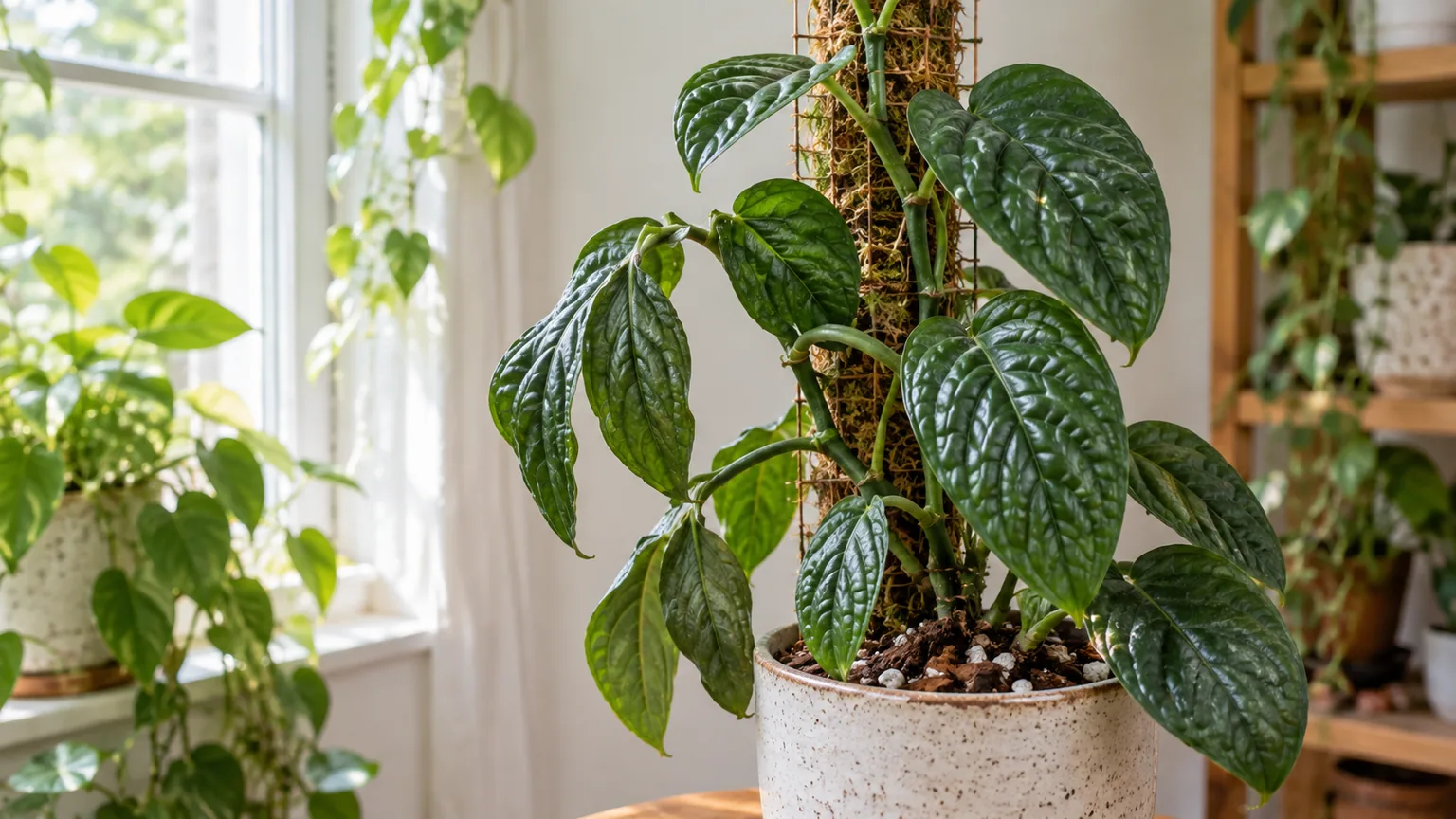
Wilting on Monstera Peru: Causes, Checks & Recovery
This guide covers wilting on Monstera Peru. See also the general Wilting guide, watering, and light pages for this plant.
Wilting on Monstera Peru: Causes, Checks & Recovery
Quick answer
Before watering a wilted Monstera Peru, feel the mix about 3–5 cm below the surface and lift the pot. If the root ball is dry and the pot is light, water it thoroughly once and let excess drain away; if the mix is wet and the pot is heavy, do not add more water. That first moisture check separates the two corrections that matter most and prevents the common mistake of pouring water onto roots that are already short of air.
Wilting describes a loss of firmness: leaves hang lower, petioles bend more than usual, or a whole section of the vine looks slack. It does not name a cause. On this compact aroid, thick, deeply puckered leaves can keep a convincing shape even while the root ball is drying or struggling, so use the pot and stem as evidence alongside the foliage. For the general mechanics behind wilting across plants, see our wilting guide; the useful question here is what the pattern means on a Monstera Peru in its particular pot and support.
What wilting looks like on Monstera Peru
A wilted Peru usually shows a change in position and firmness rather than a change in its distinctive quilted surface. One or more leaves may hang below their usual angle, a petiole may bow, or the newest section of vine may feel less supported. The puckering itself is normal for this trade plant; compare the current leaf angle with the plant’s own recent growth instead of treating every ridge or fold as dehydration.
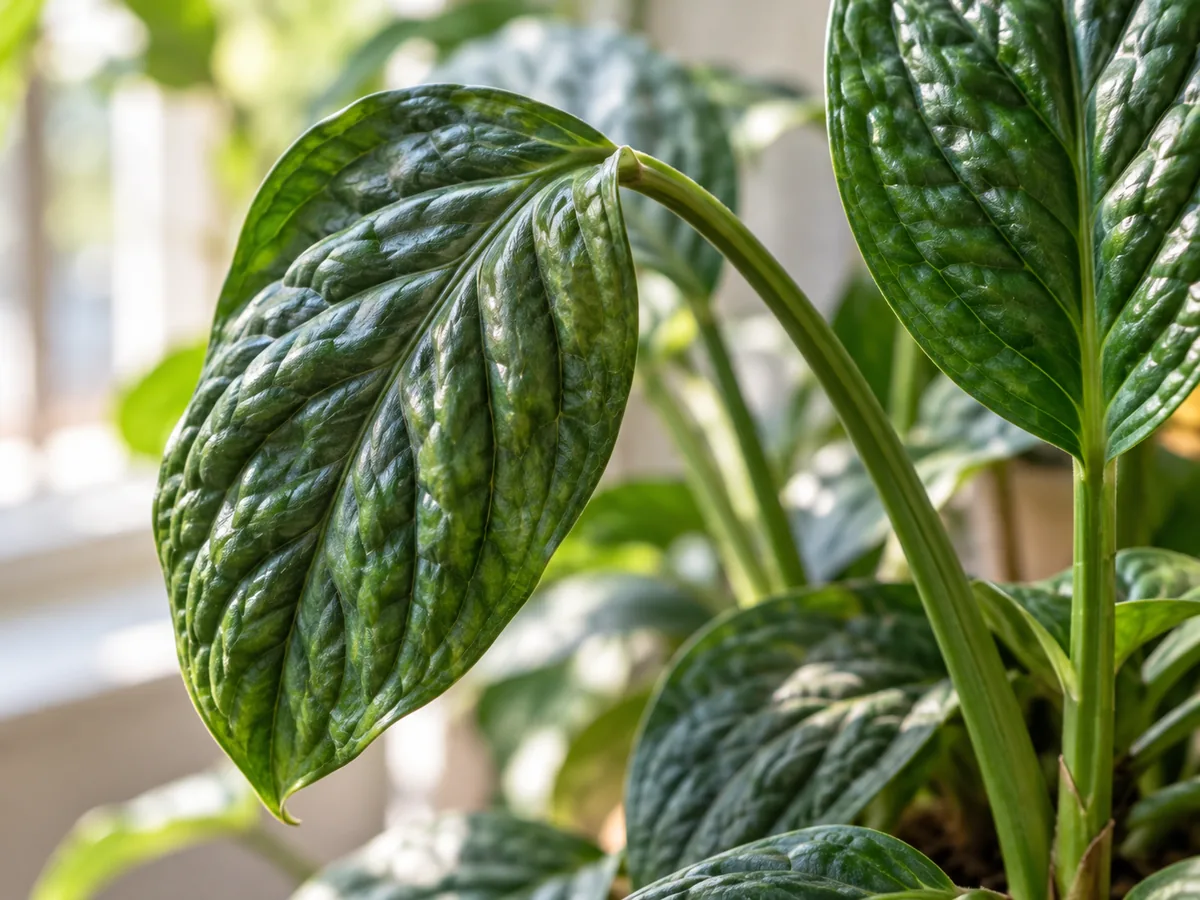
Compare the drooping petiole and leaf angle with the firmer neighboring leaf; the thick corrugated surface is normal for Monstera Peru.
Notice whether the change is sudden or gradual. Several leaves sagging within a day after a hot window exposure or a missed watering call for a different first check than one lower leaf gradually declining while the rest of the plant remains firm. A new leaf that is still unfurling can also hang temporarily; assess the petiole and leaf blade over the next few days instead of forcing or trimming it. If the leaves remain firm but simply point downward because the vine is long or unsupported, treat that as a posture or support question before assuming a water problem.
Why Monstera Peru can wilt with dry or wet soil
The most important distinction is not “too much” versus “too little” water as a calendar error; it is whether healthy roots can access moisture and air. A dry root ball has too little available water. A saturated root ball can lose oxygen, and damaged roots may then fail to supply water to leaves despite the wet mix. Clemson Extension cautions that overwatering and underwatering can produce similar symptoms, and that a plant may wilt when root injury reduces water uptake; watering in that situation can make matters worse (Clemson’s indoor watering guidance).
The references available for this guide do not include a controlled wilting study on the plant sold as Monstera Peru. Penn State’s advice is for Monstera as a houseplant, while Clemson and Missouri Botanical Garden describe broader indoor-plant or plant-health mechanisms. Those sources support the root-zone checks and explain why wet roots can still be associated with wilt; they do not establish a Peru-specific watering interval or predict how quickly an individual plant will recover. The practical interpretation below combines those general mechanisms with this plant profile’s thick leaves, climbing habit, chunky mix, and usual small indoor pot.
A dry root ball can leave the leaves limp
When the mix has dried through the active root zone, the plant has less water available to replace what leaves lose to the room. The pot usually feels lighter than it did after watering, a wooden skewer pulled from mid-depth comes out mostly clean, and the mix may have pulled slightly from the pot edge. Peru’s thick foliage may not announce drought as quickly as a thin leaf does, so waiting for dramatic collapse is a poor watering signal.
Penn State Extension’s general Monstera guidance is to water thoroughly and allow the top 1–2 inches of soil to dry between waterings; it also warns that overwatering can lead to root rot (Monstera houseplant care). That is a useful reference point, not a rigid measurement for every Peru pot. A shallow board-mounted container, a large moss pole, a plastic nursery pot, and a terracotta pot can dry at different speeds, so confirm the mix at depth and use the pot’s changing weight rather than copying a weekly schedule.
Wet mix can wilt a plant with damaged roots
A heavy pot that stays damp well beyond its usual dry-down changes the diagnosis. Persistent saturation reduces the air available around roots; as roots decline, leaves can lose firmness even though the soil looks wet. The Missouri Botanical Garden’s overwatering guidance describes this general sequence and notes that sour or rotten-smelling soil can indicate prolonged loss of oxygen.
For Monstera Peru, wet-root trouble is more plausible after repeated watering before the upper mix dries, a pot without working drainage, a cachepot holding runoff, a dense mix, or a dim placement where the root ball dries slowly. Wilting alone does not prove rot. Look for a cluster of clues: persistent wetness, yellowing that spreads, a sour odor at the drainage holes, a soft stem base, or roots that are mushy rather than firm. If the plant is still in a heavy wet pot but the stem base is solid and the leaves are not worsening, stop watering and observe the dry-down before disturbing the roots.
Light, heat, and recent moves can change water demand
A plant near a hot afternoon window may temporarily lose firmness faster than its roots can replace water, especially if the pot has dried too far. The Missouri Botanical Garden notes that some plants wilt in hot sun and may recover later as the sun moves; this is a reason to check the root zone before reflexively watering. Move the Peru out of a direct hot beam and let the room cool, then reassess its leaves and mix. Do not make a permanent light change from one afternoon’s posture alone.
Low light can contribute indirectly by slowing growth and extending the time a pot remains damp. A Peru shifted from a bright filtered spot into a dim corner may still receive the same watering it needed before, while using moisture more slowly. If long internodes and small new leaves have appeared alongside slow dry-down, review the Monstera Peru light guide and adjust light gradually. Cold drafts, air-conditioning, or a sudden change in room conditions can also coincide with decline; note the timing rather than changing watering, support, and fertilizer together.
Peru’s support and pot shape affect the check
Monstera Peru is grown as a compact climber or shingling aroid, and the support changes what you can see. In a shallow board-mounted pot, the exposed surface may dry while the root mass tucked against the back of the mount remains damp. Check near the drainage opening or use a skewer at mid-depth rather than judging only the visible front edge. A dry-looking board is not evidence that the pot needs water.
A moss pole also has its own surface moisture. The pole can dry sooner than the potting mix, and the aerial roots may be attached to the support rather than spread evenly through the container. Do not pour extra water into the pot solely because the pole feels dry. First check the root zone; water the pole separately only if maintaining a moist attachment surface is part of your growing setup. If the plant’s stems are firm and only the long unsupported growth hangs, add or adjust support after the moisture diagnosis instead of treating the leaf posture as wilt.
What to check before changing care
Use these checks in order, and stop once the evidence points clearly to a cause. You do not need to unpot a Peru that has one limp leaf and otherwise normal growth. Record what you find so the next watering decision is based on a trend rather than a single visual impression.
- Compare the whole plant. Is the whole vine limp, or is only one leaf or one branch affected? Sudden whole-plant wilt suggests a root-zone or environmental event; one localized section also calls for checking for a kink, tie, or damaged stem.
- Test moisture below the surface. Insert a clean wooden skewer near the middle of the root ball, avoiding the main stem. If it comes out dark and cool with mix clinging to it, the core is still damp even if the surface looks dry. If it is nearly clean and the pot is much lighter, the plant may be ready for water.
- Lift the pot. Compare its weight with what it feels like just after a thorough watering. If you have not made that comparison before, use the skewer and finger check today, then remember the heft after the next normal watering as a baseline.
- Look at drainage and the cachepot. Make sure the inner pot has open drainage holes and is not standing in runoff. Note whether water drains freely or sits on top; slow drainage plus a heavy pot is a warning about the mix or container, not a signal to keep adding water.
- Review the last two weeks. Note missed watering, a recent repot, a move to darker light, direct sun, a cold draft, or a change in support. The Monstera Peru watering guide explains why its interval changes with pot depth, light, mix, and season.
- Check the stem base and newest growth. A firm stem and a healthy growing tip are reassuring even if one old leaf is limp. Softening at the soil line, a sour smell, or decline moving into several leaves warrants a closer root inspection.
Clemson’s general watering guidance lists touch, pot weight, and other physical checks because watering frequency varies with plant, pot, soil mix, location, and growth stage (indoor plant watering factors). Use that as a reason to inspect this individual pot, not to infer a universal Peru schedule from a room-temperature number or one dry surface.
The first fix: correct the root-zone condition you confirmed
Start with the moisture check above; do not combine watering, repotting, fertilizing, pruning, and relocation into one response. If the root ball is dry through the upper few centimetres and the pot is light, water evenly until excess exits the drainage holes, then empty the saucer or cachepot. Let the plant drain completely and return it to its normal bright, filtered location. Recheck later rather than giving several small splashes that wet only one channel through the mix.
If the root ball is damp or wet, withhold water. Empty standing runoff and let the mix approach its normal dry-down before the next watering. A wet pot by itself is not a reason to tear apart healthy roots; reserve unpotting for worsening symptoms or other evidence of root failure. If the pot is wet because it is in a dark position, improve the light gradually and reassess dry-down; do not suddenly place a recovering plant in harsh direct sun.
If the skewer is dry but water runs straight down the pot edge, the center may be hydrophobic rather than uniformly dry. Rewet slowly in stages, pause, then water again until the root ball absorbs moisture and drains. At the next appropriate repot, the Monstera Peru soil guide can help you choose a chunkier, more evenly wettable mix. Do not repot solely because the leaves droop if the mix drains and the roots remain sound.
When a root inspection is justified
Slide the plant gently from its pot only when persistent wilt is paired with a heavy wet root ball, sour odor, softening near the soil line, or continuing yellowing. Support the vine and its pole or board as you remove it so the stem is not pulled against the support. Clear enough loose mix to see the roots, but avoid washing or stripping every healthy root when the plant is already under stress.
Healthy roots are generally firm; color varies with the plant and growing medium. Mushy, dark roots that collapse or smell rotten are more convincing evidence of rot than color alone. Better Homes & Gardens explains that root rot can mimic other houseplant problems and recommends checking root texture and odor, since healthy roots are firm while rotted roots may be black, mushy, or smelly (root rot signs and checks). This is general houseplant advice, not a Peru-specific diagnostic test, so interpret it with the soil history and the whole plant.
If a small number of roots are clearly soft and damaged, trim only the affected tissue with clean scissors, remove the decaying mix, and repot into a clean container with drainage and fresh airy substrate. Keep the pot close to the remaining root volume; a much larger container would hold more wet mix around a weakened root system. If most roots have collapsed or the stem base is soft, recovery is uncertain. A healthy firm stem section with a node may still be worth propagating, but do not promise yourself that a cutting will succeed or keep the original plant in saturated mix while you wait.
Read the climbing stem, node, and aerial roots
A Peru’s climbing architecture can help separate a support problem from a water problem. The stem carries leaves from distinct nodes, and aerial roots may press against a board or moss pole. If the leaf blade feels firm but the vine has leaned away from its support, check its tie and support stability; a long unsupported section can hang under its own weight without the whole plant being hydraulically wilted. Firmness across leaves and stems matters more than whether every leaf points upward.
If one section alone droops, inspect the stem at and just below that node for a sharp bend, crushing tie, or break. Loosen a tie that is pinching the vine and secure the stem gently to a stable support. Do not cut a sound vine simply because its leaves hang lower than the plant’s top leaves. Where the whole vine is limp and the pot is wet or dry, return to the root-zone checks; support cannot correct a failed root system.
Aerial roots are useful evidence of the plant’s growth direction, but their exposed tips do not tell you whether the inner pot is dry. A dry aerial root on a board or pole can coexist with a damp root ball. Check the pot separately, then decide whether the support needs moisture. This distinction prevents a common Peru-specific error: repeatedly watering the substrate to satisfy a surface-dry support while the actual roots remain wet.
Recovery: what should improve and what may not
After a dry plant receives a thorough watering, observe whether the leaves regain firmness over the following hours and into the next day. A partial response supports drought as a cause, but it does not rule out damaged roots if the pot was chronically dry or if wilt returns quickly. If the plant stays limp while the pot is wet, stop adding water and reassess the roots and drainage rather than repeating the soak.
A leaf that has turned yellow, developed a dry brown margin, or been physically creased may not return to its previous appearance. Recovery is better judged by the stem staying firm, no additional leaves collapsing, and a new leaf emerging normally once the plant resumes growth. Do not remove every imperfect leaf; green tissue still contributes to the plant. Prune only tissue that is fully dead, rotting, or in the way of a confirmed root repair.
A Peru recovering from root loss may need weeks rather than days to show a convincing response because it first has to rebuild a functioning root zone. Keep conditions stable: bright indirect light, no fertilizer while roots are compromised, and watering only when the mix reaches the plant’s normal dry-down point. The BHG root-rot guidance notes that moderate cases can improve while severe damage may not be salvageable; treat that as a general houseplant range, not a guarantee for this plant. If the stem base continues to soften or the decline spreads despite a corrected root zone, the chances of saving the original plant are poor.
Wilting lookalikes on Monstera Peru
“Droop” and “wilt” are often used interchangeably in casual care advice, but they are useful to separate during diagnosis. Wilt is a loss of firmness in the leaf or petiole; drooping can describe a healthy leaf that naturally hangs or a vine that lacks support. Compare the plant’s own usual shape with the physical state of the leaf and the root zone.
| What you see | More likely explanation | What to check next |
|---|---|---|
| Whole plant limp; pot very light; mix dry at depth | Underwatering or a root ball that has become hard to rewet | Water thoroughly, drain, and compare the plant again later; see underwatering on Monstera Peru |
| Limp leaves; pot heavy and mix still wet | Root stress or early root decline, not thirst alone | Withhold water; check drainage and smell; inspect roots if symptoms worsen; see root rot on Monstera Peru |
| Lower leaves yellowing while pot stays wet | Overwatering, poor drainage, or old-leaf decline; context matters | Track whether more leaves follow and whether the stem base stays firm; compare overwatering on Monstera Peru |
| Leaves lose firmness only during hot direct sun, then recover in cooler conditions | Temporary heat-related water loss may be involved | Filter the light and check moisture before watering; do not use a single afternoon as the diagnosis |
| Leaves are firm but hang from a long vine | Support, leaf angle, or growth habit rather than true wilt | Adjust the support and compare with drooping leaves |
| New growth is small and internodes are long while the pot dries slowly | Light may be too low for active growth | Review light placement and watering together |
When the root zone is healthy and the symptom is really leaf posture, the Monstera Peru problems hub helps route you to the appropriate sibling page. Avoid treating all drooping as thirst: Clemson notes that wet and dry root injury can produce overlapping symptoms, which is why moisture and root condition belong in the diagnosis before the remedy.
Prevent a repeat without watering by the calendar
Use a repeatable check instead of a fixed weekly dose. For this plant profile, begin checking when the upper 3–5 cm of mix feels dry, then combine that with pot weight and the expected dry-down of the container. Penn State’s Monstera recommendation to let the upper 1–2 inches dry is a genus-level reference; use it as a starting point and adapt for Peru’s pot, support, room, and seasonal growth.
Keep the pot and mix matched to the root system. A chunky, freely draining aroid mix and working drainage holes give you a clearer dry-down than a large cachepot filled with fine, compacted media. If the existing mix stays wet long after the upper layer dries, plan a mix refresh when the plant is stable. Do not increase pot size to compensate for wilt; extra unused wet mix can prolong the same problem.
Recheck after changing light or support. A move to a brighter filtered window can speed water use; a move to a dimmer shelf can slow it. Board-mounted roots may sit in a shallow, unevenly drying pocket, while a pole-mounted plant has an additional support surface whose moisture is separate from the pot. After a move, repot, or support change, observe one or two normal watering cycles before settling on a new interval.
Give the vine stable bright indirect light and avoid hot direct sun that repeatedly causes temporary leaf droop. Keep the support secure without tying tightly around the stem, and do not fertilize to fix wilt. Fertilizer cannot restore oxygen to waterlogged roots or rewet a dry, hydrophobic root ball; wait until the plant’s root condition and new growth are stable before returning to ordinary feeding. For the broader identity, growth habit, and care defaults, see the Monstera Peru overview.
When to act urgently
Move from observation to root inspection if the stem base softens, the root ball smells sour, several leaves decline in quick succession while the mix is wet, or water has been standing in the cachepot for days. Those signs suggest a root-zone problem that needs more than a small watering adjustment. If the plant is wilting in a dry pot but its stem is firm, water once and give it time to drain before making another change.
A single older leaf that slowly fades while the rest of the vine is firm is less urgent than a whole stem collapsing. Check that the pot drains, remove standing runoff, and keep the plant in a stable position while you observe. If most roots are soft and the base of the vine is deteriorating, the original plant may not recover; a viable node cutting can be a backup, but only firm, healthy tissue is a reasonable candidate. Do not keep pruning sound leaves or applying fertilizer in an attempt to force a response.
When to use this page vs other Monstera Peru guides
Use this guide when the leaves or petioles have lost firmness and you need to determine whether the root ball is too dry, too wet, or compromised. Use the underwatering guide when the pot and mix are dry, and the overwatering or root-rot guides when the pot stays wet or the roots show damage. If the leaves remain firm but hang from the vine, use the drooping-leaves guide; if the concern is placement or slow dry-down, pair the light and watering guides with the root-zone checks here. The Monstera Peru problems hub can help route a symptom that does not fit these patterns.
Related Monstera Peru guides
- Monstera Peru overview — identity, growth habit, and whole-plant care context.
- Monstera Peru watering — dry-down checks, pot weight, and seasonal watering changes.
- Monstera Peru soil — mix and drainage adjustments if the root ball stays wet.
- Underwatering on Monstera Peru — when the root ball is dry and the pot is light.
- Overwatering on Monstera Peru and root rot on Monstera Peru — when wet mix and root damage are the stronger clues.
- Drooping leaves on Monstera Peru — when leaves hang but remain firm.
Related tool
Try the Plant Problem Diagnosis Tool with Monstera Peru pre-selected to organize your observations before changing its care.