Leggy Growth on Oleander: Causes, Pruning Fixes & Sun
Quick answer
Leggy growth on Oleander (Nerium oleander) is characterized by elongated internodes, sparse leaf whorls, thin whippy stems, and a severe reduction in flower bud formation. It is overwhelmingly caused by insufficient direct sunlight (shady planting sites or indoor overwintering) or excessive high-nitrogen fertilization. First steps: move the shrub into at least 6 to 8 hours of unfiltered direct daily sunlight, halt high-nitrogen fertilizers, and perform selective heading pruning cuts just above a node in late winter or early spring to stimulate dense branching.
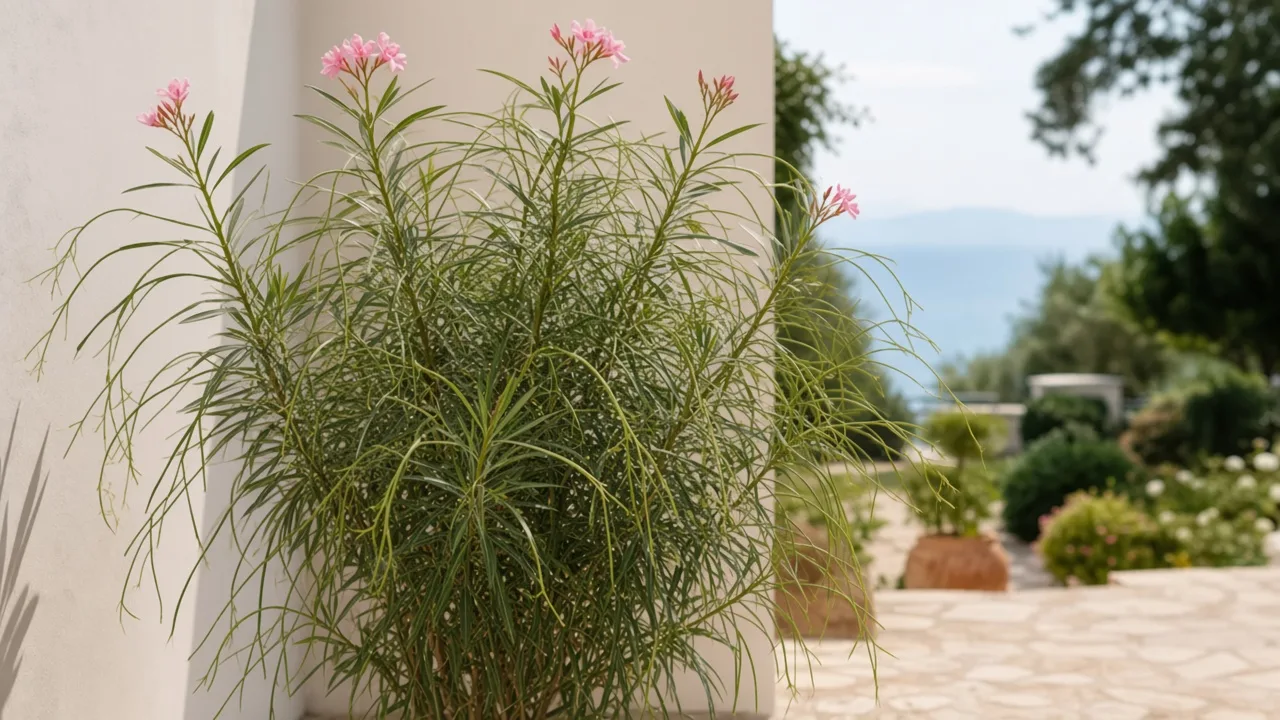
Leggy Growth on Oleander: Causes, Pruning Fixes & Sun Recovery
This guide covers leggy growth on Oleander. See also the general Leggy Growth guide, watering, and light pages for this plant.
Leggy Growth on Oleander: Causes, Pruning Fixes & Sun Recovery
Quick answer
Leggy growth on Nerium oleander is characterized by abnormally wide spacing between leaf whorls, thin, flexible branches that arch or droop, pale green foliage, and a noticeable absence of flower clusters. Oleander is an obligate sun-loving Mediterranean shrub; when grown in partial shade, beneath heavy tree canopies, or indoors without high-intensity lighting, the plant undergoes etiolation, channeling its energy into upward stem elongation in search of light rather than building dense, woody caliper. To restore a bushy, compact form and heavy summer blooming, relocate the plant to full direct sunlight (at least 6 to 8 hours daily), eliminate high-nitrogen fertilizers, and prune leggy stems back to outward-facing leaf nodes in late winter.
For universal architectural recovery principles across woody landscape shrubs, review our comprehensive guide on leggy growth.
What leggy growth looks like on Oleander
A healthy Nerium oleander develops dense, upright stems clothed in tight, leathery leaf whorls. Etiolated plants exhibit several clear structural deformities:
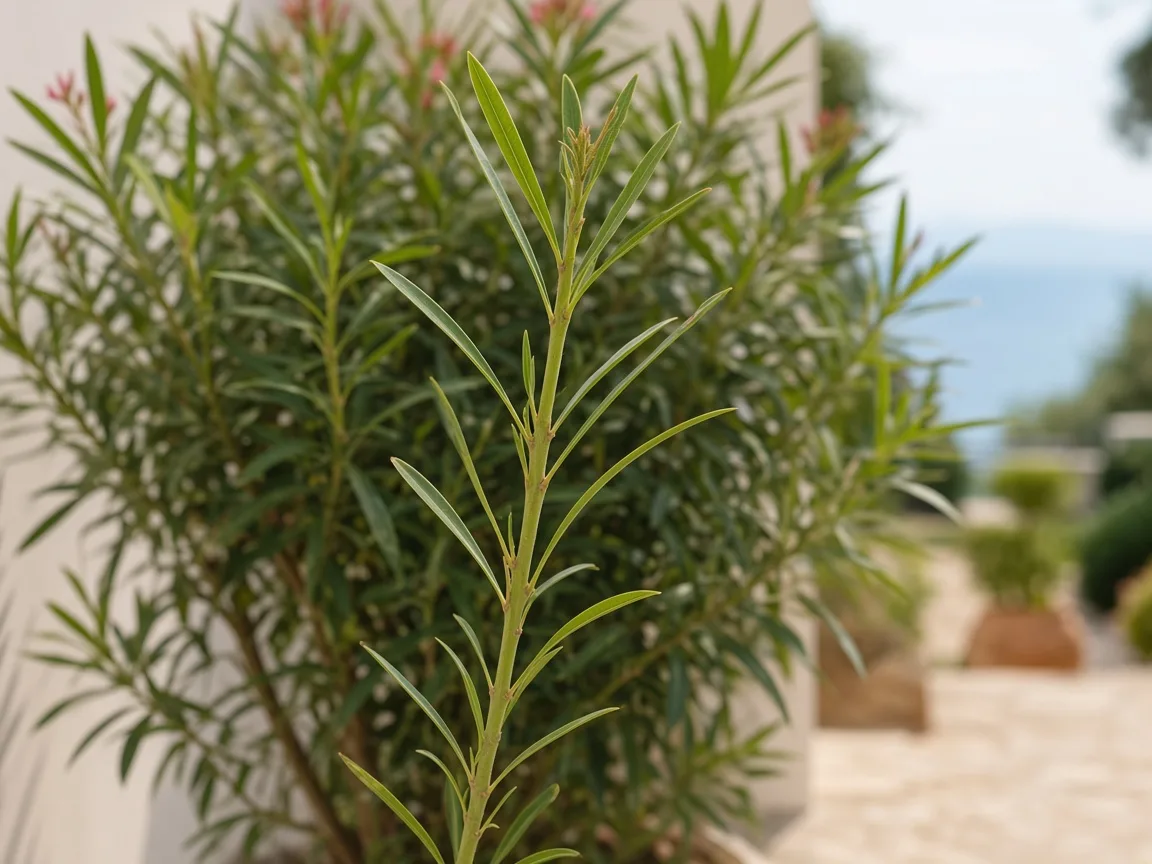
Close-up of Nerium oleander branch showing abnormally stretched, pale internodes and sparse leaf whorls caused by light starvation.
- Abnormally wide internodal gaps: Healthy oleanders produce leaf whorls separated by only 2 to 4 centimeters. Stretched plants display 8 to 15 centimeters of bare, green stem between nodes.
- Thin, whippy, weeping stems: Branches remain pencil-thin and green long after they should have developed thick, gray-brown lignified bark, causing stems to flop outward under the weight of rain or foliage, compounding drooping leaves.
- Sparse interior canopy: Older interior leaves yellow and shed prematurely from light deprivation, leaving long, naked canes with foliage only at the very branch tips.
- Absence of flower trusses: Oleander flower buds develop on sturdy, well-lit terminal shoots. Leggy branches produce few or no floral buds, resulting in poor seasonal flowering and slow growth.
- Phototropic bending: Stems curve dramatically toward the brightest available light source rather than growing in an erect, vase-shaped habit.
If uncorrected, weak leggy stems snap easily in strong summer storms and remain vulnerable to pest infestations like oleander aphids.
Why Oleander shrubs develop leggy growth
Nerium oleander evolved along open, sun-baked Mediterranean waterways and coastal plains, thriving in full, unfiltered solar radiation, as detailed by NC State Extension and UF IFAS Extension.
The primary physiological causes of spindly elongation include:
1. Inadequate direct solar radiation (Etiolation)
Oleander requires an absolute minimum of 6 hours of full direct sun daily to maintain dense branching, with 8 or more hours preferred, according to the Missouri Botanical Garden. In shade or filtered light, phytochrome photoreceptors trigger rapid cell division and cellular elongation in stem tissue, stretching the plant upward toward the light canopy.
2. Excessive nitrogen fertilization
Overfeeding with synthetic lawn fertilizers or fast-release nitrogen concentrates floods the plant with nitrates. This fuels rapid, soft vegetative growth before secondary cell wall lignification can solidify the stems, making them weak, brittle, and leggy, as warned by Clemson Cooperative Extension.
3. Overwintering indoors in low light
In USDA Zone 7 and cooler climates, container oleanders moved indoors for winter freeze protection often suffer severe etiolation. Warm household temperatures combined with short winter daylengths trick the plant into active vegetative growth without sufficient light intensity.
4. Lack of routine rejuvenating pruning
Unpruned oleanders naturally become top-heavy over several years. As the upper canopy shades the lower branches, lower leaves drop, leaving bare, leggy lower trunks.
Step-by-step remediation protocol
Restore compact architecture, thick woody stems, and heavy flower set with this four-step sequence:
Step 1: Transition into full direct sun
- If moving an indoor or greenhouse oleander outdoors, harden it off gradually over 7 to 10 days to avoid foliar sunburn.
- Place the shrub in morning sun and afternoon shade for 4 days, then move it into all-day, unfiltered direct sunlight (6 to 8+ hours).
Step 2: Halt high-nitrogen feeding
- Immediately stop applying synthetic, high-nitrogen fertilizers.
- If feeding is needed in spring, choose a balanced, slow-release granular fertilizer (such as 10-10-10 or 8-8-8 with micronutrients) applied at half the label rate.
Step 3: Perform heading cuts to force lateral branching
- Safety gear: Put on puncture-proof waterproof gloves, long sleeves, and eye protection. Nerium oleander contains lethal cardenolides in its milky sap.
- Timing: Prune in late winter or early spring before active bud break, following shrub renewal principles from the Wisconsin Horticulture Division of Extension.
- Cut placement: Using sharp, sterilized bypass pruners, cut leggy stems back by one-third to one-half. Make each cut 5 to 7 millimeters above an outward-facing leaf whorl or dormant bud at a 45-degree angle.
- Response: Removing the terminal shoot breaks apical dominance, forcing multiple dormant buds below the cut to sprout into dense, sturdy lateral shoots.
Step 4: Disinfect and dispose of prunings safely
- Disinfect pruner blades with 70% isopropyl alcohol after completing cuts.
- Bag and dispose of all cuttings in municipal yard waste or trash. Never burn oleander trimmings, as smoke carries aerosolized toxic cardenolides.
Long-term cultural practices to maintain compact growth
Ensure dense, flower-laden oleander shrubs season after season:
- Annual spring shaping: Lightly head back wayward branches each spring after the main frost risk passes to maintain balanced, multi-stemmed structure.
- Tip pinching young shoots: In late spring, pinch out the soft green growing tips of young shoots to encourage secondary branching before flower buds form.
- Proper container spacing: Space potted oleanders so their canopies do not shade each other, allowing sunlight to penetrate all the way to the container base.
- Cool, bright winter dormancy: Store container oleanders in an unheated garage, porch, or cool greenhouse kept between 35°F and 45°F (2°C to 7°C) to enforce true winter rest and prevent weak winter flushes.
Related tool
Measure your plant’s daily sunlight exposure and verify adequate solar hours with our Light Requirement Calculator.
Related oleander problems: