Mold on Soil on Philodendron Ring of Fire: Causes, Checks &
Quick answer
White fuzz on a Philodendron Ring of Fire's soil is almost always harmless saprophytic fungus feeding on damp bark and organic matter, not an infection of the plant. First step: scrape off the top 1–2 cm of moldy mix and debris, then let the top 3–5 cm dry before watering again.
Mold on Soil on Philodendron Ring of Fire: Causes, Checks & Fixes
This guide covers mold on soil on Philodendron Ring of Fire. See also the general Mold on Soil guide, watering, and light pages for this plant.
Mold on Soil on Philodendron Ring of Fire: Causes, Checks & Fixes
Quick answer
White fuzz across your Philodendron Ring of Fire’s potting mix looks alarming but is almost always harmless saprophytic fungus feeding on damp bark and organic matter, not an infection attacking the plant. It shows up because the chunky aroid mix this cultivar needs stays wet at the surface too long — calendar watering, a heavy pot with weak drainage, still humid air, or a constantly damp moss pole. First, scrape off the top 1–2 cm of fuzzy mix plus any fallen leaves or debris, then let the top 3–5 cm dry out before you water again.
For the general mechanics of how chronic wet mix feeds surface fungi, see our mold on soil guide. Everything below is about why it happens on a Ring of Fire specifically and what to do about it.
What mold looks like on a Ring of Fire’s mix
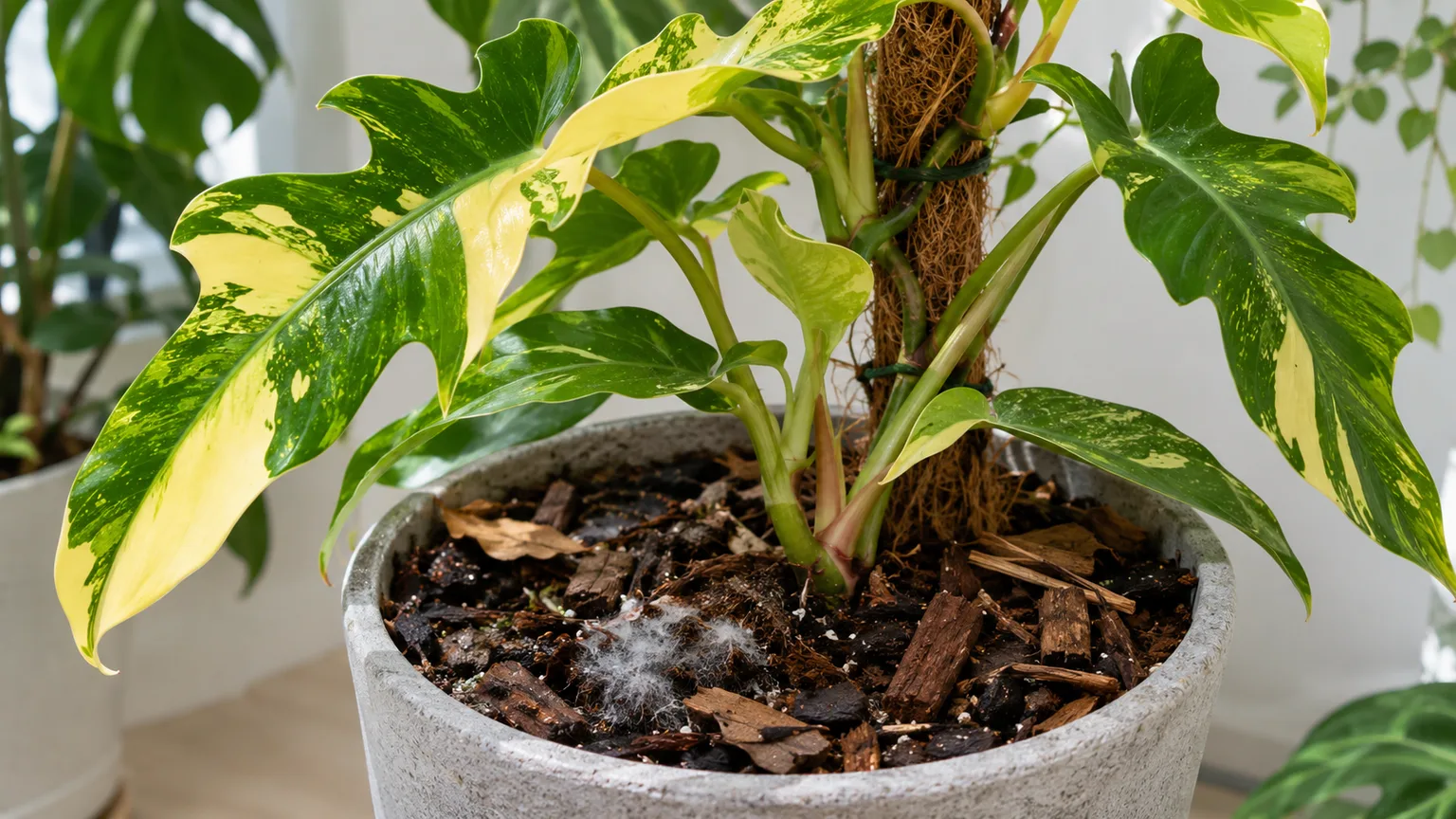
On this plant you will usually see a thin white or pale-grey fuzzy film spreading over dark bark chunks, sometimes with fine threads bridging between pieces of perlite and bark. It often rings the pot rim and the base of the moss pole first, because those spots dry last. You may also spot tiny mushrooms popping up after a heavy watering — these are just the fruiting bodies of the same decomposer fungi and equally harmless to the plant.
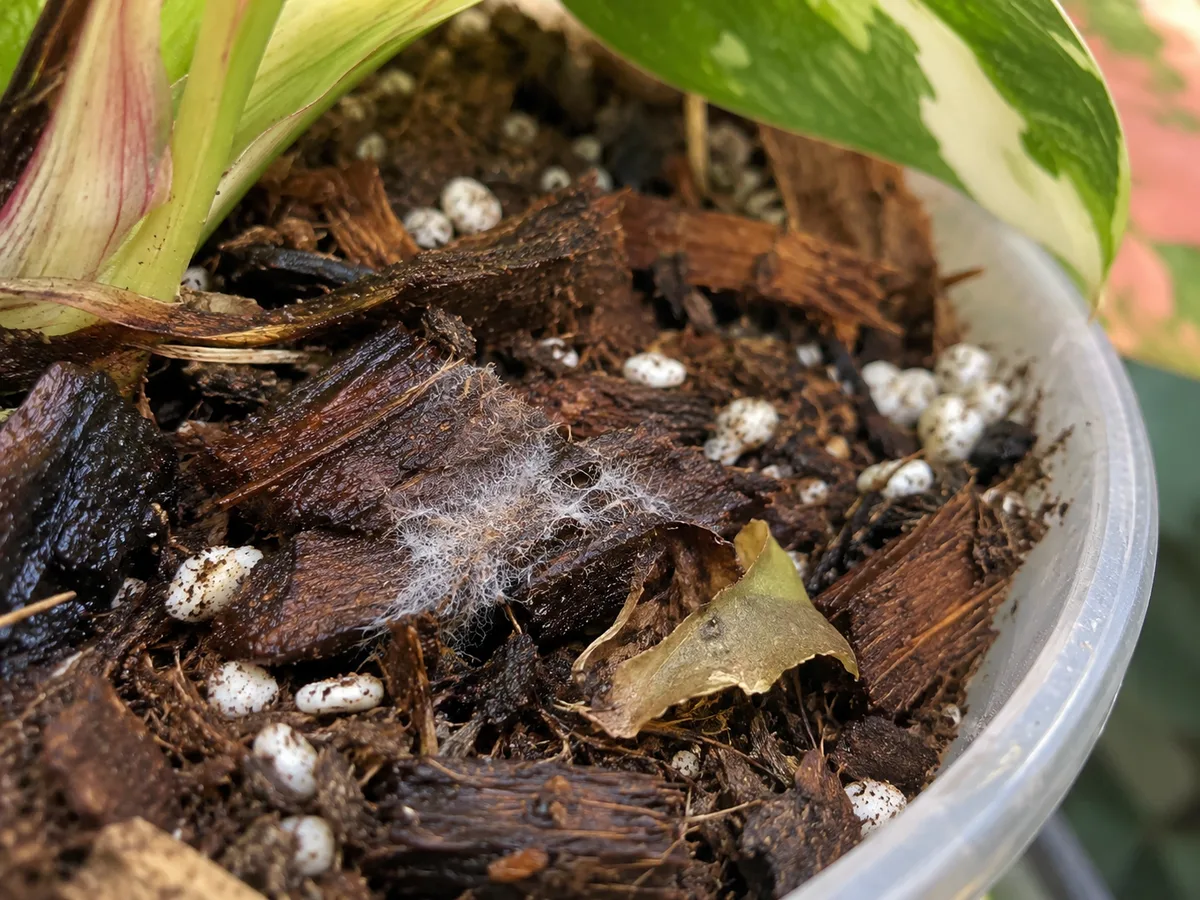
Surface mold forms a light fuzzy film on damp organic mix while the plant itself can remain healthy.
What you should not see alongside harmless mold is decline in the plant itself. Ring of Fire leaves should stay firm with crisp variegation, and new leaves should keep unfurling in reddish tones. If the fuzz coincides with rapidly yellowing leaves, stems softening at the soil line, or a sour smell from the pot, you are looking at deeper root-zone trouble wearing a moldy disguise.
Why bark-heavy Ring of Fire mix molds first
Ring of Fire demands a chunky, well-draining aroid mix of potting soil, perlite, and orchid bark, and that bark is exactly what surface fungi eat. These organisms are saprotrophic fungi — decomposers that recycle dead plant material into humus and nutrients rather than attacking living tissue. Every watering rehydrates the bark surface, and fungal spores are always present in the air and the bag of mix, so a surface that never fully dries will eventually fur over.
This is why mold on a Ring of Fire is rarely about “bad soil” and almost always about rhythm. If you water every 7 days on schedule while the top of the mix is still damp — common in winter or in a dim corner — the bark surface stays continuously moist and the fungi establish. Check the advice in our Ring of Fire watering guide and water only when the top 3–5 cm actually feels dry, not when the calendar says so.
Moss-pole moisture keeps the surface damp
Unlike a succulent in grit, a mature Ring of Fire usually climbs a moss pole, and that pole changes the drying pattern of the whole pot. Owners mist or pour water down the pole to keep aerial roots happy, and the runoff sheets straight onto the soil surface around the stem — the exact spot where mold appears first. A pole wrapped in perpetually soggy sphagnum also humidifies the air right above the mix, so the surface never gets a dry day.
Fix the pole before you blame the mix. Water the pole only when its moss feels dry to the touch, and direct most watering into the pot itself so you can judge dry-down properly. If the pole base is green with algae or fuzzy with mold while the rest of the surface is clean, the pole is the moisture source. Our Ring of Fire overview covers how climbing support fits into the plant’s overall culture.
Variegation, light placement, and slow dry-down
Ring of Fire’s pale cream and yellow leaf sectors scorch in harsh direct sun, so careful owners often set the plant a few feet back from a bright window — and that dimmer position slows everything down. Less light means less photosynthesis, less water uptake, and a pot surface that stays damp for days longer than expected, which is precisely the window surface fungi need. Cool winter rooms compound the effect, since growth stalls but watering often continues at summer frequency.
Give the plant the brightest indirect light you can without direct midday sun on the pale sectors, as described in our Ring of Fire light guide. A brighter position dries the surface faster, keeps variegation contrast strong, and shortens the damp spells that mold depends on. If you moved the plant away from a window and mold appeared within a few weeks, light — not the mix — is your prime suspect.
How to confirm the cause
Work through these checks in order before treating anything:
- Touch and lift test. Push a finger 3–5 cm into the mix and lift the pot. Damp mix plus a heavy pot days after watering confirms the surface never dries. A light pot with dry mix but persistent fuzz points to debris or a damp pole instead.
- Drainage audit. Look for blocked drainage holes, a saucer holding standing water, or a snug cachepot trapping moisture around the nursery pot. Extension guidance on fungal growth on indoor plant soil ties surface mold directly to excess moisture and stagnant air.
- Debris scan. Fallen leaves, spent sheaths, and crumbled bark dust on the surface are pure fungus food. A moldy pot with a littered surface is a cleaning problem first.
- Base-of-stem check. Squeeze stems gently at the soil line and sniff the pot. Firm stems and an earthy smell mean surface mold only; mushy stems or a sour, rotten odor mean root rot underneath, and the mold is the least of your problems.
- Gnat watch. Tiny black flies hovering when you disturb the pot mean fungus gnats are breeding in the same wet top layer. Mold plus gnats together confirm chronic surface wetness.
The first fix to try
Scrape off the top 1–2 cm of moldy mix and all surface debris, then let the pot dry until the top 3–5 cm feels dry before watering again. Use a spoon, work gently so you do not damage shallow roots, and throw the scrapings in the bin rather than composting them indoors. This single action removes both the visible fungus and much of its food, and drying breaks the damp-surface cycle it needs to regrow — the same scrape-and-dry sequence practical growers recommend for white mold films.
Do nothing else on day one. No repot, no fungicide, no fertilizer. One targeted correction lets you read the plant’s response instead of stacking stresses.
Step-by-step recovery
If the fuzz returns after scraping, work through these steps in order:
- Top-dress with fresh chunky mix. Replace what you scraped with coarse orchid bark and perlite rather than fine peat or compost. Coarse pieces dry faster at the surface and leave fewer fine particles for fungi to colonize.
- Reset the watering rhythm. Water deeply only when the top 3–5 cm is dry, then empty the saucer and remove the nursery pot from any tight cachepot until it stops dripping. Clemson’s guidance on philodendron watering and drainage stresses well-drained mix and avoiding waterlogged roots, which matches this cultivar’s needs.
- Add airflow and light. A small fan on low nearby, a brighter indirect position, and spacing between plants dry the surface far faster. Stagnant, humid, dim corners are mold factories even with correct watering.
- Rule out root rot. If leaves yellow, growth stalls, or the pot smells sour, unpot and inspect: white or tan firm roots are healthy, while brown mushy ones need trimming and a repot into fresh mix. Persistent surface mold with a heavy, sour pot is a classic early warning of the root rot pattern that overwatered climbing philodendrons develop (NC State on climbing philodendron care).
- Break the gnat cycle if present. Letting the top layer dry between waterings starves gnat larvae too. Yellow sticky traps catch adults while the dry surface prevents the next generation.
Recovery timeline
The fuzzy film itself stops spreading within a few days of scraping and drying, and the surface should look clean within one to two watering cycles. New leaves are your real scoreboard: a fresh spear unfurling with normal reddish color and firm texture means the root zone is fine. If new growth keeps emerging clean and no gnats hover after a month, the episode is over.
Worsening signs mean escalation. Spreading stem softness, multiple leaves yellowing at once, or mold returning within days despite a dry surface all point to rot deeper in the pot — unpot and inspect rather than scraping a third time.
Mistakes to avoid
- Dousing the soil with cinnamon, peroxide, or fungicide as a first move. These treat the symptom while the wet rhythm that caused it continues, and harsh drenches can damage fine roots. Fix moisture first; chemicals are rarely needed for surface mold.
- Repotting a healthy plant on day one. A full repot stresses a Ring of Fire for a problem that lives in the top centimeter of mix. Reserve repotting for confirmed rot.
- Watering from above onto the leaves and surface daily. Frequent light sprinkles keep the surface permanently damp while the lower roots stay thirsty. Water deeply and infrequently instead.
- Sealing the pot in a decorative cachepot with no airflow. Trapped humidity around the surface invites mold even when your watering volume is correct.
- Fertilizing a stressed, moldy plant. Extra salts and organic feed on a soggy surface feed fungi, not the plant. Hold feeding until the surface dries and growth resumes, then follow our Ring of Fire soil guide for mix and feeding context.
When to worry
Treat the situation as urgent if stems soften at the base, the pot smells sour or rotten, several leaves collapse at once, or the plant wobbles loosely because roots have decayed. These indicate root rot, not surface mold, and need prompt unpotting, trimming of dead roots, and fresh mix. Anyone in the home with a serious mold allergy or asthma should also have the scraped material removed promptly and ventilate while cleaning, since scraping releases a puff of spores.
How to prevent it next time
Build a routine where the surface regularly dries. Water on finger-test rather than schedule, keep the top dressed with coarse bark, clear fallen debris monthly, and give the plant bright indirect light with gentle air movement. In winter, when growth slows, stretch the interval toward 10–14 days and check before every soak — the rhythm in our Ring of Fire watering guide reflects exactly this seasonal shift. Surface mold is best understood as harmless saprophytic fungi doing decomposition work that tells you the pot is staying wetter than a climbing aroid prefers; bright indirect positions that dry compost slightly between waterings are the long-term prevention.
Related Philodendron Ring of Fire guides
- Philodendron Ring of Fire overview — start here for the plant’s overall needs and how climbing support, light, and watering fit together.
- Ring of Fire watering guide — use when mold keeps returning, since watering rhythm is the usual root cause.
- Ring of Fire soil guide — use when refreshing chunky mix or top-dressing after scraping mold.
- Ring of Fire light guide — use when the plant sits far from a window and the surface never dries.
Related tool
Use the Plant Problem Diagnosis Tool to narrow causes for mold on soil on this plant before changing multiple variables at once.