Aphids on Philodendron Xanadu: Causes, Checks & Fixes
Quick answer
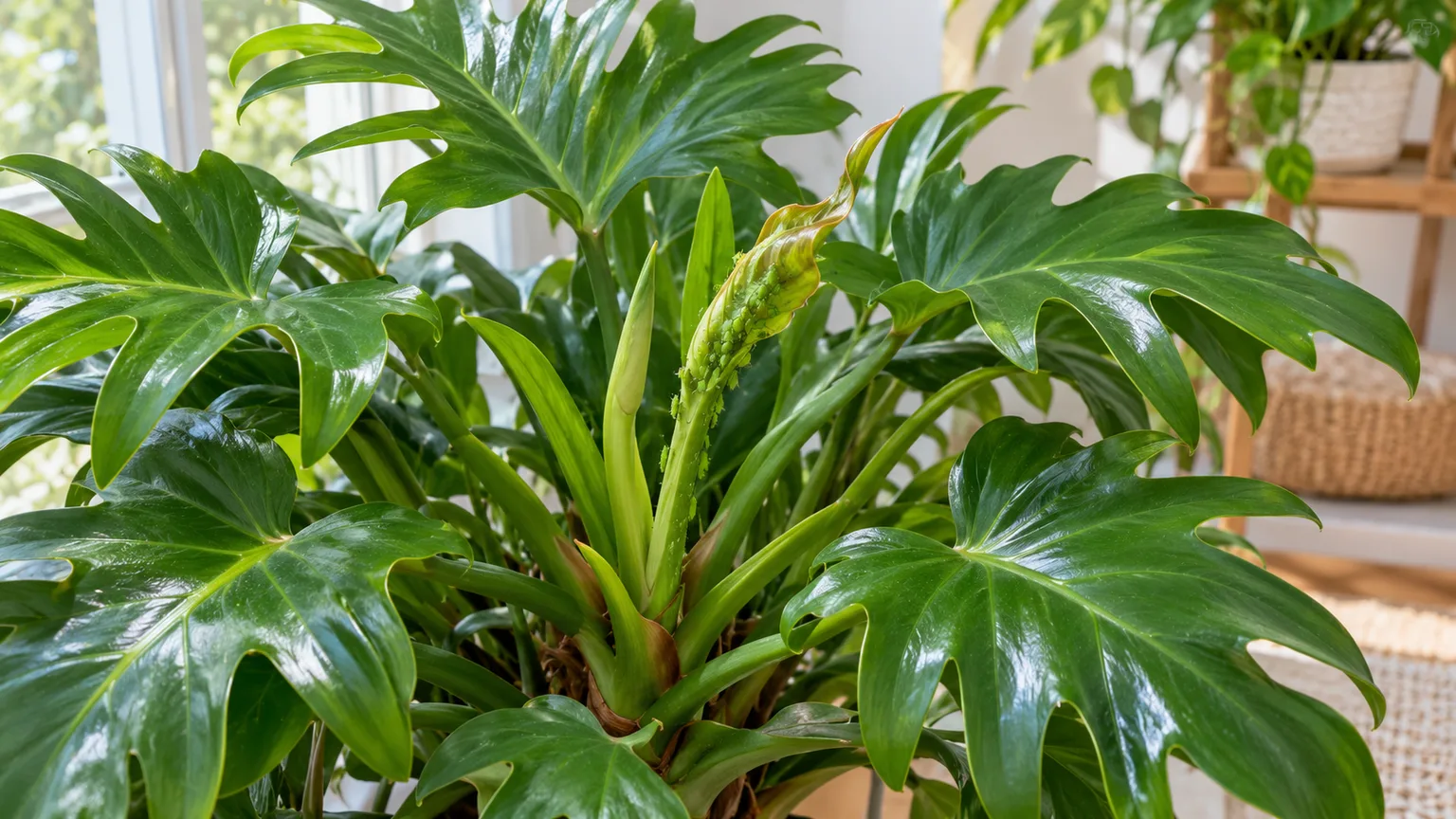
Aphids on Philodendron Xanadu cluster on the soft new spears in the central crown and the undersides of young lobed leaves. First step: isolate the plant and rinse the crown and new growth thoroughly with lukewarm water, then recheck in 3 to 4 days before reaching for any spray.
Aphids on Philodendron Xanadu: Causes, Checks & Fixes
This guide covers aphids on Philodendron Xanadu. See also the general Aphids guide, watering, and light pages for this plant.
Aphids on Philodendron Xanadu: Causes, Checks & Fixes
Quick answer
Aphids on Philodendron Xanadu gather on the softest tissue available: the pale spears unfurling from the central crown, the bases of young petioles, and the undersides of newly opened lobed leaves. Look for small pear-shaped insects in green, black, or yellow, sticky residue on leaves below the colony, and tiny white flecks that are molted skins. For aphid biology in general, see our aphids guide. On Xanadu, the pattern usually shows up as a stalled crown flush with distorted new lobes while older outer leaves still look fine.
First step: isolate the plant and rinse the crown and all new growth thoroughly with a firm stream of lukewarm water. Tilt the pot so runoff drains away from the soil, aim into the folds where spears emerge, and let the crown air-dry in good airflow. Recheck in 3 to 4 days and only escalate to a spray if live aphids remain.
What aphids look like on Philodendron Xanadu
Aphids are sap-sucking true bugs ranging from about 1 to 7 mm long, and on Xanadu they exploit the plant’s architecture. The self-heading rosette pushes new leaves from a tight central crown, and each emerging spear is wrapped in tender tissue that aphids pierce easily. Colonies line up along the spear edges and cluster where the petiole meets the leaf blade, spots a casual glance from above misses entirely.
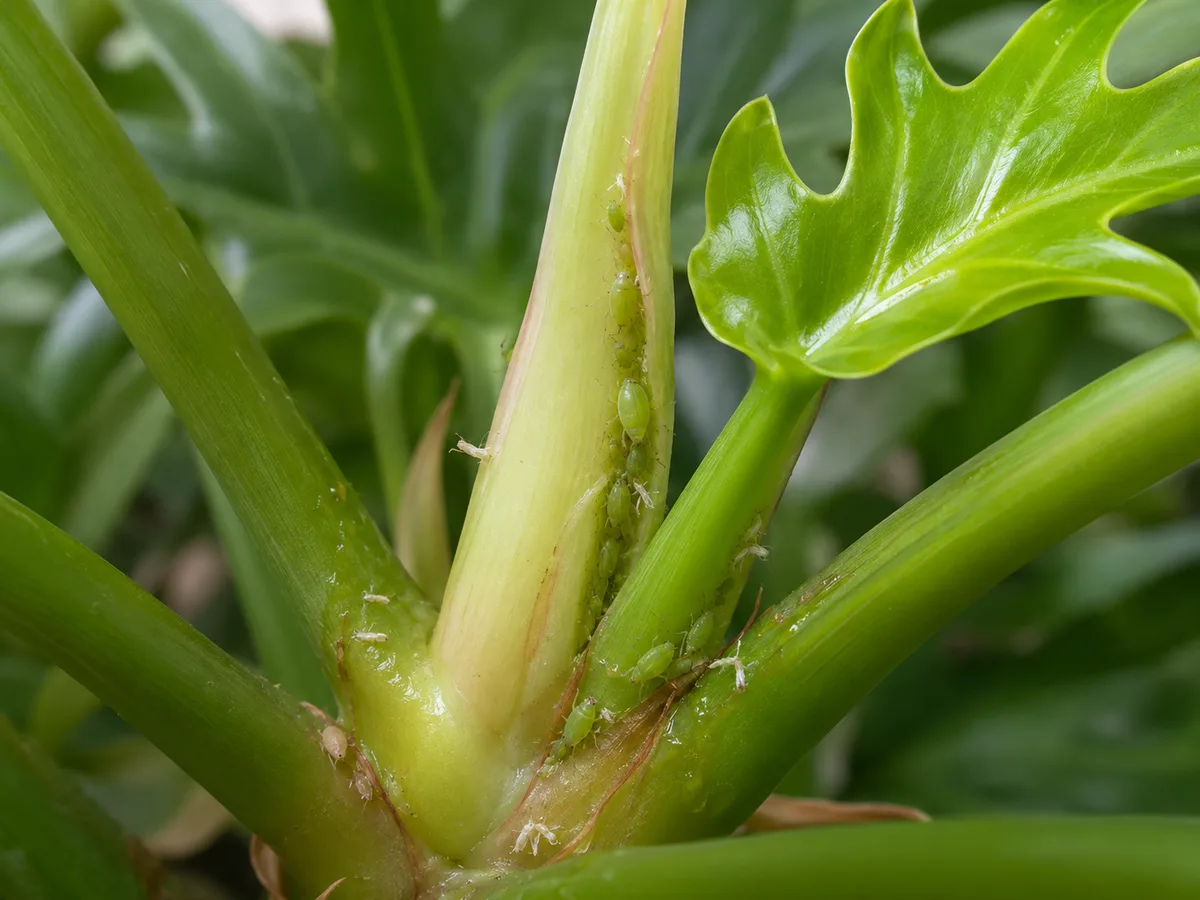
A small crown colony and shed skins can reveal aphids before older Xanadu leaves show damage.
Honeydew gives colonies away before you see the insects. As aphids feed they excrete a sweet sticky substance, and the RHS notes this honeydew is where black sooty molds grow. On Xanadu, honeydew drips from crown colonies onto the broad lobes below and collects in the clefts between lobes, so sticky lower leaves with a gray-black film point upward to a colony hiding in the crown. Ants trailing up the pot to tend the colony are another reliable signal.
New growth tells the rest of the story. Spears that stall half-unfurled, lobes that open twisted or undersized, and buds that yellow and drop all fit sustained sap loss at the growing point. Tiny white flecks scattered on leaves near the colony are molted nymph skins, which often appear days before the colony itself becomes obvious.
Why the Xanadu rosette invites aphids
Xanadu’s crown is both its charm and its vulnerability. Unlike climbing philodendrons that space new leaves along a vine, this plant stacks every new spear in one dense center, giving aphids continuous soft tissue in a sheltered, humid pocket. Indoor colonies stay active nearly year-round too, since the RHS notes aphids are most active in spring and summer outdoors but persist all year on indoor plants.
Soft overfed growth raises the odds. Xanadu pushed with frequent high-nitrogen feed produces lush sappy spears that aphids colonize first, which is why outbreaks often follow an enthusiastic spring feeding routine. New plants brought home from a greenhouse or store are the other classic entry point, as a few winged aphids ride along unnoticed and settle straight into the crown.
Dry stagnant indoor air helps colonies build. Still air around a crowded crown lets populations grow undisturbed, while leaves coated in household dust make early honeydew stickiness harder to notice until distortion appears.
How to confirm it is aphids
Work in good light with a phone magnifier and part the crown gently with your fingers.
- Find live insects. Look for clusters of pear-shaped, soft-bodied bugs on spear edges, petiole bases, and young leaf undersides. Colors vary by species, so accept green, black, yellow, or mottled forms.
- Check for honeydew. Run a finger over a lower lobe beneath the suspect spear. A sticky or varnished feel, especially with black film in the lobe clefts, supports aphids over edema or dust.
- Look for shed skins. Tiny white papery flecks on leaves and around the crown are molted nymph exoskeletons. Indoors these casts often show up a few days before the colony is large enough to spot easily.
- Rule out lookalikes. White cottony tufts that smear orange-red when dabbed are mealybugs, not aphids. Fine stippled yellowing with webbing at lobe junctions means spider mites. Hard immobile bumps on petioles are scale. Aphids move slowly when prodded and come off in a water stream, which the others do not.
- Gauge colony age. A few insects on one spear with no stickiness is a new arrival. Multiple spears coated, distorted lobes, and blackened lower leaves mean an established colony that needs the full follow-up sequence below.
The first fix to try
Isolate the plant away from other houseplants, then rinse. That single action removes most of the colony without chemicals and shows you exactly what remains afterward.
Carry the pot to a sink, shower, or outdoors and tilt it so water runs off the foliage rather than pooling into the mix. Run a firm stream of lukewarm water over every spear, into the crown folds, and across both sides of young leaves for a full minute or two. Aphid control guides list a strong water spray among the first options precisely because aphids grip weakly compared with scale or mealybugs.
Set the plant where air circulates and let the crown dry. Xanadu’s crown holds water in its folds, and a sopping crown in a dim corner invites fungal trouble, so airflow matters as much as the rinse itself. Do nothing else that day except checking neighbors for stray aphids.
Step-by-step follow-up
Recheck the crown on day 3 or 4. Aphids multiply fast on fresh new growth, with nymphs maturing in as little as a week, so one rinse rarely ends the job and timing the second pass catches hatchlings before they breed.
- Repeat the rinse if scattered live aphids remain but numbers clearly fell. Two rinses spaced several days apart clear most light infestations on Xanadu.
- Apply insecticidal soap on contact if colonies persist after the second rinse. Coat the insects themselves on spears and leaf undersides, since these sprays work by direct contact rather than residual action. Gardening Know How lists insecticidal soap among the core indoor methods for exactly this situation.
- Use neem oil as the next step for colonies tucked where sprays cannot reach. A thorough neem application covers crevices in the crown, and reapplication at label intervals breaks the roughly weekly aphid life cycle that lets missed nymphs restart the colony.
- Snip only the worst spear if one emerging leaf is coated beyond treatment and rotting in its sheath. Remove that single spear at its base, discard it in sealed trash rather than compost, and leave healthy spears alone so the crown keeps producing.
- Hold fertilizer until clean new growth resumes. Feeding a colony-stressed Xanadu pushes more of the soft tissue aphids want and can burn roots already taxed by sap loss.
Reserve synthetic insecticides as a last resort for valuable plants with repeated total-crown infestations, and follow the label exactly indoors. Most Xanadu cases resolve at step 2 or 3.
Recovery timeline
Judge recovery by the crown, not by old leaves. Spears that open clean, glossy, and full-sized mean feeding has stopped, while previously twisted lobes keep their shape permanently.
Light cases where one rinse plus a soap pass clears the colony usually show a healthy new spear within one to two weeks. Established crown-wide colonies with sooty mold need longer: expect two to four weeks of clean flushes before the plant looks like itself, plus wiping residual honeydew off older lobes so light reaches the leaf surface. If new spears keep emerging distorted after three weeks of consistent treatment, unpot-check the roots and general vigor, since a second stress such as chronic wet mix may be holding the plant back.
Lookalike symptoms on Xanadu
Several issues mimic aphid damage on this plant, and treating the wrong one wastes weeks. Use this table to route before spraying anything.
| What you see | Likely cause | How to separate it |
|---|---|---|
| White cottony clusters in petiole axils | Mealybugs | Waxy tufts smear when dabbed; no sticky sheen across whole lobes |
| Fine yellow stippling plus faint webbing | Spider mites | Damage on older outer leaves first; mites cause dots, not clusters of pear-shaped bugs |
| Hard brown bumps fixed on petioles | Scale | Bumps do not move or wash off in a rinse stream |
| Silvery scars and deformed new lobes, no stickiness | Thrips | Tiny slender insects that jump; damage looks scratched rather than sticky |
| Sticky leaves with visible soft-bodied clusters | Aphids (this page) | Pear-shaped insects plus honeydew and shed skins in the crown |
| Whole-plant wilt with heavy wet mix | Overwatering or root trouble | No insects; pot stays heavy days after watering |
When the pattern does not fit this page, the Xanadu problems hub lists the other diagnosed issues for this plant so you can match symptoms precisely.
Mistakes to avoid
- Spraying before rinsing. Coating a heavy colony in oil or soap without first washing it off wastes product and leaves dead aphids cemented in the crown folds.
- Drenching the crown and walking away. Water pooled in the rosette center in weak light invites rot. Rinse firmly, then give the plant airflow and light so the crown dries.
- Fertilizing a colony-stressed plant. Extra nitrogen during treatment grows tender tissue that feeds survivors. Resume feeding only when clean spears are emerging.
- Treating one plant and ignoring neighbors. Winged aphids walk and fly between nearby pots indoors. Inspect everything within a meter or the colony simply relocates.
- Reaching for systemic insecticides first. On an indoor Xanadu, contact methods plus repeat checks clear most colonies with far less risk to people, pets, and beneficial insects.
Philodendron Xanadu care cross-check
Aphid pressure drops when the plant grows at a steady, compact pace rather than in soft spurts. Xanadu wants bright but indirect light with some humidity indoors, and the light guide helps place the crown where new lobes grow firm instead of leggy and tender.
Watering rhythm matters because stressed plants stall and reflush with the soft growth aphids prefer. Let the top 3 to 5 cm of mix dry between waterings per the watering guide, since leaves yellow when overwatered and a weakened plant recovers from colonies more slowly. Keep the plant in the fast-draining mix described in the soil guide so the pot never stays heavy for days.
Feed lightly during active growth only, and pause feeding while any colony is active. Crowded windowsills deserve attention too: Xanadu becomes a dense mounding plant several feet across, and leaves pressed against infested neighbors let aphids cross over untouched.
How to prevent it next time
Make the crown a place where colonies get spotted early rather than a place they hide.
- Inspect emerging spears weekly from spring through early fall, when indoor growth flushes hardest.
- Quarantine every new plant for two weeks in a separate room and check its growing points before it joins the collection.
- Wipe dust from lobes monthly so honeydew sheen stands out immediately.
- Keep spacing between plants so foliage does not interlock; airflow across the crown discourages colony buildup.
- Feed at half strength on a seasonal schedule instead of heavy doses that flush soft sappy spears.
Related Philodendron Xanadu guides
Use this page when you find soft-bodied insect clusters, stickiness, or shed skins centered on new crown growth. When symptoms differ, switch guides instead of forcing this treatment.
- The Philodendron Xanadu hub covers the plant’s overall needs, including its self-heading habit and placement.
- The Xanadu problems hub routes symptom patterns such as stippling, cottony tufts, or wilt to the correct diagnosis.
- The watering guide, light guide, and soil guide carry the steady-care routines that keep new growth firm and less inviting to sap feeders.
Related tool
Use the Pest Identifier Tool to confirm aphids against other Xanadu pests before changing multiple variables at once.