Drooping Leaves on Philodendron Xanadu: Causes, Checks &
Quick answer
Drooping leaves on Philodendron Xanadu most often mean a watering mismatch: check the mix at 3-5 cm deep and lift the pot. Water deeply only if dry through that zone; if it is still damp, hold off, drain the saucer, and let the crown dry before changing anything else.
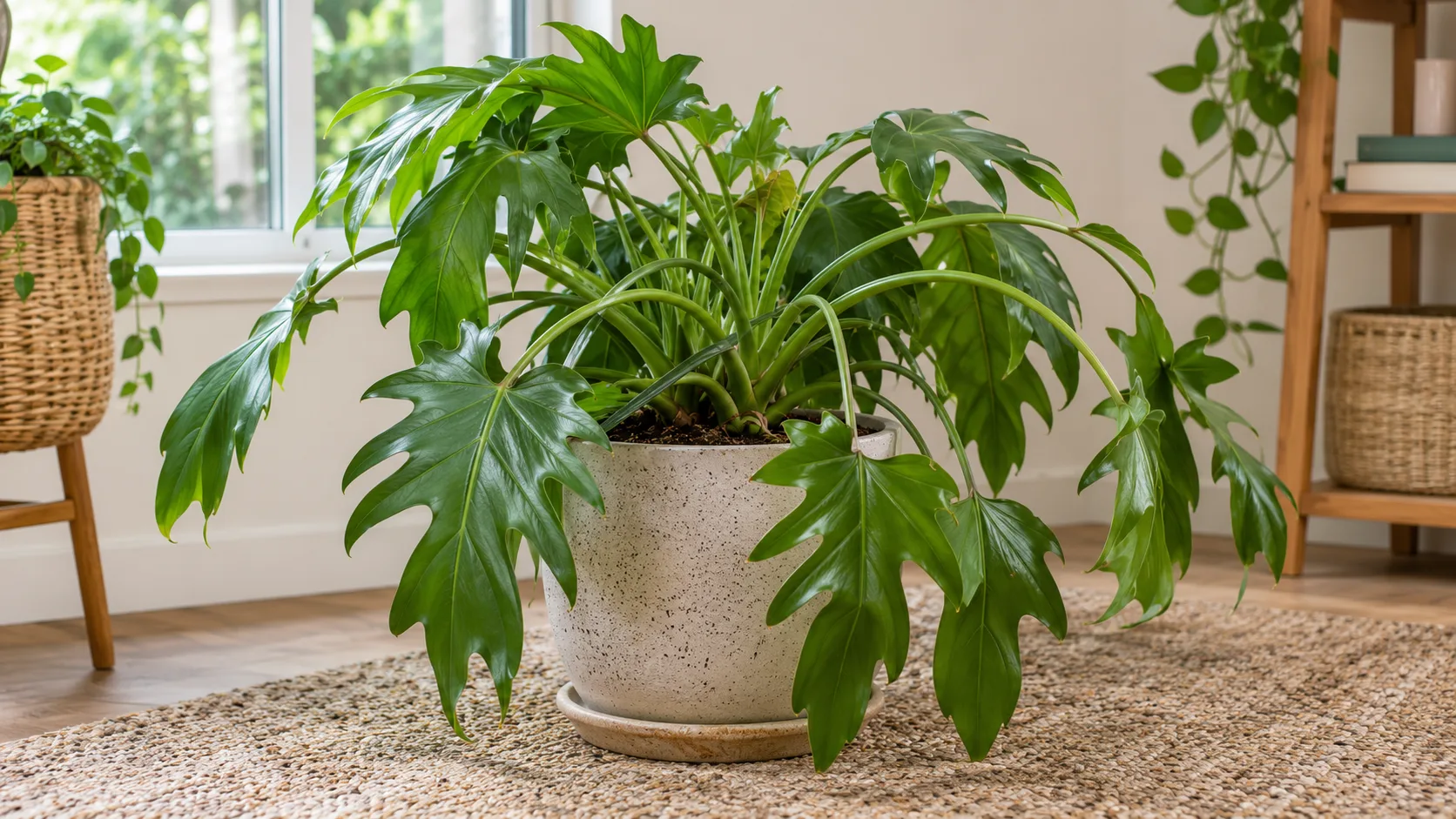
Drooping Leaves on Philodendron Xanadu: Causes, Checks & Fixes
This guide covers drooping leaves on Philodendron Xanadu. See also the general Drooping Leaves guide, watering, and light pages for this plant.
Drooping Leaves on Philodendron Xanadu: Causes, Checks & Fixes
Quick answer
Drooping leaves on Philodendron Xanadu most often mean a watering mismatch rather than a disease. Xanadu is a self-heading aroid that builds a mounded rosette of large lobed leaves on long petioles rising from a central crown, and that crown tells the story fast: thirsty plants slump with dry mix, while overwatered plants slump with heavy, damp mix.
First step: probe the mix at 3–5 cm deep and lift the pot. Water deeply only if that zone is dry and the pot feels light. If it is still damp, empty the saucer and wait. Make this one check before moving, repotting, or feeding the plant.
For how limp leaves happen in general across houseplants, see our drooping leaves guide. On Xanadu, the pattern usually shows up at the crown first, so the rest of this page stays on Xanadu-only diagnosis and recovery.
What drooping looks like on Xanadu
On Xanadu, drooping starts with the big lobed blades tipping downward while the petioles lose their upright stiffness. Because leaves are born on long petioles from one basal clump, a thirsty plant often slumps evenly across the whole mound, while a root-zone problem usually shows first in the lowest, oldest petioles near the mix surface.
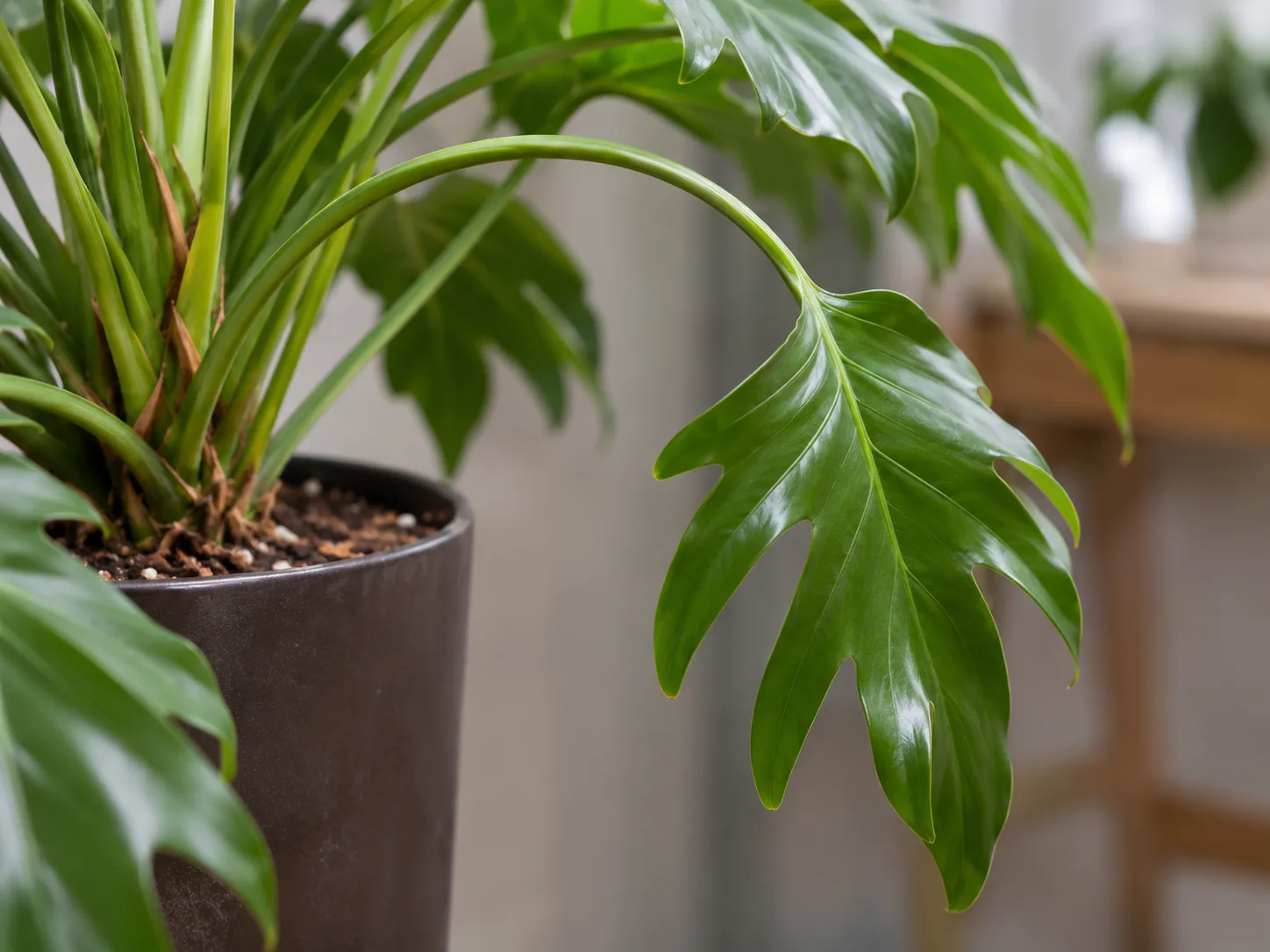
Drooping begins as the long petioles lose their upright stiffness and the lobed blades tip down.
Do not confuse this page with general wilt advice. This guide is for soft, limp drooping of otherwise green leaves. If leaves are mainly yellowing, crisping brown at the edges, or collapsing with a sour smell from the pot, use the distinctions below and then browse all Xanadu problems to route to the right guide.
Why Xanadu droops: the usual causes in order
1. Underwatering past the 3–5 cm zone. Xanadu likes its top 3–5 cm to dry between drinks, but once dryness runs deep the leaves lose turgor pressure — the internal water pressure that holds blades stiff. This is the kindest cause: the crown stays firm, petiole bases feel solid, and the pot feels noticeably light.
2. Overwatering and airless mix. When the pot stays soggy, roots cannot take up water even though water is everywhere, so an overwatered Xanadu looks much like a thirsty one. NC State notes that yellowing of the leaves will occur if overwatered, and Clemson explains that root rot usually results from a soil mix that does not drain quickly or overly frequent watering. Lower leaves yellow, petiole bases feel soft, and the pot stays heavy days after watering.
3. Cold drafts and temperature swings. Xanadu prefers indoor temperatures around 65 to 75 degrees Fahrenheit and the RHS advises keeping philodendrons above 15 C and away from cold draughts. A plant parked by a drafty entryway, an AC vent, or a cold window can slump within a day of exposure even when watering is correct.
4. Too little light over time. Xanadu wants bright but indirect light per NC State, and dim corners produce weak, floppy growth with smaller leaves. Light alone rarely causes sudden droop, but it weakens petioles so any watering slip shows faster. Compare your spot against the light guide if growth has been leggy for weeks.
5. A tired, compacted, or salty mix. Old peat-heavy mix that stays wet on top and dry underneath confuses every finger test. Salts from repeated light watering can accumulate until leaves yellow or wilt, which is why Xanadu does best in the fast-draining perlite blend described in the soil guide.
The crown-and-petiole check: Xanadu’s tell
This is the section that does not transfer to vining philodendrons. Clemson notes that self headers send out leaves from a heavy clump of growth at their base, and on Xanadu that clump is the diagnostic center. Gently feel where each drooping petiole meets the crown:
- Firm, upright bases + dry mix: classic thirst. The plumbing works; the tank is empty.
- Firm bases + damp mix + perky new spear: likely light or temperature stress, not rot. Fix placement first.
- Soft, bendy, or translucent bases + damp or sour mix: crown or root-zone rot. This is the urgent pattern — skip to the emergency steps below.
Work from the outside of the mound inward. Outer petioles age first and naturally lean, so weigh the inner crown and the newest spear most heavily.
The 3–5 cm dry-down test in a perlite mix
Xanadu’s watering rhythm is specific: let the top 3–5 cm dry, then soak until runoff and empty the saucer, as detailed in the watering guide. The Spruce gives the same principle for philodendrons generally — water when the top inch of soil has dried and never leave plants sitting in soggy soil — but Xanadu’s chunky perlite mix dries from the top while staying damp lower down, so a shallow fingertip touch lies.
Push a finger or chopstick a full 3–5 cm in, then lift the pot to confirm weight. Water only when both read dry. If the surface looks dry but the probe comes up damp and the pot feels heavy, the plant is not thirsty — it is waiting for air. The RHS makes the same point for indoor philodendrons: let the compost surface dry between waterings and never leave plants standing in water.
Brittle petioles, crown crowding, and repot timing
Clemson warns that the long leaf stalks of self-heading types are brittle, and Xanadu owners meet this trait when they drag a drooping plant across the room for inspection. Support the mound from below with one hand under the outer petioles while lifting with the other — snapped petioles never straighten and invite rot at the break.
Crowding matters too. Container plants may need repotting every 1 to 2 years, and a root-packed Xanadu either sheds water down the sides of the root ball (chronic thirst despite watering) or traps it in a dense core (chronic sogginess). If water races straight through or the probe reads wildly different depths, check the repotting guide — but repot only after the plant stabilizes, never on droop day one.
Step-by-step recovery
Step 1 — Probe and weigh (today). Check 3–5 cm depth and lift the pot. This single result decides the next move.
Step 2a — If dry and light: soak. Water slowly until it runs from the drainage holes, wait ten minutes, then empty the saucer completely. Expect thirsty leaves to firm within hours; give it a full day before judging.
Step 2b — If damp and heavy: dry out. Empty the saucer, move the nursery pot out of any cachepot for airflow, and do not water again until the 3–5 cm zone dries. Remove only fully yellow, mushy leaves at their base; leave limp-but-green blades to recover.
Step 3 — Fix placement. Settle the plant in bright indirect light away from drafts and heat vents, following the light guide. Leave it there at least a week — recovery needs stability, not rotation.
Step 4 — Emergency unpot (only if bases are soft or the mix smells sour). Slide the root ball out, rinse gently, and trim black mushy roots back to firm white tissue with clean scissors. Repot into fresh fast-draining mix per the soil guide, water once lightly, and hold off feeding. If most of the crown is mush, the plant may not be saveable — a firm offset division is the realistic rescue.
Mistakes to avoid
Do not fertilize a drooping Xanadu. Hungry roots cannot use feed, and excess salts worsen wilt — resume feeding only when new growth stays firm for a couple of weeks. Do not stack repotting, heavy pruning, and sprays on the same day; pick the single fix the probe pointed to. And do not mist drooping leaves as a cure — wet foliage in weak airflow invites the leaf spots from fungi that Xanadu is prone to, without addressing the roots.
Recovery timeline
Thirst-driven droop usually resolves within a day of a proper soak. Overwatered plants take longer: expect one to three weeks of steady firmness before trusting the rhythm again, with proof coming as new spears emerge upright from the crown. The RHS notes that saturated compost can progress to root rot that yellows leaves and eventually collapses the plant, so if limpness spreads after a week of correct drying, unpot and inspect rather than waiting.
How to prevent it next time
Anchor on the routine in the watering guide: check the 3–5 cm zone on a schedule, water deeply but infrequently, and always drain the saucer. Keep the perlite-rich mix from the soil guide open and fast-draining, hold the 18–29 C comfort range with 50–60% humidity from the Philodendron Xanadu hub, and give the mound room to spread instead of wedging it into traffic paths where brittle petioles snap.
FAQs
How can I tell whether my Xanadu is overwatered or underwatered?
Push a finger or chopstick 3–5 cm into the mix and lift the pot. Dry and light means underwatering, so soak until runoff. Damp and heavy with limp lower leaves means too much water, so drain the saucer and wait until that zone dries before watering again.
What should I check first when Xanadu leaves droop?
Start with the 3–5 cm moisture check plus pot weight, then look at the crown where the long petioles meet the base. Firm upright petiole bases with dry mix point to thirst, while soft petiole bases with damp mix point to root-zone trouble.
Will droopy Xanadu leaves perk back up?
Leaves that drooped from simple thirst usually firm up within a day of a deep watering. Leaves on soft, rotted petiole bases do not recover, so judge progress by new leaves emerging firm and upright from the crown over the next few weeks.
When is drooping on Xanadu an emergency?
Act fast when several petioles turn soft or mushy at the base, the mix smells sour, or the whole crown collapses within days. Unpot to inspect the roots, since crown and root rot spread quickly in saturated mix.
How do I stop Xanadu drooping from coming back?
Keep the 3–5 cm dry-down rhythm, use fast-draining mix with 20–25 percent perlite, empty the saucer every time, and hold Xanadu in bright indirect light at 18–29 C. Check the full guide to watering and soil habits linked below.
Related Philodendron Xanadu guides
- Philodendron Xanadu hub — growth habit, placement, and overall care baseline
- Watering — the 3–5 cm dry-down rhythm behind most droop cases
- Light — when weak, leggy petioles make drooping worse
- Soil — fast-draining perlite mix that keeps the crown aerated
- Repotting — when a root-packed mound needs room, after stabilization
- All Philodendron Xanadu problems — route yellowing, spots, or pests to the right guide
Related tool
Use the Drooping Leaves Diagnosis Tool to narrow causes for drooping leaves on this plant before changing multiple variables at once.