Not Enough Light on Philodendron Xanadu: Causes, Checks &
Quick answer
A light-starved Philodendron Xanadu grows long petioles with smaller, shallow-lobed new leaves and an open mound. First fix: move the whole crown into bright filtered light, such as 30 to 90 cm from an east window, or run a full-spectrum grow light 10 to 12 hours daily. Judge recovery only on the next one or two new leaves.
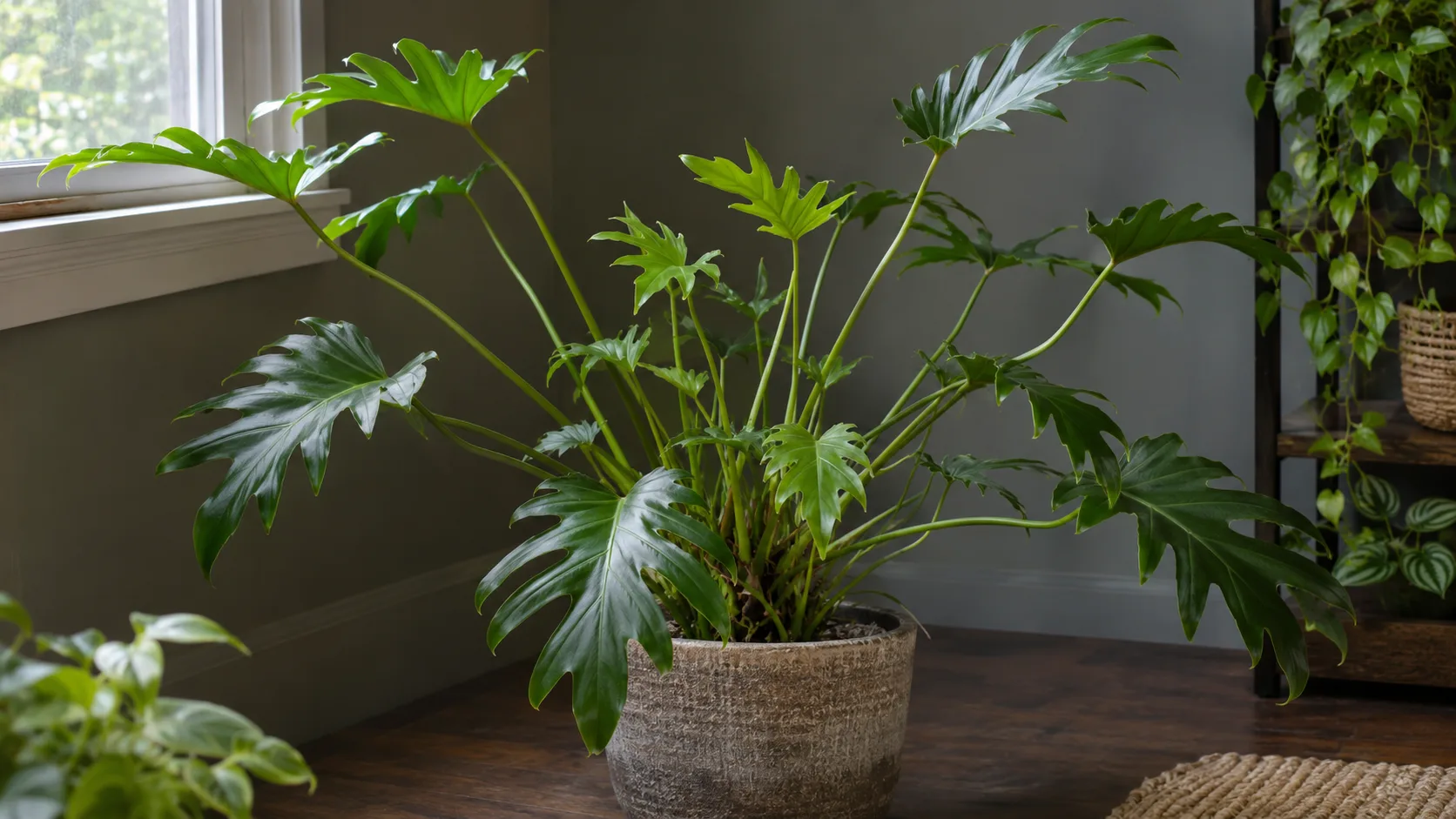
Not Enough Light on Philodendron Xanadu: Causes, Checks & Fixes
This guide covers not enough light on Philodendron Xanadu. See also the general Not Enough Light guide, watering, and light pages for this plant.
Not Enough Light on Philodendron Xanadu: Causes, Checks & Fixes
Quick answer
A light-starved Philodendron Xanadu stretches: petioles lengthen, new blades emerge smaller with shallower divisions, and the mound opens up instead of staying dense. For how chronic dim conditions weaken houseplants in general, see our not enough light guide. On Xanadu, the pattern usually shows up as long smooth leaf stalks plus shrinking new lobes while older foliage still looks acceptable.
First fix: give the entire crown brighter filtered light today. Move the pot to 30–90 cm from an east window, or place it behind sheer fabric on a south or west window — or switch on a full-spectrum grow light 30–45 cm above the crown for 10–12 hours daily. Xanadu wants a little more light than most philodendrons to hold its compact mound, so treat dim corners as the prime suspect when new leaves shrink.
What low light looks like on Philodendron Xanadu
On this plant the signature is structural, not just color. New petioles stretch longer than the previous pair, fresh blades open smaller, and the deep glossy divisions turn shallow. Growth slows, the spaces between leaf stalks widen, and the bush reads airy and sparse from above. Older leaves often keep their size for months, which tricks owners into thinking placement is fine.
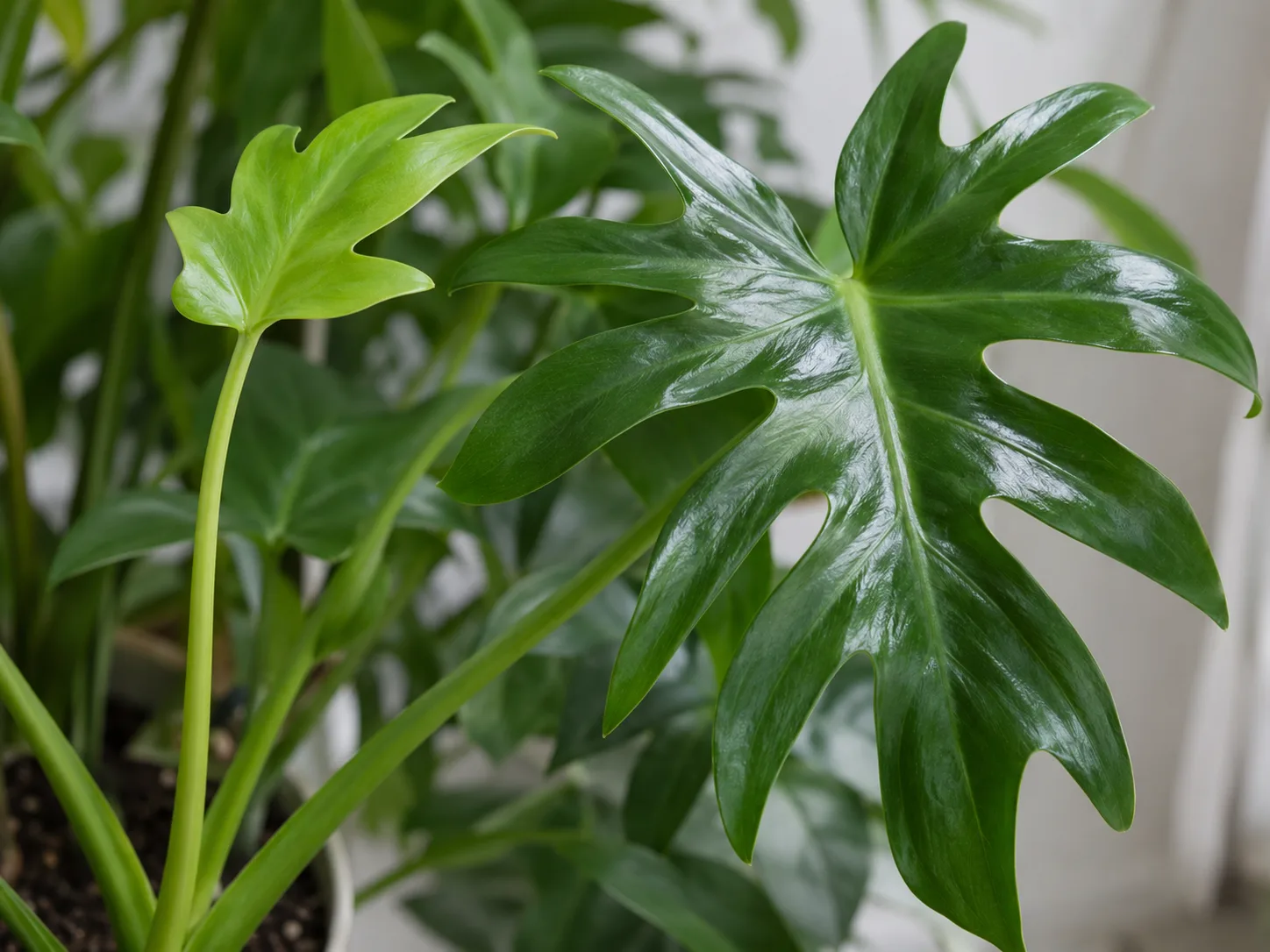
Low light can stretch new petioles and reduce the size and depth of the next leaves.
This matches documented philodendron behavior: without enough light, philodendrons become leggy and produce fewer, smaller leaves. On Xanadu specifically, a spot that is too dark makes the stems elongate beyond the compact habit buyers expect. Pale washed-out green can accompany the stretch, but petiole length plus lobe size is the more reliable tell than color alone.
Why Xanadu runs into this indoors
Xanadu is a self-heading aroid: it sends leaves from a heavy clump at its base rather than climbing toward a window like a vining philodendron. The whole mound competes for one horizontal cone of brightness, so a floor pot three metres from glass can starve even in a room that looks bright to human eyes. There is no vine tip to train into better light; the crown itself must sit where light lands.
Most philodendrons accept indirect or curtain-filtered sunlight while tolerating lower levels, but Xanadu sits at the hungrier end of that range and loses its dense form sooner. Its tropical understory origin means indoor “shade” should read as bright filtered light with shade from hot sun, never a windowless hallway or deep interior shelf. Typical triggers are north-facing rooms without supplementation, pots parked far from the glass for furniture reasons, heavy sheer-plus-blind layering, and the autumn drop in day length that turns a fine summer spot marginal by November.
How to confirm before moving anything
Confirm with two tests plus a moisture check, in this order.
1. Shadow test at crown height. On a clear day, hold your hand between the window and the foliage. A soft shadow with readable edges across the outer leaves suggests adequate bright indirect light. A faint or absent shadow means the crown is too far back or the exposure is too dim — the classic north-room or interior-shelf result.
2. New-growth test. Compare the last two leaves against the pair before them. Shorter petioles, matching blade size, and deep divisions mean current placement works. Progressively longer stalks and smaller divisions mean light is limiting growth right now, even if mature leaves look fine.
3. Moisture and history check. Feel the top 3–5 cm of mix and lift the pot for weight. Xanadu wants bright but indirect light indoors, and dim-plus-soggy is a compounding trap: roots in wet mix decline while the canopy also starves. Note any recent moves, new curtains, or seasonal dimming before blaming the plant. If the newest growth is firm and only spacing widened slightly, a small positional tweak beats a drastic relocation.
First fix for Philodendron Xanadu: brighten the whole crown
Do one thing first: relocate the crown into bright filtered light or start supplemental light — not both experiments plus fertilizer on the same day. An east window with the centre of the mound 30–90 cm from the glass suits most homes. On south or west glass, keep sheer fabric between sun and leaves and set the pot 90–150 cm back. Where windows cannot deliver, run a full-spectrum LED 30–45 cm above the crown for 10–12 hours on a timer, angled to cover the full mound.
Aim for the documented indoor band: philodendrons tolerate as low as 75 fc, but 150 fc or more is what maintains color and leaf size — your practical target is roughly 150–400 foot-candles at the leaf surface. If outer leaves feel warm after two hours under a lamp or behind glass, increase distance before increasing duration.
Settle it in without scorch
A plant that lived months in dim light burns easily under sudden brightness, so acclimate over 10–14 days. Shift the pot about 30 cm toward the target window for mornings only during days 1–3. Leave it in the brighter position full-time behind sheer fabric on days 4–7. Move 15–30 cm closer or drop one filter layer on days 8–10 if no bleaching appears. Set the final position on days 11–14, then stop adjusting until a new leaf unfurls.
Rotate the pot a quarter turn weekly so one side does not lean into the glass while the far side stretches. Rotation manages symmetry only; it cannot rescue a fundamentally dim room, so relocate or supplement instead. Change nothing else — water, fertilizer, and potting — during the acclimation window so you can read the plant’s response to light alone. Pair the new placement with the dry-down rhythm in the Philodendron Xanadu watering guide, since brighter crowns dry their mix faster.
Recovery timeline
Expect the current leaves to stay exactly as they are — mature blades never regain lost size or lobe depth. The first encouraging sign is a new leaf spear emerging within two to six weeks in the growing season, slower in winter. That leaf should open larger, glossier, and more deeply divided than its predecessor, with a shorter stalk. Two consecutive improved leaves confirm the placement.
Stalled spears or a third small leaf mean something is still off: recheck distance from glass, daily duration of brightness, lamp coverage across the full mound, or root health if the mix stays wet. Winter recoveries legitimately take longer; hold the supplemental hours steady rather than chasing faster results with fertilizer.
What not to do
Do not fertilize first. Shrunken lobes are a photon problem, and feeding a starved plant in dim light risks salt stress without growing a single bigger leaf — revisit the Philodendron Xanadu fertilizer guide only after placement is stable and new growth resumes. Do not repot on day one; root disturbance plus a light jump leaves you unable to tell which change helped or hurt. If the mix is compacted or sour, note it and address soil separately through the Philodendron Xanadu soil guide after acclimation.
Do not jump straight from a dim shelf to unfiltered south or west glass — bleached patches and crisp lobe tips follow within days. And do not keep the old watering calendar after brightening the spot; soggy mix in a previously dim pot is already the most common compounding injury, since yellowing follows overwatering on this plant.
Lookalike symptoms on Xanadu
Low light shares early signs with several other issues, so separate them before treating:
| What you see | More likely | Next step |
|---|---|---|
| Uniform yellowing from lower leaves plus heavy wet mix | Overwatering or root stress | Check drainage and dry-down before adding light |
| Bleached patches, crisp lobe tips after a move | Too much direct sun | Filter the window or increase distance |
| Stippling, fine webbing, sticky residue | Spider mites or other pests | Inspect leaf undersides with magnification |
| Single oldest leaf yellowing while new growth stays compact | Natural aging | Remove only the spent leaf and hold position |
| Long petioles plus small new lobes, firm roots, dry-down normal | True low light | Brighten placement as above |
When yellowing, soft stems, or suspected rot dominate the picture rather than stretch, start from the Philodendron Xanadu problems hub to pick the matching symptom guide instead of pushing more light.
How to prevent it next time
Keep the crown where brightness lands year-round, not where the pot looks good in June. East glass or filtered south and west exposures at the distances above hold the mound dense for most homes; north rooms need a standing grow-light routine, not hope. Revisit placement each autumn when day length drops — move the pot 15–30 cm closer or start supplementation before petioles stretch, then reverse sheer filtering when summer heat returns.
Tie watering to the new brightness rather than a fixed weekday schedule, using the top few centimetres of mix as the checkpoint. Dust the broad lobed leaves occasionally so film does not tax an already marginal spot. For full exposure-by-direction detail, including heat warnings per window orientation, use the Philodendron Xanadu light guide.
When to worry
Most dim-light Xanadus recover fully once the crown gets real brightness. Escalate when no new leaf has emerged for months despite a brighter position, when the crown base or stems soften, or when several leaves yellow at once in constantly wet mix. Those signs point past cosmetics toward root failure — inspect roots, trim only clearly rotted tissue, and correct drainage before any further light experiments. A plant with a firm crown and even one healthy new spear is saveable; a mush-based mound with no firm growth points may not be.
Conclusion
Low light on Philodendron Xanadu is a placement problem with a structural signature: long petioles, smaller new lobes, and an opening mound on a self-heading crown that cannot climb toward brightness. Confirm with the shadow test and the newest leaf pair, fix with one brighter filtered position or a steady grow-light routine, acclimate over two weeks, and judge success only on incoming leaves. Hold placement steady through the seasons and let watering follow the light — that pairing keeps the mound compact without drama.
When to use this page vs other Philodendron Xanadu guides
- Philodendron Xanadu hub — Start here for whole-plant context before troubleshooting a single symptom.
- Philodendron Xanadu watering — Use when soggy mix, yellowing lower leaves, or dry-down rhythm is the main question rather than stretch.
- Philodendron Xanadu light — Use for window-by-window placement, foot-candle targets, and grow-light setup detail.
- Philodendron Xanadu problems — Use when pests, rot, spots, or multiple symptoms overlap and you need the right symptom guide.
Related Philodendron Xanadu guides
- Philodendron Xanadu hub
- Philodendron Xanadu light
- Philodendron Xanadu watering
- Philodendron Xanadu soil
- Philodendron Xanadu fertilizer
- Philodendron Xanadu problems
Related tool
Size your fix with the Light Requirement Calculator with philodendron-xanadu pre-selected to estimate the brightness your setup delivers.