Slow Growth on Philodendron Xanadu: Causes, Checks & Fixes
Quick answer
Slow growth on Philodendron Xanadu most often traces to winter rest, too little light, missed feeding in the growing season, or a mounding crown that has filled its pot. First step: move the plant into bright, indirect light and hold every other change for two weeks so you can read its response.
Slow Growth on Philodendron Xanadu: Causes, Checks & Fixes
This guide covers slow growth on Philodendron Xanadu. See also the general Slow Growth guide, watering, and light pages for this plant.
Slow Growth on Philodendron Xanadu: Causes, Checks & Fixes
Quick answer
Slow growth on Philodendron Xanadu most often traces to winter rest, too little light, missed feeding in the growing season, or a mounding crown that has filled its pot. For how stalled growth works in houseplants generally, see our slow growth guide. On Xanadu, read the crown first: firm green foliage with no new spears in the dim season is usually rest, while shrinking blades and stretching petioles in good weather point to light or root pressure.
First step: move the pot into bright, indirect light and change nothing else for two weeks. Xanadu is a medium-paced, self-heading plant, so it answers slowly. One clean variable lets you tell whether light was the limiter before you reach for fertilizer or a repot.
What slow growth looks like on Xanadu
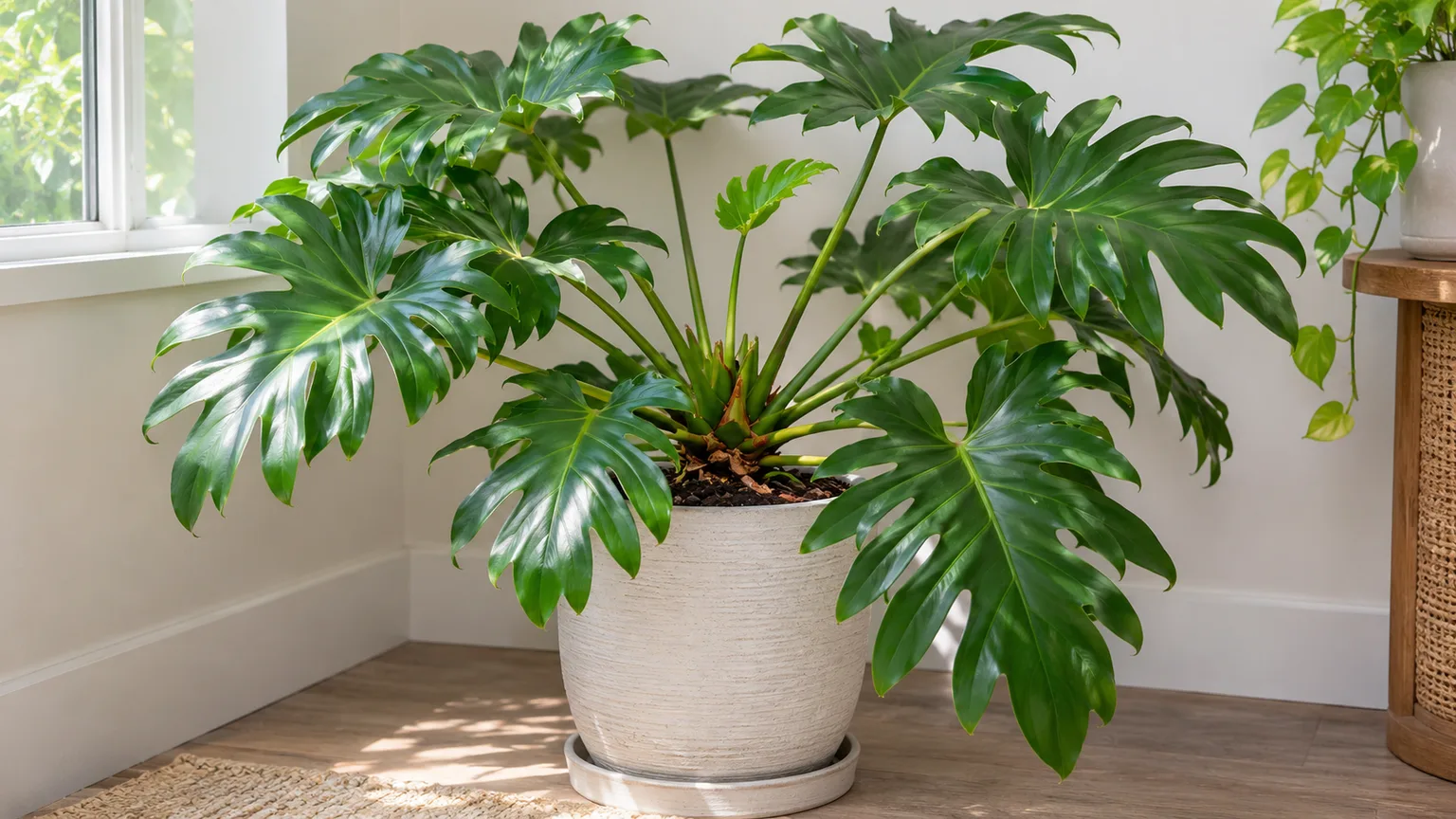
Xanadu grows from a central crown, pushing upright petioles tipped with deeply lobed blades. It never vines, so stalled growth reads differently here than on a trailing philodendron: the mound simply stops sending up new spears, and each successive leaf may open smaller and less deeply cut than the last.
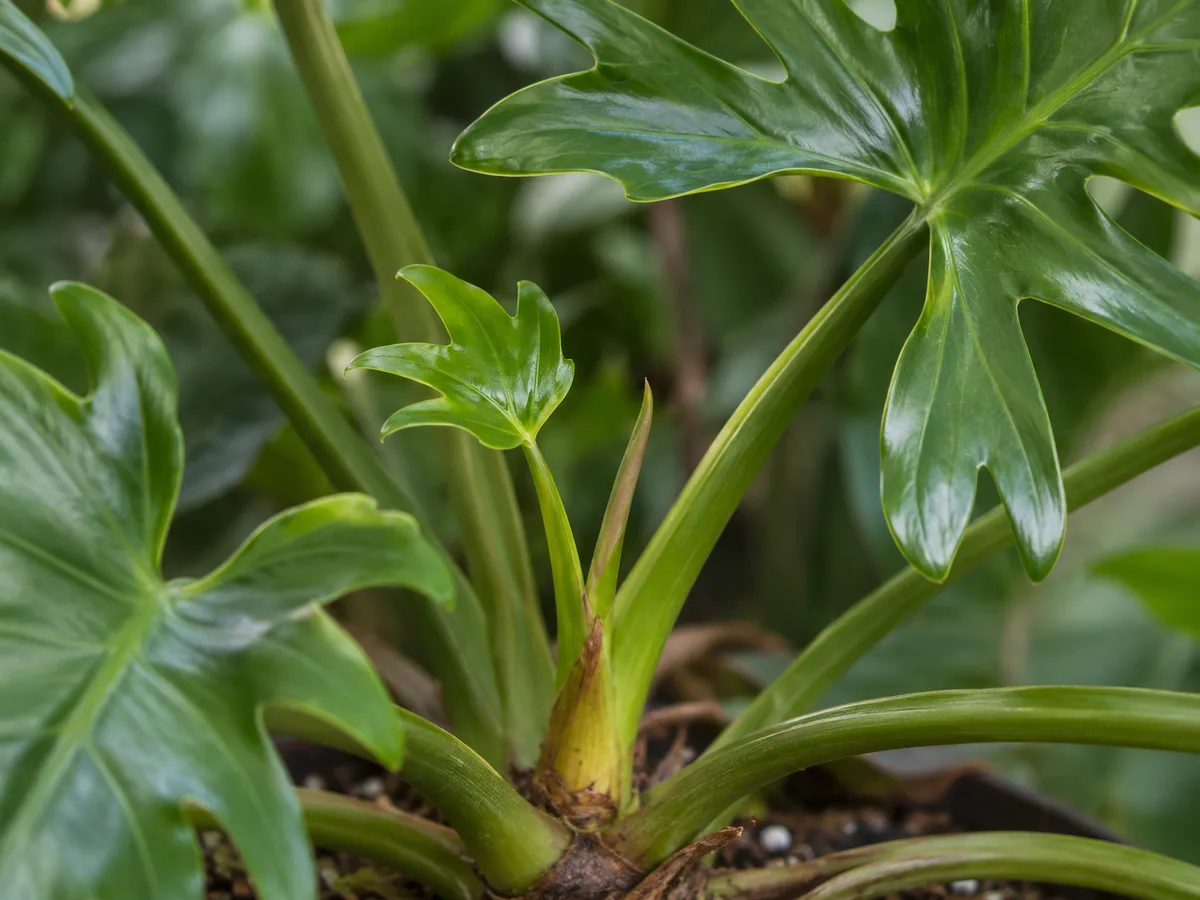
Smaller, less deeply cut leaves and a quiet central crown can indicate slowed Xanadu growth.
Healthy vigor on this plant has a recognizable signature. New blades emerge near the center, unfurl large and glossy, and hold tight spacing between petioles so the mound stays dense. When energy runs short, the spacing widens, blades shrink, and the deep lobes look shallow or unfinished. Leaves may also sit a darker, flatter green in dim corners as the plant stretches its chlorophyll to catch what it can.
Do not confuse a seasonal pause with a problem. From late autumn into winter, a healthy Xanadu often idles for weeks: no new spears, no decline, just a full crown sitting quietly. That pause is the plant matching its tropical rhythm to your short days, and it resolves on its own when light returns.
The seasonal pause is normal
Xanadu slows or stops in the cool, dim months even indoors. Growth follows light and warmth, so shorter days plus cooler windowsills naturally idle the crown. Experienced growers give it no food in winter and water less often while it rests, because a resting plant drinks slowly and wet mix around idle roots invites trouble.
Match your expectations to the calendar before diagnosing. A Xanadu that grew well through summer and now sits still in December with firm leaves is behaving correctly. Keep it above 15°C, hold the fertilizer, let the top few centimeters dry between waterings, and wait for lengthening days. Spring spears are the confirmation that rest, not sickness, was the story.
Too little light shrinks new leaves
Light is the most common limiter behind a genuine stall. Indoors, Xanadu wants bright but indirect light with some humidity, and its comfort zone sits in a 65 to 75 degrees Fahrenheit range. A mound parked several feet from the nearest window, behind heavy curtains, or in a north corner through winter simply cannot fund full-size lobed leaves.
The plant tells you plainly. Stems turn leggy with gaps between leaves as petioles stretch toward the light, and new blades open small. In prolonged dimness, extension guidance notes that too little light causes yellowing lower leaves and the death of the growing tips on philodendrons, which on Xanadu means the crown center goes quiet or browns at the spear tips. Cold drafts compound the problem, so keep the pot away from drafty winter windows and doors while you fix placement.
An east window, a bright north window, or a west window with a sheer curtain usually supplies what the crown needs. Judge the spot by the newest spear after two to three weeks: larger, glossier, more deeply lobed tissue means the light answer was correct.
A hungry plant in the growing season
A Xanadu with good light that still creeps along in spring and summer is often just unfed. This is a leafy, fast-tissued aroid during its active months, and it spends nutrients building big lobed blades. Gardening Know How’s Xanadu guidance makes the connection explicit: a plant that is growing very slowly despite adequate light may need more fertilizer, applied during the growing season with full macro and micro nutrients.
Extension advice sets the method: dilute water-soluble houseplant fertilizer on a regular schedule, or a time-release product, rather than occasional strong doses. A practical rhythm is monthly half-strength liquid feed from spring into early autumn, every other week at the height of summer for vigorous outdoor-season plants, and nothing once growth idles. Never open with fertilizer on a stressed, newly repotted, or winter-resting plant; feeding answers hunger, not root damage or dimness.
Salt buildup from heavy-handed feeding can also stall growth, so when you resume feeding, water deeply first so the mix is moist, then feed, and flush the pot occasionally until water runs clear from the drainage holes.
A crown-bound pot stalls the mound
Because Xanadu is self-heading, it expands outward into a dense mound instead of vining away, and that mound eventually packs its container solid. A root-bound Xanadu dries out within a day or two of watering, pushes thin small leaves, and may stall entirely even in bright light with regular feeding. Container plants of this species may need to be repotted every 1 to 2 years, and the right moment is when roots circle densely or crowd the drainage holes.
Spring is the preferred window, since the plant can root into fresh mix as days lengthen. The RHS notes philodendrons can stay put until roots get densely packed, with spring the best time to move them up. Choose a pot only 2 to 3 inches wider than the root ball in a coarse, free-draining aroid mix, and resist jumping to an oversized decorative planter: excess wet mix around a modest root system stalls growth worse than snug quarters.
Wet feet and tired mix
Chronic wetness masquerades as slow growth. When the mix stays soggy, fine roots suffocate and rot, and the crown cannot drink or feed no matter how bright the window is. NC State’s profile warns that yellowing leaves follow overwatering on this plant, and the RHS cautions that saturated compost eventually causes root rot in philodendrons. Suspect this path when the stall arrives with yellowing lower leaves, a pot that stays heavy for many days, or a sour smell at the drainage holes.
Old compacted mix causes the same suffocation without overwatering. After a year or two, bark fines break down, perlite crushes, and the airy structure Xanadu roots need collapses into a dense plug. Water then sheets around the root ball instead of through it, and growth creeps. If the surface stays damp while the plant still wilts or stalls, the mix itself is the suspect, and a spring refresh answers it.
How to confirm the cause
Work through these checks in order and stop at the first one that clearly fails.
- Read the calendar. Late autumn or winter with firm green leaves and no other symptoms means rest. Reduce water, stop feeding, and reassess in spring.
- Audit the light. Does bright indirect light reach most of the crown for most of the day? Small blades plus stretched petiole spacing say no.
- Inspect the crown center. Firm upcoming spears signal a living growing point waiting on energy. Browned or missing spear tips after dim months suggest light starvation reaching the meristem.
- Lift and weigh the pot. Heavy many days after watering points to wet or compacted mix; feather-light within a day plus roots circling the drain holes points to a crown-bound pot.
- Review feeding history. No fertilizer all spring and summer with good light means hunger. Heavy frequent feeding with crusty mix surface means possible salt load.
- Check for hitchhikers. Look over leaf undersides and petiole joints for mealybugs, spider mites, or scale. Sap-feeders drain vigor slowly, and the stall lifts only once they are gone.
A confirmed diagnosis names one lead cause with evidence: season plus firm crown, light plus stretched spacing, hunger plus an unfed growing season, bound roots plus circling masses, or wet mix plus heaviness and yellowing.
The first fix for Xanadu
Move the pot into bright, indirect light and hold every other change for two weeks. Set it where an east or sheer-filtered west window washes the whole crown, keep it above 15°C and clear of drafts and radiators, and continue your current watering rhythm unchanged.
This single move works because light underwrites everything else the crown does: leaf expansion, lobe depth, and the energy to use water and nutrients. Feeding a dim plant or repotting a dim plant stacks stress without addressing the deficit. After two weeks, compare the newest spear to the previous leaf. Larger, glossier, more deeply lobed growth confirms the diagnosis, and you can proceed to feeding or repotting from a position of knowledge rather than guesswork.
Step-by-step recovery
Once the light fix is in place and the crown answers—or if your checks already convicted a different cause—proceed in this order.
- Stabilize watering. Water when the top 3 to 5 cm of mix dries, soak until runoff, and empty the saucer, following our Xanadu watering guide. Do not water on a fixed weekly calendar through the recovery.
- Feed only in season. If spring or summer growth is active, begin monthly half-strength balanced liquid feed. Our Xanadu fertilizer guide sets the seasonal rhythm; skip feeding entirely if the plant is resting or freshly repotted.
- Repot only if bound. When roots circle densely, move up one pot size in spring into airy mix per our Xanadu repotting guide and Xanadu soil guide. Water in once, then wait a month before feeding.
- Refresh tired mix. If the mix has collapsed but roots still fit the pot, tease away loose old medium and refill with fresh aroid mix at the same pot size.
- Tune light seasonally. Recheck placement as the sun angle shifts; a perfect summer spot can turn dim by November. Our Xanadu light guide covers year-round positioning.
Make one change at a time and give each a fortnight before judging. Xanadu is medium-paced, and stacked interventions hide which one worked.
Recovery timeline
Two to four weeks after the light move, expect the crown center to firm up and the next spear to emerge visibly larger than its predecessor. That single leaf is your early verdict.
Six to ten weeks of steady growing-season care should bring a run of progressively larger, more deeply lobed leaves and tighter petiole spacing. A spring repot typically shows the same payoff one flush later, since the plant roots first and leafs second.
One full season is the honest horizon for a badly stalled mound to look lush again. Old small blades never resize, so the plant improves leaf by leaf from the center outward. If three successive spears stay small despite bright light, seasonal feeding, and room to root, unpot and inspect the root system directly.
Lookalike symptoms
| Pattern | More likely | Next step |
|---|---|---|
| No new spears in winter, firm green mound | Seasonal rest | Reduce water, stop feeding, wait for spring |
| Small blades with wide petiole gaps in summer | Low light | Bright indirect placement, then reassess |
| Pale overall mound, unfed all season | Hunger | Resume seasonal half-strength feeding |
| Dries in a day, roots circling drains | Crown-bound pot | Spring move one size up |
| Heavy pot, yellowing lower leaves | Wet or rotted roots | Dry down, inspect roots, refresh mix |
| Stippled leaves with fine webbing or cottony clusters | Sap-feeding pests | Treat pests first; growth resumes after |
| Whole crown soft or loose in the pot | Advanced root damage | Unpot immediately and triage roots |
When several rows seem to fit, browse the Philodendron Xanadu problems hub and match your exact pattern before treating.
Mistakes to avoid
Do not fertilize a stalled winter plant to force it awake; salts accumulate around idle roots and burn the fine tips the spring flush needs. Do not repot on day one of a stall unless roots are clearly circling or rotting; a move shocks a plant whose real problem is dim light. Do not jump the mound into a much larger planter, since the extra wet mix suffocates more than it helps. Do not prune healthy small leaves to stimulate growth; they still photosynthesize and fund the next spear. And do not stack a move, a repot, a feed, and a pest spray in one weekend, because you will never learn which change mattered.
How to prevent it next time
Prevention is seasonal rhythm, not constant pushing. Keep the crown in bright indirect light year-round and reposition as day length shifts. Water by finger-check rather than calendar, feed lightly only through the active months, and keep winter cool, bright, and unfed. Repot every year or two in spring before the mound packs solid, refreshing the airy mix it roots best in. Wipe the broad lobed blades occasionally so dust does not tax an already dim winter window. A Xanadu kept on this rhythm rarely stalls outside its honest winter rest.
When to worry
Escalate past patience when the stall pairs with soft or collapsing petiole bases, spreading yellow lower leaves, a sour-smelling pot, or a crown that wobbles loose at the soil line. Those signs mean root function is failing, and waiting through them costs the plant. Unpot, trim only clearly mushy roots with clean tools, and reset into fresh airy mix without feeding until new spears show. A firm crown with clean foliage and no new leaves, by contrast, is a plant asking for season-appropriate care, not rescue.
Conclusion
Slow growth on Philodendron Xanadu is usually the crown telling the truth about its conditions: resting through winter, starved of light, unfed through summer, packed into its pot, or sitting too wet. Move it into bright indirect light first, confirm the response in the next spear, then feed in season or repot in spring only as the evidence directs. Read leaf size and petiole spacing as your gauges, and the mound will rebuild itself leaf by leaf from the center out.
Related Philodendron Xanadu guides
- Xanadu watering — finger-check rhythm that keeps the crown drinking without wet feet
- Xanadu light — year-round placement for full-size lobed leaves
- Xanadu soil — airy mix structure bound-prone mounds root best in
- Xanadu fertilizer — seasonal feeding without salt stress
- Xanadu repotting — when and how to move a packed mound up one size
- Philodendron Xanadu problems — full problem hub for pattern-matching lookalikes
Related tool
Use the Plant Growth Rate Calculator to estimate a realistic growth pace for slow growth on this plant before changing multiple variables at once.