Wilting on Philodendron Xanadu: Causes, Checks & Fixes
Quick answer
Wilting on Philodendron Xanadu is almost always a water problem: check the top 3-5 cm of mix and lift the pot. If dry and light, soak deeply once; if damp and heavy, drain the saucer and hold off water until it dries.
Wilting on Philodendron Xanadu: Causes, Checks & Fixes
This guide covers wilting on Philodendron Xanadu. See also the general Wilting guide, watering, and light pages for this plant.
Wilting on Philodendron Xanadu: Causes, Checks & Fixes
Quick answer
Wilting on Philodendron Xanadu is almost always a water problem. Push a finger 3–5 cm into the mix and lift the pot: dry and light means soak deeply once until runoff; damp and heavy means empty the saucer and wait. For the general mechanics of how wilt develops, see our wilting guide — on Xanadu, the pattern almost always traces back to the crown and root zone described below.
What wilting looks like on Xanadu
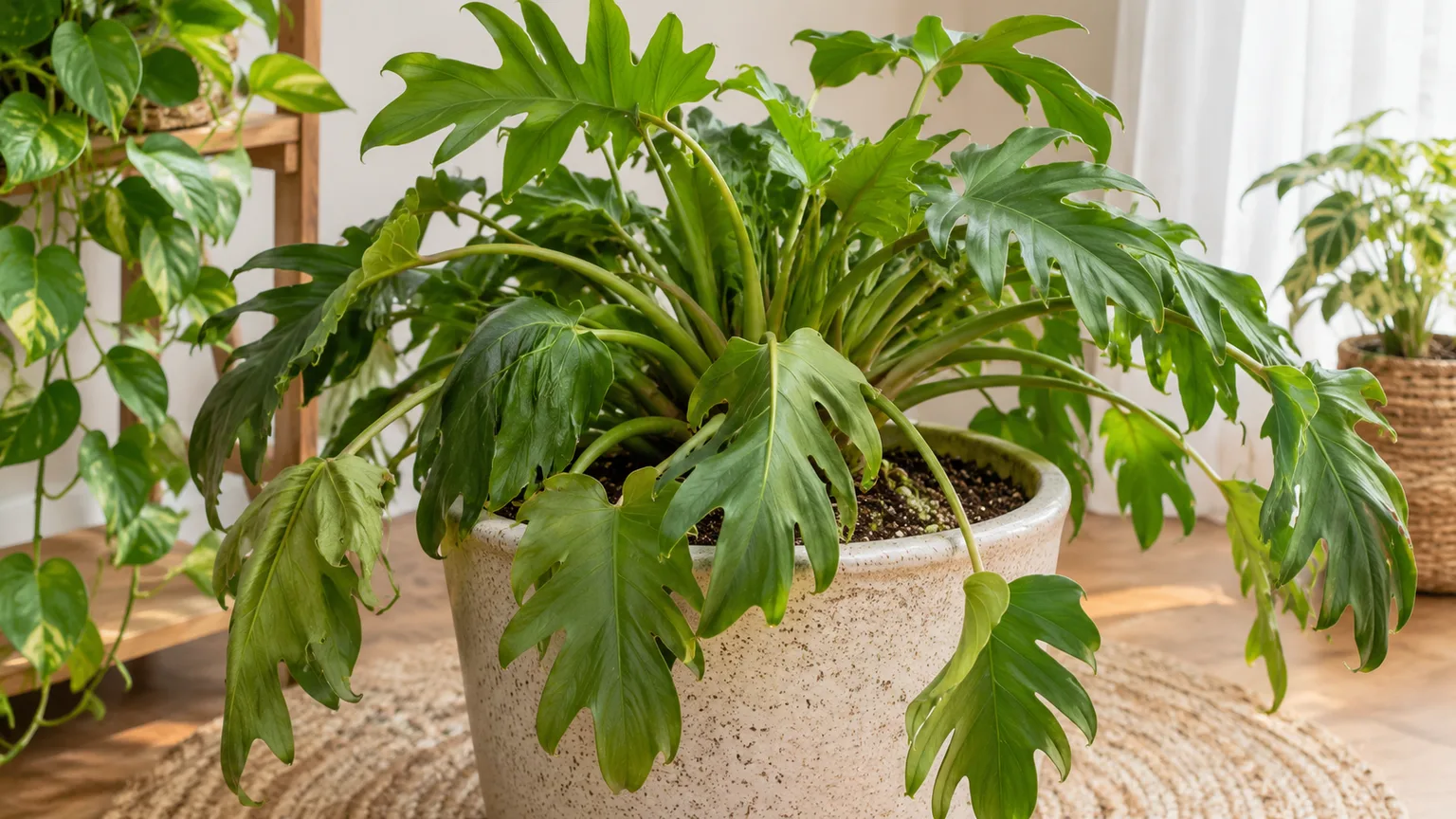
On most houseplants wilt means flat leaves. On Xanadu it starts in the architecture: this is a self-heading plant that holds deeply lobed leaves on long, stiff petioles rising from a central crown. When water flow fails, the outer petioles lose rigidity first and the whole mound slumps sideways rather than just drooping at the tips.
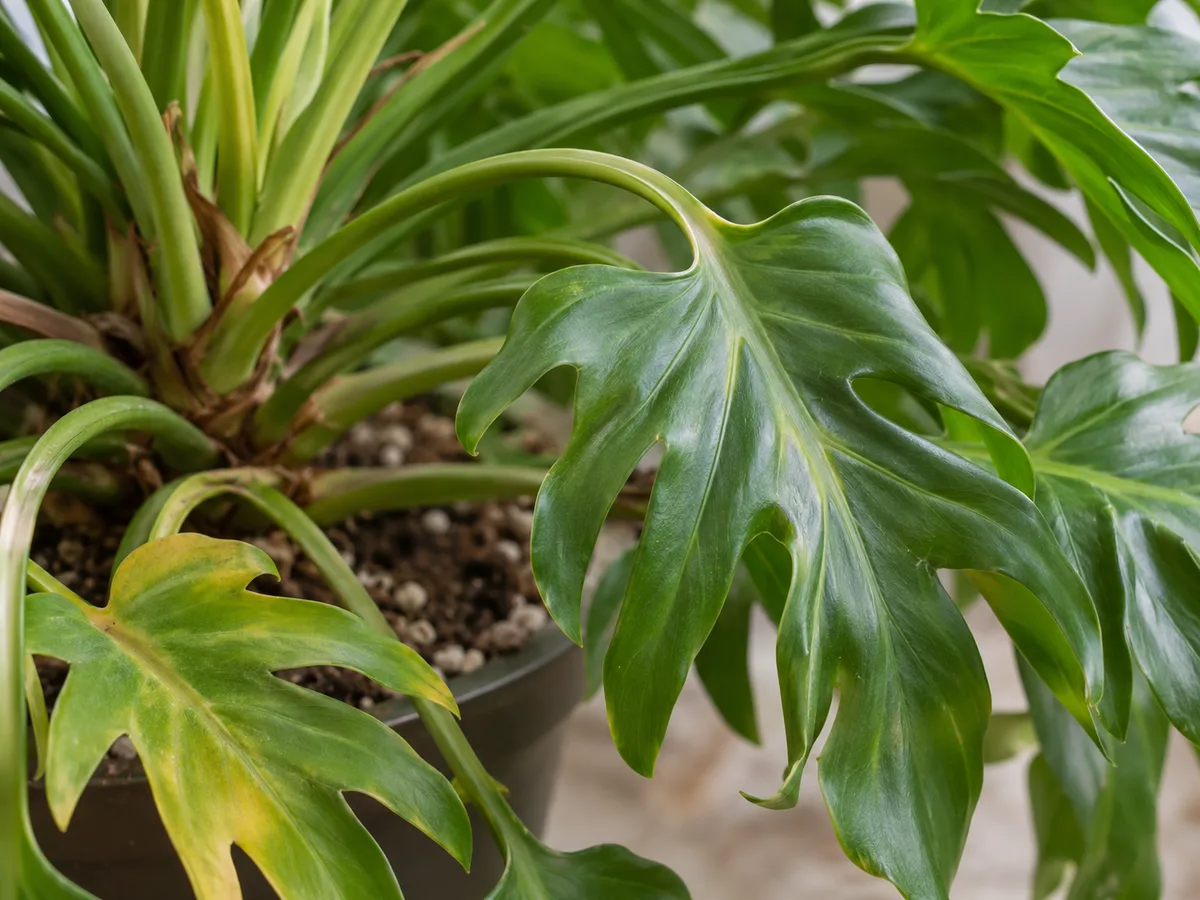
Wilted Xanadu often loses firmness in outer petioles first; check soil depth and pot weight to distinguish dry mix from soggy roots.
Underwatered plants show dull, papery-feeling lobes with leaf edges curling inward, and the pot feels strikingly light. Overwatered plants wilt too — because suffocated roots cannot deliver water — but the lobes feel soft and limp, lower leaves yellow, and the mix smells stale or sour.
Why Xanadu is prone to it
Xanadu wants bright but indirect light paired with a mix that dries on top between waterings. Indoors it typically grows in a dense, peat-heavy nursery mix that stays wet at the bottom long after the surface looks dry. A big self-heading crown also transpires a lot of water through its many lobes, so the plant swings between too dry and too wet faster than a small-leafed trailer would.
Two traps cause most cases. The first is calendar watering: every 7–10 days suits summer growth, but the same schedule in a dim room or in winter keeps the root zone soggy, and Xanadu kept in low light is easy to overwater because it drinks less. The second is a pot without drainage or a cachepot that holds standing water, which is exactly how soil that does not drain quickly triggers root rot on philodendrons.
The crown-and-petiole check
Before touching water, read the crown — this is the Xanadu-specific inspection other plants do not need. Part the outer petioles and look at where they meet the center:
- Firm, upright inner petioles with limp outer leaves suggest simple underwatering or heat stress.
- Soft, translucent petiole bases, especially with a sour smell, suggest crown or root rot.
- Brittle snapped petioles with otherwise perky leaves are mechanical damage — the long leaf stalks of self-heading types are brittle, so keep the plant out of traffic paths rather than treating it as disease.
Then confirm with the 3–5 cm finger test plus pot weight, and note which leaves are affected: oldest outer leaves alone often means watering imbalance, while new crown growth wilting means root trouble.
The first fix to try
First, fix only the moisture side you found — one deep soak for a dry pot, or draining plus waiting for a wet one. Do not repot, fertilize, prune, and relocate on the same day; stacked fixes hide which one worked and stress an already struggling crown.
If the mix is dry: water slowly until it runs from the drainage holes, empty the saucer after 15 minutes, and recheck in a few hours. If the mix is wet: empty the saucer and any cachepot reservoir immediately, move the nursery pot where air circulates, and do not water again until the top 3–5 cm dries — philodendrons recover best when compost is allowed to dry out slightly between waterings and never left standing in water.
The Xanadu dry-down routine
This plant dislikes both extremes: it likes steady moisture yet cannot stand wet feet. As a practical rule, allow about half of the soil to dry before watering again, watering thoroughly with full drainage each time. Indoors that usually means checking the top 3–5 cm with a finger or chopstick rather than following the calendar, since pots in dim corners or cool rooms dry far slower.
If you tend to underwater, switch to smaller, more attentive checks rather than flooding on a schedule. If you tend to overwater, the fix is structural: a standard mix with 20–25% perlite, a pot with real drainage holes, and no water left in the saucer. The watering guide has the seasonal cadence, and the soil guide covers the aerated mix this root system needs.
When wilt means root rot
Suspect rot when the pot stays heavy for many days, lower leaves yellow while the mix is still damp, or the crown base softens. Slide the root ball out and inspect: firm pale roots are alive, while brown, mushy, foul-smelling roots are rotted. Trim dead roots with clean scissors, repot into fresh fast-draining mix, and water lightly once.
Xanadu kept too wet in dim conditions is the classic victim, because consistently moist soil that turns soggy invites root rot while the plant is too light-starved to use the water. After rescue, place it in medium to bright indirect light — the light guide shows suitable spots — and hold fertilizer until new crown growth looks healthy. Container plants generally need repotting only every 1–2 years, so do not treat repotting as routine maintenance; the repotting guide covers timing.
Low humidity and heat wilt
Dry air alone rarely wilts a Xanadu, but it amplifies an underwatered one: when leaves lose water faster than roots can absorb it, the plant wilts even though the mix is not bone dry. This shows up near radiators, heating vents, or sun-baked windows — lobes curl inward and feel papery while the soil is only slightly dry.
Move the plant out of hot airflow, water if the 3–5 cm check says dry, and keep humidity around 50–60% with grouping or a pebble tray rather than constant misting, which keeps the crown damp without raising humidity meaningfully. For the full picture of this plant’s needs, the Philodendron Xanadu hub links every care topic in one place.
Recovery timeline
Underwatered Xanadu usually firms up within hours of a thorough soak, since wilt here is lost turgor pressure — the internal water pressure that keeps leaves stiff. Overwatered plants need one to two weeks: the mix must dry, fine roots must regrow, and only then do petioles stiffen again.
Judge by the crown, not old leaves. New leaf tips emerging firm and glossy mean recovery; spreading yellowing, soft petiole bases, or a sour smell mean rot is advancing and roots need re-inspection. Yellowed leaves will not turn green again — prune them only once the plant is clearly stabilizing, so you do not remove tissue it is still drawing on.
What not to do
Do not fertilize a wilted Xanadu — stressed roots cannot use feed and salts make soggy soil worse. Do not repot on day one unless you confirmed rot or a collapsed, waterlogged mix. Do not move a wilted plant into direct sun to “perk it up”; hot sun on limp lobes scorches them. And do not water a heavy pot “just in case,” since an overwatered philodendron looks deceptively like a thirsty one.
How to prevent it next time
Water by dryness, not by day of week, and size the pot to the root ball so the mix cannot stay wet for weeks. Keep the crown uncrowded with space to spread sideways — never staked to a pole — so air reaches the center and petioles are not snapped by passing traffic. Check weekly: finger test, pot weight, saucer emptiness, and a glance at the crown.
If wilt keeps recurring despite good watering, browse the Xanadu problem hub to compare lookalike issues such as root and humidity troubles before changing anything else.
Related tool
Use the Plant Watering Calculator to set a dry-down reminder matched to your pot size and light before wilting returns.