Christmas Cactus Not Blooming? 5 Fixes
Christmas cactus not blooming? Run a 60-second triage, then fix darkness, temperature, light, water, and fertilizer mistakes with extension-backed steps.
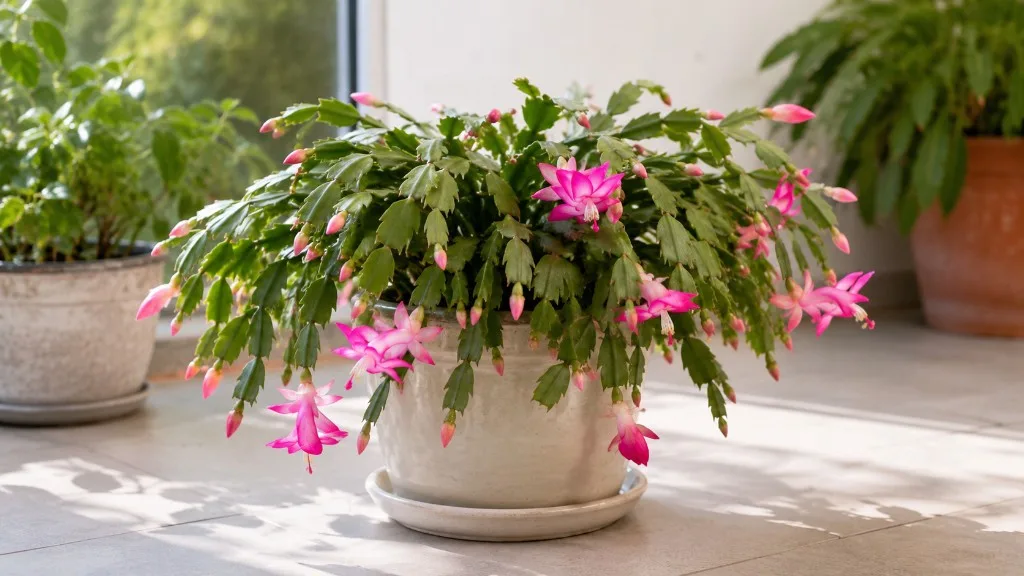
A Christmas cactus (Schlumbergera × buckleyi) can look textbook healthy—plump green phylloclades, no pests, steady growth—and still refuse to flower. That frustration usually means one of five environmental signals is missing or broken. The plant is not being dramatic. It is waiting for the same autumn cues it would read in Brazilian cloud-forest margins: long uninterrupted nights, cooler evenings, bright filtered days, even moisture during bud set, and no fresh fertilizer push in late fall.
Before you repot, buy bloom booster, or move the pot for the third time this week, sort the problem into one of three buckets. No buds at all points to a failed fall bloom cue—darkness, temperature, or weak daytime energy. Buds that formed then fell points to sudden change after bud set: a move, a draft, a heat spike, or a sharp watering swing. Blooms at the “wrong” time often means you have a Thanksgiving cactus hybrid, not a Christmas-schedule plant. Fix the bucket first; the five reasons below tell you which lever to pull.
For year-round care beyond bloom troubleshooting, see the Christmas cactus care hub and our Christmas cactus care guide.
Start With the Right Problem (Triage)
Bloom failure is not one generic complaint. Treating bud drop like a darkness problem—or repotting a plant that simply never got 13 hours of night—wastes a season and stresses roots for nothing.
No Buds vs Bud Drop vs Wrong Season
No buds through November or December almost always traces back to autumn setup: the long-night routine started too late, room lights broke darkness, nights stayed too warm without compensating with even longer dark periods, or daytime light was too dim to build bloom energy. The segments stay green because the plant is alive. It just never received the hormonal switch toward flowering.
Buds formed, then yellowed and fell is a different story. Missouri Botanical Garden notes that continuous warm temperatures, drafts, and abrupt changes after buds set commonly cause bud drop. You likely had a decent fall cue, then sabotaged it by moving the pot near a heater, repotting, letting soil go bone dry, or turning on a lamp after buds appeared.
Flowers in early November instead of late December may mean your plant is Schlumbergera truncata (Thanksgiving cactus) or a hybrid on the early side—not a care failure at all. Compare segment shape before you chase fixes. Scalloped, rounded teeth suggest Christmas timing; pointed, claw-like teeth suggest Thanksgiving timing. Our light guide covers photoperiod rules that apply to both, but bloom month expectations differ.
Run a 60-Second Bloom Triage Before You Change Anything
Answer four yes/no questions before touching fertilizer or soil.
Did the plant get 13 to 14 or more hours of total darkness every night from mid-September through October? If no—or if any lamp, TV glow, or hallway night-light hit the plant—that is your first fix. See Reason 1.
Were night temperatures mostly between 55 and 65 °F (13–18 °C), or did the room stay above 70 °F (21 °C) without extending darkness to 15 hours? Warm rooms need longer nights. See Reason 2.
Does the plant get bright indirect light by day but avoid harsh midday sun on the segments? Stretching toward glass or bleached segments signal light imbalance. See Reason 3.
During bud formation, did soil swing from soggy to desert-dry—or did you feed heavily in fall? Even moisture matters once buds initiate; winter fertilizer often backfires. See Reasons 4 and 5.
If all four check out and you still have no buds, jump to When It’s Not a Care Problem—species ID, plant age, or recent repotting may explain a skipped year.
Reason 1: Fall Nights Aren’t Long or Dark Enough
This is the number-one reason healthy Christmas cacti skip bloom indoors, and it is the reason most short troubleshooting lists bury under a generic “light” bullet. Schlumbergera is a short-day, long-night plant. It measures uninterrupted night length, not how sunny your living room feels at noon. UGA Cooperative Extension is direct: as little as two hours of light during the dark period can inhibit bud set.
That means a plant in a bright east window can fail completely if the kitchen downlight runs until midnight, a grow light on a timer overlaps evening hours, or streetlights leak through blinds. Daytime brightness does not cancel out a broken night.
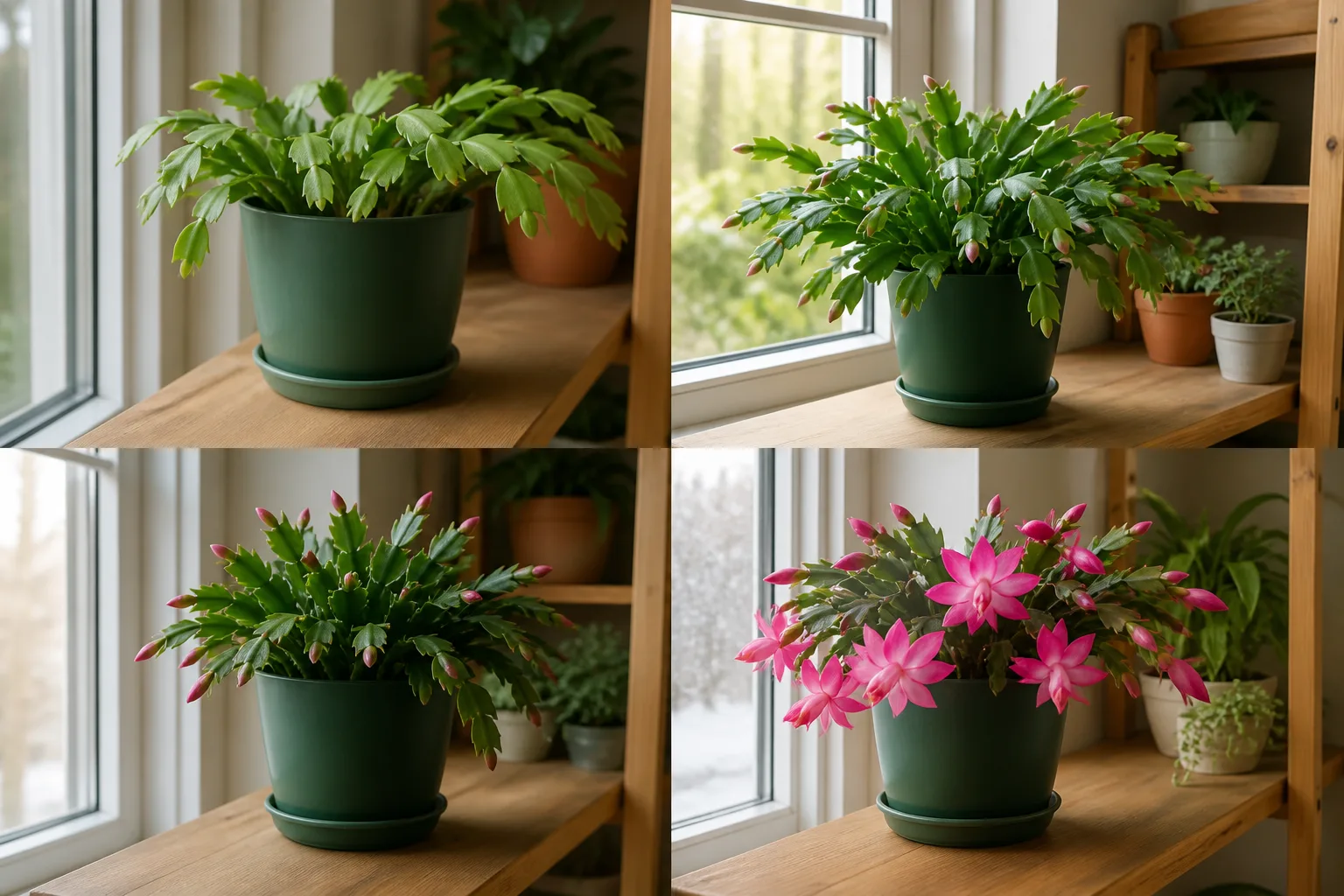
How Many Hours of Darkness Schlumbergera Actually Needs
Most extension guidance clusters around 13 to 14 or more continuous hours of darkness nightly for six to eight weeks, starting around mid-September if you want December flowers. University of Minnesota Extension describes holiday cacti as needing long nights in fall to initiate buds. Iowa State Extension lists interrupted darkness and warm rooms among the top bloom failures.
Practical home rule: aim for a repeatable 14-hour dark block every night from mid-September through late October. Buds often show within three to four weeks once the routine is consistent; flowers follow several weeks later. If your home runs warm at night (above 70 °F / 21 °C), extend toward 15 hours of darkness or cool the room—temperature and night length interact, covered in Reason 2.
Covering works when you cannot relocate the plant. A blackout cloth, cardboard tent, or dark closet can create the cue—as long as you remove the cover at the same time each morning and return the plant to bright daytime light. Our why cover a Christmas cactus guide walks through cover methods without overheating the pot.
The Night-Light Leak Audit
Walk the plant’s spot at 10 p.m. with the overhead lights off. Note every glow source: router LEDs, microwave clocks, open bathroom doors, smart bulbs on low, aquarium lights, and light under doors. Tape gaps, move the pot, or use a dedicated dark room. Consistency beats perfection one night and failure the next.
If you missed the fall window entirely and it is already December, you cannot magically force buds overnight. Stabilize care, plan the September routine for next year, and use our Christmas cactus light topic page to map daily light plus fall darkness on one calendar.
Reason 2: Temperature Works Against Bud Set
Christmas cacti are tropical epiphytes, not desert succulents—but “tropical” does not mean “keep me at summer heat while I try to flower.” Bloom initiation pairs long nights with cooler evenings. RHS recommends a distinct cool period in autumn to encourage flowering.
Warm Rooms, Drafts, and Heaters
Ideal bud-set nights for many homes sit around 55 to 65 °F (13–18 °C) with the 13- to 14-hour darkness routine. Daytime temperatures of 65 to 70 °F (18–21 °C) work well. When nights stay above 70 °F (21 °C)—common in centrally heated living rooms—you often need 15 hours of darkness instead of 13 to compensate, or the plant keeps growing vegetatively without switching to bloom mode.
Heat stress after buds form is equally destructive. Radiators, fireplace blowers, and heat registers that pulse warm air across the pot cause bud drop within days. So do cold drafts from frequently opened doors or single-pane glass the segments touch on freezing nights. The fix is boring and effective: one stable location, away from hot and cold extremes, from bud set through open flowers.
If your only cool room is a spare bedroom at 62 °F, that is often a better bloom chamber than a bright great room at 74 °F—provided you can keep that room dark at night. Temperature and darkness trade off; when you cannot cool the room, lengthen the dark period first.
Reason 3: Daytime Light Is Too Weak or Too Harsh
Fall darkness triggers buds, but daytime light fuels them. Think of photoperiod as the switch and daily photons as the battery. A plant in a dim hallway may survive on long nights yet lack the reserves to hold buds. A plant blasted by summer south-window sun may scorch segments and abort flowers from stress.
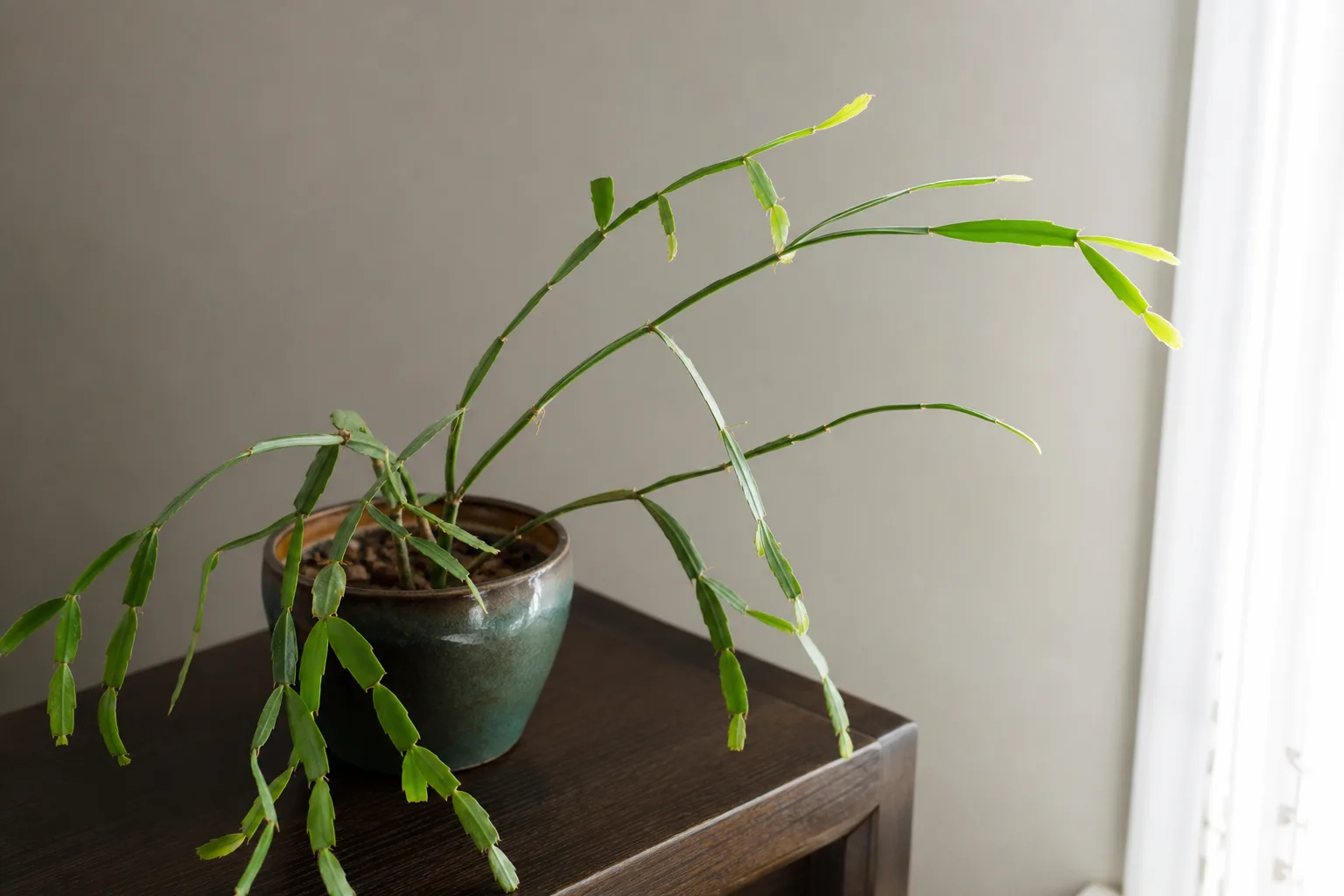
Bright Indirect vs Leggy vs Scorched
Bright indirect light means the room reads well lit, but the sun’s beam does not bake the phylloclades for hours. Hold your hand between window and plant at midday: a soft, fuzzy shadow is about right; a sharp dark shadow means filter or move back. NC State Extension recommends bright indirect light during the growing season and warns that full sun can bleach stems.
Leggy growth—thin segments with wide spacing between nodes—screams “more daytime light from spring through summer.” Fix that before next fall’s dark routine or bud set will be weak. Pale, yellow-green, or reddish segments often mean too much direct sun or sudden exposure without acclimation; see our Christmas cactus turning red guide for sun-stress triage.
Placement sweet spot for most homes: one to three feet inside an east window, or a west window with sheer curtain. Rotate the pot a quarter turn weekly during active growth so all sides get light. During fall bud initiation, prioritize dark nights over chasing the brightest sill if that sill sits in a lit room after sunset.
Reason 4: Water Swings at the Wrong Time
Watering advice that works in July can wreck December buds. Christmas cacti need more moisture than desert cacti year-round, but the pattern changes with the growth cycle.
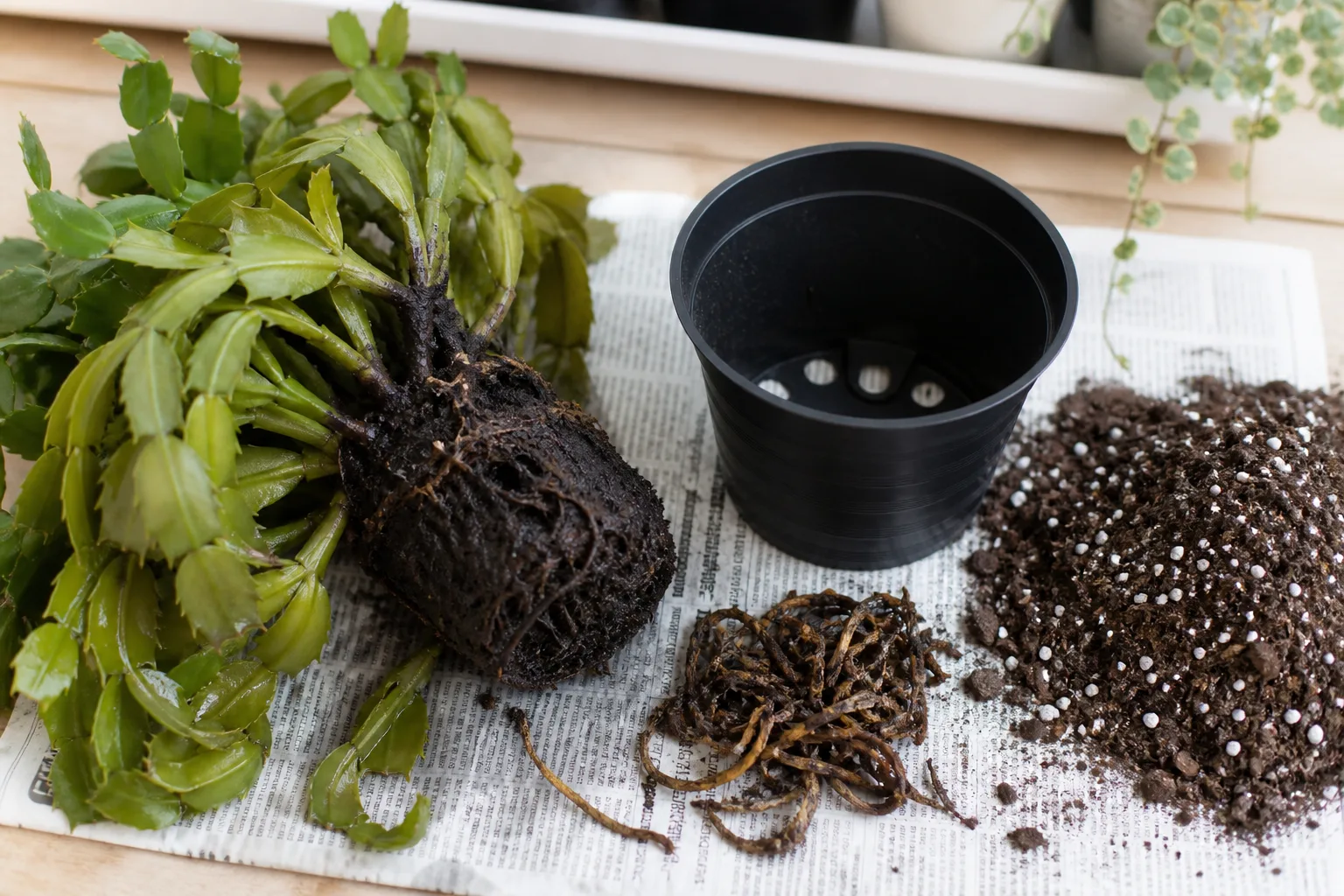
Bloom-Season Moisture vs Summer Drought
From March through October, let the top inch of mix dry before a thorough soak that drains freely. Slightly drier conditions in late summer can help nudge the plant toward dormancy before you start long nights—many growers reduce water in September before increasing it again once buds show.
From November through February, during bloom season, keep soil consistently and lightly moist, not wet and not bone dry. Gardening Know How emphasizes even moisture while flowering. Letting a budded plant dry hard mid-cycle is a classic trigger for bud drop. Overwatering into soggy, airless mix causes root stress that also drops buds—see why Christmas cactus is dropping leaves for the overwatering vs underwatering split.
Use the pot weight test, not a rigid calendar. Lift after watering to learn “heavy.” When it feels light and the top inch is dry, water until a little drains out, then empty the saucer. During bud set, smaller swings beat heroic soaks followed by week-long droughts.
Reason 5: Fertilizer at the Wrong Season
A balanced 20-20-20 fertilizer diluted to half strength supports spring and summer growth on Christmas cactus. It does not belong in the bloom-initiation window the way it might for summer annuals outdoors.
Feed from April through August while new segments are actively growing—roughly every two to four weeks, stopping by late summer before you start long nights. Do not fertilize while forcing darkness in fall or while buds are swelling in winter. Fresh nitrogen pushes leafy growth and can burn roots on a plant already stressed by photoperiod change. Iowa State Extension lists overfertilization among bloom failures.
If you are tempted by sugar water, molasses, or bloom booster hacks, skip them. They do not replace darkness and cool nights—and can invite rot. Our sugar water guide explains why sweeteners are not plant food.
Resume light feeding only after flowering finishes and new spring growth appears. Flush accumulated salts if you fed heavily all summer and the crust sits on soil surface.
When It’s Not a Care Problem
Sometimes the environment checks out and the plant still skips a year. Know when to stop tweaking.
Thanksgiving vs Christmas Cactus ID
Retail pots labeled “Christmas cactus” are often Thanksgiving cactus (S. truncata) or hybrids. Thanksgiving types bloom earlier (often November) with pointed, claw-like segment margins. True Christmas cactus has rounded, scalloped teeth. Bloom timing follows genetics as much as your cover routine. ID the plant before you decide failure occurred.
Immaturity, Repotting, and Recent Stress
Young plants from recent cuttings may need two to three years of steady growth before they bloom heavily. Recent repotting, heavy pruning, or a new store purchase can pause flowering for one cycle while roots re-establish. UMN Extension notes that holiday cacti bloom best when slightly pot-bound—repotting right before fall is a common self-inflicted skip.
If you pruned heavily in autumn or moved homes in September, forgive a blank year and rebuild stable care. Focus on bright summer growth and next fall’s dark routine instead of forcing winter blooms on a recovering plant.
Month-by-Month Bloom Prep Calendar
Use this as a default Northern Hemisphere indoor schedule; adjust two weeks earlier in hot climates or later if you want January flowers.
January–February: Enjoy blooms if present. Water evenly, avoid moves, no fertilizer. After flowers fade, let the plant rest with slightly reduced water.
March–April: Resume light feeding as new growth starts. Increase water with active growth. Bright indirect light is strongest now.
May–August: Active growth season. Feed every two to four weeks, repot only if roots are crowded—ideally after bloom season, not now if buds are the goal for December. Protect from harsh summer sun.
September (weeks 1–2): Stop fertilizing. Optionally reduce water slightly. Begin checking night-light leaks.
September (mid) through October: Start 14-hour (or 15-hour in warm rooms) darkness routine nightly for six to eight weeks. Cool nights if possible. Bright days.
November: Buds should appear at segment tips. End forced darkness once buds show. Increase water slightly; keep temperatures stable.
December–January: Blooms open. Do not rotate, repot, or relocate. Maintain even moisture.
What to Do Once Buds Form (Don’t Sabotage Success)
Getting buds is half the battle. Bud drop after success breaks hearts—and it is almost always sudden change, not mysterious cactus mood.
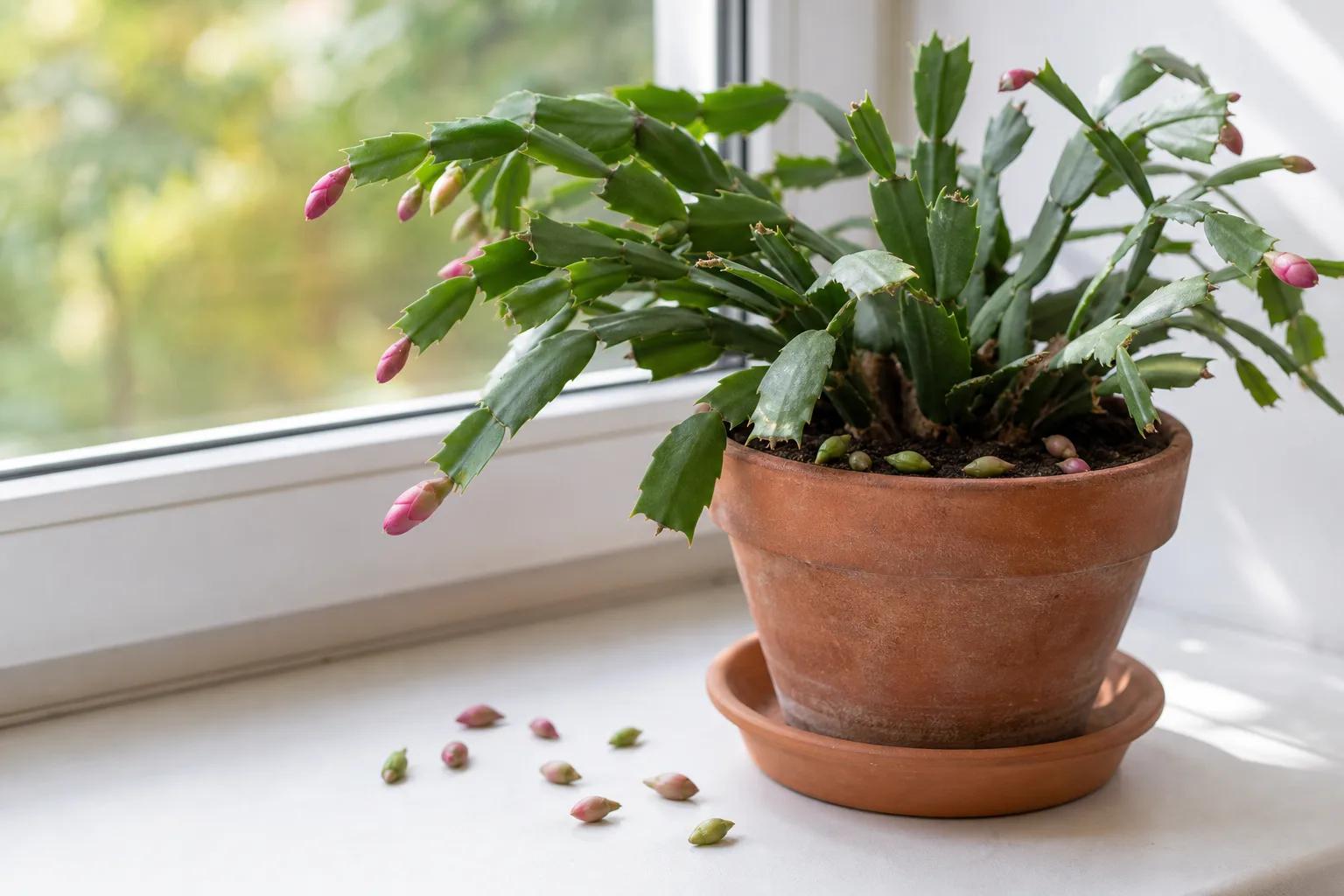
Keep the pot stationary once buds are visible. No “just moving it to the dining table for guests.” No repotting. No turning the pot for even growth. Temperature swings above 90 °F (32 °C) or cold drafts can abort buds within days, per Missouri Botanical Garden guidance on warm conditions after bud set.
Water on a steady schedule—slightly more than your summer dry-down, never soggy. Skip fertilizer until after bloom. If a few buds drop but most hold, do not panic; holiday cacti often shed some buds. If most drop, review heat, light changes, and watering swings honestly.
When blooms finish, return to normal Christmas cactus watering and plan next September’s darkness routine before you forget again.
Conclusion
A Christmas cactus that will not bloom is usually missing an autumn signal, not a miracle product. Long, uninterrupted fall nights come first, paired with cool evenings, bright filtered days, even moisture during bud set, and no off-season fertilizer push. Run the 60-second triage, separate “no buds” from “dropped buds,” and confirm you have a Christmas-schedule plant—not an early-blooming Thanksgiving hybrid.
If this year’s window closed, you still win by fixing daytime light and root health through summer so next September’s dark routine actually works. Bookmark the light guide and cover guide when mid-September arrives, and let the plant do what it evolved to do: turn shortening days into winter flowers.



