How to Grow Cucuzza Squash: Planting to Harvest
Learn how to grow cucuzza squash with warm-soil timing, a sturdy trellis, steady watering, pollination checks, and harvest cues for eating or drying.
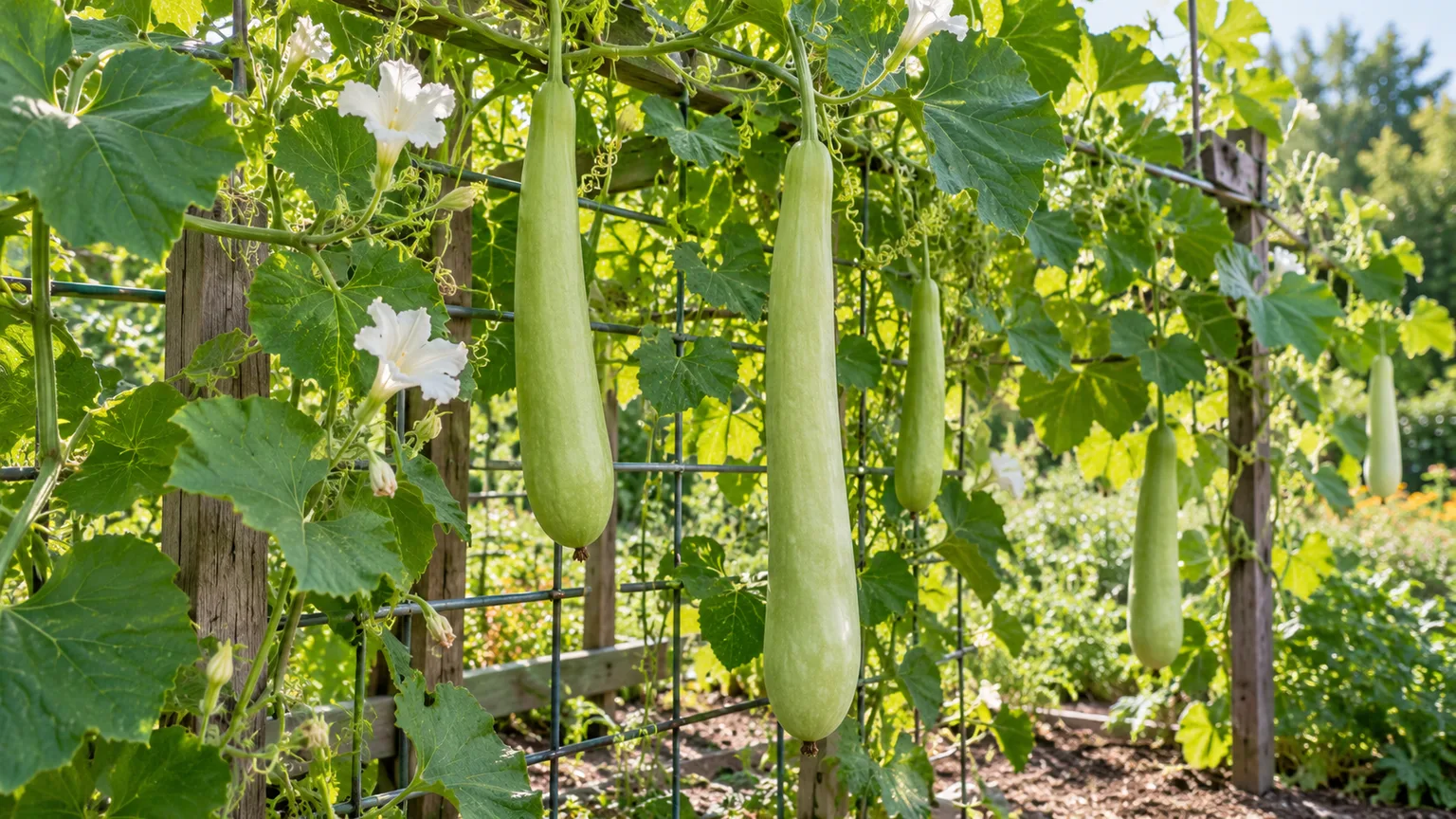
Cucuzza is a heat-loving, fast-climbing gourd that can give you two very different harvests: tender, pale-green squash for the kitchen or mature hard-shell gourds for drying. The best way to avoid a disappointing season is to plan around its long vine and warm-weather needs before the seed goes in the ground. Pick a sunny site, wait for truly warm soil, and decide whether you have room for the vine to sprawl or a sturdy support to carry it.
One important distinction shapes every care choice: harvest cucuzza while it is young if you want to eat it; leave it on the plant to mature if you want a shell for crafts. A fruit that has begun to harden is no longer a tender summer squash, and a fruit picked early will not become a durable ornamental gourd after cutting.
Know What You Are Growing Before You Buy Seed
Cucuzza, often sold as cucuzzi or Italian edible gourd, is Lagenaria siceraria in the cucumber family, Cucurbitaceae. The same species is widely called bottle gourd or calabash gourd. It is not a zucchini or a pumpkin, although its edible immature fruit is often cooked like summer squash. The NC State Extension plant profile describes a rapid-growing annual vine with night-blooming white flowers and fruit that develops a hard shell as it matures.
Seed names can be confusing. “Snake gourd” is used for cucuzza in some markets, but it can also refer to other plants, and “calabaza” is often used for different winter squashes; a Gardener’s Path guide to calabaza identifies that crop as Cucurbita moschata. Check the botanical name on the packet when you want cucuzza specifically. A seed packet or seller should also tell you whether the fruit is intended for eating young, drying mature, or both.
The plant behaves as a warm-season annual in a home garden. USDA hardiness zones are a poor planting calendar for it: they describe average winter minima used for perennial survival, while cucuzza’s success depends more on frost-free days, warm soil, and enough summer heat for the fruit to mature. In a short-season garden, plan for an early but not overgrown start; in a long, hot season, direct sowing is usually simpler.
Start With Warmth, Not a Calendar Date
Plant after the last frost risk has passed and the soil has warmed. NC State Extension gives 70°F as the ground-temperature threshold for direct sowing bottle gourd. A Cucuzza-specific guide from Savvy Gardening uses 65°F as a practical minimum. Because cold, damp soil slows germination and can rot seed, use the more conservative 70°F mark if spring nights are still cool; in a reliably warm climate, follow local experience and your seed supplier’s guidance.
Take the temperature several mornings at the depth where the seed will sit, rather than relying on a warm afternoon reading. A soil thermometer is inexpensive, but even without one, a succession of warm days and nights is a better cue than a date printed on a generic planting calendar. If a late cold snap is forecast, wait or protect a small planting rather than gambling the whole packet.
Direct-sow after frost in warm soil
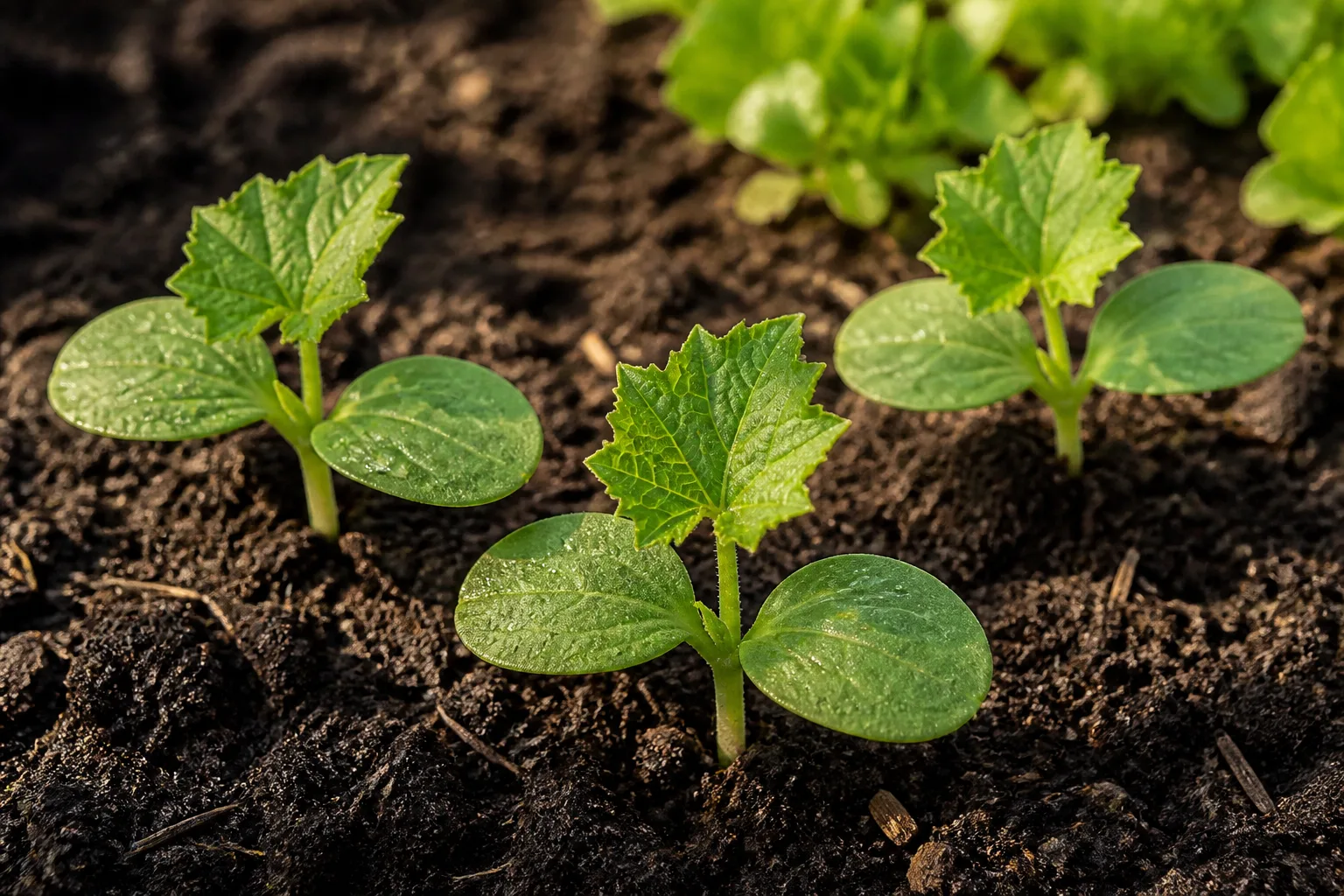
Direct sowing avoids transplant shock and suits areas with a long warm season. Soak hard-coated seed for several hours or overnight if it has been slow to sprout for you, then plant about ½ to 1 inch deep in moist, prepared soil. Soaking is optional, not a substitute for warm soil: a seed can swell and still fail if it sits in cold, waterlogged ground.
Plant two seeds where you want one vine, then keep the stronger seedling once both have established. That gives you a backup without allowing a dense clump to compete all season. Water the planting area gently so the seed stays covered, and keep it evenly damp—not saturated—until emergence. If the soil crusts after rain, loosen only the surface around the seed rather than digging for it.
Start seedlings briefly when the season is short
If your summer is short, sow indoors roughly three to four weeks before the expected last frost. Use a roomy individual pot or a biodegradable pot, because cucuzza grows quickly and does not appreciate having its roots pulled apart. Savvy Gardening starts seeds about a month before the last frost and cautions against starting too early; an indoor vine that has outgrown its pot can be harder to transplant than a young seedling.
Give seedlings bright light and warm conditions. Harden them off over about a week, gradually increasing outdoor exposure, then plant only once frost is past and soil is warm. Keep the root ball intact and set the plant at the same depth it was growing indoors. If the seedling is root-bound or has begun twisting around the pot, handle it carefully and expect a short pause while it settles.
Choose a Sunny Site and Prepare the Soil
Choose a spot that receives at least six hours of direct sun, with eight or more being a useful target for a vigorous fruiting vine. The plant will climb over nearby vegetation if it can, so avoid a narrow bed where it will smother shorter crops or block a walkway. If you plan to let it sprawl, reserve more area than the seedling suggests; established vines can run 20 feet or longer.
Cucuzza grows best in fertile soil that drains well but does not dry out immediately. NC State lists a broad soil texture range, from sand to clay, provided drainage and moisture are appropriate. Mix in mature compost before planting if the bed is low in organic matter, and use a soil test when you have one rather than adding amendments by habit. Poor drainage matters more than whether your soil is called loam: a seedling sitting in a puddled planting hole is likely to struggle.
Weed the planting area before the vine spreads. A light mulch layer helps hold moisture and suppress weeds, but keep mulch a few inches away from the stem so the crown is not kept continuously wet. Mulch also prevents long fruit from resting directly on bare, damp soil if you choose ground culture instead of a trellis.
Decide Whether to Trellis or Let the Vine Sprawl
A trellis is optional, not a biological requirement. Cucuzza can trail on the ground if you have room, but training it upward saves bed space, improves access for inspection, and usually keeps the long fruits straighter and cleaner. Ground-grown fruit may curve around obstacles or develop discolored patches where it presses against damp soil; that can be acceptable if shape is unimportant or you want an unusual ornamental gourd.
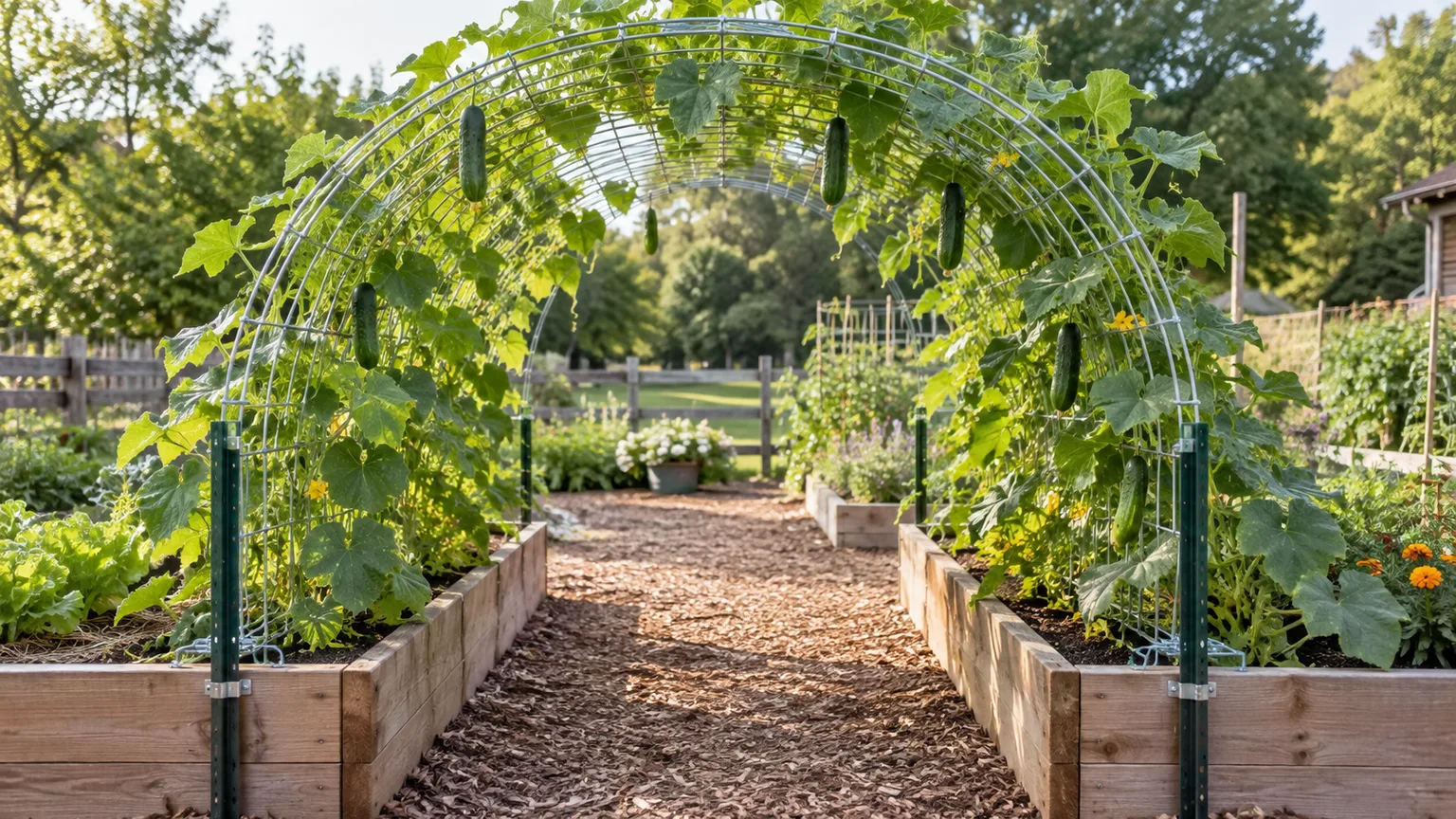
Choose a support before sowing. A firmly anchored cattle panel, strong wire mesh, fence, or A-frame can work, but a lightweight tomato cage is not designed for a vine that keeps climbing and carrying large leaves and fruit. The trellis should resist wind and be fixed to posts or a stable structure, not merely pushed into soft soil. Savvy Gardening describes vines exceeding 20 feet and uses tall, substantial support; size the structure for the plant you intend to grow, not its first few weeks.
Guide the young main vine toward the mesh while it is flexible. Cucuzza has tendrils that can grip, but you can add loose soft ties if the stem is not catching. Check fruit as it lengthens: support any fruit that bows sharply or hangs where it may pull the vine, and do not force a long fruit through a narrow opening. Some gardeners use a breathable sling for unusually heavy fruit, but it is not necessary for every young edible squash.
Plant and Space Cucuzza for a Long Growing Season
Prepare the bed and install the trellis before planting so you do not drive stakes through developing roots later. For a supported vine, start seed stations about 18 to 36 inches apart and thin each station to one strong plant; give each vine its own sturdy support section rather than crowding several onto a narrow arch. If you are growing the vines on the ground, leave at least 3 feet between planting stations and use wider rows—about 6 to 8 feet—so you can reach fruit without stepping on stems. These are starting points: use the seed packet and the width of your support to open the spacing up when needed. NC State Extension lists hills about 3 feet apart for supported plants and farther apart for trailing vines, while Savvy Gardening describes a similar closer spacing on a trellis and broader spacing for ground culture.
Plant the seed or seedling shallowly, water it in, and mark the location. Keep the soil moist while it establishes, then shift to deeper watering that wets the active root zone. Thin extra seedlings by snipping them at soil level rather than pulling them up close to the keeper plant; tugging can disturb the roots you want to preserve.
The first few weeks are about root and leaf growth, not immediate fruit. Cucuzza spends time building a long vine before it flowers, especially when planted into cool weather or low light. Use the seed packet’s days-to-maturity range as a planning estimate, not a deadline; heat, transplanting, and the distinction between edible fruit and fully mature gourds change the wait.
Water Consistently and Feed Without Overfeeding
Water deeply when the soil begins to dry below the surface, adjusting for rainfall, temperature, and soil type. Savvy Gardening uses about 1 inch of water per week as a starting point for active vines, but a hot spell or sandy bed may need more frequent checks. Water at the soil line in the morning when practical; wet foliage that stays damp overnight can encourage disease, while a shallow sprinkle may wet only the surface and leave roots thirsty.
Watch the plant, but do not use a single midday wilt as proof that it needs water. Leaves can droop briefly in intense heat and recover by evening. Check soil several inches down: if it is dry, water slowly; if it is wet, inspect drainage and the stem base before adding more. In a container or raised bed, check more often because a smaller soil volume can dry quickly.
Feed according to soil condition. Compost worked into the bed before planting and one balanced fertilizer application at planting may be enough in fertile soil. A modest side-dress when vines begin to run can help a poor bed, but excess nitrogen often makes a cucurbit produce huge leaves and long stems at the expense of flowers and fruit. If your plant is dark green and growing rapidly but not flowering, do not reflexively add more fertilizer. NC State and Arkansas Extension both caution against overfertilizing gourds; follow the label and avoid placing concentrated fertilizer against stems or roots.
Read the Flowers Before You Expect Fruit
Cucuzza bears separate male and female flowers on the same vine. The large white blossoms open in the evening or at night, an important difference from many familiar yellow squash flowers. Male flowers usually appear first and are carried on a slender stalk; a female flower has a small immature fruit at its base. Seeing male flowers without fruitlets early in the season is normal and does not mean the plant is sterile.
Fruit set depends on pollen moving from an open male flower to a female flower. NC State Extension notes that fruit set improves with hand pollination, while bees and other visitors can carry pollen naturally. Avoid covering a flowering vine with a row cover and leaving it sealed: the cover protects the plant from insects but also keeps pollinators away. If pest pressure calls for a temporary cover, remove it when flowers open or be ready to pollinate by hand.
Hand-pollinate only when fruit set needs help
Try hand-pollination if female flowers open but the tiny fruit turns yellow, shrivels, or drops before it begins enlarging. In the evening or early morning while the flowers are open, pick a fresh male flower or use a small clean paintbrush to collect pollen from its anthers. Touch the pollen to the central stigma of the female flower, reaching each lobe if the stigma is divided, then leave the vine undisturbed.
Hand-pollinating every bloom is unnecessary when fruit is already setting well. It is a targeted backup when pollinator access is poor, weather has limited insect activity, or you are growing under netting. Make a note of the date you try it and inspect the fruitlet a few days later; this helps you tell whether pollination, rather than water or root stress, was the likely bottleneck.
Catch Pests and Diseases While They Are Manageable
Inspect the upper and lower leaf surfaces at least weekly, especially while seedlings are small. NC State lists cucumber beetles, squash bugs, aphids, cutworms, pickleworms, and squash vine borers among potential bottle-gourd pests, along with diseases including anthracnose, downy mildew, powdery mildew, bacterial wilt, and blights. The list identifies what to watch for, not a guarantee that every garden will have each problem.
Look for pest evidence rather than spraying on a schedule. Squash bug eggs and young clusters often appear on leaf undersides; cucumber beetles chew foliage and may damage blossoms. A vine that suddenly wilts despite moist soil deserves a close look at the stem base for feeding injury, holes, or sawdust-like frass. Hand-remove visible eggs or insects where practical, keep the bed free of badly infested debris, and rotate cucurbits to a different bed in future seasons when space allows.
White powdery patches, angular yellow areas, or dark lesions need different responses, so avoid diagnosing every discolored leaf as a nutrient problem. Improve airflow by maintaining the planned spacing, water at the base, and remove only badly affected foliage with clean pruners while keeping enough healthy leaves to feed fruit. For a fast-spreading disease or a suspected vine borer, contact your local extension office for identification and region-specific management. If you use any pesticide, the product label—not a generic garden recipe—sets the safe crop, rate, timing, and pollinator precautions.
Troubleshoot Flowers or Young Fruit That Fail
Use the plant’s stage to choose the next step. If it is still building its vine and has no flowers, first check warmth, sun, and excessive nitrogen; adding more fertilizer is rarely the right first move for an already vigorous, dark-green plant. If it has male flowers only, wait for female blooms rather than treating the lack of fruit as a problem.
If female flowers open but no fruit remains, check pollinator access and try hand-pollination on a fresh bloom. If small fruit forms and then yellows or shrivels, pollination may have failed, but heat, dry soil, waterlogged roots, and abrupt stress can produce similar symptoms. Check the root zone before changing watering, and keep fruit from resting in standing water or being damaged by pests.
If the vine is lush but flowering late, pause nitrogen feeding and give it time in warm, sunny conditions. If it flowers heavily yet yield stays low, prioritize flower access and pollination before pruning healthy vines. A few yellowing leaves at the end of the season are different from rapid whole-vine collapse; sudden wilt, lesions, or stem damage calls for a pest or disease inspection rather than extra irrigation alone.
Harvest Young Cucuzza for the Kitchen
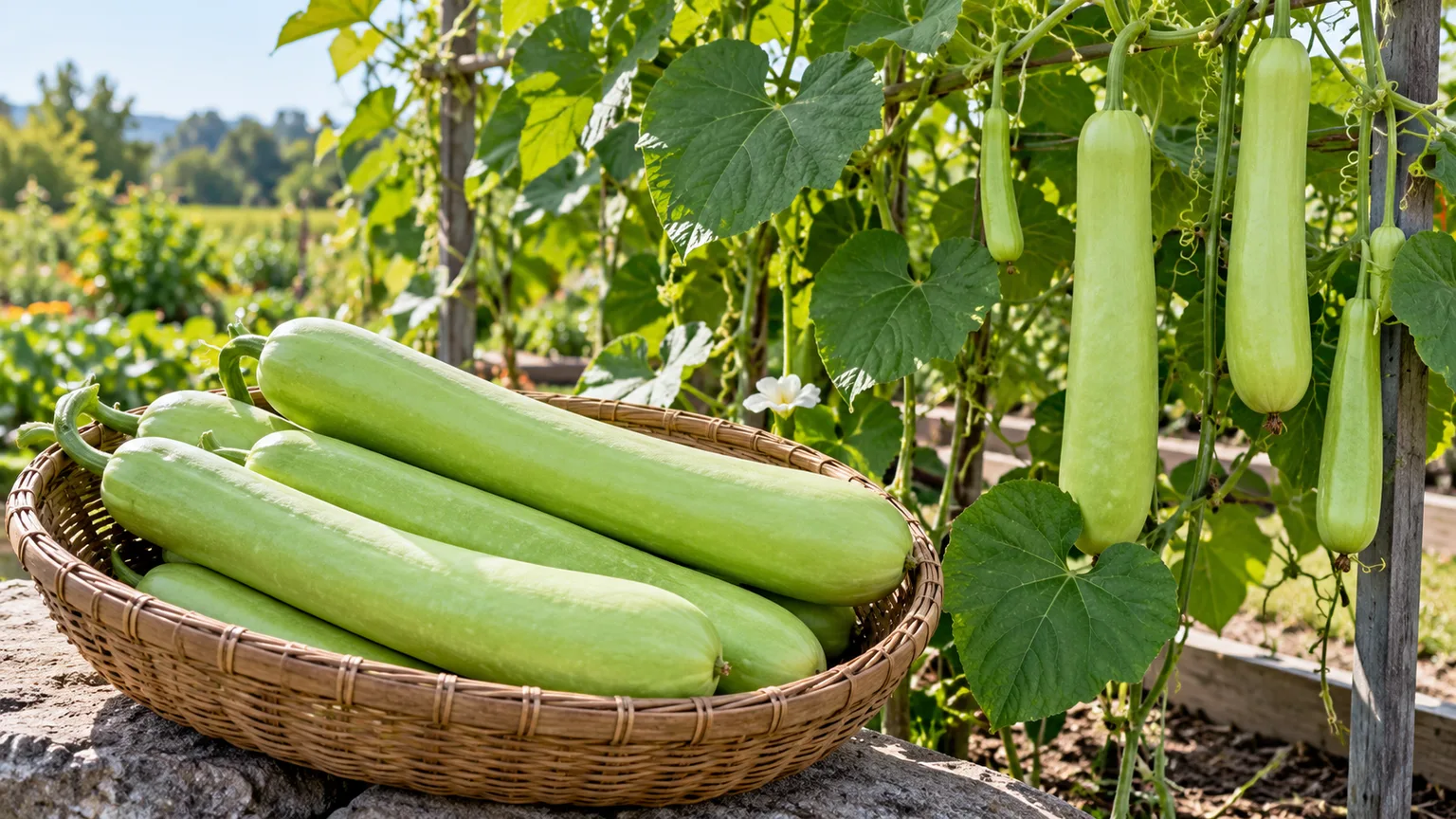
Pick cucuzza while the fruit is slender, pale green, and still tender. Many gardeners harvest at about 12 to 18 inches, but length is a guide rather than a rule because seed lines differ and a fast-growing fruit can become fibrous quickly in hot weather. The skin should still feel soft enough to cut easily; once it hardens into a shell, the fruit is better treated as a mature gourd than as summer squash.
Use clean pruners or a knife to cut through the stem, leaving a short piece attached instead of twisting the fruit off. Check the vine every few days during warm weather so edible fruit does not pass its tender stage unnoticed. Frequent picking also prevents oversized fruit from taking over the plant’s limited growing energy while younger fruit is forming.
The young fruit can be cooked much like zucchini or other mild summer squash: sauté, stew, stuff, or add it to soup. NC State notes that young fruit, seeds, leaves, flowers, and stems are edible, though culinary preparation varies. Handle leafy shoots conservatively and use a reputable recipe for unfamiliar plant parts. Refrigerate harvested tender fruit and use it promptly; cut or cooked squash should be chilled rather than left at room temperature.
Leave Mature Gourds to Cure for Crafts
If you want a hard-shell gourd, choose a few well-formed fruits and let them mature fully on the vine instead of harvesting them at edible size. Mature fruit becomes much firmer, and its surface and stem begin drying as the plant approaches the end of the season. Arkansas Extension’s gourd guide recommends harvesting when stems are dry and brown and before frost when possible; cut with pruners and leave an inch or two of stem attached.
Handle mature gourds gently. Bruises, punctures, and soft spots can become rot during drying, so separate damaged fruit instead of laying it in a dense pile with sound gourds. Wipe away soil and arrange the fruit in a warm, dry, airy place with space between each one. Turn it periodically so damp spots do not stay pressed against a shelf or another gourd.
Drying takes weeks or months depending on fruit size, maturity, temperature, and airflow. Arkansas Extension gives a shorter curing window for some small ornamental gourds, while Savvy Gardening notes that large hard-shell gourds may take several months. Use the endpoint, not a fixed date: a fully dry gourd feels much lighter, the shell is hard, and seeds rattle inside when shaken. Remove any fruit that becomes soft, leaks, or develops spreading decay rather than risking the rest of the batch.
Grow in a Container Only If You Can Support the Vine
Ground planting is easier because cucuzza has a long, vigorous root and vine system. A container can work as a space-saving experiment if it is very large, drains freely, and can be placed beside a strong, independently anchored trellis. Grow one vine per container, use a free-draining potting mix, and expect to water more often than you would an in-ground plant during hot weather.
Do not choose a small decorative pot because the seedling looks compact. As the plant grows, roots and leaves can outgrow the container, moisture swings become harder to manage, and a heavy trellis can tip the pot. If you cannot provide a stable support and enough root volume, let the vine sprawl in a garden bed or choose a more compact vegetable for the pot.
Routine pruning is not needed. Avoid cutting healthy main stems just to make the plant look tidy; every leaf helps power growth and fruit. Remove only broken or clearly diseased foliage, and use clean pruners so you do not spread problems from one plant to another.
Save Seed Carefully or Buy Fresh Seed Next Season
Cucuzza is normally started from seed each year, so the simplest propagation plan is to buy fresh seed or save seed from a fully mature gourd. Let the fruit mature completely, remove seeds from the dried interior, clean off pulp, and dry them thoroughly before storing in a labeled paper packet in a cool, dry place. Do not save seed from an immature fruit harvested for dinner; its seeds may not be fully developed.
Seed-saving results are less predictable when you do not know the parent seed line or what other compatible gourds flowered nearby. If preserving a named type matters, confirm whether the seed is open-pollinated and learn how it was pollinated; otherwise, treat saved seed as an experiment and buy a fresh packet when you want predictable fruit. Keep the species name with the packet so “cucuzza,” “calabash,” and other market names do not get mixed together.
Conclusion
For a reliable cucuzza crop, get the timing right before focusing on fertilizer: plant after frost when soil is warm, give the vine full sun and room, and install a genuinely sturdy support if you want to grow vertically. Keep moisture steady, avoid pushing lush growth with excess nitrogen, and watch the night-opening flowers so you can tell normal male-first flowering from a real pollination problem.
Then choose your harvest goal. Cut young fruit while it is still tender for the kitchen, or leave selected fruit on the vine until the shell and stem mature before curing it in a dry, airy place. Those two clear harvest paths make cucuzza easier to grow and keep you from asking a hard-shell gourd to behave like a summer squash.



