Plant These 7 Flowers for Blooms Through December
Pansies, dahlias, asters, kale, black-eyed Susans, coneflowers, and catmint: which to plant now, what “until December” really means in your zone, and when each stops flowering.
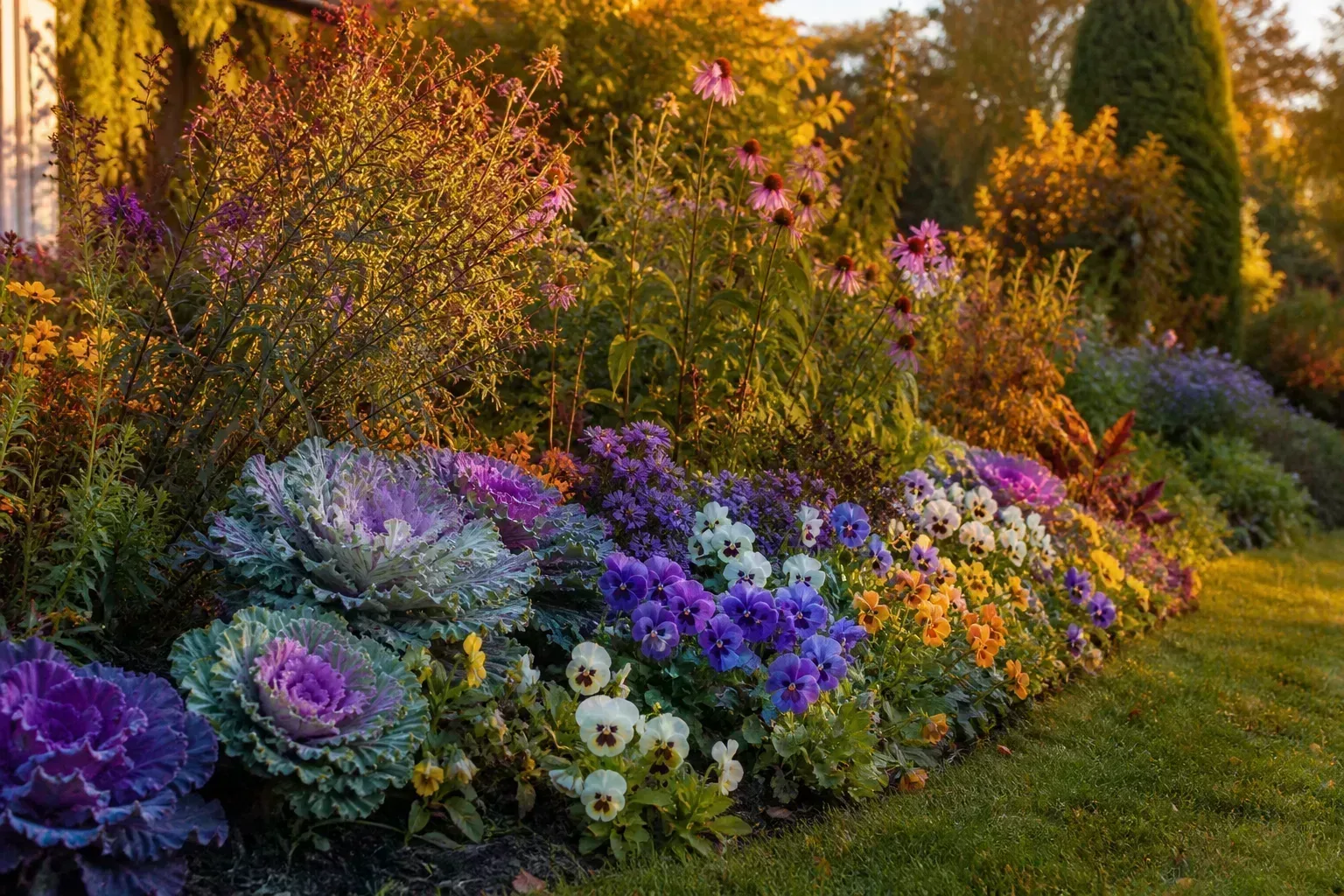
Late summer is not the end of the flower calendar — it is the switching season between heat-weary summer beds and the cooler displays that carry color into fall and, in mild climates, toward December. The seven plants below are worth planting right now because each handles dropping temperatures differently: some keep true petals through light frosts, others deliver bold foliage color, and a few give you long-lasting structure after bloom.
None of them reward guesswork. “Until December” depends on your USDA zone, your first frost date, and whether you mean open flowers or winter interest. This guide names honest bloom windows, tells you what to buy (transplant vs already-established clump), and shows when planting this week still makes sense — and when you should wait for spring instead.
What “Until December” Actually Means in Your Zone
Competitor lists often treat “cold tolerant” as “blooms all winter everywhere.” That is not how temperate gardens work. Use three realistic categories:
Category A — Open flowers into late fall or mild winters: Pansies are the clearest example. Planted in fall, they prefer 40°F to 60°F air and can flower through winter in USDA zones 7–9 (and often zone 6 with protection). In colder zones, expect strong fall color that pauses under snow and returns in early spring — not Christmas petals on a frozen bed.
Category B — Blooms until hard frost, then structure: Dahlias, asters, black-eyed Susans, and catmint keep flowering until a killing frost stops petal production. Dahlias in particular lose tuber viability when soil temperatures drop below about 25°F, according to NC State’s dahlia profile. After frost, seed heads and dried stems — not fresh flowers — carry the show.
Category C — Color without traditional flowers: Flowering kale and ornamental cabbage are grown for purple, pink, and white foliage that intensifies in cold air. They are not petal producers, but they are one of the most reliable ways to keep a front bed vivid when nights dip toward freezing.
Coneflowers blur B and C: ray flowers run from early summer into fall, while domed seed heads persist for birds and winter texture. Calling that “December blooms” is only accurate if you value dried form and wildlife food, not fresh purple petals.
Match your expectation to your climate before you shop. The USDA Plant Hardiness Zone Map tells you winter survival; your local average first frost date tells you whether a late-August transplant still has time to root.
Count Back From Your First Frost Before You Buy Anything
Look up your average first frost date (local extension offices publish zip-level calendars). Count backward from today:
- Six to eight weeks before frost: Ideal for container-grown perennials and biennials — asters, coneflowers, catmint, black-eyed Susans — plus pansy transplants going into prepared beds. Warm soil still drives root growth while cooling nights reduce wilting. Iowa State University Extension identifies late August through mid-September as an excellent perennial-planting window when frost is still far enough out.
- Four to six weeks before frost: Still workable for healthy gallon pots and pansy packs, but skip slow-rooting bargains. Water daily for the first 10–14 days if heat persists.
- Fewer than four weeks before frost: Buy pansies and ornamental kale for instant color only; do not expect new dahlia tubers or tiny aster plugs to establish. Wait until spring for major perennial divisions.
If August soil is baked dry or above 90°F daily, wait for a cooler spell and plant in the evening. Stressed transplants fail quietly — they do not announce that heat killed their roots.
A Simple Late-Summer Planting Window Table
| Weeks until average first frost | Best moves now | Skip for now |
|---|---|---|
| 8+ | All seven on this list from healthy nursery stock; divide overcrowded catmint | Weak clearance plants with circling roots |
| 6–8 | Pansies, kale, asters, coneflowers, catmint, black-eyed Susans; potted dahlias | Bare-root dahlia tubers without irrigation plan |
| 4–6 | Pansies, kale, in-bloom dahlias in pots; small perennial starts | Large bare-root perennial mail-order |
| Under 4 | Color bowls of pansies and kale only | Anything needing six weeks of root establishment |
This is a planning estimate, not a guarantee. An early Arctic front can end dahlia season overnight; a warm November can extend pansy bloom in zone 8.
How to Read the Seven Choices Below
Each entry includes:
- Plant type (cool-season annual, tender tuber, perennial, biennial, or foliage accent)
- What “lasts until December” means here (petals, foliage, or seed heads)
- Best late-summer action (what to buy and do this week)
- Site needs (sun, drainage, common failure)
For broader August planting context — vegetables, bulbs, and additional perennials — see our guides on what to plant in August and perennials to plant in August.
Pansies — Real Winter Petals in Cool and Mild Climates
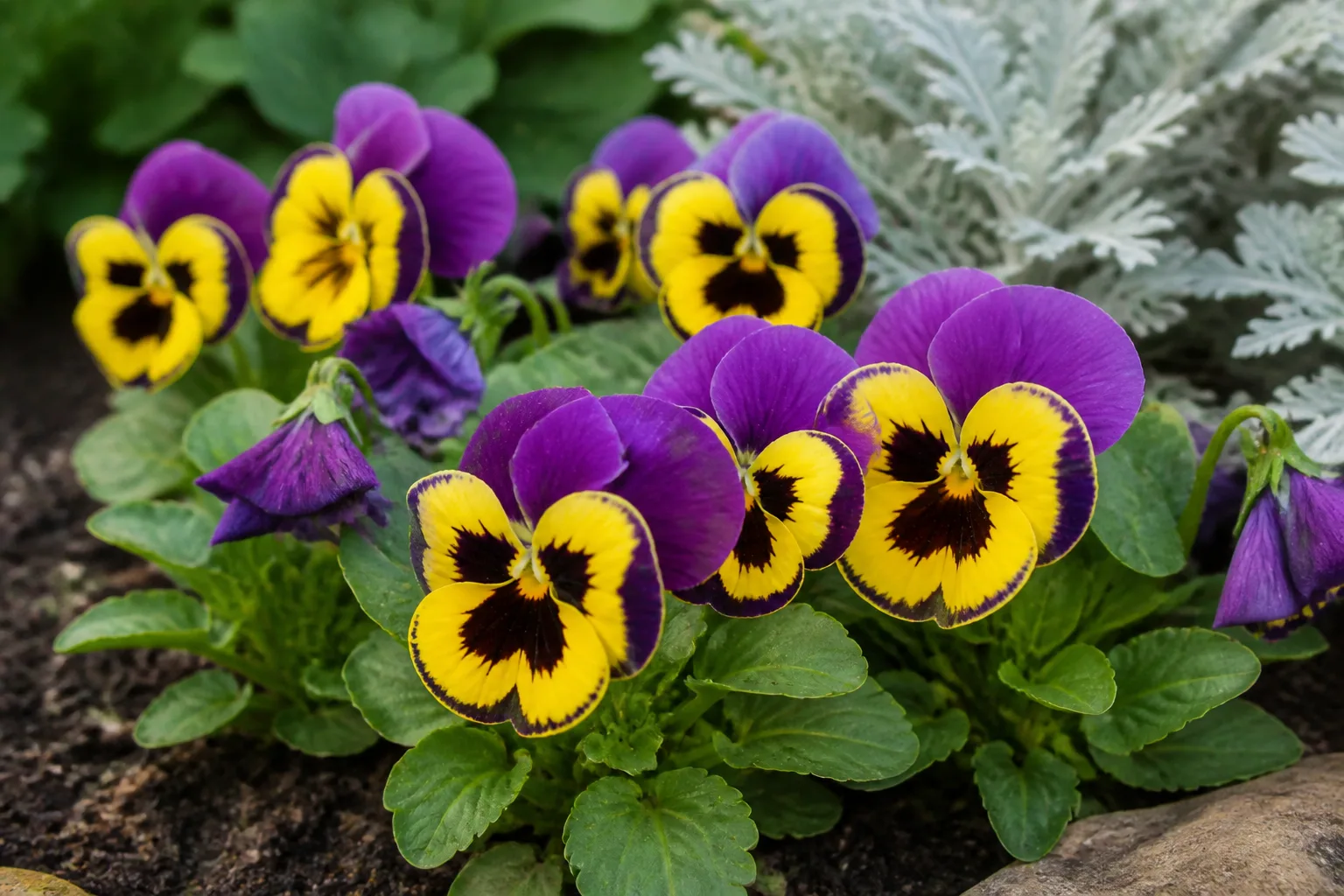
Pansies (Viola × wittrockiana) are the most dependable true winter flower on this list for gardeners in cool climates who plant at the right time. NC State’s pansy profile notes they prefer full sun to part shade, consistently moist, well-drained soil, and fall planting for winter and early-spring bloom. Individual plants can flower four to six months when deadheaded and kept cool.
They are not heat lovers. Summer sown or summer-planted pansies often collapse when days stay hot; that is normal, not a personal failure. Treat them as a cool-season annual or short-lived perennial depending on zone.
What “until December” means: In zones 7–9, open faces through December are realistic in mild winters. In zones 4–6, expect peak color September through November, then dormancy under snow with a March encore.
Best late-summer action: Buy cell-pack or bowl-grown transplants — not dry seed in August if you want December color. Plant at the same depth they grew in the pot, mulch lightly, and water until roots reach beyond the original soil ball.
Site needs: Morning sun with afternoon shade helps in the South. Avoid nitrogen-heavy lawn edges where pansies produce leaves instead of flowers. Gardening Know How’s pansy culture overview reinforces steady moisture without waterlogging.
Common mistake: Planting into hot, dry August soil without daily watering. If a heat wave is forecast, wait a week or use containers you can move to partial shade.
When to Plant Pansies for December Color
In mild-winter regions, set out transplants when nighttime lows begin falling below 70°F — often late August through October. In cold zones, plant four to six weeks before first frost for fall show; winter bloom requires protection (cold frame, south-facing microclimate, or covered porch pots).
Dahlias — Bold Late-Fall Blooms With a Hard Frost Deadline
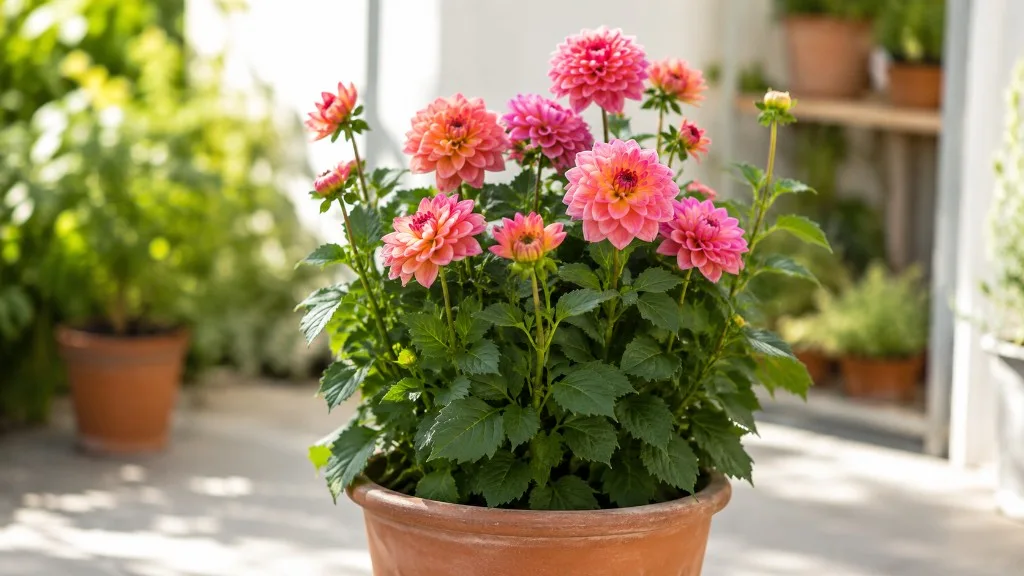
Dahlias deliver some of the latest true flowers in the garden — often from late summer until first hard frost — but they are tender tubers, not hardy winter perennials in most of the U.S. NC State reports tuberous roots can be injured below about 25°F, which is stricter than the “35°F” rule of thumb you sometimes see in casual lists.
They want fertile, moist, well-drained soil and full sun to light shade, with mulch and steady water through summer lulls. Deadhead spent blooms to extend the season. Tall forms may need staking.
What “until December” means: In zones 8–10, November blooms are common; December open flowers happen only if ** frost stays mild and late**. Everywhere else, plan for October–November color, then frost shutdown.
Best late-summer action: Buy potted dahlias already in bud for instant impact — nursery stock performs better than trying to force tubers started this late. If you already have plants in the ground, deadhead and water; do not transplant large clumps in August heat unless you can irrigate daily.
Site needs: Avoid heavy clay that stays soggy; dahlias rot in wet winter storage and in saturated summer soil.
Common mistake: Leaving tubers in ground in zones 6 and colder without planning to dig, dry, and store them. Treat undug tubers as an annual gamble.
Protecting Dahlia Tubers When Nights Turn Cold
After the first light frost blackens foliage, cut stems to 4–6 inches, dig carefully, and let tubers dry in shade for several days (do not wash). Pack in slightly moist vermiculite or dry sand at 35–45°F for winter. In zone 7, some gardeners mulch heavily in place; in zones 8–10, in-ground overwintering with mulch is more reliable.
Asters — Native Purple Spikes From Late Summer Through Frost
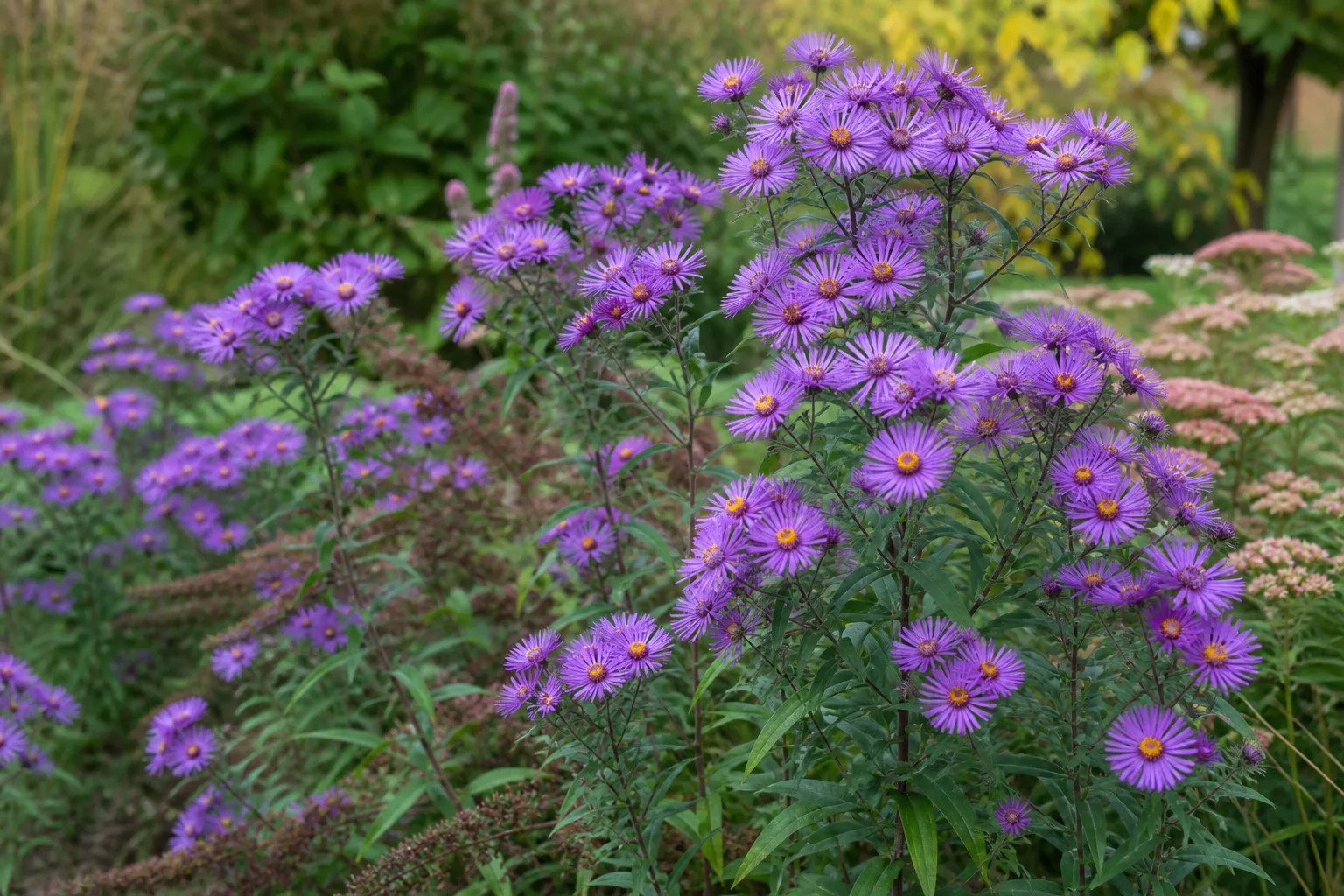
New England aster (Symphyotrichum novae-angliae) is a native perennial that peaks when summer daisies fade. NC State describes late-summer to fall composite flowers — often purple rays with yellow centers — on plants 3–6 feet tall unless you choose compact cultivars like ‘Purple Dome’.
Grow in full sun, moist, fertile, well-drained soil (including clay loam), with good airflow to limit powdery mildew. Pinch stems in spring for bushier plants and slightly delayed bloom — a useful trick if you want peak color to align with October.
What “until December” means: Flowers run until hard frost, not through winter. Pair with goldenrod (Solidago) for a classic fall native border.
Best late-summer action: Plant potted perennials now if you are six or more weeks from frost. August planting focuses on root establishment; bloom may be modest this year but stronger next fall.
Site needs: Do not cram asters against a solid fence with no air movement. Space 18–24 inches for tall types.
Common mistake: Confusing annual China aster (Callistephus) with perennial New England aster. Only the perennial returns year after year in cold zones.
Flowering Kale — Foliage Color That Holds Through Cold Weeks
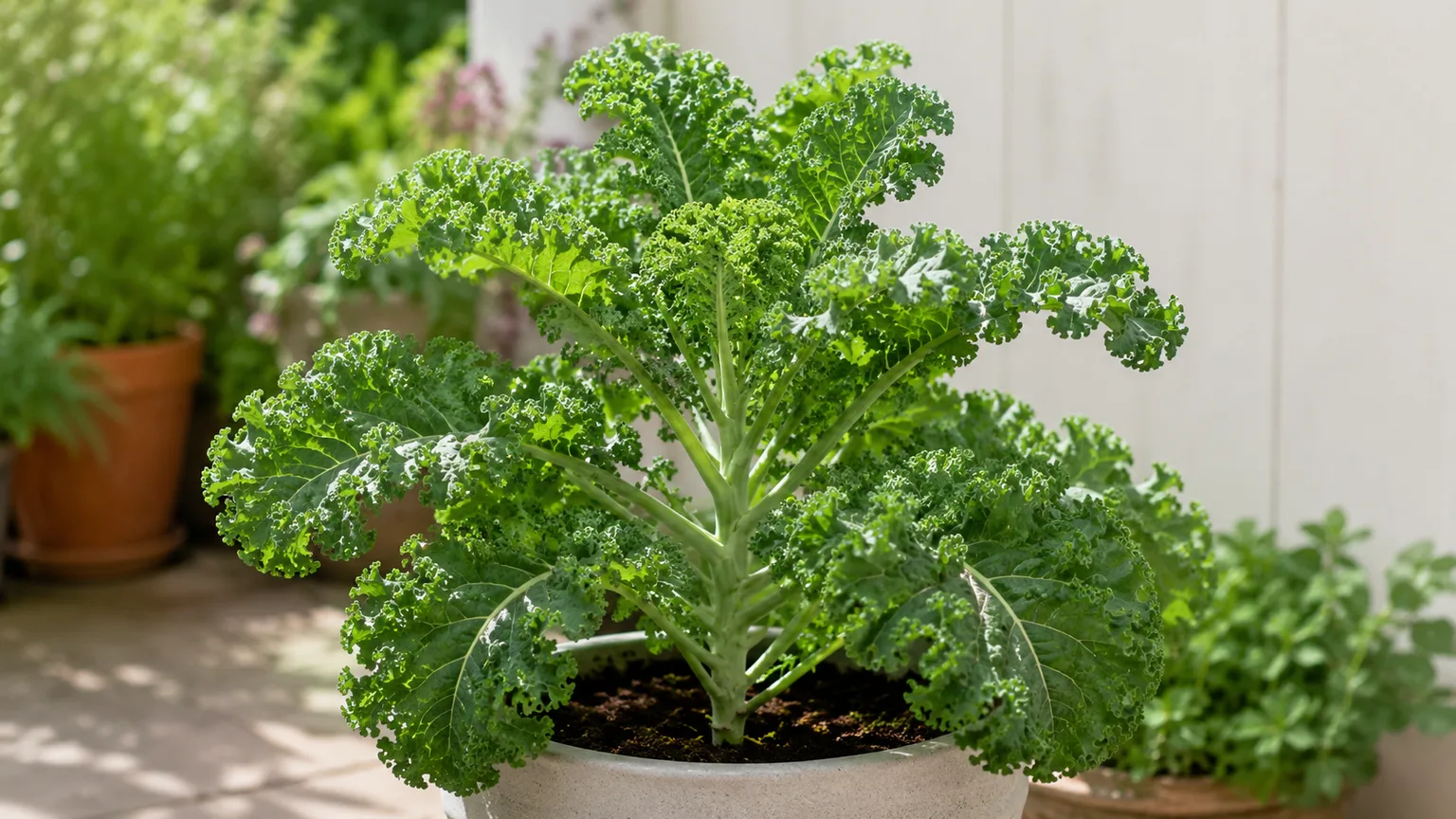
Ornamental kale and flowering cabbage (Brassica oleracea Acephala Group) are cool-season foliage plants, not traditional blossoms. Their pink, purple, and white inner leaves intensify after light frosts sweeten the leaves and deepen pigment.
What “until December” means: In most continental climates, vivid rosettes through November and December are realistic; in snow zones, plants may persist as frozen sculpture until thaw. You are buying leaf color, not petals.
Best late-summer action: Set out greenhouse-grown transplants when temperatures begin to drop — the same window as pansies. Plant slightly deeper than the pot line and firm soil to prevent heaving in freeze-thaw cycles.
Site needs: Full sun for best color; consistent moisture without soggy roots. Rotate away from last year’s cabbage-family beds to reduce clubroot risk.
Common mistake: Expecting fragrance or nectar. These are visual anchors for entry beds and containers, not pollinator powerhouses.
Black-Eyed Susans — Gold Into Fall, Structure After Bloom
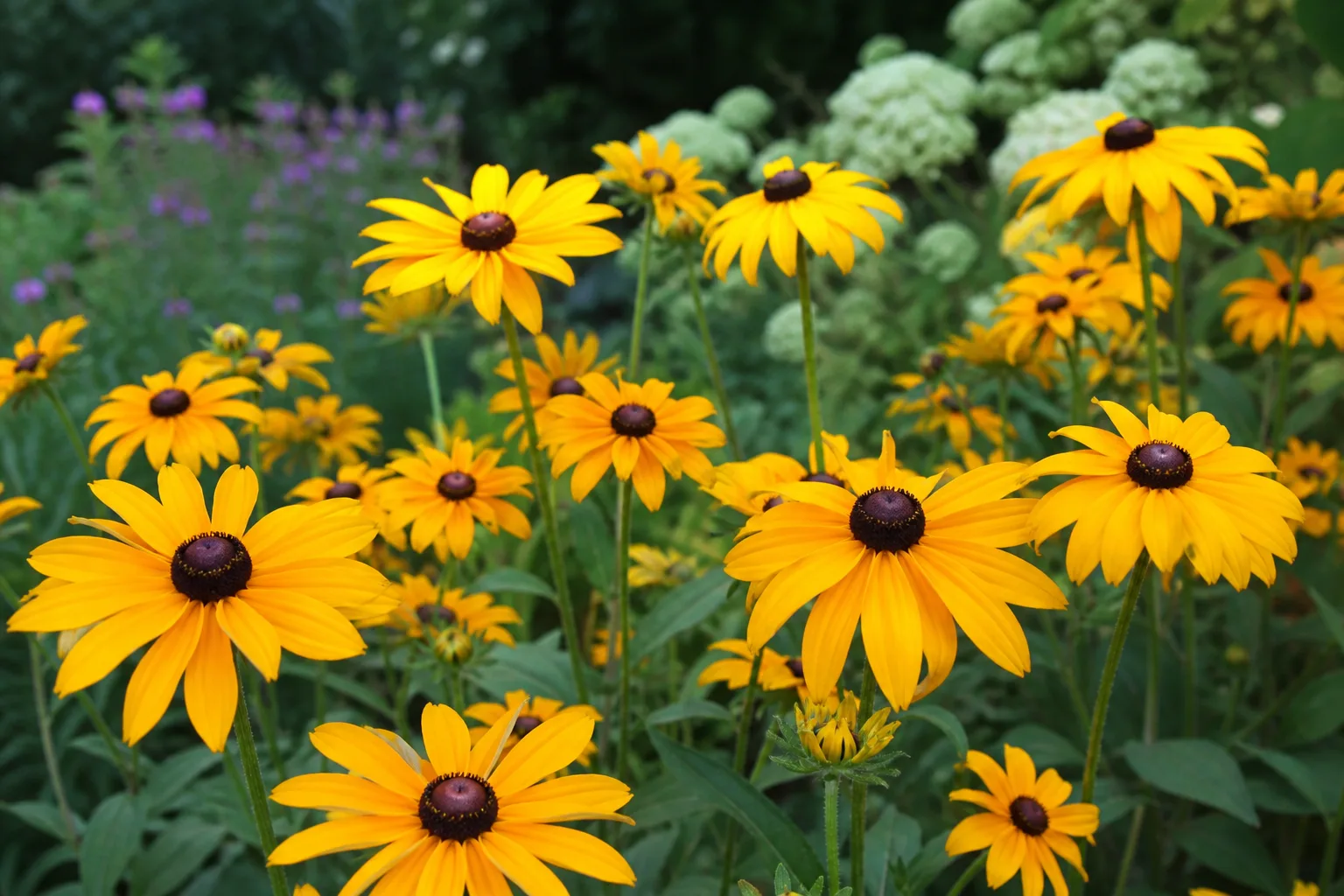
Black-eyed Susan (Rudbeckia hirta) is a fast-growing biennial or short-lived perennial native to eastern North America. NC State notes flowers from midsummer into mid-fall with deadheading, on 2–4-foot plants that attract butterflies and goldfinches.
Hardiness to -30°F means the plant survives northern winters — it does not mean yellow petals in January. Winter interest comes from dark seed cones and self-sown seedlings, not ongoing bloom.
What “until December” means: Gold rays through October (sometimes November in warm falls), then brown centers that finches strip through winter.
Best late-summer action: Plant container-grown clumps now for root growth, or sow seed early next spring if frost is too close. Avoid high-nitrogen lawn edges that produce leaves, not flowers.
Site needs: Full sun to light shade, moderate fertility, well-drained clay, loam, or sand.
Common mistake: Calling them low-maintenance everywhere. They self-seed freely — delightful in meadows, messy in tight formal borders unless you deadhead before seed drop.
Coneflowers — Long Summer Blooms and Winter Seed Heads
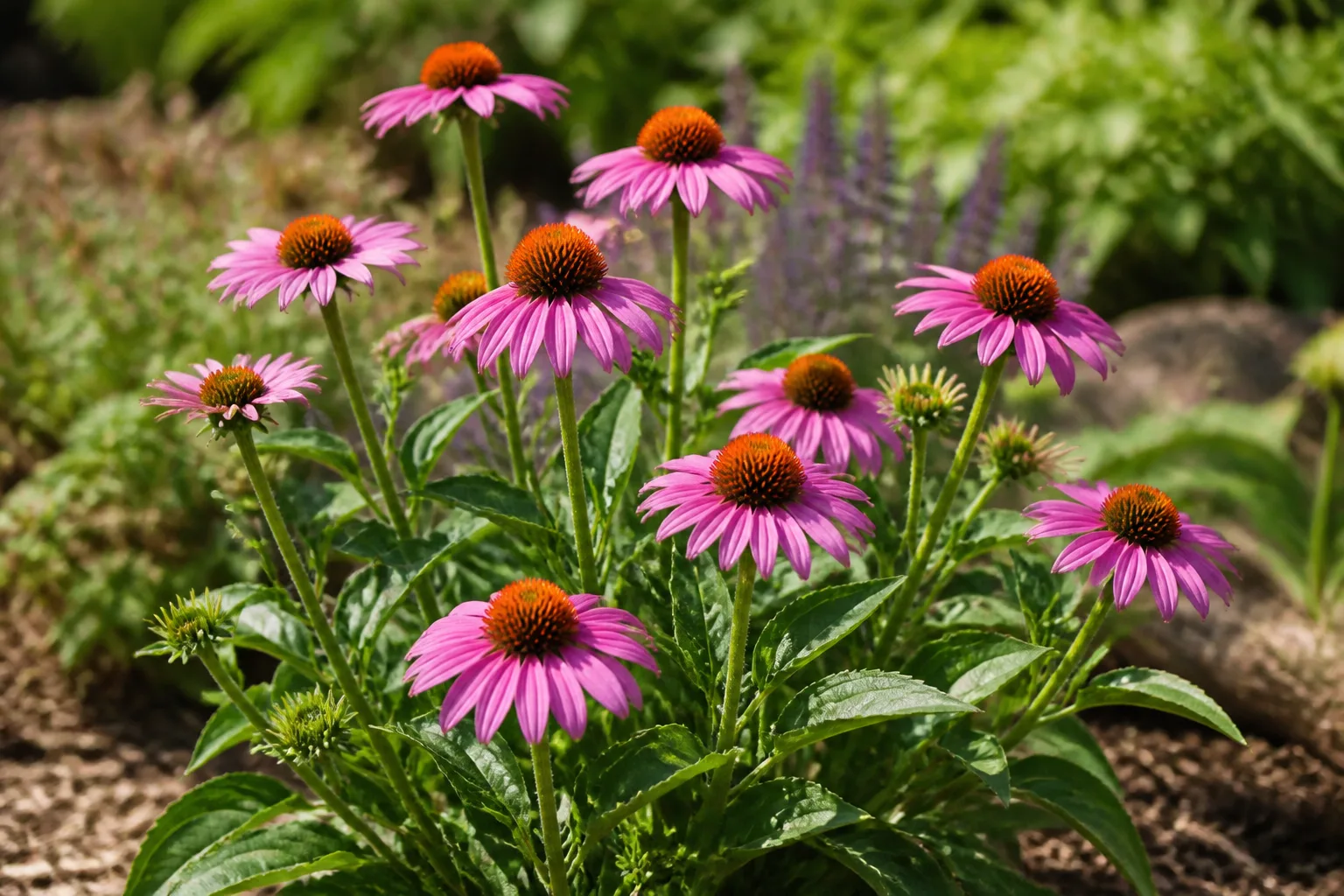
Purple coneflower (Echinacea purpurea) is a native perennial with pink-purple rays around a spiny brown cone. NC State reports 3–4-foot plants, drought tolerance once established, and primary bloom from early summer through mid-fall, with cultivars extending the window.
Leave some seed heads standing for goldfinches and stem-nesting native bees — NC State’s pollinator guidance recommends cutting dead stems to 12–24 inches and letting them disintegrate rather than shredding every stalk in fall cleanup.
What “until December” means: Fresh petals usually finish by late fall; upright cones provide December structure and bird food, not new flowers.
Best late-summer action: Insert potted plants into gaps left by spent summer annuals. Water through dry spells; skip heavy nitrogen fertilizer that delays bloom.
Site needs: Full sun to partial shade, well-drained moist loam ideal but adaptable.
Common mistake: Assuming every colorful echinacea cultivar behaves like the species. Some hybrids are short-lived or weak repeat bloomers — read the tag.
Catmint — Repeat Flushes and Clean Gray-Green Foliage
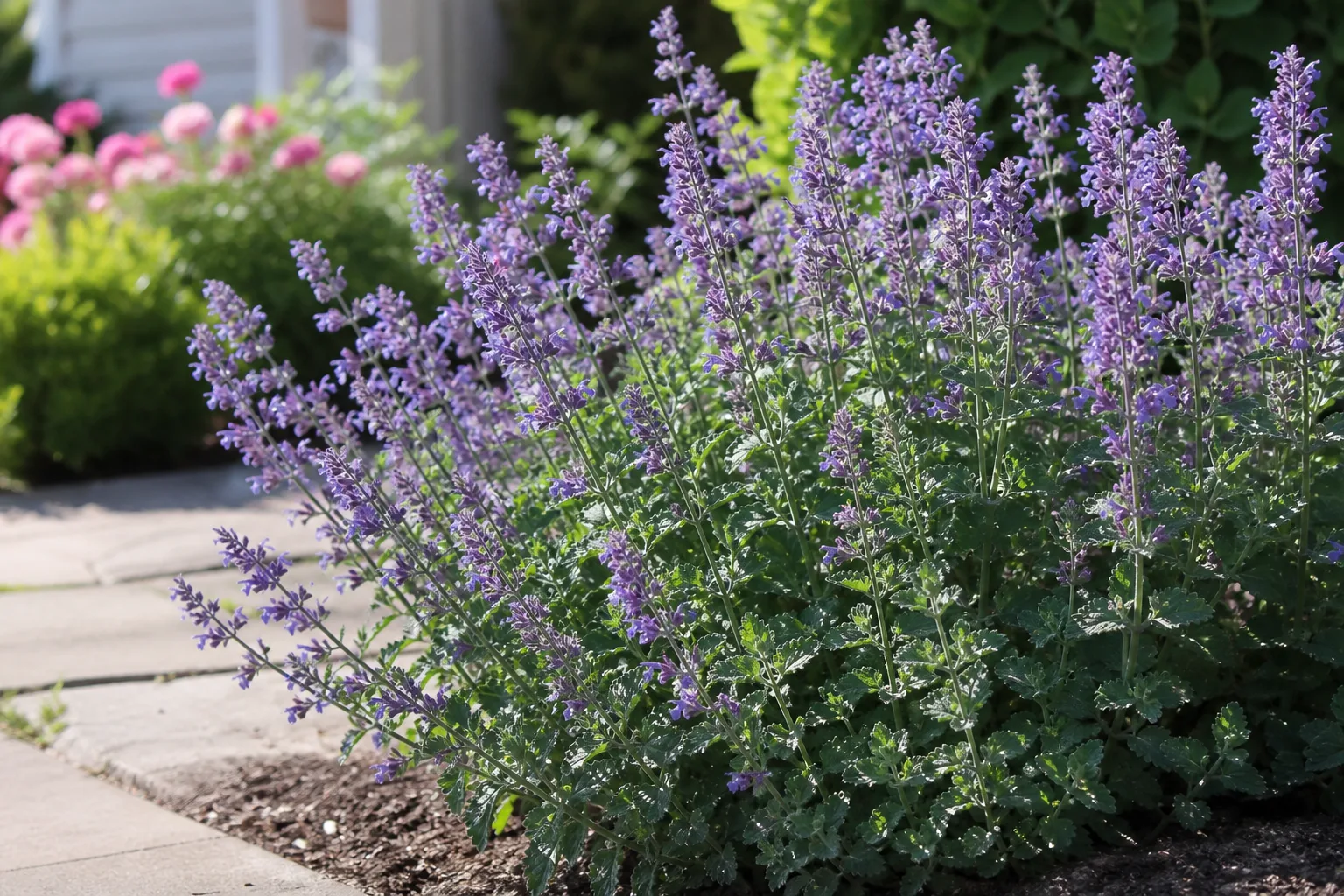
Catmint (Nepeta × faassenii, often sold as blue catmint) is a sterile hybrid perennial forming 18–24-inch mounds that spread up to 36 inches wide. NC State notes spring-through-summer bloom with repeat flushes after shearing, plus drought tolerance once established in well-drained soils.
Fragrant gray-green leaves persist after flowers finish, giving beds a clean winter silhouette in mild zones.
What “until December” means: A late-summer or early-fall rebloom is possible if you shear spent spikes in August; December show is foliage, not purple spikes, in most climates.
Best late-summer action: Plant divisions or pots now, or shear existing plants by one-third after the first flower wave to force fresh color for fall.
Site needs: Full sun (partial shade in the Deep South). Excellent front-of-border filler with deer resistance.
Common mistake: Planting in heavy wet clay where catmint rots overwinter. Raise beds or amend drainage first.
Match Each Flower to Sun, Drainage, and Pollinators
Use this quick matcher before checkout:
| If your bed is… | Start with… | Why |
|---|---|---|
| Full sun, well drained | Coneflowers, black-eyed Susans, catmint, dahlias | All tolerate heat once rooted; dahlias need water |
| Part shade, moist | Asters (with airflow), pansies | Asters handle clay loam; pansies want cool roots |
| Entry pot or window box | Pansies, ornamental kale | Instant cool-season color |
| Native pollinator strip | Asters, coneflowers, catmint | Late nectar for bees and butterflies |
| Heavy clay, slow drainage | Avoid dahlias and catmint; try aster on raised mound | Tubers and crowns rot in wet soil |
Colorado State University Extension’s perennial tables emphasize matching plants to sun, soil moisture, and bloom period — not impulse color alone. That discipline matters more in August, when heat hides drainage problems until fall rains arrive.
Containers vs In-Ground Beds in Late-Summer Heat
Containers win for pansies and kale when pavement radiates heat — you can move pots to morning sun and afternoon shade. Use quality potting mix, not garden dirt, and expect daily watering until nights cool.
In-ground beds win for asters, coneflowers, catmint, and black-eyed Susans that need root spread before frost. Dig holes twice the pot width, loosen sidewalls, and mulch 2 inches after planting — keep mulch off crowns.
Dahlias excel in large pots (18 inches or wider) if your soil is heavy clay; just plan the same tuber storage routine as in-ground plants.
When This List Is the Wrong Move
Skip this planting push if:
- First frost is under three weeks away and you need major perennial establishment — wait for spring (annuals to plant in August may still help for quick frost-tolerant color).
- Soil is waterlogged from recent storms — fix drainage before dahlias, catmint, or asters.
- You want guaranteed December petals in zone 4 — choose pansies in protected containers plus ornamental kale; do not expect dahlias or open coneflowers.
- You cannot store dahlia tubers — treat dahlias as summer-to-frost annuals and spend the budget on pansies and kale instead.
Conclusion
Late-summer planting still pays off when you match each flower to an honest definition of “until December.” Pansies and ornamental kale deliver the closest thing to winter color in mild and cool climates. Dahlias and asters push true petals until frost. Coneflowers and black-eyed Susans hand off to seed heads and structure. Catmint bridges seasons with repeat bloom and tidy foliage.
Before you buy, write down your first frost date, count the weeks remaining, and label each bed petals, foliage, or structure. That one step separates a garden that still looks alive in November from one that quit in August — and it is the difference this list is built to deliver.



