Satin Pothos Leaves Curling: 6 Causes and Fixes
Satin pothos leaves curling? Diagnose dry vs wet soil, light, humidity, pests, and temperature stress on Scindapsus pictus—then fix the right cause fast.
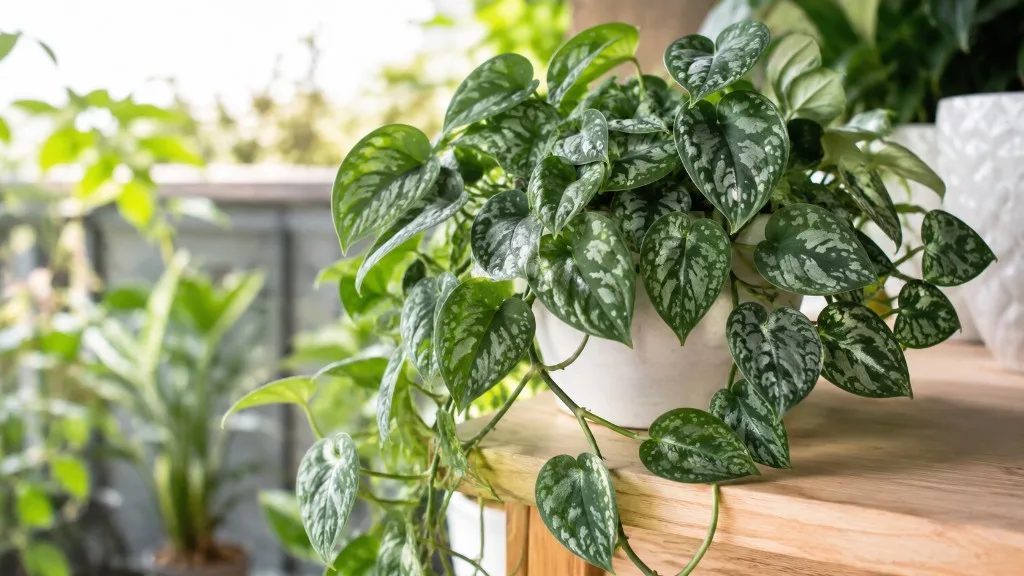
You noticed the silver-splashed leaves on your satin pothos (Scindapsus pictus) rolling inward like tiny scrolls, and your first instinct was probably to grab the watering can. Sometimes that is exactly right. Often it is the wrong move entirely.
Curling leaves are a stress signal, not a single disease. The plant is trying to reduce water loss, protect leaf tissue from harsh light, or respond to roots that cannot deliver moisture—even when the surface of the potting mix looks fine. NC State Extension notes that yellow leaves may indicate overwatering while curling leaves may indicate underwatering on satin pothos, but real rooms produce overlap: soggy roots and dry air can both cup foliage on the same plant.
This guide walks through six primary causes—underwatering, overwatering, too much sun, low humidity, temperature shock, and pests—plus two secondary triggers (fertilizer burn and poor water quality). More importantly, it gives you a diagnostic sequence so you fix the actual problem instead of cycling through random care tweaks. For full baseline care, see the satin pothos growing guide and the Scindapsus pictus hub.
Why Satin Pothos Leaves Curl
Before you treat anything, understand what curl is. Healthy satin pothos leaves are heart-shaped, thick, and held at a relaxed angle with silvery blotches visible on the upper surface. When cells lose turgor—the internal water pressure that keeps tissue firm—the blade cups inward along the margins or rolls lengthwise to shrink exposed surface area.
That response is adaptive. A drought-stressed plant curls to conserve water. A sun-stressed plant curls away from intense light. A pest-damaged plant curls where sap-feeding insects have disrupted normal growth. The curl is the symptom; moisture, roots, light, air, temperature, or pests are the causes.
Despite the common name, satin pothos is not a true pothos (Epipremnum aureum). Scindapsus pictus has slightly thicker leaves and often needs a touch less frequent watering than a thirsty golden pothos in the same window. Copying pothos care by reflex is a common reason silver variegation fades and leaves stress-curl in the first place.
Start Here: A 5-Minute Curl Diagnostic
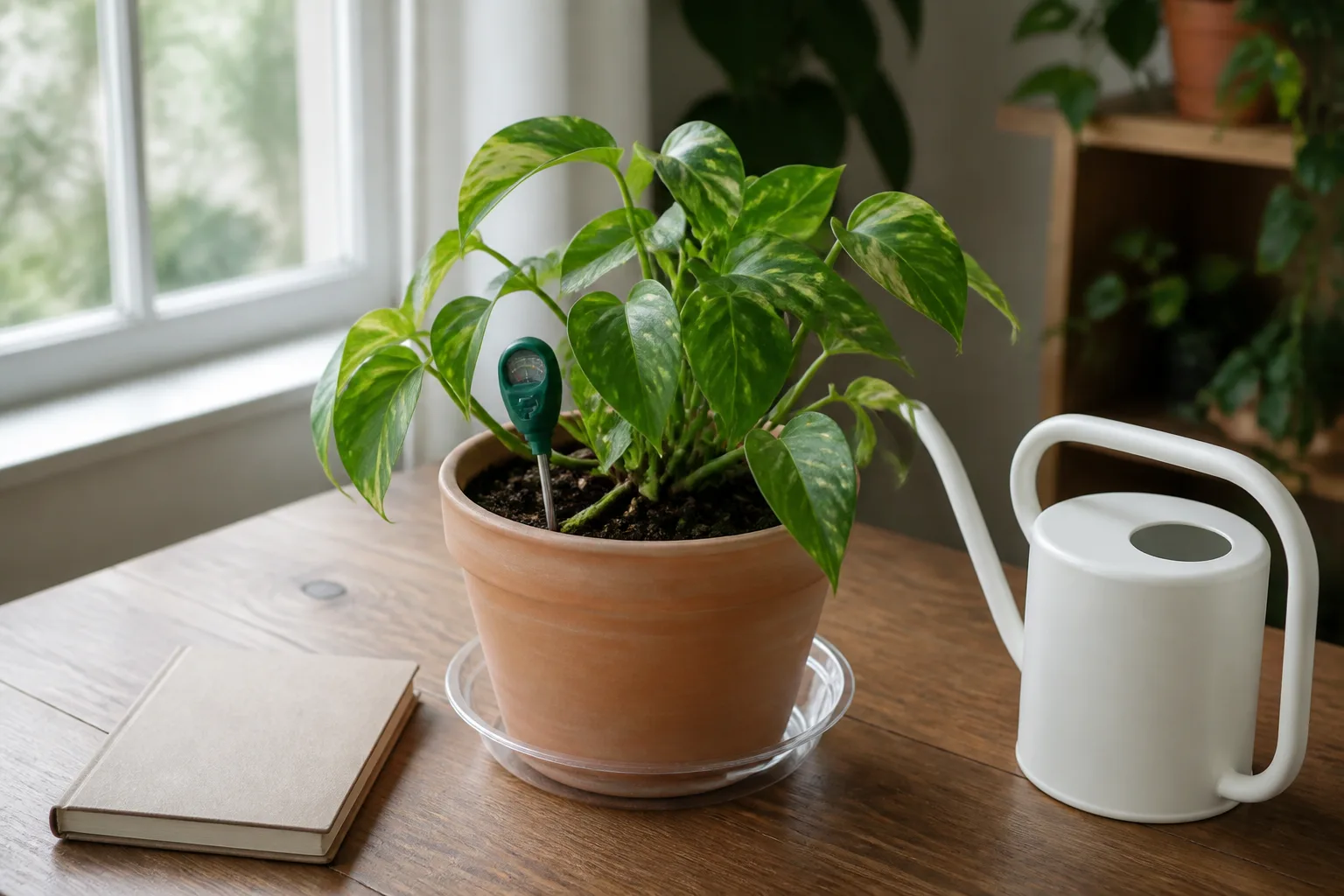
Do not start by moving the plant, repotting, or fertilizing. Run this quick check in order. Each step eliminates a cause category before you commit to a fix.
Step 1 — Finger-test the root zone. Push your finger two inches into the potting mix, or lift the pot. Light and dusty dry? Lean toward underwatering. Heavy, cool, and clinging to your skin? Lean toward overwatering and possible root stress.
Step 2 — Scan the brightest side of the plant. Afternoon sun through glass, or a heat register blowing on leaves, produces inward curl and sometimes pale bleached patches on the silver markings.
Step 3 — Check new growth at the vine tip. Pests and chronic dryness hit tender new leaves first. Look for stippling, webbing, cottony clusters, or distorted unfurling.
Step 4 — Note the room context. Winter heating, air-conditioning vents, and single-pane windows can drop humidity and chill leaves even when the thermostat reads 72°F.
Step 5 — Review recent changes. Fresh repotting, a move to a new window, or a doubled fertilizer dose in spring can trigger temporary curl that has nothing to do with your usual watering rhythm.
If two causes seem equally likely—wet soil and a sunny sill—address drainage and light first. A plant in soggy mix plus direct sun is fighting on two fronts.
Wet Soil vs Dry Soil — The Fork That Matters Most
This single fork prevents the most expensive mistake in curl troubleshooting: watering a plant that is already drowning.
| What you find | Pot feel | Leaf texture | Likely cause | First action |
|---|---|---|---|---|
| Top 2 in. bone dry; pot light | Very light | Thin, papery curl; may feel crispy at edges | Underwatering | Deep soak; drain saucer |
| Mix wet several days; pot heavy | Heavy | Limp cupped leaves; may yellow at base | Overwatering / root stress | Stop watering; inspect roots |
| Alternating wet-dry swings | Variable | Mixed old curl + new yellow | Inconsistent watering | Set a schedule; check drainage |
| Dry surface but heavy pot | Heavy bottom | Curl with stalled growth | Root-bound or compacted mix | Water less often; plan repot |
Clemson HGIC houseplant watering guidance applies here: wilting and curling are not always a cue to add water. Roots injured by excess moisture cannot transport water upward, so leaves curl as if they were dry while the mix stays wet.
Read the Curl Pattern Before You Change Anything
Curl direction and texture narrow the cause faster than guessing.
Tight inward cup along the leaf margin, often with soil pulling away from the pot wall, points to underwatering or low humidity. Inward curl on leaves facing the window, sometimes with silvery patches fading to tan, suggests too much direct sun or heat. Downward hook at the tip with dark green, overly small new leaves can follow fertilizer salt buildup. Twisted or puckered new growth with fine webbing on undersides screams spider mites, not thirst.
Old leaves that already creased severely may never fully flatten. Judge success by the next leaf the vine produces, not by whether last month’s damaged foliage uncurls overnight.
Underwatering — The Most Common Cause
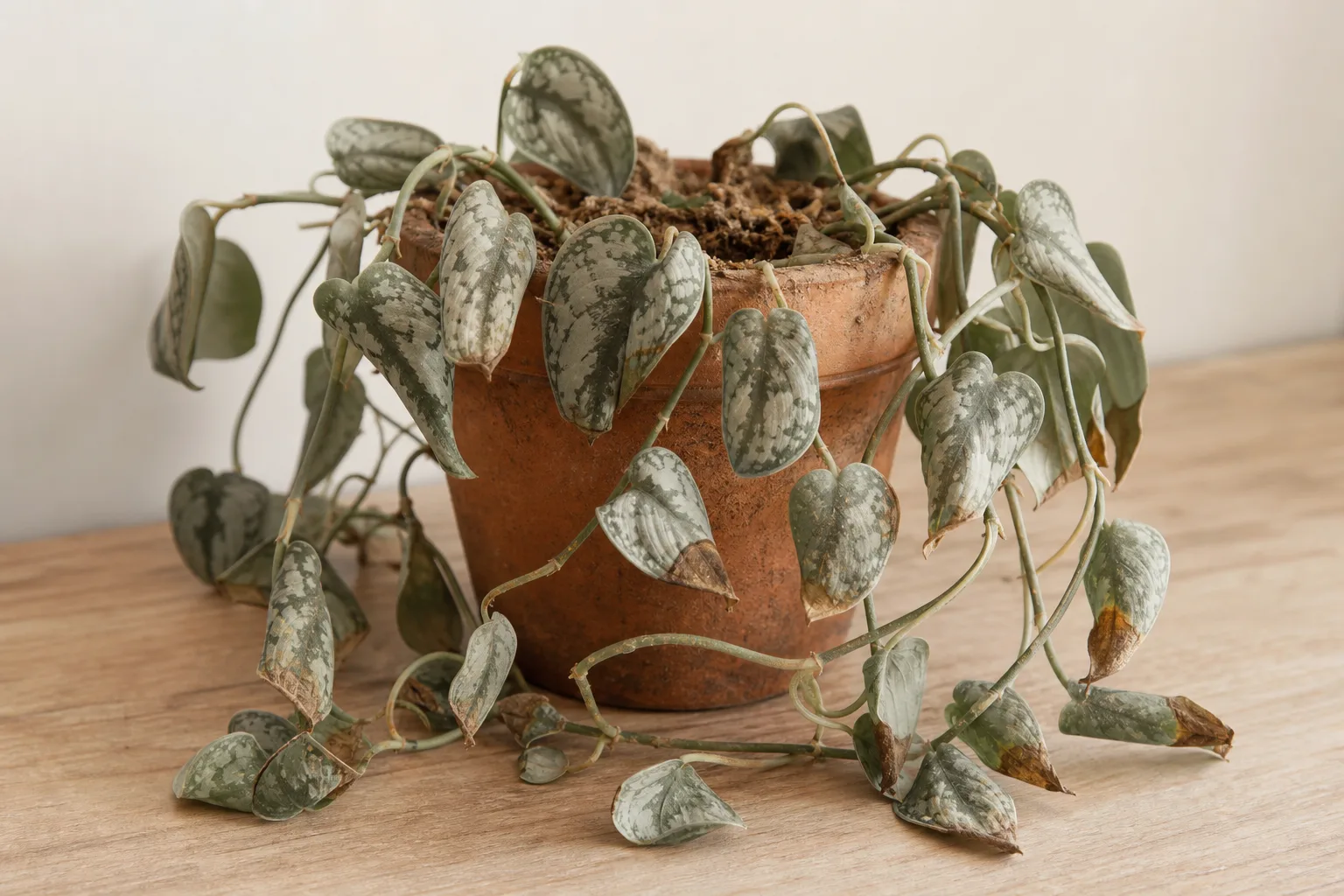
Underwatering is the number-one reason satin pothos leaves curl, and NC State Extension lists curling as a classic underwatering sign on Scindapsus pictus. Satin pothos leaves are thick compared with many houseplants, which means they hold moisture longer—but they still need regular replenishment once the upper root zone dries.
When soil stays dry too long, root hairs die back and cells shrink. Leaves cup inward to reduce transpiration. In bright rooms the plant dries faster; a satin pothos on a south-facing sill may need water weekly in summer but only every two weeks in a dim corner.
Signs beyond curl: pot noticeably light, soil gap along the edge, leaf edges turning crisp brown, vines feeling limp despite firm older stems, and silver variegation looking dull rather than shimmering.
How to Rehydrate Without Shock
Take the pot to the sink and water slowly until a little runs from the drainage holes. If water races straight through a hydrophobic, shrunken root ball, bottom-water for twenty to thirty minutes, then top-water once the mix swells.
If soil is compacted and repels water, loosen the surface gently with a chopstick before soaking—never stab deep enough to snap roots. Empty the saucer within thirty minutes.
Most satin pothos perk within a few hours to one day after a proper soak. If leaves stay curled after wetting, roots may be damaged from prior drought; unpot and inspect. Shriveled, brown roots mean propagation from healthy stem cuttings may be the salvage path—see Scindapsus pictus propagation.
Going forward, water when the top two inches of mix feel dry, not on a rigid calendar. The satin pothos watering guide breaks down seasonal rhythm in more detail.
Overwatering and Root Stress
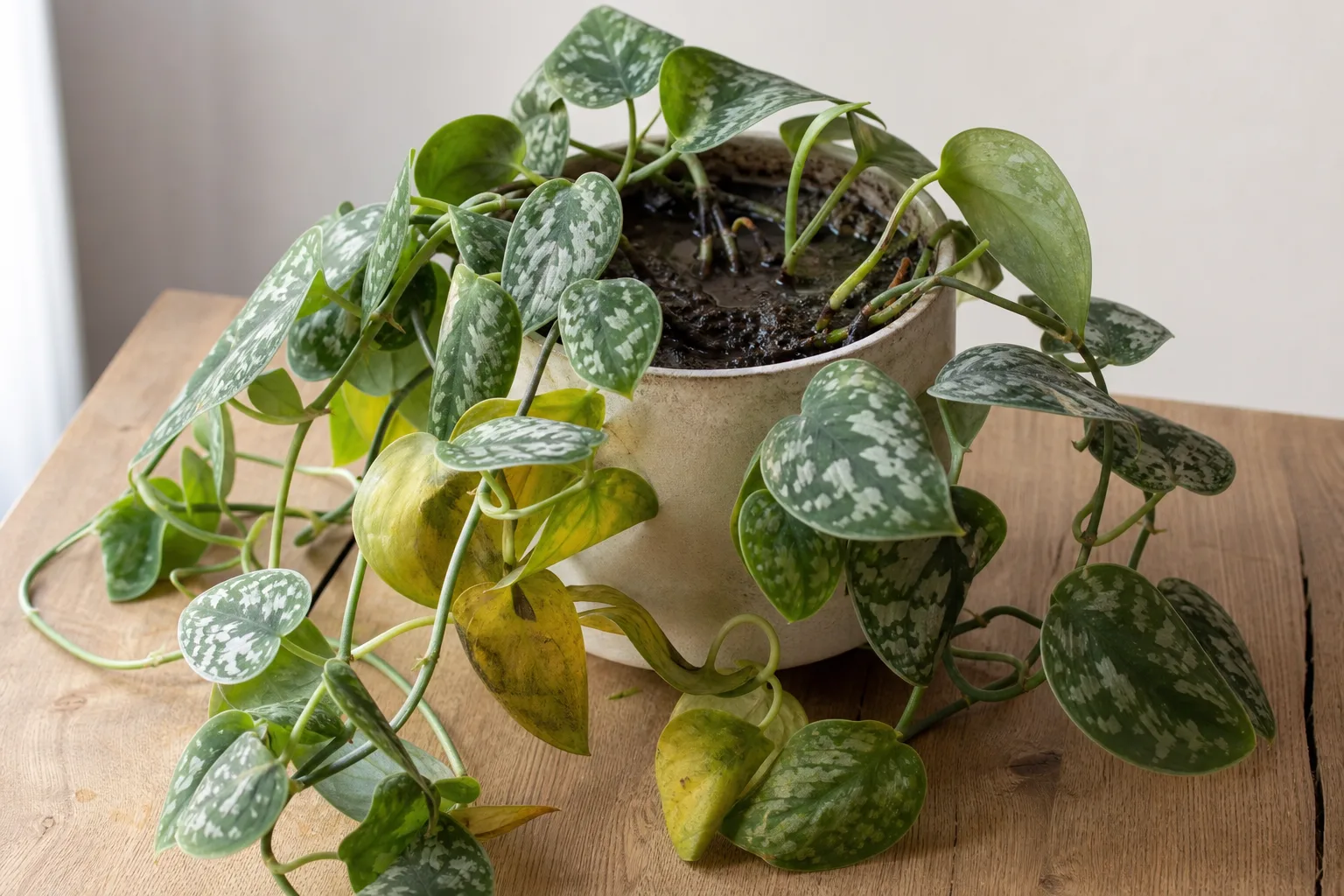
Overwatering produces the cruelest mimic: cupped leaves on wet soil. Roots in saturated, airless mix cannot absorb oxygen or water effectively. Fungal root rot may follow. Leaves curl because the shoot is starved even though you have been diligent with the watering can.
Satin pothos prefers moist, well-drained potting mix when grown indoors, per NC State—but “moist” does not mean constantly wet. Let the upper layer dry between drinks. Pots without drainage holes, oversized decorative cachepots, and heavy peat mixes that never dry are frequent culprits.
Warning signs: yellow lower leaves, sour-smelling soil, fungus gnats, black mushy roots, and leaves that feel soft rather than crispy when curled.
When Curl Means Rot, Not Thirst
If the mix has been wet for days and the pot feels heavy, do not add more water. Slide the plant out of the pot. Healthy roots are firm and white or tan. Rotten roots are brown, black, or mushy and may smell musty.
Trim dead roots with clean scissors. Repot into fresh, airy mix—peat-based potting soil with perlite works well—and choose a pot only slightly larger with clear drainage. Wait a week before resuming light watering so torn root surfaces callus.
Severe rot with little root mass left? Take stem cuttings with at least one node each and root in water or moss. The parent plant may not recover, but Scindapsus pictus propagates readily from nodes. More on saving soggy plants in the overwatering problem page and root rot guide.
Too Much Direct Sun
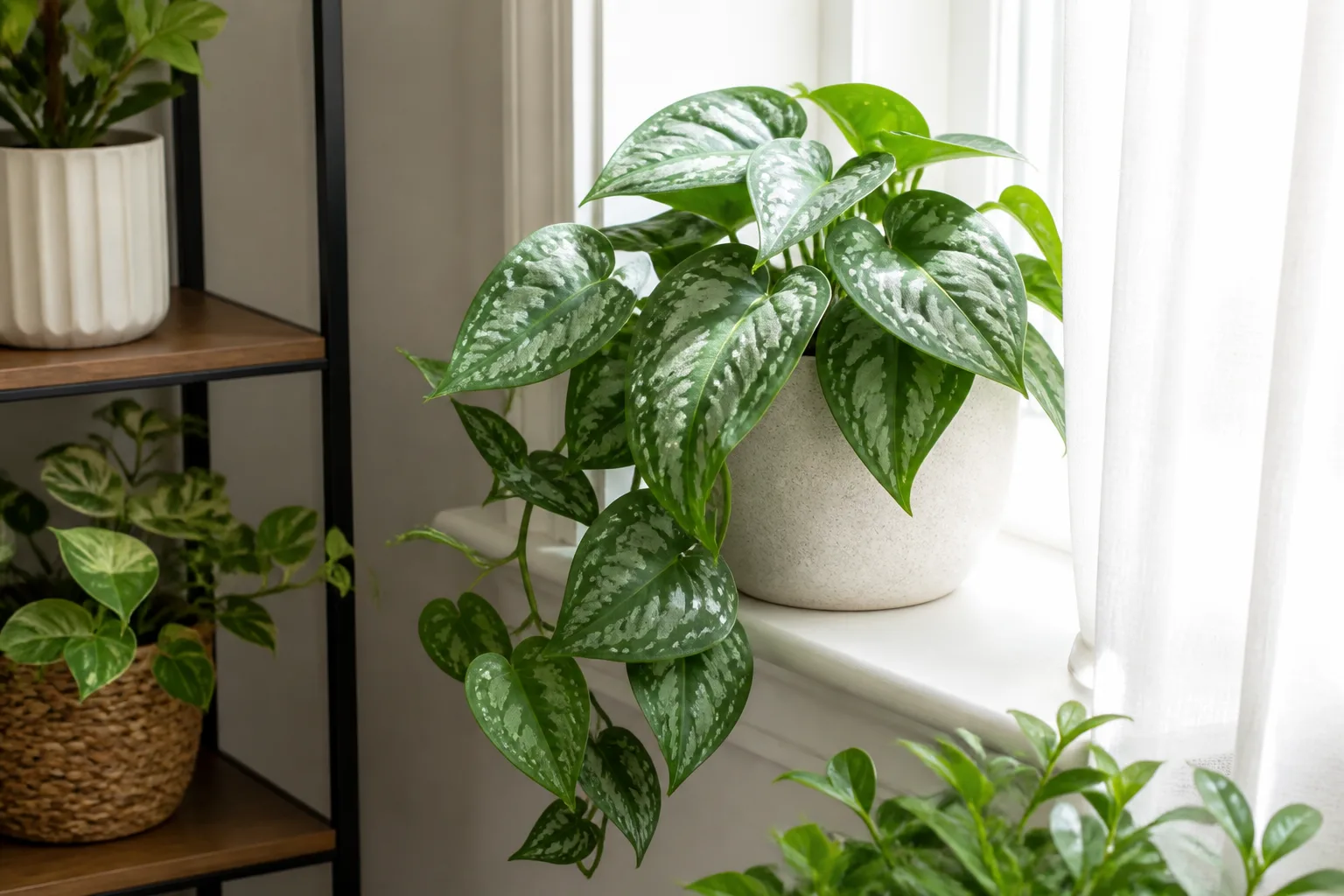
Satin pothos wants bright, indirect light and does not tolerate direct sunlight or cooler air, according to NC State Extension. The RHS lists Scindapsus pictus ‘Argyraeus’ for partial shade—indoors, that means an east window, or several feet back from south or west glass behind a sheer curtain.
Direct afternoon sun heats leaves quickly. Silver variegation bleaches. Tissue scorches tan or papery brown. Leaves curl inward away from the light as a shield. University of Florida IFAS foliage research on pothos relatives notes that leaves exposed to excess light may curl downward or inward while shaded leaves on the same plant stay flat—direction matters.
Fix: Move the plant out of the sunbeam. Rotate weekly for even growth, but prioritize removing harsh rays over chasing symmetry. Damaged leaves will not regain their silver pattern; new growth will tell you whether the spot works.
If you are fighting fade and curl in a dim room, the plant may be stretching toward glass and then getting blasted at midday—a common “bright corner” trap. Pull it back from the pane.
Low Humidity and Dry Indoor Air
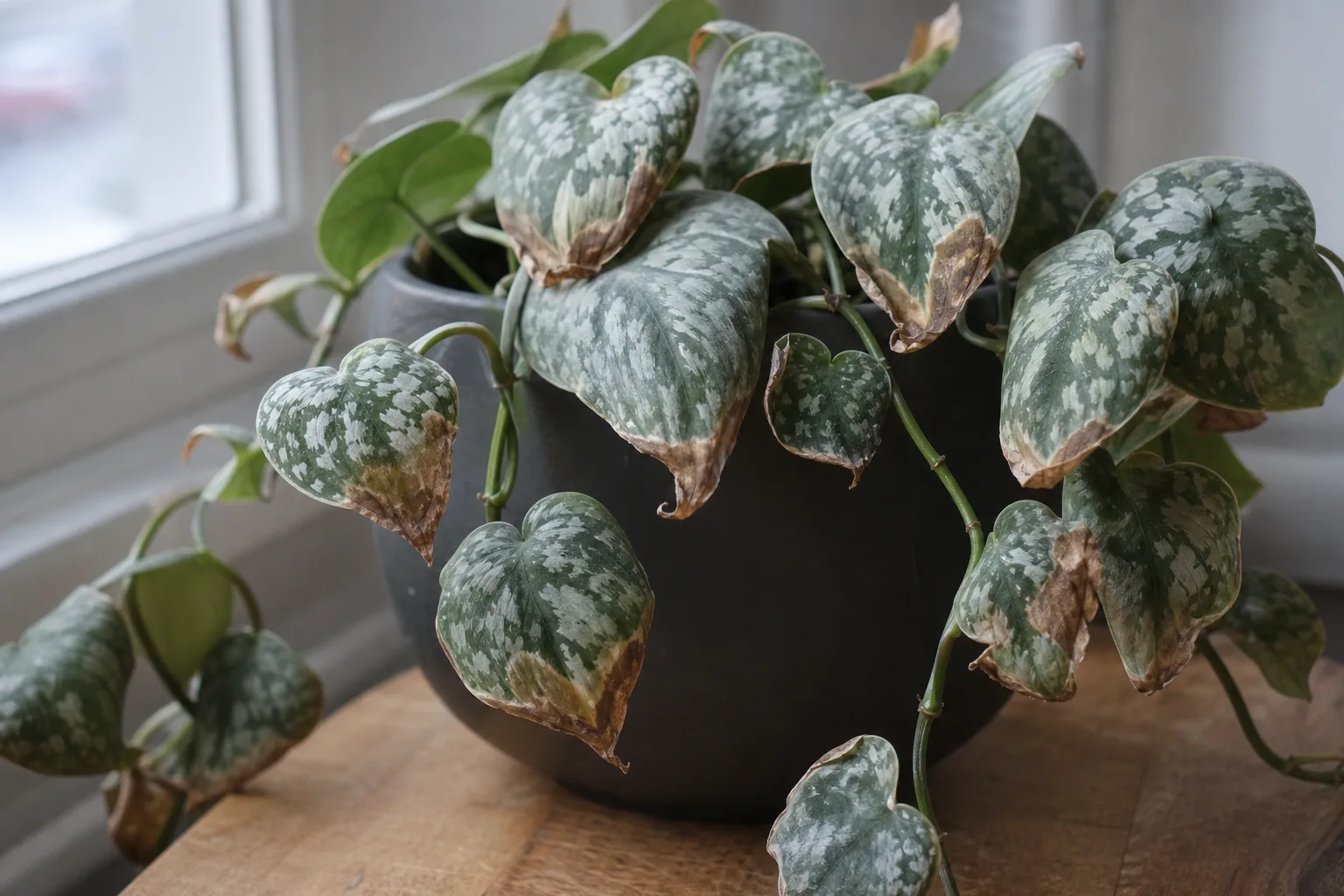
Satin pothos tolerates average household humidity better than fussy calatheas, but prolonged dry air—especially in heated winter rooms—still pulls moisture from leaf margins. Curl pairs with crispy brown tips and sometimes slower new growth.
Penn State Extension notes indoor relative humidity often drops below 30 percent in winter, well under the 30–60 percent band many tropical foliage plants prefer. Air blowing from furnaces, fireplaces, or desk fans accelerates drying on the leaves facing the airflow.
Practical fixes that work: group plants to raise local humidity slightly, run a humidifier nearby, or set the pot on a pebble tray with water below stone level so evaporation mist does not rot leaves. Moving the plant to a brighter bathroom or kitchen can help if light there is still indirect.
Avoid misting as your only strategy—it raises humidity for minutes, not hours, and wet foliage overnight can invite fungal spots on crowded shelves. For chronic winter dryness, see the low humidity problem page.
Temperature Shock and Cold Drafts
Tropical evergreen is not marketing copy—it is a climate requirement. NC State recommends room temperatures of 65 to 85°F for satin pothos indoors. The plant is not frost hardy and suffers when cold air hits leaves.
Temperature shock shows up as sudden curl, droop, or yellowing after:
- Moving a plant from a warm nursery to a cold car trunk
- Sitting on a windowsill when outdoor nights dip below 55°F
- Placement beside a frequently opened exterior door in winter
- Blasts from air-conditioning vents in summer
Acclimate gradually when changing rooms. If you recently moved the pot and curl appeared within forty-eight hours, return it to the prior location for a week, then shift in small steps.
Heat stress above 90°F—near radiators, on top of appliances, or in closed greenhouses—can also cup leaves. The fix is cooler, stable air, not more water.
Pest Infestations That Cup Leaves
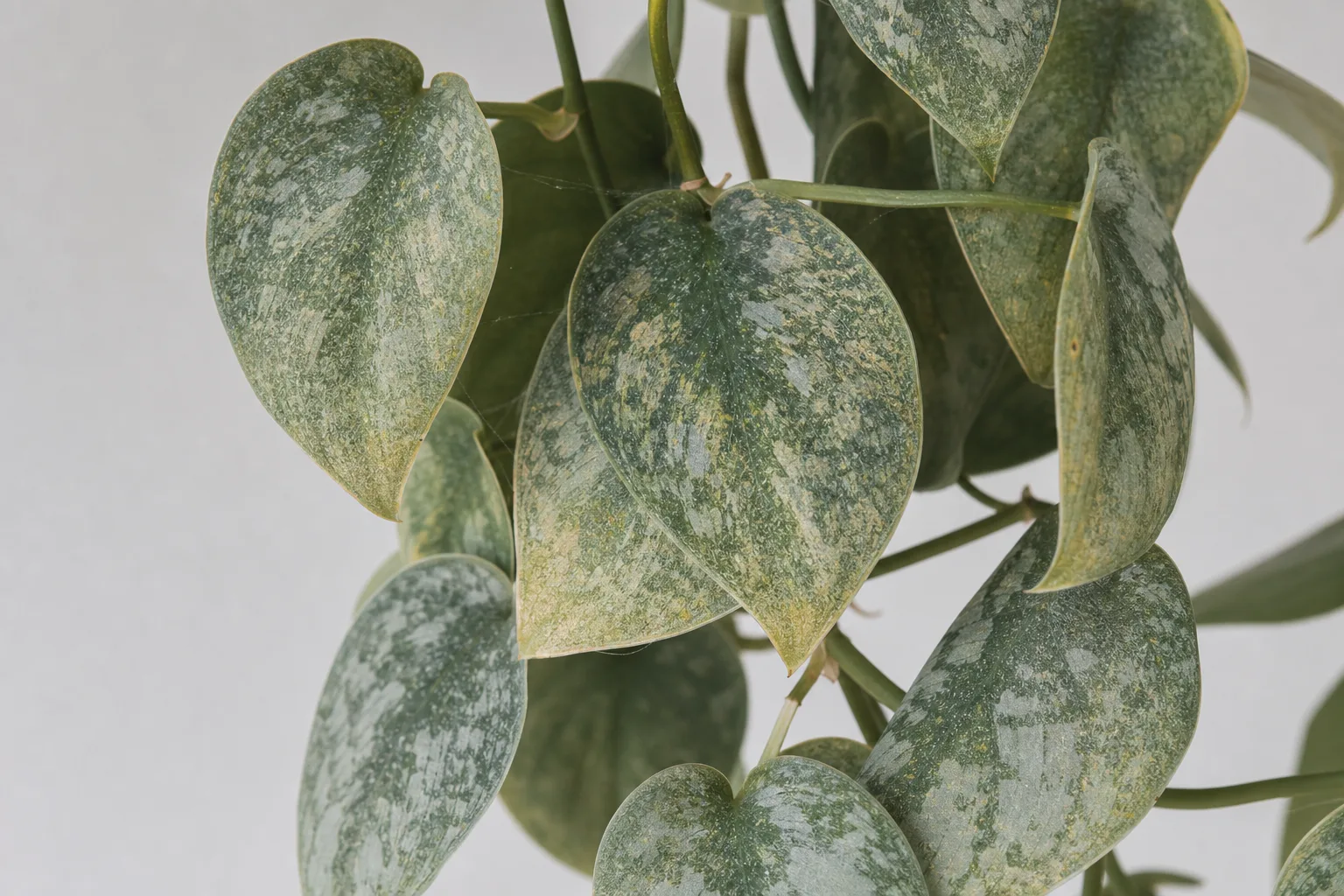
Insects that pierce leaf tissue and feed on sap weaken normal expansion. New leaves may emerge twisted, puckered, or curled even when watering is perfect. NC State lists scale, mites, mealybugs, and thrips as pests to monitor on Scindapsus pictus, along with fungal leaf spot and botrytis in wet conditions.
Pest curl is often asymmetric—one vine or one side of the plant first—whereas environmental curl tends to hit the whole plant uniformly.
Spider Mites, Mealybugs, and Scale on Scindapsus
Spider mites thrive in warm, dry air. Look for fine webbing on leaf undersides, stippled silver-gray flecking, and leaves that feel gritty when wiped. Mealybugs form white cottony clusters in leaf axils and along stems. Scale looks like immobile brown or tan bumps on stems and leaf veins.
Treatment sequence:
- Isolate the plant from your collection immediately.
- Shower or wipe leaves with diluted insecticidal soap or horticultural oil, covering undersides.
- Repeat weekly for at least three weeks—mites reproduce fast and eggs survive single sprays.
- Raise humidity slightly during mite outbreaks; dry air favors them.
Do not blanket-spray strong insecticides on every houseplant “just in case.” That adds chemical stress to an already curling plant. Treat only when you see pests or their telltale damage. Deeper ID photos live on the spider mite and mealybug problem pages.
Less Common Triggers: Fertilizer Burn and Water Quality
Two causes show up less often but matter when you have already ruled out water, light, and pests.
Fertilizer burn: Satin pothos needs only light feeding during active growth. The Missouri Botanical Garden recommends monthly feeding at reduced strength for related indoor vines. Excess salt builds white crust on soil, stunts new leaves, and can cause downward curl or hooking at leaf tips. Flush the pot with plain water several times or repot into fresh mix. Skip fertilizer until new growth looks normal for six weeks.
Water quality: Highly chlorinated or mineral-heavy tap water can stress sensitive roots over time, especially if salts accumulate in a pot without periodic flushing. If curl appeared after switching water sources, try filtered water or tap water left open overnight before use. This is a secondary suspect—check moisture and light first.
Repot shock: Freshly repotted plants sometimes curl for a week while roots establish. Hold off on fertilizer and keep soil evenly moist but not soggy until new growth resumes.
Recovery Timeline: What to Expect After You Fix It
Patience is part of the prescription. Mild curl from a missed watering often relaxes within hours once turgor returns. Low-humidity tip curl improves over one to two weeks as new tissue forms with adequate moisture in the air.
Sun scorch, severe dehydration, and pest-scarred leaves usually stay curled or blemished permanently. That is normal. Watch the vine tip: if the next two leaves emerge flat, firm, and silver-marked, your fix worked.
Do not prune every curled leaf on day one. Leaves with minor cup still photosynthesize. Remove only tissue that is mostly brown, mushy, or heavily infested.
If nothing improves after three weeks of corrected care—and you have verified pests are gone—reinspect roots. Hidden rot or a root-bound pot may need a second intervention.
When Propagation Beats Rehabilitation
Sometimes the root system is too far gone. If you unpot and find mostly mush, or if leaves stay limp after repeated proper soaks, shift to propagation instead of nursing the mother plant.
Choose healthy stems with at least one node and one or two leaves. Cut below the node, root in water, sphagnum, or moist perlite, and keep humidity high until roots are two to three inches long. Scindapsus pictus roots faster in warm, bright indirect light than in dark corners.
Propagation is also the right call when chronic underwatering desiccated fine roots beyond recovery—the top still looks alive, but the base cannot rehydrate. The propagation guide covers node placement and when to pot up.
Conclusion
Satin pothos leaves curl when something in the environment forces the plant to conserve water or protect stressed tissue. Underwatering tops the list, but overwatering, direct sun, dry winter air, temperature swings, and sap-sucking pests produce similar drama—especially when more than one stress hits at once.
Your fastest path out: check soil moisture at depth, read how the leaves are curling, scan for pests and hot windows, then apply the matching fix. Old damage may not reverse, but healthy new silver leaves are the scoreboard.
For baseline light, soil, and watering rhythm, keep the satin pothos care guide bookmarked. When curl is only one symptom in a bigger decline, the general houseplant curling leaves guide helps compare patterns across species—but on Scindapsus pictus, the wet-vs-dry fork and the next new leaf tell you almost everything you need to know.