Why Your Thanksgiving Cactus Is Dropping Leaves
Thanksgiving cactus dropping leaves? Learn normal vs alarming drop, the top causes from watering to disease, and step-by-step fixes to stop segment loss.
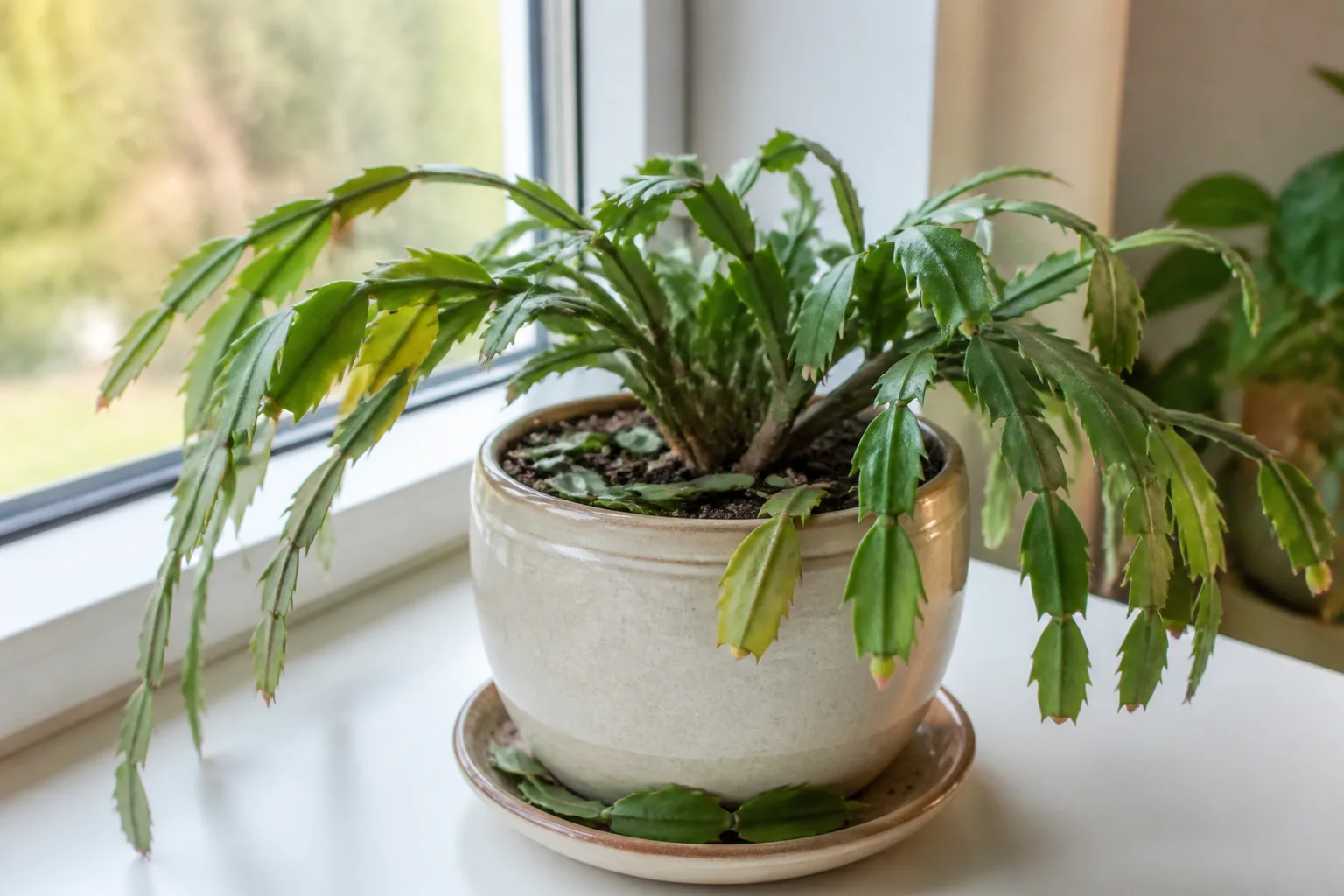
A Thanksgiving cactus (Schlumbergera truncata) drops a segment now and then as it ages—that is normal. What is not normal is a plant shedding clusters of cladodes (the flat, leaf-like stem segments), turning limp and yellow first, or losing whole branches that were healthy last week. That pattern means something in the environment is wrong, and the plant is shedding tissue to survive.
The good news: Thanksgiving cactus is tough. Most leaf-drop crises are reversible if you diagnose the stressor quickly and stop repeating the mistake. This guide walks you from normal vs alarming drop through a fast triage, then each major cause with a fix sequence you can run today.
Normal Leaf Drop vs a Real Problem
Thanksgiving cactus naturally sheds the oldest segments at the base of long chains as new growth extends from the tips. You might find one or two dry, hollow segments on the soil surface every few months—especially on a mature, cascading plant. No action needed.
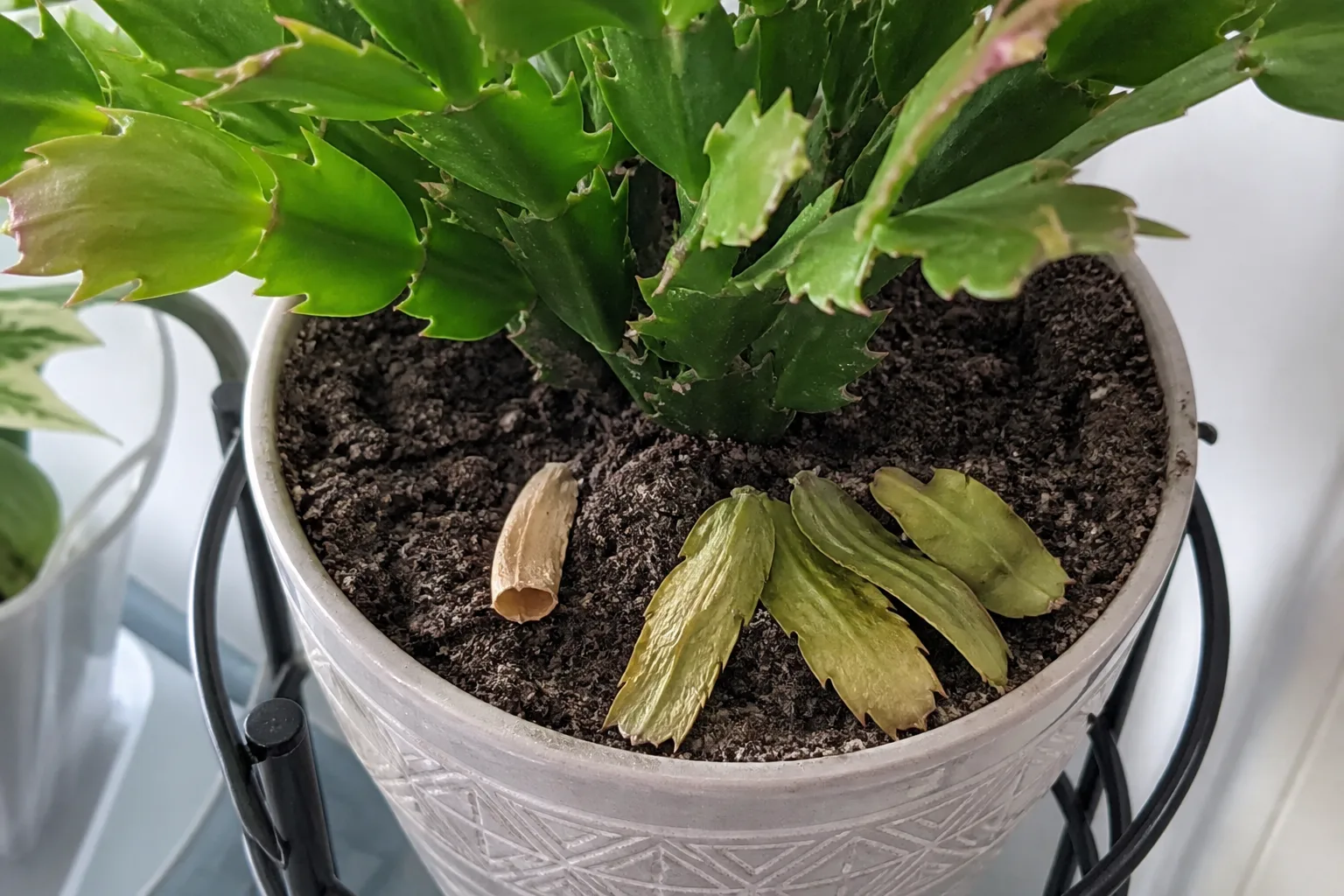
Worry when you see multiple segments falling within days, segments that look limp, wrinkled, or yellow-green before they drop, mushy stems at the soil line, or whole branch tips breaking off under their own weight. Those signs point to water stress, light burn, temperature shock, pests, disease, or structural overload—not routine aging.
How to Read the Warning Signs
Plump segments that detach cleanly at a joint sometimes mean the plant was bumped or a branch got too heavy—check structure before assuming disease. Shriveled segments that fall almost always mean roots are not delivering water—either because soil is too dry or because rot has destroyed the root system. Yellowing segments in direct sun often mean scorch. Gray-green, water-soaked stems mean fungal trouble. Black, slimy branches mean bacterial soft rot—act fast and isolate the plant.
If you are unsure which holiday cactus you own, look at the segment margins: Thanksgiving cactus has pointed, claw-like teeth; true Christmas cactus (Schlumbergera × buckleyi) has rounder, smoother edges. Care is nearly identical for leaf-drop troubleshooting—see our Christmas cactus overview for ID and year-round basics.
Start With a 60-Second Triage
Before moving the pot or pruning anything, run this quick check. It prevents the most common mistake: watering a rotting plant because the segments look “thirsty.”
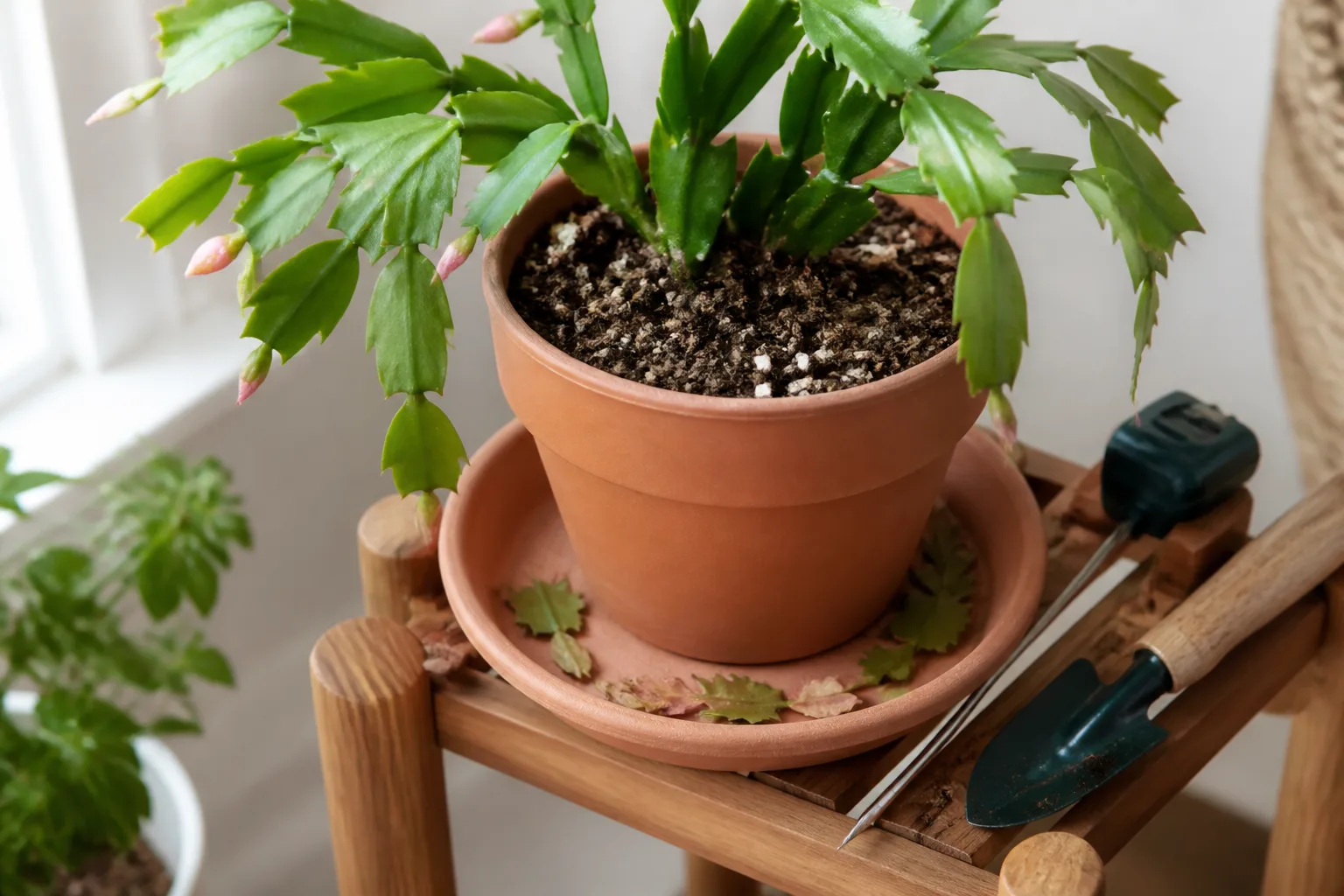
Step 1 — Soil moisture. Stick your finger 2 inches into the mix. Wet, cold, or sour-smelling soil with limp segments points to overwatering or root rot. Bone-dry soil all the way down with wrinkled, papery segments points to underwatering.
Step 2 — Light. Is the plant in afternoon sun on a south or west windowsill? Scorched segments turn yellow or reddish-purple before dropping (NC State Extension).
Step 3 — Air around the pot. Feel for hot drafts from radiators or cold air from a frequently opened door or single-pane glass. Holiday cacti drop segments when temperatures swing sharply.
Step 4 — Pests. Look at segment joints and the soil surface for white cottony clusters (mealybugs), brown bumps (scale), or fine webbing (spider mites).
Step 5 — Structure. Has the plant gone years without pruning or repotting? A top-heavy cascade can snap under its own weight.
Whichever box matches, jump to that section below—but fix water first if soil is soggy. More water on rot always makes leaf drop worse.
The Soil Moisture Test Comes First
Thanksgiving cactus is an epiphytic rainforest cactus, not a desert succulent. It wants consistent moisture during active growth and bloom, but roots still need oxygen. NC State Extension warns that root rot follows overwatering and that direct sun can scorch stems (NC State Extension). The segment appearance alone cannot tell wet from dry—you must read the pot.
A simple rule: water when the top 1 to 2 inches of soil feel dry, then soak until a little water drains from the bottom and empty the saucer. Never let the pot sit in standing water. For seasonal rhythm detail, see our Christmas cactus watering guide—the schedule applies to Thanksgiving cactus too.
Overwatering and Root Rot
Overwatering is the leading cause of heavy leaf drop on Thanksgiving cactus. Soggy soil suffocates fine roots; without roots, segments lose turgor and fall. Early signs include limp, slightly translucent segments, yellowing at the base, and soil that stays wet for days after watering.
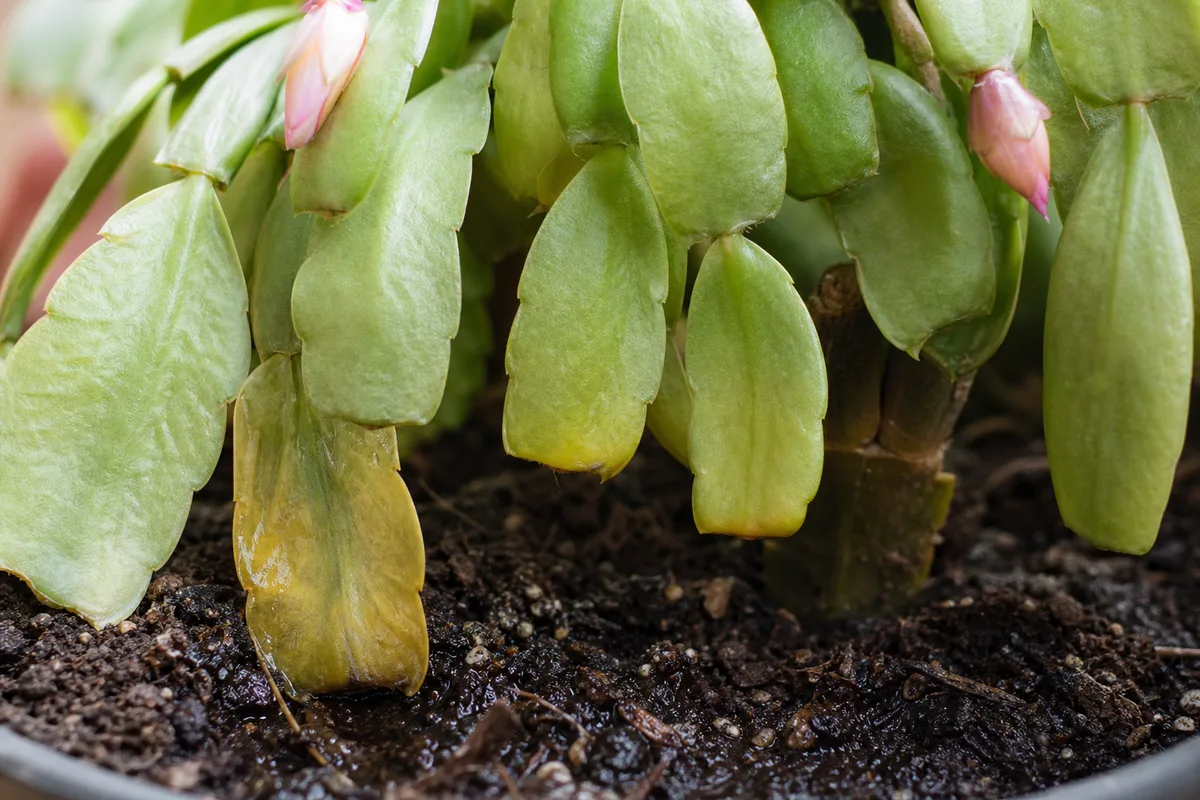
Overwatering on Christmas cactus — compare with healthy tissue.
Root rot advances quietly. You may smell musty or sour soil. Segments at the soil line turn mushy or gray-green. University of Minnesota Extension notes that overwatering is a common issue with holiday cacti and that repotting every two to three years with fresh, well-drained mix helps prevent problems (University of Minnesota Extension).
Fix sequence: Stop watering immediately. If soil is wet and segments are limp, unpot the plant and inspect roots. Healthy roots are firm and white or tan. Trim any brown, black, or mushy roots with clean scissors. Let the root ball air-dry for several hours on newspaper. Repot into a clean pot with drainage holes using airy cactus or succulent mix blended with extra perlite if your mix is heavy. Water lightly only after the top inch is dry. Expect some segments to continue dropping while the plant reallocates energy—do not flood it to “help.”
For a full rescue walkthrough, see overwatering on Christmas cactus and root rot—symptoms and fixes are the same for S. truncata.
How to Rescue a Waterlogged Thanksgiving Cactus
If more than half the root system is mushy, propagate healthy tips instead of trying to save the whole plant. Cut two- to three-segment sections from undamaged stems, let cut ends callous two to three days, then root in moist, fast-draining mix. Discard the rotten base in the trash—not the compost pile. Mealybugs and rot pathogens travel on infected tissue.
After repotting, place the plant in bright, indirect light and stable room temperatures. Recovery takes several weeks before new segment tips firm up. Patience beats another soak.
Underwatering and Chronic Drought Stress
Underwatering also drops leaves, but the segments look different: thin, wrinkled, and leathery, sometimes with brown dry edges, before they detach. Soil pulls away from the pot sides. In bloom season or during summer active growth, Thanksgiving cactus needs more frequent drinks than in post-bloom rest.
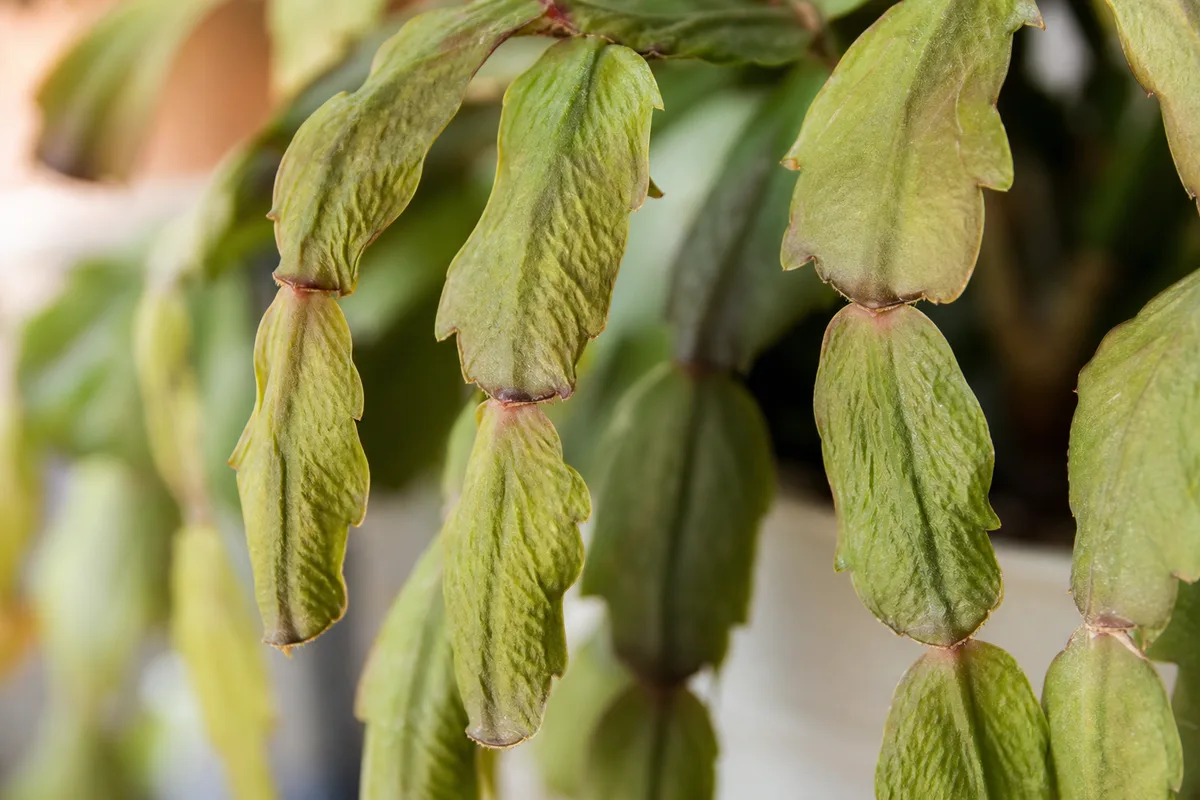
Underwatering on Christmas cactus — compare with healthy tissue.
Chronic drought weakens the plant so that even a single hot afternoon can trigger mass drop. Heat plus dry soil is especially brutal when indoor heating runs in winter (Citycacti).
Fix sequence: Water slowly and thoroughly until water exits the drainage holes. If soil has shrunk and water runs down the sides without soaking, bottom-water for 30 minutes in a basin, then let drain fully. Trim any segments that are crispy and hollow—they will not rehydrate. Going forward, check moisture twice a week during active growth and weekly during winter rest; adjust for pot size and room heat.
Do not swing to daily watering as compensation—that invites rot. Our underwatering guide covers the wet-vs-dry overlap with wilting if symptoms confuse you.
Too Much Direct Sunlight Scorches Segments
Thanksgiving cactus evolved under forest canopy in coastal Brazil. It wants bright, indirect light, not blazing window sun. NC State Extension is explicit: direct sunlight scorches stems, and summer shade prevents yellowing (NC State Extension).
Scorched segments often turn yellow, bronze, or purple-red before dropping. The damage usually hits the side facing the glass. Fall and winter sun is milder, but a south window with reflected heat can still burn segments in cold climates.
Fix sequence: Move the pot 2 to 4 feet back from the window or hang a sheer curtain. East-facing light is ideal; west windows need filtering in afternoon. Remove fully desiccated segments with a twist at the joint. New growth should emerge plump and green within a few weeks once light is corrected. Do not fertilize scorched plants until they show fresh spring growth.
Temperature Swings, Drafts, and Low Humidity
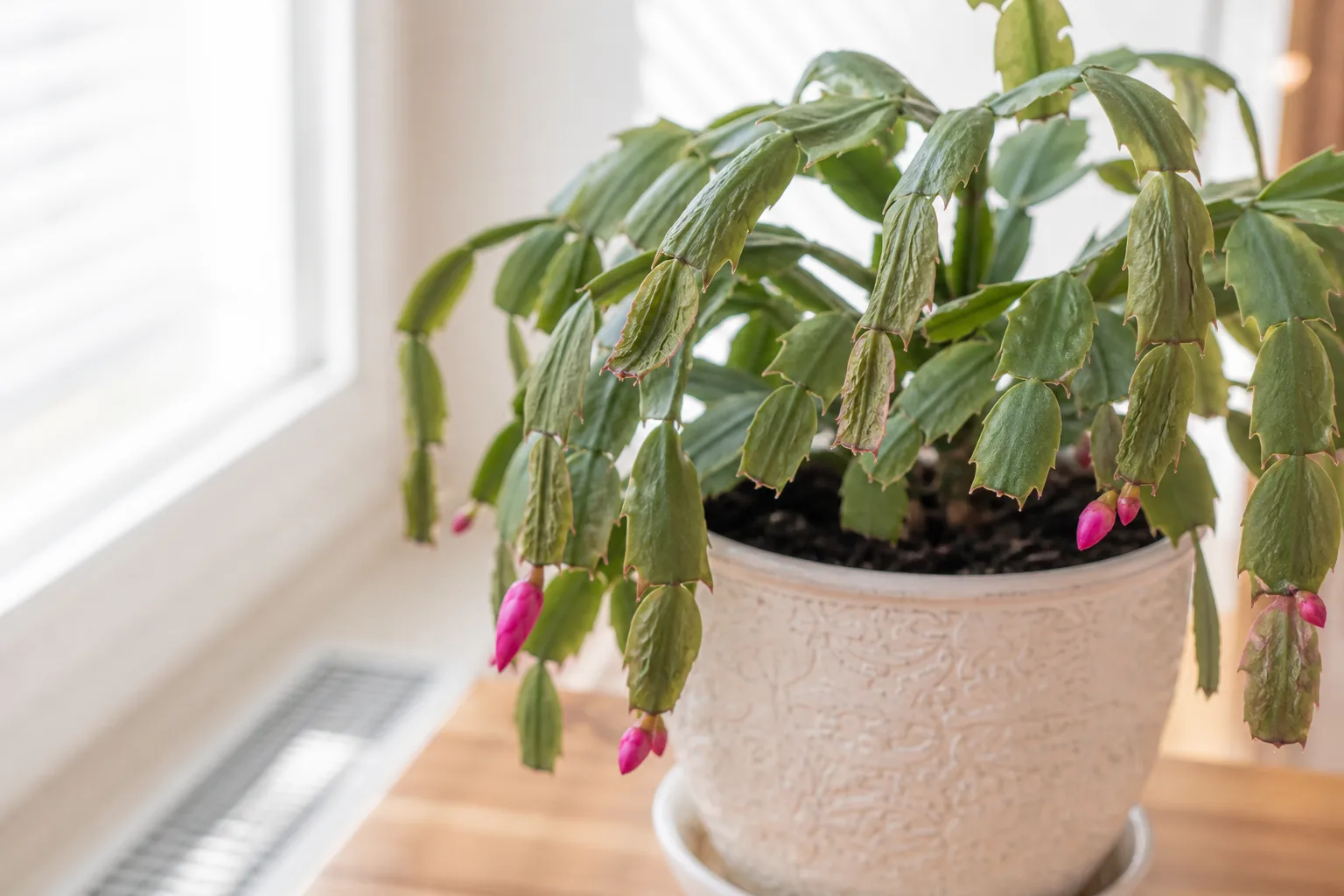
Thanksgiving cactus prefers daytime temperatures around 70 to 80°F and cooler nights around 55 to 65°F (NC State Extension). It tolerates normal indoor ranges, but sudden swings—moving from a porch to a heated living room, sitting beside a fireplace, or resting against cold window glass—trigger segment drop within days.
Low humidity compounds the problem. Dry winter air forces segments to lose moisture faster than roots can replace it, especially if you also underwater. NC State lists high humidity tolerance as a strength of the species; bathrooms and kitchens often suit it better than arid offices (NC State Extension).
Fix sequence: Move the plant to a stable spot away from heating vents, air-conditioner blasts, and drafty entries. If nights are cold, pull the pot back from the glass or insulate the windowsill. Raise humidity with a pebble tray (water below stone tops), a small humidifier, or grouping plants—our humidifier placement guide covers safe setup. Mist briefly if you must, but ambient humidity beats a once-daily spritz.
Bloom-Season Moves and Environmental Shock
Thanksgiving cactus is sensitive to relocation during flowering. Buds and segments drop when the plant moves from a cool dark room to a bright display table, or when artificial light interrupts the night cycle. NC State notes that reduced flowering and bud drop follow inadequate dark hours, sudden temperature changes, lack of moisture, or light changes (NC State Extension).
Once buds form, choose a final display spot and leave the pot there. Increase watering slightly while blooms open, but never waterlog. If you must move it, expect some drop—stabilize temperature and humidity afterward and avoid fertilizer until spring.
Pests That Drain Segments Dry
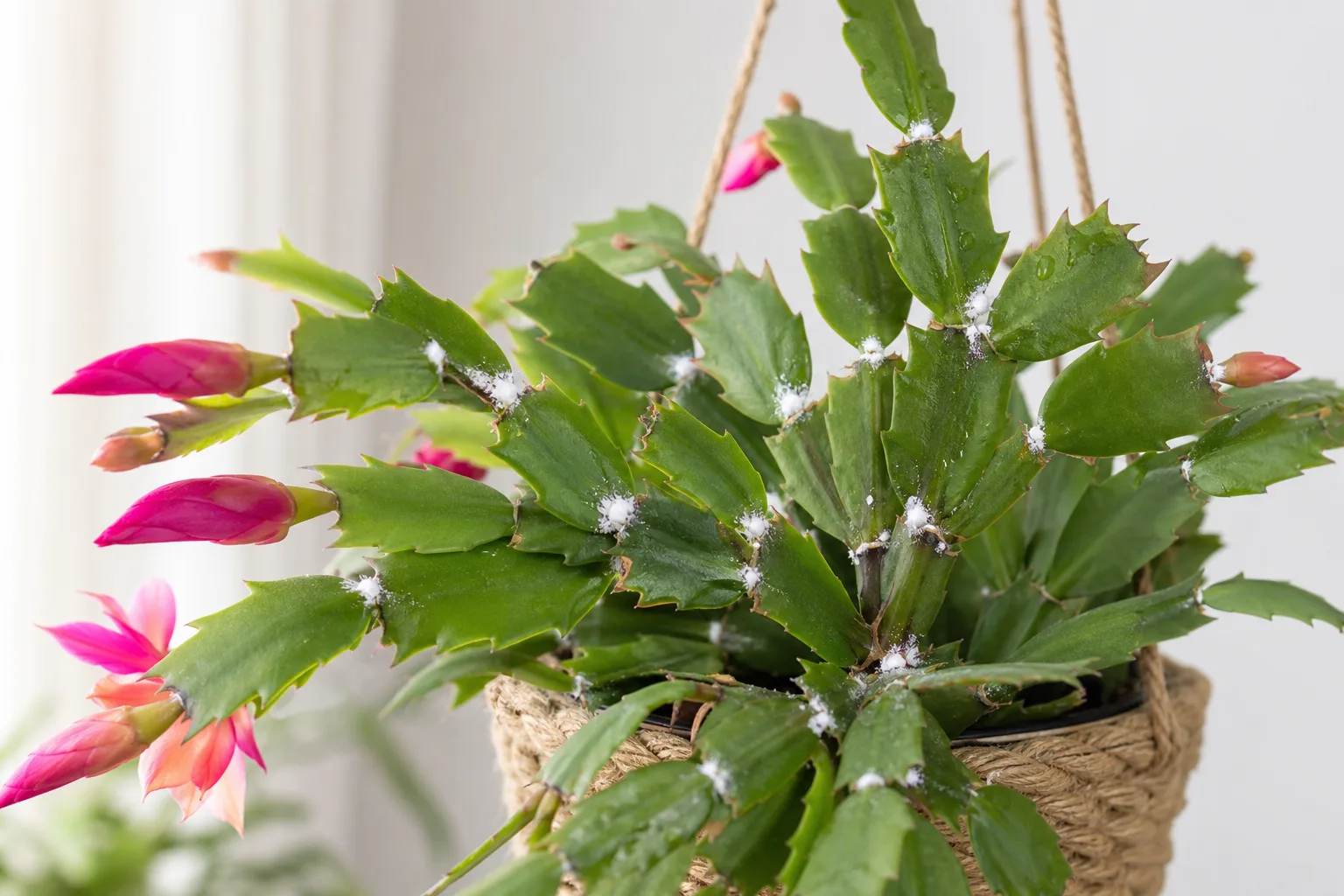
Mealybugs, scale, and spider mites are common on holiday cacti and cause wrinkled, dropping segments as they drain sap. Check segment joints, undersides, and the soil line. White cottony masses mean mealybugs; hard brown shells mean scale; stippling plus webbing means mites.
Fix sequence: Isolate the plant. Wipe visible mealybugs with rubbing alcohol on a cotton swab. For larger infestations, wash stems with dilute insecticidal soap or neem oil, covering joints thoroughly (Citycacti). Repeat weekly until clear. Segments heavily damaged by pests may not re-plump—trim and propagate healthy tips if needed.
Pest stress often overlaps with overwatering (which weakens the plant). Fix drainage and pests together. See Christmas cactus mealybugs if cottony clusters persist.
Fungal and Bacterial Diseases
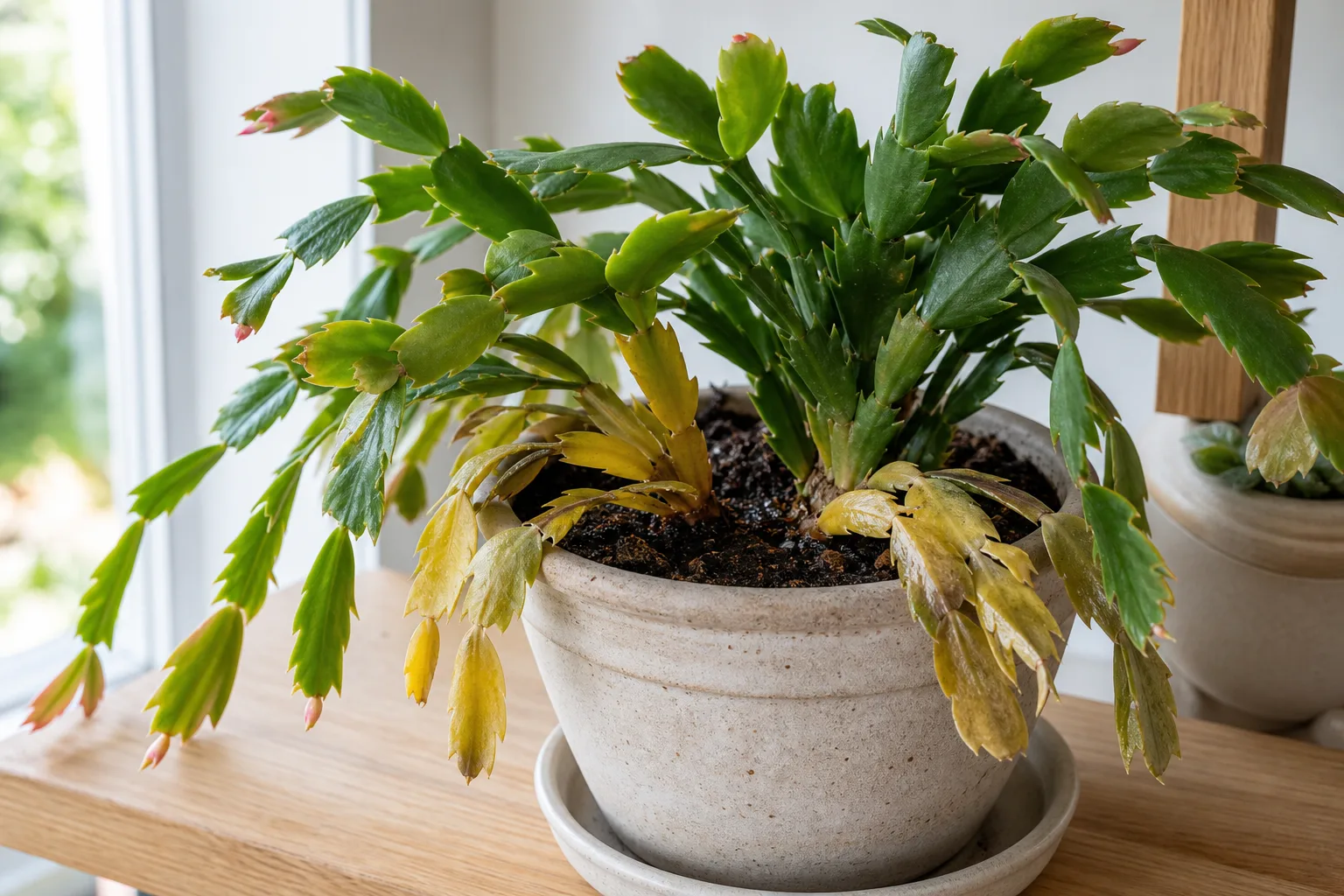
Disease-related leaf drop rarely appears alone. Watch for pre-symptoms before segments fall.
Fungal stem rot (often from chronic overwatering or poor drainage) starts with gray-green, water-soaked stems at the soil line and moves up branches. Leaves turn dull before detaching. If caught early, cut infected tissue back to healthy green stem, let the cut dry, and dry out the root zone before careful watering resumes.
Bacterial soft rot spreads fast: branches turn black, slimy, and foul-smelling, then collapse. There is no reliable cure—discard the infected plant in the trash and sterilize the pot. Do not compost infected tissue or reuse mix.
Gray mold (Botrytis) can appear in stagnant, humid air with poor circulation. Remove affected segments, improve airflow, and avoid wetting foliage at night. NC State lists gray mold in high humidity with poor air circulation as a known problem (NC State Extension).
When rot is advanced, propagate clean cuttings from unaffected tips rather than nursing a collapsing base.
Oversized, Leggy, or Rootbound Plants
A Thanksgiving cactus that has grown for years without pruning can become too heavy for its own stems. Long cascades snap at weak joints, especially if the plant was recently watered heavily or moved. This is mechanical stress, not disease—but it looks like mysterious leaf drop.
Rootbound plants also drop segments. Crowded roots cannot take up water evenly; the plant wilts between waterings even when you think you are watering enough. NC State notes the species does well slightly pot-bound but still needs repotting about every three years (NC State Extension). University of Minnesota Extension recommends fresh mix every two to three years (University of Minnesota Extension).
Fix sequence: If branches are breaking, shorten long chains by one to three segments per branch to lighten the load. If roots circle the pot densely and water runs straight through, repot one size up—never jump to a huge decorative pot. Extra soil volume stays wet too long and causes rot.
When and How to Prune Without Losing Next Year’s Blooms
The best pruning window is spring, when new growth starts after the rest period (University of Minnesota Extension). Spring pruning shapes the plant and stimulates branching without removing fall bud sites.
If branches are actively breaking in fall, prune anyway—losing a few potential buds beats losing half the plant. Use clean scissors or twist segments at natural joints. Save healthy cuttings for propagation. Full technique: Christmas cactus pruning.
Repotting Shock and Wrong Pot Size
Freshly repotted Thanksgiving cactus often drops a few segments while roots settle—normal if temporary. Shock worsens when you disturb roots heavily, repot during peak bloom, or move into a much larger pot where soil stays wet for weeks (Citycacti).
Fix sequence: After repotting, keep the plant in bright indirect light, maintain stable temperatures, and water sparingly until new growth appears—only when the top inch is dry. Do not fertilize until spring. If leaf drop continues more than three to four weeks and soil smells sour, unpot and check for new rot from oversized pots.
Choose containers only 1 to 2 inches wider than the root ball. Glazed pots without drainage are a common post-holiday gift trap—drill holes or slip the grow pot out to water and drain.
Recovery Timeline and When to Propagate Fallen Segments
Most Thanksgiving cactus plants stop active dropping within one to two weeks after you correct the cause—water, light, or temperature. Re-plumping wrinkled segments that survived takes three to six weeks in stable care. Root rot recovery is slower; expect two months before confident new tip growth.
If the base is rotting but tips are firm, propagate immediately. Healthy fallen segments with intact joints can also root: let cuts callous two to three days, then insert the bottom segment halfway into moist mix. Keep humidity moderate and avoid direct sun. Roots form in three to eight weeks.
When more than half the plant is mushy or pest-ridden, propagation is not failure—it is how these long-lived heirlooms survive for decades. Our Christmas cactus care guide covers year-round conditions so the next generation does not repeat the same stress cycle. For winter-specific mistakes that trigger drop, see winter houseplant care mistakes.
Conclusion
Thanksgiving cactus drops a segment now and then—that is normal aging. Clusters of limp, yellow, or mushy segments are a stress alarm. Start with soil moisture, then check light, temperature, humidity, pests, disease, and plant size. Fix overwatering before you add more water; move scorched plants out of direct sun; stabilize drafts and dry air; prune or repot when weight and roots can no longer support the cascade.
Most plants recover within weeks once conditions stabilize. When rot or pests win the base, propagate clean tips and begin again with drainage, indirect light, and a steady watering rhythm. Get those three right and next Thanksgiving’s bloom show is still on the calendar.



