Brown Leaves on Amla: Causes, Checks & Fixes
Quick answer
Brown leaves on Amla are dead tissue — existing feathery leaflets rarely re-green. First step: check whether the tree is entering normal winter dormancy, then probe soil 3–5 cm deep and lift the pot. Crispy brown on a feather-light container usually means drought; soft brown on a heavy wet pot points to root stress or overwatering.
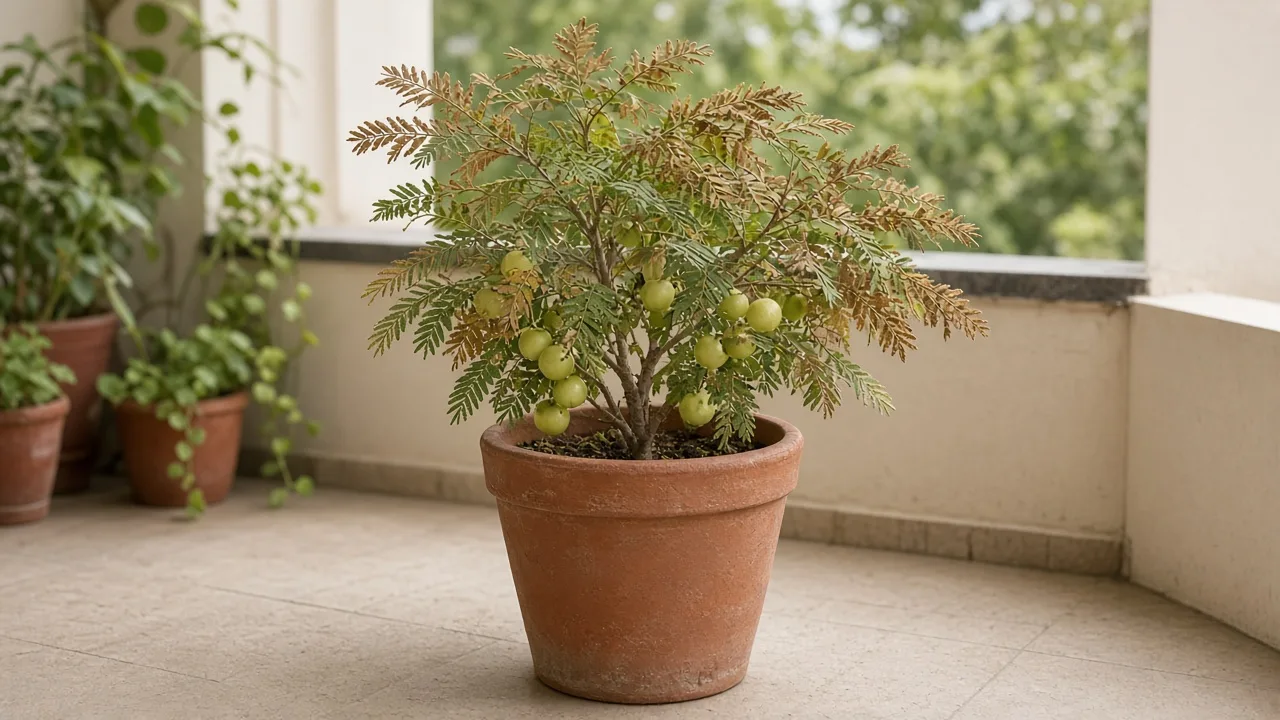
Brown Leaves on Amla: Causes, Checks & Fixes
This guide covers brown leaves on Amla. See also the general Brown Leaves guide, watering, and light pages for this plant.
Brown Leaves on Amla: Causes, Checks & Fixes
Quick answer
Brown leaves on Amla (Phyllanthus emblica) mean tissue has died — whether from normal deciduous rest, waterlogged roots, drought during fruit set, frost, sudden sun shock, fungal spotting, or pest damage on feathery branchlets. For general whole-leaf browning mechanics, see our brown leaves guide. On Amla, the first fork is seasonal: this sun-loving deciduous tree naturally sheds foliage before cool or dry rest, and that can look alarming on a terrace pot even when the tree is healthy.
First step: confirm the season, then probe soil 3–5 cm deep and lift the pot. If the canopy is uniformly fading in late autumn with firm wood and no sour smell, pause before repotting — dormancy may be normal. If new shoots brown while the pot stays heavy and damp, stop watering and inspect drainage. If feathery leaflets crisp on a feather-light pot in full sun, deep-soak once and adjust your Amla watering rhythm.
What brown leaves look like on Amla
Healthy Amla carries small, narrow, feathery leaflets spaced along slender branchlets, giving the canopy a soft, fine-textured look unlike broad houseplant foliage. Browning breaks that pattern in distinct ways:
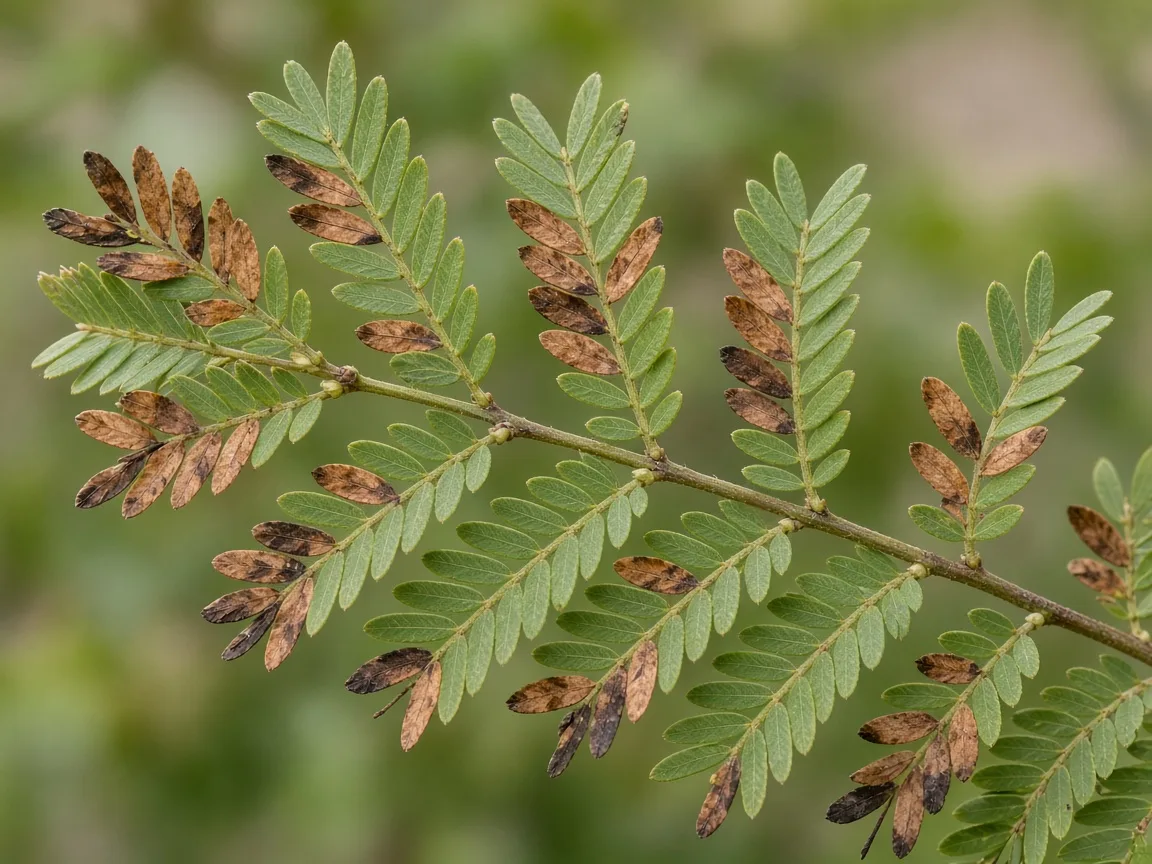
Brown leaf symptoms on Amla — compare necrotic feathery leaflets with still-green tissue on the same branchlet.
- Uniform tan-to-brown leaflets across many branchlets, firm wood, cool season — Often normal deciduous rest before winter or dry dormancy. Low urgency if buds look plump and soil is not sour.
- Crispy brown margins or whole dry leaflets, very light pot, dry soil throughout — Severe underwatering on Amla or heat stress during flowering or fruit set when moisture demand spikes.
- Soft yellow-brown leaf clusters, heavy wet pot, sour smell — Root oxygen loss from chronic wet mix. Often paired with yellow leaves on Amla.
- Brown patches on one side of branchlets after a move to stronger sun — Sun scorch on shade-softened foliage. Common when a nursery tree jumps to full terrace sun without hardening off.
- Brown with black speckles or spreading wet edges in humid monsoon — Fungal leaf issues worsened by stagnant air. See black spots on Amla when spots dominate.
- Ragged brown holes or chewed margins — Caterpillars or aphids stressing tender new shoots.
Always inspect newest shoots at branchlet tips and the soil line. Brown on fresh growth during the active season is more urgent than older leaflets fading before dormancy.
Seasonal dormancy vs. sick brown on a deciduous fruit tree
Amla is not an evergreen kitchen herb — it is a deciduous tree that evolved across tropical and subtropical Asia, often in deciduous forest zones where a rest period is normal. Container growers on balconies sometimes panic when the whole canopy turns tan and drops in cool months even though the tree is following its natural calendar.
Normal dormancy pattern:
- Browning spreads fairly evenly across feathery branchlets, not just one corner
- Wood stays firm; no sour or swampy smell from the pot
- Happens in late autumn through early winter in most Indian climates, or during a deliberate dry rest
- Buds remain visible along branchlets for the next flush
Pathological off-season brown:
- Sudden browning during active summer growth or mid fruit set
- One-sided damage after frost, cold wind, or a heatwave without soil drying
- Brown climbing through new shoots while mix stays wet
- Premature fruit drop alongside leaf death
If dormancy fits, reduce water gradually and protect from frost — do not repot, hard-prune, and fertilize on the same week.
Reading brown along feathery branchlets
Amla’s fine leaflets on slender branchlets make location as diagnostic as colour.
Bottom-up brown on wet soil: When lower branchlets brown first while the pot stays heavy, suspect overwatering on Amla or advancing root rot. Amla tolerates drought but fails quickly in soggy, poorly aerated mix — the opposite of its wild habit on well-drained sites.
Tip-down brown in hot dry weather: When newest leaflets at shoot tips crisp while older branchlets still look green, the tree is often pulling moisture faster than roots can supply — common in small pots during flowering or fruit set. Orchard guidance for aonla treats irrigation as seasonal; field trees may go 15–20 days between soaks in dry summer, but a terrace pot in full sun can dry within days.
One-sided scorch after relocation: Brown only on the south or west face after moving from nursery shade to a sunny terrace points to light shock, not disease. Harden off over two weeks — see not enough light for the opposite problem when trees were kept too dim.
Whole-branchlet dieback with firm wood elsewhere: Can follow frost nip, mechanical damage, or localized scale insects on a single stem. Check bark for splits and undersides for pests before assuming root failure.
Why Amla gets brown leaves
Waterlogged roots in a drought-adapted tree
Emblic is described as thriving on well-drained soil and tolerating dry or moist conditions — but not stagnant water. Heavy clay, closed saucers, or monsoon rain without drainage keeps roots anaerobic. Leaflets yellow, then brown, often with wilting on wet soil because damaged roots cannot move water upward.
Drought stress during active growth or fruit set
Established trees survive short dry spells, yet young container plants and fruiting branches need deeper moisture when heat spikes. Crispy brown margins on feathery leaves with a very light pot match underwatering more than rot. Premature fruit drop may accompany leaf death.
Frost, cold wind, and sudden temperature drops
Amla grows best in warm tropical conditions — roughly 20–35°C comfort — and young terrace trees are frost-sensitive. Cold snaps brown tender leaflets overnight while wood may stay firm. Protect pots before winter nights drop below about 10°C.
Sun scorch after shade acclimation
PFAF notes emblic requires full sun for productivity, but trees moved abruptly from deep nursery shade to harsh afternoon rays can bleach and brown leaflets on exposed branchlets. Gradual exposure over 10–14 days prevents scorch.
Fungal leaf issues in humid, stagnant air
During monsoon, damp foliage plus weak airflow encourages leaf spots that advance to brown necrosis. This differs from uniform dormancy — spots are patchy and often start on older leaflets near the canopy interior. Cross-check black spots on Amla and improve spacing and airflow.
Pests on tender new shoots
Aphids, caterpillars, and leaf miners damage young leaflets first, leaving brown, distorted, or holed tissue. Inspect shoot tips and leaf undersides with a hand lens before spraying.
How to confirm the cause
Work through this order on a terrace or garden Amla:
- Season check — Is late autumn or winter dormancy likely? Uniform fade with firm wood suggests rest, not rot.
- Pot weight and finger test at 3–5 cm — Heavy and damp points to overwatering; feather-light and dry points to drought.
- Smell at drainage holes — Sour or swampy odour confirms anaerobic mix; earthy smell is normal.
- New growth at branchlet tips — Green new shoots mean the tree is still functioning; brown tips on wet soil mean urgent root review.
- Light history — Recent move to stronger sun? One-sided brown fits scorch.
- Weather log — Frost or cold wind in the last 48 hours? Cold injury fits sudden uniform tip burn.
- Pest scan — Sticky residue, webbing, holes, or scale bumps on branchlets.
| What you see | Likely cause | First action |
|---|---|---|
| Even canopy fade, cool season, firm wood | Normal dormancy | Reduce water; protect from frost; do not repot |
| Soft yellow-brown leaflets, heavy wet pot, sour smell | Overwatering / root stress | Stop watering; empty saucer; improve soil drainage |
| Crispy brown tips, light pot, dry throughout | Drought / heat stress | Deep soak once; adjust watering schedule |
| One-sided tan-brown after sun move | Sun scorch | Shade partially; harden off gradually |
| Patchy spots spreading in humid weather | Fungal leaf issue | Improve airflow; remove badly infected leaflets |
| Holes, webbing, sticky shoots | Pests | Treat identified pest; see sibling pest guides |
The first fix to try
If the pot is heavy and soil at 3–5 cm feels damp during active growth: stop watering immediately. Empty standing water from saucers and cachepots. Let the entire root ball dry before the next soak, using pot weight as your guide. This single step prevents further oxygen loss while you observe whether new branchlet tips stay green.
Only after one full dry-down cycle should you consider scraping the top layer of sour mix, drilling extra drainage, or repotting into a grittier blend. Unpotting is justified when sour smell persists, stems soften at the base, or brown keeps climbing through new shoots on wet soil — see root rot on Amla for salvage steps.
If the pot is feather-light with crispy brown leaflets instead, deep-soak once until runoff drains freely, then resume the finger-test rhythm from the watering guide. Do not sprinkle daily — shallow moisture teases roots without refilling the profile.
Step-by-step recovery
After overwatering or root stress
- Stop watering until the pot feels noticeably lighter — often one to three weeks indoors, faster in full sun.
- Move to the brightest spot you have without afternoon scorch if the tree was in shade — better light helps the mix dry and supports recovery.
- Remove fully brown leaf clusters to reduce mould habitat; keep partially green branchlets unless they are mushy.
- If smell stays sour after dry-down, unpot, trim mushy roots, and repot into sandy loam with 25% coarse sand or perlite per the soil guide.
- Resume deep watering only when the top 3–5 cm are dry and new shoots look firm.
After drought or heat stress
- Deep-soak once; discard runoff.
- Mulch the surface lightly in summer to slow evaporation — not against the trunk.
- Shade during extreme afternoon heat for a week if leaflets keep crisping.
- Hold fertilizer until new feathery growth opens clean green.
After frost or sun scorch
- Move potted trees under cover before the next cold night.
- For scorch, provide 30–40% shade for 10–14 days, then increase sun gradually.
- Trim only fully necrotic leaflets; living green tissue still feeds the tree.
Recovery timeline
Judge progress by new shoots along branchlets, not by old brown leaflets turning green — they will not.
- Mild drought or scorch: New clean leaflets within two to four weeks after corrected water or shade.
- Overwatering caught early: Spread stops within one to two watering cycles once mix aerates; full canopy refill may take a full growing season on a large pot.
- Advanced root rot: Several months; some branchlets may die back entirely even after salvage.
- Normal dormancy: Fresh green flush returns with spring warmth — often weeks after the last brown leaf drops.
Worry if brown keeps climbing through new tips on wet soil, stems soften, or the tree drops fruit out of season alongside leaf death.
Lookalike symptoms
| Looks like brown leaves | Often actually | Tell apart |
|---|---|---|
| Brown tips only | Salt, drought, or fluoride edge burn | Margins only; centre still green |
| Yellow leaves | Overwatering or nitrogen lack | Yellow precedes brown; check soil moisture |
| Wilting | Root failure or drought | Limp branchlets — soil wet vs dry separates causes |
| Curling leaves | Heat, pests, or moisture stress | Blade shape changes before full necrosis |
| Seasonal drop | Normal deciduous rest | Timing + firm wood + no sour soil |
Mistakes to avoid
- Watering on a calendar without a finger test — the fastest route to brown on terrace pots.
- Repotting, hard pruning, and fertilizing the same week on a stressed tree.
- Assuming dormancy is death and discarding a firm, budded tree in winter.
- Keeping a sun-loving fruit tree indoors to “protect” it — weak light plus wet soil browns leaflets from both sides.
- Daily misting during monsoon without airflow — raises fungal risk on feathery foliage.
How to prevent brown leaves next time
Match care to Amla’s identity as a full-sun, well-drained, drought-tolerant deciduous fruit tree:
- Water deeply when the top 3–5 cm are dry; never leave pots sitting in water — details in the Amla watering guide.
- Use sandy loam with excellent drainage; refresh compacted mix before roots circle — soil guide.
- Give at least six hours of direct sun on productive terraces — light guide.
- Protect young pots from frost and harden off shade-grown nursery trees before full sun.
- Inspect shoot tips weekly during monsoon and fruit set for pests and spotty lesions.
- Reduce irrigation through dormancy; resume as spring growth starts.
When to use this page vs. other Amla guides
This page is the symptom-first entry for whole-leaf or leaflet browning on feathery branchlets.
- Overwatering — chronic wet mix, heavy pots, and sour soil before rot advances
- Root rot — mushy roots, soft stems, salvage repotting
- Underwatering — crispy drought brown in heat and small pots
- Yellow leaves — yellowing that precedes brown from wet roots or nutrition
- Brown tips — margin burn only, not whole leaflets
- Amla overview — placement, dormancy rhythm, and long-term fruit-tree care
Related Amla guides
Use Amla overview for hub context, watering and soil when pot weight and drainage are the core issue, and light when scorch or leggy shade growth preceded browning. For active pest or disease patterns, open the matching problem page from Amla problems rather than stacking treatments here.
Related tool
Use the Plant Problem Diagnosis Tool to narrow causes for brown leaves on this plant before changing multiple variables at once.