Low Humidity on Fig: Dry Air vs Drought
Quick answer
Common fig tolerates dry Mediterranean air; most margin crisping on terrace pots is shallow-root drought in hot dry wind, not a missing humidifier. Overwintering container figs in heated dry storage can kill dormant roots if the mix goes bone dry. First step: if leaves are on the tree, run the top 1–2 inch dry-down check; if the tree is dormant indoors, probe the root ball and water lightly only when mix is dusty dry.
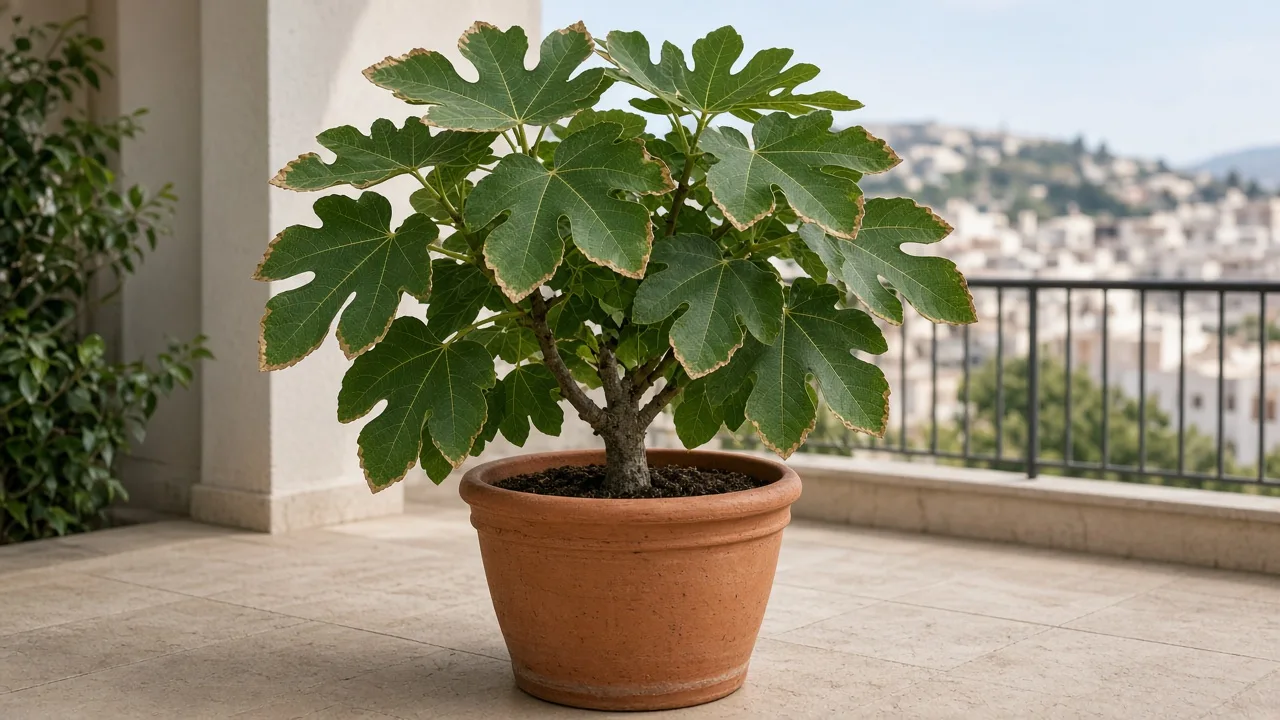
Low Humidity on Fig: Causes, Checks & Fixes
This guide covers low humidity on Fig. See also the general Low Humidity guide, watering, and light pages for this plant.
Low Humidity on Fig: Causes, Checks & Fixes
Quick answer
Common fig (Ficus carica, anjeer) is a deciduous Mediterranean fruit tree, not an evergreen indoor Ficus that needs 60% room humidity. Most growers who search “low humidity on fig” are really seeing shallow-root drought in hot dry wind, reflected heat on a terrace pot, or desiccated dormant roots in a heated garage—not a missing humidifier.
For how dry indoor air stresses thin-leaved houseplants in general, see the low humidity guide. On fig, diagnosis centers on large lobed leaves, fruit swell, and seasonal dormancy, not misting routines copied from calatheas.
First step: If the tree still has leaves, run the top 1–2 inch dry-down check before you buy humidity hardware. If the tree is bare and dormant in winter storage, probe the root ball—dormant figs still need occasional moisture so roots do not die in dry heated air.
When to use this page vs other Fig guides
- Fig watering guide — Use when you are unsure whether drought, not RH, is driving tip crisp or fruit drop.
- Brown tips on Fig — Use when margins are tan and papery but you have not yet separated dry air from missed soaks or salt burn.
- Underwatering on Fig — Limp lobes, very light pots, mix pulling away from the container edge.
- Wilting on Fig — Whole branches droop, not just dry edges.
- Fig light guide — Bleached or scorched sun-facing lobes after a harsh terrace move.
- Spider mites on Fig — Stippling and webbing in warm dry indoor corners during overwintering.
What low humidity looks like on Fig
Fig leaves are large, palmate, and deeply lobed. Dry-air stress usually shows on lobe tips and outer margins first, while the midrib zone may stay green longer. UF/IFAS describes bright dark green blades on Ficus carica—compare any crisping against that baseline on the same branch.
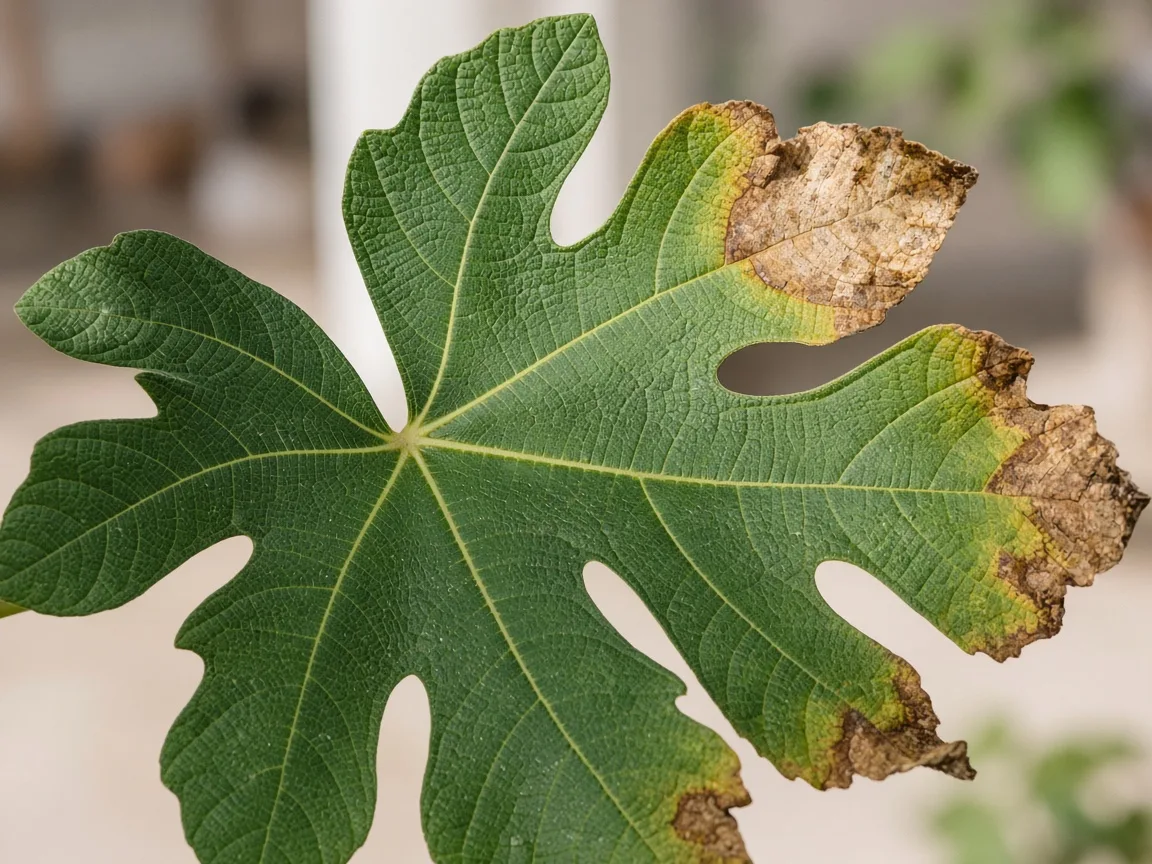
Dry tan lobe margins on common fig—pair edge crisping with pot weight, recent heat, and whether the tree is actively leafed or dormant in storage.
Active growth on a sunny terrace (most common “dry air” confusion):
- Tan, papery lobe tips after hot, windy, low-RH weather when the container feels light
- Slightly cupped or folded lobes on the newest flush before margins fully necrose
- Pattern may match brown tips when the root zone dried faster than shallow roots could resupply water in full sun
Overwintered container in dry heated storage:
- Bare branches look normal while roots slowly desiccate in dusty-dry mix
- Tree fails to break bud in spring or pushes weak shoots then collapses
- My Perfect Plants notes a dormant tree does not take in water like summer growth, but can die if roots dry out during months in a garage or basement with furnace air
Rare active indoor specimen (not typical culture):
- Slow, leggy leaves on a south window with forced-air heat in winter
- Fine stippling on undersides—warm dry indoor air favors spider mites on houseplants; fig is a poor long-term houseplant except specialized dwarf types
What low humidity is usually not on fig:
- Yellowing entire trees on wet mix — root stress; see overwatering on Fig
- Leaf drop in autumn — normal deciduous dormancy, not dry-air injury
- Split or sour fruit in humid late season — often excess moisture and humidity, the opposite problem (UC IPM warns late summer or fall rains can spoil fruit)
Why Fig rarely behaves like a “humidity plant”
Mediterranean fruit tree, not fiddle-leaf fig
Ficus carica evolved with warm, relatively dry summers and deep-soak rain patterns. NC State lists full sun to partial shade in organically rich, well-drained, moist soil—moist meaning replenished after the surface dries, not tropical fog. Confusing common fig with Ficus lyrata houseplant advice leads to useless misting on a tree that wants six hours of direct sun on a terrace.
Shallow roots and hot dry VPD on containers
Fig roots grow close to the soil surface. Gardening Know How recommends regular watering and mulching during the growing season because dry roots can lead to premature fruit drop. On a rooftop pot, low relative humidity plus wind plus full sun pulls water through large leaves faster than a calendar watering schedule—ambient RH can read “fine” while the root zone is still drought-stressed.
Fruit swell needs water, not mist
UF/IFAS states figs need plenty of water during the fruiting season but will not tolerate excessively wet soil. That narrow band means dry air during ripening hurts when irrigation fails, not because you skipped a pebble tray. Pair humidity worries with Fig fertilizer only after moisture is stable.
Dormant overwintering vs active houseplant humidity
NC State notes containers must be overwintered indoors in cold zones. Standard practice is cool, bright storage with sharply reduced watering after leaf fall (Missouri Botanical Garden recommends regular summer watering and reduced fall watering for container figs). Heated dry air accelerates mix drying on idle roots—this is the main indoor “low humidity” failure mode, not crispy leaf tips.
When high humidity is the enemy outdoors
UC IPM advises avoiding sites with late summer or fall rains because humidity may cause fruit to spoil or split before harvest. Monsoon-season growers should prioritize airflow and rain shelter, not raising RH around ripening syconia.
How to confirm the cause
Work through checks in an order that matches fig biology:
- Season and leaf status — Active leafed tree vs bare dormant storage?
- Moisture at 1–2 inches — Dusty dry and light pot (drought) vs cool, heavy mix (watering guide).
- Hygrometer at canopy height (optional) — Below ~30% RH in a heated indoor room with leaves still on supports dry-air stress on an atypical indoor fig; outdoor terrace readings alone rarely justify a humidifier.
- Recent weather — Pre-monsoon heat spike, wind, or new west-facing wall placement?
- Fruit stage — Swelling syconia on branches showing margin crisp?
- Pest signs — Stippling and webbing on lobed leaf undersides in dry indoor heat?
- New growth — Are youngest lobes opening green after you adjust one variable?
UC IPM stresses that moisture should be replaced well before trees begin to show stress—by the time many lobe tips crisp outdoors, the root zone has already lagged for days.
First fix for Fig
Make one correction first:
- Leafed tree in active growth with light pot and dry upper mix after heat: deep-soak until excess drains, then let the top 1–2 inches dry before the next soak per Fig watering. Do not mist lobes.
- Dormant bare tree in winter storage with dusty-dry mix: water lightly until a little moisture reaches the root ball, then let excess drain—repeat only when mix is dry several centimetres down, following dormant storage rhythm in My Perfect Plants winter container guidance.
- Indoor heat + stippling on undersides: isolate and inspect for spider mites before raising humidity.
Do not run a humidifier, repot, and move into hotter sun on the same stressed tree.
Step-by-step recovery
- Match water to season — Summer fruiting soaks when the surface dries; post leaf-fall reduction on dormant pots (Missouri Botanical Garden).
- Mulch surface roots — Straw or compost on in-ground trees holds moisture without soggy crowns (Gardening Know How).
- Reduce wind and reflected heat — Temporary afternoon shade or windbreak on terrace pots during extreme dry spells while you stabilize watering—not permanent shade that blocks fruit.
- Storage placement — Keep dormant containers in cool (not baking) rooms; avoid blasting furnace vents directly at the pot rim.
- Trim cosmetic damage — Dry tan lobe edges will not re-green; snip papery margins with clean tools and gloves because fig latex irritates skin (Fig overview).
- Escalate root issues — If crisping spreads on wet mix with soft stems, inspect for root rot on Fig before soaking again.
Recovery timeline
Dry tan tissue on a lobed leaf will not turn green again. Judge success by new leaves opening with intact margins within two to four weeks after water rhythm matches the season. Dormant storage failures may not show until spring bud break—dead roots mean no flush despite wetting attempts in March.
If margins keep crisping on fresh growth after corrected watering, cross-check yellow leaves on Fig and drooping leaves on Fig for uptake failure on wet or damaged roots.
Lookalike symptoms
| What you see | Likely cause | Where to go |
|---|---|---|
| Tan lobe tips, light dry pot | Drought in dry heat | Underwatering |
| Bleached then brown sun-facing lobes | Light or heat | Fig light |
| Whole leaves yellow, wet mix | Root stress | Yellow leaves |
| Limp canopy, dry mix | Severe drought | Wilting |
| Stippling, webbing | Pests | Spider mites |
| Fruit split in rainy season | Excess moisture | Overwatering |
What not to do
Do not mist fig leaves like a tropical foliage plant—surface mist evaporates quickly in terrace sun and does not rehydrate shallow roots. Do not overwater because air feels dry when mix is already wet. Do not store dormant pots without any moisture checks through a dry winter. Do not chase high humidity around ripening outdoor fruit in humid monsoon weather.
Avoid stacking repotting, systemic pesticide, and major pruning on the same stressed container fig.
Fig care cross-check
Align fixes with normal culture on the Fig overview and Fig soil mix: free drainage, full sun, and steady root-zone moisture while leaves and syconia develop. NC State recommends mulch roots to maintain moisture and protect plants through winter in marginal climates.
Pair any hygrometer reading with pot weight and the 1–2 inch probe, not automatic humidifier purchases copied from indoor foliage blogs.
How to prevent dry-air damage next time
Check container weight or the top 1–2 inches every few days during hot dry weather—calendar watering fails on terrace figs. Mulch in-ground root zones; use windbreaks during heat waves. For overwintering, mark a monthly root-ball check on dormant pots in heated storage. Resume the summer soak schedule only after leaves expand in spring per Fig pruning and growth timing on your cultivar.
Practical checks
Urgency check
Cosmetic margin burn on a few lower lobes is low urgency if new growth stays green. Escalate when stems soften on wet mix, a dormant stored tree has not been watered all winter in a dry heated room, or spring buds fail across the framework.
Best inspection order
For fig, inspect season (active vs dormant), newest lobed leaves and lobe tips, pot weight and the 1–2 inch probe, fruit load, storage heat sources, leaf undersides for mites, and roots only if softness spreads.
Severity note
This issue is marked medium for fig—isolated dry tips rarely kill a mature in-ground tree, but drought during fruit swell and desiccated dormant roots can cost the season’s crop or the whole container plant.
Related Fig guides
- Fig overview — deciduous fruit tree culture, not indoor Ficus
- Fig problems hub — all common issues on this species
- Fig watering — fruiting-season moisture and dormancy cuts
- Fig light — full sun, walls, and container placement
- Brown tips on Fig — margin necrosis when humidity is not the root cause
- Slow growth on Fig — when dry stress limits vigor over a full season