Mold on Soil on Monstera Peru: Causes, Checks & Fixes
Quick answer
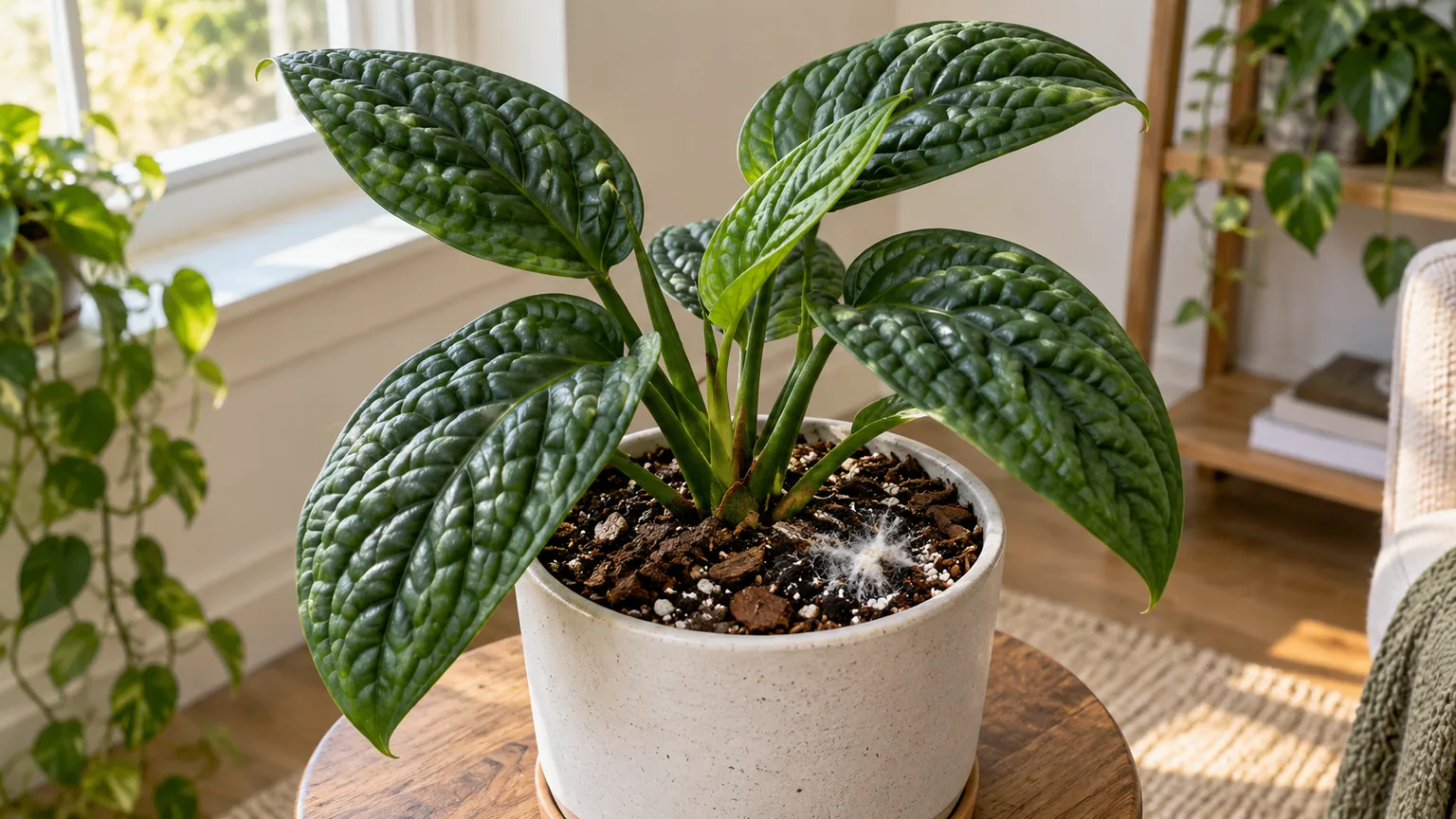
A small fuzzy patch on Monstera Peru soil usually points to a surface that has stayed damp, but it does not by itself prove root rot. First lift off the visible growth with a clean spoon, then let the top 3–5 cm of mix dry before watering again.
Mold on Soil on Monstera Peru: Causes, Checks & Fixes
This guide covers mold on soil on Monstera Peru. See also the general Mold on Soil guide, watering, and light pages for this plant.
Mold on Soil on Monstera Peru: Causes, Checks & Fixes
Quick answer
A small white or pale-gray fuzzy patch on the surface of a Monstera Peru pot is a reason to check how long the mix stays damp. It is not, by itself, proof that the roots are rotting or that the plant has a disease. Houseplant soil mold is associated with moist, poorly drained, low-airflow conditions, so correct the conditions you can confirm rather than treating the color alone as a diagnosis (Family Handyman).
First, use a clean spoon to lift off only the visible fuzzy material and loose debris at the surface. Keep the spoon shallow so you do not dig through the Peru’s root zone. Then check the top 3–5 cm of mix before the next watering; this plant’s care cue is a measured dry-down, not a fixed weekly appointment. For the broader symptom mechanics, see our mold on soil guide; this page focuses on the checks that make sense for a Monstera Peru in its chunky aroid mix.
What mold looks like on Monstera Peru soil
The common concern is a soft, fuzzy or threadlike patch on the potting mix, often around bark pieces or other organic debris. The patch may be white or gray and may be limited to one side of the surface. Its location matters: growth on the mix alone calls for a soil-moisture check, while growth spreading onto a living stem or leaf needs a different diagnosis. A photograph helps you compare whether the patch is growing, shrinking after the surface dries, or appearing on plant tissue.
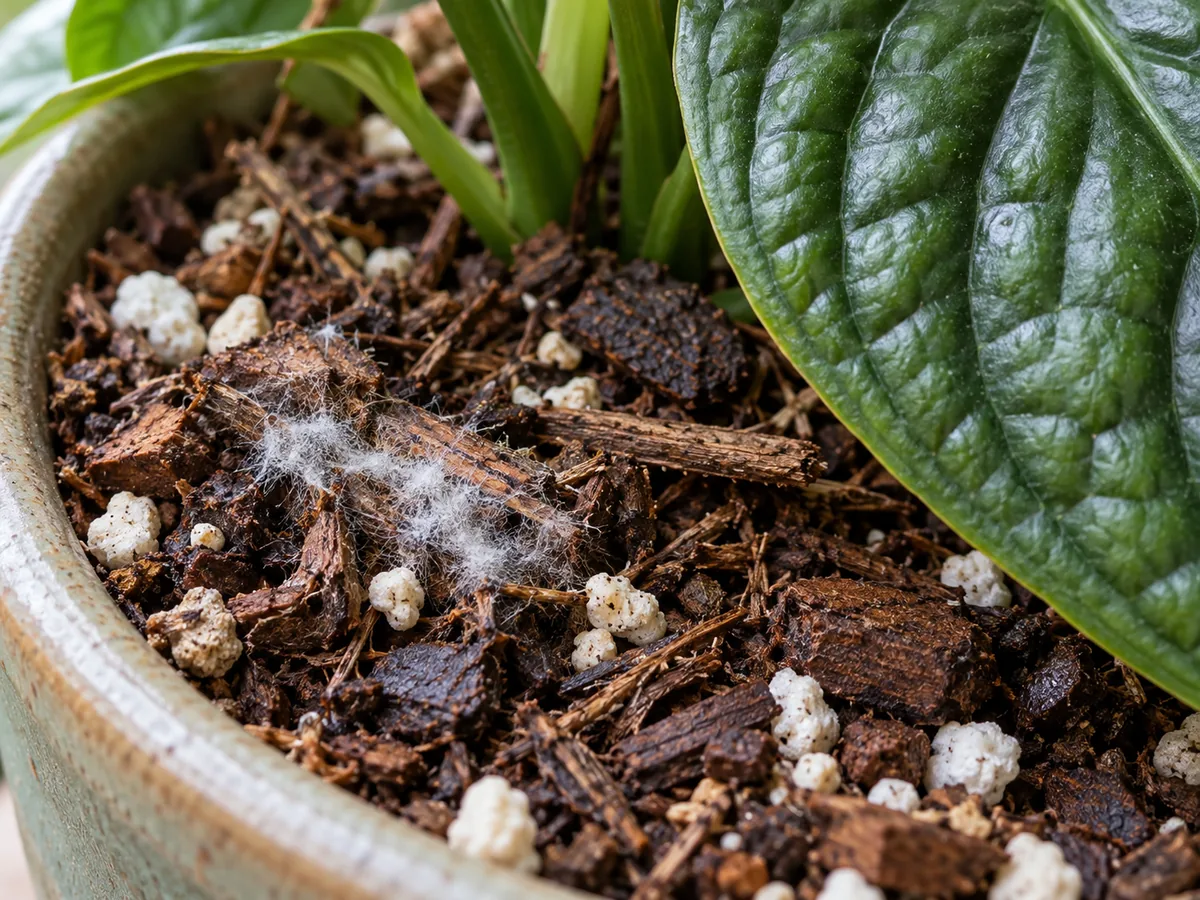
A small surface patch on bark-and-perlite mix is a cue to check dry-down, drainage, and airflow; the patch alone does not confirm root rot.
Monstera Peru’s thick, corrugated leaves can make the plant look unusual even when it is healthy. Do not mistake the leaf texture, old leaf marks, or a pale piece of perlite for soil mold. If the white growth is attached to the leaf surface, stem, or crown rather than lying loosely across the mix, stop using this soil-only guide as the diagnosis. Some surface growth can be relatively harmless to the plant, but the conditions that let it establish and the possibility of other fungi mean color alone is not enough to identify it (Family Handyman).
Why a Monstera Peru pot can grow mold while the plant still looks healthy
The most likely explanation is that the top of the medium has remained damp between waterings. In a home, indirect light and still air can slow drying; poor drainage or a dense mix can keep water around organic material longer. That combination is more useful to investigate than the idea that the plant itself is infected. A surface patch can show up before a leaf changes, so treat it as a moisture-and-airflow clue, not an automatic emergency.
This is particularly relevant to a Peru because its care routine depends on the mix drying in a predictable way. The Monstera Peru care data uses a chunky aroid blend with potting mix, perlite, and orchid bark, and calls for watering after the top 3–5 cm has dried. A chunky recipe helps water move through the pot, but it cannot compensate for a pot without drainage, a mix that has compacted, a container that is much too large for its roots, or repeated watering before the upper layer dries (Family Handyman). Penn State Extension likewise recommends a well-draining medium for Monstera and notes that bark or perlite can be used as amendments (Penn State Extension).
The plant may remain firm and continue producing normal new leaves while the soil surface is moldy. That pattern is different from a Peru whose whole root zone is staying wet and whose stems or leaves begin to decline. Use the pot, mix, light, and growth stage to identify why this container is slow to dry rather than treating a seven-day calendar as a diagnosis; Clemson Extension explains that each of those conditions changes indoor watering frequency (Clemson Extension watering guidance).
Make three Monstera Peru-specific checks before changing care
Check the top 3–5 cm of the Peru’s mix
Insert a clean wooden skewer or finger into the surface layer, away from the stem, and note whether the mix is cool and damp or has dried through the first 3–5 cm. Lift the pot carefully and compare its weight with how it feels after a normal watering. A heavy pot with a damp top layer soon after irrigation means the plant has not reached its usual watering cue yet; wait and check again rather than adding water because a calendar reminder appeared.
The 7–12 day interval in a care guide is only a starting estimate for active growth, not a schedule that overrides the pot. The same Peru can dry more slowly in a dim winter corner, a cool room, or a pot that is large relative to its roots. It may dry faster in brighter filtered light or in a smaller container. The surface and pot weight are more informative than the last day of the week.
Inspect the bark-and-perlite surface and drainage path
Look for a blocked drainage hole, a nursery pot sitting in water inside a decorative cachepot, or a top layer packed tightly with fine, decomposed material. Check whether water exits when you do irrigate and whether the pot is standing in a saucer of runoff afterward. A thick, organic mix can stay wet when the container has no way to shed excess water, so a quick look underneath the pot is often more useful than digging through the roots.
This Monstera Peru is meant to grow in an airy, well-draining mix rather than a dense bed of fine soil. The plant’s own soil guide gives the blend used for this trade plant. If the surface is moldy but water exits freely and the plant remains firm, do not repot just to make the patch disappear. If the mix is compacted or the pot has no drainage hole, the container setup itself needs correcting.
Read the climbing base separately from the leaf texture
Monstera Peru is grown for thick, puckered leaves and an upright climbing habit. Inspect the soil surface around the stem base, then look up the climbing stem and any support you use. If the fuzzy material is confined to old bark or soil at the rim, you are still dealing with a surface issue. If it reaches soft stem tissue or a damaged leaf, or if the stem base is collapsing, do not assume that the appearance is the same harmless surface growth.
The plant’s quilted leaf pattern can trap dust in its grooves, but dust on a leaf is not a reason to water the pot. Likewise, a pale aerial root emerging from a stem node is not the same thing as fuzz spread over the soil. Keep the pot’s surface visible when training the vine to a board or pole so that you can check where the material starts and whether it is spreading. The Monstera Peru overview covers its normal leaf and climbing form if you need an identification cross-check.
First fix: lift off the visible surface patch
For a small patch on an otherwise stable plant, first remove the visible fuzzy material with a clean spoon or tissue, taking only loose surface debris with it. Discard the material in the trash and avoid brushing it across the Peru’s leaves or stem. This is a limited cleanup, not a deep excavation of the pot; the goal is to clear the visible patch while leaving healthy roots undisturbed. Family Handyman includes wiping the surface growth away as a practical first step, then emphasizes correcting the conditions that allowed it to return (Family Handyman’s soil-mold guidance).
After that single first action, make one care correction at a time. If the mix is still damp in the upper 3–5 cm, wait until it dries before watering. If the top dries but the pot remains heavy for days, check the drainage route and light before changing the mix. If the Peru stays healthy and the patch does not return after the next dry-down, a full repot was unnecessary. If the patch returns repeatedly, treat the recurrence as evidence that the surface is staying wet or still for too long and follow the checks below.
Correct the conditions in the order you find them
- Adjust the next watering to the mix, not the calendar. Let the upper 3–5 cm of this Peru’s soil dry before watering again, then water thoroughly and let excess drain. Do not leave the pot standing in runoff. Do not water just because a calendar reminder says that a week has passed.
- Make sure the pot can drain. Clear a blocked hole and empty the saucer after watering. If the plant is in a decorative pot with no outlet, use a draining nursery pot inside it or make a planned move to a suitable container.
- Give the climbing plant brighter filtered light and open air. Move it toward bright indirect light if it has been kept in a dark corner, but avoid sudden harsh direct sun. Penn State Extension recommends bright indirect light for Monstera, and brighter usable light makes it easier to observe whether the Peru’s pot is drying at a reasonable pace (Penn State Extension). Leave some space around the pot and between nearby plants so the soil surface is not boxed into a still corner.
- Remove debris instead of removing healthy mix. Pick out fallen leaves or dead plant material resting on the soil surface. Decomposing plant matter can provide a place for mold to grow, so keeping the Peru’s pot clear is a smaller, lower-disturbance step than replacing all of the medium (Family Handyman).
If these checks show that the medium is still draining normally and the Monstera Peru is firm, stop after the relevant correction and observe. Avoid changing the pot, location, watering, and feeding schedule all at once; several changes make it hard to tell what solved the problem. If the pot stays saturated or the plant starts declining while the mix is wet, move from surface cleanup to a root-zone assessment.
Tell soil mold apart from the problems that can look related
| What you notice | What it points toward | Next step for Monstera Peru |
|---|---|---|
| Soft, threadlike growth confined to the soil surface | Surface fungal growth is plausible, especially if the mix has stayed damp; color alone does not identify it | Lift the small patch away and check dry-down, drainage, and airflow |
| Small dark flies hovering around the pot | Fungus gnats are a separate issue; UMN Extension associates them with overwatered soil or soil with high organic matter (UMN Extension) | Use the Monstera Peru fungus-gnats guide if you see flying adults, rather than treating surface fuzz as proof of gnats |
| Leaves yellowing or stems softening while the pot remains wet | The problem may extend beyond a surface patch into chronic wetness or root damage | Compare with the Monstera Peru overwatering guide; inspect roots only if decline or persistent wetness makes it necessary |
| Roots that are soft or dark, or a sour-smelling mix with ongoing wilt | Root rot or a failing medium deserves attention; soil mold by itself is not confirmation | Follow the Monstera Peru root-rot guide and check whether the mix has lost its drainage structure |
| Hard, flat, gritty pale residue rather than loose fuzzy threads | The material may not be mold, so this cleanup advice may not fit | Do not apply a fungicide based on color; compare watering and feeding history before treating it as a mold problem |
Fungus gnats deserve their own check because they are insects, not the white surface growth itself. Their presence points back to moisture management but does not prove that mold is causing leaf damage. Use a separate gnat diagnosis if adults are present; do not pour a gnat treatment into the soil just because a small fuzzy patch appeared.
Root rot is a different escalation. Excess water can reduce oxygen around roots, and Clemson Extension explains that overwatering can lead to root problems in houseplants (Clemson Extension). A patch confined to the soil surface is not enough to conclude that roots are damaged. The combination of a pot that stays heavy, continuing wilt or yellowing, softening stems, and roots that feel mushy when inspected is a stronger reason to follow the root-rot guide.
Recovery timeline: watch the soil and new growth
The visible patch may be removed in one sitting; prevention takes longer because the conditions have to change through the next dry-down. Recheck the upper layer and the pot weight over the next watering cycle rather than expecting a specific number of days. If the surface stays clearer and the plant remains firm, keep the same light and watering approach. If fuzz returns in the same spot, check whether the pot is drying evenly or whether a leaf pile, support, or nearby container is blocking air at that corner.
Surface mold does not need a leaf to “heal” if the leaves were never affected. A yellowed leaf will not turn green again just because the soil was cleaned, and a damaged root does not become healthy on the same day that the surface dries. For a Peru with root stress, improvement means the stem remains firm, no additional leaves decline, and new growth resumes with the plant’s normal thick, puckered texture. A plant that has stopped worsening is a better sign than an old leaf changing color.
Expect the pot’s dry-down to shift as seasons and indoor conditions change. In lower winter light the plant may use water more slowly; in brighter filtered light during active growth it may dry sooner. Do not try to force the old interval by watering on the same weekday. Recheck the top 3–5 cm and continue to adjust only when the pot’s actual condition changes. For context on normal irrigation and placement, use the Monstera Peru watering guide and light guide.
Mistakes that can make the Peru harder to diagnose
Do not flood the pot, spray the soil every day, or mist the leaves in an attempt to wash mold away. The water at the surface is part of what needs checking, and adding more before the top layer dries can reinforce the same conditions. Do not add cinnamon, household cleaners, peroxide, or a fungicide as a reflex. A patch’s appearance does not identify a pathogen or tell you that a chemical treatment is needed; the first response is surface cleanup and correction of confirmed moisture or drainage conditions.
Avoid replacing the whole mix immediately if the plant is stable and water exits the drainage holes. Repotting can disturb roots and does not fix a dark shelf or a watering habit that keeps the next mix wet. Consider repotting when you have a clear reason: no drainage hole, badly compacted medium, roots occupying a pot that no longer drains well, or active root decline. If you do repot, use a pot only modestly larger than the root mass and restore the chunky aroid mix rather than packing the roots into dense soil.
Do not assume that all white material is the same problem. A fuzzy patch, a hard mineral-like crust, dust in the Peru’s corrugated leaf surface, pale perlite, and growth on living plant tissue are different observations. Photograph the material, note whether it is soft or crusted, and record where it is attached before applying a treatment. If it appears on living tissue or the plant deteriorates quickly, isolate it from nearby plants while you identify the cause.
Prevent mold with the Peru’s normal dry-down and climbing setup
Start with the routine already suited to this plant: bright filtered light, a pot with open drainage, and a well-draining, chunky mix. The Monstera Peru’s own soil check should lead each watering decision rather than a fixed weekly reminder.
Keep the upper mix visible. When you train the vine up a board or pole, avoid piling fallen leaves or fresh potting material over the surface. A support may make the plant look more upright, but it should not make it hard to see whether water drains from the pot or whether the top layer is staying damp. Leave enough room around the container to inspect the surface and to remove runoff from the saucer.
Use a repeatable observation instead of adding more products: check the top 3–5 cm, lift the pot if moisture is hard to judge, and write down how long it takes to dry after a thorough watering. If that interval suddenly becomes much longer, look for lower light, cooler conditions, a blocked hole, or a mix that has compacted. Correct the actual change before reducing water so much that the Peru becomes dry-stressed. Remove leaf debris during routine checks and keep the puckered foliage clean with gentle dusting rather than repeated wetting.
When to escalate beyond a surface cleanup
Get a closer root-zone assessment if the pot remains wet well past its usual dry-down, the stem base turns soft, multiple leaves yellow in quick succession, or the plant wilts despite wet mix. Those signs do not prove one specific disease, but they make a surface-only explanation less adequate. If you lift the root ball, compare root firmness; soft, hollow, or breaking-down roots call for the plant-specific root-rot steps and removal only of tissue that is clearly damaged.
If fuzzy material spreads onto living stems or leaves, or the plant declines rapidly, avoid spraying a treatment across the whole plant without identifying the problem. Separate the Peru from nearby plants, take clear photos of the affected tissue and soil, and seek a reliable plant-health diagnosis. Surface soil mold and plant disease are not interchangeable labels.
When to use this page vs other Monstera Peru guides
Use this page when the main observation is a soft or fuzzy patch on the potting mix and the plant is otherwise stable. Go to the Monstera Peru problems hub if you are not sure which symptom is primary. If a pot stays wet or the plant declines after watering, use the Peru overwatering guide; if roots or stems are soft, use the root-rot guide. If you see flying gnats rather than a surface patch, use the fungus-gnats guide.
For a care correction rather than a symptom diagnosis, the watering guide explains the plant’s dry-down cue, and the soil guide covers the mix and drainage setup. Use the light guide if the plant sits in a dim spot and its pot is drying slowly. The Monstera Peru overview is the place to confirm the plant’s normal climbing form and puckered leaves before you compare symptoms.
Related tool
Use the Plant Problem Diagnosis Tool to compare mold on soil with the other symptoms you observe on this Monstera Peru. Enter the plant and the main sign you can verify; use the result to decide whether the next step is a moisture check, a gnat inspection, or a root assessment.